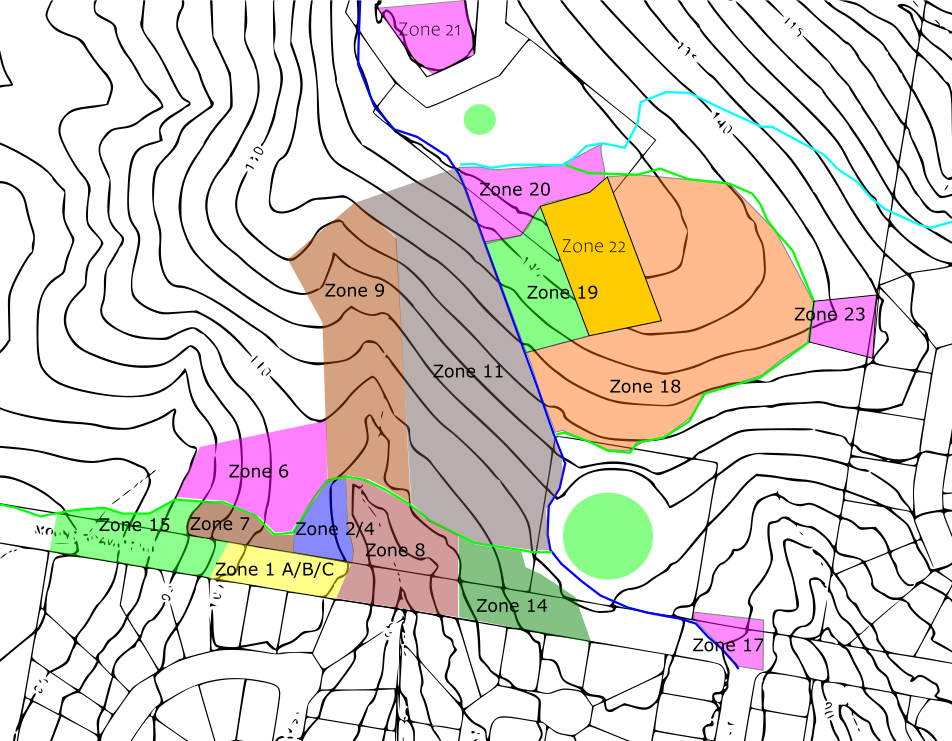
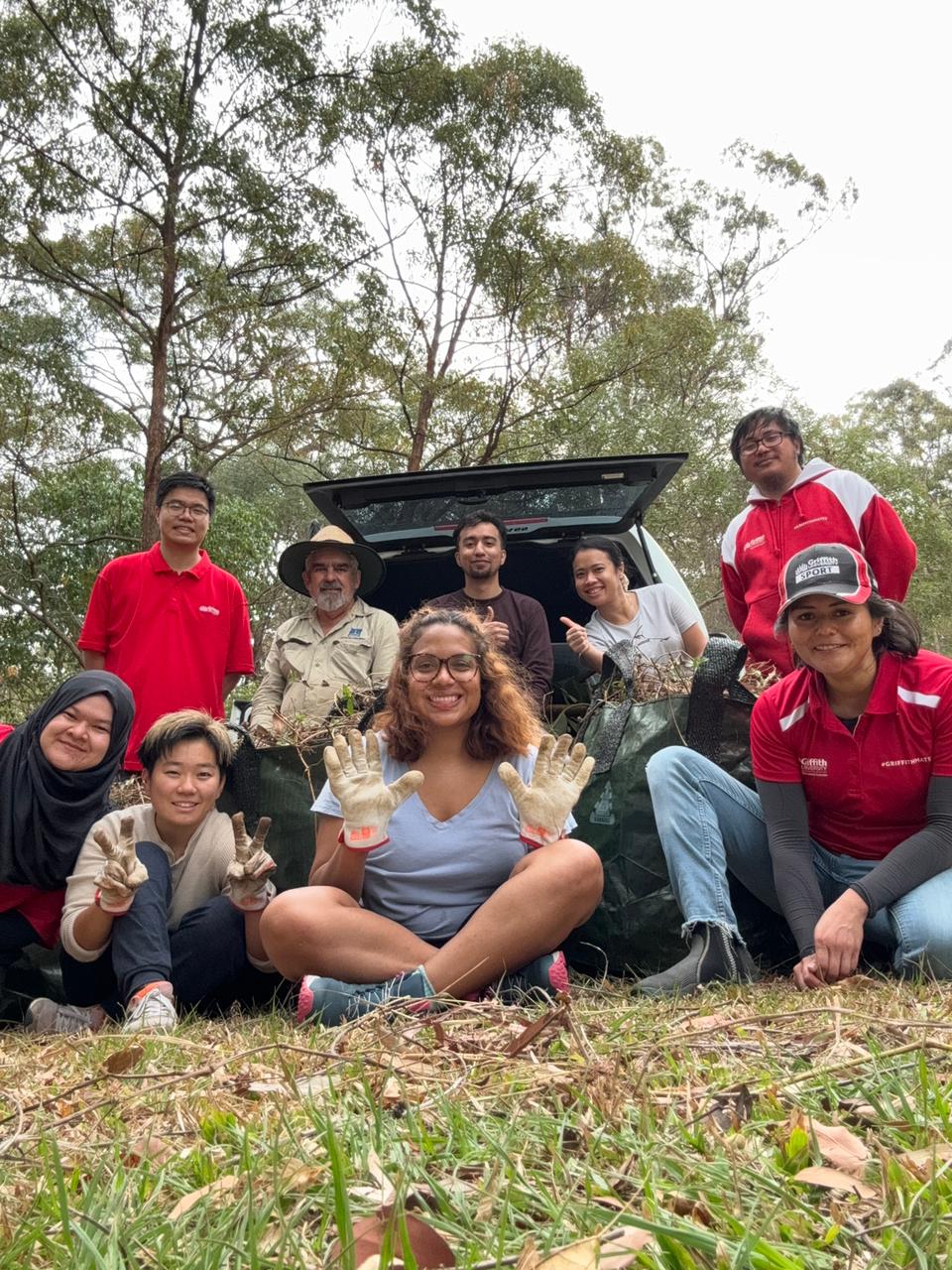
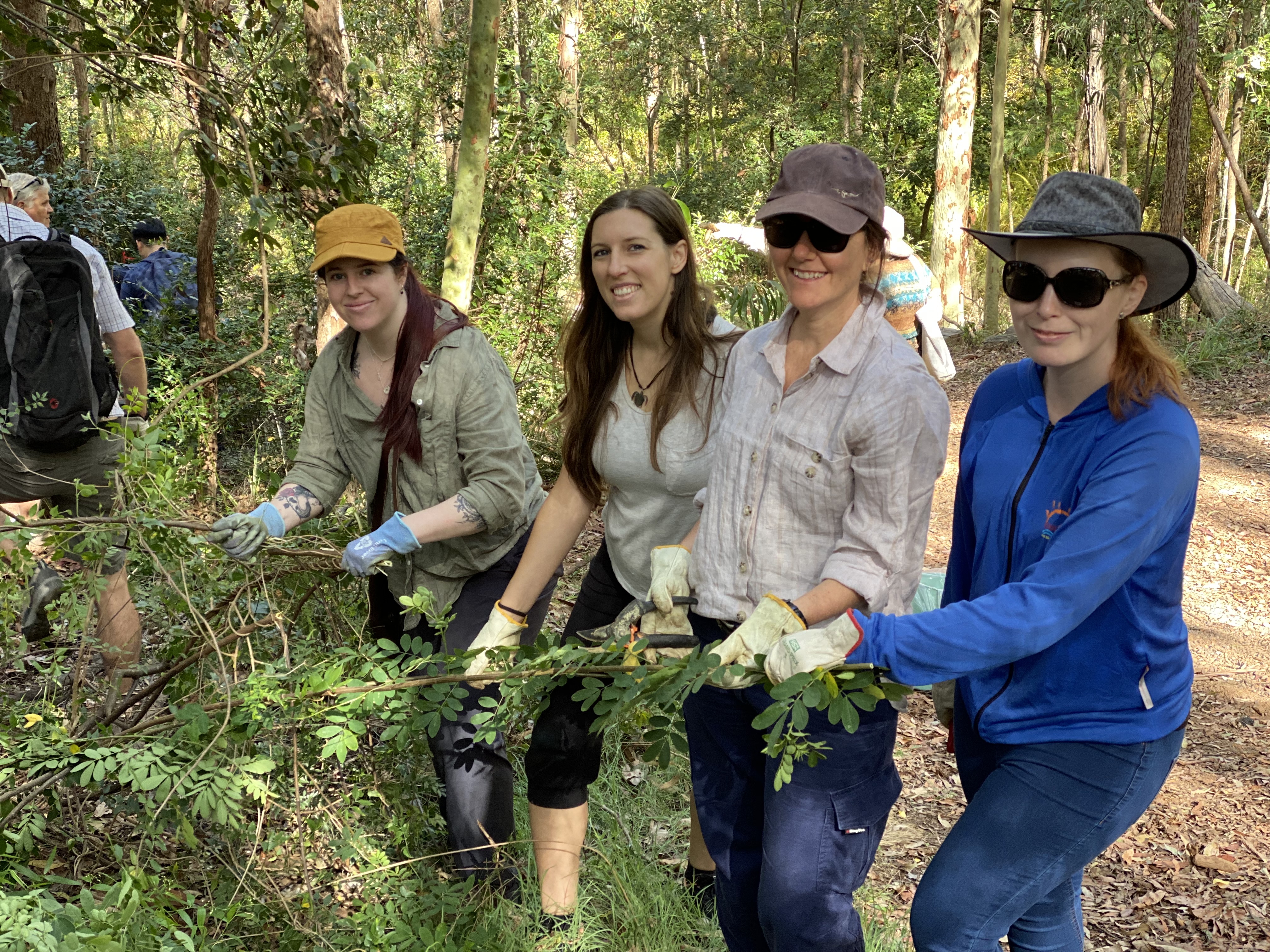
Our Griffith Mates Bushcare Team joined us again on Saturday to continue restoration of Zone 14 in our Fox Gully Bushcare site. The Mates Team was truly multinational with participants from Indonesia, Vietnam, Pakistan, Japan, Venezuela, Mexico and Malaysia.
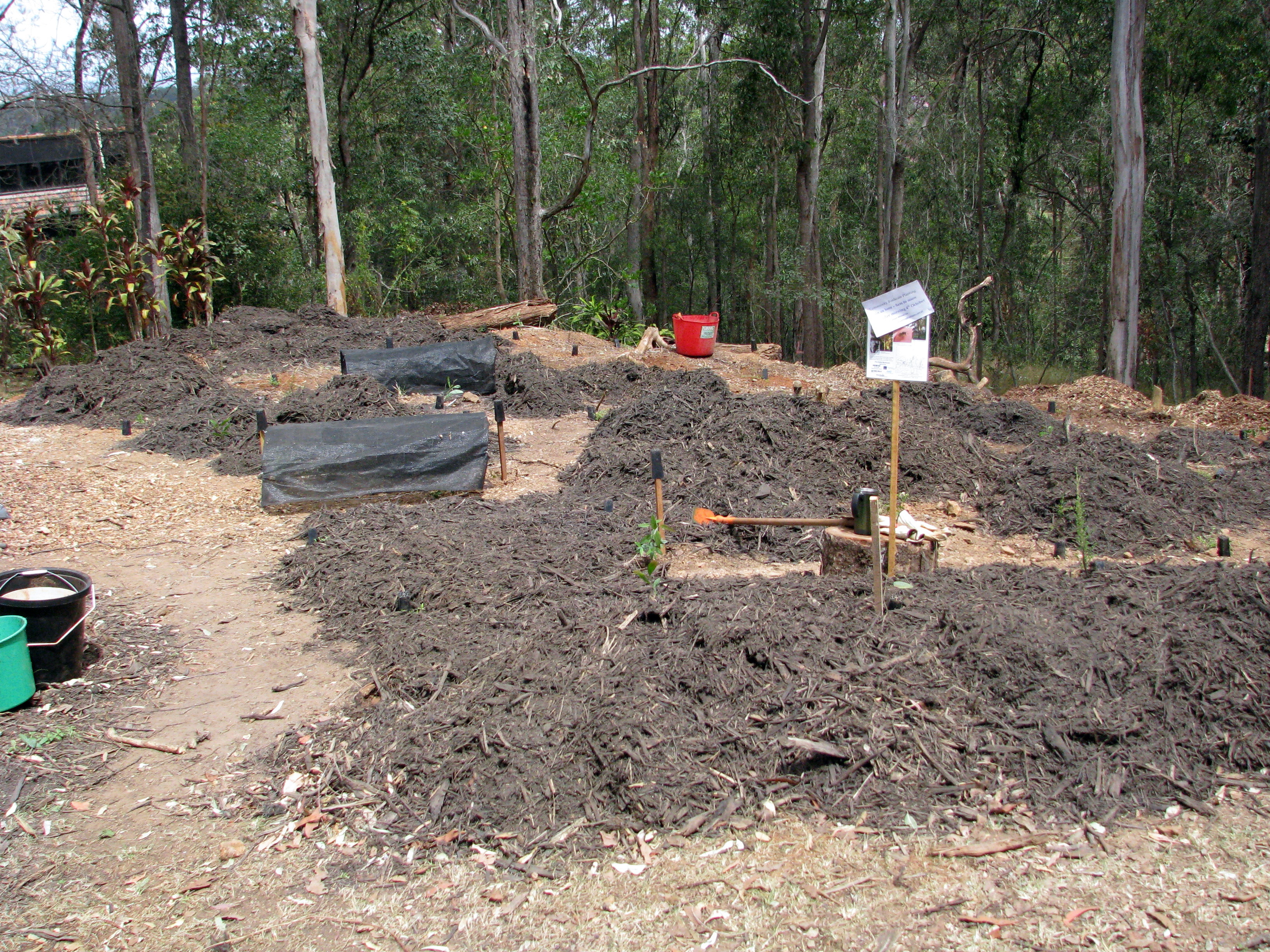
Community Planting October 2009Team hard at work
The team worked hard clearing invasive weeds like Singapore Daisy Sphagneticola trilobata and Guinea Grass Megathyrsus maximus var. maximus. Sometimes weeding seems frustrating but look at the trees in the background that were planted in October 2009 which have gone from bare ground to trees large enough for Koalas. The part of the Zone with the trees is relatively weed free so we need to do some infill planting to take advantage of the Mates Team’s work.
Cutting back an Indian Rubber TreeBreaking down dead Acacia branches
Cutting back an Indian Rubber Tree Ficus elasticato improve access. Longer term, the plan to remove the tree. Rubber Trees are not a big problem with spreading but the roots are very aggressive and steal a lot of water from local natives. While these extraordinary trees are a problem here they provide an unique community service in their natural habitat. In places like northern India and Bhutan these trees are used to create Living Bridges.
Breaking down dead Acacia branches allowed them to be added to the onsite compost pile rather than taking to the dump.
I always love working with the diverse teams of Griffith University students. Fascinating stories and full of energy.
The Team are very proud of their efforts so it is time to head for the Summit and pizza, and of course see if we can find more Koalas Phascolarctos cinereus.
By the time we reached ten Koalas had be sighed. That included two mum’s and joeys.
Mulching the ground is an important part of our restoration of the forest habitat. I explained that mulch have three functions:
Retaining soil moisture.
Reducing erosion.
Most important is keeping soil cool. Soil is teeming with living organisms: microorganisms like bacteria, fungi, algae and macro-organisms like springtails, mites, nematodes, earthworms, ants that recycle organic material refreshing and boosting soil health. Average soil temperatures for bioactivity range from 10-24°C. Mulch keeps soil warm in cold weather and more important for Brisbane it keeps the soil cool in summer.
2023 National Tree Day moved to the entry of the Scribbly Gum Track beside the Scout Hall and the planting team were greeted by a Koala Phascolarctos cinereus sleeping in tree at the entry.
.
Eight hundred and thirty local native trees, shrubs, vines and grasses were planted including more Koala food trees.
.
.
.
Fifty two volunteers contributed one hundred and eighty nine hours of labour restoring another parcel of special Koala habitat. A special thanks to Brisbane First Chinese Scouts who have helped with National Tree Day since 2018.
Clairvaux MacKillop Year 10 students have been working with us since stepping up in 2018 to help with preparation of the National Tree Day site.
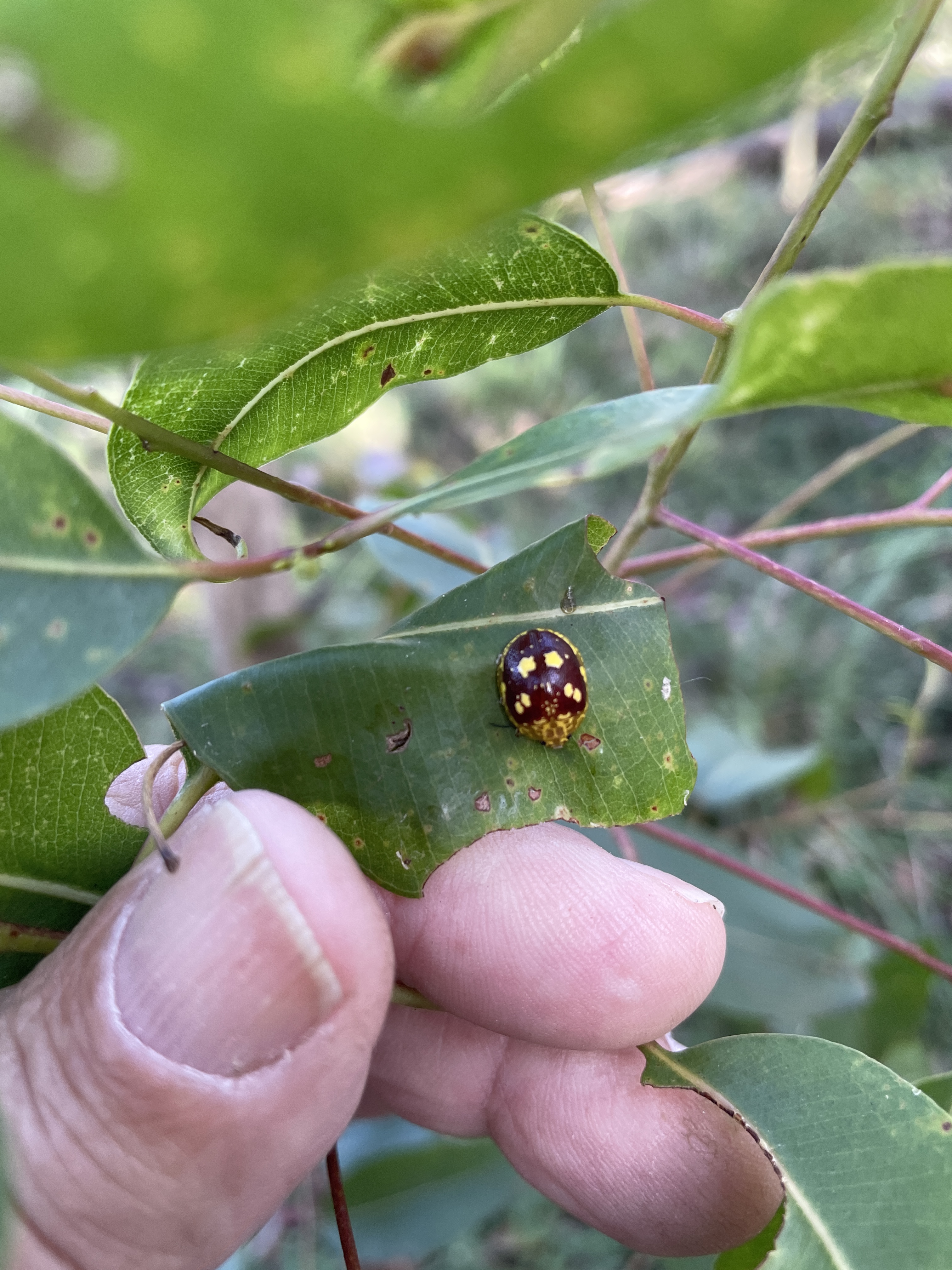
The students are amazing when it comes to finding insects for me to photograph. A double bonus … weeds cleared and more species to add to our Flora and Fauna research.
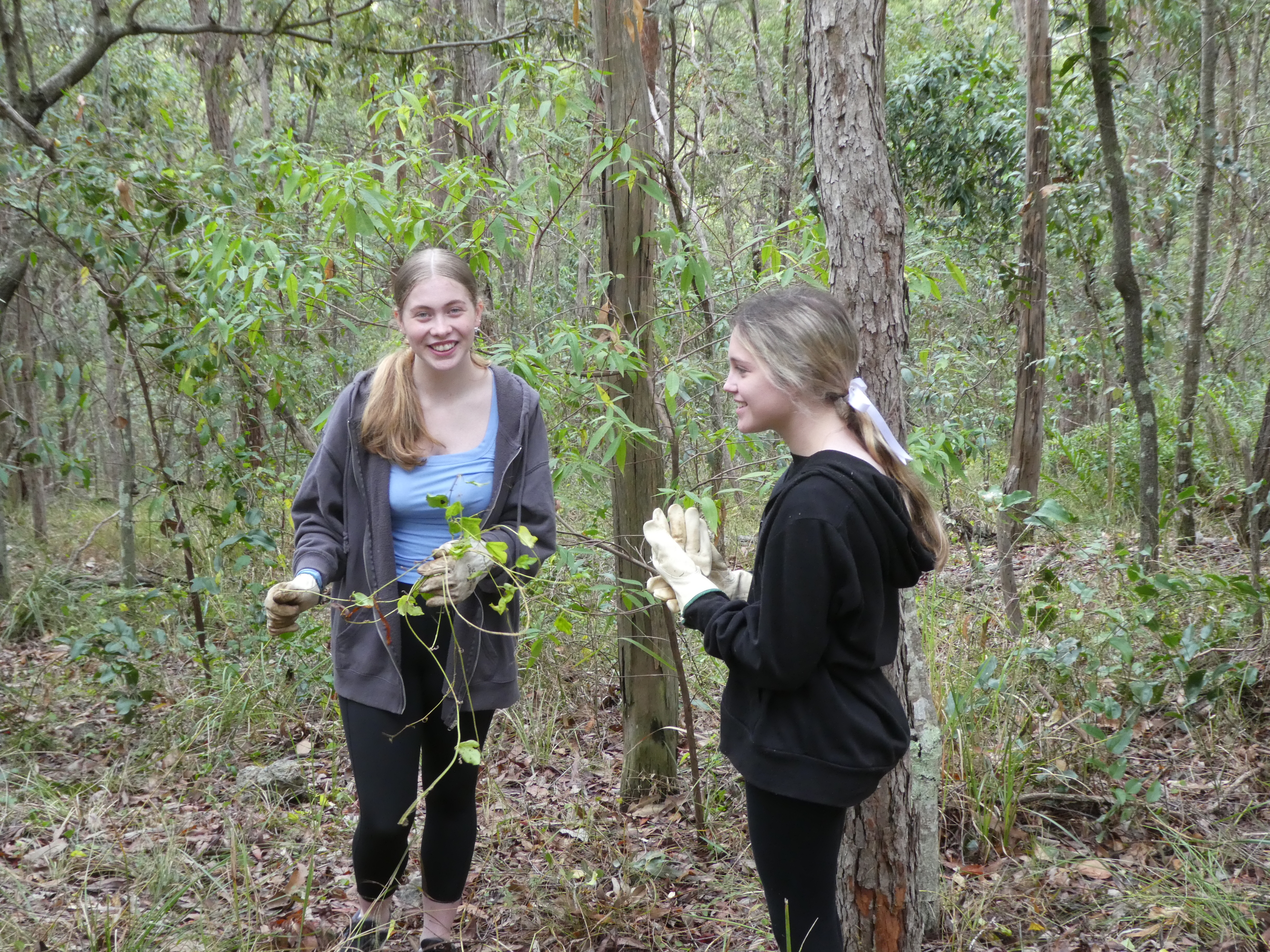
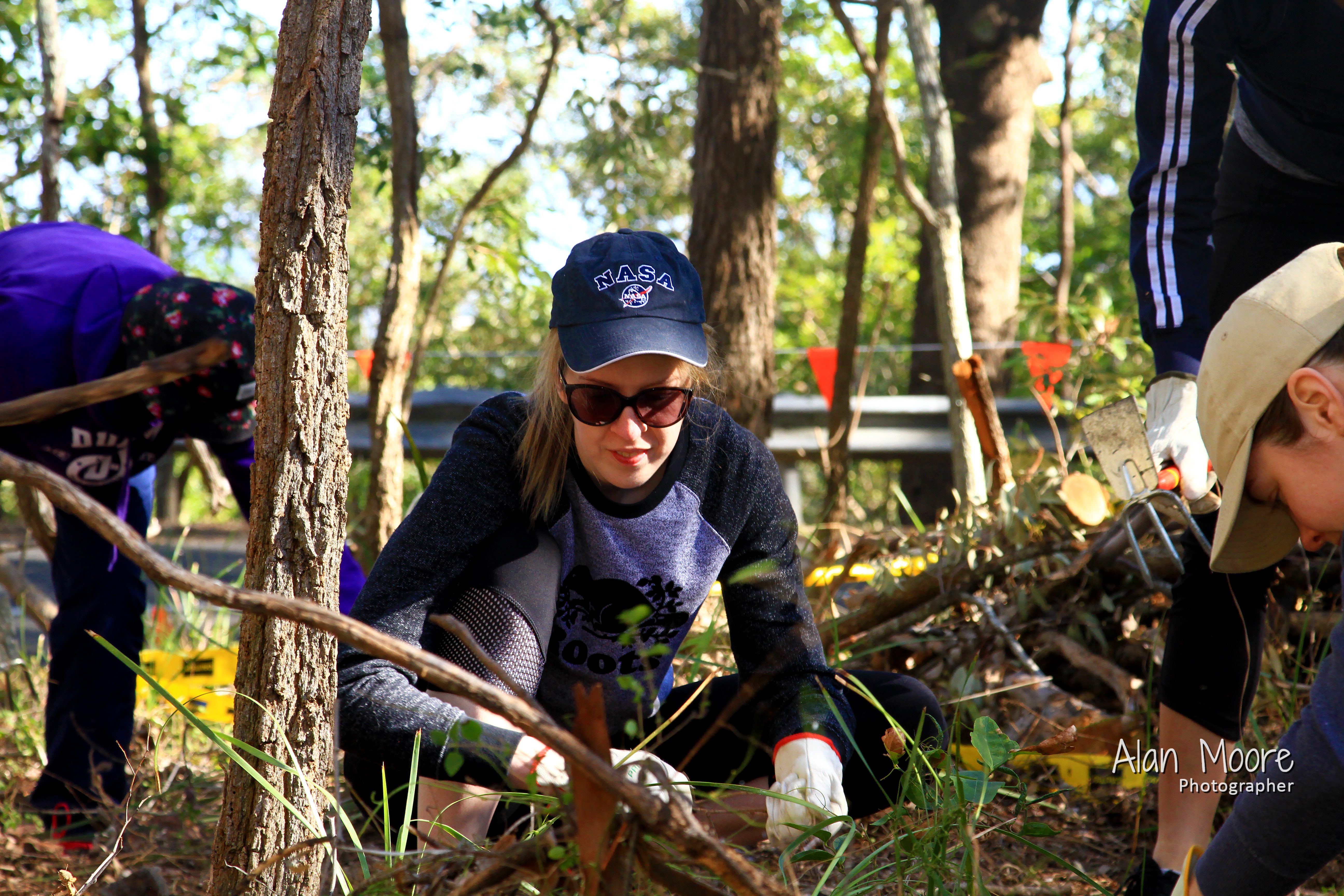
Dynamic weeding duo on the jobAnother bucket of weeds gone
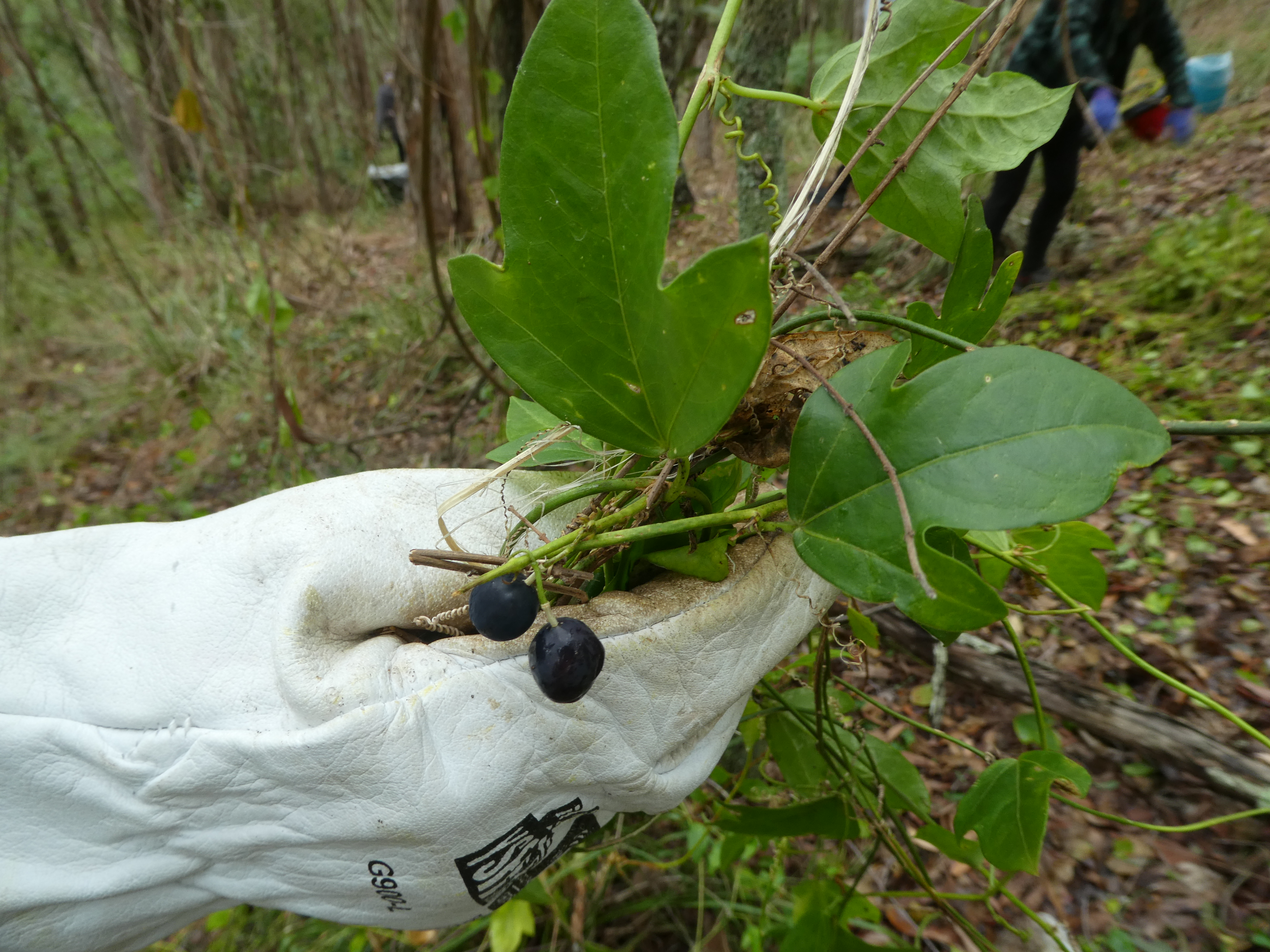
The target weed for the event was Corky Passion Vine Passiflora suberos which is currently covered in fruit.
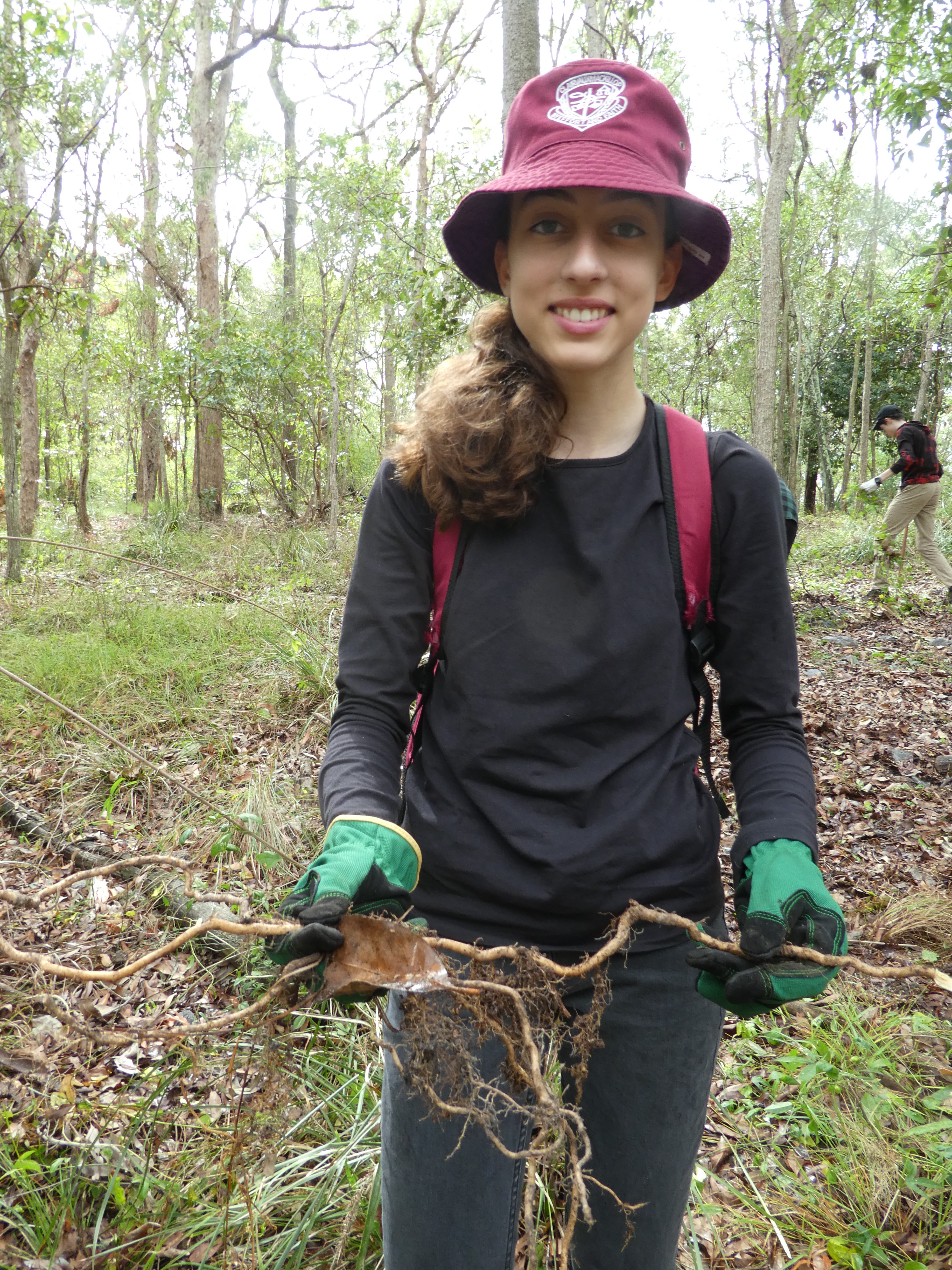
Corky Passion Vine fruitThe Bushcarers worked hard on getting all roots out
The vine is a vigorous invasive weed with seeds spread by fruit eating birds. Ironically Corky Passion Vine has become our new target weed as it is thriving in now that the other weeds have been cleared. It is important to remove the roots to ensure that we don’t have to do our work all over again.
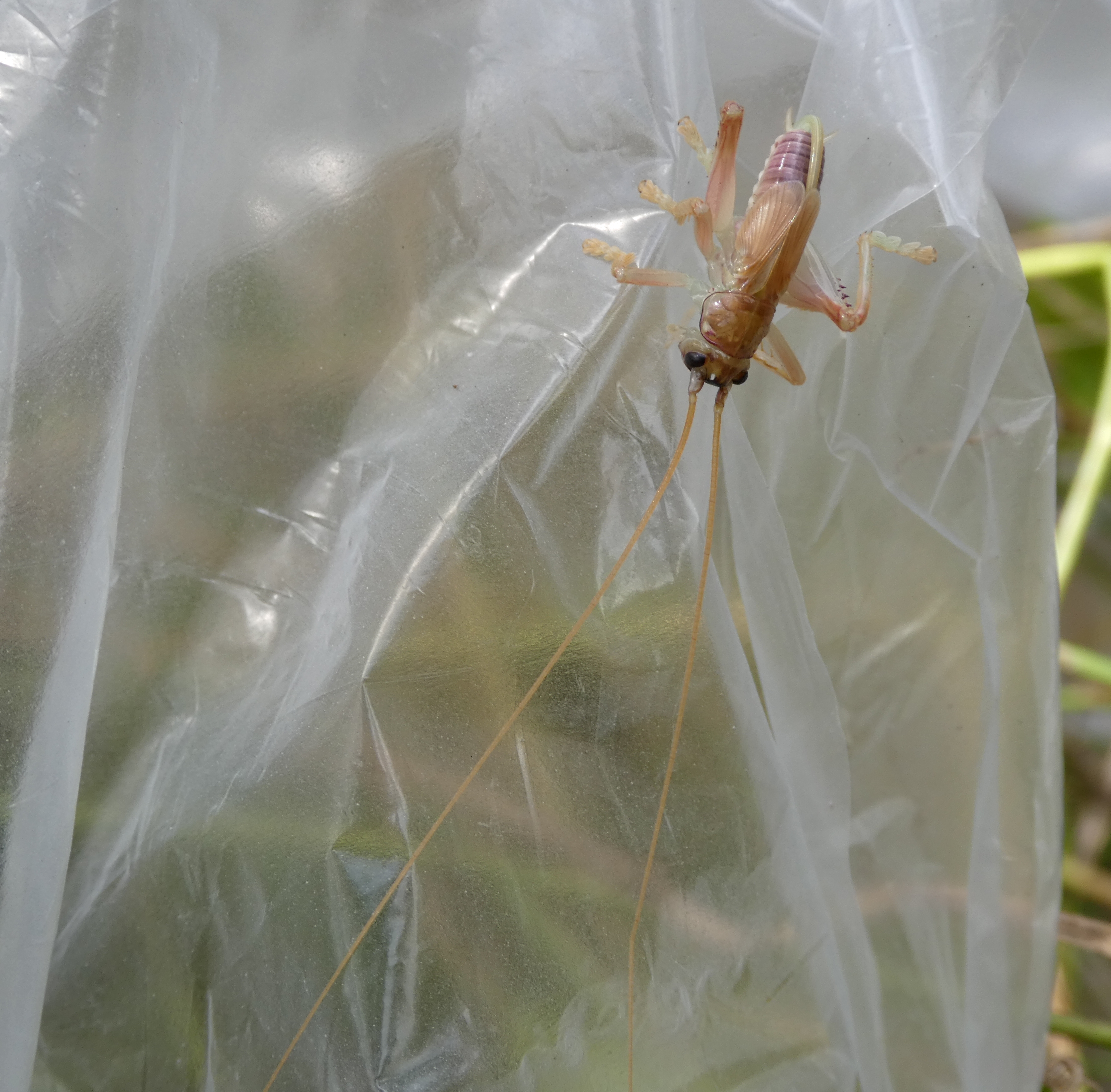
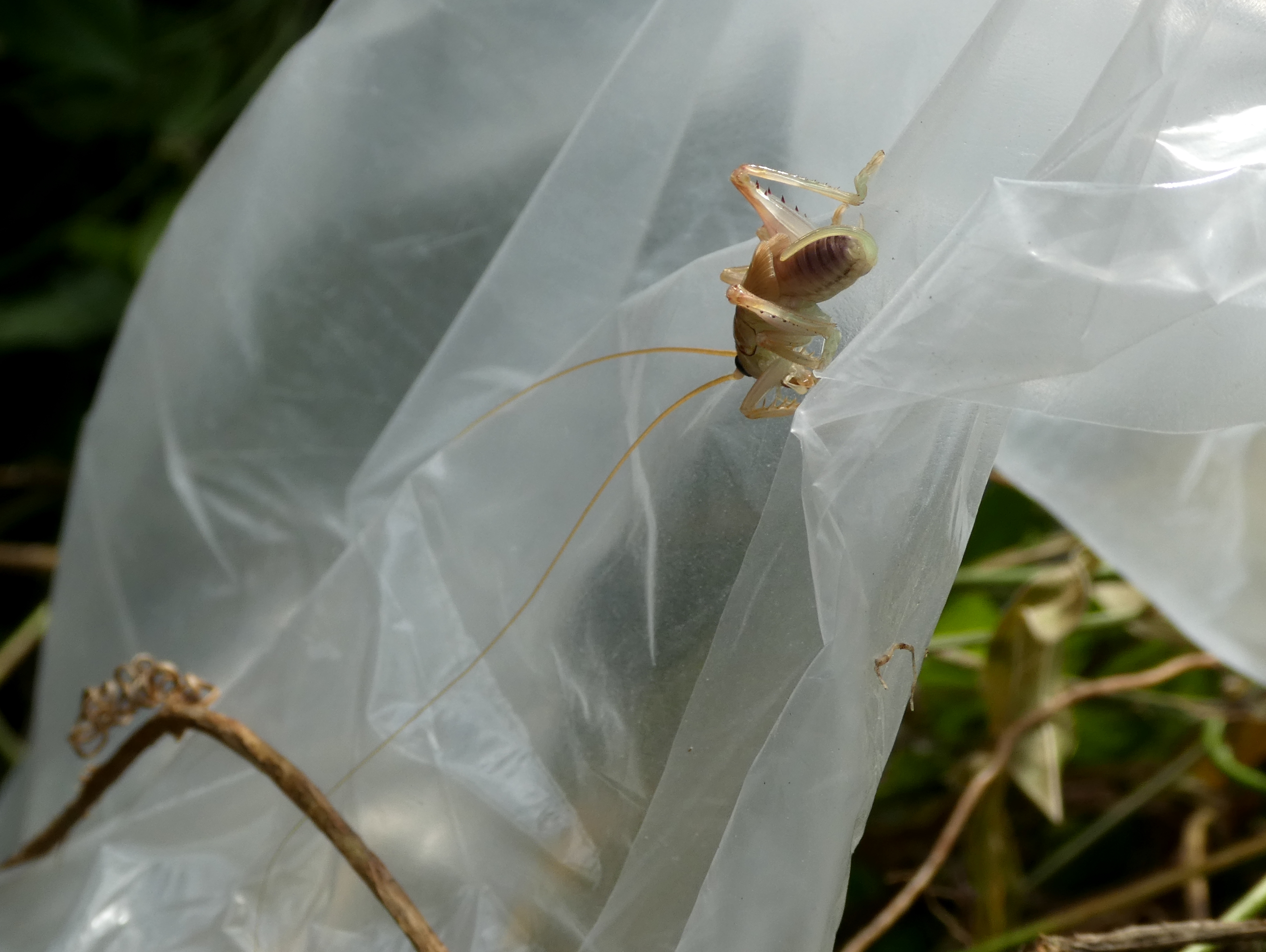
True to form a sharp eyed student found a new insect for me to research.
I have submitted my tentative identification Noliphus erythrocephalus Colourful Board-headed Bug to iNaturalist for id confirmation before I add this species to our Flora and Fauna database. Part of my identification process was to check the iNaturalist map of sightings.
I have found this species before however this time I noticed a tail like appendage curved over the abdomen. This oviposter identified the cricket as female and is used to deposits eggs deep into soil.
The two short appendages are cerci which are sensitive to puffs of air and low-frequency vibrations.
I love having our student Bushcarers finding me insects to research. I learn something after every event.
Benno, Phil and I returned our 2017 planting site to clear Creeping Lantana Lantana montevidenses, slow work but very effective in promoting natural regeneration. The weed smothers native grasses and the chemicals in Creeping Lantana suppress regrowth. Chase the creeper along to find the main root, pull the root and discard on the ground: the weed will not reshoot.
Building Habitat Tripod July 2017
We have been focused on maintaining the 2021 National Tree Day site so I took the opportunity check how the 2017 planting is going.
Preparing the planting site required clearing the weeds to leave the ground bare for planting and included building Habitat Tripods to create safe habitat for small forest birds.
A beautiful cool sunny morning. What a day to welcome the ERM Team to Mt Gravatt and Fox Gully Bushcare for a morning of waging war on weeds and exploring our forest habitat.
How many people get to work in such an amazing place?
ERM is a multinational sustainability consultancy with over 7,000 team members in 40 offices around the world.
.
On the track to the worksite we stop to look for Koalas. A local couple walk the mountain each morning on the lookout for Koalas and scratching arrows on tracks so visitors can meet our local wildlife.
.
On site safety briefing
.
.
The ERM Team are an interesting group of experienced professionals: included environmental scientists, water engineers and even archaeologists. However, our work site is quite steep and slippery so safety is key.
.
.
Sam Treepopper fan
.
.
The Treepopper was a hit with the group working on removal of Ochna (Mickey Mouse Plant). The Treepopper pulls the weed vertically removing with minimal disturbance of the soil microbes and fungi. This is important to maintaining soil health.
The first step removing Ochna is to remove and bag seeds for disposal. The removed plants were placed in a pile to compost: retaining scarce resources on-site while slowing water flow on the steep slope.
.
.
.
.
Bushcare teamwork
.
.
.
All hands on the job to clear a large Easter Cassia Senna pendula var. glabrata. The bright yellow flowers of Easter Cassia is easy to spot at Easter however at other times the gold rim of the leaves is reliable for identification.
.
Chinese Elm Team in action.
.
.
.
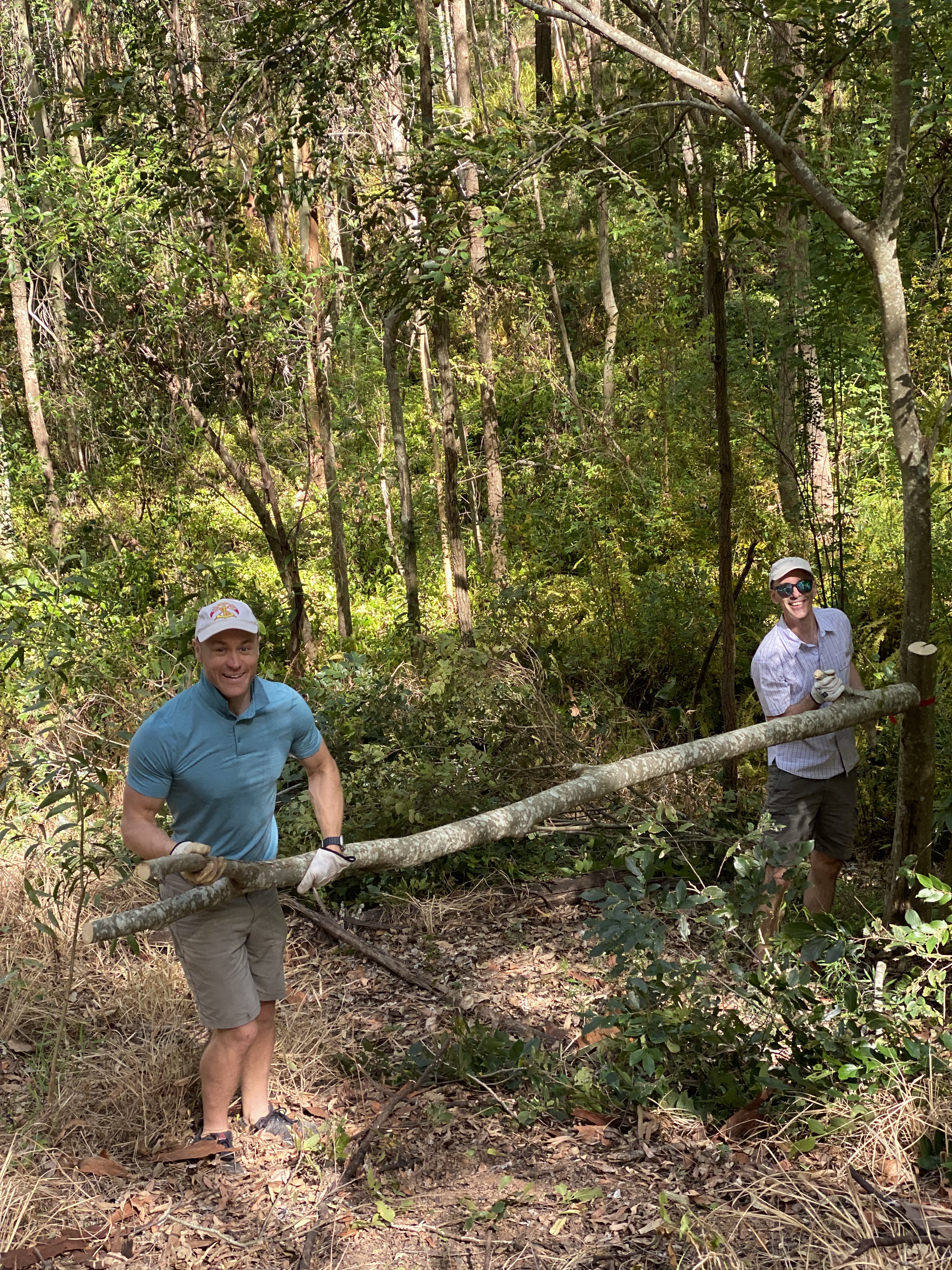
The Chinese Elm Celtis sinensis team worked hard cutting down and poisoning large trees. Logs were placed across the slope to reduce erosion.
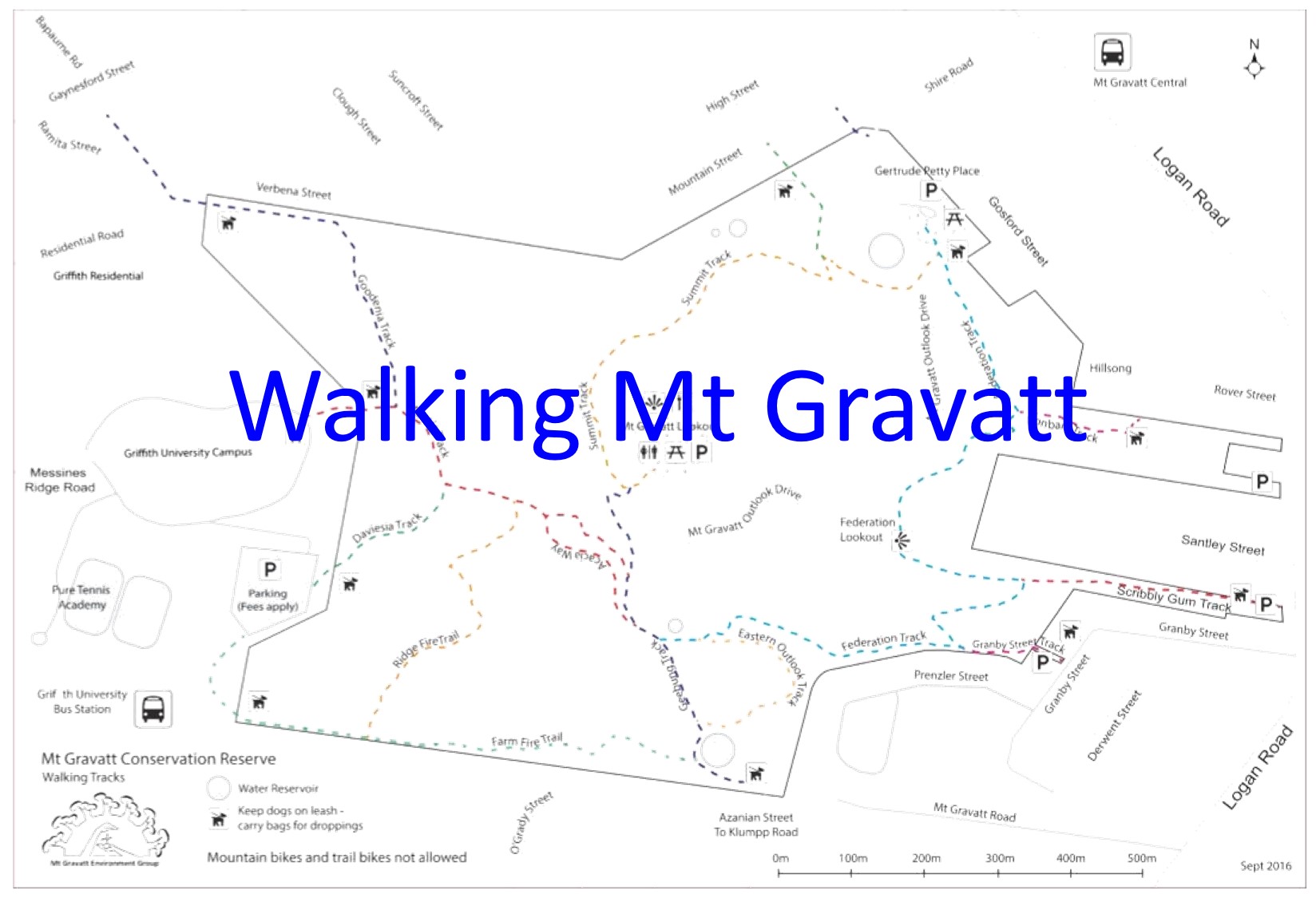
Returning to the Summit via the Eastern Outlook Track the team inspected our restoration work at our National Tree Day planting sites.
I explained the BCC Habitat Brisbane team provided the plants based on our research of species found in the forest: Flora and Fauna. Planting local species produces excellent results, even in the thin rocky soil, with some shrubs going from tube stock to 2.5 metres in eighteen months.
We discussed the lush growth of Scurvy Weed Commelina cyanea which creates a thick cover of Living Mulch keeping the soil cool and retaining moisture. The leaves of Scurvy Weed are edible with high vitamin C content. Managing Commelina species in bushland can be a challenge with white flowering weed Wandering Jew Tradescantia fluminensis often confused with Scurvy Weed: roots can be used to identify the weed.
.
A quick stop to introduce the team to the Tree Troff Koala Drinker used to provide water for wildlife within the dry mountain reserve.
.
.
.
A very pleasant morning in the bush with interesting people finished with an excellent brunch at Lovewell Cafe thanks to the ERM Team. I introduced our Pollinator Link project and encouraged everyone to take advantage of free registration of their wildlife garden.
The team from B4C came today to refill our Tree Troff Koala drinkers so it was very exciting to find a Koala Mum and Joey in sitting on a branch above the drinker on Acacia Way.
The Mt Gravatt Environment Group team installed a second Koala Tree Troff in the forest this morning.
Artwork by Chrys O’Hare
Laurie, Alan, myself management the installation with the valuable help of David Fechner, Koala researcher from Griffith University, who we recruited on-site.
.
.
The Tree Troff is installed beside a Tallowood Eucalyptus microcorys a favourate Koala food tree. Note the scratching of the bark.
This innovative design by Robert Frend of Wildsip, and manufactured by local Gunnedah business and donated by WIRES NSW.
The Tree Troff simply balances against the tree with the weight of 220 litres of water transferred directly to the ground.
How many Koalas are there in Mt Gravatt Conservation Reserve? I am often asked that question.
As part of our 2021 Koala Drinker Research Project and work by Peter Demmers we know there are at least thirteen individual Koalas in the Reserve. We now have a couple with excellent Koala spotting skills they share with other visitors by marking sightings with an arrow on the track.
If you see an arrow on the track, pause look around and say hi to our special locals.
It is always special to when we see special wildlife at our Fox Gully Bushcare site.
.
.
Look out for the amazing new sculpture at the Shire Road entry to the Reserve. Featuring our local native flora and fauna the totem pole shows off the special residents who call the Reserve home.
This morning artist Jamie Maclean was putting finishing touches adding colour to our special addition welcoming visitors.
Thanks to Councillor Krista Adams who commissioned the sculpture through the Lord Mayors Suburban Enhancement Fund.























 Mount Gravatt Environment Group