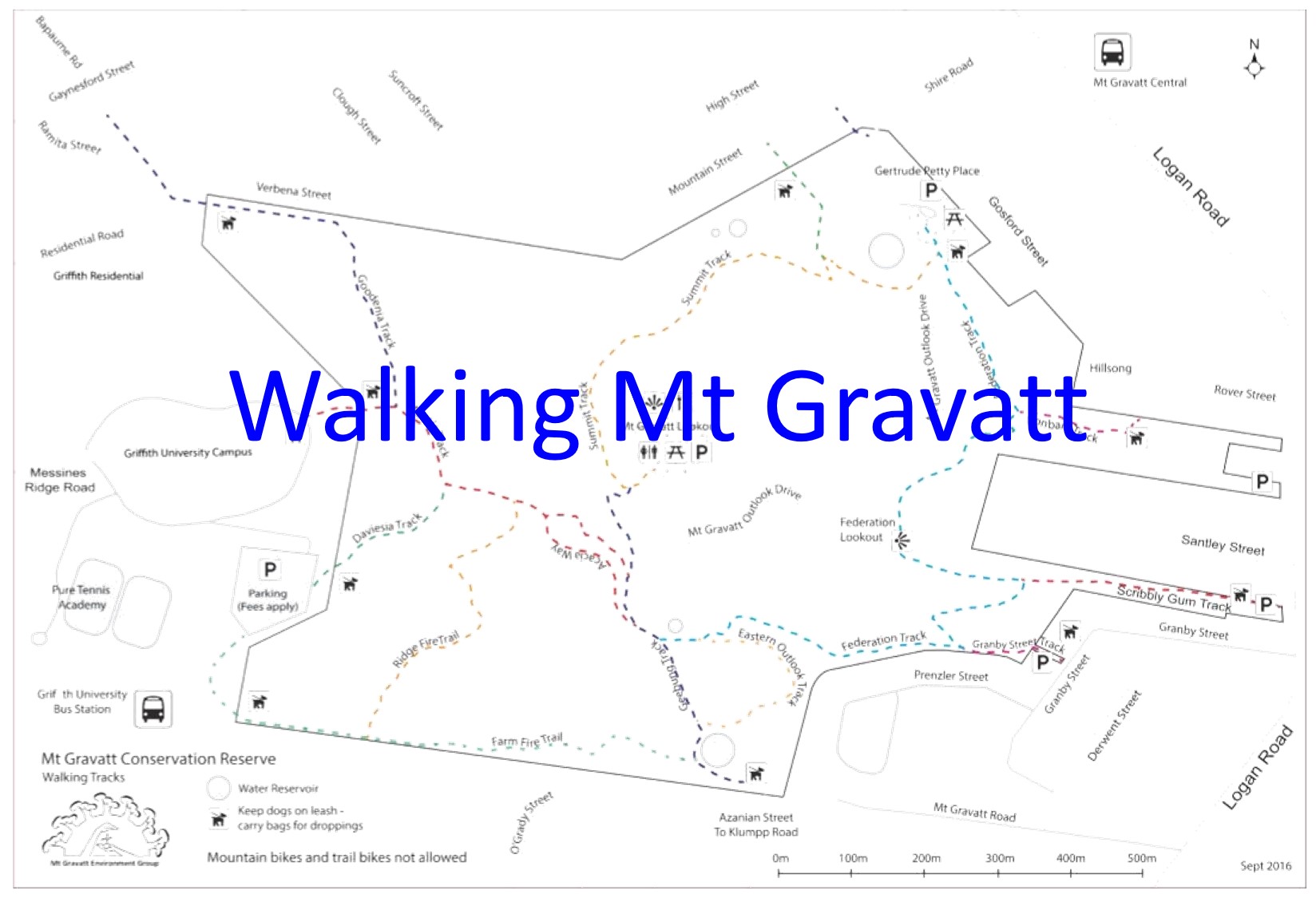
Mt Gravatt Conservation Reserve


Exocarpos cupressiformis - 22 Nov 2014By: Michael Fox

Identification of Native Cherry Exocarpos cupressiformis brings to two hundred and seventy-four plant species identified within Mt Gravatt Conservation Reserve.

 Mt Gravatt Then and Now, Mt Gravatt Historical Society, records that in July 1883 our local Mt Gravatt community convinced the state government to protect the Reserve which had previously been logged as railway timber reserve.

In 2014 it is our turn to protect this unique high diversity habitat. The 274 native plant species our 66 hectare Reserve is equal to 11% of of all species in Great Britain which is 22.6 million hectares.

Protecting and restoring this habitat is a whole of community effort with Griffith Mates joining our Bushcare teams, Mt Gravatt Kindy protecting their part of the habitat and installing nest boxes  so the next generation learns, Mt Gravatt State High School and Fox Gully neighbours supporting efforts to build Pollinator Link wildlife corridors linking the Reserve to other habitats.

Koalas breeding successfully is one measure of our progress.

IMG_7853

Fox Gully Bushcare – 13 Nov 2014

By: Michael Fox

Things can be a little noisy at night in Fox Gully with Kenny, Jenny and her joey as well as what seems to be another young Koala in residence. It is a real pleasure to walk in the bush and see Koalas and even more amazing when you don’t even have to leave home.

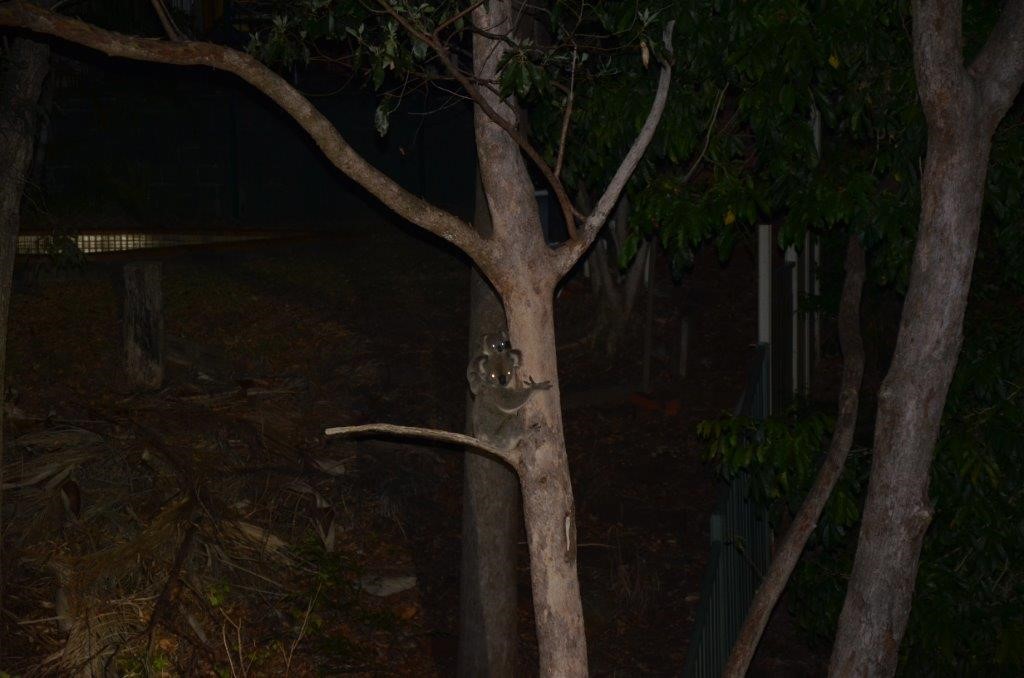
We were sitting outside on dusk yesterday when I noticed this Koala climbing down one of the big Tallowwoods Eucalyptus microcorys.

IMG_7856

Eucalypt branches are amazingly strong


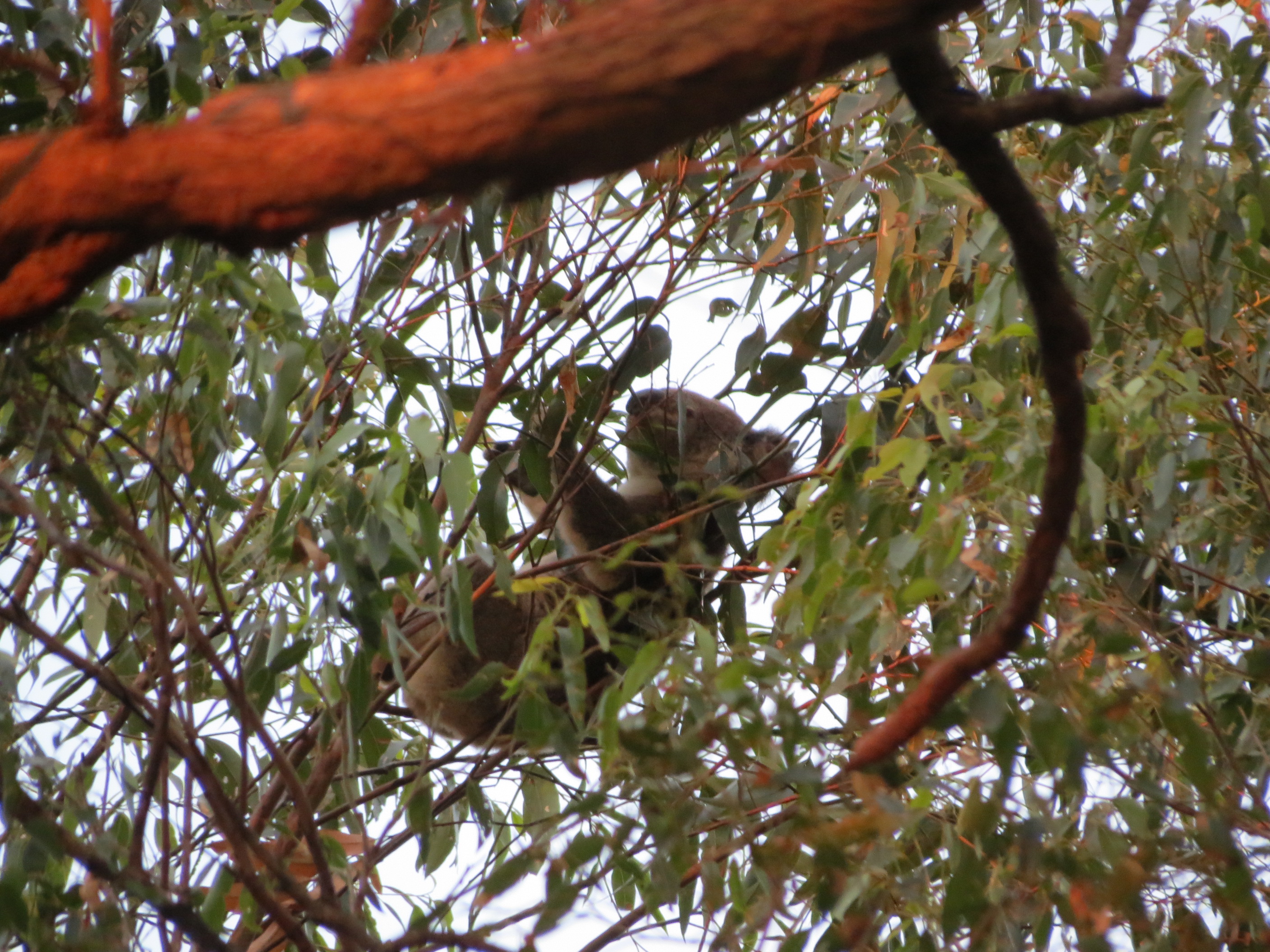
Disappearing on the ground it soon reappeared climbing a another much smaller eucalyptus. The new leaves at the very top were the target. Don’t worry that the branches are very thin and Koalas are solid weights. Settling in among the very top branches sitting on something that would be less that 2cm thick our young visitor started reaching out for dinner of gum leaves.


Koala Mum and joey - Fox Gully - Alan Moore - 9 Nov 2014 - lowres

Koala mum & joey – Photo: Alan Moore

On Sunday we spotted a Koala mum and joey just beside the Farm Fire Trail.


Koala Mum and joey - Fox Gully - Barry Flower - 9 Nov 2014

Jenny and joey – Photo: Barry Flower


Then later that night I received a text message from Miranda whose Arafura Street property forms part of the Fox Gully wildlife corridor. The Koala mum (Jenny) and joey were in their favorite tree and Kenny the father was around making his usual grunting noises.

Koala Mum & Joey

Koala Mum & Joey

By: Michael Fox

Koala Phascolarctos cinereus breeding season is roughly August to February.

For some weeks we have been listening to the fighting, bellowing, screaming at night and this morning a Koala mum and baby was sitting in an Acacia just beside the Farm Fire Trail.

Koala Life Cycle poster – Australian Koala Foundation

.

Koalas are returning to Mt Gravatt Conservation Reserve. An extraordinary example of the resilience of nature if we give it a chance. As recently as August 1927 over 500,000 Queensland Koalas were hunted for their pelts.

“From 1 to 31 August 1927, Queensland held what was to be the last open hunting season on koalas in Australia. David Stead, President of the Wild Life Preservation Society of Australia, warned that 300,000 would be killed. This figure was ridiculed in certain quarters, but as later events would show, even Stead underestimated the carnage. The Annual Report of the Department of Agriculture and Stock for the year1927-28 gives the number of koalas “secured” as being 584,738.”

Dog off - 9 Oct 2014

Pick-up after your dog

.
Hunting is no longer a threat however in our urban environment dogs are a threat to the returning Koalas. A quick bite, even from a small dog, can kill through infection or shock.
.
My dog would only play with it. Even a quick bite is enough to kill a Koala. A Koala’s skin is very pliable, with little fat for protection, and internal organs are easily punctured. Some Koalas may appear to have survived a dog attack with very few visible signs of external trauma but may be suffering from internal injuries and may die later from shock or infection. Stress alone might also be enough to trigger other problems such as disease.
During breeding season it is particularly important to keep dogs on a leash within the Reserve and pick up after your dog.
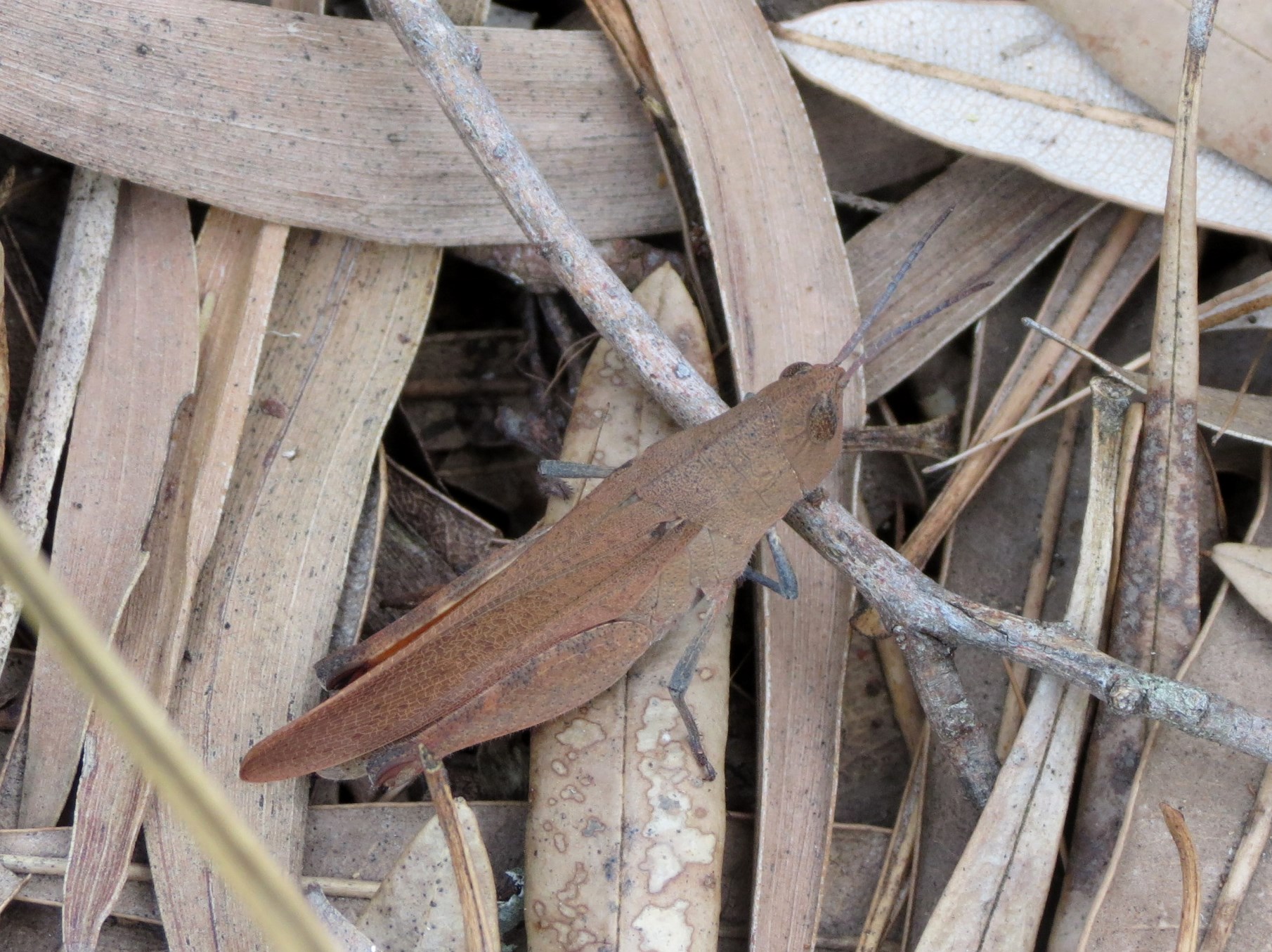
Goniaea opomaloides - 9 Oct 2014

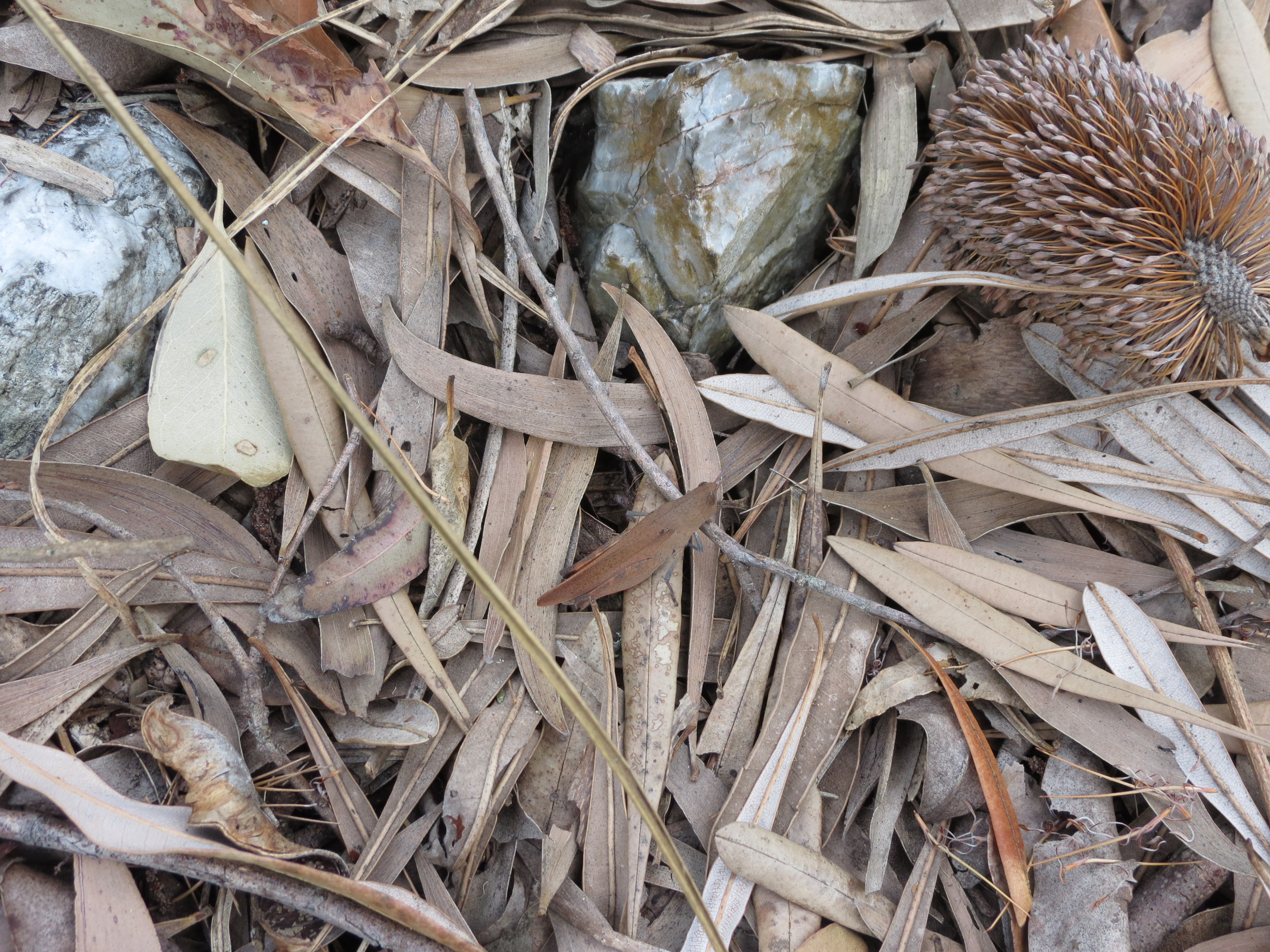
Can you see me?

Goniaea opomaloides - close - 9 Oct 2014 adjusted

Mimetic Gumleaf Grasshopper

By: Michael Fox

Every time I walk in forest I see something new. Something that has probably been in plain sight all the time.

Camouflage is a key survival strategy in the bush and this Mimetic Gumleaf Grasshopper Goniaea opomaloides is one of the best I have seen. Of course I have not seen all the ones with better camouflage.

By: Michael Fox

I'm partied out ... time for a rest.

I’m partied out … time to rest.

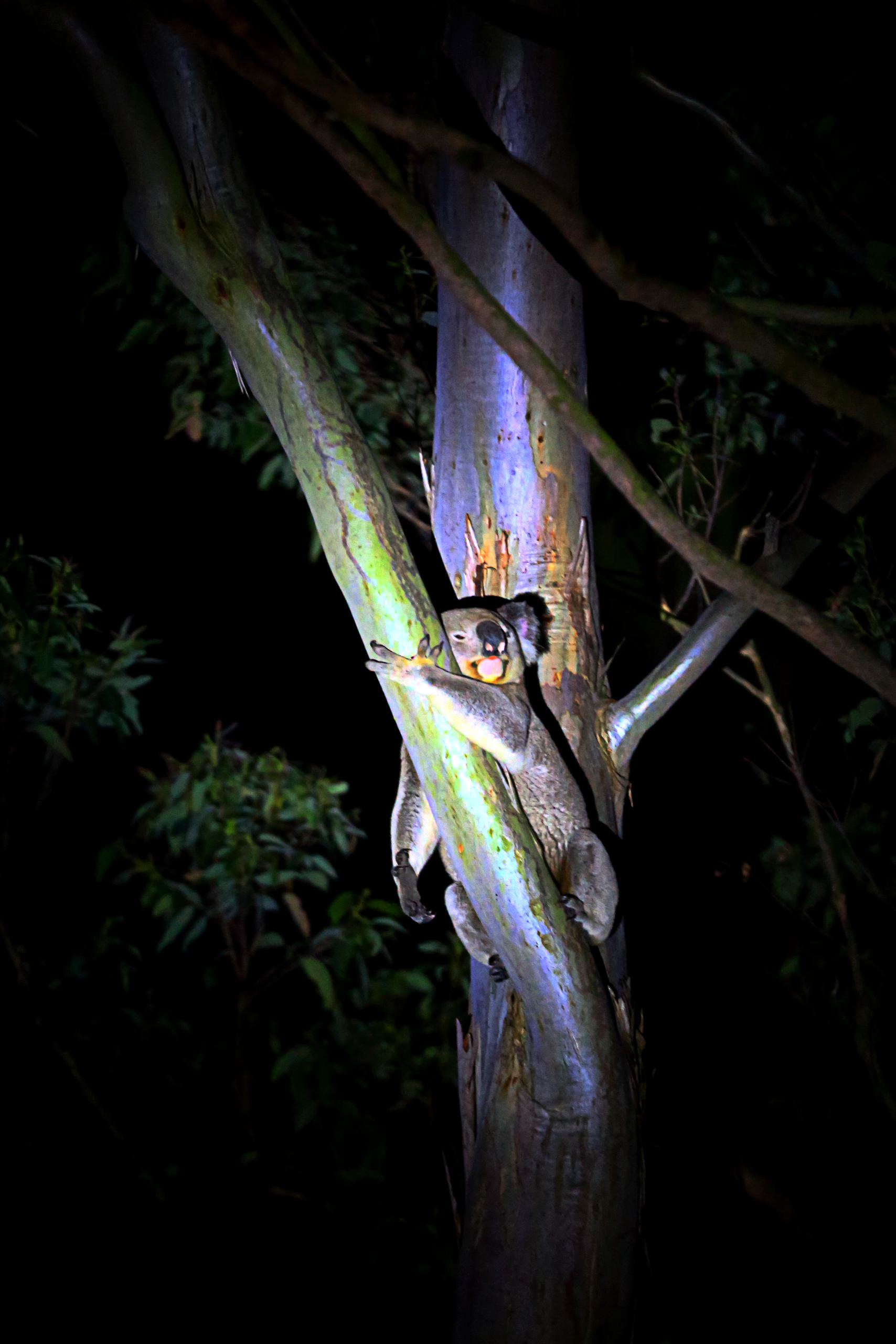
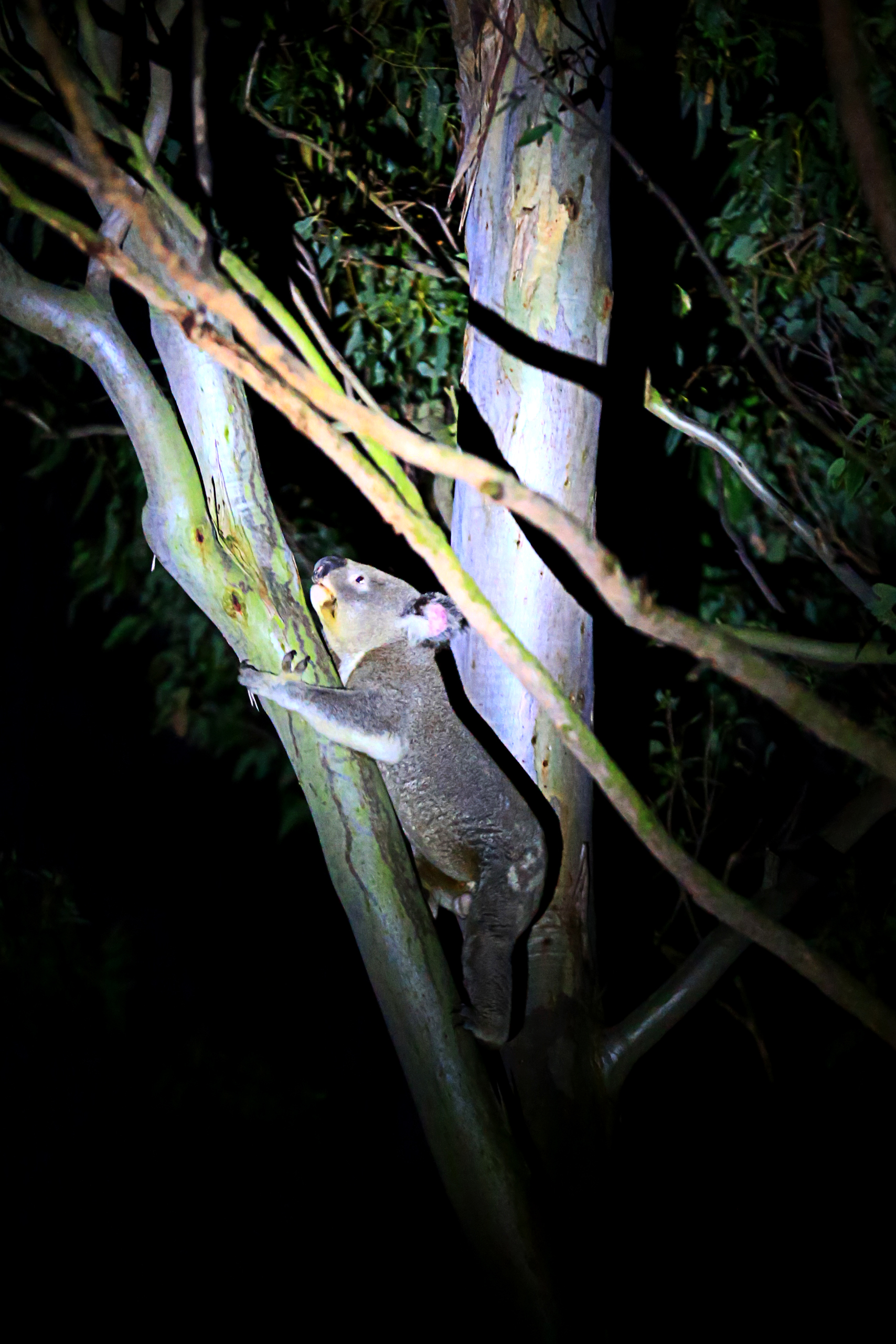
September to March is Koala mating season and Photographer, Alan Moore, reports that on Tuesday night there seemed to be a late night party in the trees behind his house.

Alan identified the sounds of three different Koalas … typically lots grunting, hissing and squealing/screaming.

.

.

.

.

.

.

,

LED LENSER - Alan Moore

LED LENSER P17

.

Photographing Koalas high in the trees is difficult at the best of times. At 11:30pm it is a bit of an art.

Alan uses an LED LENSER P17 torch that can be focused into a power spot light beam. The bright white LED light is ideal for photography even for back-lighting in daytime.

.

Koala3 - male - Alan Moore - 7 Oct 2014

Definitely a male Koala

.

.

.

.

.

“Ok, back to the party. The girls will be missing me.”

If you see a Koala:

  • please take a photo – even a phone camera photo is fine as it provides details of date/time
  • note the location – beside Summit Track or backyard of number/street
  • report to Koala Tracker; or
  • email details and photos to megoutlook@gmail.com

Sick or injured Koalas can be reported to 1300 ANIMAL or Daisy Hill Koala Ambulance

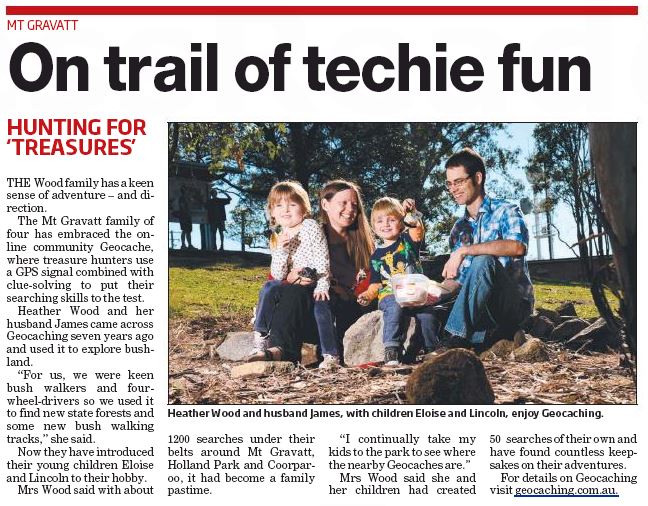
Geocaching family - Southern Star - Sept 2014

Southern Star – 24 September 2014

By: Michael Fox

Marshal Kloske and I met the Wood family at Mt Gravatt Summit the morning they were there to meet the Southern Star photographer and we were there to photograph butterfly mating displays as part of our research for the new interpretative track signs.

IMG_7474

Noisy Miner chicks calling for food

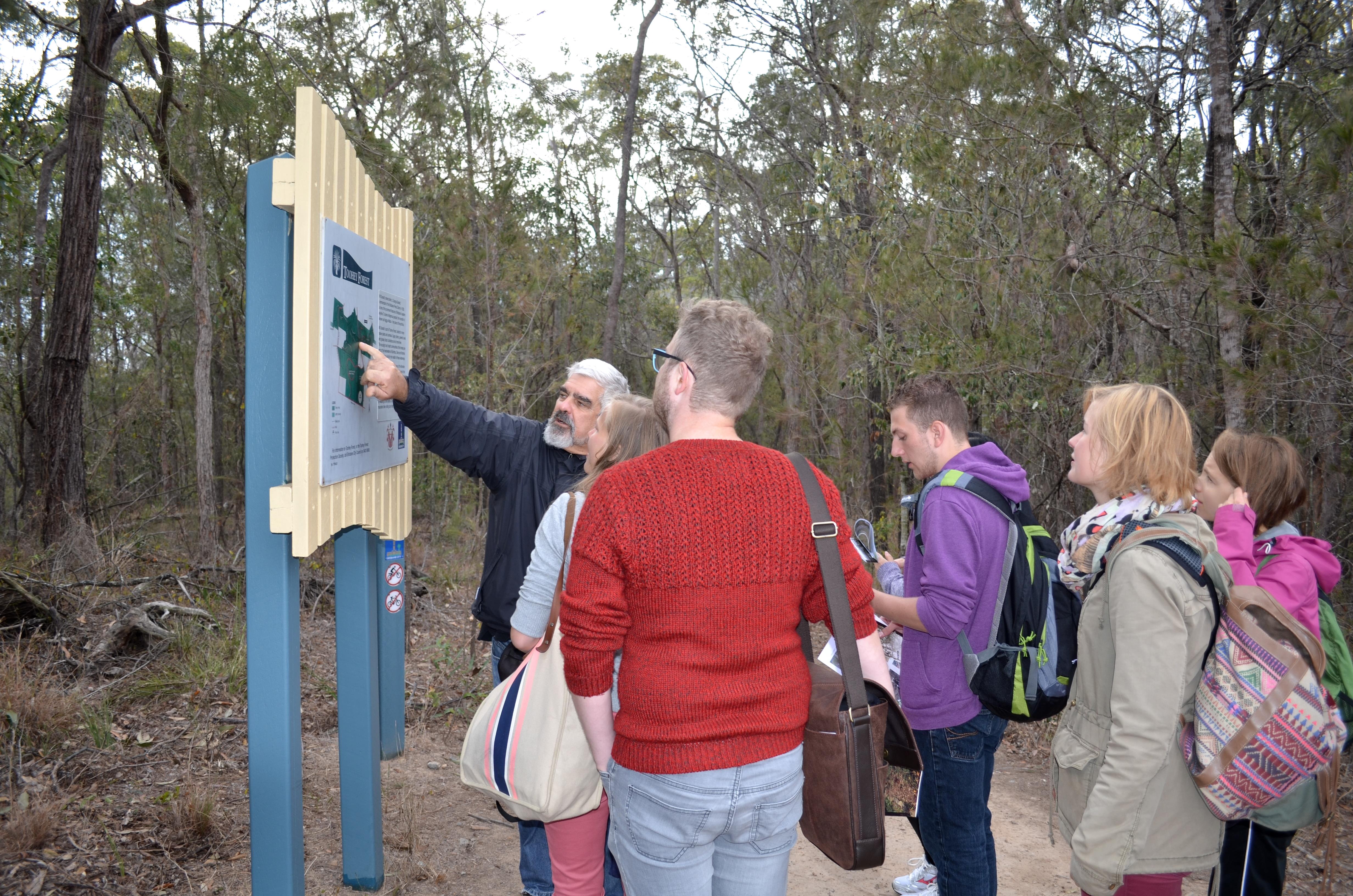
Marshal showed the family the large new sign with maps and information about local history and environment. Like most people the family were surprised to learn about the local “glow-in-the-dark” mushrooms and they were very interesting our research and restoration work.

Nest watching

Nest watching team in action

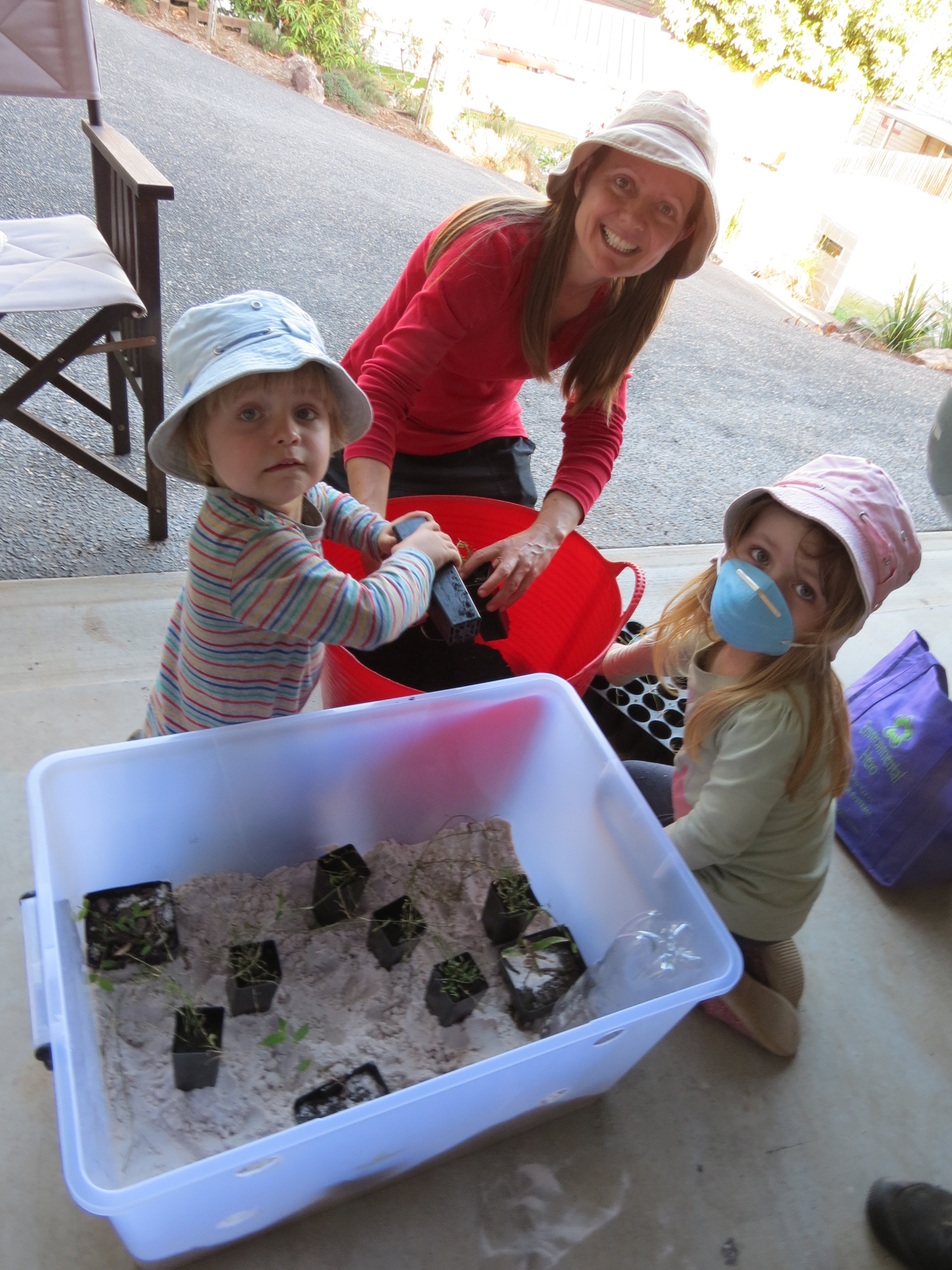
Heather, Eloise and Lincoln then joined Liz, Marshal and I on Wednesday afternoon for our regular Fox Gully Bushcare. Knowing we would be joined by young children, I planned a special afternoon of activities including checking the nest-boxes and making a portable plant nursery to propagate native seedlings for re-vegetation work. When the family arrived we found out that Marshal and I are now officially called “the Bush Men” … definitely an honour.

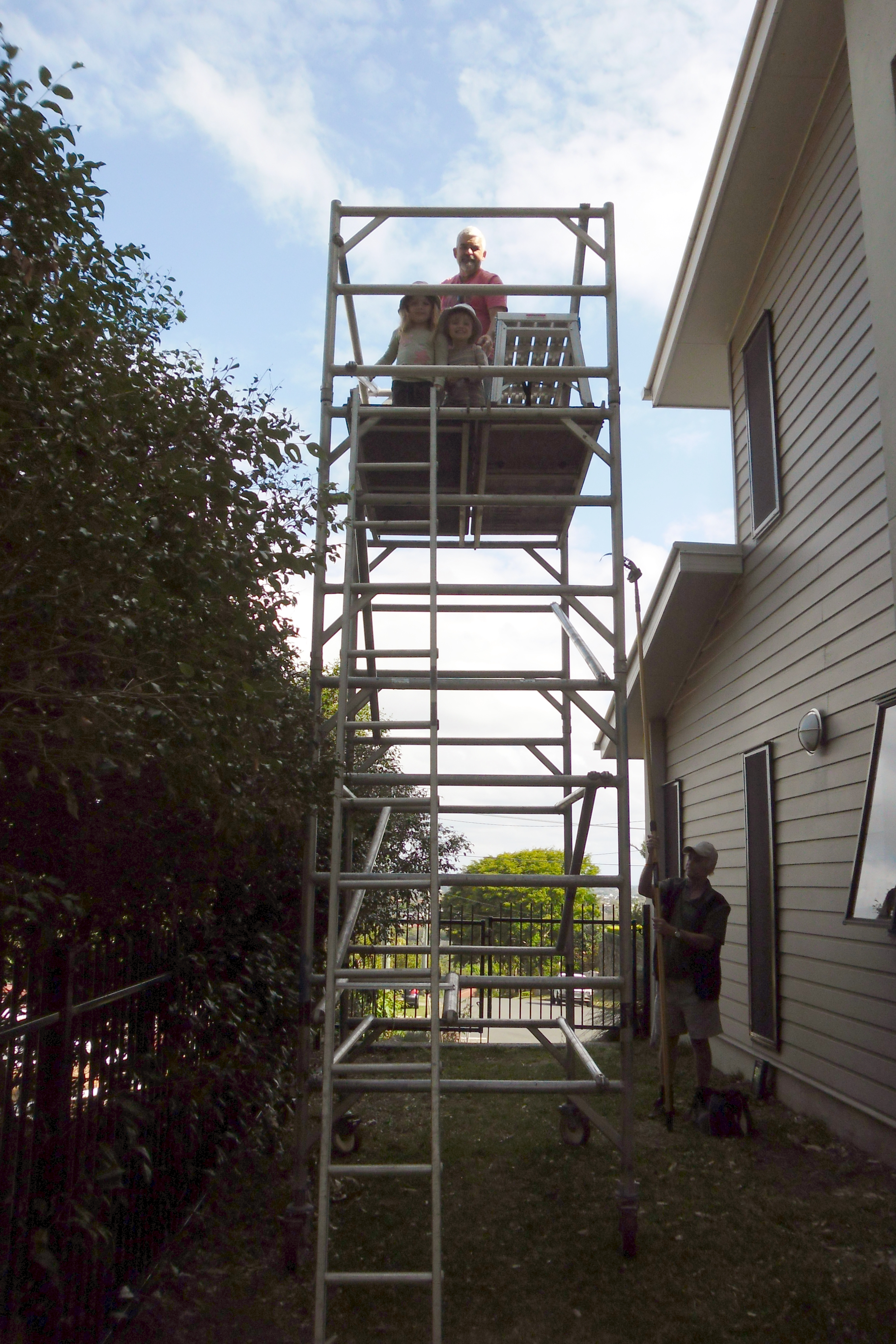
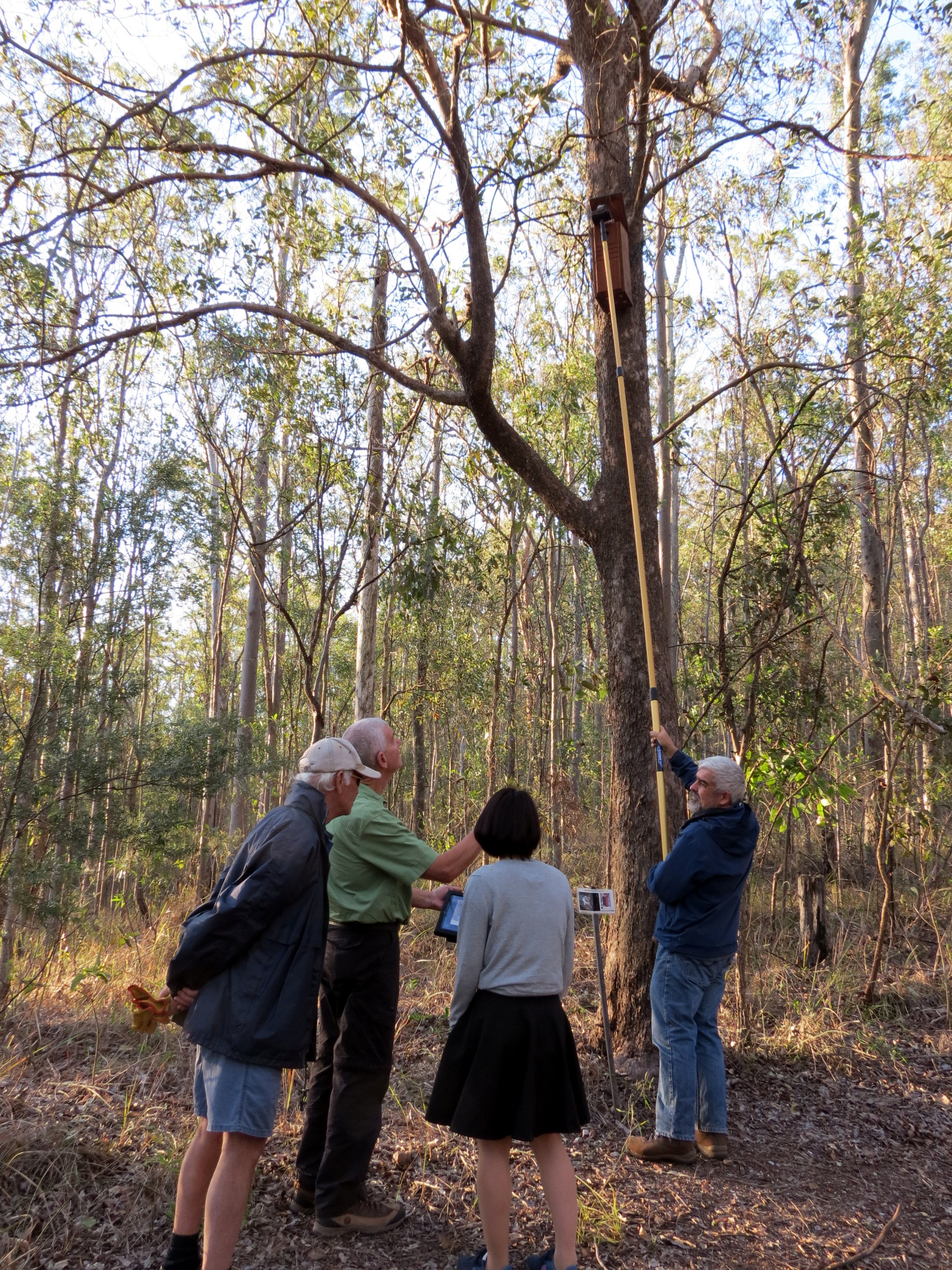
First stop was to check on the Noisy Miner family nesting in the Lillypilly hedge. A mobile scaffold makes an ideal place to look down into the nest. Checking the nest boxes we found two Squirrel Gliders at home in one nest box and three possibly four Gliders in another box.

IMG_7502

Kids and sand – always a success

IMG_7505

Watering in with Seasol

The next job is potting up Creeping Beard or Rainforest Grass Oplismenus aemulus and Love Flower Pseuderanthemum variable. Rainforest Grass is ideal for creating Living Mulch that keeps the weeds down, controls erosion, feeds butterflies and creates a natural fire break with its low fuel load. Love Flower spreads rapidly in the garden and is considered of nuisance by some gardeners. However, this pretty little native herb is host plant for the caterpillars of a number of butterflies including Australian Leafwing Doleschallia bisaltide and Varied Eggfly Hypolimnas bolina. Also Bearded Dragons Pogona barbata like to eat the flowers.

First Eloise and Lincoln helped build a self-watering seedling nursery … sand and water … a recipe forfun.

The idea for this neat seedling nursery came from a Gardening Australia segment on building a simple hothouse. It was a productive and fun afternoon. I will provide an update on the success of the seedling nursery which may become a valuable project for Pollinator Link gardeners.

Pandorea pandorana - close - 24 Sept 2014

Wonga Wonga Vine Pandorea pandorana

By: Michael Fox

Every now and then I come across something really special when doing my bush restoration work. This morning it was coming across this Wonga Wonga Vine Pandorea pandorana covered in hundreds of flowers.

I have been working in the area around this vine for months creating a barrier to stop the spread of Guinea Grass Panicum maximum and remove carpet of huge Asparagus Fern Asparagus aethiopicus. I was in the area only a few days ago and didn’t see any flowers then when I arrived this morning the vine was covered in flowers.

Pandorea pandorana - tree - 24 Sept 2014

Wonga Wonga Vine covering an old stag

I have seen Wonga Wonga Vine in Toohey Forest around the Nathan Campus but never in Mt Gravatt Conservation Reserve. This exciting find means we have not identified two hundred and seventy-two different native plant species found in this special island of bushland surrounded by the suburban matrix of houses and roads. That means in 66 hectares we have 11% of the total native plant diversity in the whole of the 22 million hectares of Great Britain.

Wonga Wonga Vine is a vigorous twining plant with this patch almost covering a huge old stag (dead tree) creating great habitat for the small forest birds to hide and nest.

Being right in the middle of the area I have been clearing of weeds, this vine will have a great opportunity to spread as part of the natural regeneration that is all ready occurring with Love Flower Pseuderanthemum variable,  Pink Tongues Rostellularia adscendens and Scrambling Lilly Geitonoplesium cymosum returning.

.


Nest box monitoring - 3 Sept 2014

(l-r) Marshal, Alan, Saki and myself. Liz is on the camera


By: Michael Fox

Kyoto University student, Saki, joined Marshal, Alan, Saki, Liz and myself at Bushcare on Wednesday to check the nest boxes providing important habitat for hollow dwelling wildlife.

We the GoPro camera to  drop in on the Squirrel Glider Petaurus norfolcensis family were at home in one of the glider boxes.

.

.

.

.

.

Squirrel Glider family

Squirrel Glider Petaurus norfolcensis family

.

A bundle of Gliders.

.

.

.

.

.

.

Brushtail & baby - 3 Sept 2014

Brushtail Possum Trichosurus vulpecula & baby

.

.

Then we visited mother Brushtail and her baby (called a joey like Kangaroos) in the Kookaburra nest box. The Brushtail took over the nest box not long after the installation by Hollow Log Homes. The Kookaburras took over the Boobook Owl box to raise their family.

Acacia Way entry

Acacia Way Track – Mt Gravatt Campus

By: Michael Fox

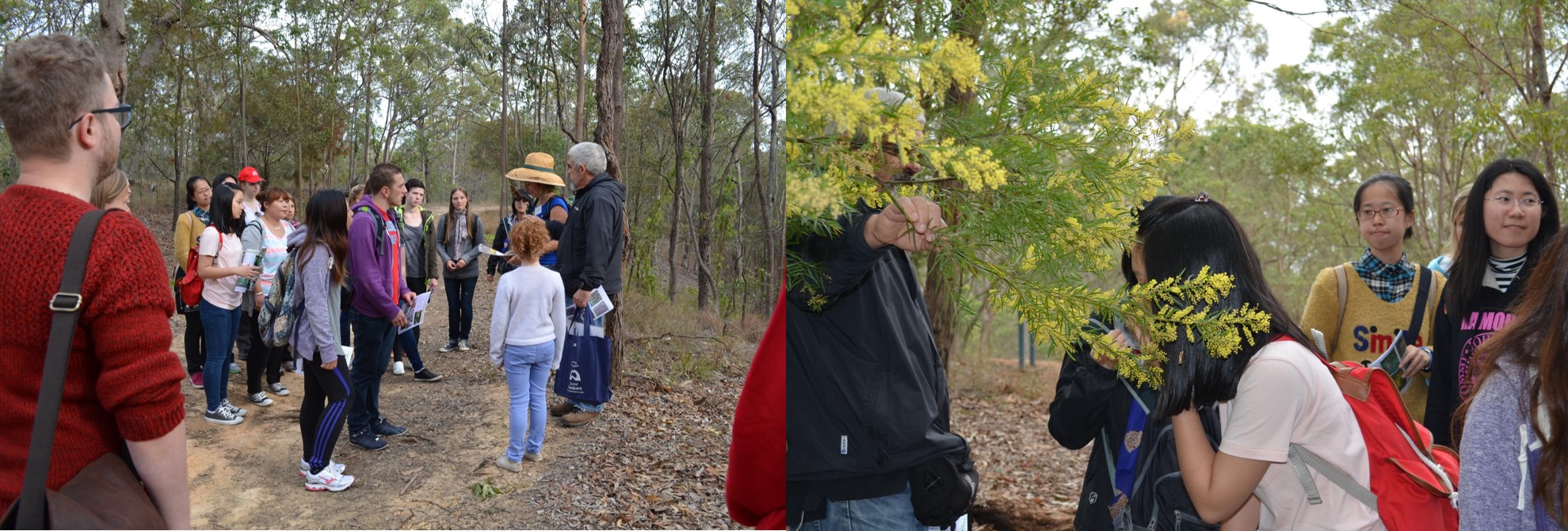
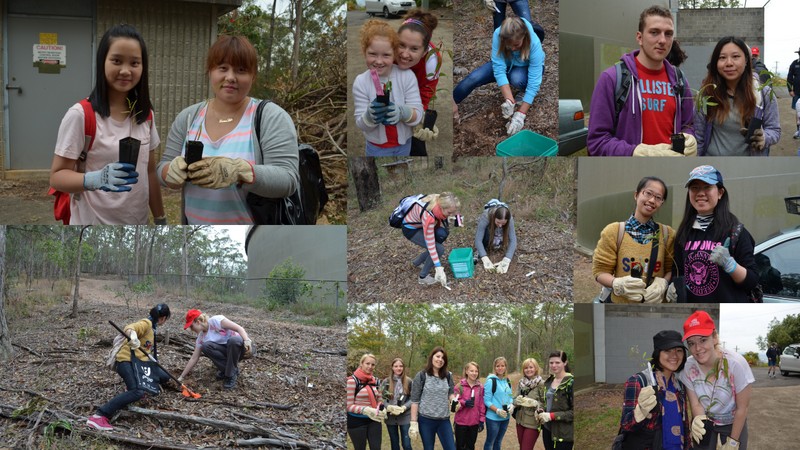
As part of National Tree Day celebrations, Laurie Deacon and I were privileged to lead a guided walk in Mt Gravatt Conservation Reserve for twenty-one Griffith University students and friends. We have partnered with Griffith Mates since 2012 to offer students the opportunity to give back to the tranquil bushland surrounding Griffith University.


Watershed - Bulimba & Norman Creek catchments .......... Acacia

Watershed – Bulimba & Norman Creek ………… Brisbane Fringed Wattle Acacia fimbriata
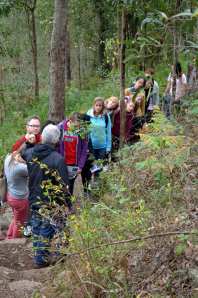
On track

Fishing line and bush food

Rain falling on Mt Gravatt flows into two different river catchments: Norman Creek catchment via Ekibin Creek and Bulimba Creek catchment via Mimosa Creek. Acacia Way follows the ridge line forming the watershed between the catchments.

Winter is flowering time for many of our wattles, like this beautiful fragment delicate Brisbane Fringed Wattle.

Mt Gravatt Conservation Reserve has an amazing species diversity with two hundred and seventy-one native plant species identified, including Settlers Flax Gymnostachys anceps which was used by indigenous people to make fishing lines, and bush food Molucca Raspberry Rubus moluccanus.
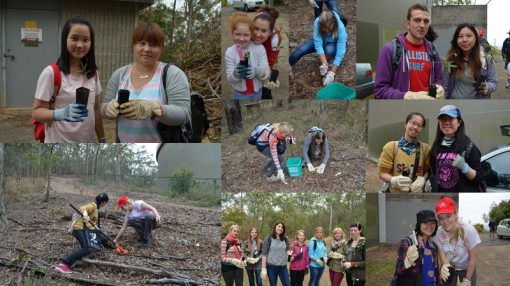
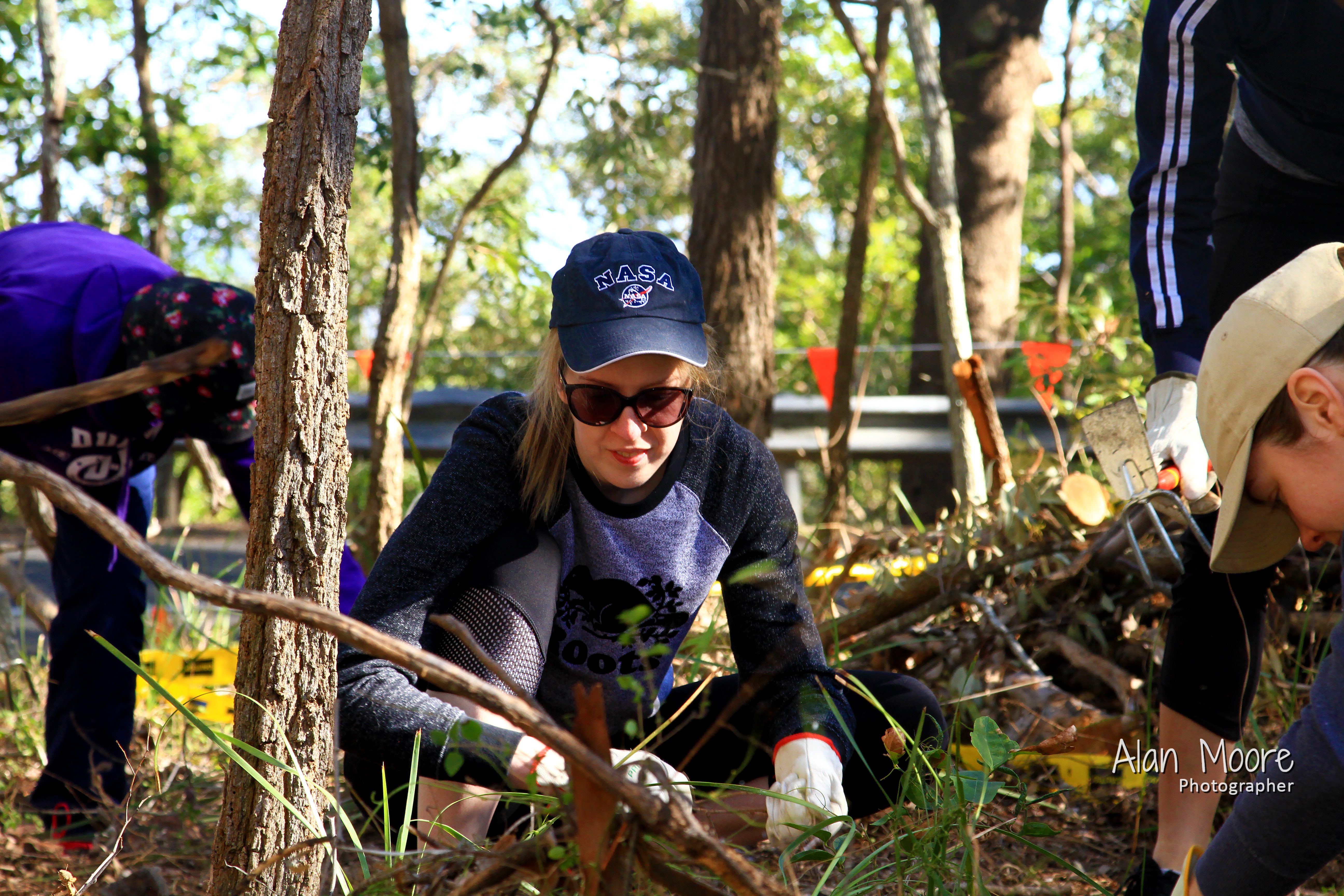
Planting Team

Planting Koala trees

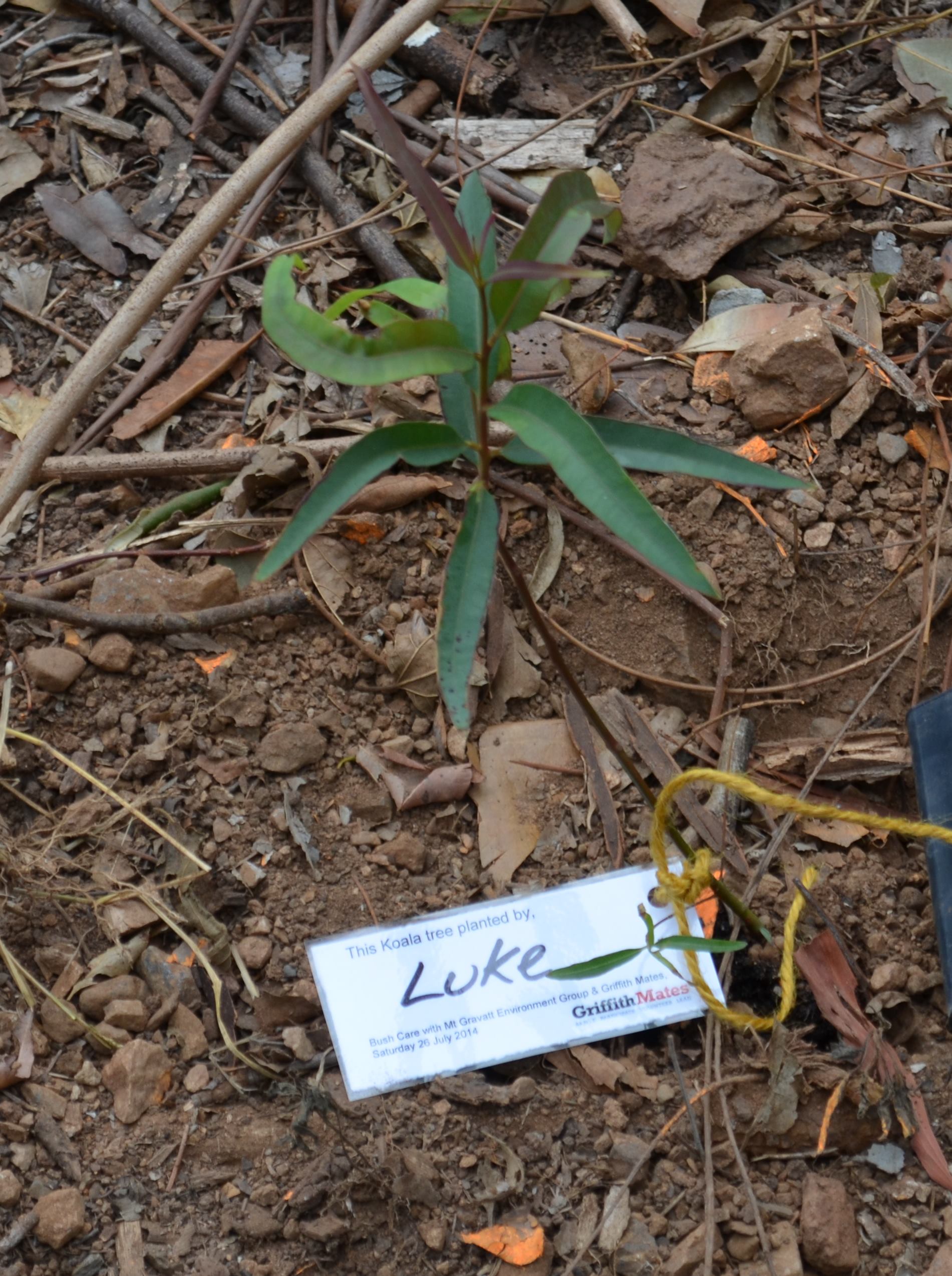
Luke tree

Laminated tags identify each planter


Arriving at Fox Gully Bushcare the team prepare to plant twenty Koala food trees including Small-fruited Grey Gum Eucalyptus propinqua, Scribbly Gum Eucalyptus racemosa and Qld Blue Gum Eucalyptus tereticornis.

.

.

.

.

DSC_1671

Len Kann introducing Australian native bees

.

Len Kann introduced the team to our Australian native bees. Len keeps hives with the small black Stingless Native Bees Trigona carbonaria. He has also developed a deep knowledge of native solitary bees like our local Blue Banded Bees Amegilla cingulata and Teddy Bear Bees Amegilla bombiformis.

.
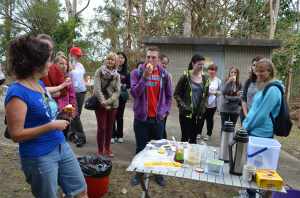
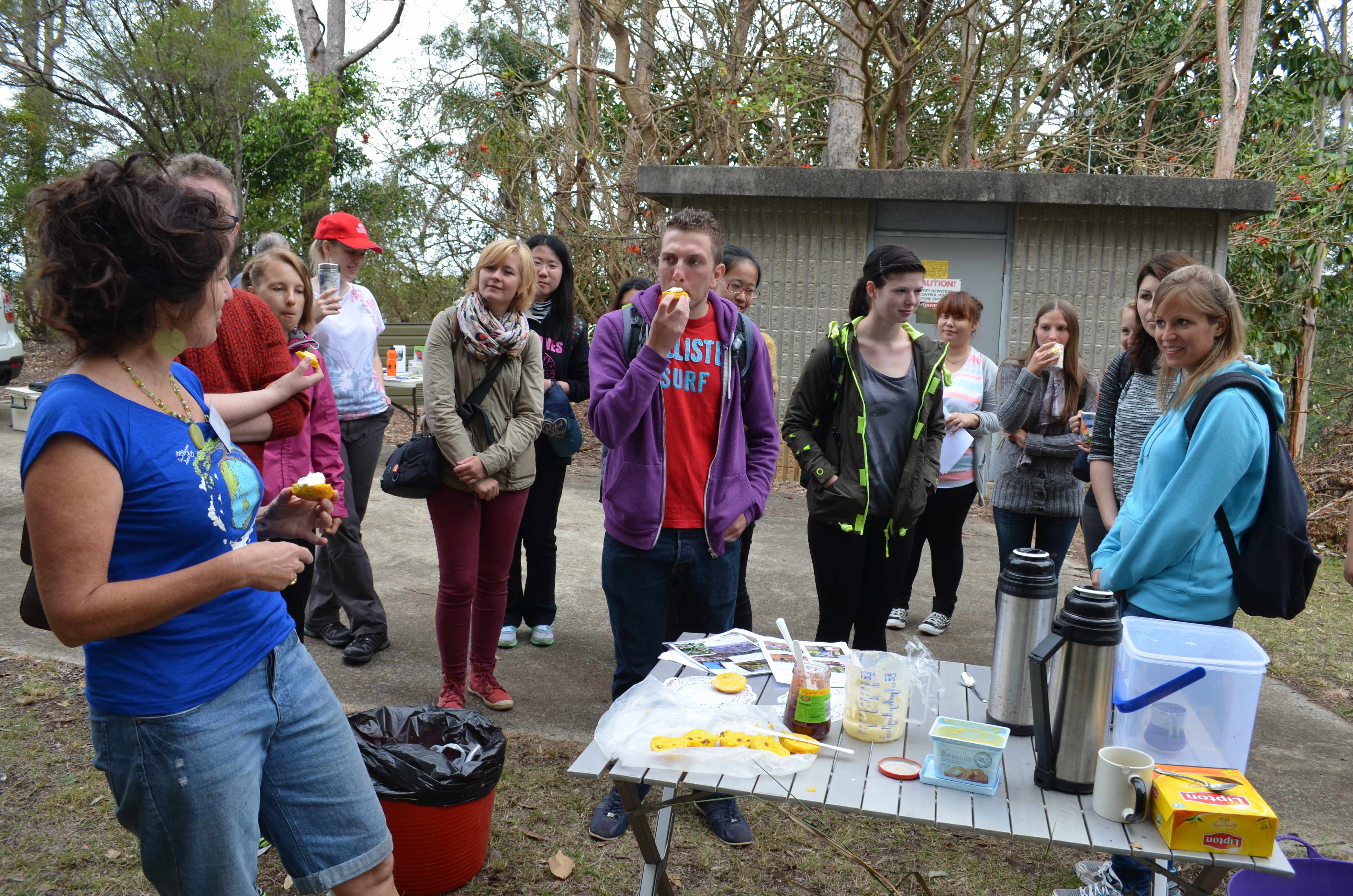
Afternoon tea

Bush food – punkin scones, jam and crea

.

.

With the work done time for the reward. Thanks to Margaret Medland for the delicious home made punkin scones, jam and cream!

.

.
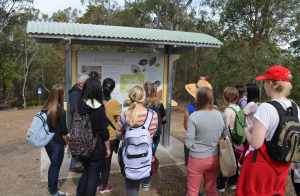
Sign

BCC Habitat Brisbane interpretative sign

.

.

The walk back included a detour to the Summit where we inspected the new interpretative signs installed by BCC Habitat Brisbane team.

Thank you to our Griffith Mates visitors. We look forward to meeting again at a bushcare.


Oxalis chnoodes 4 - 3 July 2014 - Alan Moore

Hairy Oxalis Oxalis chnoodes – photo: Alan Moore

By: Michael Fox
I am currently checking and uploading our research Flora & Fauna of Mt Gravatt Conservation Reserve. Keep checking for updates.

Botanist, Ann Moran, has generously checked our first couple of files and we gained another native species bringing our count to 270 native plant species in the Reserve.

Oxalis chnoodes 1 - 3 July 2014 - Alan Moore

Hairy Oxalis Oxalis chnoodes – photo: Alan Moore

I had photographed and identified what I thought was Creeping Oxalis Oxalis corniculata, a weed. Ann took one look at my photos and said that is the native herb, Hairy Oxalis Oxalis chnoodes.

Hairy Oxalis? When I had a close look I found the leaves of our local plant are very hairy. To be able to show this curious plant to community members we needed some real close-up pics … time to call in Alan Moore our local photography guru.


« Previous PageNext Page »