Our mountain community is hurting after two Koala Mums and Joeys were hit on Mt Gravatt Outlook Drive in the last week.
The first was found early morning having been hit at night. Koala Mum, Angela, didn’t make it, she died leaving Joey Monty an orphan in care.
.
A couple of days later a second Mum, Myra, was hit on the road and taken to the Koala Hospital were she was discovered to be lactating.
Click on image to watch rescue
.
.
.
.
.
.
.
Alerted, my neighbours, Miranda and Scott started the search for Myra’s joey. No success. so my neighbours returned to the search at night. A glimpse of eye shine alerted Miranda and the joey was located high in a tree beside the road.
Proud rescuers … wide smiles.
.
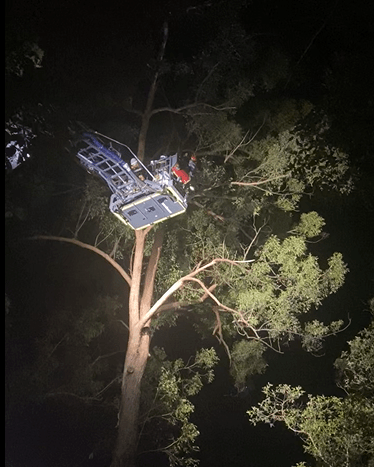
Time to call in the rescue at height experts. A real community effort. High lift fire brigade bucket trucks arrived: Luna from Roma Street and Juliette from Wishart Station.
.
.
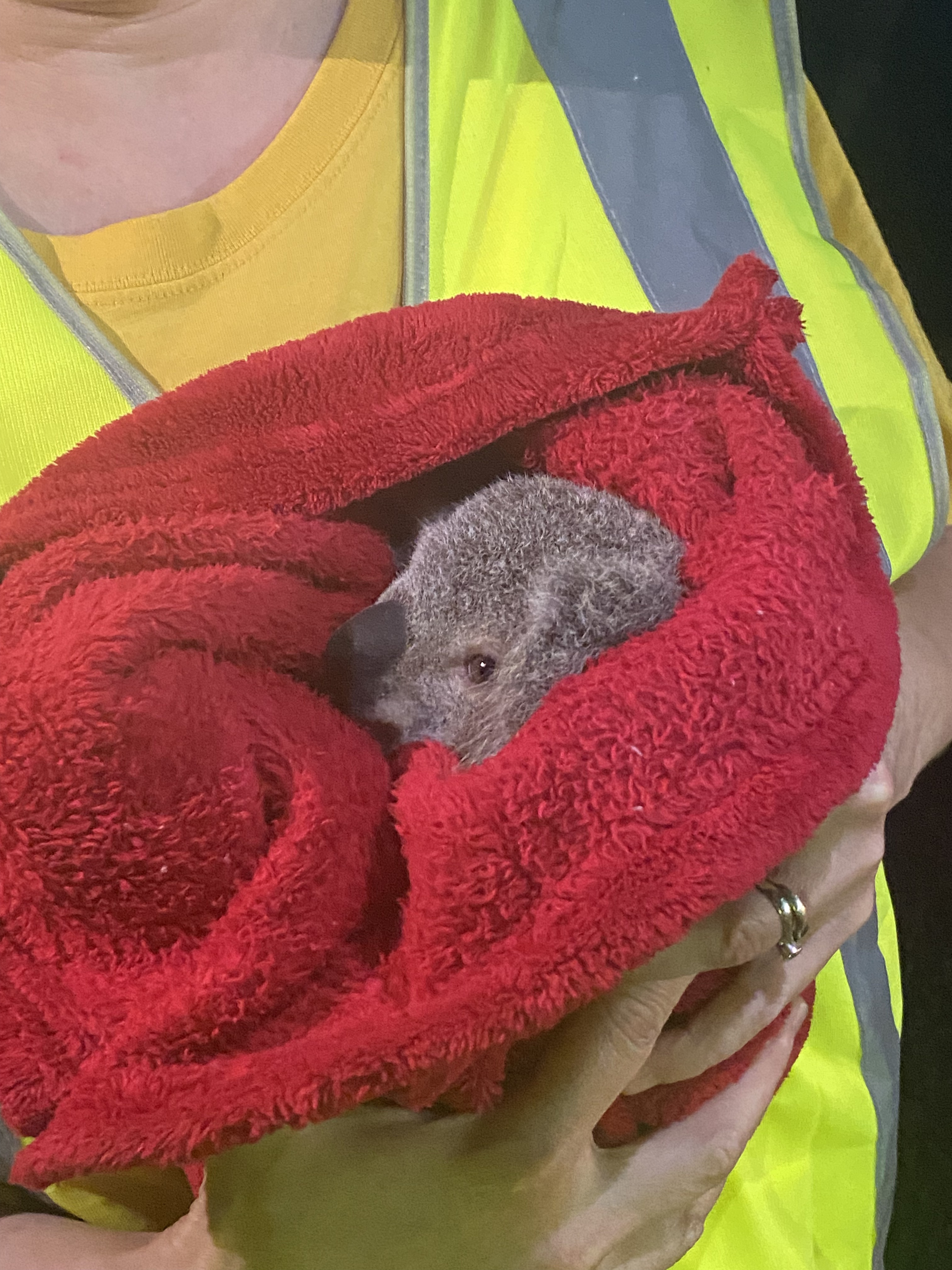
Yasha wrapped up safe.
.
.
.
.
.
.
.
.
.
.
.
..
.
.
.
.
.
Yasha was wrapped up warm to help manage shock and taken to hospital.
The story has a happy ending … Yasha was reunited with Mum the next morning.
.
.
.
.
.
Unfortunately even though the speed limit on the mountain has been reduced to 40 kph there still too many incidents with koalas being hit by speeding cars and increasing reports of dangerous hooning on the road at night.
Community members are concerned that the gate is not being closed at night. Shutting the gate at night not only dramatically reduced hooning it also had a dramatic impact on the volume of rubbish collected at Clean Up Australia:
I am getting reports that the gate is not being closed at night at all which would explain the speeding cars at night and tragedies like the death of Monty’s Mum.
My understanding is that closing the gate is manged by contract staff. So does this mean we are not receiving the service Council pays for on our behalf? Local community member Vicky has committed to regularly monitoring the gate closure times.
You can help by calling the Council Call Centre on 07 3403 8888 to lodge a request for the gate to be closed at night.
A beautiful sunny morning and in the sky two beautiful Square-tailed Kites Lophoictinia isura soaring wings spread wide as they do lazy loops above the trees.
The kites have returned for the forth year to their nest in the Spotted Gum and now have two chicks poking their heads up. The kites are top level predator feeding on small birds, insects and lizards so to have a pair breeding in the forest provides some evidence of a healthy habitat providing sufficient food.
Koala Mum and Joey
Tuesday Bushcare is always an adventure in spotting flora and fauna. Spring breeding season however is special.
Koala Spotter Steph found a Mum and Joey in a tree above where we were working.
.
.
Bearded Dragon
.
.
.
.
We also spotted a handsome Beaded Dragon Pogona barbata hiding in plain sight. Good camouflage.
Spring means the weed Mickey Mouse Plant Ochna serrulatais covered in seed: one bush completely filled a weed tub. Recent rain also softened to ground so we were able to use the TreePopper to remove the weed with minimal disturbance to the soil and no use of herbicide.
.
.
.
.
.
.
.
Corky Passion Vine – variety of leaf shapes
Most of our work at this season is removing Corky Passion Vine Passiflora suberosa which has spread aggressively in areas where we have cleared other weeds. Corky Passion Vine can have very different leaf shapes so we are careful to follow the vines to the base so we can check for the corky stem and remove the roots to stop re shooting.
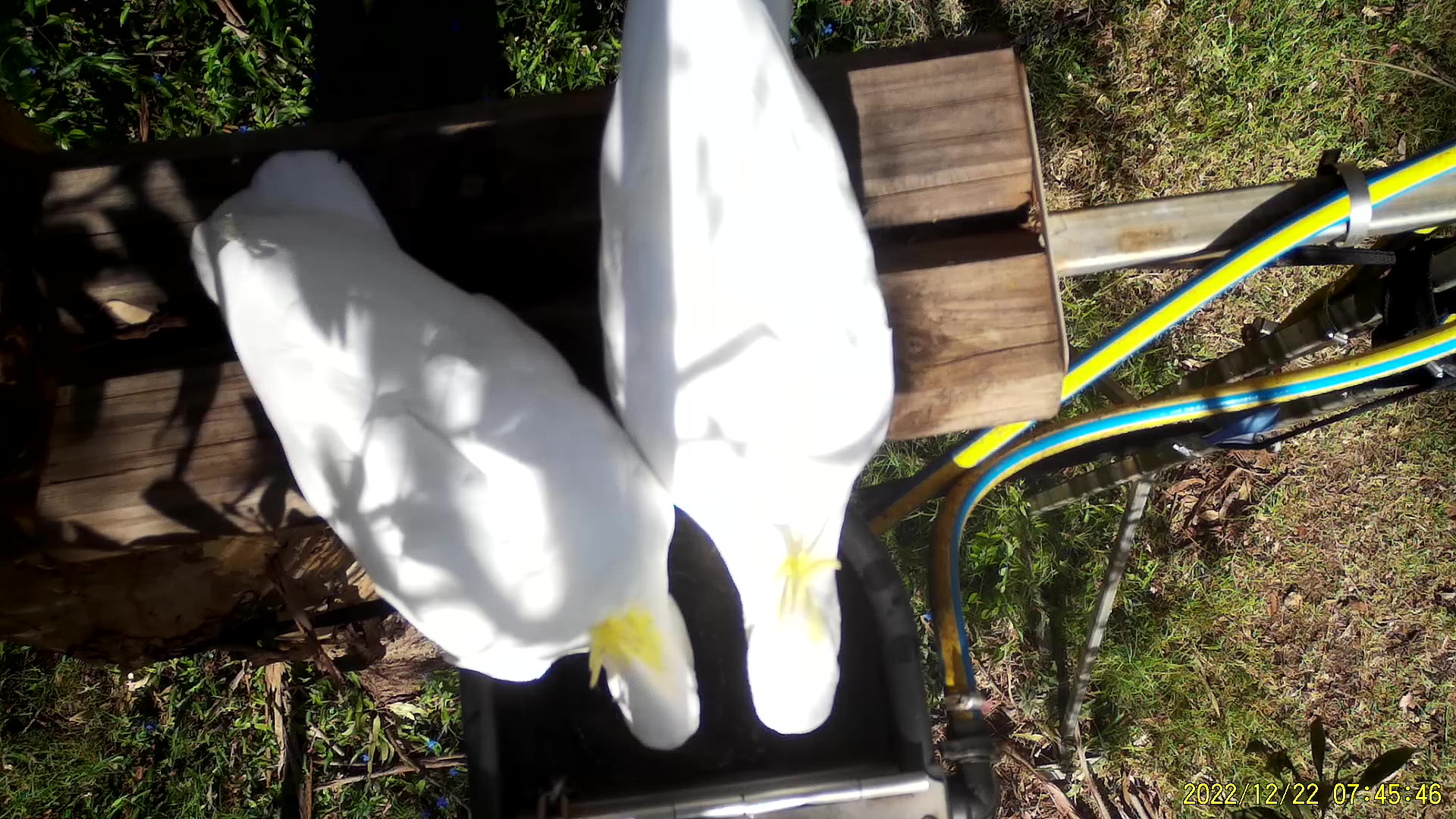
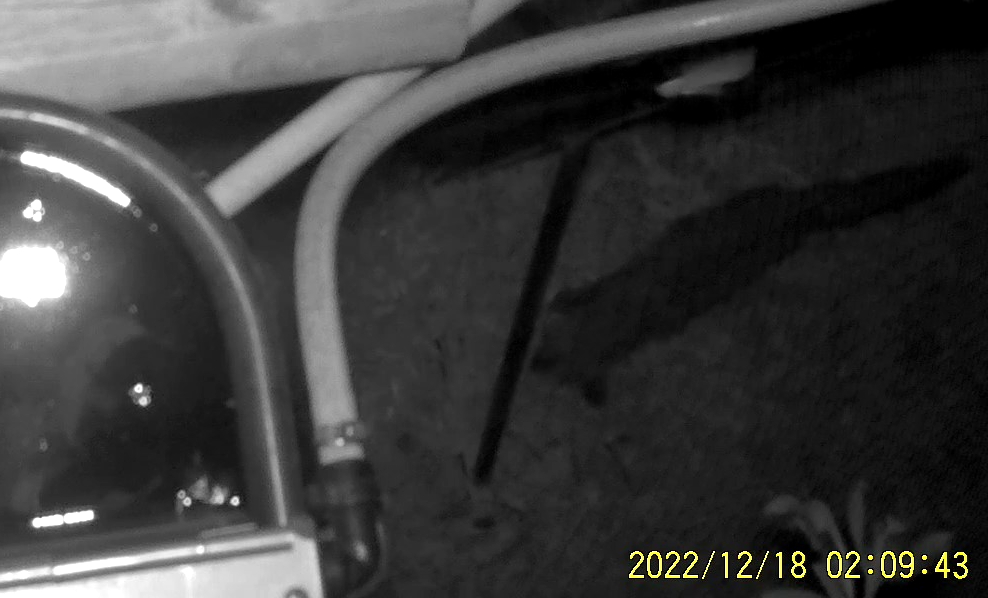
Wildlife cameras monitoring the two Tree Troff Koala Drinkers are showing a diversity of animals visiting for water.
Birds in particular are frequent visitors showing the importance of providing water for our urban wildlife. Create and register a Pollinator Link garden providing Water, Food and Shelter for Birds, Butterflies and Bees.
SPROMISESPROMISERainbow Lorikeets, Sulphur-crested Cockatoos and Australian Magpies
Koalas Phascolarctos cinereus and Common Brushtail Possums Trichosurus vulpecula are also using the water source.
.
.
.
.
.
.
The cameras also picked up some unwelcome visitors with two European Red Fox Vulpes vulpes cubs playing below the Tree Troff at 2am.
You can report feral animals like foxes or cats on the BCC website.
The team from B4C came today to refill our Tree Troff Koala drinkers so it was very exciting to find a Koala Mum and Joey in sitting on a branch above the drinker on Acacia Way.
Brisbane’s natural areas are a precious resource for both nature and people.
Please provide Council with feedback on the draft Brisbane Off-Road Cycling Strategy. The current strategy is putting large areas of our limited urban bushland at risk.
The Council’s Brisbane Off-Road Cycling Strategy which focuses on opening up bushland for mountain biking, may be a threat to special places like Mt Gravatt Conservation Reserve.
In the past a small number of illegal mountain bikers ignoring Council signs have caused huge damage to the sensitive bushland our community members have spent thousands of hours restoring: 176 volunteers contributed 606 hours in the 2019/20 financial year.
Erosion caused by illegal mountain biking – Jan 2021
.
While less of problem in 2021, illegal mountain bikers are still making new tracks destroying plants and causing erosion. Even riders on the fire roads can’t resist the temptation to go “off-road”. Riders using the Acacia Way maintenance track have caused erosion that is undermining a mature eucalypt tree.
.
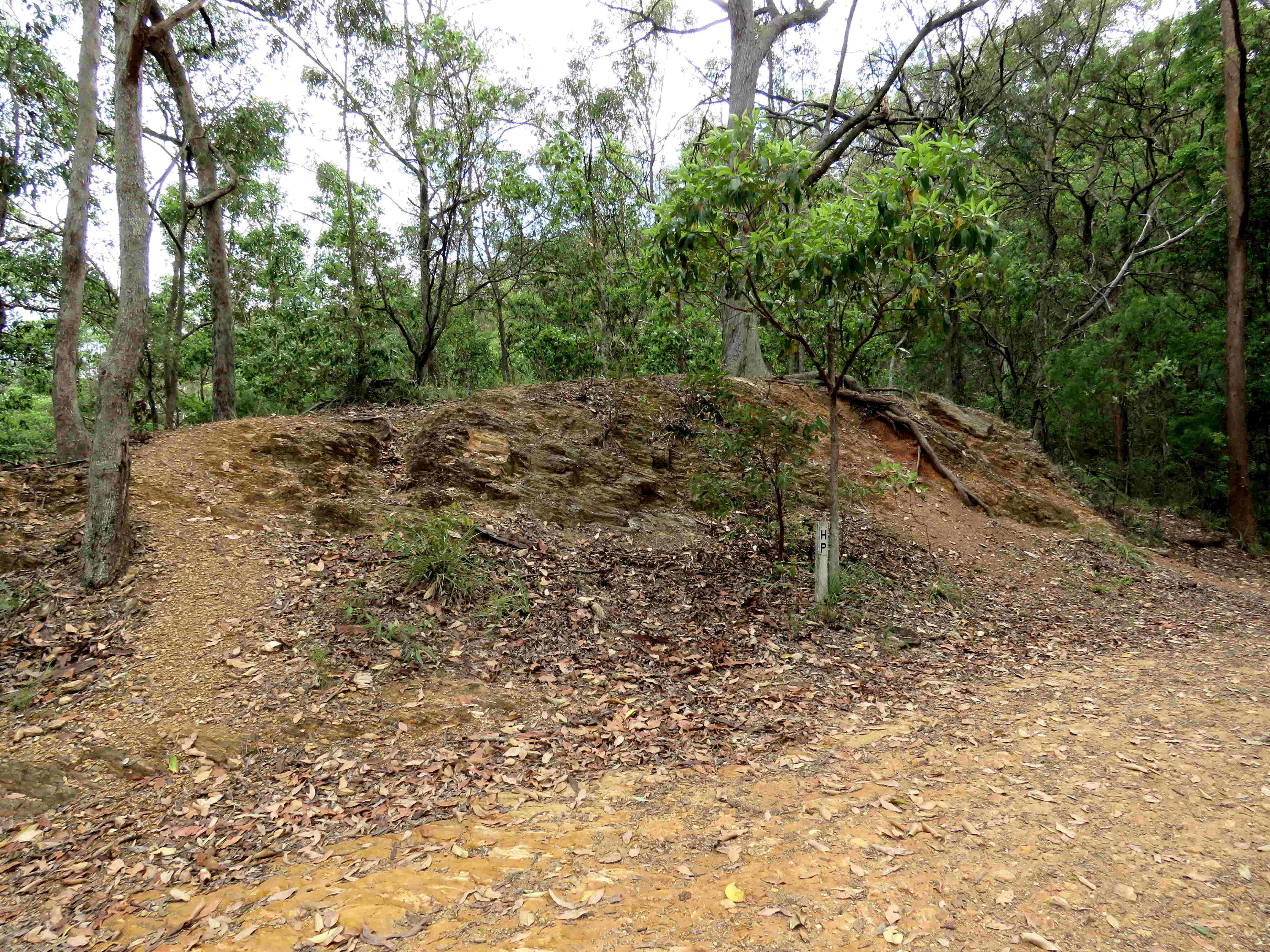
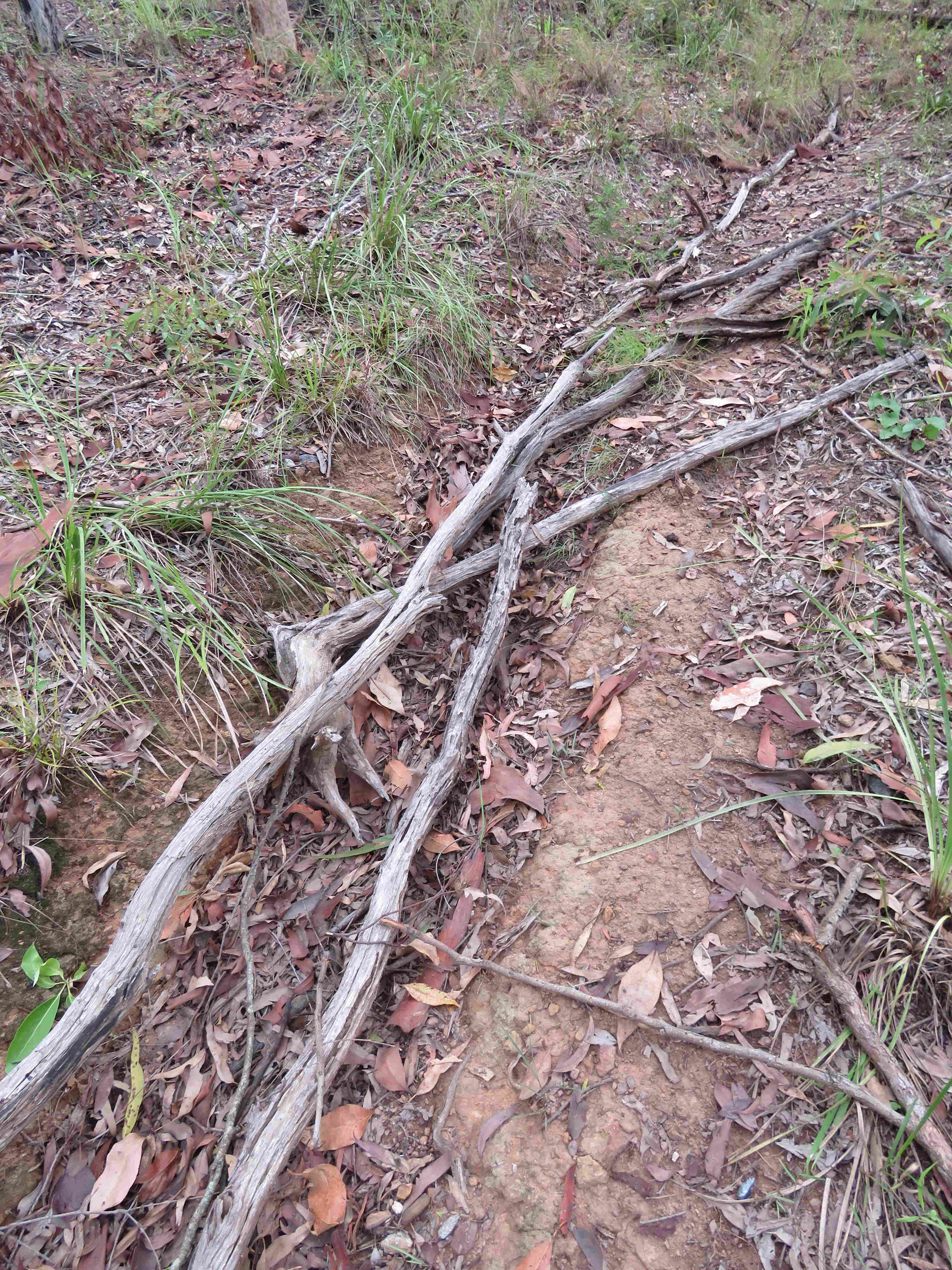
Branches and mulch used to close tracks
.
Illegal tracks dramatically increase erosion on steep slopes as water is channelled down hill. Closing down and repairing illegal tracks is a labour intensive and costly exercise: closing one track has required several metres of mulch, hundreds of branches recovered from the bush and laid on the track to stop bikes and start restoring the ground by collecting silt before it is washed downhill.
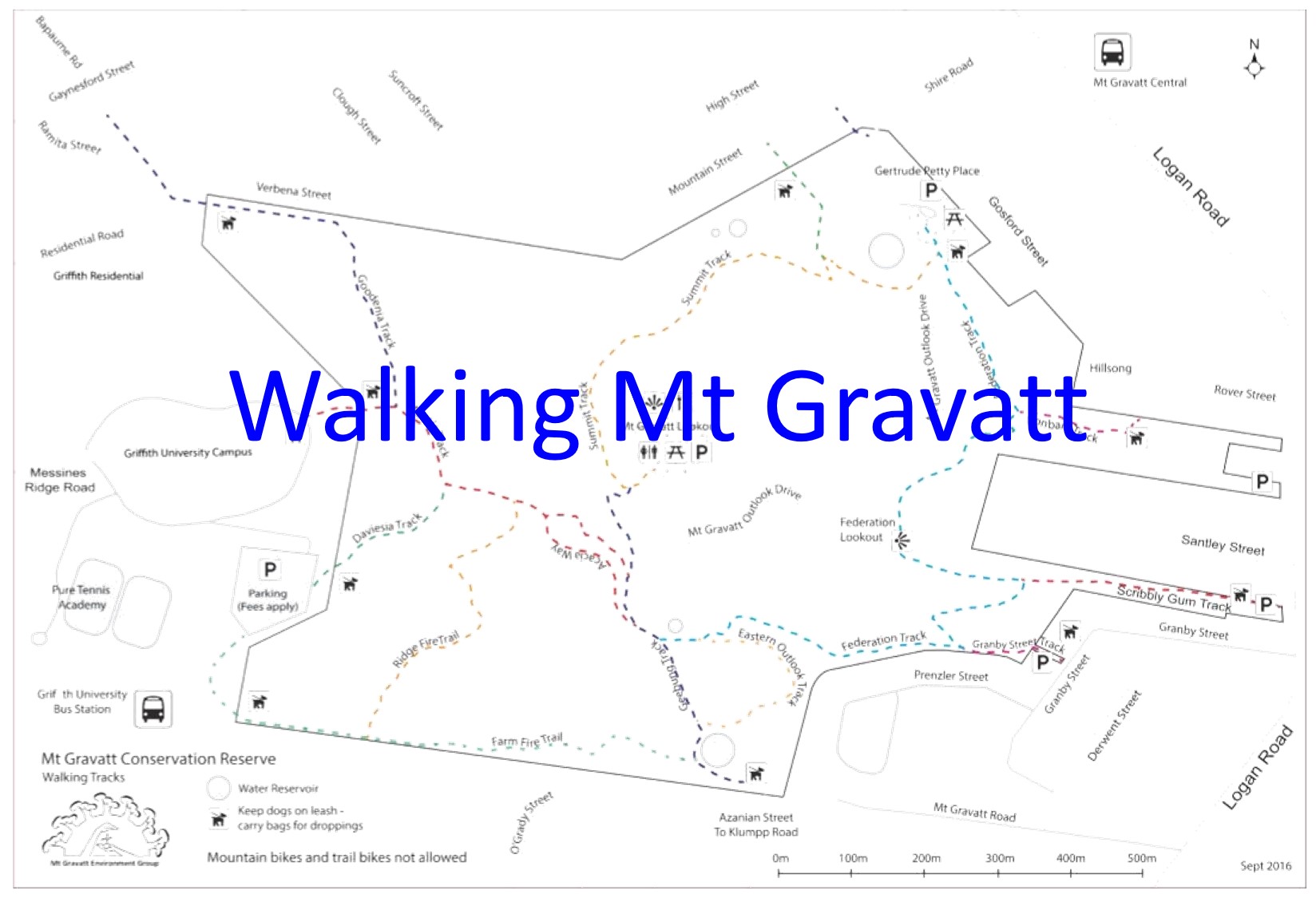
Even with these efforts by Council staff are not enough. I received a report this morning of orange barrier fences being removed and a father and son riding though the bush from the Summit to Gertrude Petty Place. Repair work like this uses scarce Council funds that could be used for improving facilities for all visitors.
National Tree Day 2018
As a BCC ratepayer and volunteer Habitat Brisbane Bushcare leader I am very concerned that a small percentage of our community are lobbying for a “free-ride” with access our bushland reserves without accepting the cost of that access. (A free-rider problem is a type of market failure that occurs when those who benefit from resources, public goods (such as public roads or hospitals), or services of a communal nature do not pay for them.)
.
National Tree Day 2015
Habitat Brisbane Bushcare volunteer contribution is typically $4 for every $1 invested by Council: provision of plants, tools and training. Bushcare is a very low risk activity which contributes to the health of our urban bushland while reducing maintenance costs for Council. On the other hand, off-road cycling is a relatively high risk recreational activity that damages bushland, increases maintenance costs and dramatically increases the potential for legal action against Council.
This article focuses on Mt Gravatt Conservation Reserve because I have deep knowledge of this area with fourteen years actively restoring the Reserve, researching the flora and fauna and engaging an increasing number of community members in restoration or observing the dramatic increase community members walking in the bush. While I do not have the same knowledge of other Brisbane bushland reserves they will have same sensitive habitat and I can make general observations about the potential impact of off-road cycling on other reserves.
Signage: The current track no bikes signage is very small, very limited and ineffective for the target audience: typically young males riding fast and totally focused on riding not signs. Tourists are one group that definitely better signage: one rider I stopped going down the walking track from the Summit was a visitor from South America. Others simply claim they have not seen signs. Signs need to be larger and spread along the tracks so everyone is well aware of the rules: no excuses.
Vandalised no-bike sign
Fines with no Enforcement = no behaviour change: While off-ride cycling is illegal in the Reserve and subject to $500 fines enforcement appears to be non-existent. As I understand the situation the very Council Officers, Rangers / Habitat Brisbane Officers, who spend time on the ground in the Reserves are not allowed to even issue fines, let alone that stronger action.
The draft Brisbane Off-Road Cycling Strategy (BORCS) “seeks to reduce unauthorised [illegal] track construction” (page 6). It is hard to understand the logic of a strategy that manages illegal behaviour by rewarding the bad behaviour.
Most visitors to the Reserve are responsible however there are a small number that ignore the rules putting walkers at risk, damaging sensitive wildlife habitat, increasing maintenance costs, even vandalising the limited signage that exists.
The Off-Road Cycling Strategy suggests that “Increasing the authorised recreational use of natural areas will also increase casual surveillance which helps to deter illegal activity.” (BORCS page 11) While Cialdini’s Social proof is a valuable tool for influencing and changing behaviour, our experience using this to manage behaviour Mt Gravatt Conservation Reserve has had mixed success. The very demographic we are dealing with: young males, means that our Bushcarers: typically retired and female, have to be very careful because violent verbal abuse is common. If this is an ongoing problem in a popular and busy Reserve like Mt Gravatt what control will there be in other reserves that do not have active Bushcare groups.
User Pays: Any football club or other community group that wants to uses Council land like parks and reserves are responsible for their own costs: lease fees, public liability insurance and property maintenance. While many and possibly most off-road cyclists are not part of a formal group that could provide public liability insurance and pay lease fees, they are still increasing costs and litigation risk. If the Council accepts this as a cost of providing valuable recreational activities this must not come out of limited environment budgets that are critical to habitat protection and restoration: “Council is continuing to invest in the protection and restoration of our city’s biodiversity, and we are on track to achieve the target of having 40% of Brisbane as natural habitat by 2031.” (BORCS page 8)
As a ratepayer I have contributed to Bushland Acquisition Program. I am concerned that land purchased to protect our urban bushland may now be “given” to a very small percentage of community members for their personal use. “More than 4300 hectares of land have been purchased and protected through Council’s Bushland Acquisition Program since 1990. The preservation and management of biodiversity within Brisbane’s natural areas is of vital importance.” (BORCS page 8)
Mt Gravatt Conservation Reserve has no permanent water and no safe access to water or breeding opportunities in surrounding bushland.
The Koala Drinker research is providing vital baseline information on the potential of providing water for wildlife to maintain and strengthen populations of vulnerable Koala Phascolarctos cinereus and other species in isolated urban bushland habitats. The Koala Drinker Research Project is supported by Communities Environment Program and sponsored by Ross Vasta MP.
We are also working with Cr Steve Huang on his concept for a wildlife bridge across Klumpp Road from the bottom of Fox Gully to the Hibiscus Sports Complex then Mimosa Creek.
The artificial nest boxes are intended to support wildlife while natural nest hollows develop in the forest. Our Kookaburras have been using an owl nest box for breeding, so it is exciting to see the termite nest is now large enough for our Kookas to create make their own home.
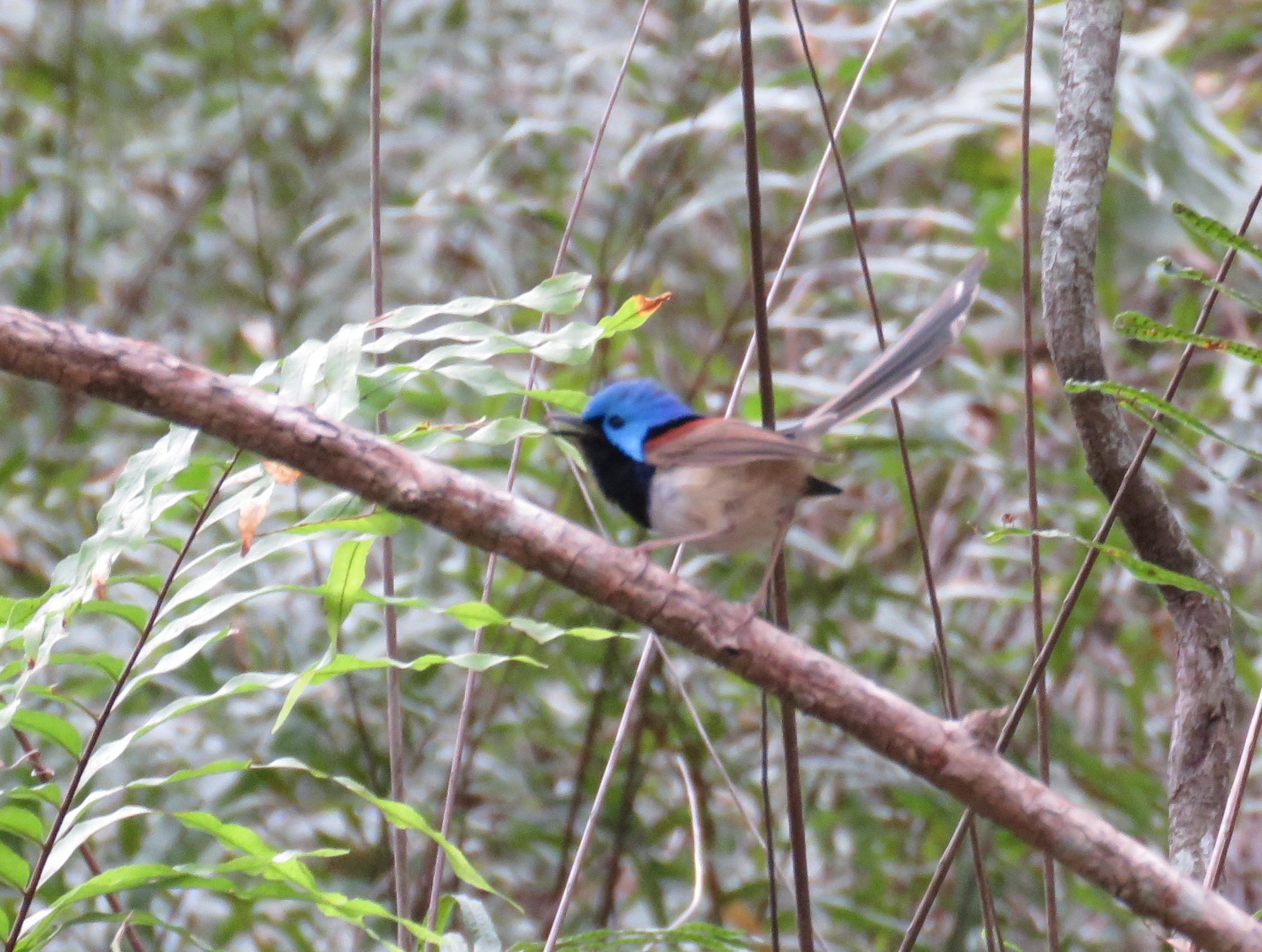
Male Variegated Fairy Wren
.
.
.
Look for a family of Variegated Fairy Wrens Malurus lamberti playing in the scrubby habitat alongside Acacia Way. Small forest birds like the safety of tangled habitat like this where they can nest and escape from Kookaburras and other large predator birds like Pied Currawongs Strepera graculina and Kookaburras.
You can provide habitat for these special birds in your backyard by building a Habitat Tripod.
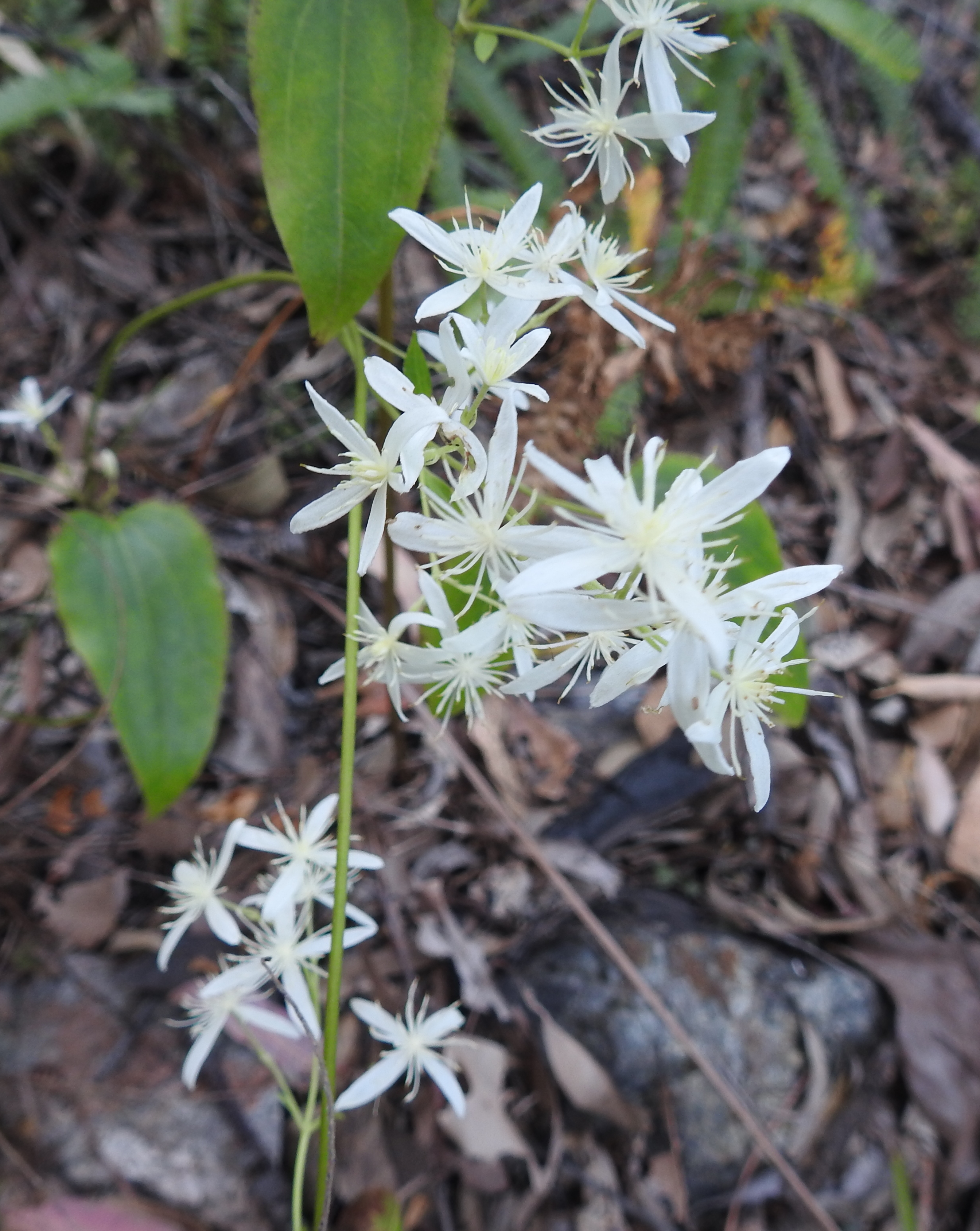
“It is a useful climber that could be used to cover the framework of a fernery. The growth is very dense and provides safe nesting sites for small native birds.” Australian Plants Society NSW
A useful vine, as it is happy growing in shaded areas and the crushed leaves help manage headaches.
Lipotriches sp. – Solitary Bee on Dianella flower
.
.
.
.
We also found a different solitary native bee species visiting flowers of Blueberry Lily Dianella longifolia. Lipotriches sp. do not form colonies, the individual females make nests in the ground. Native plant species like Dianella require Buzz Polination (sonicating) which shakes the pollen out of the flowers.
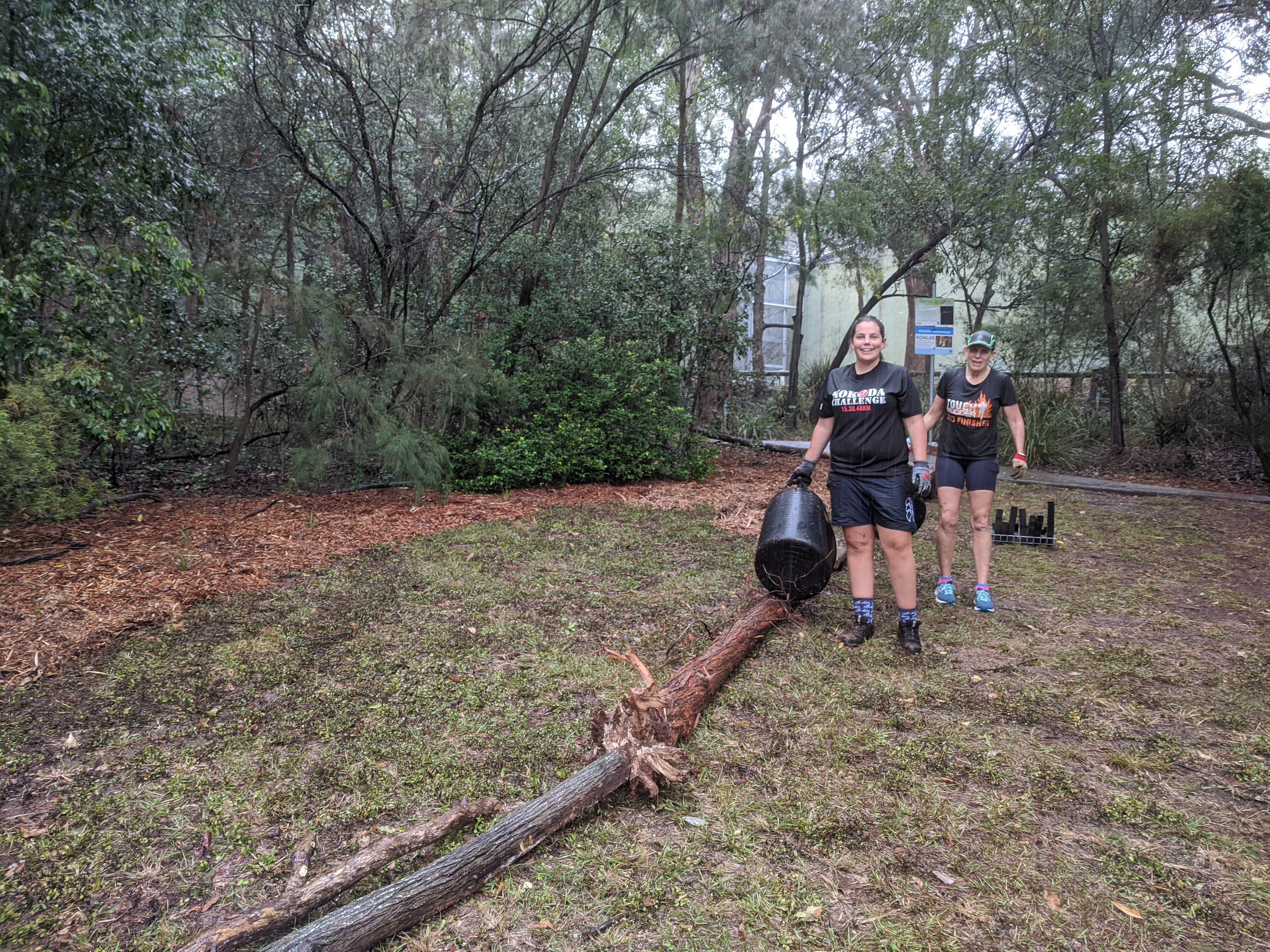
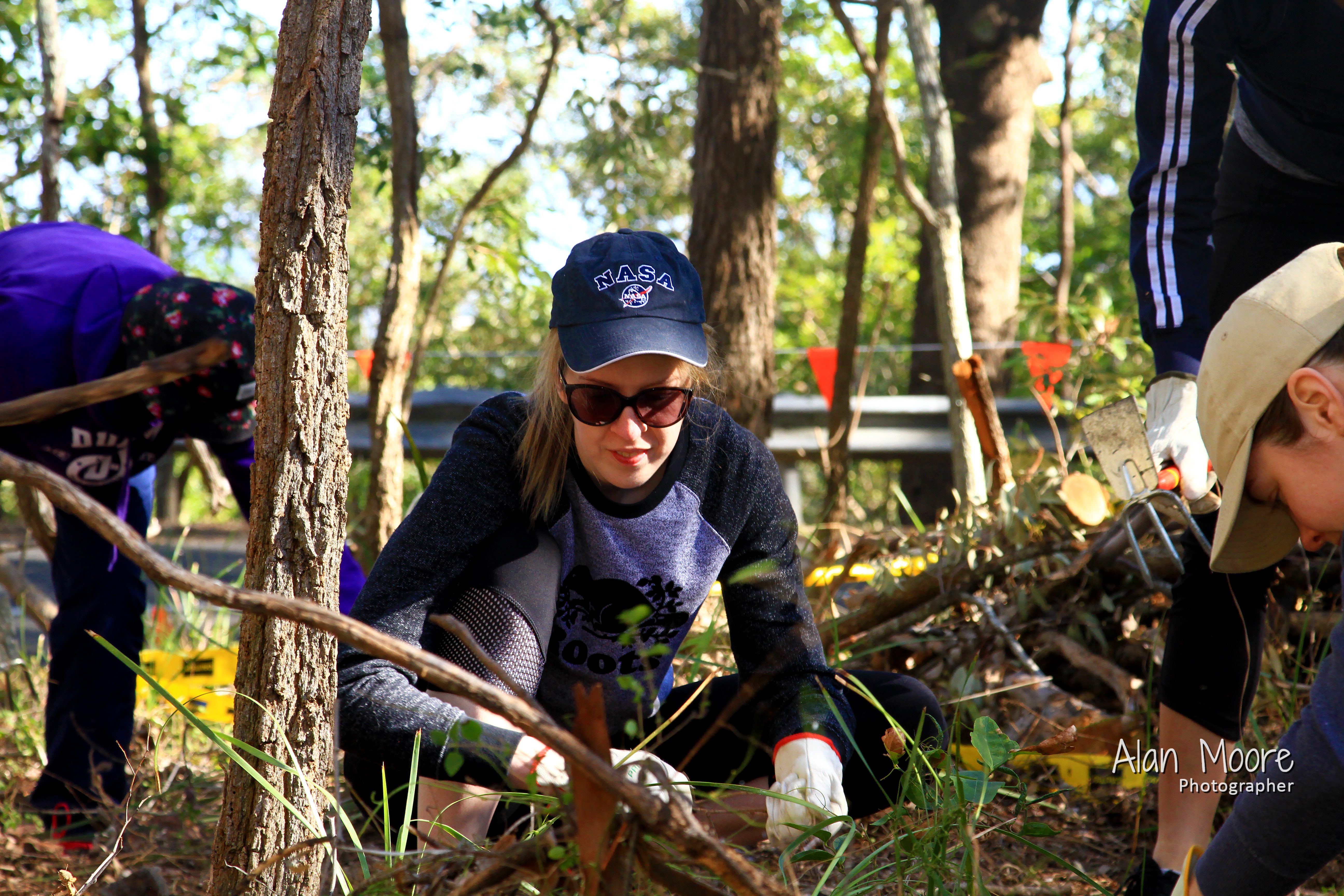
We had a lot of fun yesterday in the puddles, luckily it was not too cold as we got soaked!
Thanks to our hard … wet … workers, we got heaps done in such a short period of time.
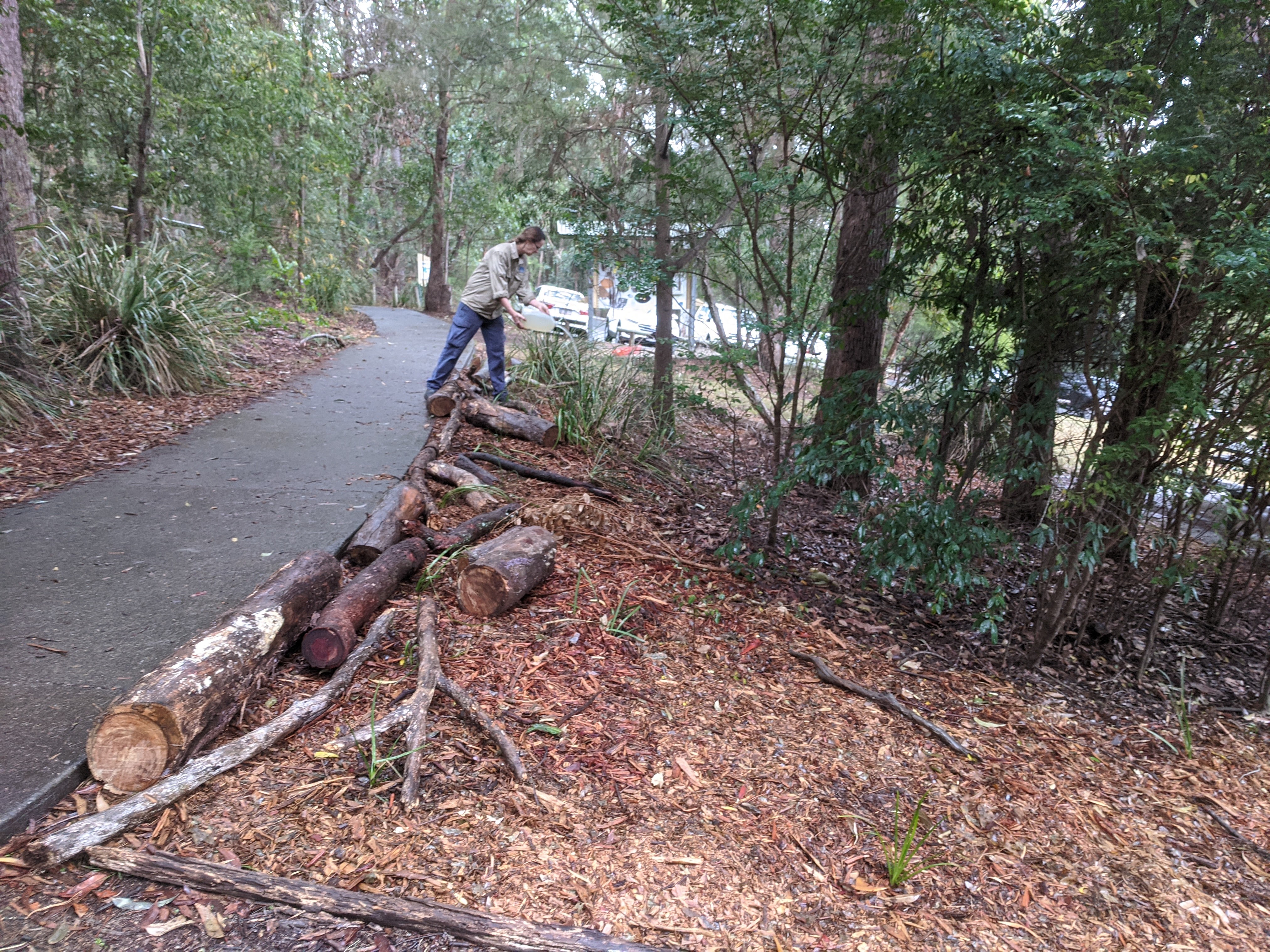
Logs and branches adjacent to the path will reduce damage to our new Lomandra planting by stopping people walking off the track. At the same time logs make safe habitat for lizards and provide valuable food for beetles and other insects.
Logs protect planting
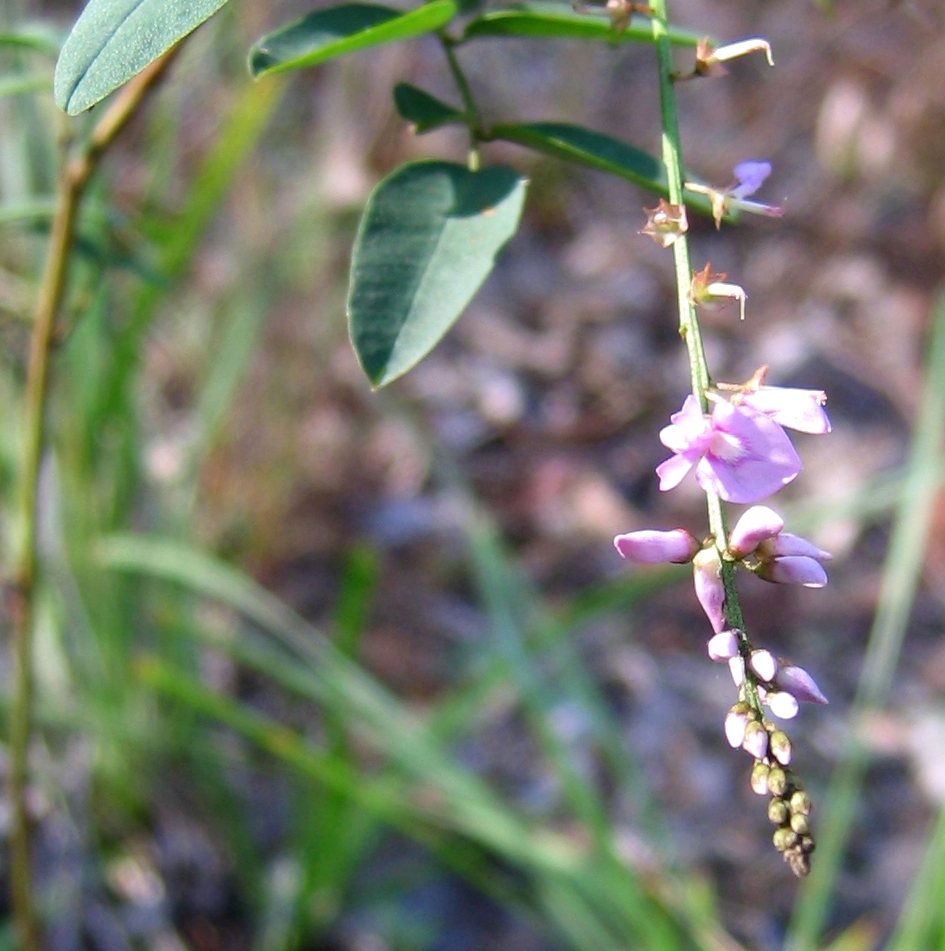
Garden beds have been extended to cover areas where fast spreading invasive weed has been Dyschoriste depressa poisoned. Our energiser rain loving team planted and mulched the expanded garden area.
A pedestrian goat track and a mountain bike track between road and Federation Track were closed to allow regeneration and re-mulched earlier plantings.
Our next monthly working bee is Saturday 29th August 8am – 11am. Hope to see you there.
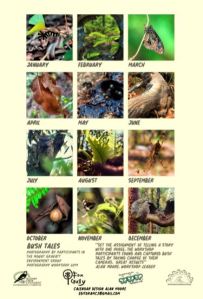
Share visual stories of Mt Gravatt Conservation Reserve with family and friends and support our ongoing restoration work and wildlife research.
The theme of this year’s annual Photographic Workshop was Aspects and Viewpoints: look for a viewpoint that emphasises the story and the aspect frames the subject. Participants learned to tell a story using lighting and depth of field to capture their experience of being in the bush.























 Mount Gravatt Environment Group