Wildlife


Acacia Way entry

Acacia Way Track – Mt Gravatt Campus

By: Michael Fox

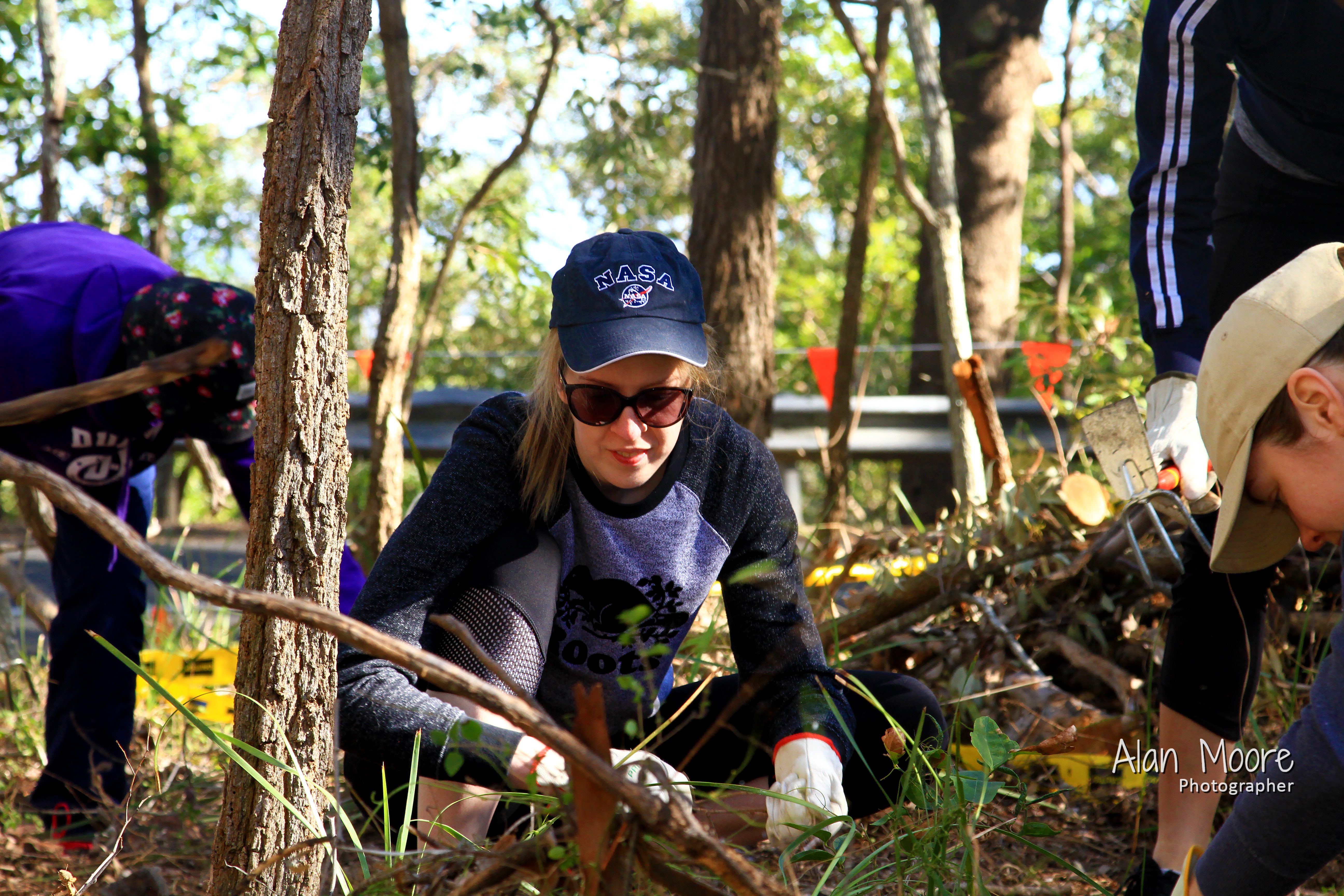
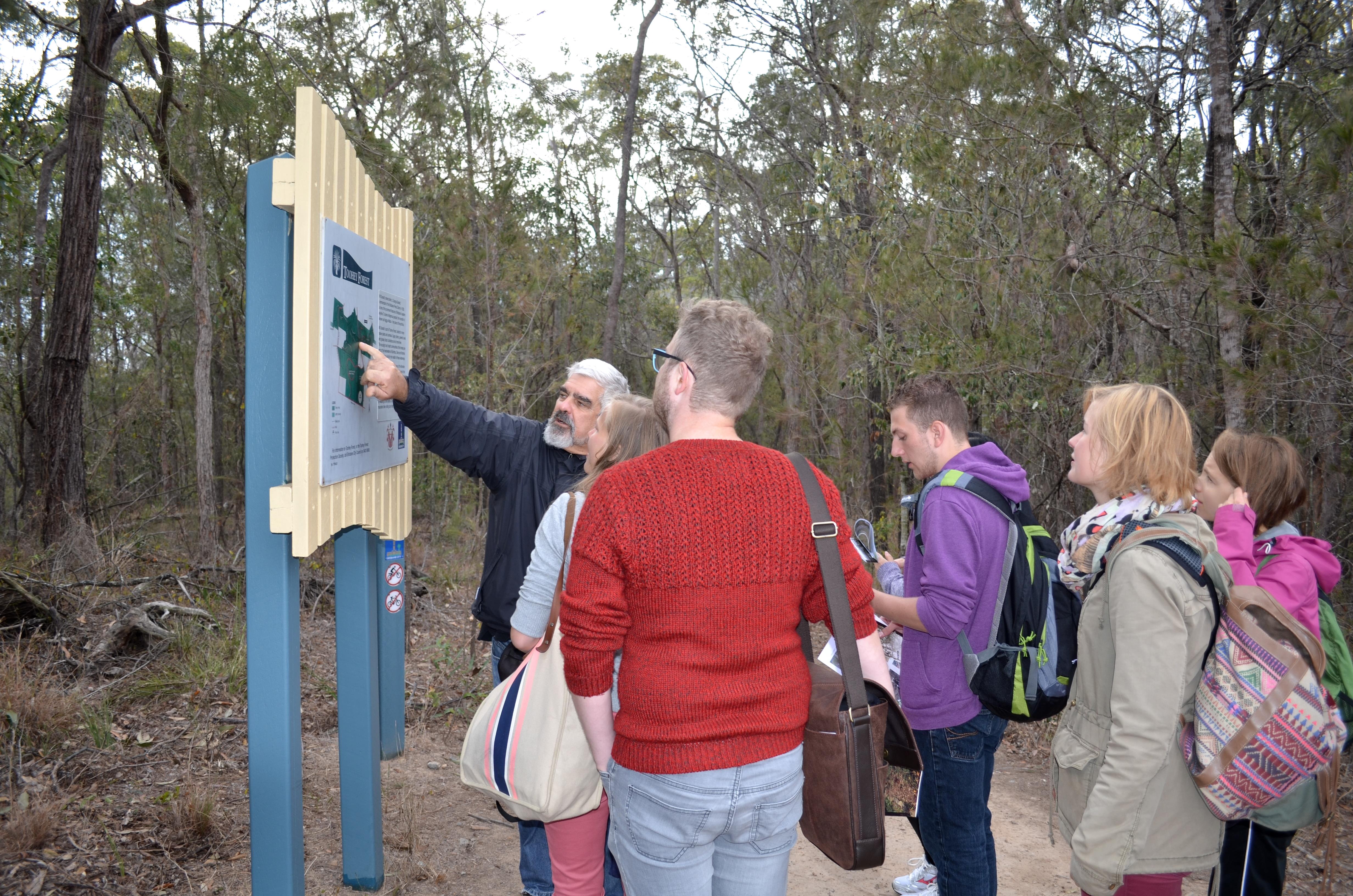
As part of National Tree Day celebrations, Laurie Deacon and I were privileged to lead a guided walk in Mt Gravatt Conservation Reserve for twenty-one Griffith University students and friends. We have partnered with Griffith Mates since 2012 to offer students the opportunity to give back to the tranquil bushland surrounding Griffith University.
 

Watershed - Bulimba & Norman Creek catchments .......... Acacia

Watershed – Bulimba & Norman Creek ………… Brisbane Fringed Wattle Acacia fimbriata

On track

Fishing line and bush food

Rain falling on Mt Gravatt flows into two different river catchments: Norman Creek catchment via Ekibin Creek and Bulimba Creek catchment via Mimosa Creek. Acacia Way follows the ridge line forming the watershed between the catchments.

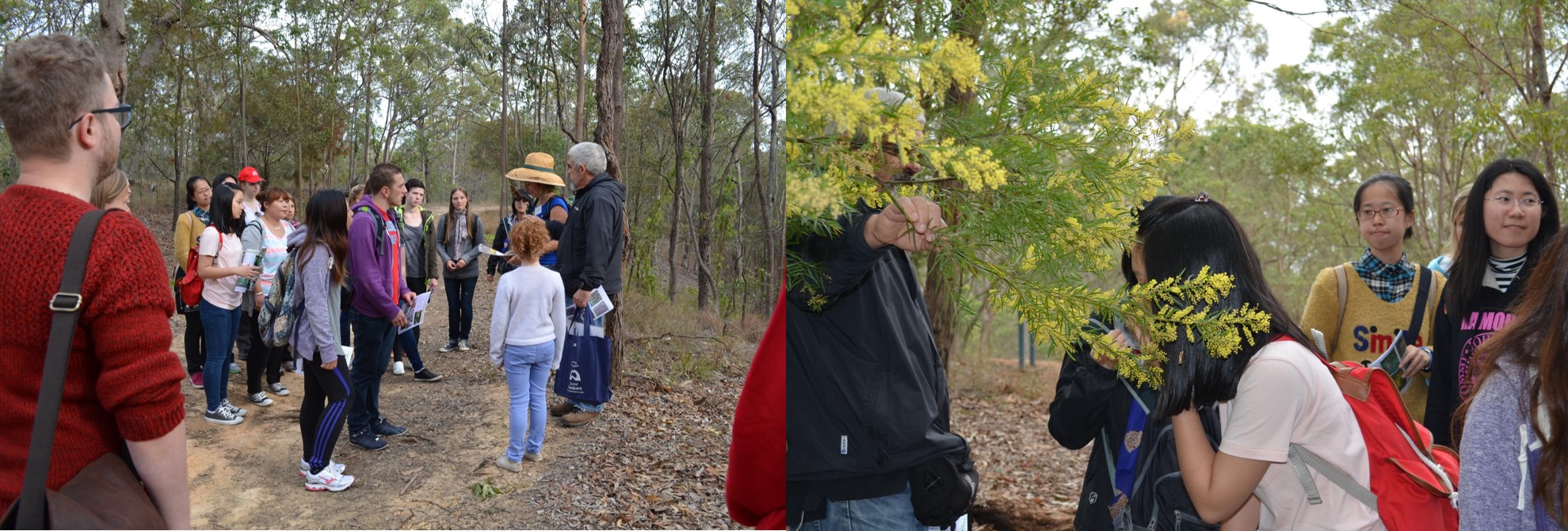
Winter is flowering time for many of our wattles, like this beautiful fragment delicate Brisbane Fringed Wattle.

Mt Gravatt Conservation Reserve has an amazing species diversity with two hundred and seventy-one native plant species identified, including Settlers Flax Gymnostachys anceps which was used by indigenous people to make fishing lines, and bush food Molucca Raspberry Rubus moluccanus.
Planting Team

Planting Koala trees

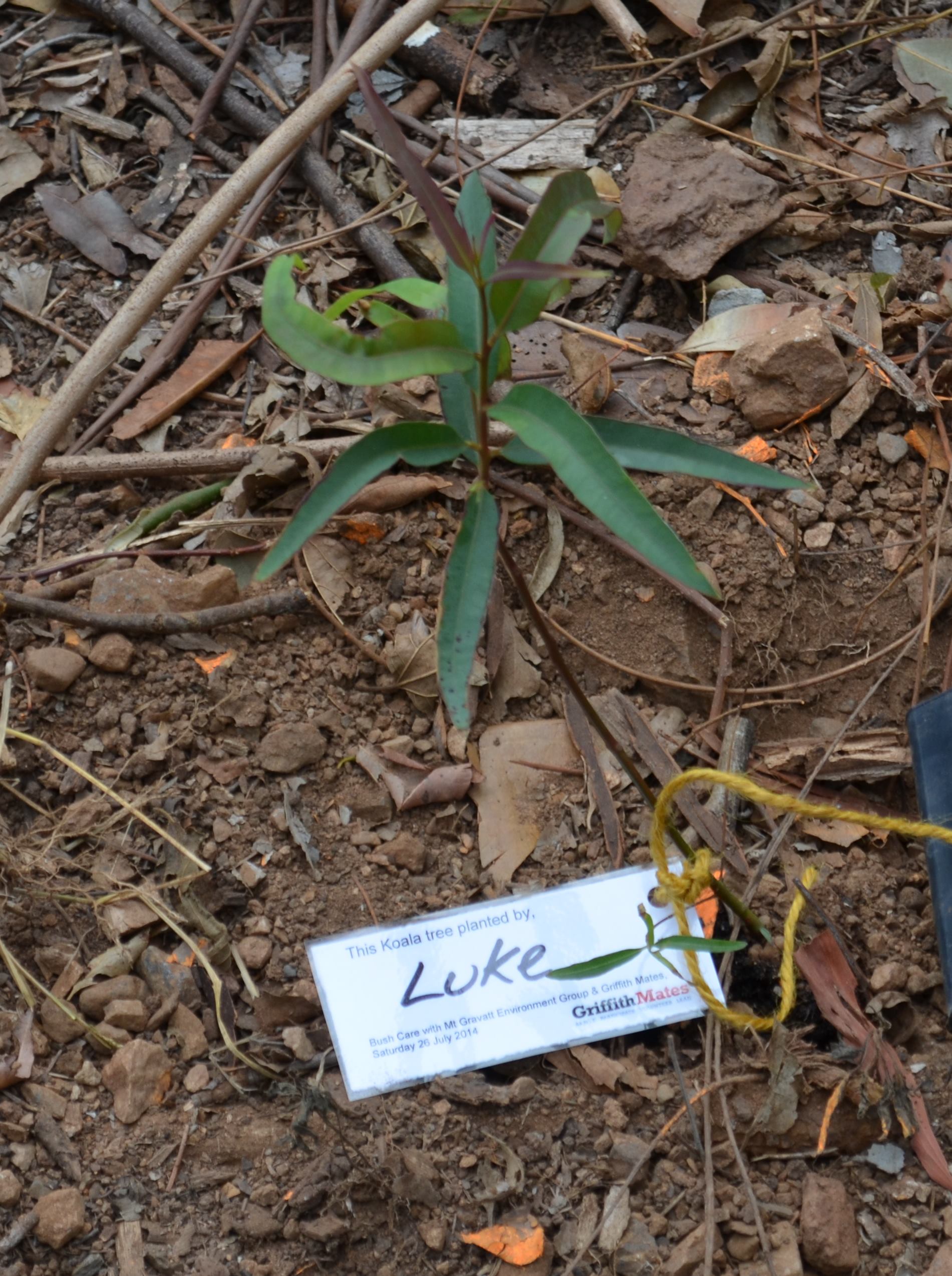
Luke tree

Laminated tags identify each planter


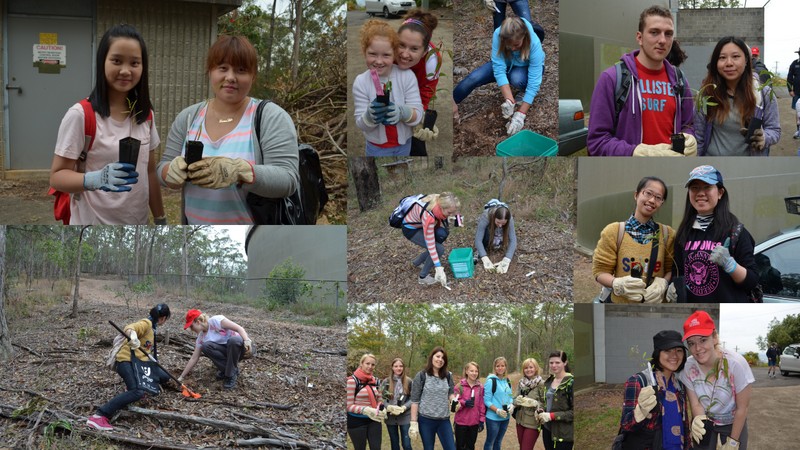
Arriving at Fox Gully Bushcare the team prepare to plant twenty Koala food trees including Small-fruited Grey Gum Eucalyptus propinqua, Scribbly Gum Eucalyptus racemosa and Qld Blue Gum Eucalyptus tereticornis.

.

.

.

.

DSC_1671

Len Kann introducing Australian native bees

.

Len Kann introduced the team to our Australian native bees. Len keeps hives with the small black Stingless Native Bees Trigona carbonaria. He has also developed a deep knowledge of native solitary bees like our local Blue Banded Bees Amegilla cingulata and Teddy Bear Bees Amegilla bombiformis.

.
Afternoon tea

Bush food – punkin scones, jam and crea

.

.

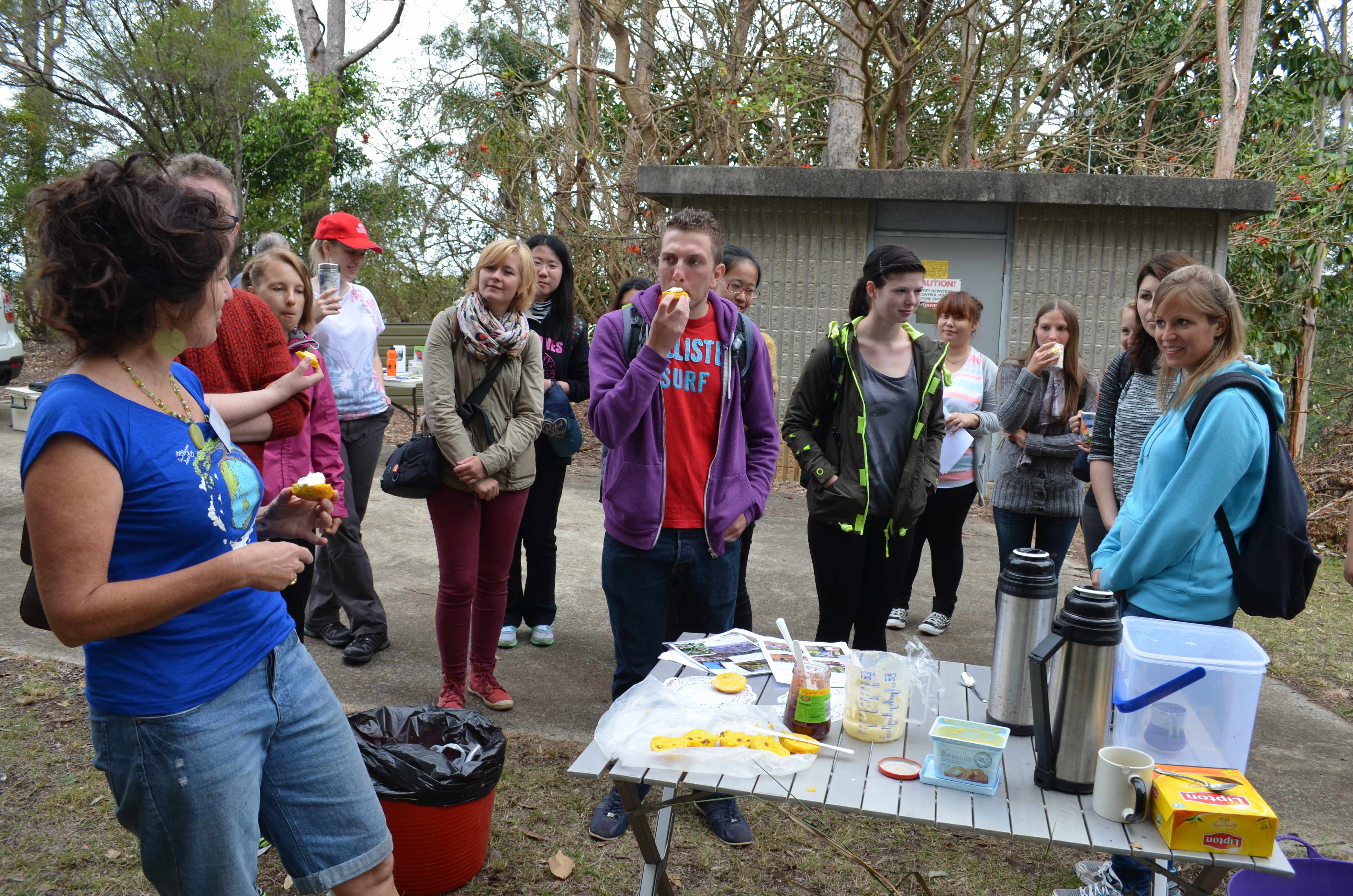
With the work done time for the reward. Thanks to Margaret Medland for the delicious home made punkin scones, jam and cream!

.

.

Sign

BCC Habitat Brisbane interpretative sign

.

.

The walk back included a detour to the Summit where we inspected the new interpretative signs installed by BCC Habitat Brisbane team.

Thank you to our Griffith Mates visitors. We look forward to meeting again at a bushcare.
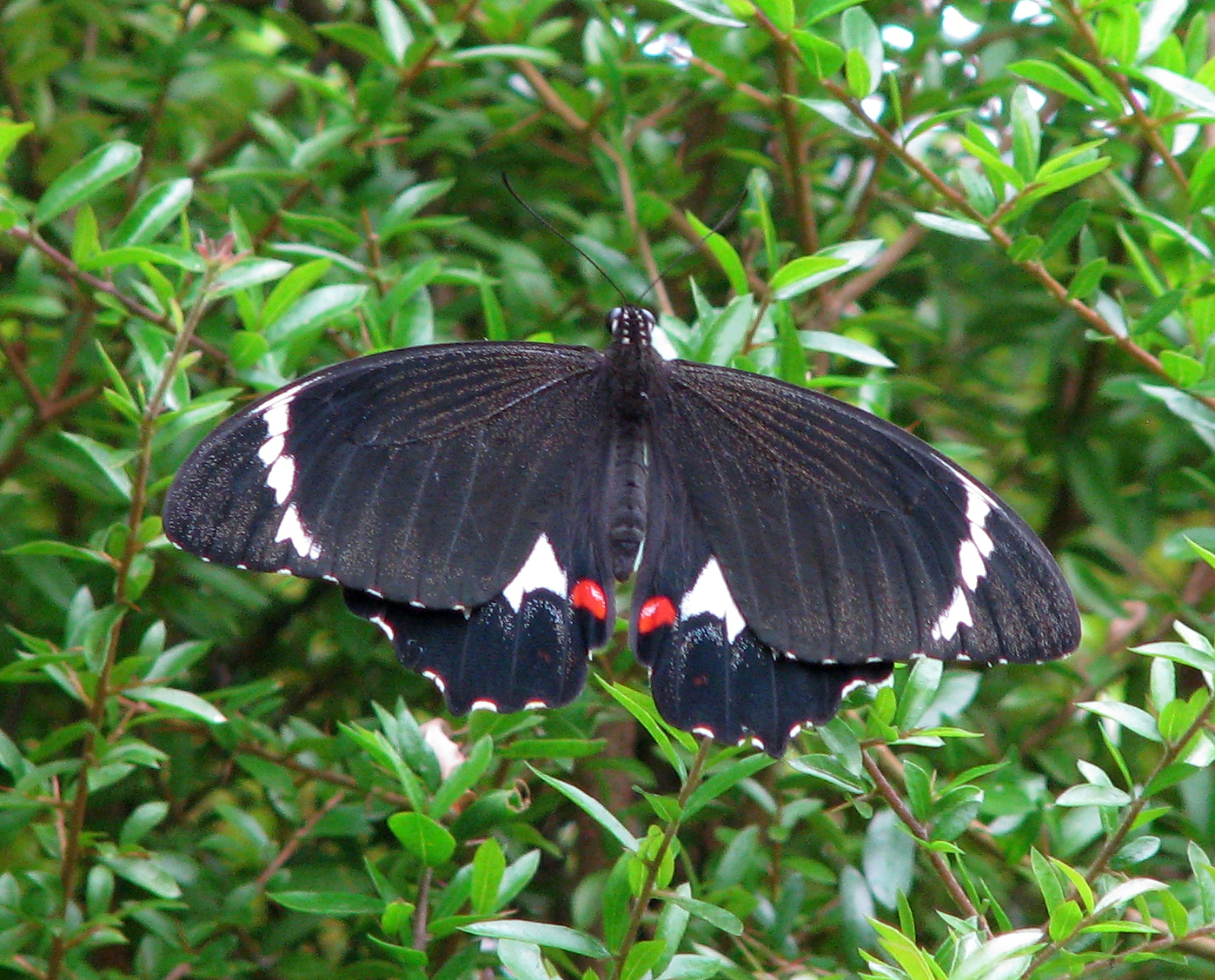
 

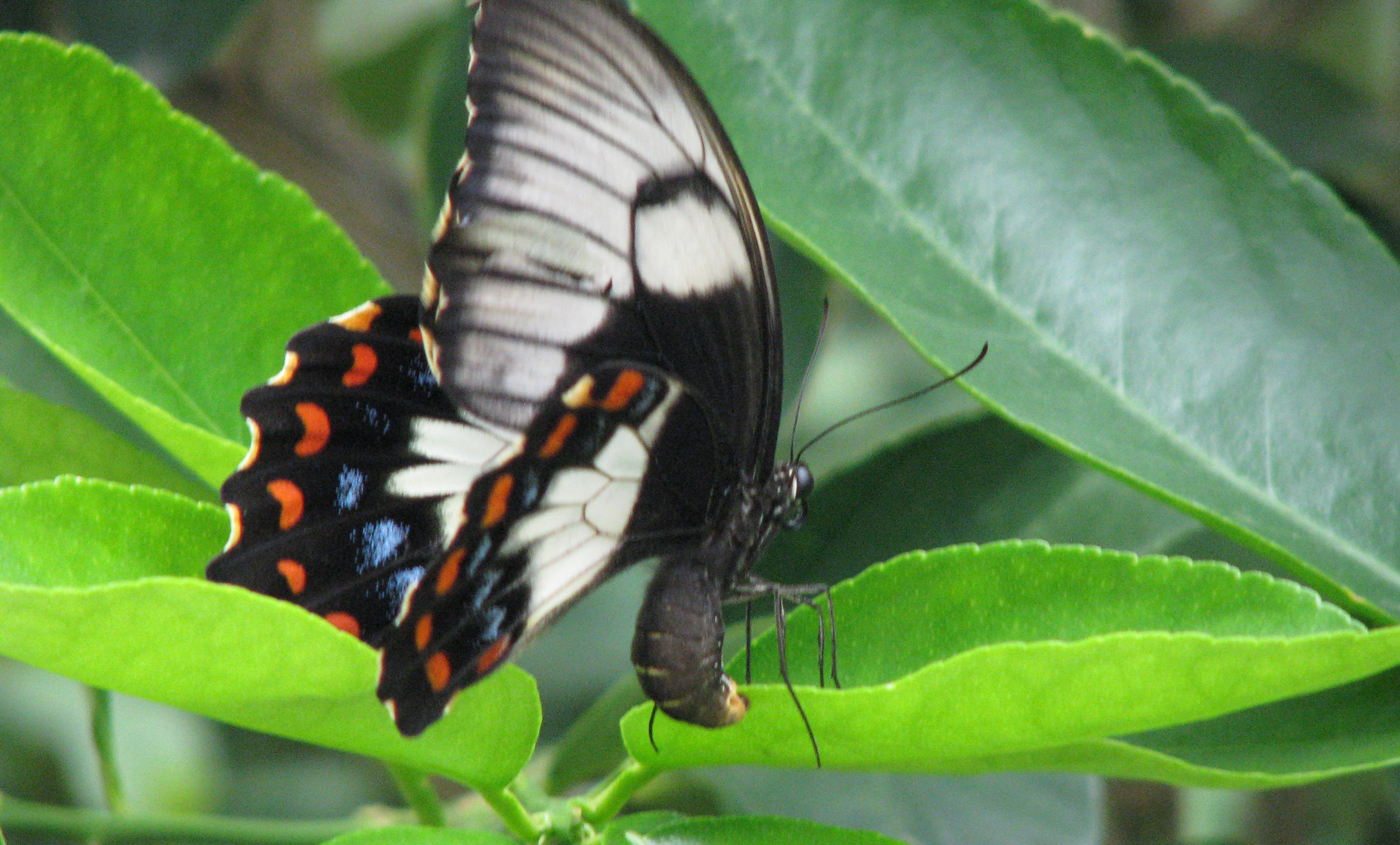
Orchard Swallowtail - Male - Apr10

Orchard Swallowtail – Male

By: Michael Fox

Forty-six butterfly species are found in Mt Gravatt Conservation Reserve with a wide range of colours, sizes and behaviour.

I have been aware, for some time, of the different colours of the male and female Orchard Swallowtail Papilio aegeus.

Orchard Swallowtail - Nov 08

Orchard Swallowtail – Female – laying eggs on lemon tree

Orchard Swallowtail butterflies are large  (male 102mm/female 108mm). However, the females are definitely the most attractive to see flitting around your citrus trees.

These beautiful butterflies are a wonderful addition to any backyard, so if you see some strange caterpillars on your citrus trees please check before you pull out the pest spray. The Orchard caterpillars will do very little damage to your trees before they metamorphosise into beautiful colourful butterflies.

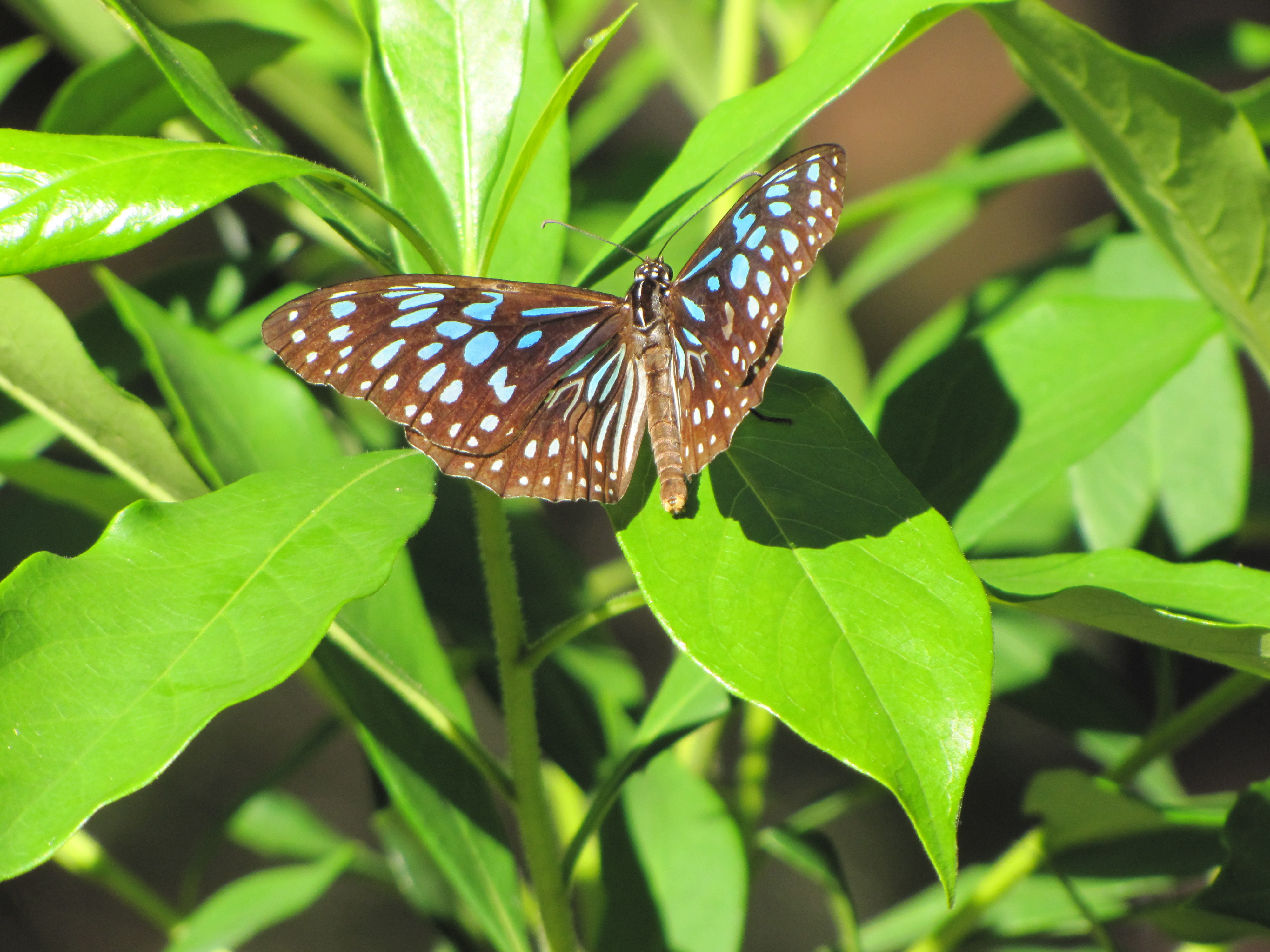
Blue Tiger - male - 17 Oct 10

Blue Tiger – male – on Parsonsia leaf

.

Identifying the sex of Blue Tiger Tirumala hamata butterflies is more difficult. It took a chance comment from Helen Schwencke, Earthling Enterprises, to make me even think to look for a way to identify males vs females. I had sent Helen a picture of a Blue Tiger in the winter sunlight. Helen emailed back commenting that the “male” butterfly would be collecting alkaloids from the Parsonsia leaf to make him more attractive to females.

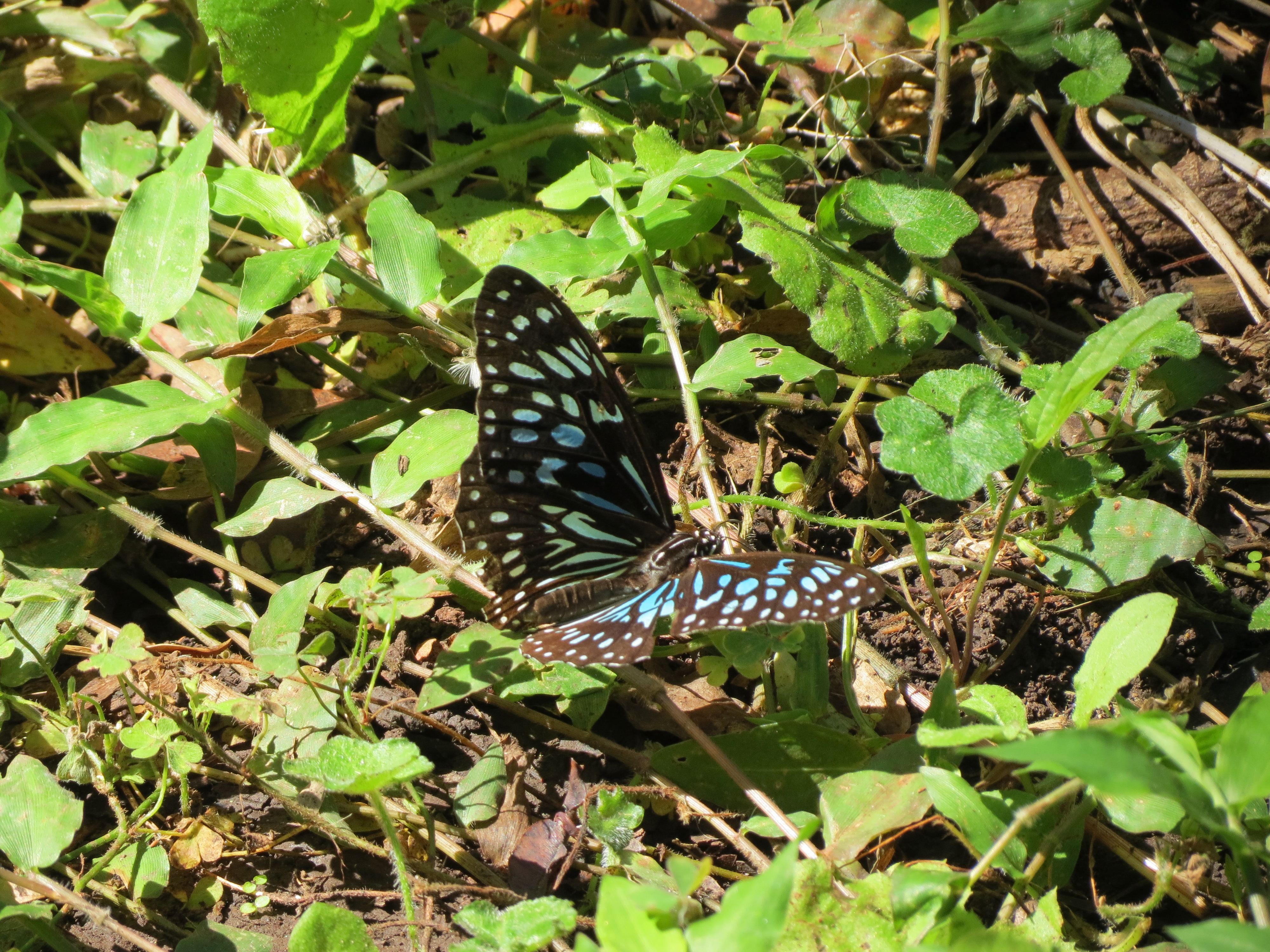
Blue Tiger - female - 24 Aug 2013

Blue Tiger – female

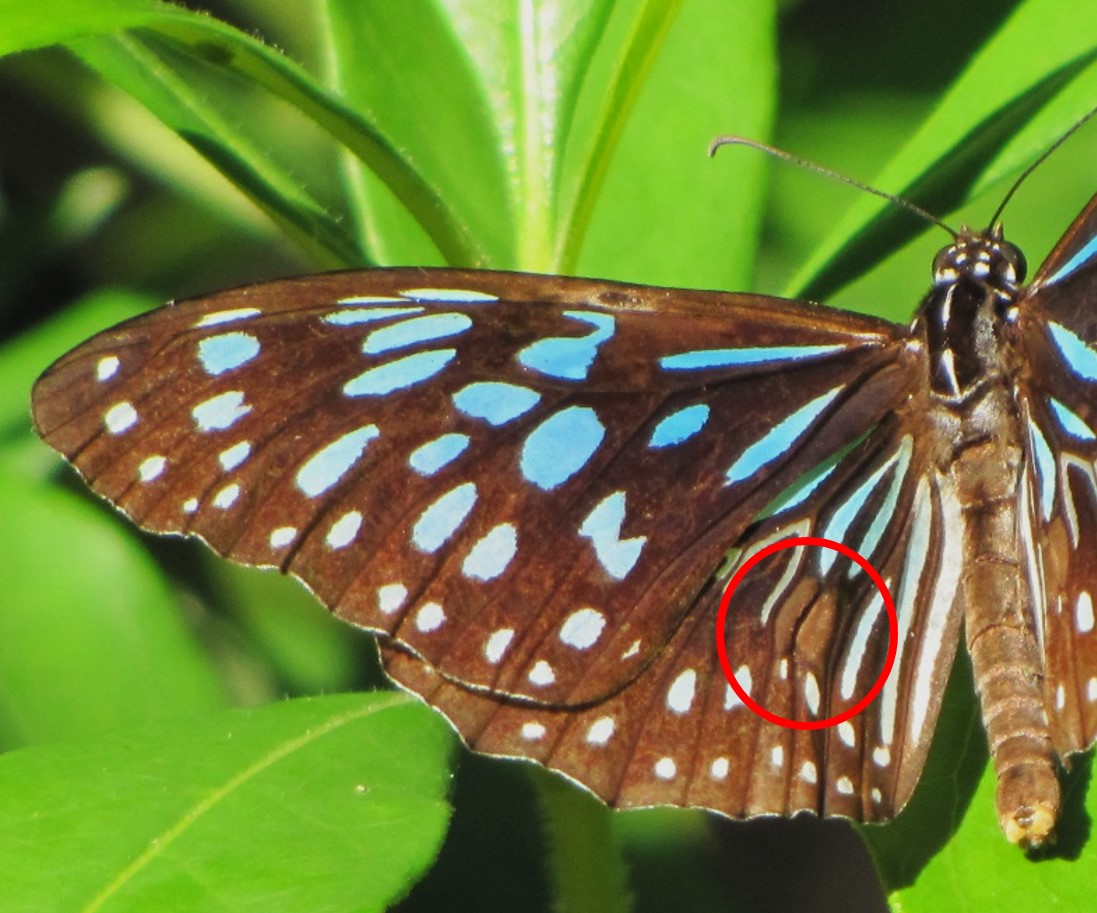
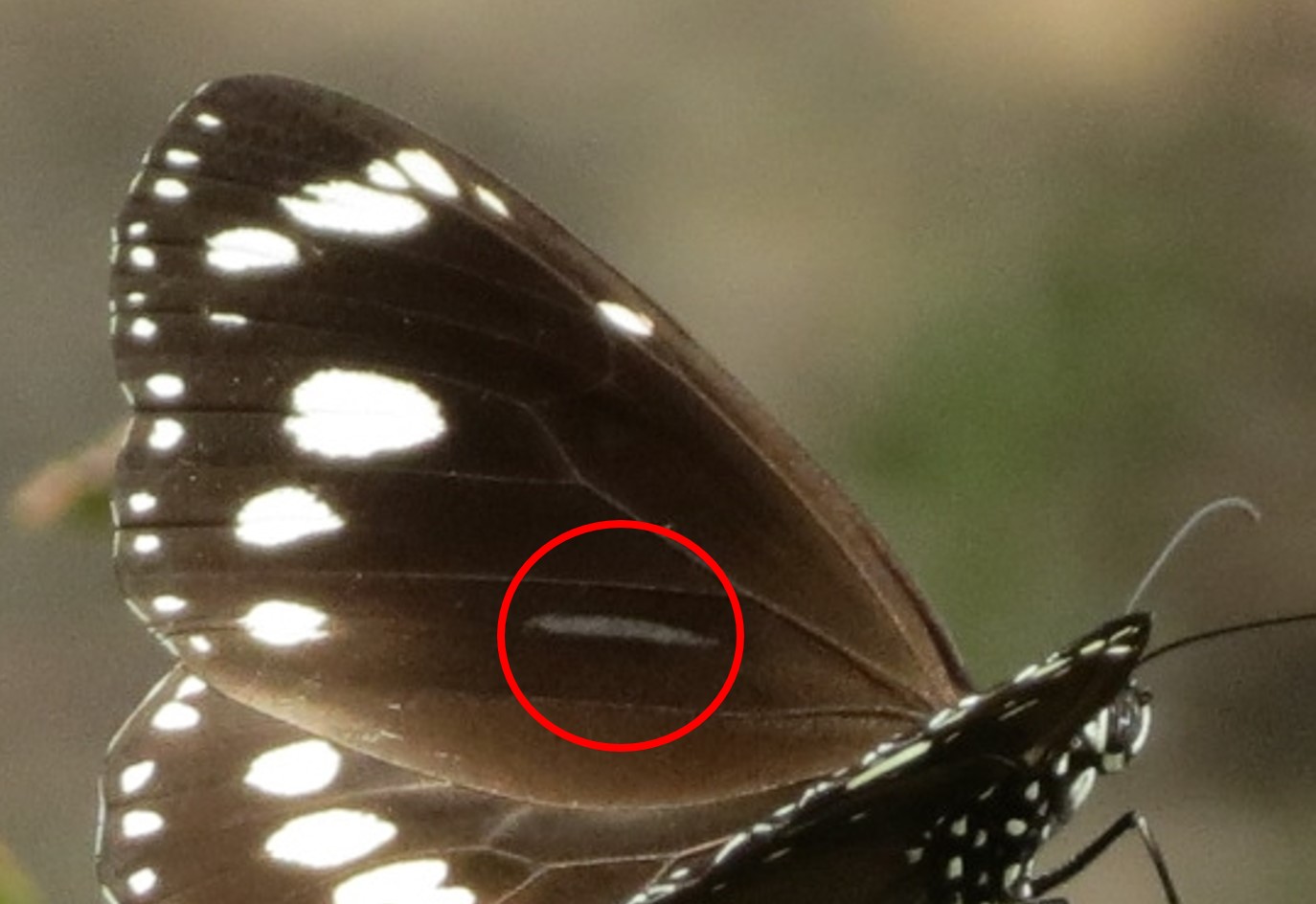
Female Blue Tigers have a very similar patten of colours on their wings. When I asked how Helen identified a male butterfly just from a photo, she introduced me to butterfly “sex brands” which can be found on a number of butterfly species including Blue Tigers and Common Crows.

.

.

Blue Tiger sex brand

Blue Tiger male sex brands circled

.

.

The Blue Tiger males have distinctive sex brands on the hind wing.

.

.

.

.

.

.

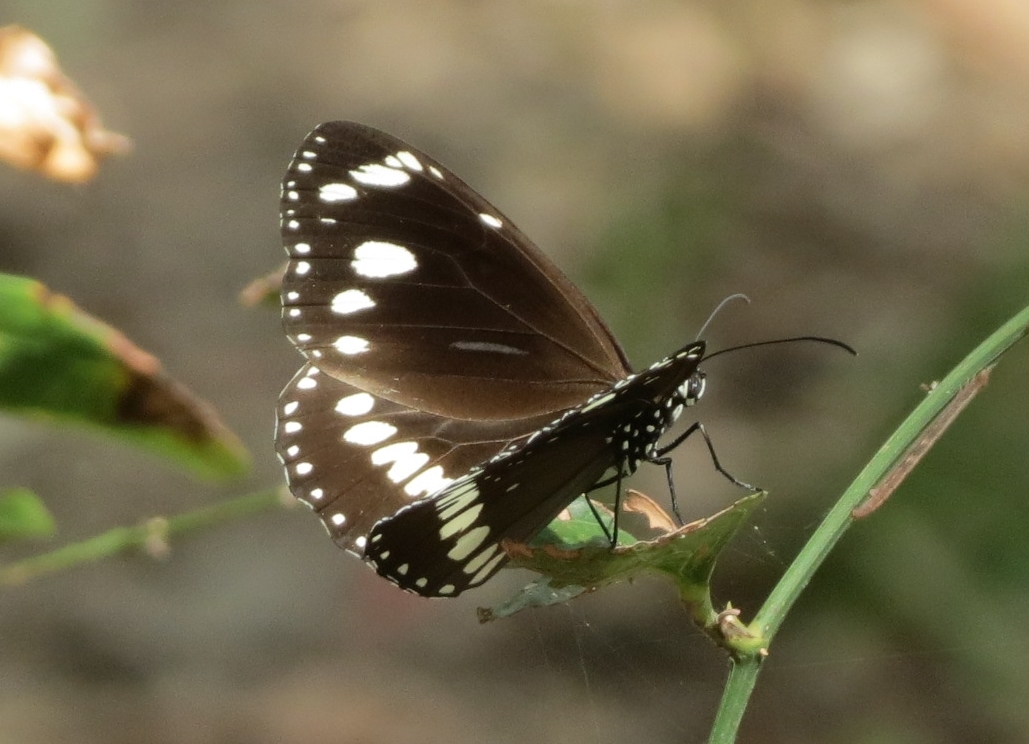
Common Crow - male - 10 Feb 2014 - on barbed wire vine

Common Crow – male.

.

Common Crow - male - sex brand

Common Crow – male – sex brand

The Common Crow Euploea core male has a sex brand on the fore wing.

Now that I am aware of sex brands I will have to ensure all my photographs of mountain butterflies include this information.


.


IMG_6834

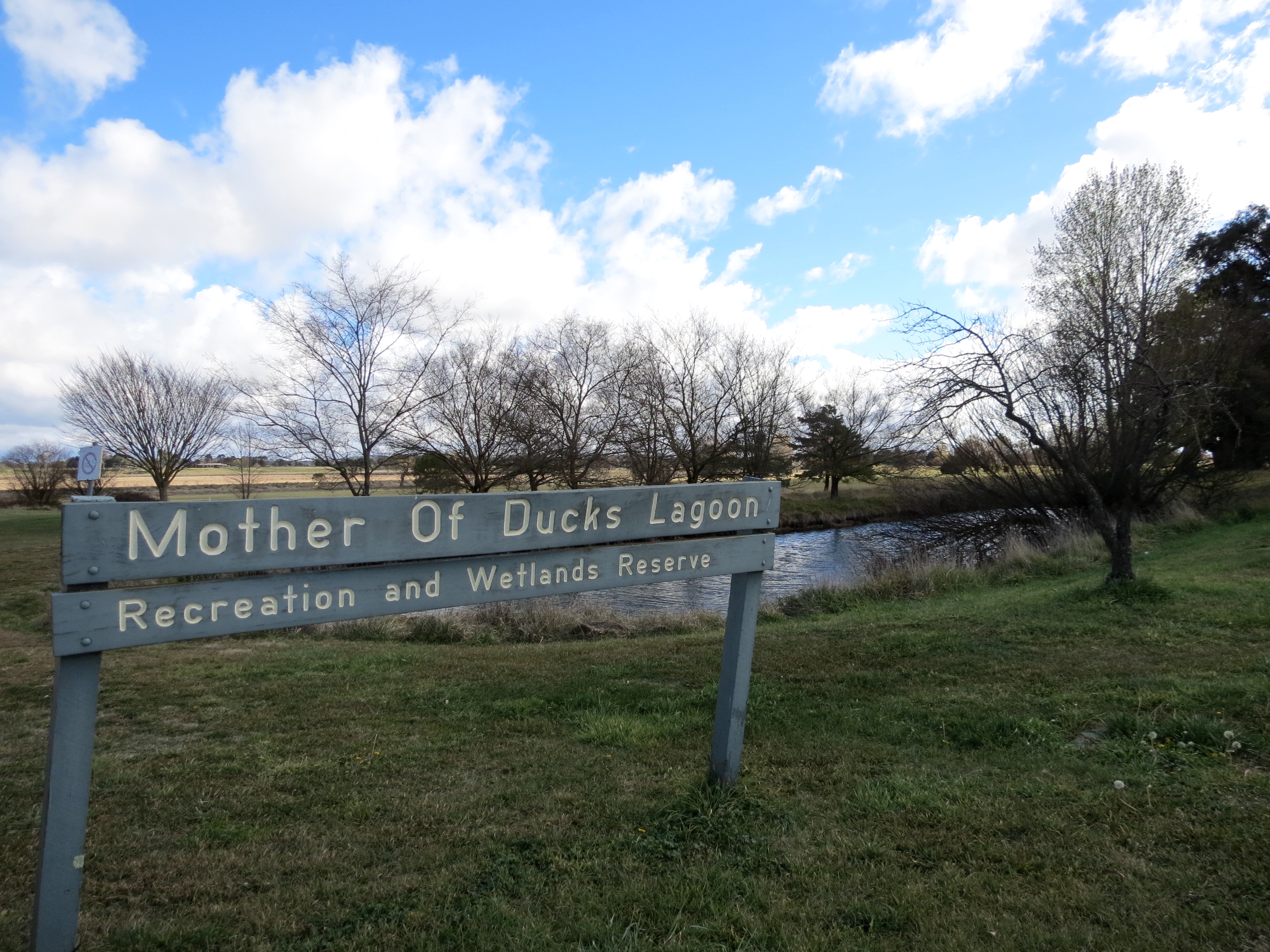
Mother of Ducks Lagoon

By: Michael Fox

Traveling  back from Armidale, NSW last week we stopped at the Mother of Ducks Lagoon in Guyra.

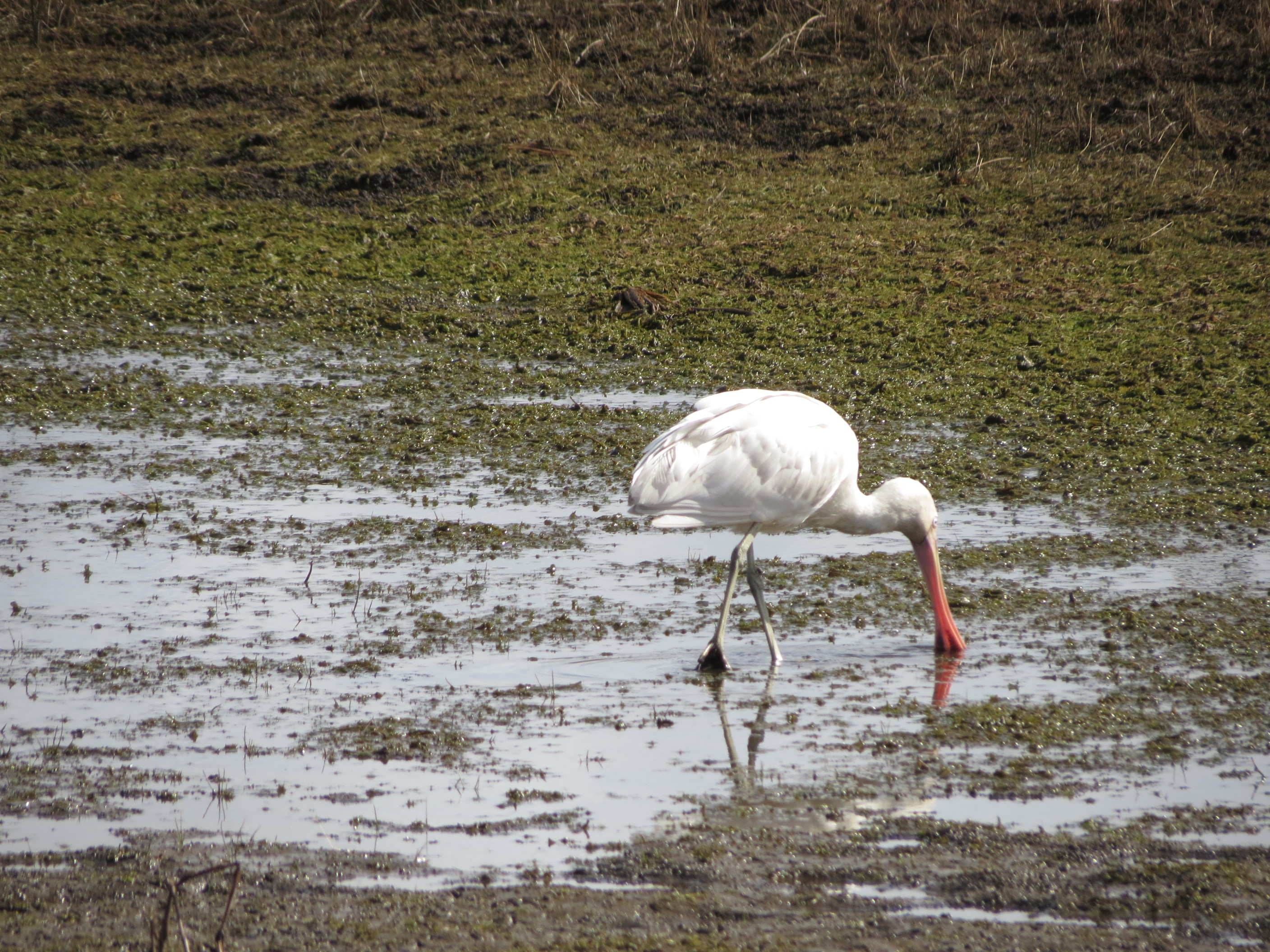
Yellow-billed Spoonbill - Gurya - 20 June 2014

Yellow-billed Spoonbill Platalea flavipes

White-winged Choughs Corcorax melanorhamphos

Mother of Ducks Lagoon (McKie Drive)
One of Guyra’s most important landmarks in Guyra is the Mother of Ducks Lagoon which is a large stretch of water 14kms in circumference, held in a silted volcanic crater.

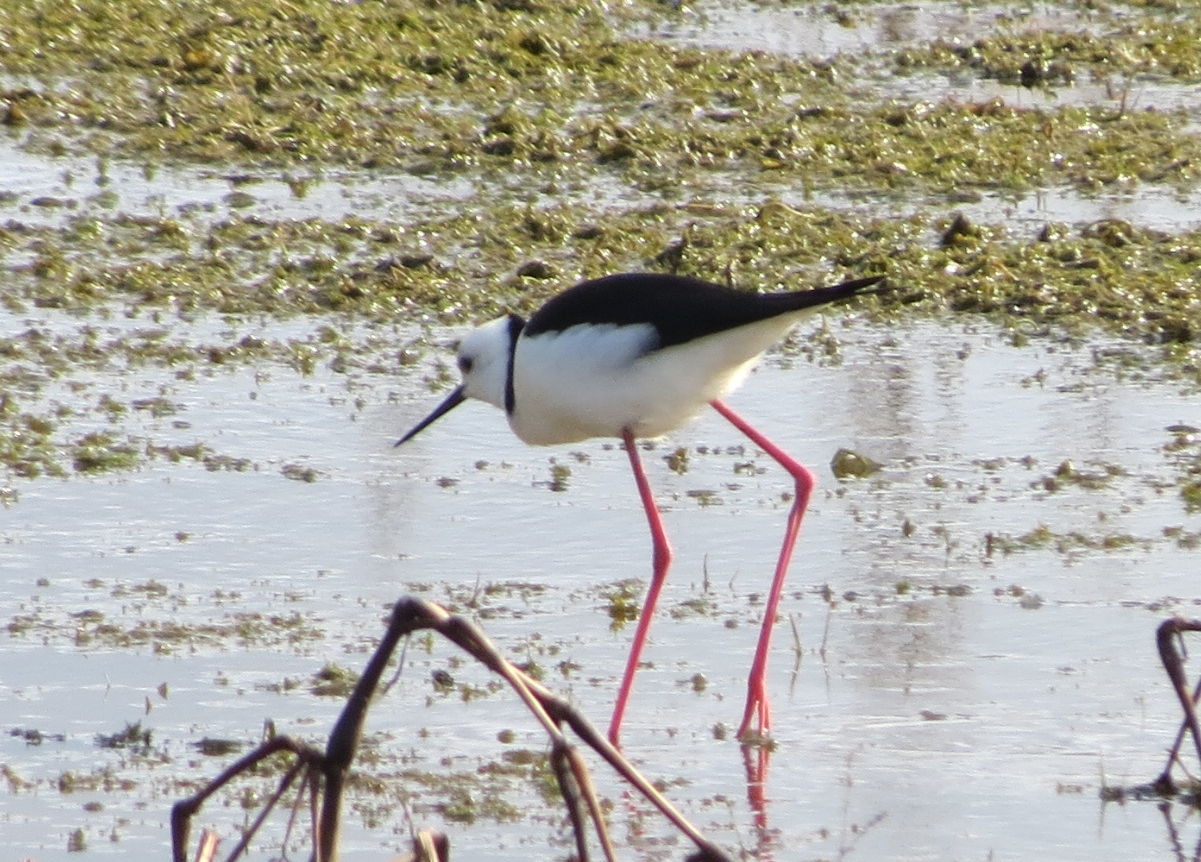
Black-winged Stilt - 20 June 2014

Black-winged Stilt Himantopus himantopus

Once a magnificent body of water large enough for boating, the lagoon has been drained for agricultural and other purposes since the turn of the century. The lagoon was partially restored as Guyra’s Bicentennial project and is once again home to a wide range of aquatic birds. Nests of black swans and a host of other water birds can be seen from the viewing platform or by walking around the bank of the reserve area.

The golf course follows its contours and the two meld comfortably into the unique landscape of Guyra. Picnic tables and toilet facilities are available next to the entrance and information stand. The lagoon is the source of Sandy/Laura creek which is known for its trout fishing.”

White-faced Heron - 20 June 2014

White-faced Heron Egretta novaehollandiae

Guyra Online

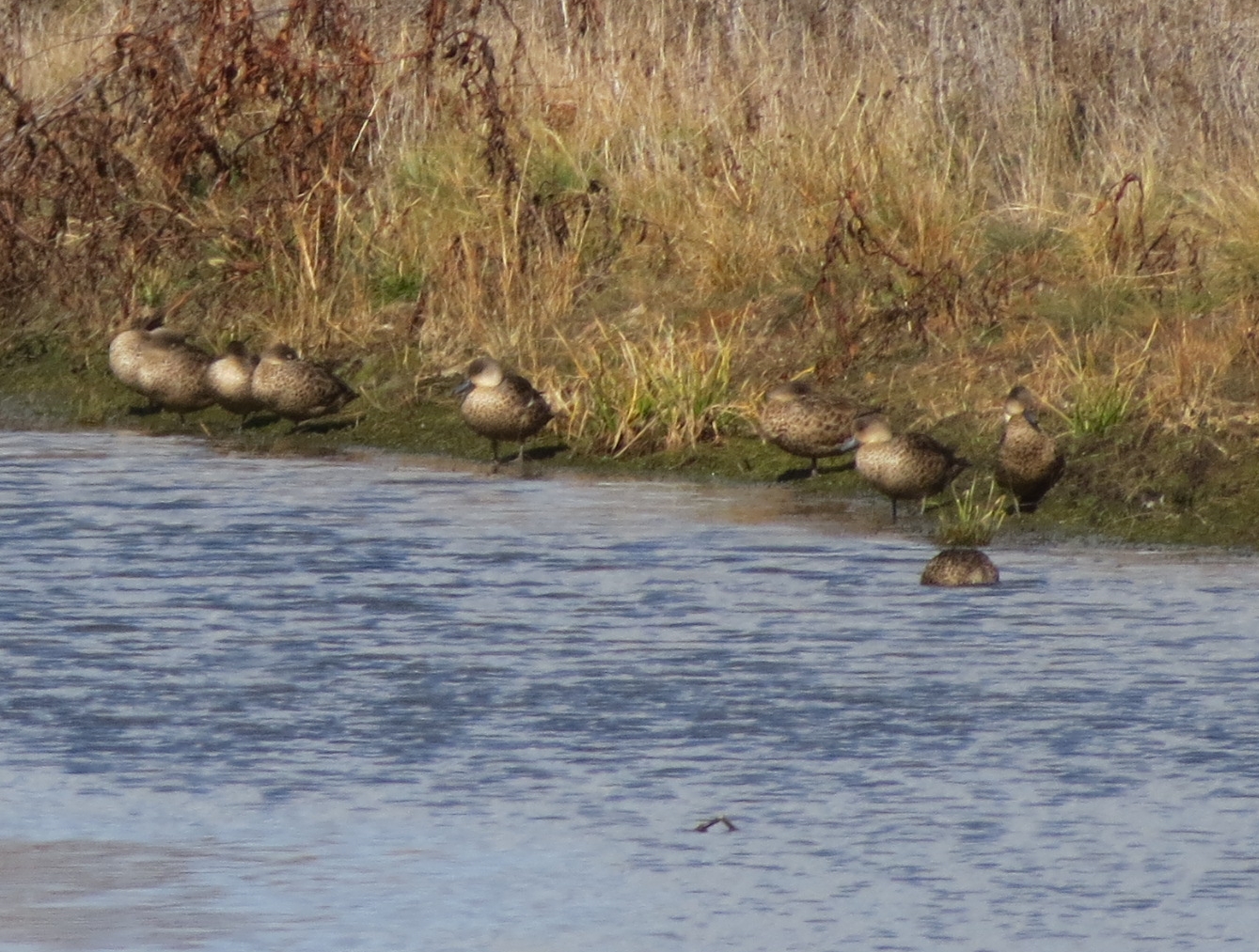
We only stopped for fifteen minutes and in that time saw a flight of what we think were White-winged Choughs Corcorax melanorhamphosIt was fascinating to watch the flock wheel over then settle in waves. We were also visited by a Yellow-billed Spoonbill Platalea flavipesBlack-winged Stilts Himantopus himantopus, White-faced Heron Egretta novaehollandiae and Grey Teal Anas gracilis.

A great spot to stop for a picnic or afternoon tea. Only a couple of minutes  off the highway but a peaceful world away from traffic and trucks.

Grey Teal - Mother of Ducks Lagoon - 20 June 2014

Grey Teal Anas gracilis

IMG_6275

Morning sun from Eastern Outlook Track

By: Michael Fox

Autumn is a wonderful time of year for a morning walk in Mt Gravatt Conservation Reserve. The air is fresh and cool and alive with the sound of birds.

Every morning is different. One day the morning sun is putting on a show peaking over the clouds while this morning I saw a new bird to photograph and identify. (Not always easy when you only catch one view of the bird.)

Unidentfied bird - 23 March 14

What bird is this? Ideas anyone?

Acacia Way - 23 Mar 14

Are we really in the middle of a city?

We also saw a Spangled Drongo Dicrurus bracteatus on the Eastern Outlook Track and another pair on the Farm Fire Trail.

We did not see any Wallabies, there have been three reliable sightings over the past twelve months, but we did have a pair of Galahs Eolophus roseicapillus fly past and saw two Black Faced Cuckoo Shrikes Coracina novaehollandiae.

Every track has different vegetation and a different feel depending on the time of day and position of the sun.

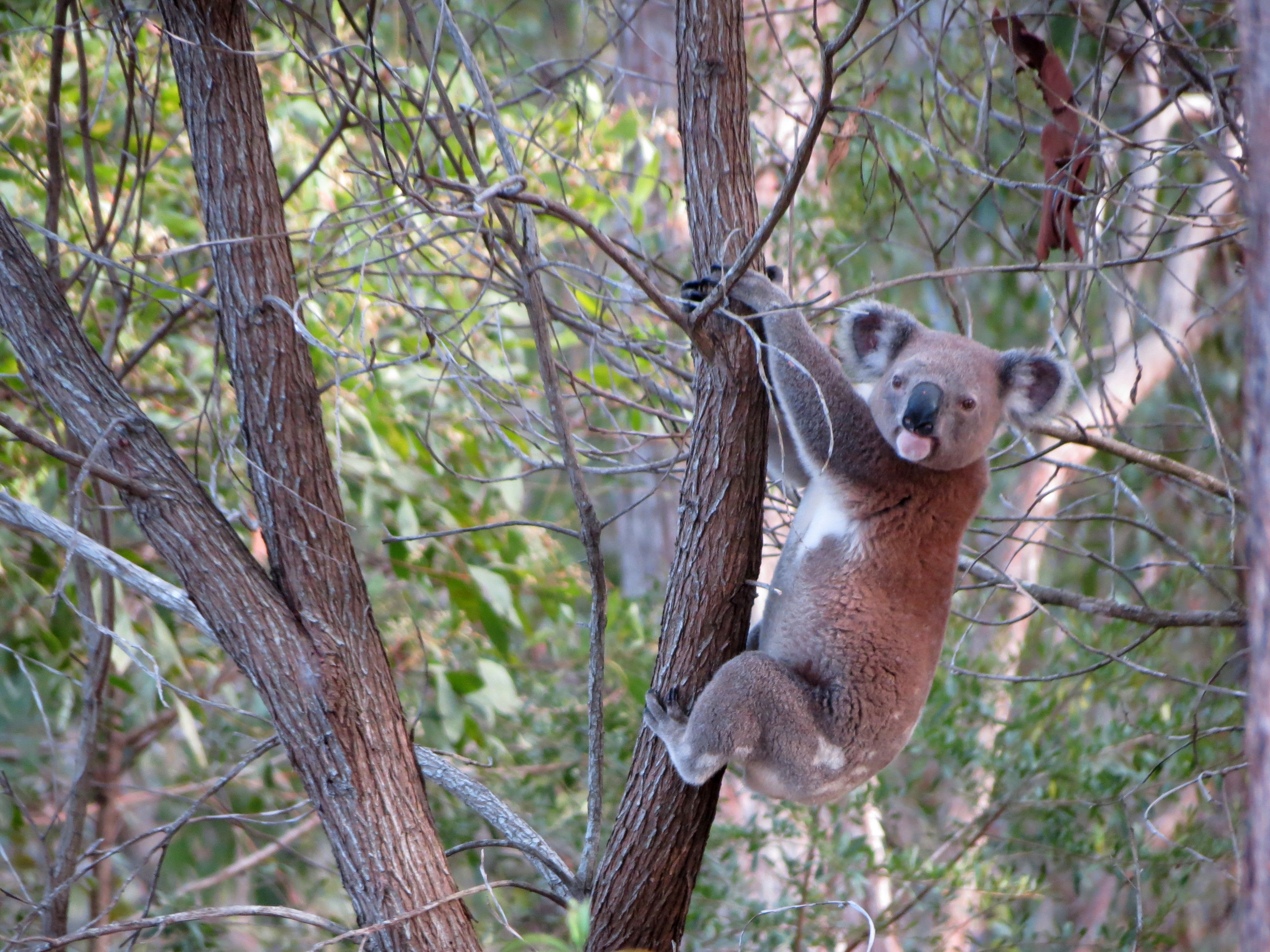
Koala - Fox Gully - 8 March 2014 - 7-01am

Koala with brown pelt? That is different.

By: Michael Fox

Saturday morning I was preparing to lead a guided walk for students from Griffith University and QIBT when my wife, Jude, calls to tell me there is a Koala in the tree behind our house. This is exciting because I can always find a tree with scratches to show people but if I can lead these students to a Koala in the wild right beside their university campus, that will be something special.

IMG_6243

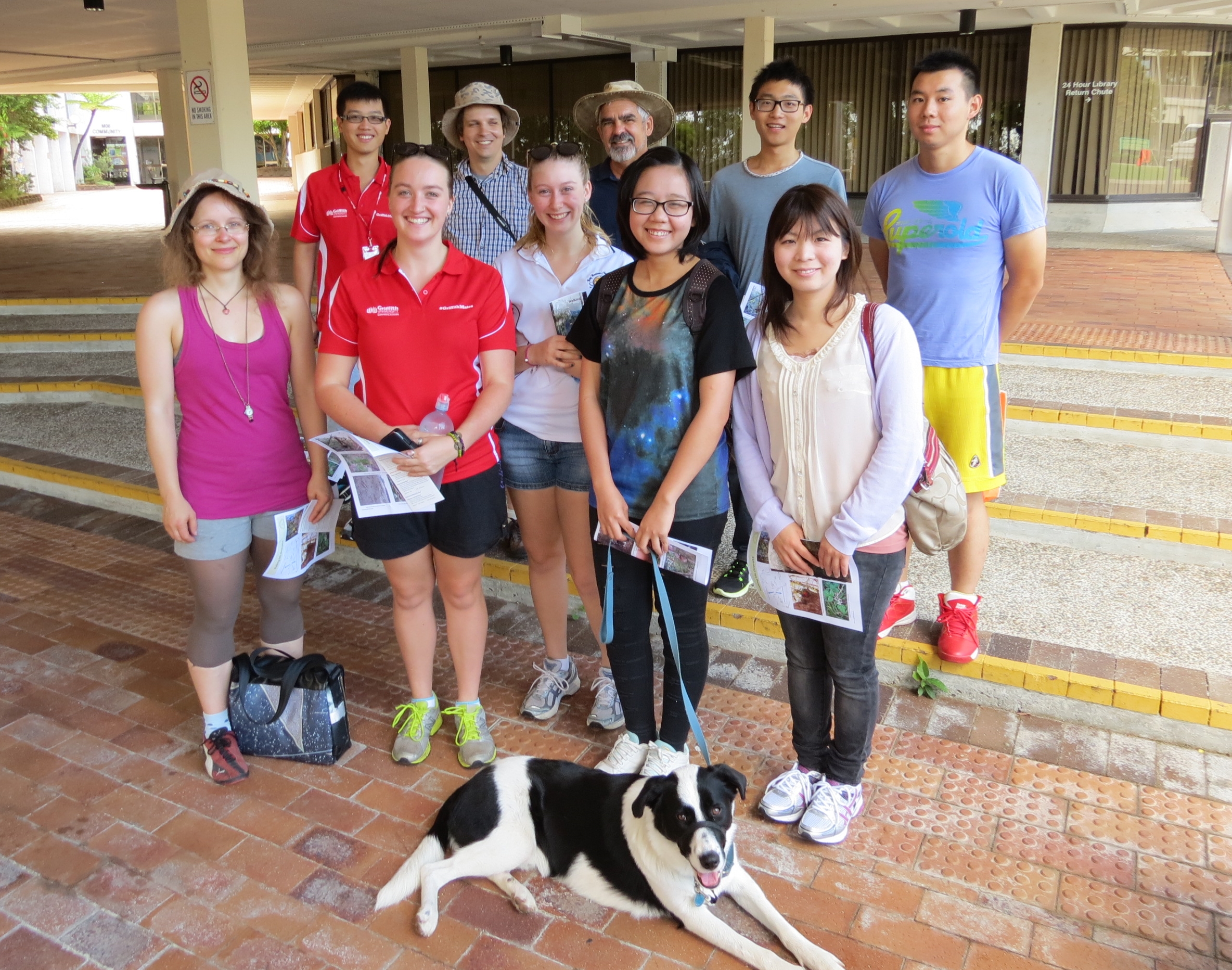
Griffith and QIBT student explorers

IMG_6093

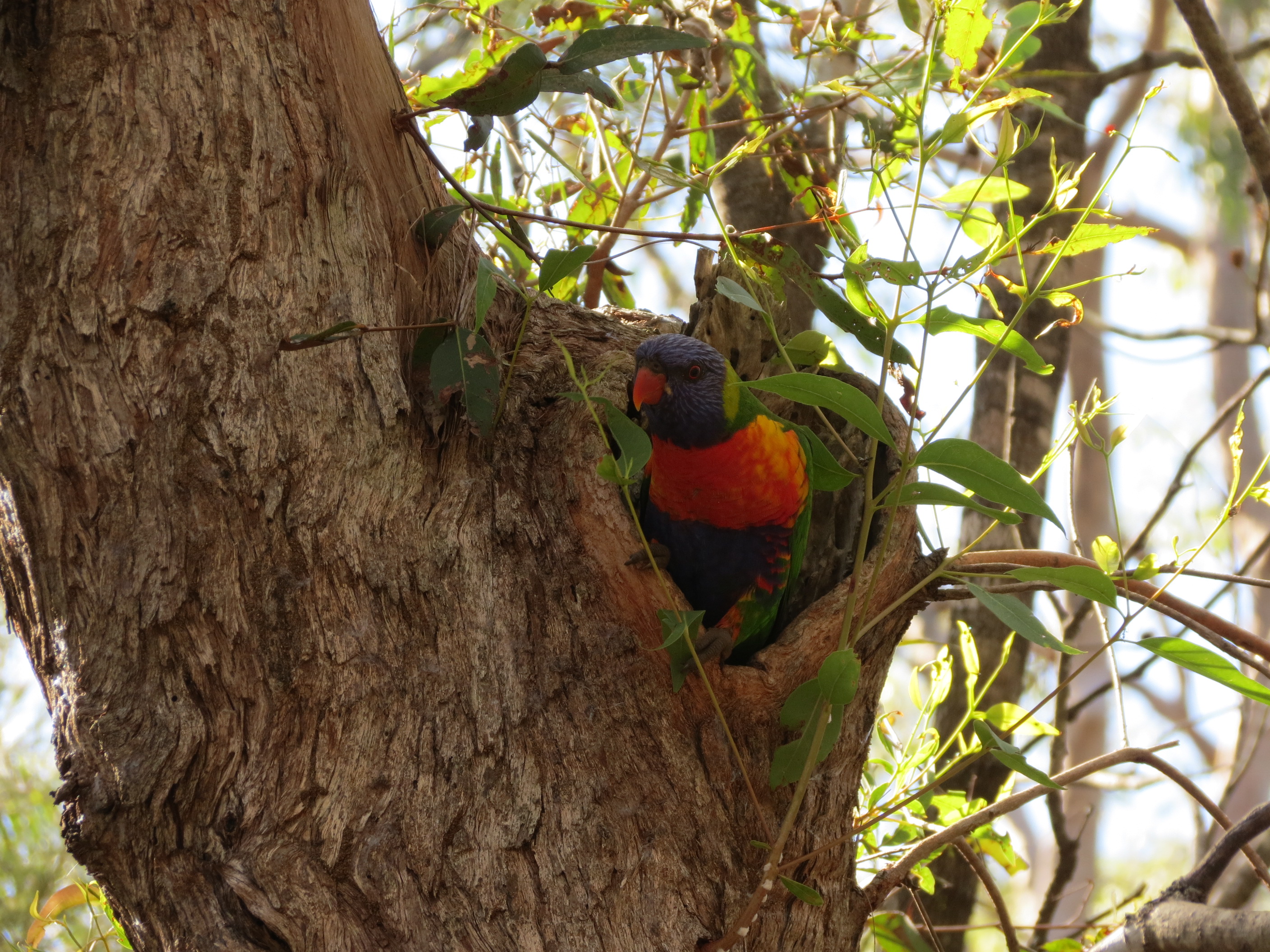
Rainbow Lorikeets

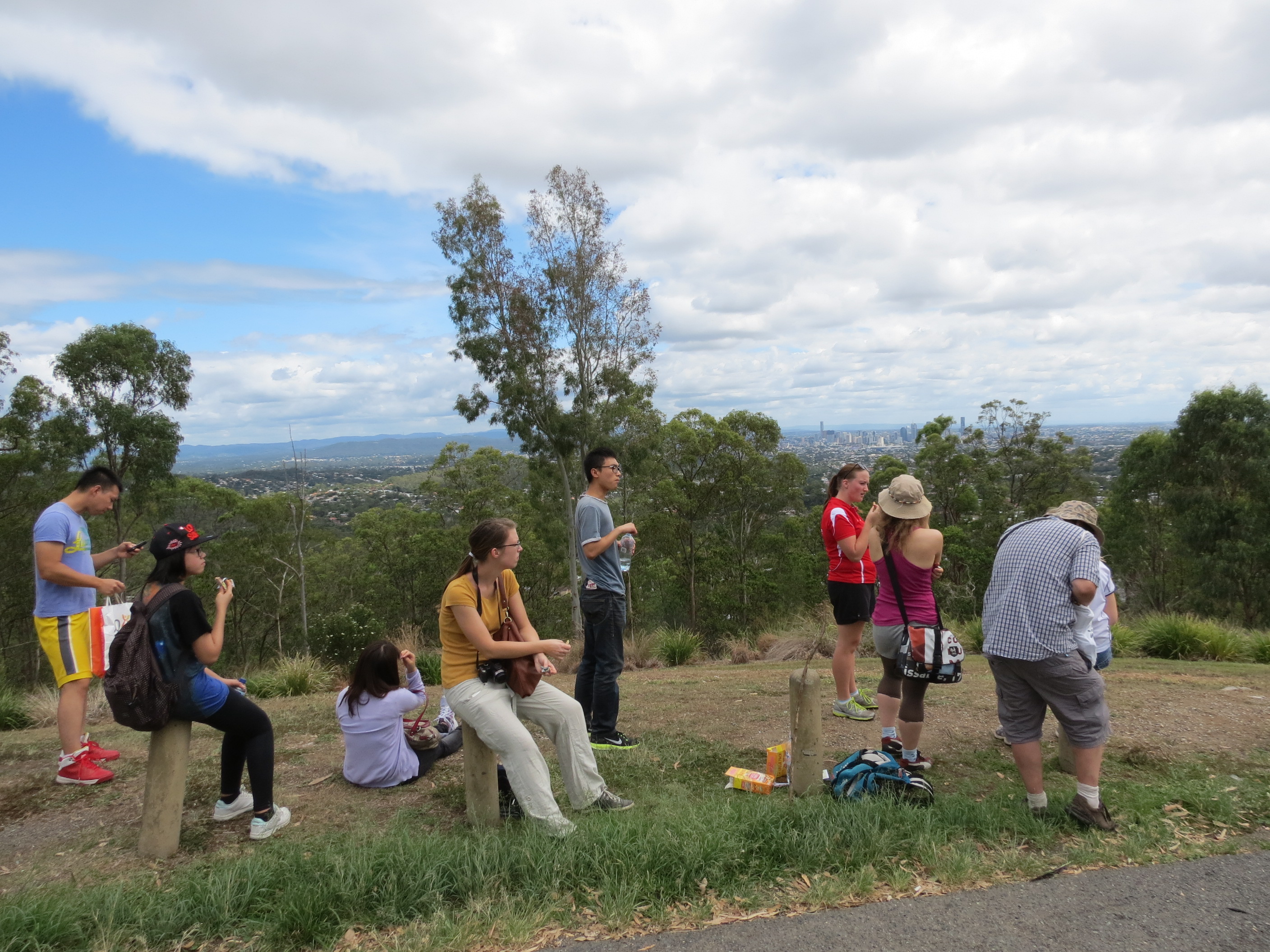
Laurie Deacon and I are joined by ten enthusiastic participants from all over the world – Europe, China, Japan, as well as country Victoria, all keen to explore Mt Gravatt walking tracks.

Acacia Way from Mt Gravatt Campus leads along the ridge that acts as the watershed between Ekibin/Norman Creek catchment and Mimosa/Bulimba Creek catchment passing a tree with a nest hollow being used by a pair of Rainbow Lorikeets Trichoglossus haematodus.

IMG_6232

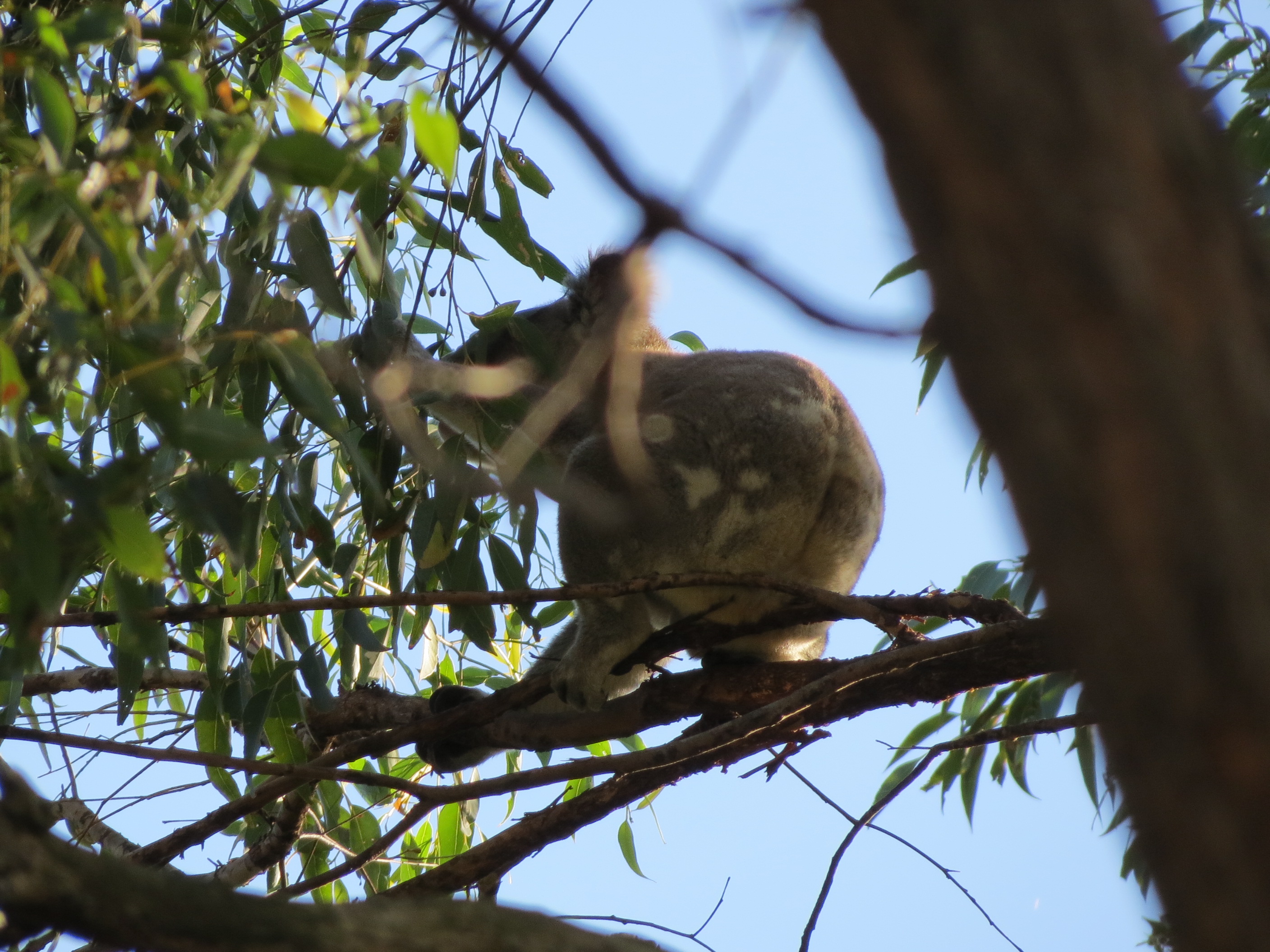
Koala Phascolarctos cinereus

I was able to introduce our visitors to bush food – Native Raspberry Rubus moluccanus, unfortunately not in fruit at the moment, and Settlers Flax Gymnostachys anceps with tough fibers used by aborigines to make fishing lines.

Joining the Geebung Track we continued onto the Fox Gully Bushcare site where I explained the nestbox project that is providing breeding habitat for Squirrel Gliders Petaurus norfolcensis and Kookaburras Dacelo novaeguineae.

IMG_6248

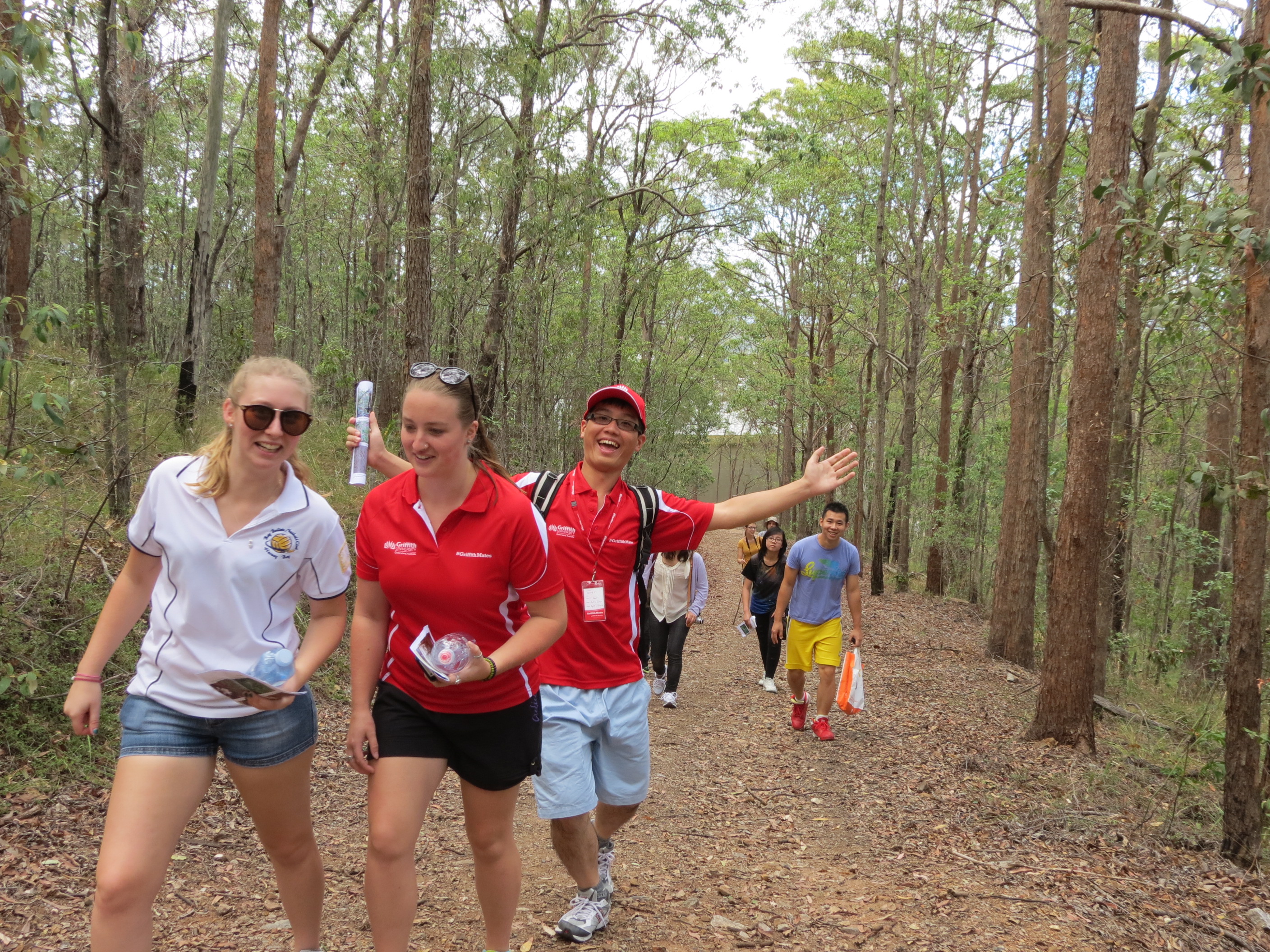
Mountain explorers powering up the hill

.

Our friendly Koala has moved high up into the branches, however, it was still a special opportunity to show visitors one of these amazing animals in the wild, not in a zoo, just 15 minutes from the city and right beside their campus.

.

.

.

Re-energised our team powered on to Mt Gravatt Lookout for a break before returning to campus.

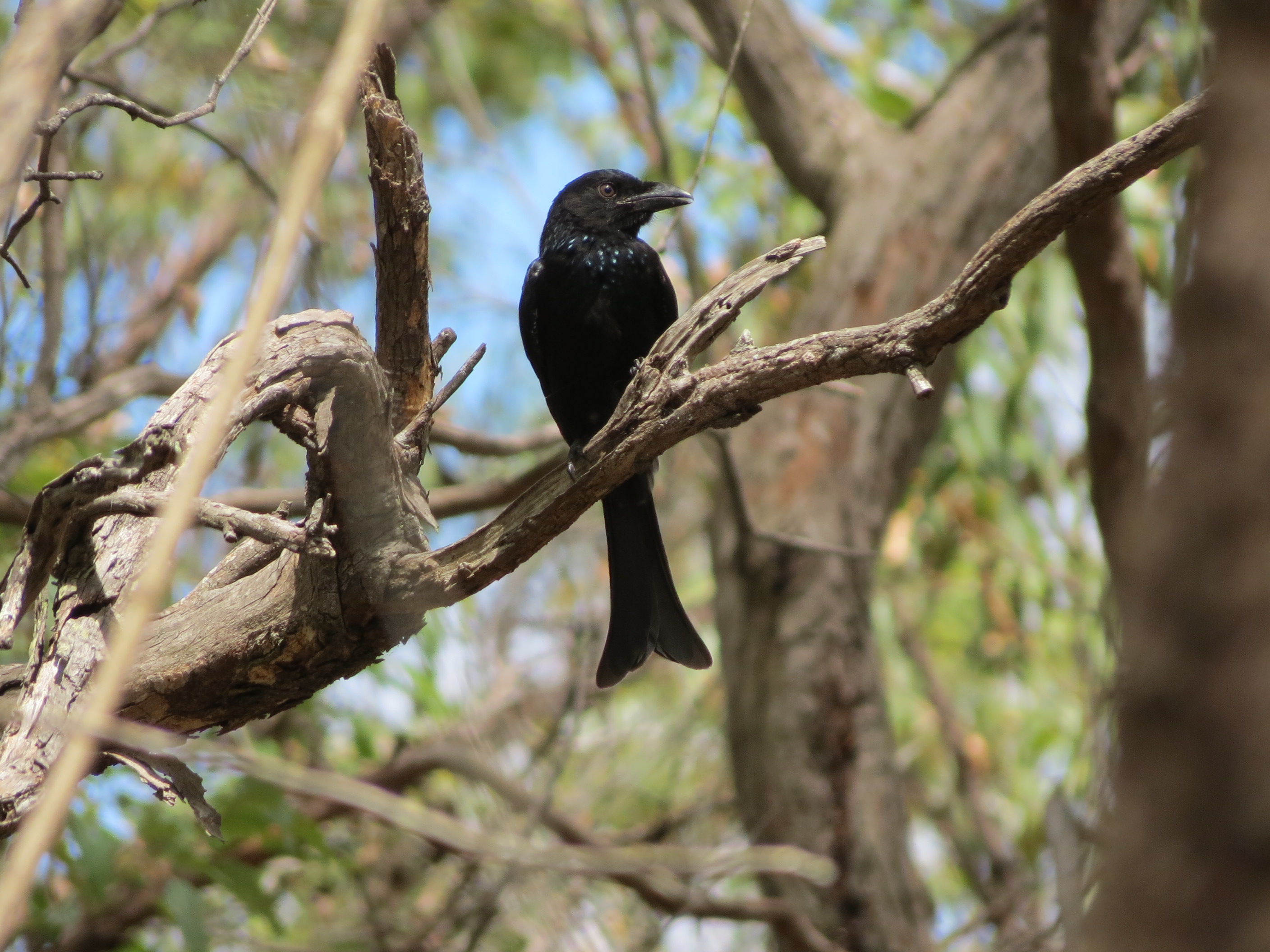
I was particularly pleased to photograph a Spangled Drongo on the way back. We had the Spangled Drongo on our species list but no photograph.

QIBT and Griffith students are invited to join us in our bush restoration work.See Griffith Mates for events. 

IMG_6250

Mt Gravatt Lookout

IMG_6258

Spangled Drongo Dicrurus bracteatus

By: Michael Fox

2014 is off to a good start. Lots of Koala sightings, including a joey which gives us two joey in Fox Gully in the last twelve months, Kookaburras hatching chicks and Squirrel Gliders breeding in our nest boxes and today a Brush-turkey chick.

IMG_4148

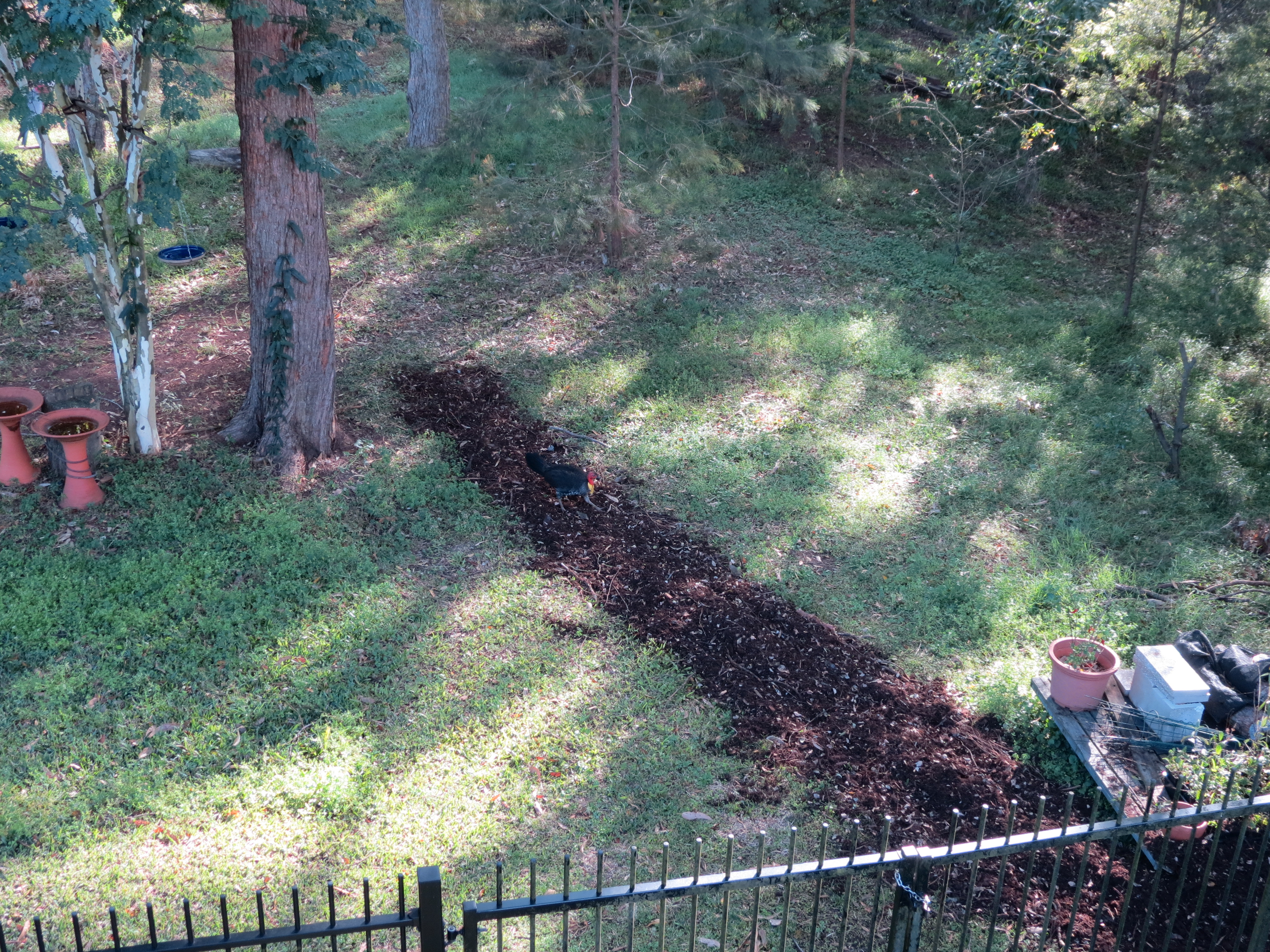
Very neat gardener – Brush-turkey pinching mulch

MVI_5711.MOV.Still004

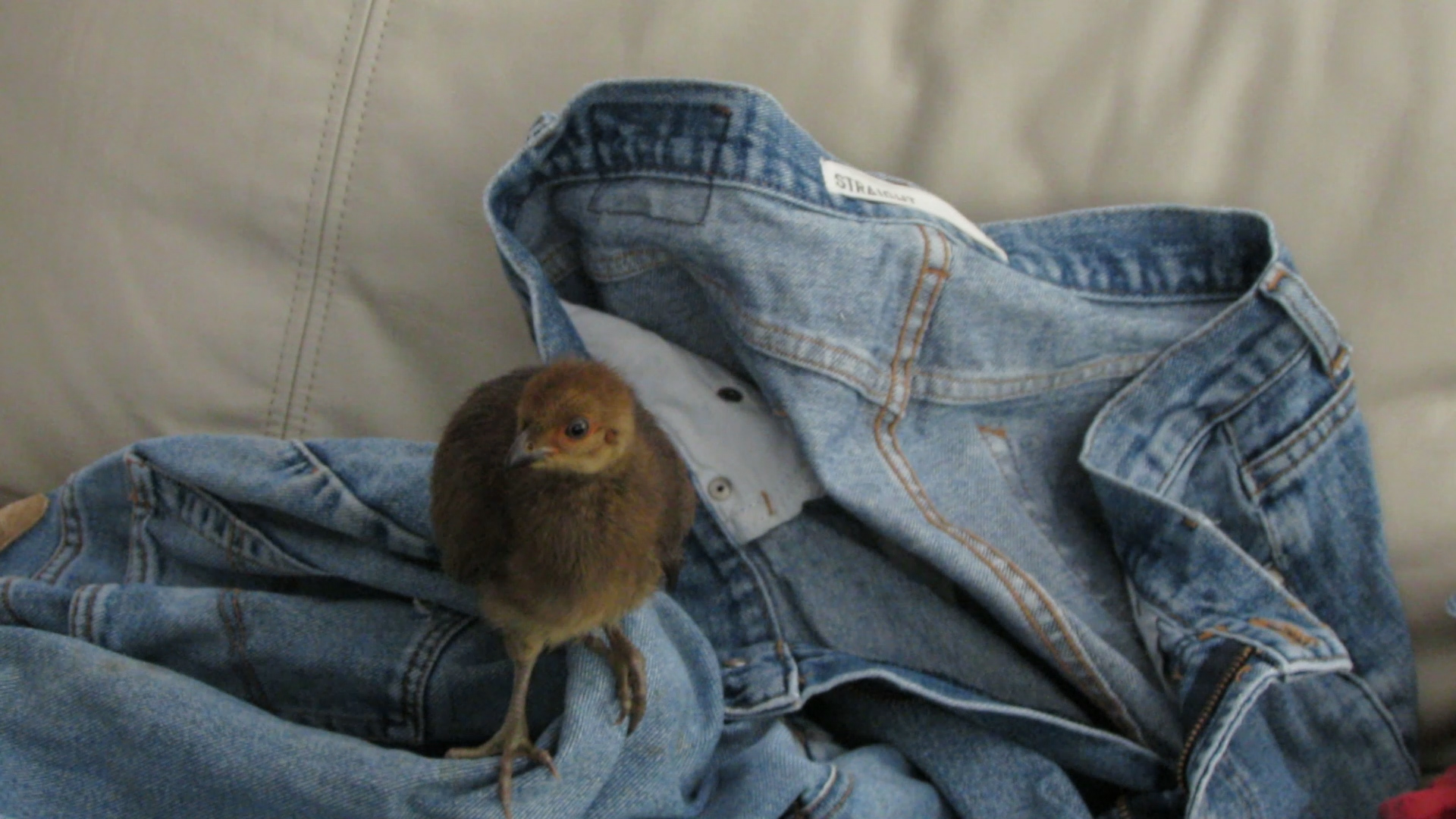
Mmmm … do I like this place?

We have been watching the male Brush-turkey building his mound and playing host to visiting females since July last year. One morning we looked out to find him pinching mulch … a very tidy gardener, he neatly scraped the mulch about 4o metres from our yard to his mound and left the grass spotless by the end of the day.

MVI_5711.MOV.Still010

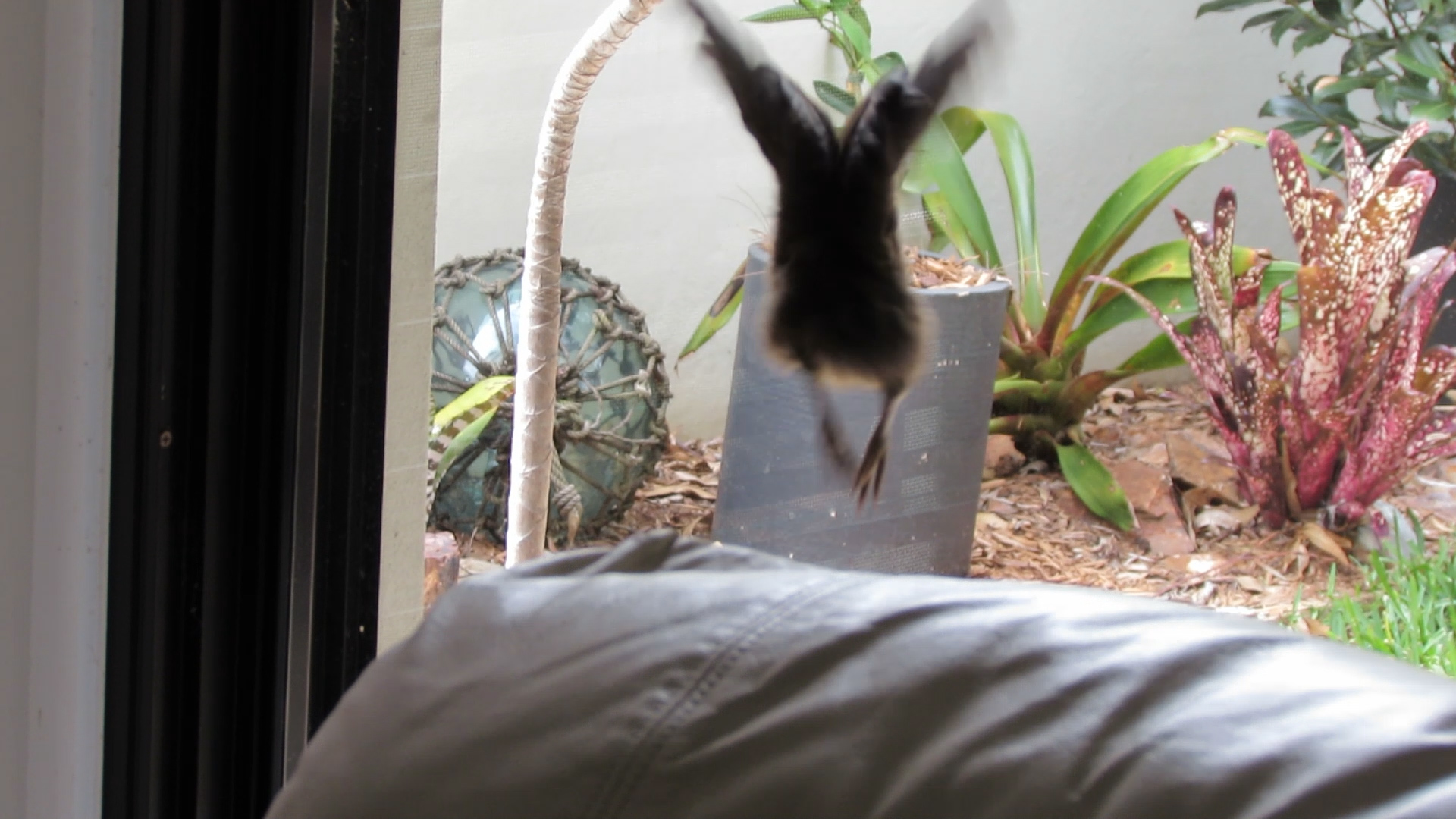
I can fly … whoops … what is that invisible wall?

We have been worried that we missed any hatching’s or that chicks had been taken by a fox or a cat. Today that changed when I walked into the lounge to find this beautiful and confused Turkey chick standing on my clean washing – fortunately just the old jeans I wear for bushcare.

IMG_5715

Released in relative safety of Fox Gully

I quickly grabbed the camera and recorded the visit. Obviously the chick decided the bush was more attractive than my old jeans, however, while he could fly he still has to learn about windows.

I caught him(or her) before he could hurt himself and released him in the safety of the tree cover of the gully.

I hope we have more Turkey chicks visit … perhaps outside so I don’t have to clean up the little gifts they leave behind on the furniture.
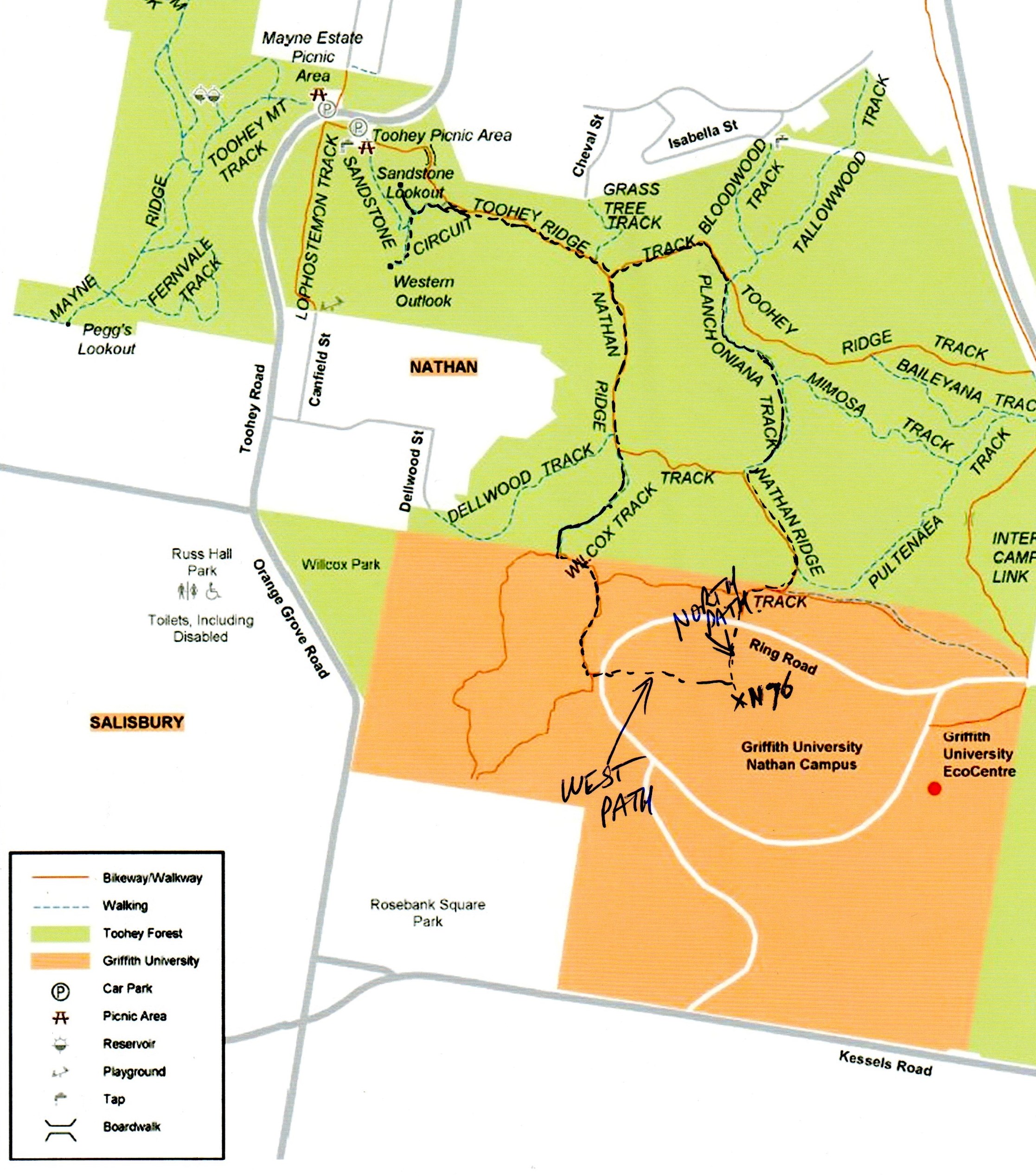
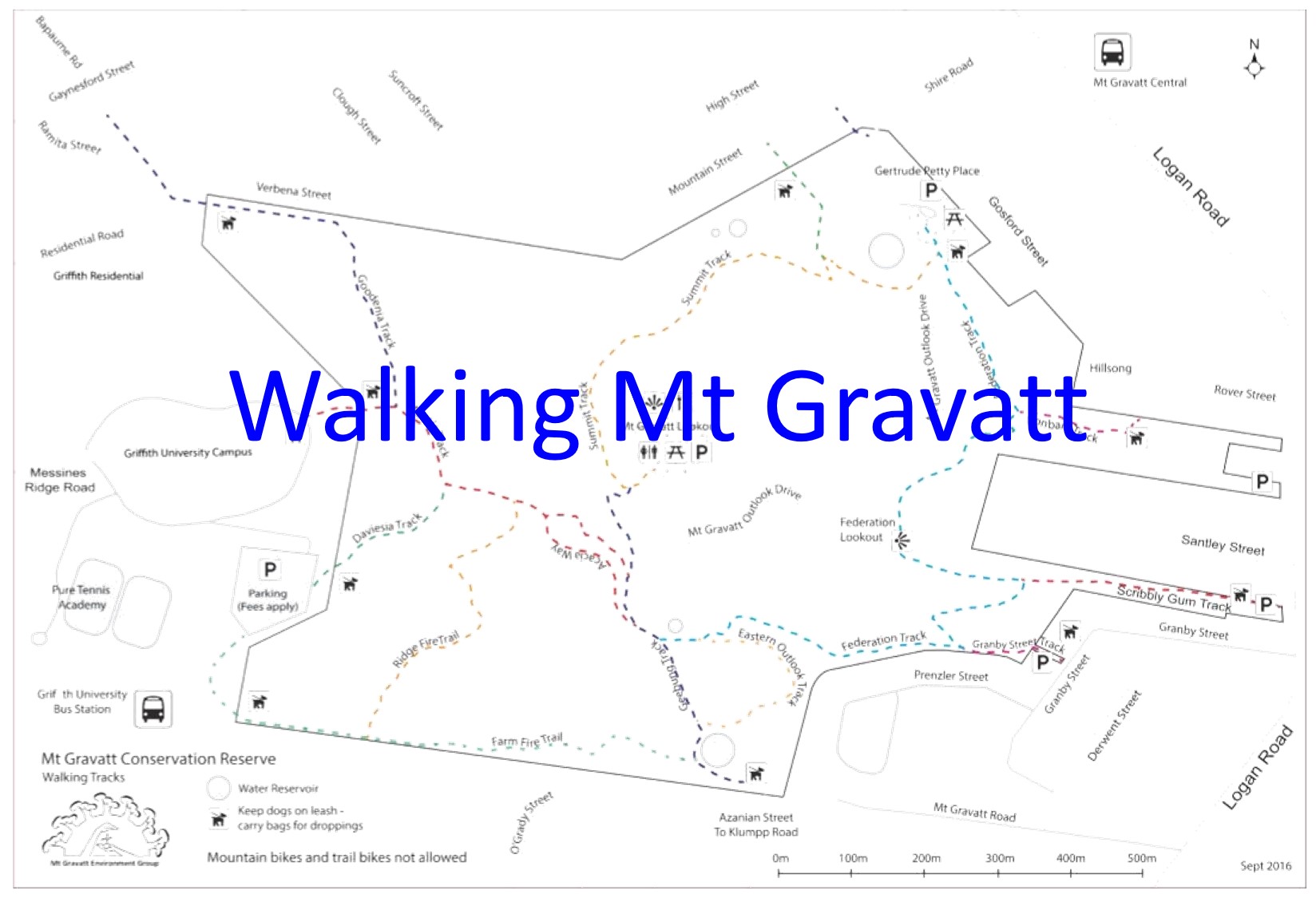
Griffith Mates Bushwalk - Map

Griffith Mates Bushwalk

By: Michael Fox

I joined neighbors Matt, Maya and Louie today for a walk to Sandstone Lookout, Toohey Forest.

As part of Orientation Week activities I am leading a walk-in-the-bush next Sunday for Griffith Mates. Griffith Mates are student volunteers who assist in orientation of  international by providing new students with a memorable first experience of life in Australia and at Griffith University.

IMG_4099

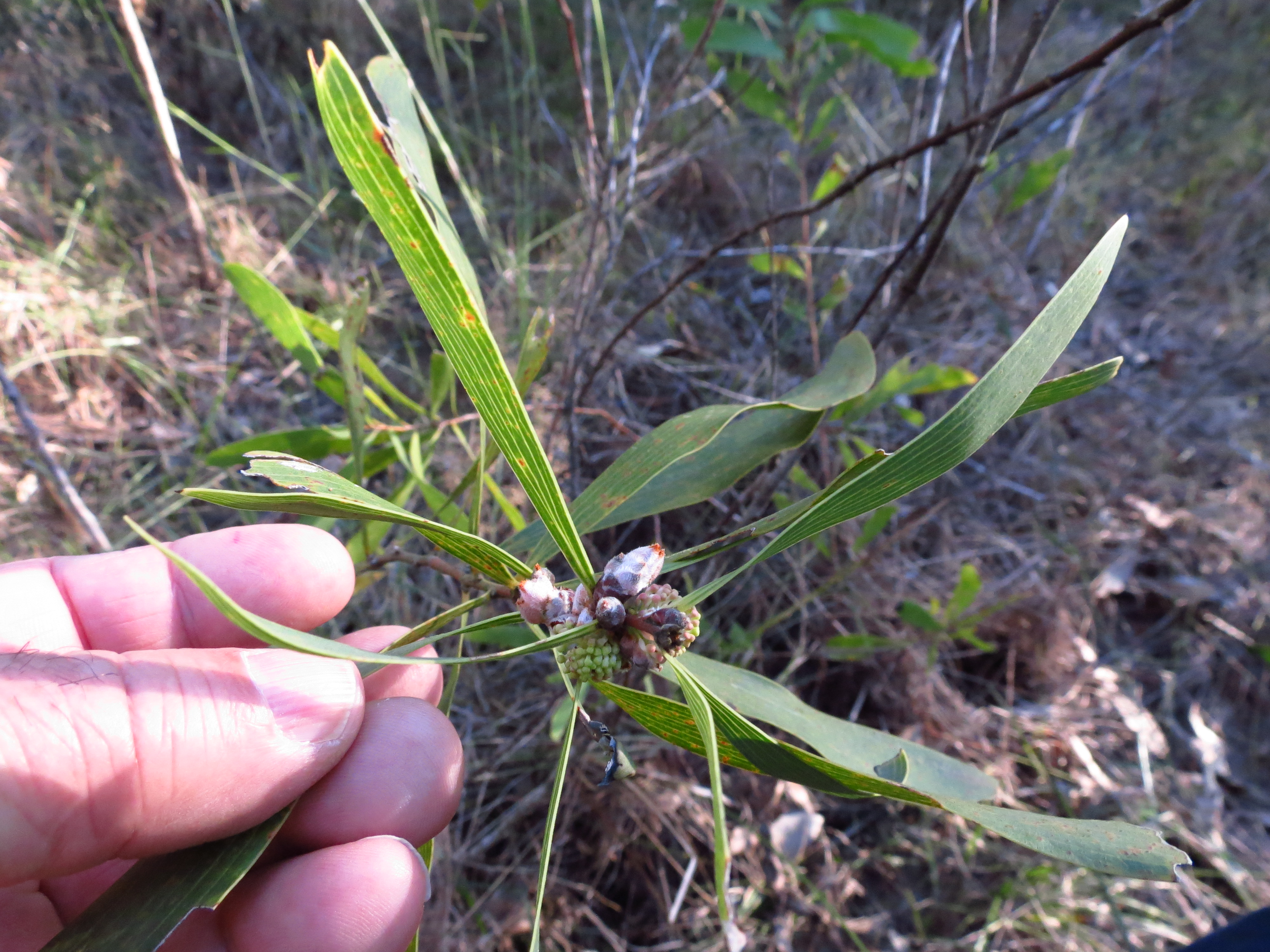
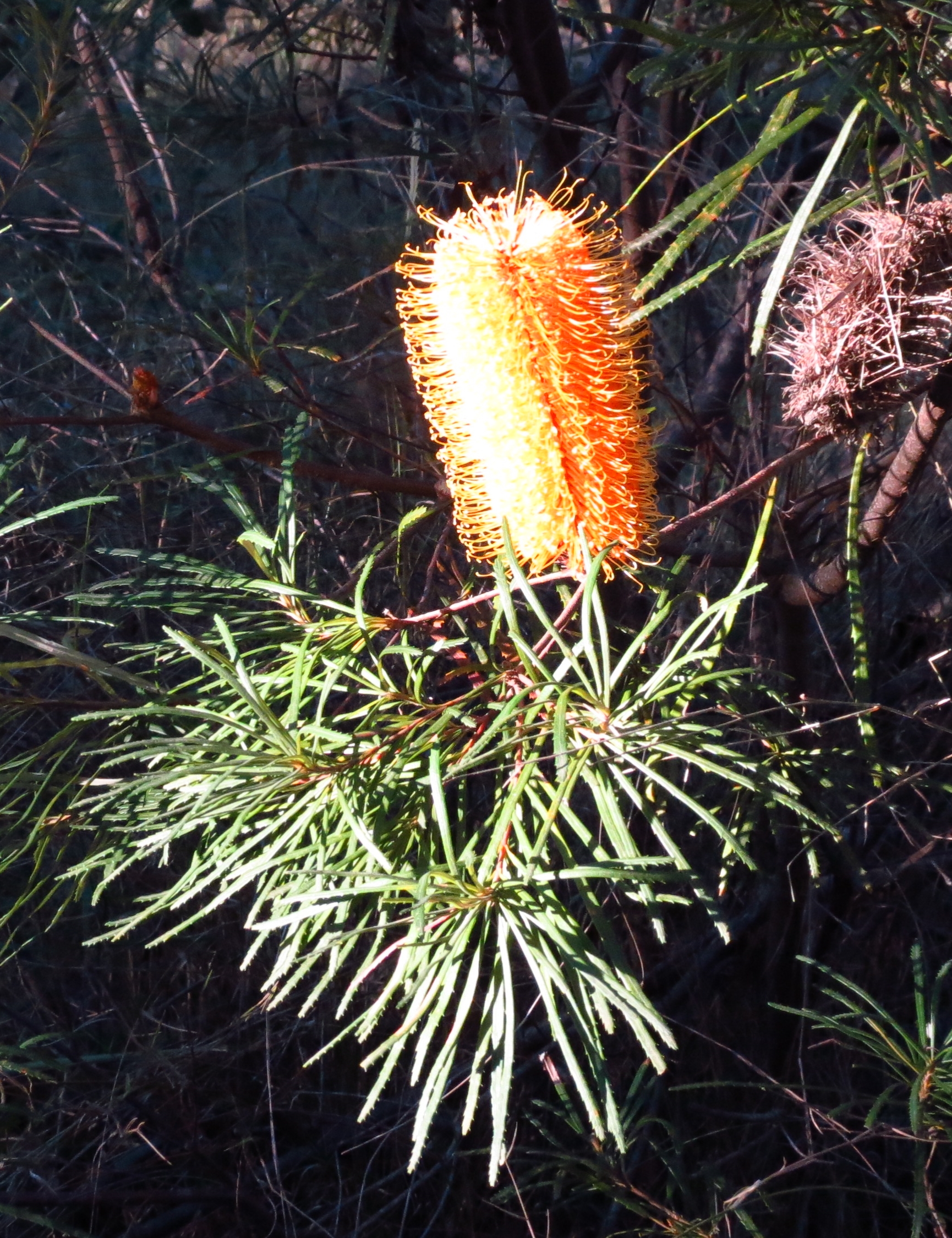
Hakea florulenta flower

The Nathan Ridge Track starts at the Ring Road opposite the North Path. The track has a high quality smooth bitumen surface ideal for young children on push-bikes.

d

IMG_4098

Hakea florulenta seed pods

d

We found an unexpected range of plants flowering even in mid-winter. An interesting example is the distinctive Hakea florulenta flowers, buds and seed pods. This species normally flowers in spring, around September/October so a winter flowering was unexpected.

d

d

d

The first time I found these plants I thought they must be wattles because of the leaf shape. However, the flowers and seed pods a very distinctive.
IMG_4078 close

Fan-tailed Cuckoo Cacomantis flabelliformis

d

d

d

d

We also saw a number of different bird species including Eastern Spinebill Acanthorhynchus tenuirostris and my first sighting of a very cute Fan-tailed Cuckoo Cacomantis flabelliformis.

d

s

s

IMG_4117

Koala scratches

s

s

s

The side track to Sandstone Lookout goes through a stand of eucalyptus with multiple Koala scratches.

d

d

IMG_4111

Matt

IMG_4115

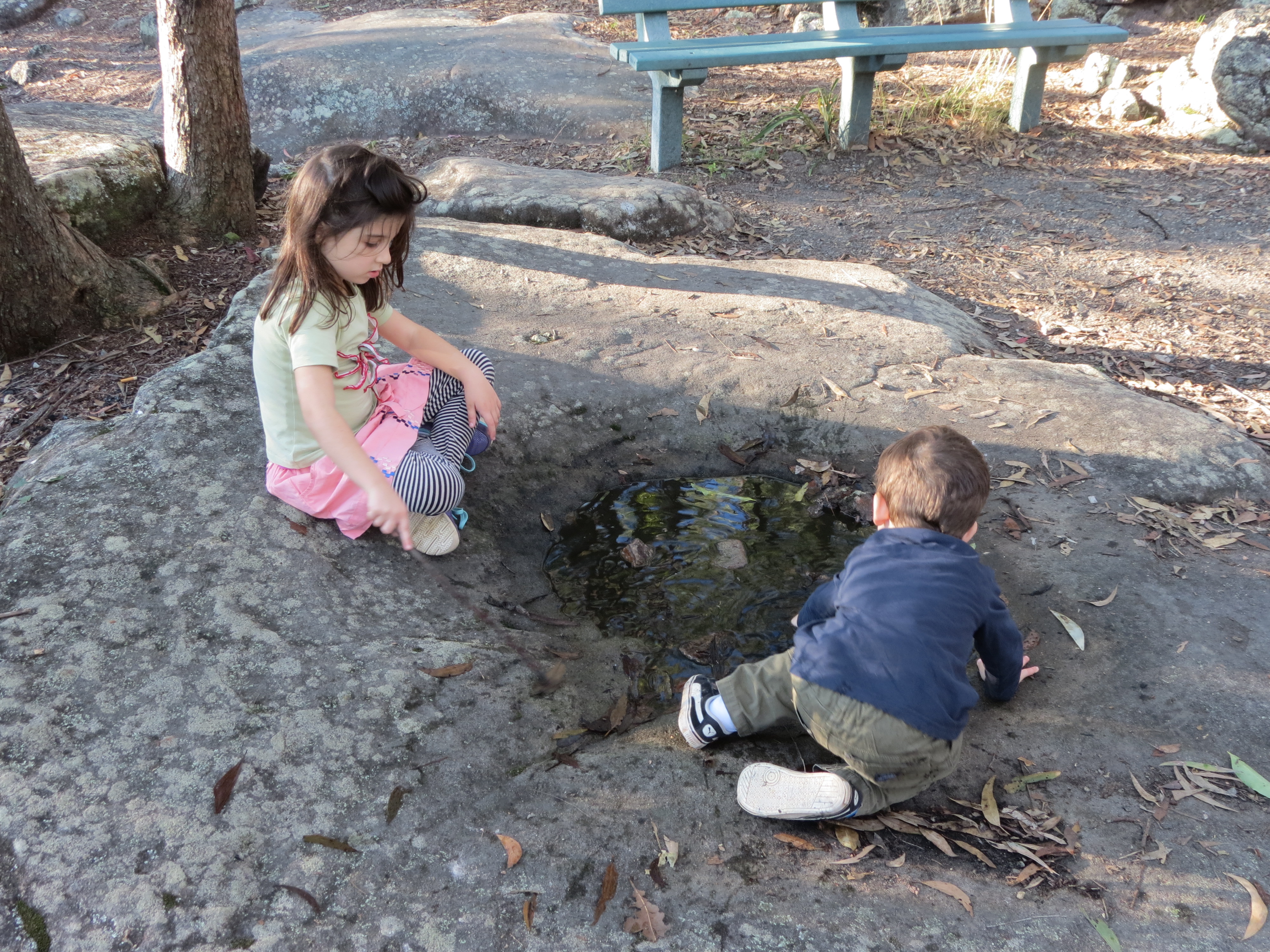
Maya and Louis – kids being kids

IMG_4120

Hairpin Banksia Banksia spinulosa

d

a

a

Sandstone Lookout is one of my favorite places in Toohey Forest and an ideal place for kids to be kids.

d

c

c

c

c

c

c

c

c

c

c

c

c

c

c

c

d

On our return I could not pass up this photography opportunity presented when the afternoon light picked out this Hairpin Banksia Banksia spinulosa.

By: Michael Fox

Anthela canescens 2 - 8 June 2013

Large Anthelid Moth – Anthela canescens
(head to left)

I am often asked what keeps me with the huge job of engaging our community in restoration of Mt Gravatt Conservation Reserve.

Today I realised that one thing that keeps me going is the sense of achievement when a young neighbour knocks on my door with a native snail or today a moth caterpillar in a box. When I was Liam’s age I was inspired by David Fleay’s nature notes in the Courier Mail, so I feel honoured to have to opportunity to help another young naturalist.

Anthela canescens - feet & prolegs - 8 June 2013

True legs and prolegs

I have added this new specimen to Flora and Fauna of Mt Gravatt Conservation Reserve crediting Liam.

Every time I find a new animal or plant, or have them arrive at my door, I learn something new as I work through identification and take close-up photos.

Anthela canescens - feet close - 8 June 2013

Prolegs gripping plastic box

Brisbane Insects (see photos of moth) and Lepidoptera Butterfly House are two valuable sites for identification of moths and butterflies.

My wife took one look at this specimen and said it looks like a Chinese Shih Tzu … all hair and attitude.

Anthela canescens - wiskers - 8 June 2013

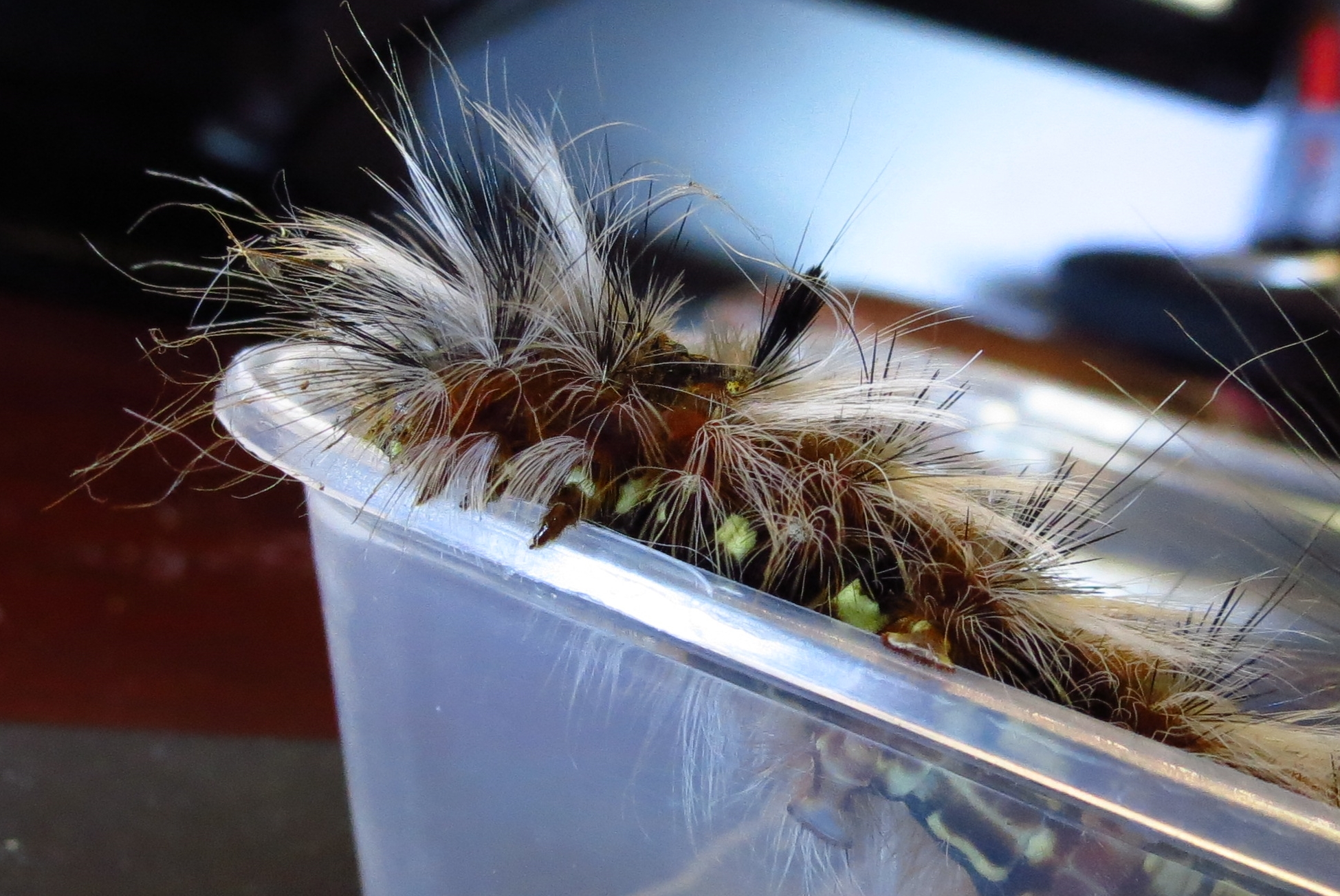
Black spine like hairs

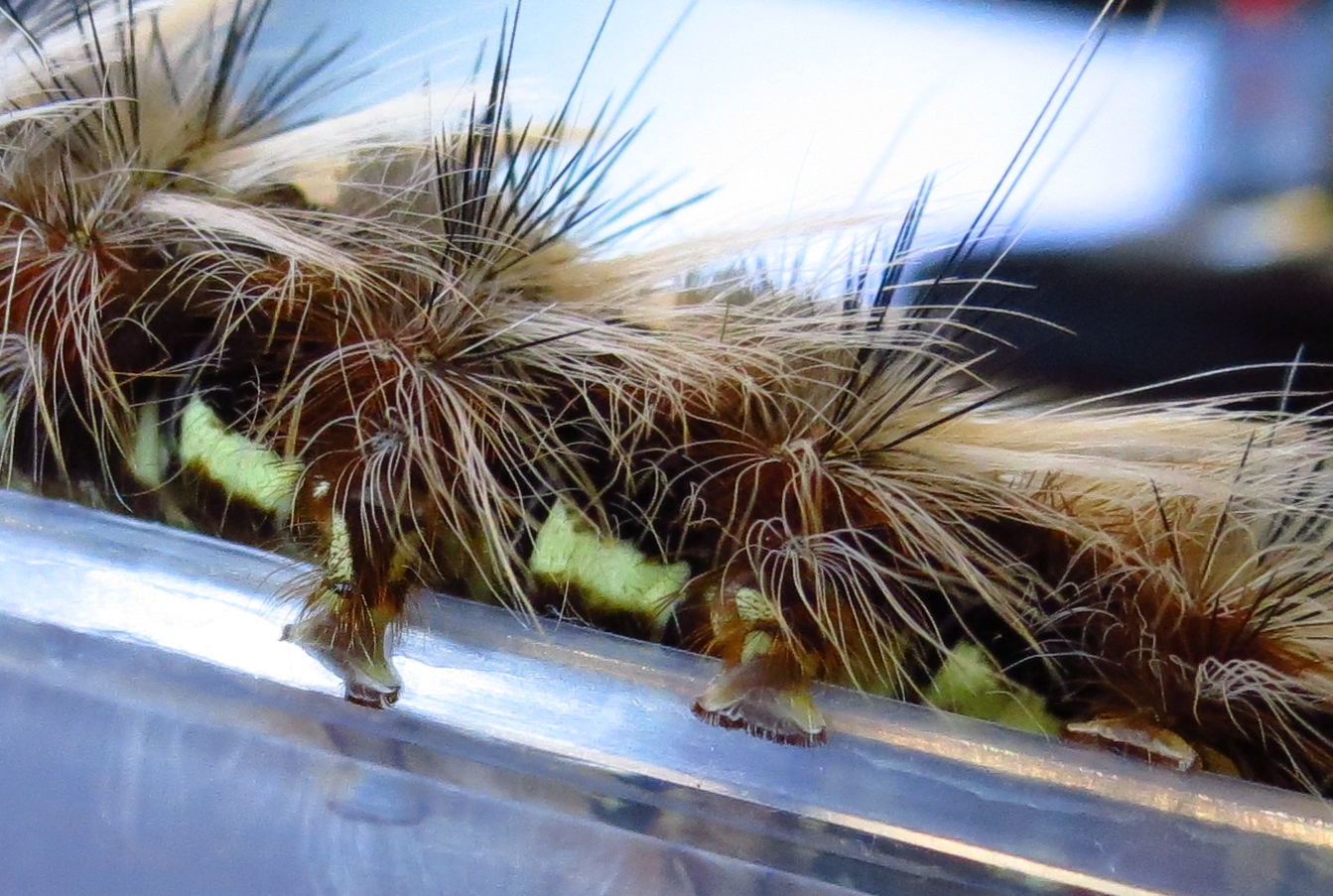
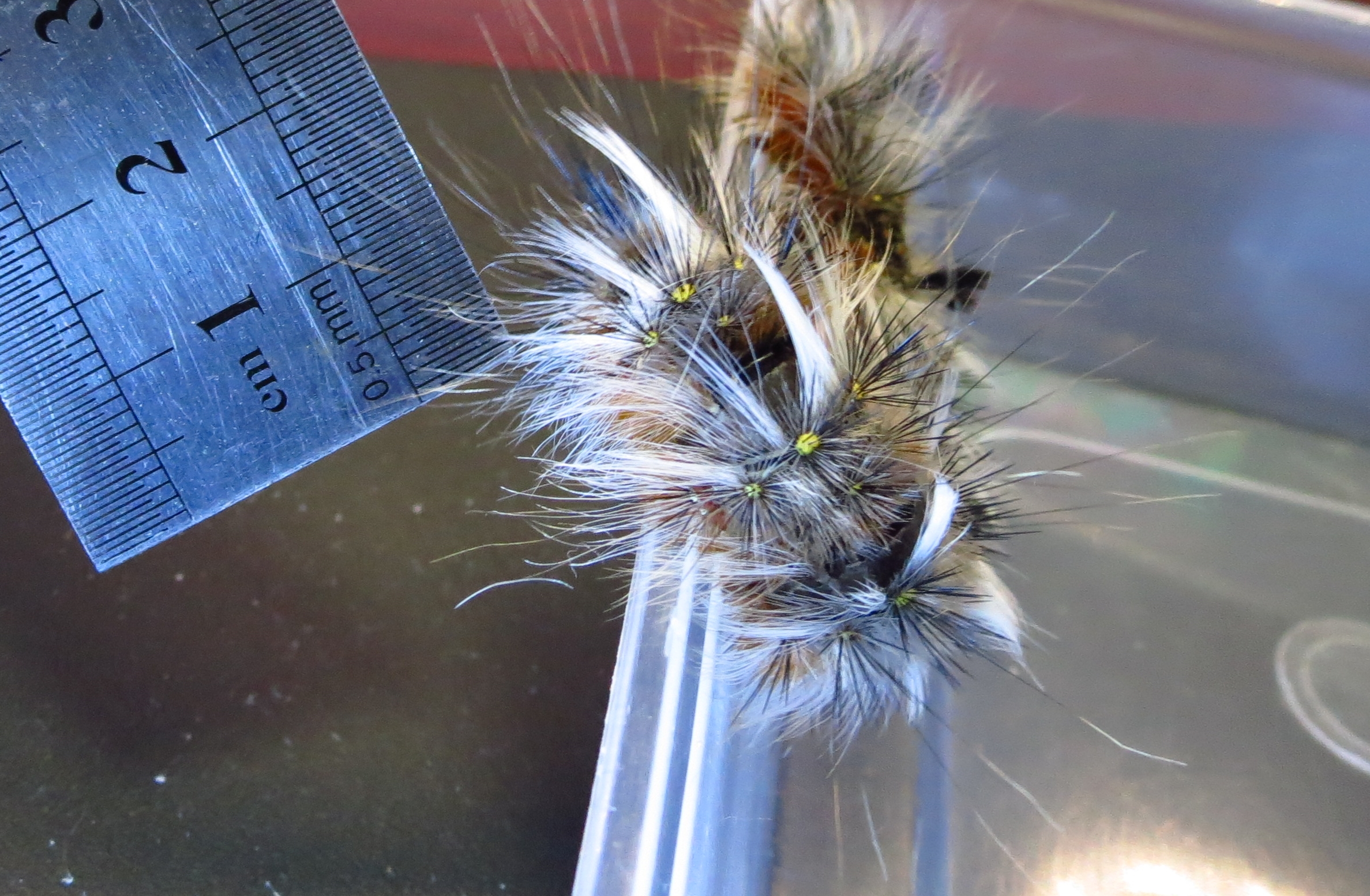
Macro-photos of the caterpillar legs shows the dramatic difference between the true legs attached to the thorax near the head and the prolegs attached to the abdomen. The prolegs look like large pads for gripping while the true legs look like something from a science fiction monster.

A close up photo of the hairy monster showed clusters of black spine like hairs growing out of bright yellow balls. These non-envenomating (no venom) hairs produced a mechanical irritation on contact. The hairs are fragile and easily dislodged from the caterpillar, they adhere to the surface of skin when the caterpillar is contacted. (Uni Sydney Department of Medical Entomology – Caterpillars)

The addition of Liam’s specimen means we now have twenty seven different moths photographed and identified and living in Mt Gravatt Conservation Reserve.

IMG_2908

Garrett with Coppa in Wildlife Ambulance

By: Michael Fox

Last month I joined Wildlife Ambulance officers, Garrett Smits and Vicki Pender, to return Coppa the Lucky Koala back to bushland adjoining Bulimba Creek at Mansfield. This is the third time Coppa has been taken to the Moggill Koala Hospital after being hit by a car on Creek Road.

Injured Koalas taken to the Moggill Koala Hospital are all given a name and micro-chipped before being released to bushland as close as possible to where they are found.

Coppa back in the trees - 10 Apr 2013

Southern Star – 10 April 2013

Coppa is a 5.5 year old male in good health … and very lucky.

  • 18/12/2011 – hit by car on Creek Road – course of antibiotics and observation for 10 days released north of Creek Road
  • 16/8/2012 – hit by car on Creek Road – bruising – obs for 3 days – released north of Creek Road
  • 19/3/2013 – hit by car on Creek Road – released yesterday bushland at end of Dividend Street Mansfield (south of Creek Road)

Vicki and Garrett are obviously proud of their Wildlife Ambulance work and particularly fond of this lucky Koala they have now rescued three times.

It was a pleasure to see a Koala return from hospital back to the wild. Koalas are breeding successful again in Mt Gravatt Conservation Reserve and bushland along Bulimba Creek. However, city drivers are not used to having to slow down for a Koala crossing the road. Breeding season from September to March is the time when Koalas are most likely to be crossing roads.

Coppa was hit in the same area each time … just within the 70km zone as you come down the hill from Carindale towards the Bunnings corner. Please be careful and report injured Koalas to 1300 WILDLIFE.

By: Michael Fox

Injured Koala with joey in pouch

“The car in front hit her and just kept going!” Sam Oberhardt was describing the events witnessed by a motorist who had pulled over to help the female Koala hit by a car on Creek Road Wednesday morning last week.

The second driver, Sam and another driver all pulled over the help the injured Koala and waited for the Animal Ambulance sent by Daisy Hill Koala Centre.

This beautiful animal touched the hearts of these generous individuals who stopped to help. She sat passively allowing herself to be removed from the road and placed in the car boot and covered to keep warm.

Safe and warm while waiting for ambos

Unfortunately the story has a sad end. Transferred to Australia Zoo Wildlife Hospital the Koala was found to have a joey in her pouch but with a broken arm and shattered jaw, she and her joey had to be euthanized.

What can we learn from this?

Gillian Brownhill, Winner Pride of Australia Environmental Medal and founder of Wildlife Rehabilitation Centre Eumandi, l makes an important point:

“The first car that hits an animal usually doesn’t kill, it just leaves them stunned. The second car that comes expects the animal to move off the road, then by the time they realise it is not moving it is too late and they have hit it again.”

We are all busy and the morning commute is not a time we want to be taking an animal to the vet. Gillian asks that, if we do not have time to wait, at least stop, move the injured animal off the road and call the Animal Ambulance. If you cannot wait, please note the address or some feature that will help the Ambulance find the injured animal. You can call the RSPCA Wildlife Ambulance 24/7 on 1300 ANIMAL

August to February is Koala breeding season so they will be on the move and sometimes try to cross busy roads. Swerving or stopping suddenly to avoid an animal is not recommend as that may cause a much worse accident. However, if our car does hit an animal we can all take the time to at least stop and remove the injured animal to safety. Sometimes that is enough as a stunned animal may recover by itself if is safe from being hit by another car.

Seeing Koalas on your walk to work or crossing our suburban roads is a something special. These iconic animals are returning to our suburbs. Visit Koala Tracker to report any sightings.

Daisy Hill Koala Centre Information Sheets:

Living with wildlife- Koala sick and injured

Living with wildlife- Koala planting trees

Living with wildlife- Koala misconceptions

Living with wildlife- Koala info sheet

Living with wildlife- Koala backyard

« Previous PageNext Page »