Another amazing critter in our bushland: Mottled Cup Moth caterpillar Doratifera vulnerans.

I have seen capsules on trees and wondered what they are. They look just like a gum nuts in the wrong place on the tree.

Yesterday I was asked to identify two caterpillars from a local bushcare site. My bushcare colleague had a painful encounter with the stinging spines on these otherwise pretty caterpillars so I put on disposable gloves before I opened the container to photograph these strange creatures.

Butterfly expert Helen Schwenchke put me on the right track when she suggested looking up Cup Moths on the Australian caterpillar identification site. These intriguing pink yellow spiky critters are caterpillars of the Mottled Cup Moth Doratifera vulnerans.

Back to the caterpillars for a real surprise. One had carefully stripped a piece of the eucalypt branch and started spinning silky threads: it was building it chrysalis while I watched!

This process took about 70 minutes with the caterpillar curled tight and completely covered in silk thread.

By  morning the chrysalis had hardened, shrunk to less than half the size and created this capsule that looks just like the gum nuts of the eucalypt trees the caterpillars feed on. See the picture at the top: the chrysalis is the one on the right.

Do you want to help clean up the home of these unique creatures? Register for Summit Cleanup on Sunday 6th March.

Join Mt Gravatt Environment Group (MEG) for Clean Up Australia Day 2011 and help clean up the habitat of some of our special animals.

Sunday 6th March 2011,  8 – 10 am.  Meet at the Echidna Magic Cafe on the summit.

Access via Mt Gravatt Outlook Drive (UBD 201:B2).

Click to Register for Summit Cleanup.

Mt Gravatt Reserve is home to koalas, echidnas, fireflies and forty-five species of butterflies.

Clean Up Australia Day is an opportunity to experience this unique bushland and improve the habitat for our wildlife.

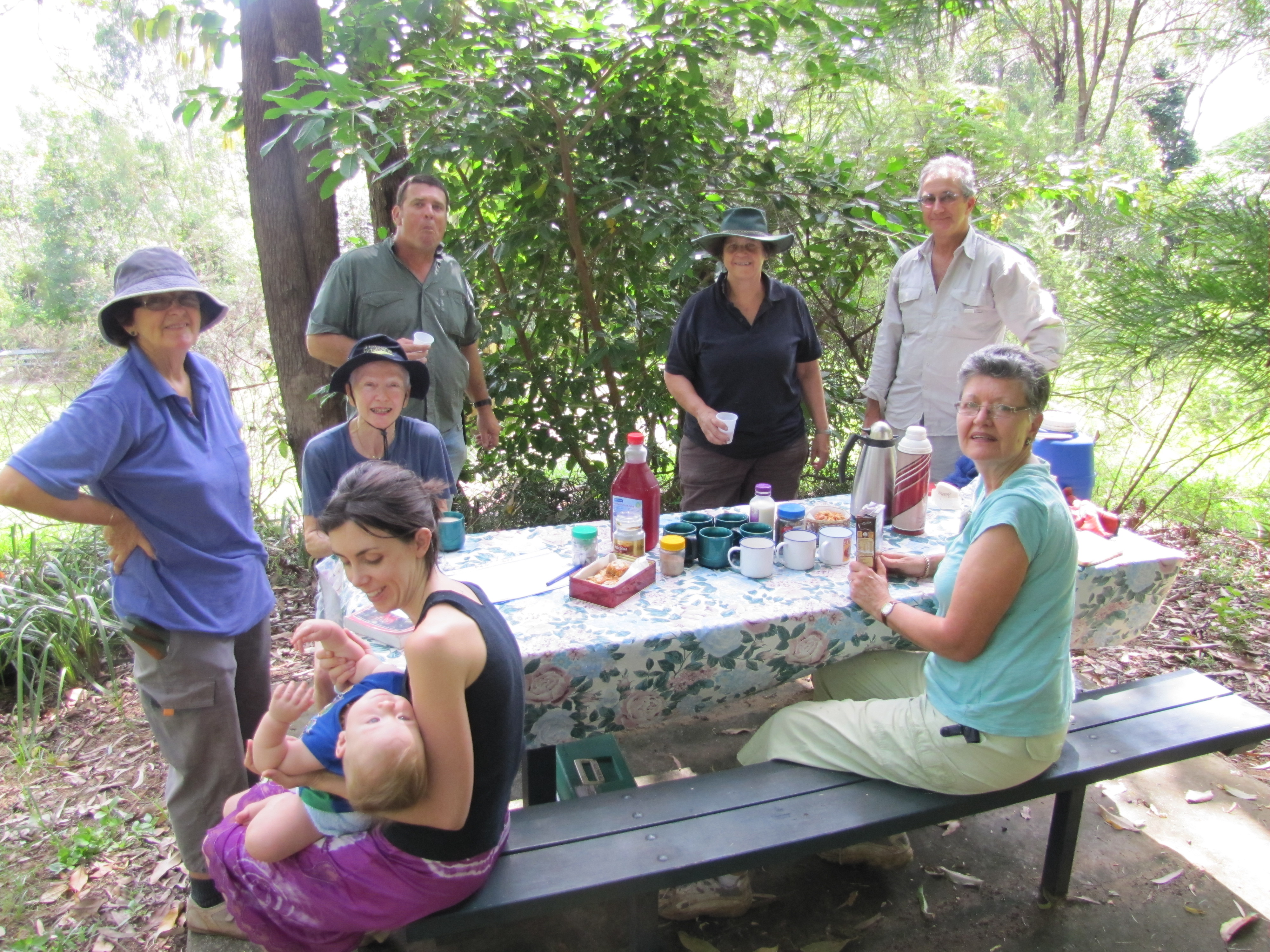
Two large pile of weeds have been removed so it is time for a cuppa with the Geutrude Petty Bushcare team. Around the table today are Judy, Ian, Sarah, Nancy, Brett, Morag, Susan and Mannix.

It is always interesting to sit down with the team at Geutrude Petty. The range of experience around the table is extraordianary. Today the group included a retired business owner, an expert in breeding frogs, an envrionmental restoration professional, Meals on Wheels volunteers and a person who hiked into the Stinson wreck to clean up and carry out rubbish: a 35 kilometre treck climbng 1040 metres.

Gertrude Petty restoration is creating an amazing picnic opportunity you normally only find in a national park outside the city. Our Australian wildflowers are often small and easily overlooked. Visit Gertrude Petty virtually any time of the year and you will find amazing flowers. The Native or Ivy-leaf Violet Viola banksii are flowering at the moment.

The Gertrude Petty team meets 8am to 10am last Saturday of each month and 3pm to 5pm every Wednesday. For details/contacts see 2011 MEG Calendar.

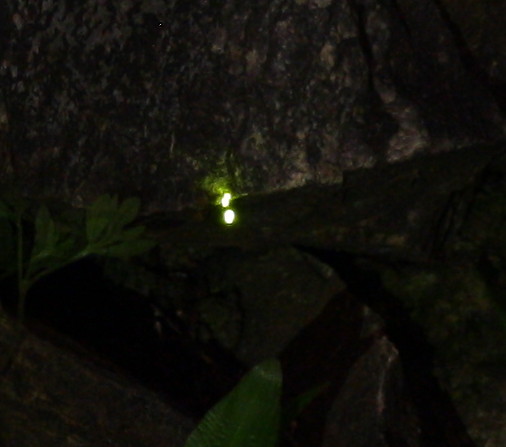
Mycena lampadis Luminous Mushroom

Fireflies now glow-in-the-dark mushrooms!


Same mushroom under torch light

Carol, who sent the firefly photos, called me late the other night inviting me to see the glow-in-the-dark mushrooms in their gully. Extraordinary, spooky and a very very special experience: walking thought the dark with the only light these amazing fungi.

Seeing these luminous mushrooms during the day they look like just another delicate white fungi.

The Springbrook Research Centre has information on bioluminescence.

The Mountain continues to surprise and delight. Listen to my interview with Kelly Higgins-Devine: 612ABC Drive.

See more of our amazing mushrooms: read my article on Forest Fungi.

Home to koalas, echidnas, gliders, frogs, fireflies, forty-two butterfly species and two hundred and fifty-one native plant species Mt Gravatt Reserve is a unique haven in our city only 10 km from Brisbane CBD.

I realised just how valuable this resource is when we visited Wivenhoe Outlook picnic area in Brisbane Forest Park. Approximately 60 minutes from the CBD, via a slow winding road the Outlook is still definitely worth a visit. However, even protected by 25,000 hectares of national park, the first plant I noticed when I got out of the car was the familiar Cobblers Peg Bidens pilosa, a common weed on Mt Gravatt.  Seeing this familiar weed actually gave me a perverse sense of optimism. We have similar weeds but we have a tiny fraction of the area to restore and we have a growing population, read: potential bushcare workforce, only a few minutes walk from the mountain.

Mt Gravatt Reserve is only 66 hectares however the native plant diversity is equal to 10% of all plant species in the 22,600,000 hectares of Great Britain. This extraordinary level of plant diversity is also why we have a wide range of native animal species living just across our back fences. The opportunity exists right now, to strengthen and grow something that could never be recreated in places like Great Britain or Europe.
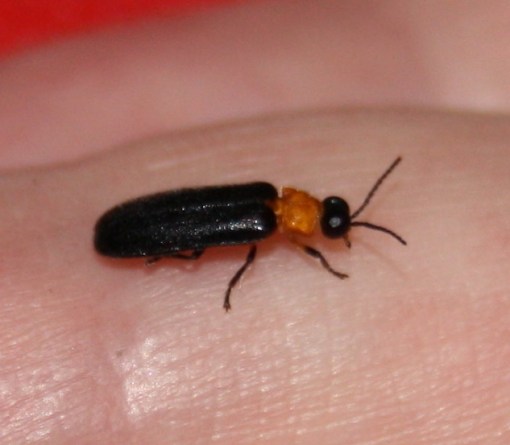
Something truly unique to our Mt Gravatt community: waking with Kookaburras, walking with echidnas, reading by firefly light. Ok, that last one is a stretch however we do have fireflies in our gullies so keep your eyes open. Thanks to Carol Kloske for these photos of these surprising insects. Firefly Luciola nigra

Population growth is putting pressure on our natural areas and in particular the expected population growth outlined in the Mt Gravatt Corridor Neighbourhood Plan will impact on how we relate to Mt Gravatt Reserve.

How is MEG working to turn population growth into a powerful positive for Mt Gravatt Reserve?

Active restoration work:

  • MEG has four bushcare groups: Gertrude Petty Place, Rover Street, Fox Gully and Roly Chapman Reserve. For details see: 2011 MEG Calendar
  • Restoration focused on:
    • edges of the Reserve to reduce edge-effect of private gardens
    • wildlife corridors linking Reserve with other habitat

Build awareness and change damaging behaviour:

  • MEG focuses on reducing three key threats:
    • Weeds, garden waste and rubbish dumping
    • Downhill mountain biking, trail bikes & unofficial tracks
    • Feral and domestic animals
  • Flora & Fauna of Mt Gravatt Reserve – available on CD from B4C Nursery
  • Environmental Workshop in Spring – details available closer to date

As our community members start to really “see” what is around them every day they will discover a miniture Brisbane Forest Park just over their back fence.

Thanks to Bill and Alison Semple we have photographic evidence that echidnas are still active on the Mountain.

Alison photographed this prickly character foraging for food last week. Bill and Alison were walking on the mountain when they were made this special find.

Echidnas Tachyglossus aculeatus is one the few ground dwelling mammals found in the Reserve. Commonly called Spiny Anteater, for obvious reasons, dig into ants nests and termite mounds using their long tongue to search out dinner. Like the platypus these fascinating mammals lay eggs like reptiles then nurture their young in a pouch feeding them on mother’s milk. It never ceases to amaze me that we can find special animals like this only ten minutes from Brisbane CBD.

Keep an eye out for the beautiful Blue Tiger butterflies – Tirumala hamata visiting the mountain at the moment. Note the tiger like spots on the head.

When I could not identify any caterpillar (larval) food plants in the Reserve for these butterflies I contacted Dr Carla Catterall who kindly shared her extensive knowledge. It turns our Tigers are tourists just visiting Brisbane on holidays.

Dr Catterall advises that the Tiger Blue is a migratory species – so to understand why we are seeing them we need to search for info about its migratory habits rather than its food plants.

Because of these large-scale coordinated movements by many individuals at once (which are poorly understood), this species appears and disappears in large numbers from time to time (and apparently there are a lot of them in the Brisbane region at present).  It is also known to migrate over water (for example, I [Carla Catterall] have seen them flying across the ocean between Gladstone and Heron Island).

The larvae would have hatched, fed and pupated somewhere else, probably a long way away from Toohey Forest (tens to hundreds of km).

Thank you Dr Catterall.

In February, Mt Gravatt Environment Group proposed an alternative approach to tree clearing on the mountain: Restoring Unique Scenic Outlook Below is a copy of the Letters to Editor section of Southern Star – June 9, 2010. Click on image to enlarge for reading.

MEG is already working closely with BCC Habitat Brisbane on restoration of four Mt Gravatt bushcare sites and has expressed interest in restoration of the Mt Gravatt Outlook. However, as a volunteer organisation with limited resources our activities are critically dependent on careful planning and co-ordination with other Mountain stakeholders: allows elimination of rework and other unnecessary work. While we provided detailed comment on the 2008 Draft Land Management Plan, we have not yet received a copy of the Interim Land Management Plan which we understand is currently being used to support decisions such as tree clearing on the summit.

Fleshy Pore fungi are a suprise. They often look like the mushroom form gilled fungi from the top, however, underneath instead of gills you discover a sponge like fertile surface.

Fleshy Pore fungi have some amazing shapes.

The Stinkhorn fungi are some of the most spectactular, unusual and, yes, stinky fungi in the forest.

Craypot Stinkhorn Colus pusillus

The reddish arms form a basket with ahollow in the centre. The arm are coated with brown faeces like rotten meat smelling coating that attracts flies to disperse spores.

 

The Craypot fungi bursts from a cluster of white gelatinous egg shapes.

k

k

k

k

k

kn

h

h

h


Starfish Fungi Aseroe rubra

This unusual fungi is commonly found in suburban gardens.