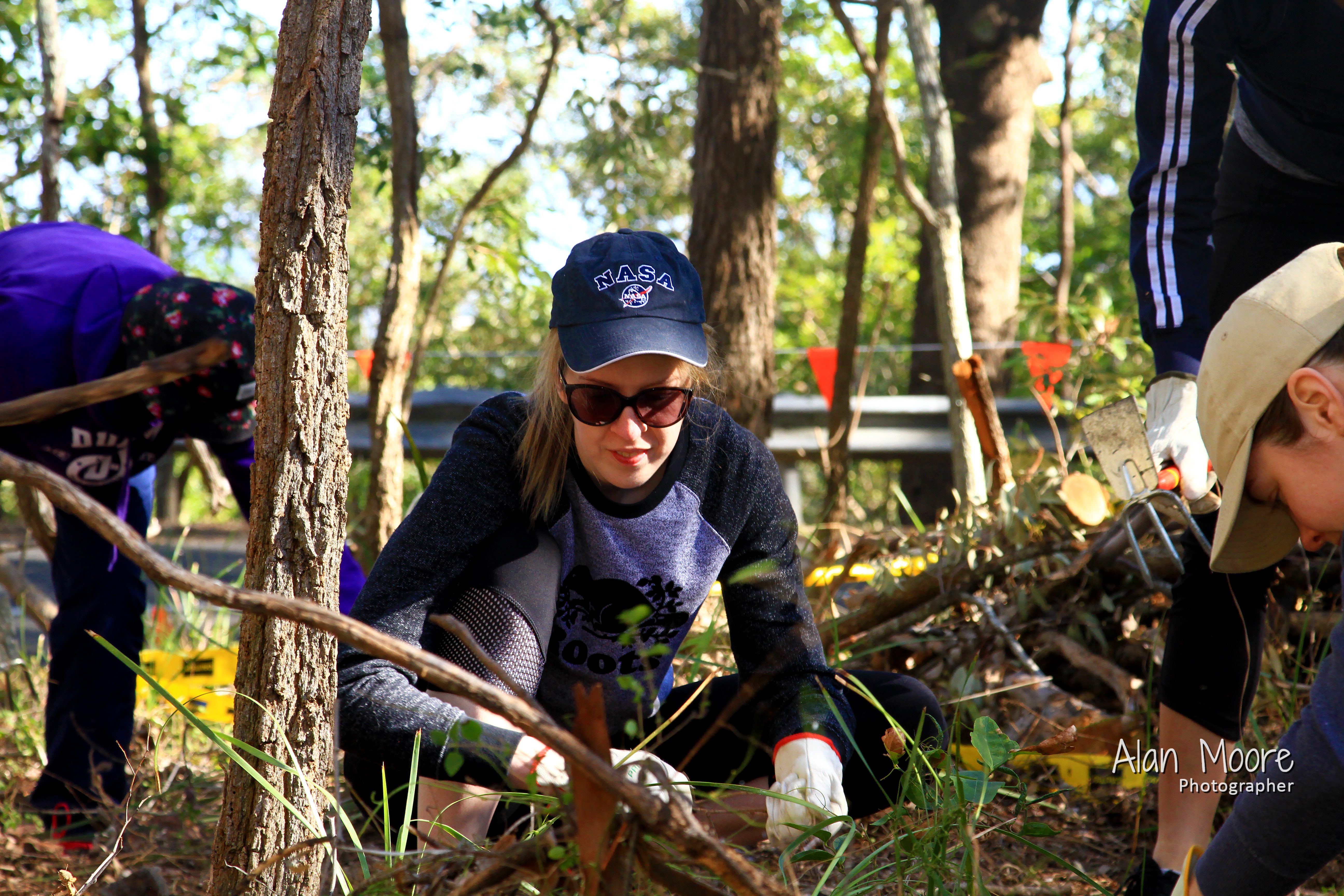
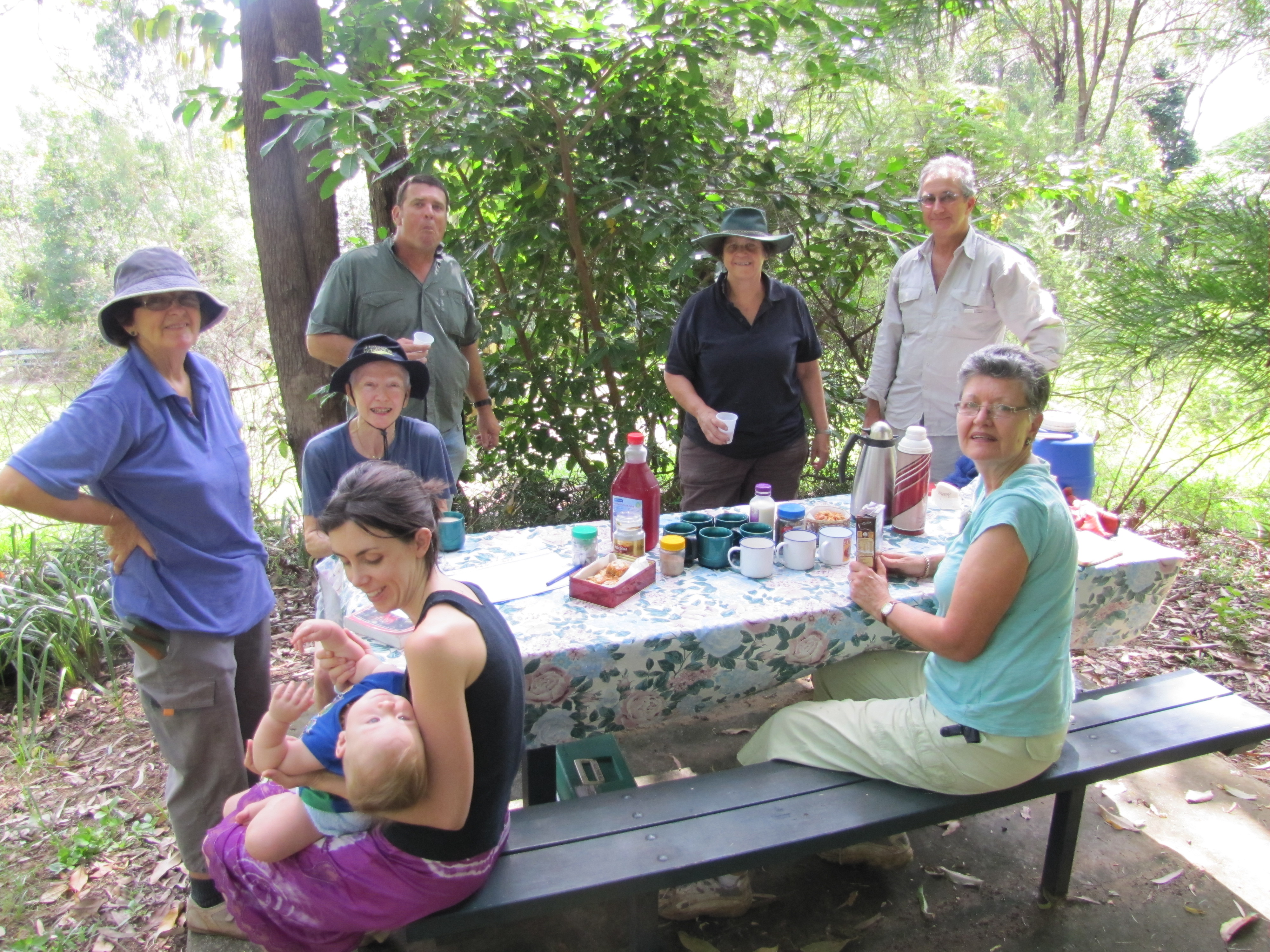
Two large pile of weeds have been removed so it is time for a cuppa with the Geutrude Petty Bushcare team. Around the table today are Judy, Ian, Sarah, Nancy, Brett, Morag, Susan and Mannix.

It is always interesting to sit down with the team at Geutrude Petty. The range of experience around the table is extraordianary. Today the group included a retired business owner, an expert in breeding frogs, an envrionmental restoration professional, Meals on Wheels volunteers and a person who hiked into the Stinson wreck to clean up and carry out rubbish: a 35 kilometre treck climbng 1040 metres.

Gertrude Petty restoration is creating an amazing picnic opportunity you normally only find in a national park outside the city. Our Australian wildflowers are often small and easily overlooked. Visit Gertrude Petty virtually any time of the year and you will find amazing flowers. The Native or Ivy-leaf Violet Viola banksii are flowering at the moment.

The Gertrude Petty team meets 8am to 10am last Saturday of each month and 3pm to 5pm every Wednesday. For details/contacts see 2011 MEG Calendar.

Home to koalas, echidnas, gliders, frogs, fireflies, forty-two butterfly species and two hundred and fifty-one native plant species Mt Gravatt Reserve is a unique haven in our city only 10 km from Brisbane CBD.

I realised just how valuable this resource is when we visited Wivenhoe Outlook picnic area in Brisbane Forest Park. Approximately 60 minutes from the CBD, via a slow winding road the Outlook is still definitely worth a visit. However, even protected by 25,000 hectares of national park, the first plant I noticed when I got out of the car was the familiar Cobblers Peg Bidens pilosa, a common weed on Mt Gravatt.  Seeing this familiar weed actually gave me a perverse sense of optimism. We have similar weeds but we have a tiny fraction of the area to restore and we have a growing population, read: potential bushcare workforce, only a few minutes walk from the mountain.

Mt Gravatt Reserve is only 66 hectares however the native plant diversity is equal to 10% of all plant species in the 22,600,000 hectares of Great Britain. This extraordinary level of plant diversity is also why we have a wide range of native animal species living just across our back fences. The opportunity exists right now, to strengthen and grow something that could never be recreated in places like Great Britain or Europe.
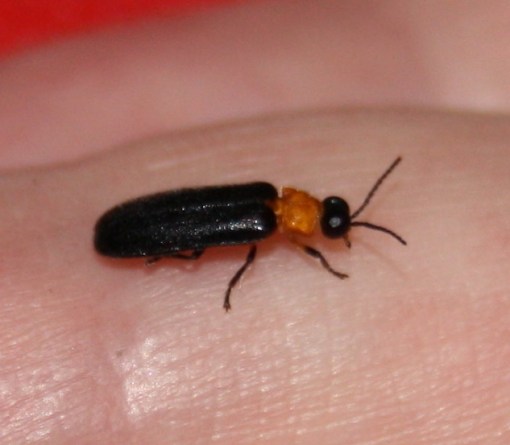
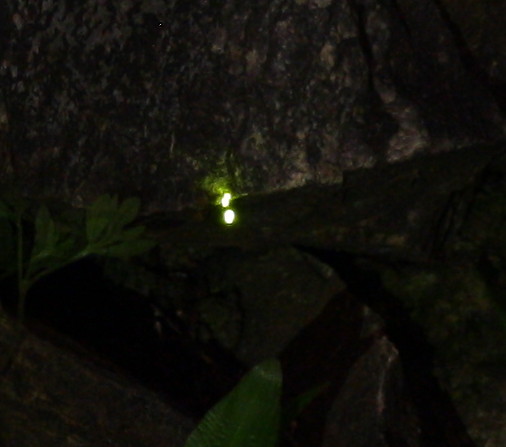
Something truly unique to our Mt Gravatt community: waking with Kookaburras, walking with echidnas, reading by firefly light. Ok, that last one is a stretch however we do have fireflies in our gullies so keep your eyes open. Thanks to Carol Kloske for these photos of these surprising insects. Firefly Luciola nigra

Population growth is putting pressure on our natural areas and in particular the expected population growth outlined in the Mt Gravatt Corridor Neighbourhood Plan will impact on how we relate to Mt Gravatt Reserve.

How is MEG working to turn population growth into a powerful positive for Mt Gravatt Reserve?

Active restoration work:

  • MEG has four bushcare groups: Gertrude Petty Place, Rover Street, Fox Gully and Roly Chapman Reserve. For details see: 2011 MEG Calendar
  • Restoration focused on:
    • edges of the Reserve to reduce edge-effect of private gardens
    • wildlife corridors linking Reserve with other habitat

Build awareness and change damaging behaviour:

  • MEG focuses on reducing three key threats:
    • Weeds, garden waste and rubbish dumping
    • Downhill mountain biking, trail bikes & unofficial tracks
    • Feral and domestic animals
  • Flora & Fauna of Mt Gravatt Reserve – available on CD from B4C Nursery
  • Environmental Workshop in Spring – details available closer to date

As our community members start to really “see” what is around them every day they will discover a miniture Brisbane Forest Park just over their back fence.

In February, Mt Gravatt Environment Group proposed an alternative approach to tree clearing on the mountain: Restoring Unique Scenic Outlook Below is a copy of the Letters to Editor section of Southern Star – June 9, 2010. Click on image to enlarge for reading.

MEG is already working closely with BCC Habitat Brisbane on restoration of four Mt Gravatt bushcare sites and has expressed interest in restoration of the Mt Gravatt Outlook. However, as a volunteer organisation with limited resources our activities are critically dependent on careful planning and co-ordination with other Mountain stakeholders: allows elimination of rework and other unnecessary work. While we provided detailed comment on the 2008 Draft Land Management Plan, we have not yet received a copy of the Interim Land Management Plan which we understand is currently being used to support decisions such as tree clearing on the summit.

The Stinkhorn fungi are some of the most spectactular, unusual and, yes, stinky fungi in the forest.

Craypot Stinkhorn Colus pusillus

The reddish arms form a basket with ahollow in the centre. The arm are coated with brown faeces like rotten meat smelling coating that attracts flies to disperse spores.


The Craypot fungi bursts from a cluster of white gelatinous egg shapes.

k

k

k

k

k

kn

h

h

h


Starfish Fungi Aseroe rubra

This unusual fungi is commonly found in suburban gardens.


The rain this year has bought out an amazing range of fungi in our forest.  We have also been lucky to have a visiting fungi expert, photographer and author, Duane Sept, visiting from Canada.

Duane’s visit prompted this month’s article for the Southside Community NewsForest Fungi – not just what you see.

Using categories developed in discussion with Duane, I have now added a Fungi category into the MEG publication Flora & Fauna of Mt Gravatt Reserve – Sue Jones & Michael Fox.

See some of the special forest fungi found in Mt Gravatt Reserve:

Our Mt Gravatt Outlook has featured on ABC Breakfast with Spencer Howson this morning.

Please have a listen and post your thoughts on this issue.

My comment on the MEG “the environmentalists” Outlook on this issue is below:

Mt Gravatt Environment Group (MEG) is working with BCC Habitat Brisbane, First Contact, Mt Gravatt District Historical Society, Cr Krista Adams and other local stakeholders to plan the restoration of Mt Gravatt Outlook to maximise the experience for visitors.

The focus for MEG is engaging visitors, both local and tourists, with a powerful environmental, cultural/historical experience through development of the distant city and river vistas while experincing the colours and scents of our local wildflowers, calls of King Parrots, the flash of colour as Imperial Hairstreaks cluster in the Acacias and the buzz of discovering a Koala asleep in a Tallowwood.

Our research of local plants and wildlife – Flora & Fauna of Mt Gravatt Reserve by Sue Jones & Michael Fox, combined with our bush restoration experience allows us to see huge potential in thoughtful development of the Scenic Outlook.

For detailed information on our environmental view of maximising the community and tourist experience of Mt Gravatt Outlook go to our blog post –

https://megoutlook.wordpress.com/2010/02/07/restoring-unique-scenic-outlook/

Michael Fox
Fox Gully Bushcare – http://www.foxgully.wordpress.com
Mt Gravatt Environment Group – http://www.megoutlook.wordpress.com

Posted by: Michael Fox17 March 2010 at 09:07 AM

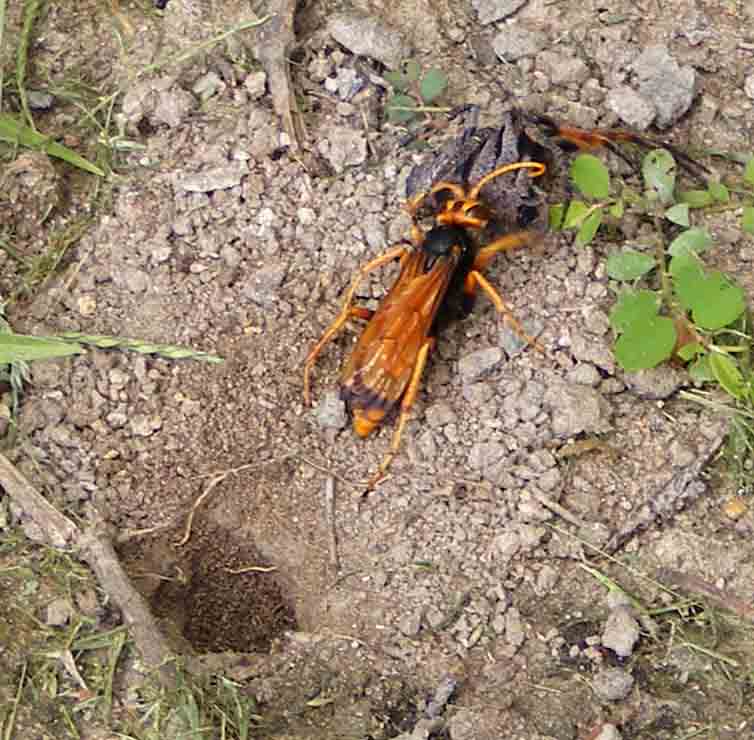
Female Orange Spider Wasp – Priocnemis bicolor, with a Huntsman spider which it has just paralysed.

The male dies shortly after mating and the female prepares a nest in the ground to be stocked with food for the larva when the egg hatch.

The wasp had to drag its prey over one metre to the newly dug nest.  The debris is still beside hole.

The spider is dragged down into the nest.

Finally the dirt is put back into the nest and the tamped down. Note the debris is now cleared from around the hole.

Thanks to Sue Jones for this amazing sequence of photos.

Click on photo to see larger image.

Who or what is digging in your backyard?

It may suprise you.

Mike

Geutrude Petty Place Buscare site is alive with butterflies at the moment.  The work Sue and the team have done removing weeds and planting native grasses and shrubs is really paying off with the rain we have been getting this summer. With the weeds removed natural regeneration means a large number of different native grasses and sedges have returned a critical success factor for bringing back the butterflies.

I photographed two new butterflies this morning which have not previously been recorded on Mt Gravatt.

A Spotted Sedge-skipper – Hesperilla ornata posed on some native Barbed Wire grass. Saw Sedge which is indigenous to the Reserve, is the laval food plant for the Spotted Sedge-skipper. With natural regeneration bringing back the native sedges we can expect to see more of these beautiful butterflies on Mt Gravatt in the future. This is particularly important because these butterflies are classed as “uncommon” in Braby’s Butterflies of Australia.

I also found this male White-banded Plane – Phaedyma shepherdi.

At 55mm these are quite a large butterfly for Brisbane. The patterns on the wings identify this specimen as a male.

I also found Splendid Ochre – Trapezites symmomus and Small Dusky-blue – Candalides erinus butterflies.

Mike

Join us for Clean Up Australia Day at the Summit of Mt Gravatt – Saturday 7th March – anytime between 8am and 10am – sign out with the MEG Team here –  www.cleanupaustraliaday.org.au/Mt+Gravatt+Summit

Mt Gravatt Environment Group is working with BCC Habitat Brisbane and the Echidna Magic Kiosk to plan the development and restoration of one of Brisbane’s iconic outlooks.

Clean Up Australia Day is a great opportunity to visit this amazing location where just ten minutes from the CBD you may see a Koala snoozing in a tree or simply be surrounded by the magic of bird song as you work beside some amazing individuals, pinic with the family or share the Echidna Magic with a coffee on the deck with Brisbane’s greatest outlook.

Do you want a CD copy of Flora & Fauna of Mt Gravatt Reserve?

Sign up today so I know how many copies to bring – www.cleanupaustraliaday.org.au/Mt+Gravatt+Summit

Michael J Fox

I added a special bush tucker plant to our Flora & Fauna of Mt Gravatt Reserve today – Austromyrtus dulcis Midgen, Midyim Berry.

I am honoured to be given these bush tucker berries by my MEG collegue Sue. We have French visitors coming for dinner and we are planning an Aussie food experience: Kangaroo steak on the barbie followed by Pavlova topped with Midyim Berries.

Midyim Berries are growing in our Gertrude Petty Place Bushcare site. If you want to grow these in your own backyard the B4C Nursery has plants available.

Do you have any other bushtucker ideas we can use with our French foodies?

Mike