Chinese Elm Celtis sinensis and Ochna Ochna serrulata are two Brisbane’s troublesome environmental weeds that have seeds that are spread by birds eating the fruit. Both called woody weeds they are very difficult to remove as their extensive root systems get a hold.
Leigh loved using the Tree Popper so I spotted a small Yellow Bells Tecoma stans needing removal. Ironically I saw these attractive trees in flower in a park when I visited Quito in Ecuador where they occur naturally.
.
.
.
Pauline with her pile of Corky Passion Vines
.
.
.
.
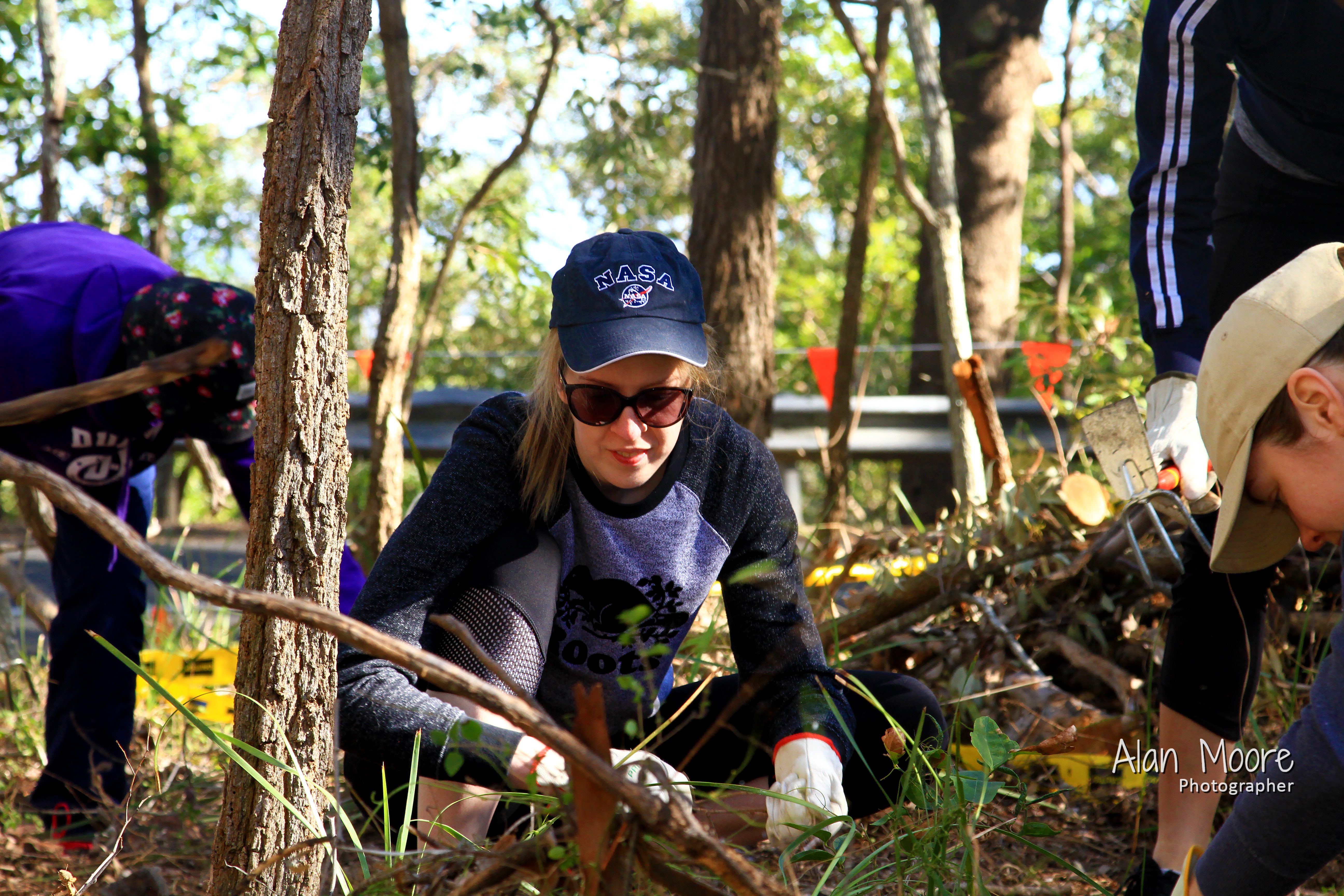
Another team member Pauline focused on another of our troublesome weeds Corky Passion Vine Passiflora suberosa which is currently covered in fruit which will be eaten and spread by birds.
A beautiful sunny morning and in the sky two beautiful Square-tailed Kites Lophoictinia isura soaring wings spread wide as they do lazy loops above the trees.
The kites have returned for the forth year to their nest in the Spotted Gum and now have two chicks poking their heads up. The kites are top level predator feeding on small birds, insects and lizards so to have a pair breeding in the forest provides some evidence of a healthy habitat providing sufficient food.
Koala Mum and Joey
Tuesday Bushcare is always an adventure in spotting flora and fauna. Spring breeding season however is special.
Koala Spotter Steph found a Mum and Joey in a tree above where we were working.
.
.
Bearded Dragon
.
.
.
.
We also spotted a handsome Beaded Dragon Pogona barbata hiding in plain sight. Good camouflage.
Spring means the weed Mickey Mouse Plant Ochna serrulatais covered in seed: one bush completely filled a weed tub. Recent rain also softened to ground so we were able to use the TreePopper to remove the weed with minimal disturbance to the soil and no use of herbicide.
.
.
.
.
.
.
.
Corky Passion Vine – variety of leaf shapes
Most of our work at this season is removing Corky Passion Vine Passiflora suberosa which has spread aggressively in areas where we have cleared other weeds. Corky Passion Vine can have very different leaf shapes so we are careful to follow the vines to the base so we can check for the corky stem and remove the roots to stop re shooting.
Mulching the ground is an important part of our restoration of the forest habitat. I explained that mulch have three functions:
Retaining soil moisture.
Reducing erosion.
Most important is keeping soil cool. Soil is teeming with living organisms: microorganisms like bacteria, fungi, algae and macro-organisms like springtails, mites, nematodes, earthworms, ants that recycle organic material refreshing and boosting soil health. Average soil temperatures for bioactivity range from 10-24°C. Mulch keeps soil warm in cold weather and more important for Brisbane it keeps the soil cool in summer.
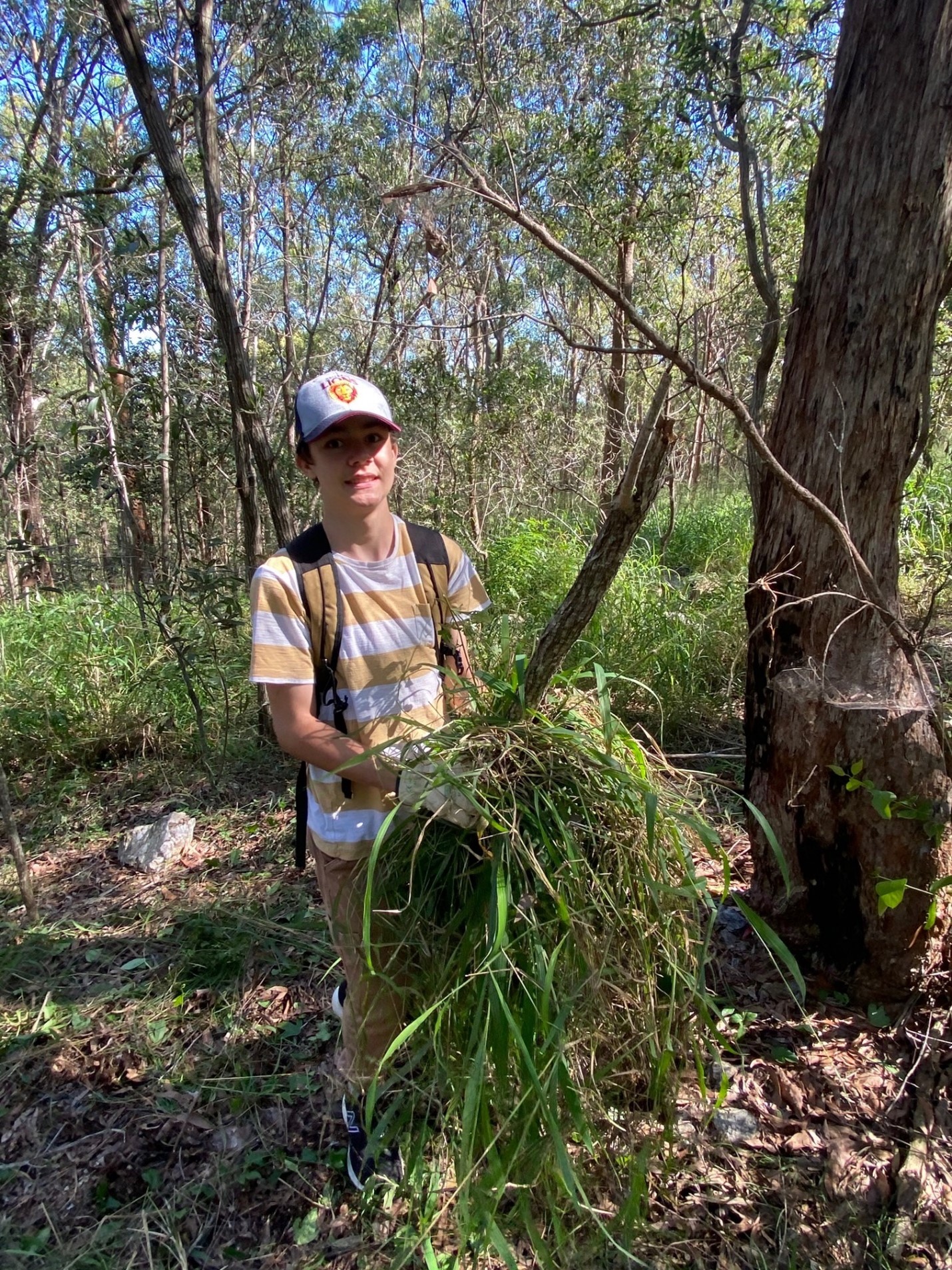
Clairvaux MacKillop Year 10 students have been working with us since stepping up in 2018 to help with preparation of the National Tree Day site.
The students are amazing when it comes to finding insects for me to photograph. A double bonus … weeds cleared and more species to add to our Flora and Fauna research.
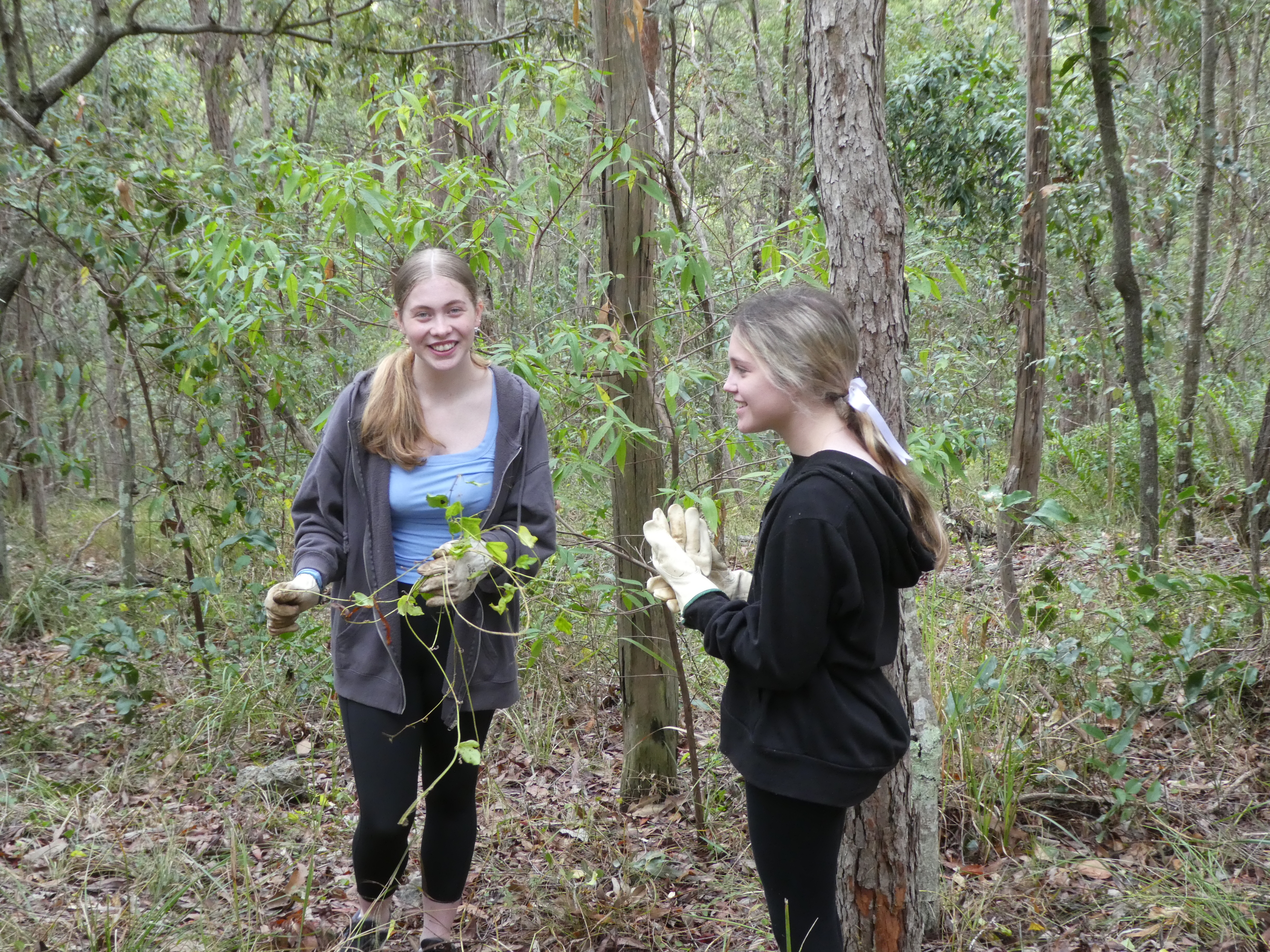
Dynamic weeding duo on the jobAnother bucket of weeds gone
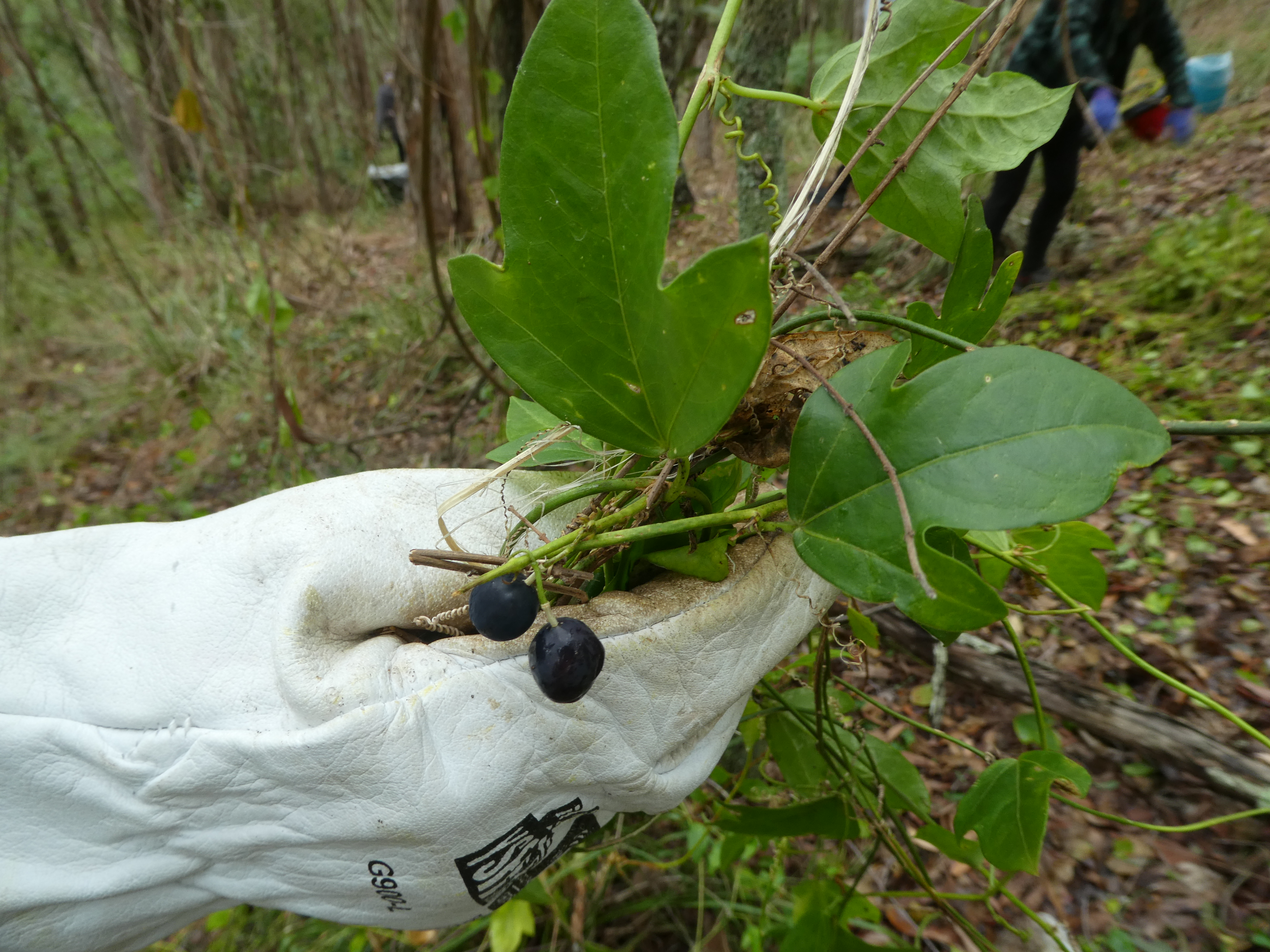
The target weed for the event was Corky Passion Vine Passiflora suberos which is currently covered in fruit.
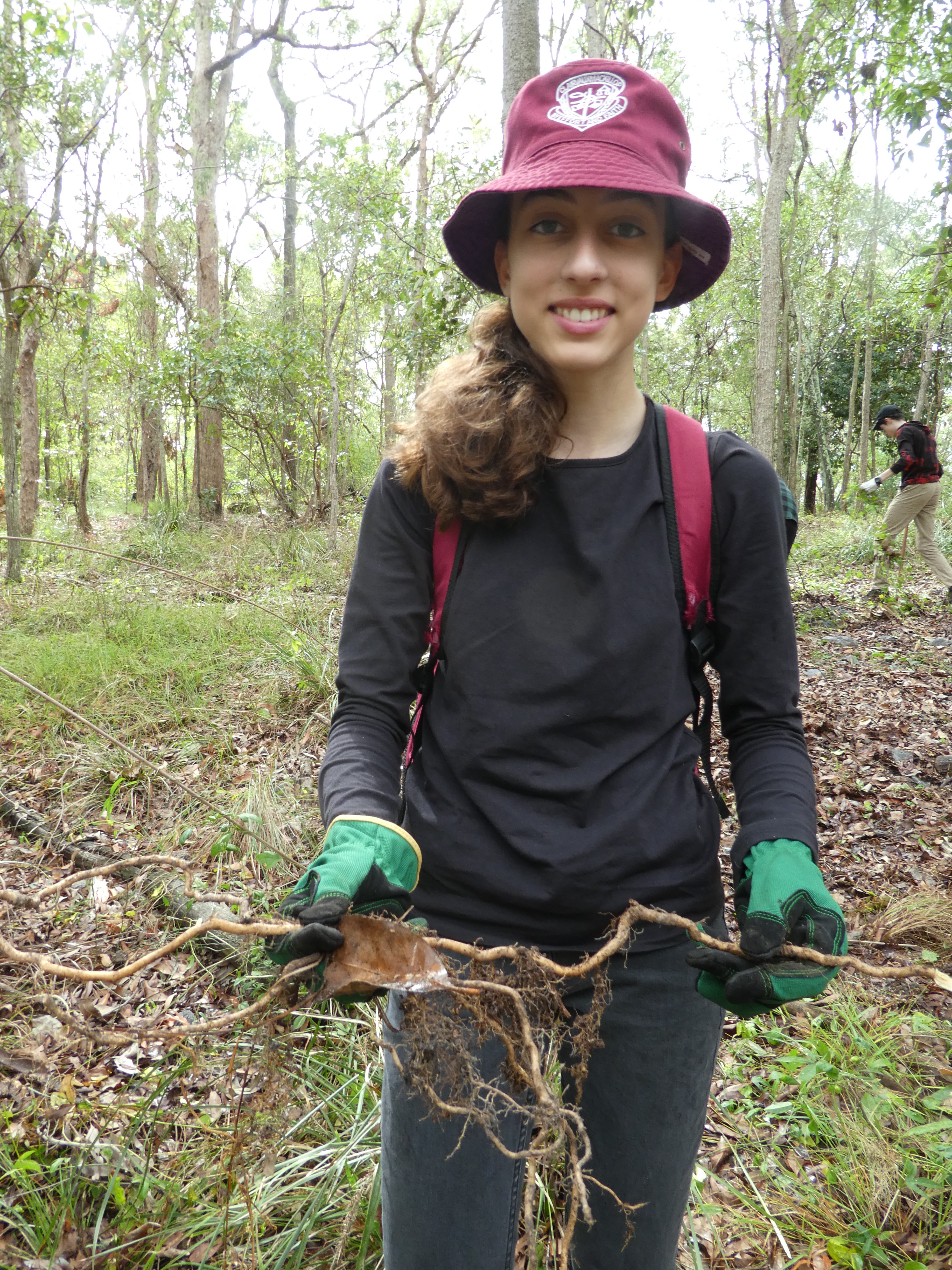
Corky Passion Vine fruitThe Bushcarers worked hard on getting all roots out
The vine is a vigorous invasive weed with seeds spread by fruit eating birds. Ironically Corky Passion Vine has become our new target weed as it is thriving in now that the other weeds have been cleared. It is important to remove the roots to ensure that we don’t have to do our work all over again.
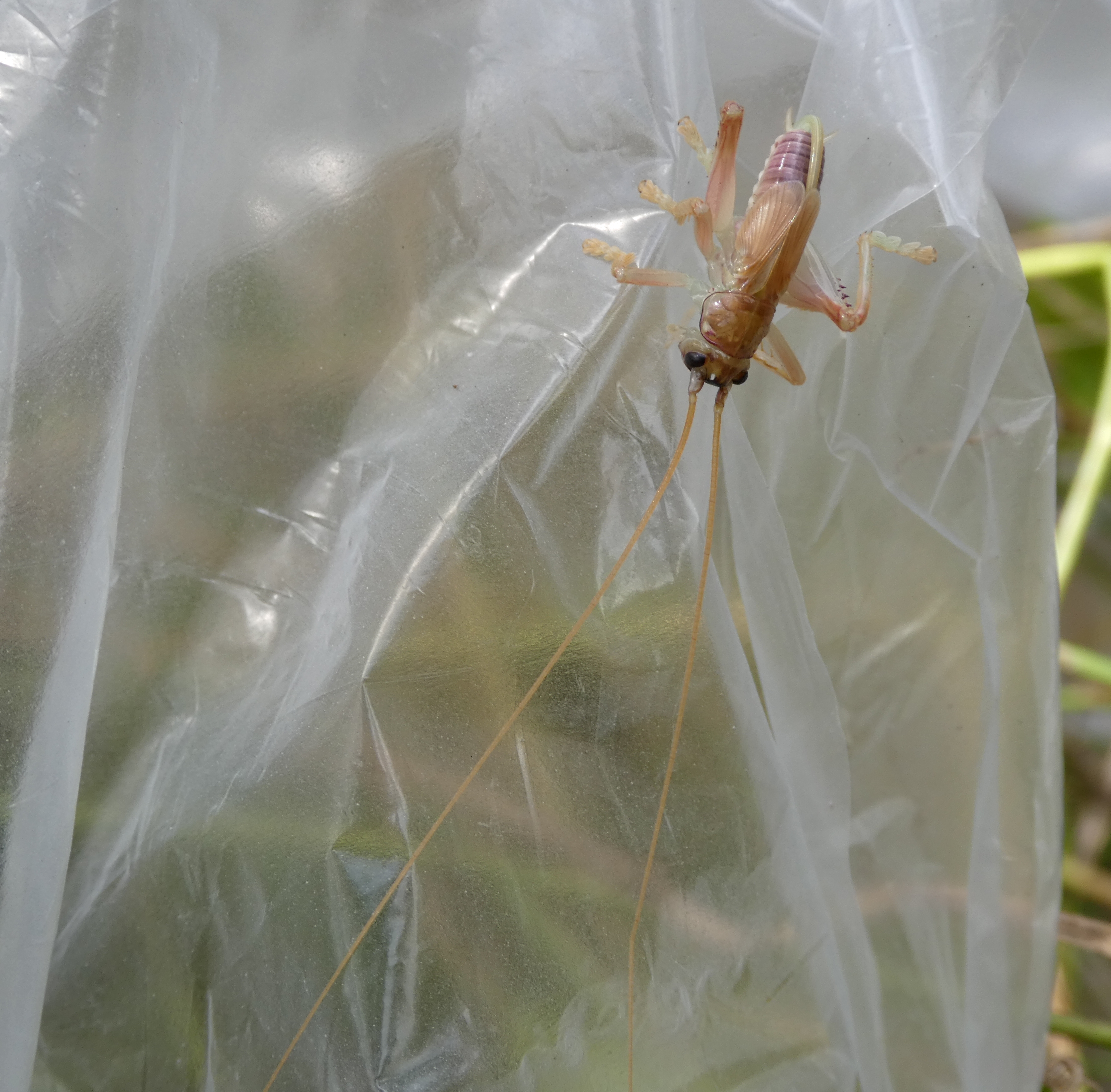
True to form a sharp eyed student found a new insect for me to research.
I have submitted my tentative identification Noliphus erythrocephalus Colourful Board-headed Bug to iNaturalist for id confirmation before I add this species to our Flora and Fauna database. Part of my identification process was to check the iNaturalist map of sightings.
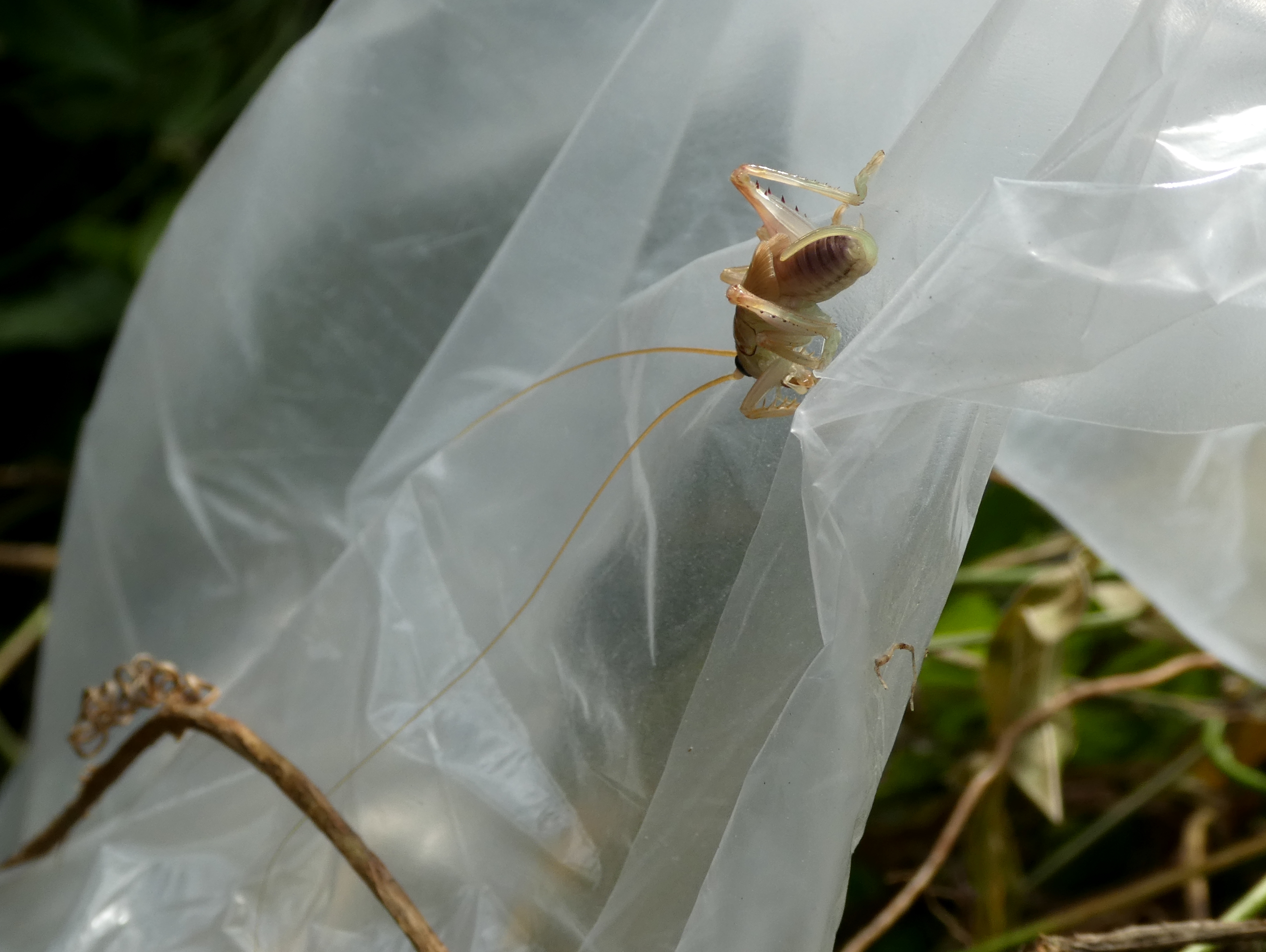
I have found this species before however this time I noticed a tail like appendage curved over the abdomen. This oviposter identified the cricket as female and is used to deposits eggs deep into soil.
The two short appendages are cerci which are sensitive to puffs of air and low-frequency vibrations.
I love having our student Bushcarers finding me insects to research. I learn something after every event.
The first of three innovative events organised by Sandra Stadhams: Campus Minister with the theme Revive The Earth. It is an inspiring initiative founded on the words of Pope Francis:
We can change, and we can make a new start. The whole human family needs to work together to care for our planet earth so that we sow beauty, not pollution and destruction. So, let’s put love for the world and love for our neighbours, into action, by living together in harmony, and caring for nature.
The Revive The Earth program utilises the Shared Path Framework “… to go beyond mere surface-experience in our endeavours to develop students who are compassionately engaged human beings.”
The interrelated movements of the Framework are:
Movement 1: PREPARE Attention of the Heart/Holding Space How can we ground experiences in the here and now?
Movement 2: PARTNER Receptive Presence/Connecting How do we form authentic reciprocal relationships with the communities we are engaging with?
Movement 3: PERCEIVE Critical Reflection/Seeing Beyond How do we train the eye to see beyond the experience? How do we use reflective tools that mirror the pathway of incoming information through the brain?
Movement 4: PRACTICE Reciprocal Intention/Discernment How can we ensure that students aren’t developing pre-mature solutions to complex community challenges?
Movement 5: PARTICIPATE Integration of Purpose/Transformation How can this be placed to animate, orient and innovate a new way of being human and a new way of relationship which is radically open-hearted and transformational.
The team also helped us trial a new tool to remove Guinea Grass by separating the plant crown from roots with minimal root disturbance. The diverse living organisms critical for soil health can be damaged by if the soil is disturbed, so we are working with the BCC Habitat Brisbane team to develop best practice techniques for habitat restoration.
It is also a pleasure sharing basic skills like using a hand saw safely.
I am looking forward to welcoming the Clairvaux Bushcare team back for my own learning. Observing how the students apply the Shared Path Framework will strengthen my skills with community engagement.
Lions’ refurbishment of the Roly Chapman Reserve native gardens is steaming ahead.
A thick jungle of garden escapees, including Purple Succulent Callisia fragrans, Corky Passion Vine Passiflora suberosa, Chinese Elm Celtis sinensis, Cobblers Pegs Bidens pilosa and Cocos Palms Syagrus romanizoffiana, confronted the volunteers when they arrived.
Innovative weed removal technique
Lions Team (l-r) Steve, Baska, Kevin, Glen & Shan Ju
The Cobblers Pegs were over a metre high and covered in seeds, requiring careful removal. The Purple Succulent also required careful handling to ensure all fleshy stems and roots were lifted, or they’d resprout. Baska and Kevin hit on the idea of using a small tarp onto which the weeds were loaded, and then lifted off the beds. Meanwhile, the rest of the crew were kept busy pulling weeds for removal.
Perfect weather, plus a great team produced an excellent morning’s work. Well done, MacGregor Lions and neighbour Liz!
Next working bee:
Midweek – Thursday 17th May from 3 – 5 pm
Monthly – Saturday, 2nd June from 8 – 10 am
Meet on the concrete pathway at the third garden from Hoad Street end.
For details: email – Macgregor.Lions.Secretary@gmail.com or contact John Spriggs on 3849 6479.
Join 928 other subscribers
Volunteering Mt Gravatt Conservation Reserve
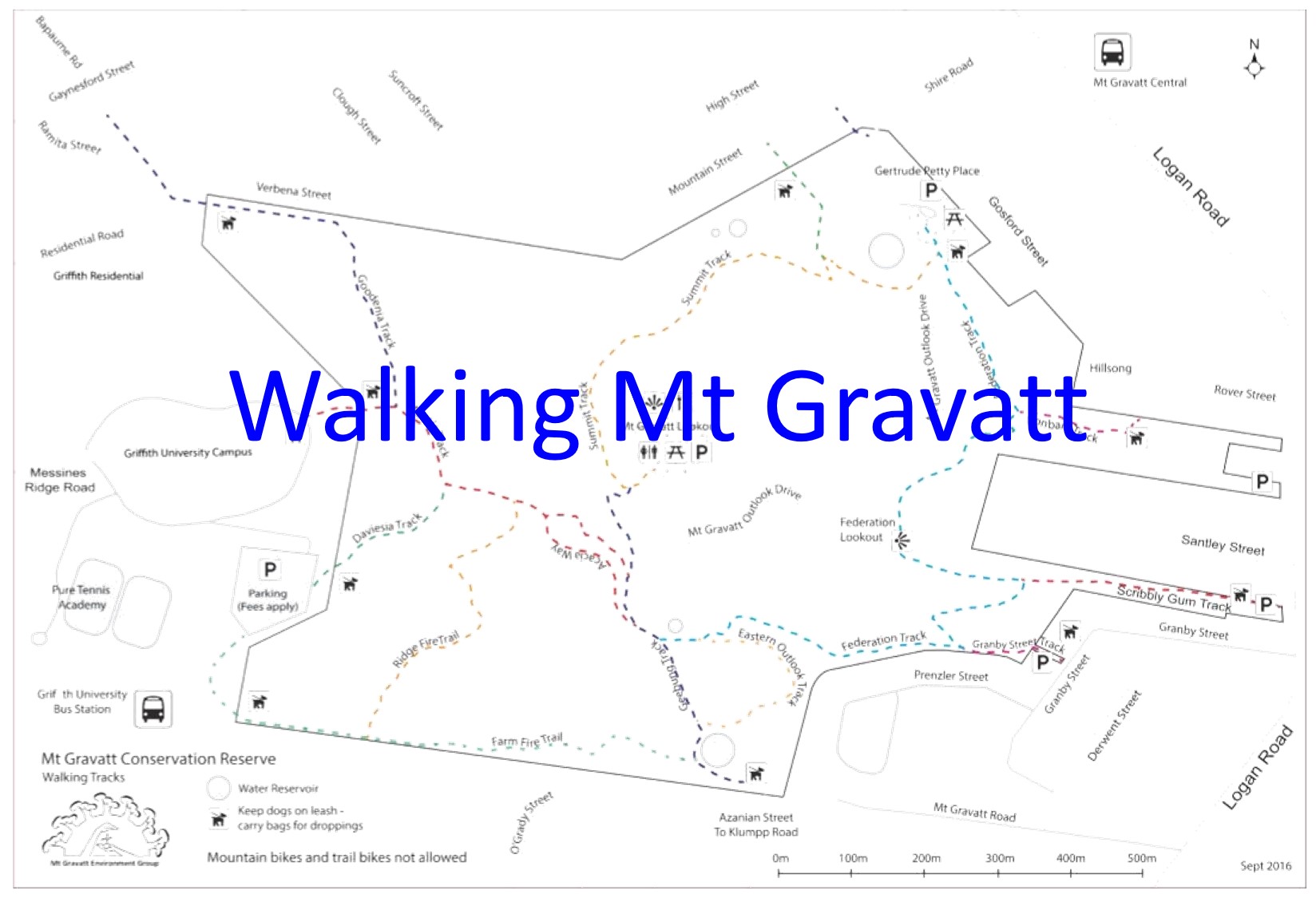
Maps of walking tracks
Follow our restoration work
Links
Report Koala sightings
Contacts:
Co-Presidents:
Michael Fox
Laurie Deacon
Susan Jones - Secretary megoutlook@gmail.com

















 Mount Gravatt Environment Group
