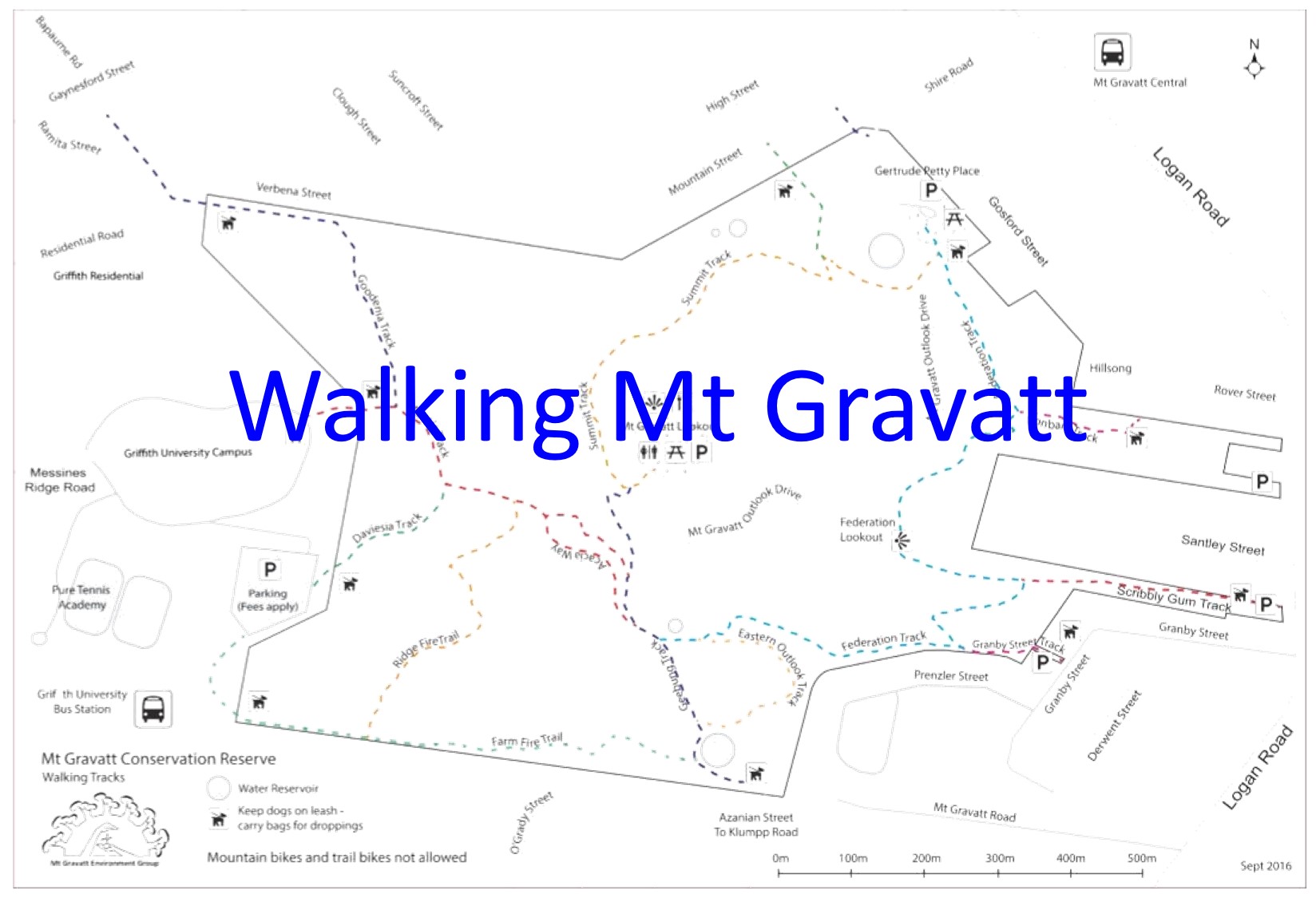
Our Vision is the first step in revising the Mt Gravatt Environment Group’s Strategic Plan.

Mt Gravatt is the heart of a special community. Indigenous and European histories both have strong links with the mountain.  Although it has been farmed, harvested for timber and increasingly isolated by suburban development over one hundred years, the mountain still supports the most amazing diversity of plant and animal life.  This ecological and cultural landmark exists just ten kilometres from the CBD of the fastest growing city in Australia.

Restoring and strengthening the ecosystems of the mountain and its corridors, will have positive community and environmental outcomes, and is increasingly urgent as the population in the area grows.  Mt Gravatt Environment Group is already working to actively engage the whole community in consolidating healthy habitat areas and reducing habitat isolation with wildlife links.

Why a whole of community focus?

Wildlife does not recognise human created property boundaries or roads. Effective habitat consolidation and linking requires co-operation of a diverse range of property owners – private, corporate, local/state/federal government, community groups, schools and university. Therefore, a key part of our strategy is to identify investments in the environment that also deliver excellent community and business outcomes.
Mt Gravatt Envrionment Group

Please comment. How can we engage the community in this vision?

Follow Us on Twitter

Mimosa Creek is beautiful crystal clear stream rising in Toohey Forest before it flows under the Pacific Motorway reappearing beside Klumpp Road, meandering through Roly Chapman Reserve where, if you are quiet, you will often see turtles.

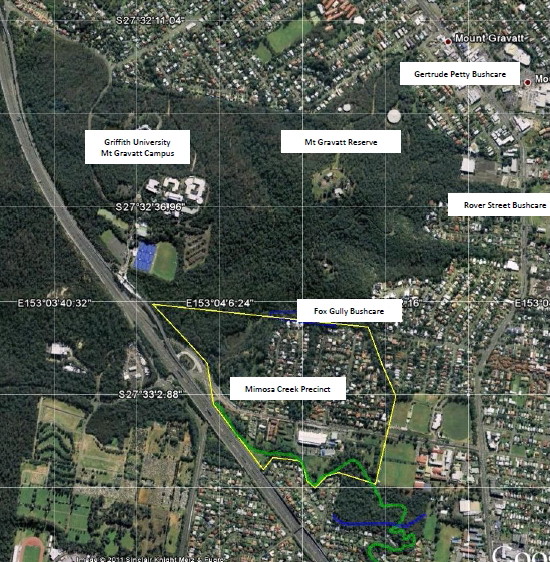
Mimosa Creek Precinct is the reach between the Pacific Motorway and Clairvaux MacKillop College, also including three potential wildlife corridors connecting with Mt Gravatt Reserve.

In developing the Mimosa Creek Precinct Landscape Plan, Mt Gravatt Environment Group aims to provide a community focused approach to environmental restoration of this important habitat with a variety of owners including BCC, Main Roads Dept, Translink, Hibiscus Sport Centre (local & state government), community organisations, schools and private owners. The term Landscape Plan comes from the excellent Birds in Backyards – Best Practice Guidelines, and is used to encompass this complex ownership mix.

Download the plan here: Mimosa Creek Precinct Landscape Plan – ver 1.6 (web) It does not take long to read: it is mostly Google Earth pictures. Appendix PDF files: Roly Chapman Bushcare Plan – ver 1.5 Fox Gully Bushcare Plan 2011 – ver 3.6 Mt Gravatt Strategic Plan – ver1.0

The environment is the key focus of this Plan, however, building and maintaining long-term financial and community commitment requires identification of business opportunities and community benefits derived from habitat restoration.

We have already identified a number of direct community benefits from implementation of the Landscape Plan. Identifying business opportunities that directly contribute to restoration of Mimosa Creek Precinct, is not as obvious. However, to quote Peter Drucker:

“Every single social and global issue of our day is a business opportunity in disguise.”

BizEd july/august 2008

Read the Fox Gully blog post Business Goes Bush in Mt Gravatt.

What community and business opportunities can you identify?

The visit by BOIC (Butterflies & Other Invertebrates Club) reported in our local Southside Community News.

Correction and apology: BOIC President’s name was incorrect. My mistake: I provided the wrong name to the journalist.

Ross Kendall of Butterfly Encounters is currently BOIC President.

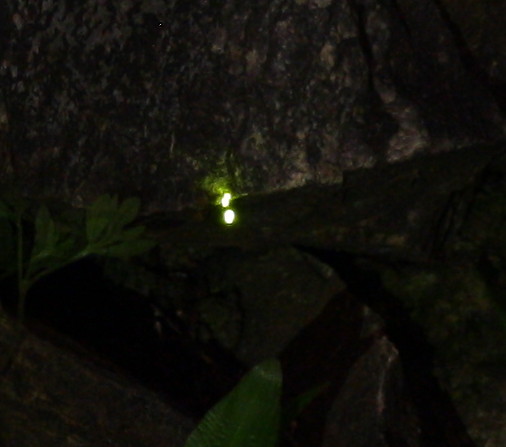
Mycena lampadis Luminous Mushroom

Fireflies now glow-in-the-dark mushrooms!


Same mushroom under torch light

Carol, who sent the firefly photos, called me late the other night inviting me to see the glow-in-the-dark mushrooms in their gully. Extraordinary, spooky and a very very special experience: walking thought the dark with the only light these amazing fungi.

Seeing these luminous mushrooms during the day they look like just another delicate white fungi.

The Springbrook Research Centre has information on bioluminescence.

The Mountain continues to surprise and delight. Listen to my interview with Kelly Higgins-Devine: 612ABC Drive.

See more of our amazing mushrooms: read my article on Forest Fungi.

Home to koalas, echidnas, gliders, frogs, fireflies, forty-two butterfly species and two hundred and fifty-one native plant species Mt Gravatt Reserve is a unique haven in our city only 10 km from Brisbane CBD.

I realised just how valuable this resource is when we visited Wivenhoe Outlook picnic area in Brisbane Forest Park. Approximately 60 minutes from the CBD, via a slow winding road the Outlook is still definitely worth a visit. However, even protected by 25,000 hectares of national park, the first plant I noticed when I got out of the car was the familiar Cobblers Peg Bidens pilosa, a common weed on Mt Gravatt.  Seeing this familiar weed actually gave me a perverse sense of optimism. We have similar weeds but we have a tiny fraction of the area to restore and we have a growing population, read: potential bushcare workforce, only a few minutes walk from the mountain.

Mt Gravatt Reserve is only 66 hectares however the native plant diversity is equal to 10% of all plant species in the 22,600,000 hectares of Great Britain. This extraordinary level of plant diversity is also why we have a wide range of native animal species living just across our back fences. The opportunity exists right now, to strengthen and grow something that could never be recreated in places like Great Britain or Europe.

Something truly unique to our Mt Gravatt community: waking with Kookaburras, walking with echidnas, reading by firefly light. Ok, that last one is a stretch however we do have fireflies in our gullies so keep your eyes open. Thanks to Carol Kloske for these photos of these surprising insects. Firefly Luciola nigra

Population growth is putting pressure on our natural areas and in particular the expected population growth outlined in the Mt Gravatt Corridor Neighbourhood Plan will impact on how we relate to Mt Gravatt Reserve.

How is MEG working to turn population growth into a powerful positive for Mt Gravatt Reserve?

Active restoration work:

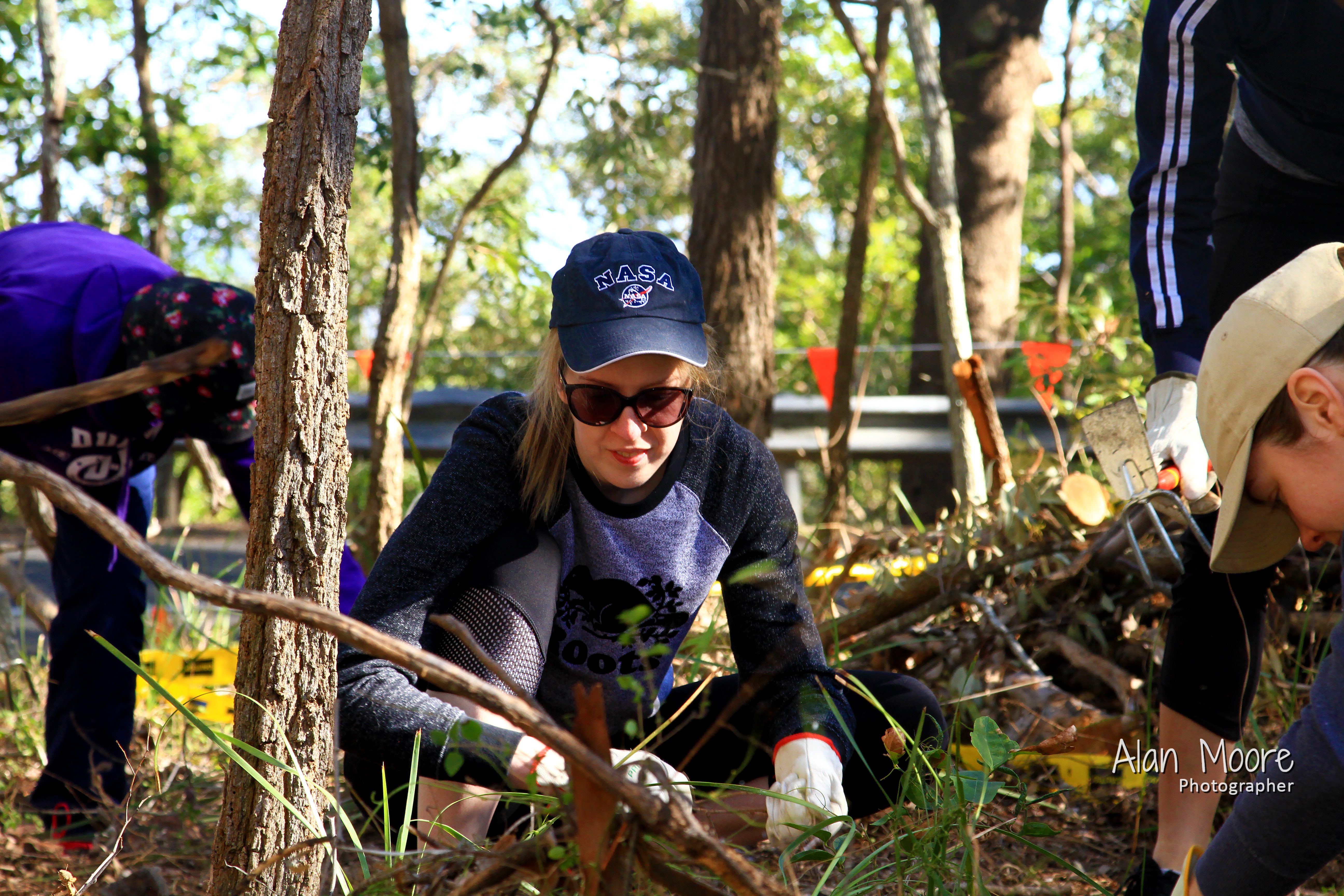
  • MEG has four bushcare groups: Gertrude Petty Place, Rover Street, Fox Gully and Roly Chapman Reserve. For details see: 2011 MEG Calendar
  • Restoration focused on:
    • edges of the Reserve to reduce edge-effect of private gardens
    • wildlife corridors linking Reserve with other habitat

Build awareness and change damaging behaviour:

  • MEG focuses on reducing three key threats:
    • Weeds, garden waste and rubbish dumping
    • Downhill mountain biking, trail bikes & unofficial tracks
    • Feral and domestic animals
  • Flora & Fauna of Mt Gravatt Reserve – available on CD from B4C Nursery
  • Environmental Workshop in Spring – details available closer to date

As our community members start to really “see” what is around them every day they will discover a miniture Brisbane Forest Park just over their back fence.

In February, Mt Gravatt Environment Group proposed an alternative approach to tree clearing on the mountain: Restoring Unique Scenic Outlook Below is a copy of the Letters to Editor section of Southern Star – June 9, 2010. Click on image to enlarge for reading.

MEG is already working closely with BCC Habitat Brisbane on restoration of four Mt Gravatt bushcare sites and has expressed interest in restoration of the Mt Gravatt Outlook. However, as a volunteer organisation with limited resources our activities are critically dependent on careful planning and co-ordination with other Mountain stakeholders: allows elimination of rework and other unnecessary work. While we provided detailed comment on the 2008 Draft Land Management Plan, we have not yet received a copy of the Interim Land Management Plan which we understand is currently being used to support decisions such as tree clearing on the summit.

Fleshy Pore fungi are a suprise. They often look like the mushroom form gilled fungi from the top, however, underneath instead of gills you discover a sponge like fertile surface.

Fleshy Pore fungi have some amazing shapes.

The Stinkhorn fungi are some of the most spectactular, unusual and, yes, stinky fungi in the forest.

Craypot Stinkhorn Colus pusillus

The reddish arms form a basket with ahollow in the centre. The arm are coated with brown faeces like rotten meat smelling coating that attracts flies to disperse spores.


The Craypot fungi bursts from a cluster of white gelatinous egg shapes.

k

k

k

k

k

kn

h

h

h


Starfish Fungi Aseroe rubra

This unusual fungi is commonly found in suburban gardens.


The rain this year has bought out an amazing range of fungi in our forest.  We have also been lucky to have a visiting fungi expert, photographer and author, Duane Sept, visiting from Canada.

Duane’s visit prompted this month’s article for the Southside Community NewsForest Fungi – not just what you see.

Using categories developed in discussion with Duane, I have now added a Fungi category into the MEG publication Flora & Fauna of Mt Gravatt Reserve – Sue Jones & Michael Fox.

See some of the special forest fungi found in Mt Gravatt Reserve:

Our Mt Gravatt Outlook has featured on ABC Breakfast with Spencer Howson this morning.

Please have a listen and post your thoughts on this issue.

My comment on the MEG “the environmentalists” Outlook on this issue is below:

Mt Gravatt Environment Group (MEG) is working with BCC Habitat Brisbane, First Contact, Mt Gravatt District Historical Society, Cr Krista Adams and other local stakeholders to plan the restoration of Mt Gravatt Outlook to maximise the experience for visitors.

The focus for MEG is engaging visitors, both local and tourists, with a powerful environmental, cultural/historical experience through development of the distant city and river vistas while experincing the colours and scents of our local wildflowers, calls of King Parrots, the flash of colour as Imperial Hairstreaks cluster in the Acacias and the buzz of discovering a Koala asleep in a Tallowwood.

Our research of local plants and wildlife – Flora & Fauna of Mt Gravatt Reserve by Sue Jones & Michael Fox, combined with our bush restoration experience allows us to see huge potential in thoughtful development of the Scenic Outlook.

For detailed information on our environmental view of maximising the community and tourist experience of Mt Gravatt Outlook go to our blog post –

https://megoutlook.wordpress.com/2010/02/07/restoring-unique-scenic-outlook/

Michael Fox
Fox Gully Bushcare – http://www.foxgully.wordpress.com
Mt Gravatt Environment Group – http://www.megoutlook.wordpress.com

Posted by: Michael Fox17 March 2010 at 09:07 AM