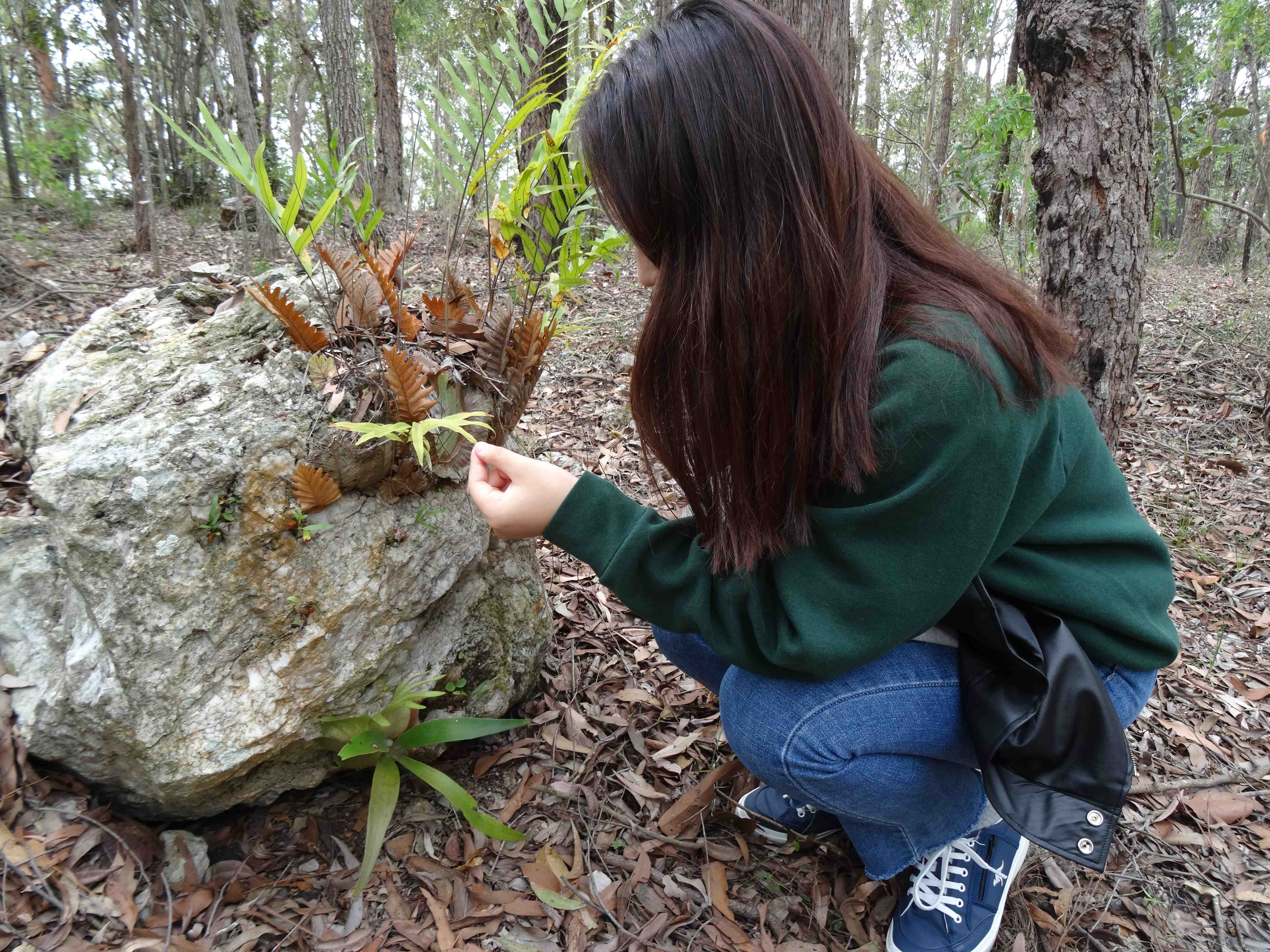
Jisu fascinated by Elkhorn and Basket Ferns growing on a rock
By: Michael Fox
I introduced Korean student Jisu to our wildlife and native plants in Mt Gravatt Conservation Reserve while walking to Mt Gravatt Campus.
.
.
.
.
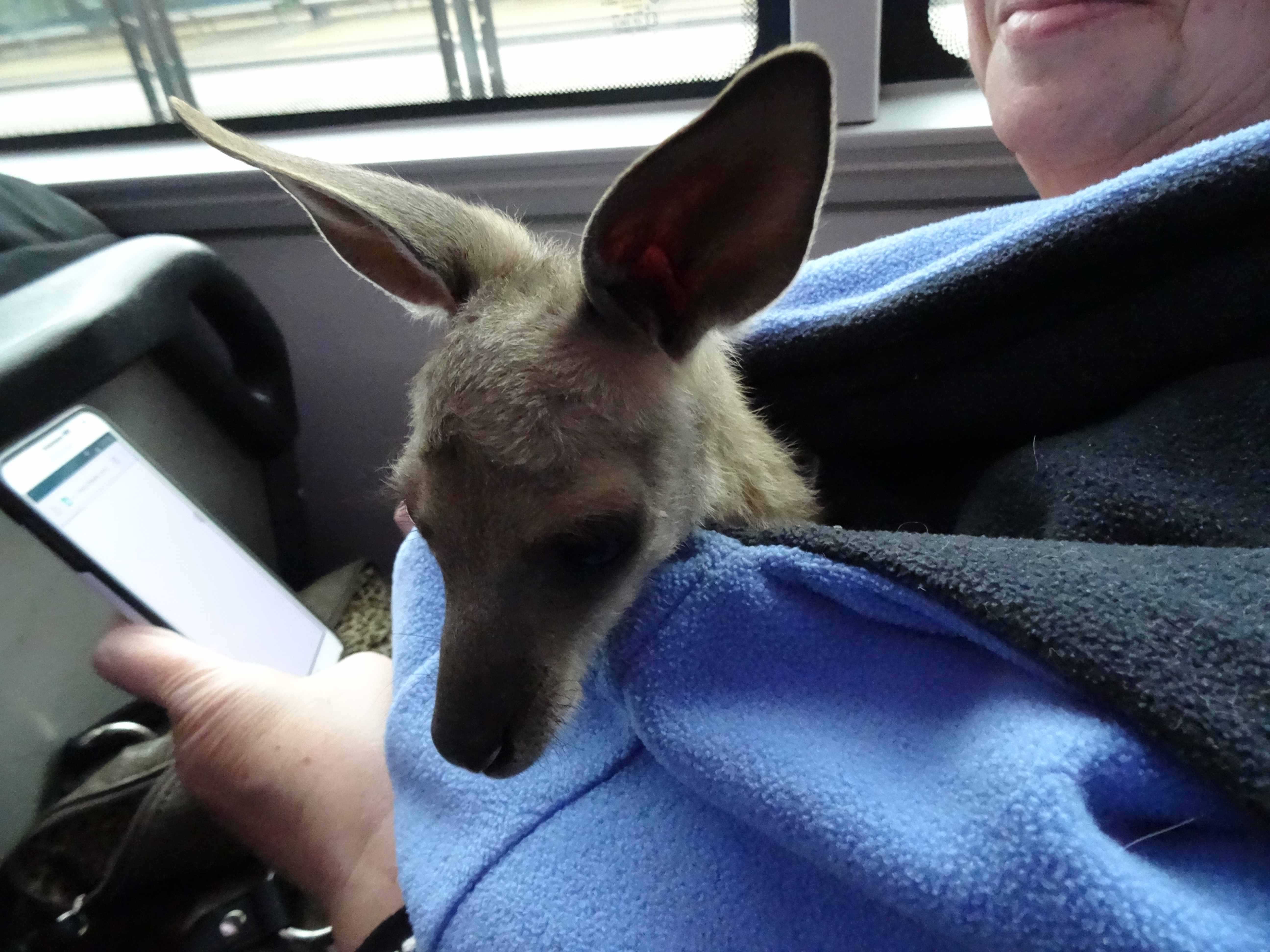
I like my new mum
.
Jisu is keen to meet a Koala but neither of us expected to meet a Kangaroo on the Griffith Inter-campus. This youngster was happily nestled into his substitute pouch on the wildlife carer’s lap.
I led the team on an off track adventure to reach the nest boxes. While Carl operated the GoPro camera on the extendable pole the ground crew monitored on iPads using WiFi connection.
Carl became a real professional keeping the tall wobbly pole under control while he lifted the lid on each box and inserted the camera.
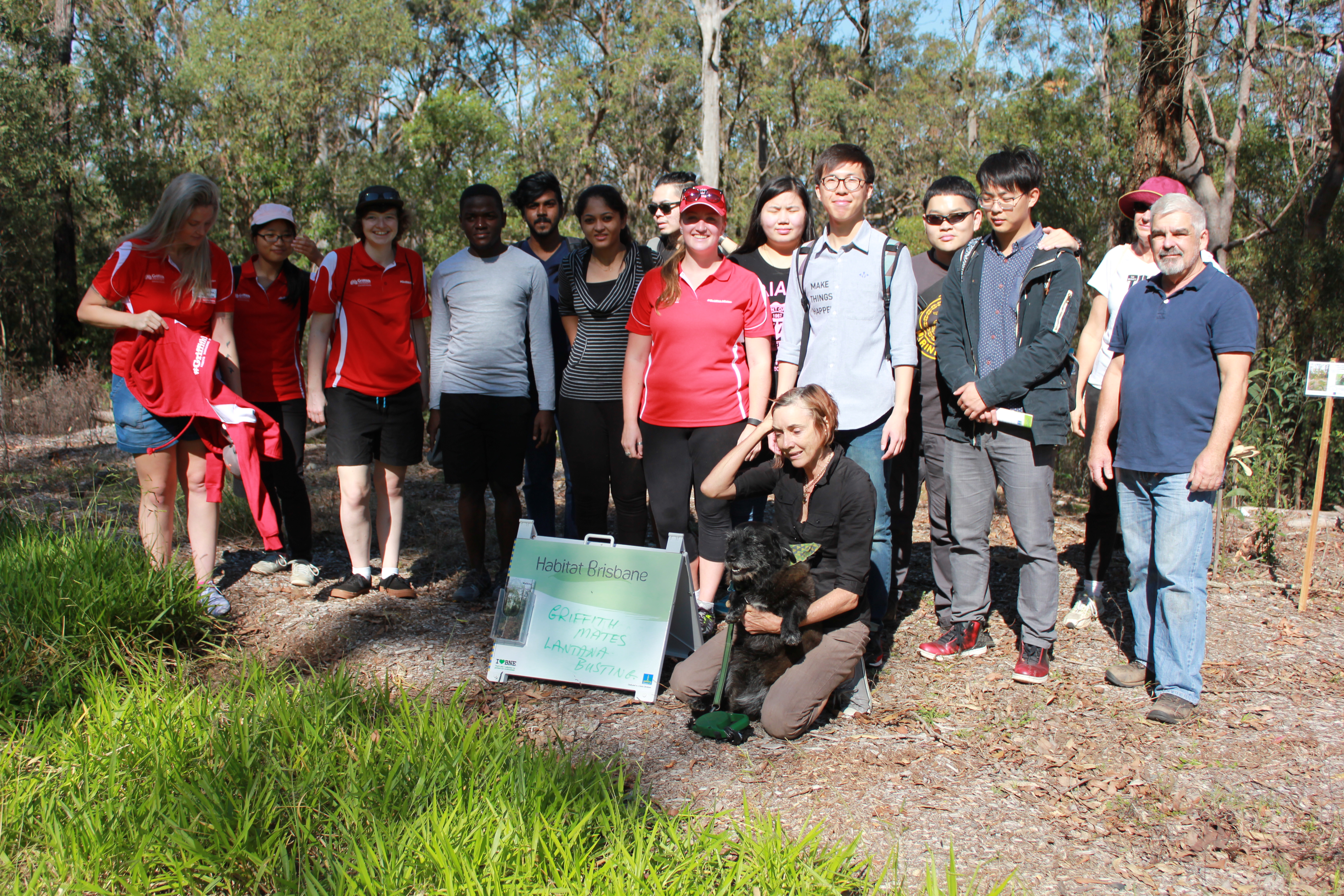
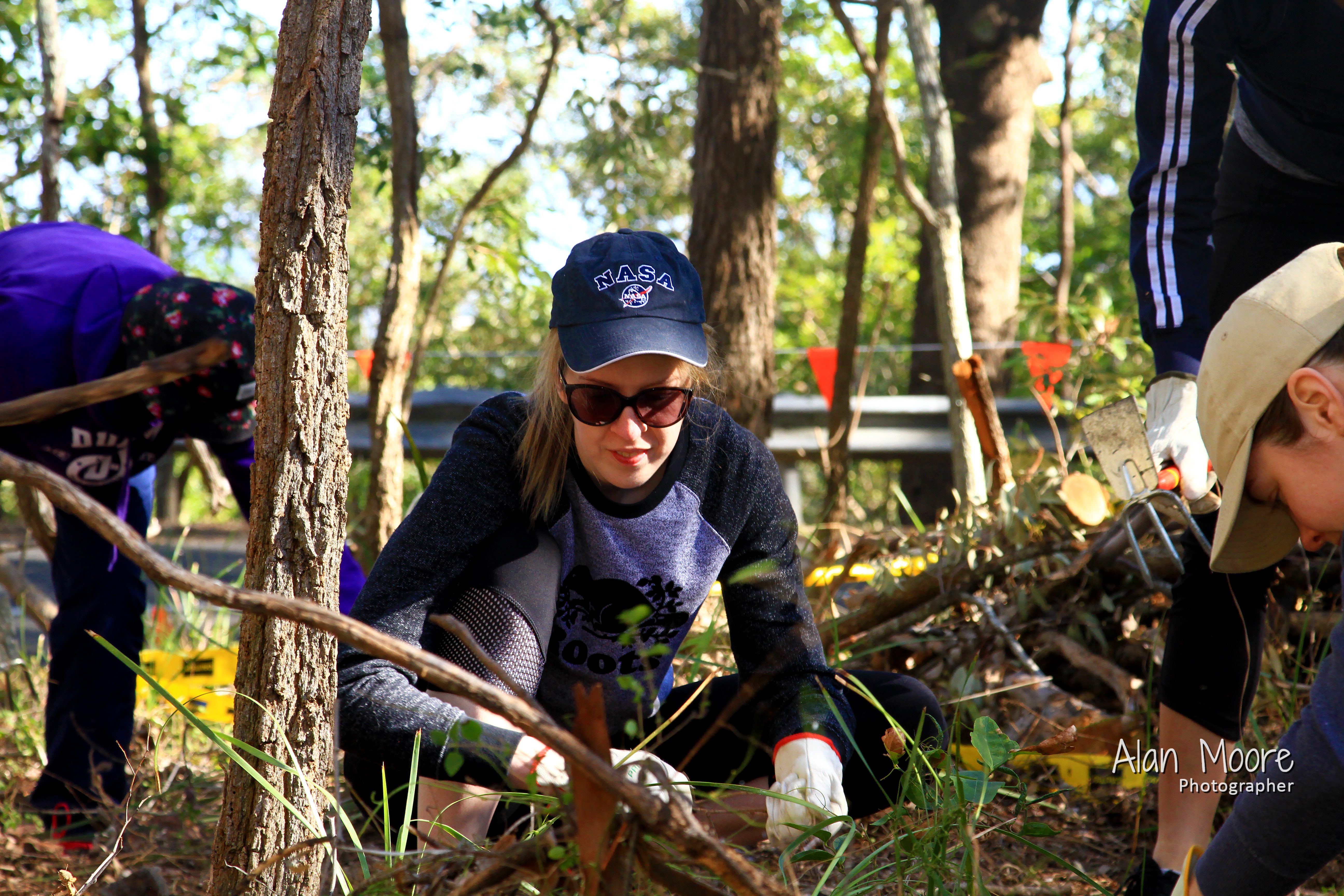
Lantana Busters at work
Not surprisingly none of the boxes had been occupied in the short time since installation. However, it is valuable to get a information on how long it takes before boxes are adopted.
.
.
.
Then is was back through the bush to the Lantana Busting site.
Scolopendrid centipede – tail to left
1,600 square metres of Creeping Lantana Lantana montevidensis were cleared and raked into swales on National Tree Day. Now we are doing the detail work of clearing the remaining roots to eradicate this invasive garden escapee.
There is an amazing about of wildlife among the leaf litter as well as in the trees. We disturbed a Scolopendrid centipede which I think Baoyi wanted to keep as a pet. Be careful handling centipedes as they may bite if disturbed or handled. The bite may cause severe pain and associated swelling.
Home made cakes a reward for hard work. (l-r) Sophie, Jocelyn, Harry, Baoyi, Carl, Amanda and Dana in front
Centipedes are predatory and will kill and consume a variety of other invertebrates such as spiders, molluscs, many insects, slaters and other centipedes. Prey is usually immobilised by venom injected through the fangs and then torn into pieces by the mandibles and the soft parts are eaten.
All that hard work deserves a reward. Thanks to Mt Gravatt Environment Group member Dana for the home made cakes.
Neighbours, Roger and Margaret called a short while ago. A Koala had just come down one tree and jumped across to another tree in the gully.
.
.
.
.
Looks young and definitely male.
It’s a boy
Breeding season has started so the males will be on the move.
Koalas are particularly to dog attack when they are on the ground moving between trees. So it is important that dogs are kept on a leash when visiting Mt Gravatt Conservation Reserve.
Sunday morning 31 July and one hundred and thirteen volunteers have arrived for 2016 National Tree Day. So I took one team to tackle the Creeping Lantana Lantana montevidenses while Sue Jones organised the other team to start the planting. The teams swapped jobs after morning tea.
Lantana Busters hard at work clearing 1,600 square metres of Creeping Lantana
Creeping Lantana is a major weed threat in Mt Gravatt Conservation Reserve. Lantana competes for native plants for scarce water reserves and nutrients, physically smothers other plant and the chemicals in Lantana have a significant negative effects on native plant species.
The Lantana Busting teams cleared an amazing 1,600 square metres with one group raking the weed into long swales to manage erosion and retain water while others followed up, hand pulling the remaining roots. I explained that once the roots are removed the Lantana can be left piled up without regrowing. Slow, detailed but amazingly effective work. I showed the teams the natural regeneration of native grasses: Pademelon Grass Oplismenus imbecillis and Creeping Beard Grass Oplismenus aemulus, Tufted Scleria Scleria mackaviensis (native sedge) and Slender Grape Cayratia clematidea (native vine). Nature works 24/7 to build on our work and the forest will regenerate naturally if we clear the weeds.
Over with the planting team it was all action, lots of smiles and a big job in hand. This year the team is building on the work from 2015 National Tree Day with in-fill planting of 564 creepers, grasses, shrubs and trees to provide safe habitat and food for small forest birds, including nectar, pollen, insects and seeds. 2016 National Tree Day Planting List
And the kids were there digging in to build their own future. Kids love digging in dirt and look at the skill development! Let’s invite these future builders back for 2017 National Tree Day.
All that hard work deserves some tea and bikkies and time to learn about our native bees from Len Kann.
I show Ross Vasta and his son an Acacia Falcata planted in 2015 and already flowering.
An amazing event – see Stats below, and importantly it looks like 2017 National Tree Day will be even bigger with all the teams and local community members telling me they want to come back.
It is always a pleasure to lead a guided walk with our Griffith Mates partners, sharing some of the surprising relationships between different plants and between plants and the animals that depend on them for food and shelter.
Many of the students who join the walk are international so it is a great opportunity to introduce these visitors to our unique bushland. Unfortunately no Koalas spotted this time.
Walking Acacia Way we discussed the importance of tree hollows for nesting and the curious Allocasuarina: male trees have russet (red-brown) flowers on tips of leaves and female trees have red ball flowers growing directly from the branches.
.
.
.
.
.
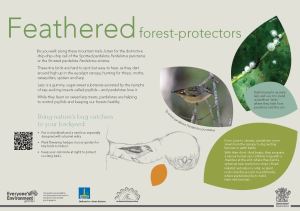
Stopping at the interpretative sign I used the QR code to bring up the online video of a Striated Pardalotte Pardalotus striatus with its “chip-chip” call on my iPhone. As soon as the birds high in the trees head the call they started to respond with their own calls.
.
.
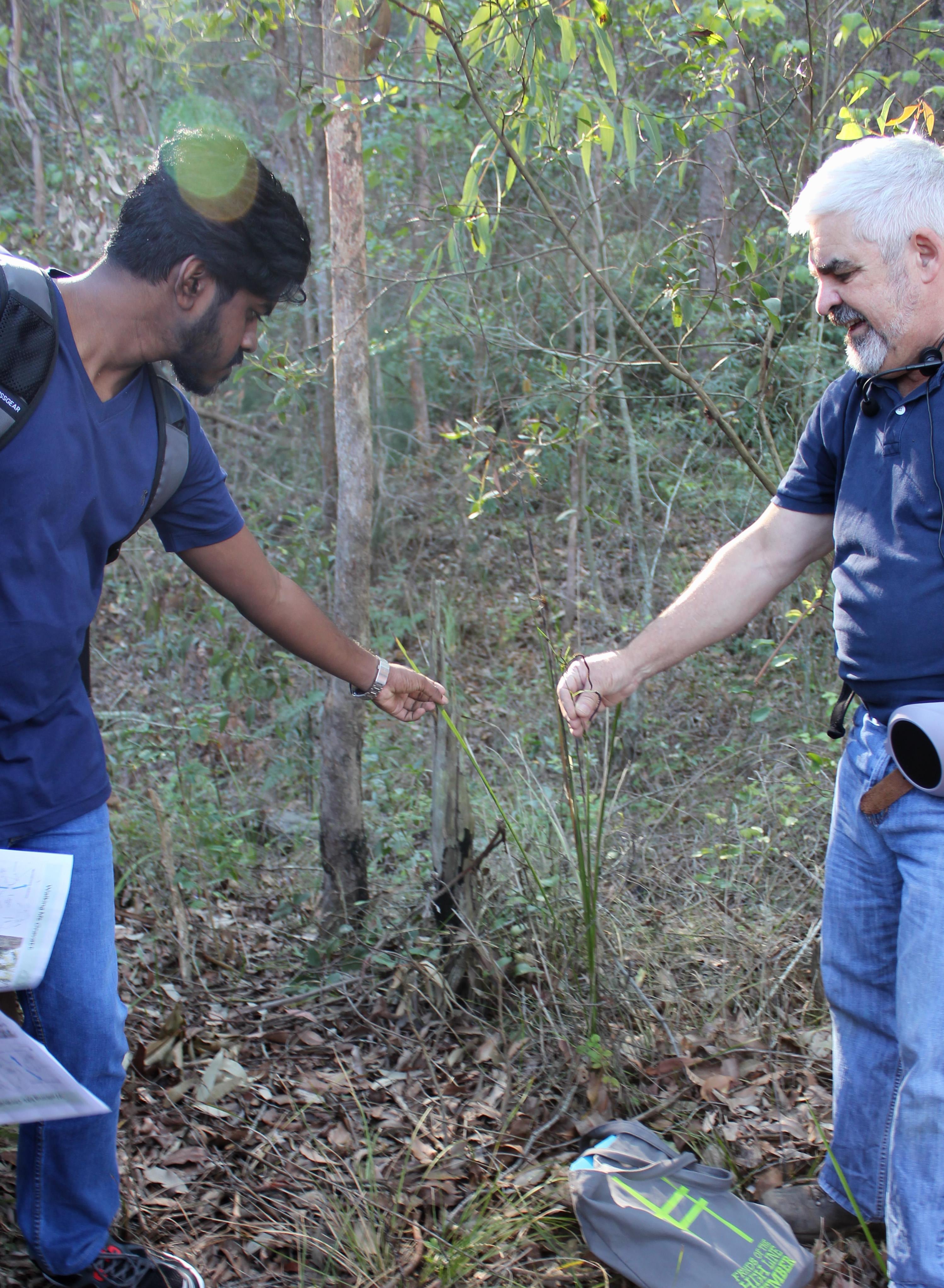
Discussing Settlers Flax
.
Settlers Flax Gymnostachys anceps has an interesting history of use by indigenous people and white settlers:
“Fibres were used to make fishing line. There are records of use as string by Europeans (to bind and carry pigs by the feet).” Save Our Waterways Now (SOWN)
.
.
After visiting Fox Gully Bushcare site we spent time clearing Creeping Lantana Lantana montevidenses.
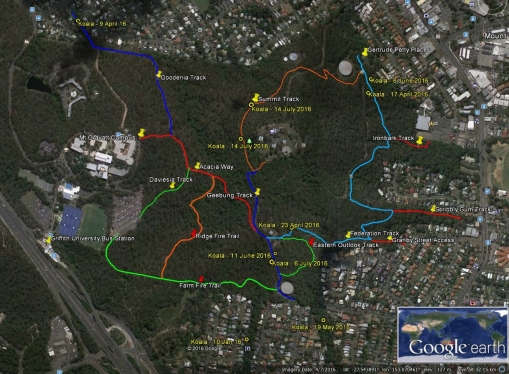
Koala Phascolarctos cinereus breeding season is August to February and we already have three sighting this month, so it is a good time to remind walkers to keep their dogs on leash within the Reserve. As this sighting report highlights:
Koala sighted – station marker 5
“Walking on the mountain yesterday around 10.30 proved exciting: two Koalas on the Summit Track. The first was sitting in a fork directly above the 5th guided walk sign-post. The second had actually climbed down from a tree, walked along the track before climbing back up a tree about four steps from the top of the flight up the western side of the mountain on the Summit Track, where it promptly started feeding. Two in one day really proves we have at least two koalas on the mountain! We think the ones we saw were both young.
Koala sighted walking Summit Track
“As an aside; the woman who saw the Koala climb down and walk the track before climbing back up had a rather large dog, firmly on a lead. We congratulated her for having the dog under control. Poor Koala would not have stood a chance had the dog been free.” Alison
.
.
BCC information on Dogs and Koalas: identifies that Koalas are under threat of extinction. Koalas are now listed as vulnerable in Queensland under the Australian Environment Protection and Biodiversity Conservation Act 1999 and also in the South East Queensland bio-region under the Queensland Nature Conservation Act 1992.
Queensland was once home to millions of Koalas. However, the BCC estimates that now there may be as few as 100,000 left in existence statewide. Koalas were still being hunted in Queensland in the 1920s, since that time habitat clearing and road trauma have been the have been the most significant threat with dog attacks number three.
“In 1927 in Queensland, the country’s final, but highly controversial month-long hunt known as Black August, more than 800,000 koalas were killed.” Rural Weekly
Koalas are now breeding in Mt Gravatt Conservation Reserve so we have a second chance to keep this unique and iconic species as part of our community.
“80 percent of koalas attacked by dogs die from their injuries” Moggill Koala Hospital – cited in BCC Dogs and Koalas
Koalas live here – dogs visit Keep your dog on leash while walking in the Reserve and help us protect and grow the Koala population.
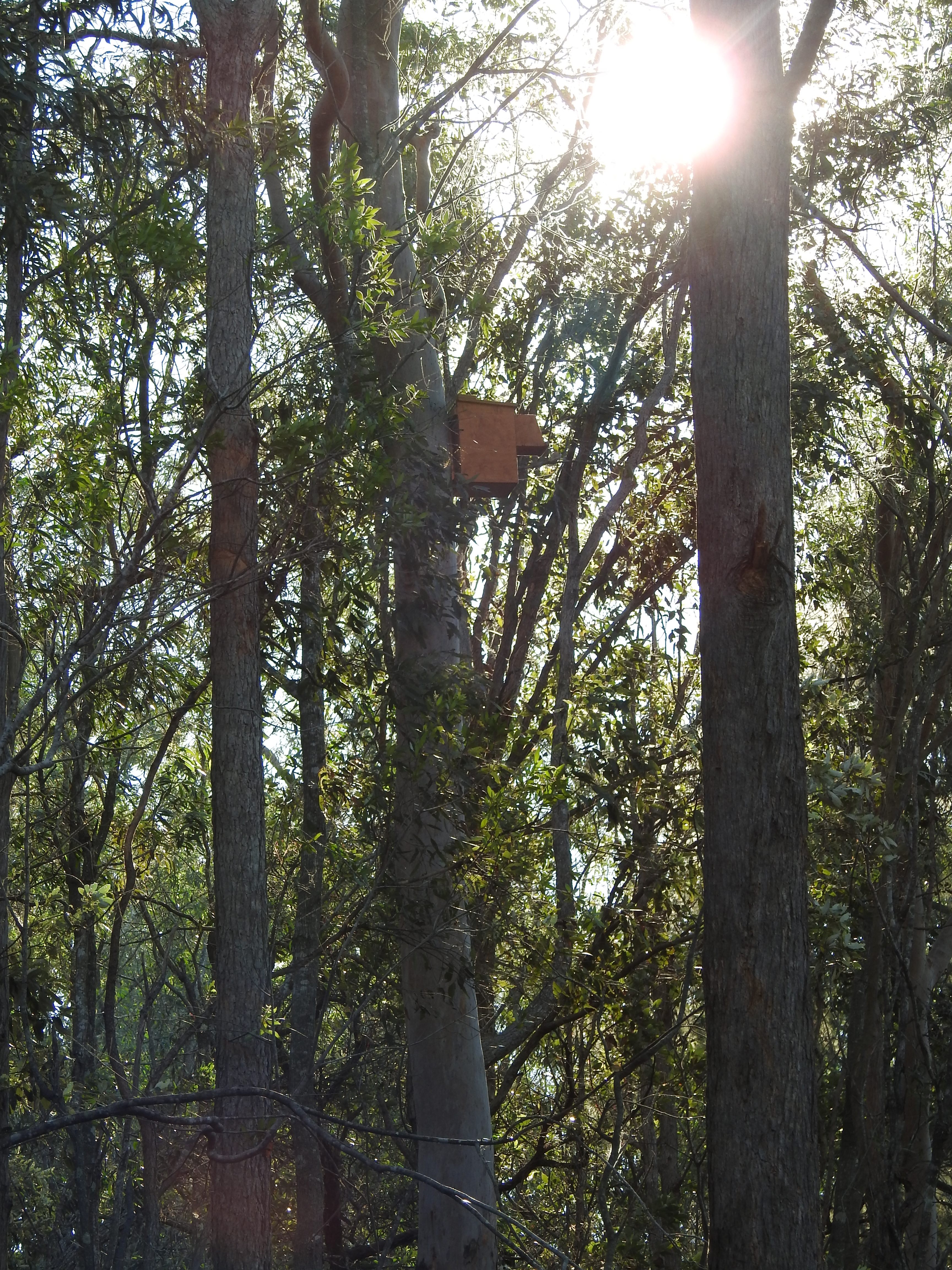
Kookaburras took over the Bookbook Owl Ninox novaeseelandiaebox and have raised two clutches of chicks. Rainbow Lorikeets Trichoglossus haematodus have raised chicks in the Lorikeet/Rosella boxes.
Play spot the nest-box when you walk the Geebung Track with your kids.
Also keep an eye out for birds creating nest hollows in the trees.
Just last week I photographed a pair of Sulphur-creasted Cockatoo Cacatua galeritaclearing out a hollow where a branch has broken from a Spotted Gum Corymbia citriodora v variegata.
Our Koalas becoming a tourist attraction for Mt Gravatt Conservation Reserve:
Levi “Eagle Eyes” Koala
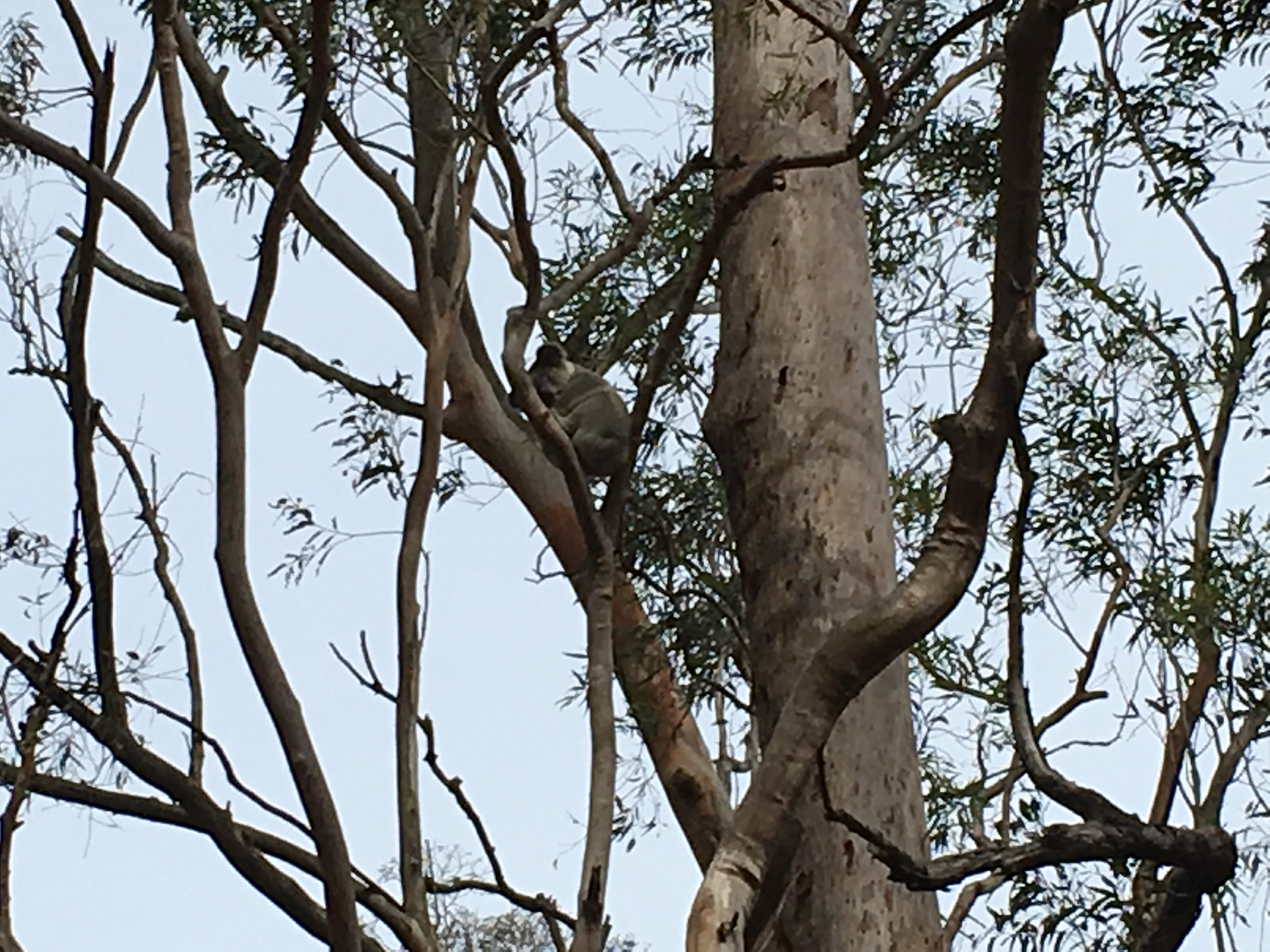
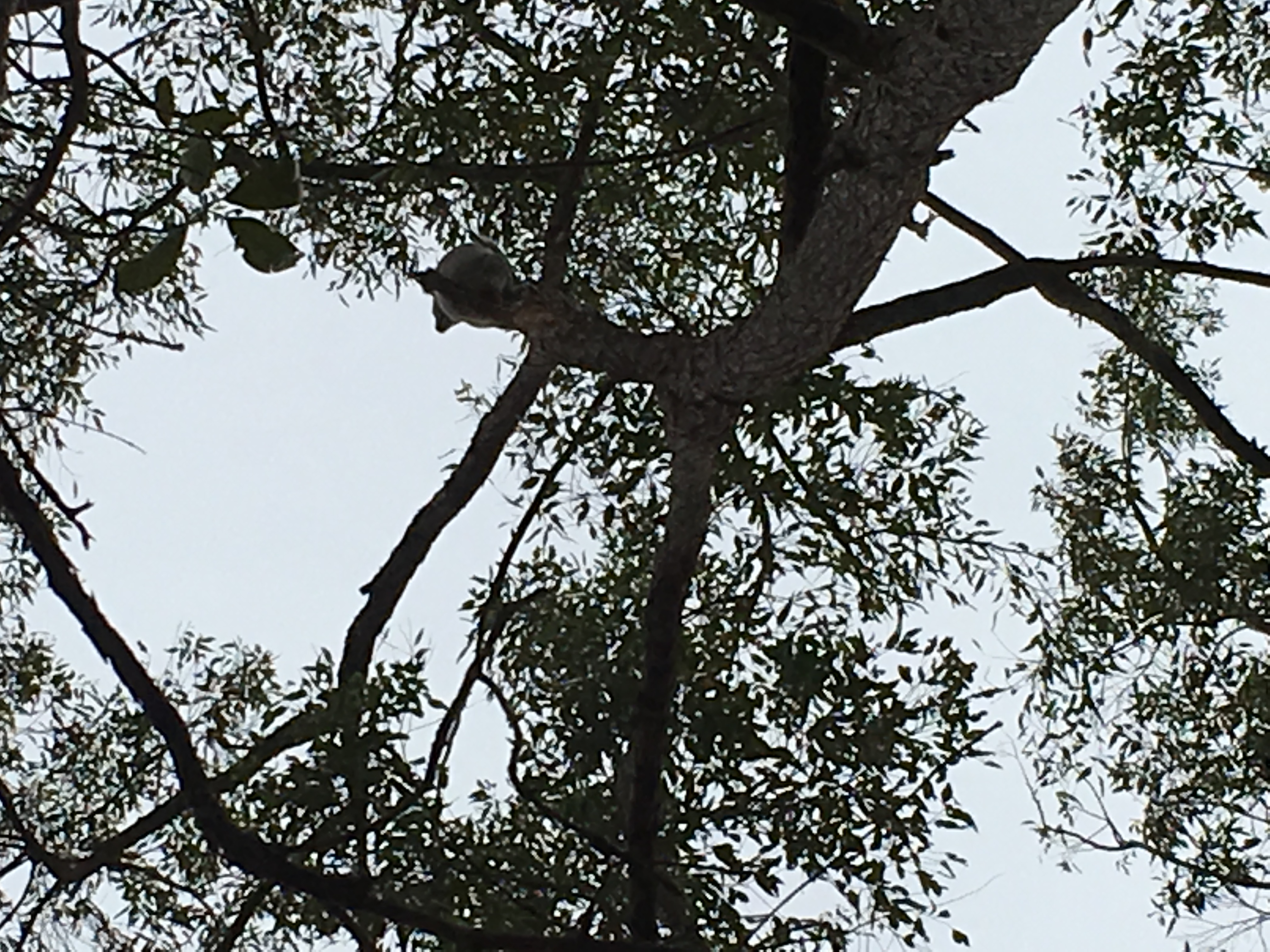
“Today my son and I went for a walk through the Mt Gravatt Conservation Reserve and headed on down to Fox Gully to look at your handy work. It’s looking great including all the nest boxes around the area. On the way back I gave my ‘eagle eyes’ son, Levi, a challenge to spot a koala. To my great delight within a minute or two he succeeded! I have attached a photo – not a great one as it was very high up – look for the bump in the second fork up! Thank you for inspiring me to improve my own garden (kookaburra box is up and fingers are crossed!) and for everything that you do for nature.”
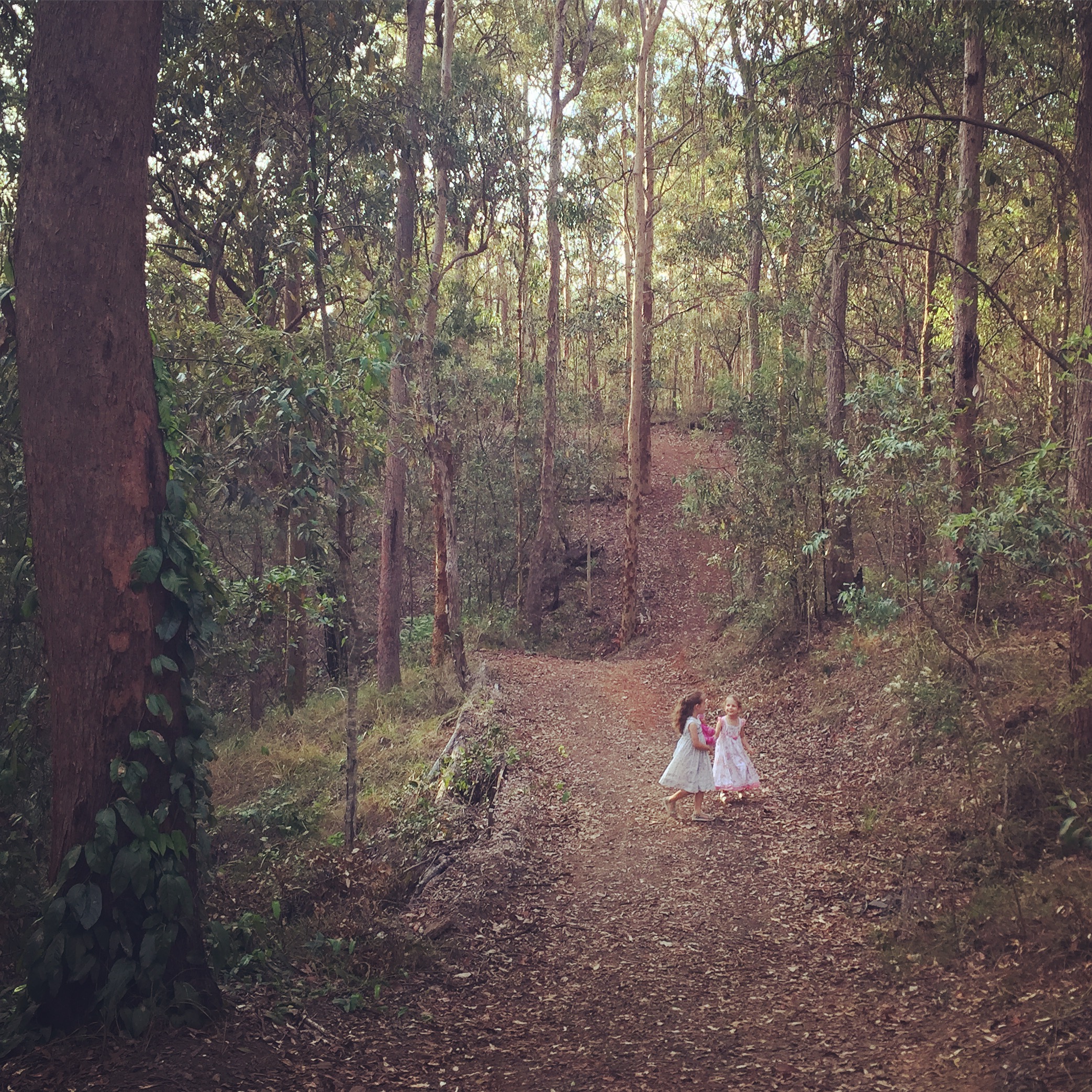
“After a community barbecue on Australia Day afternoon, a group of us wandered into the enchanting Toohey Forest to admire the work of Mount Gravatt Environment Group. While we checked out the breeding boxes that had been built for squirrel gliders, my wife captured this photo of our daughters playing and laughing together, enjoying the Australian bush. As much as these two precious souls belong to us, they also belong to a community and a place where they feel free and safe, exploring the beauty of nature. Watching their delight brings us such joy.” Scott
















 Mount Gravatt Environment Group