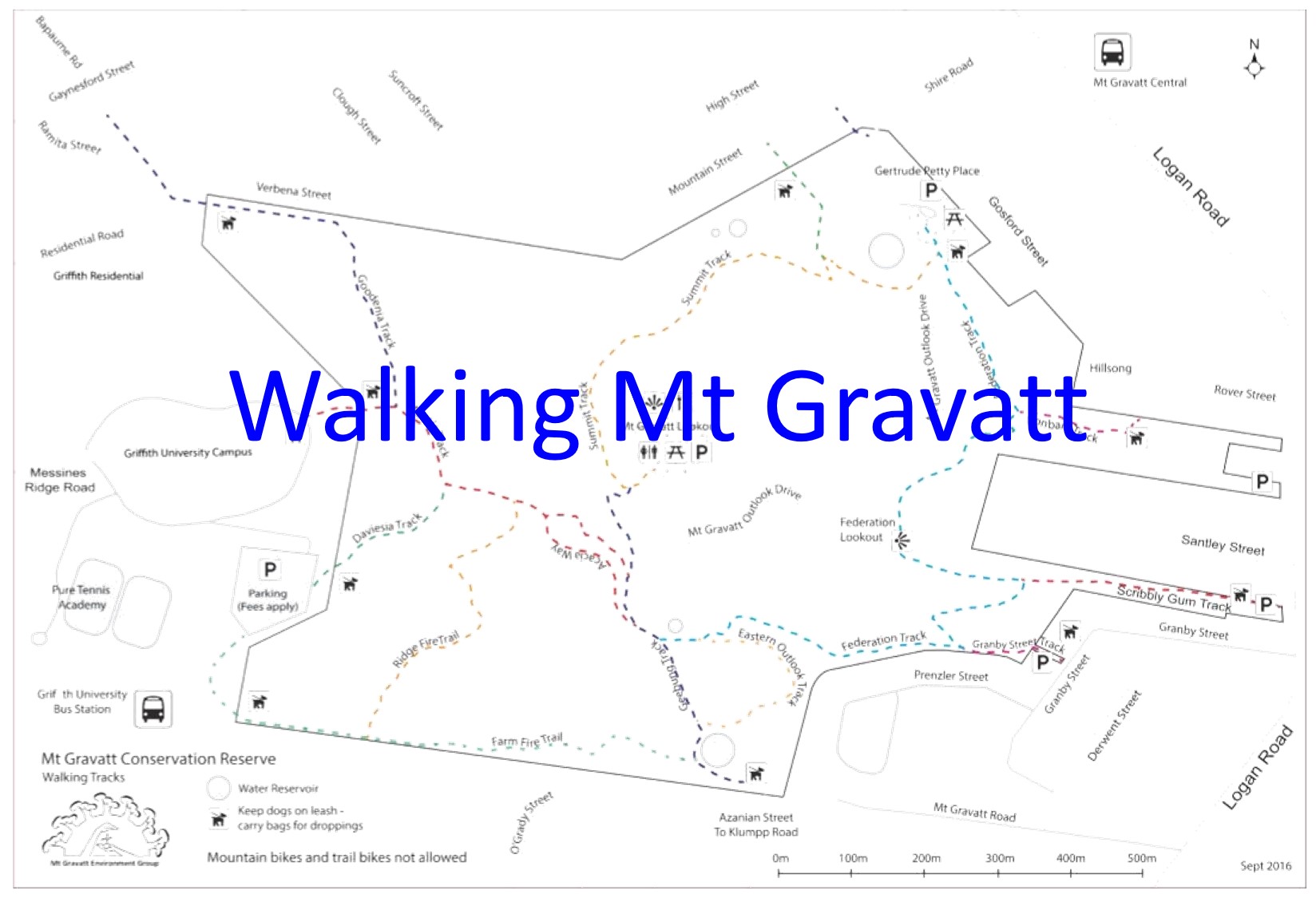
From Granby Street take Federation Track to Gertrude Petty Place
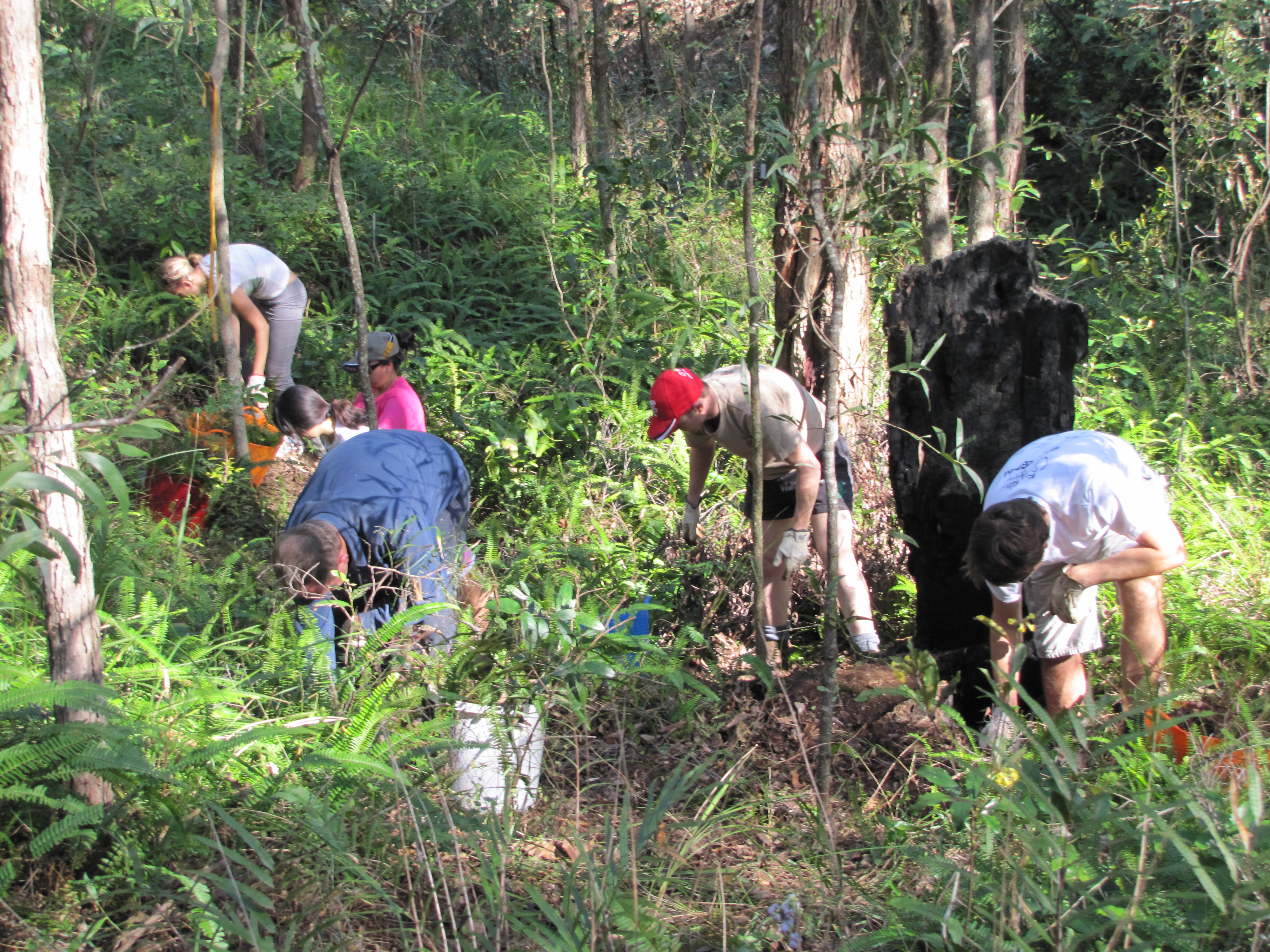
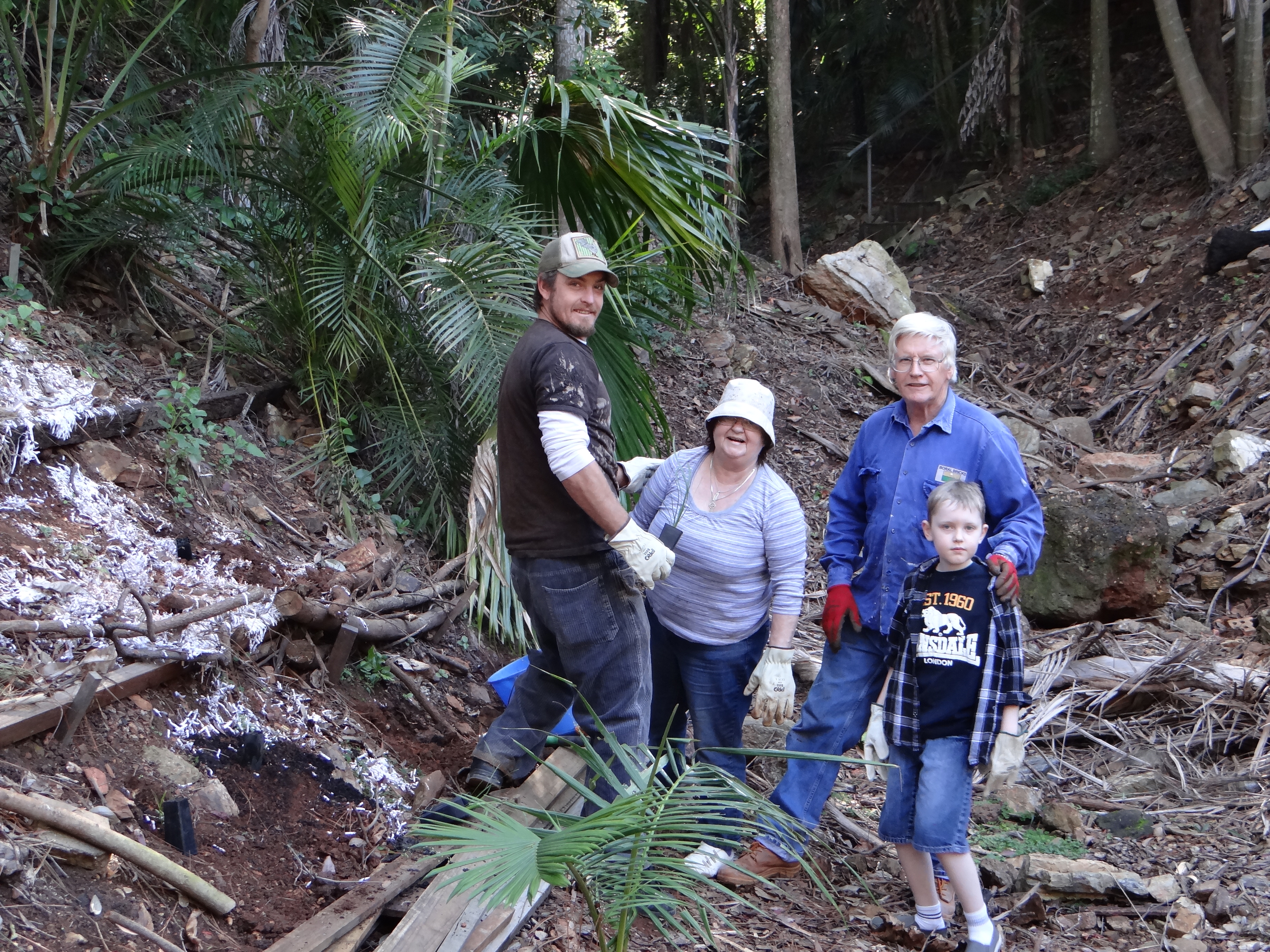
I joined Sandra, David and Marshall this morning to explore the headwaters of Jo’s Creek: above the timber bridge on the Federation Track. Our aim was to clear a large infestation of Ochna serrulata Mickey Mouse Plant which is currently flowering and getting ready to set seed.
This upper section of Jo’s Creek where the Federation Track crosses is quite special with Coin-spot Treeferns Cyathea cooperi thriving
along the sides of the gully even in the very dry weather. When we have good rain the many rock pools fill up and the gully is alive with birds you don’t find in more open forest areas.
Working together we cleared a large area of Ochna, Umbrella Trees Schefflera actinophylla, Lantana Lantana camara and Asparagus Fern Asparagus aethiopicus. Some larger Umbrella Trees had to be cut and poisoned however most Ochna
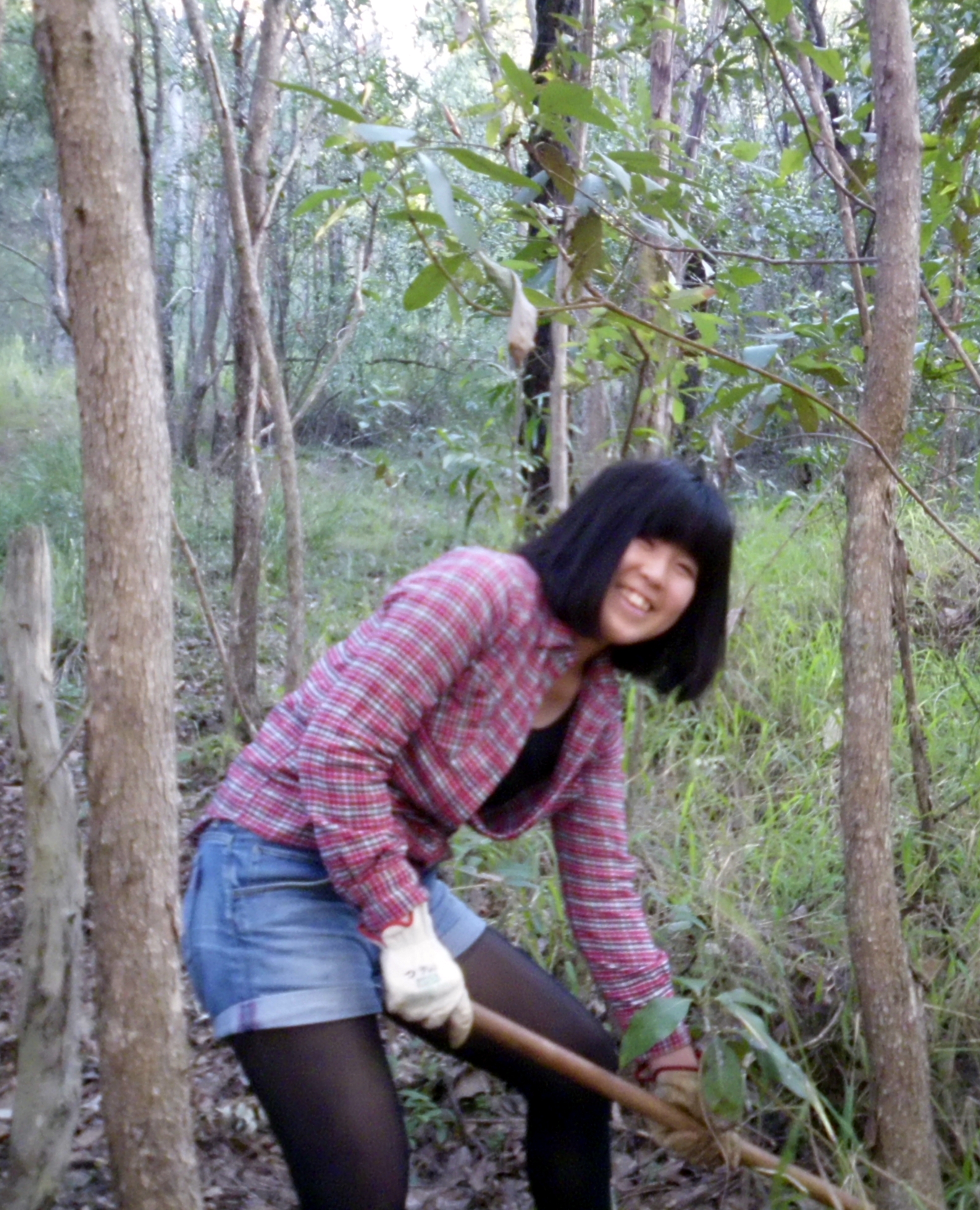
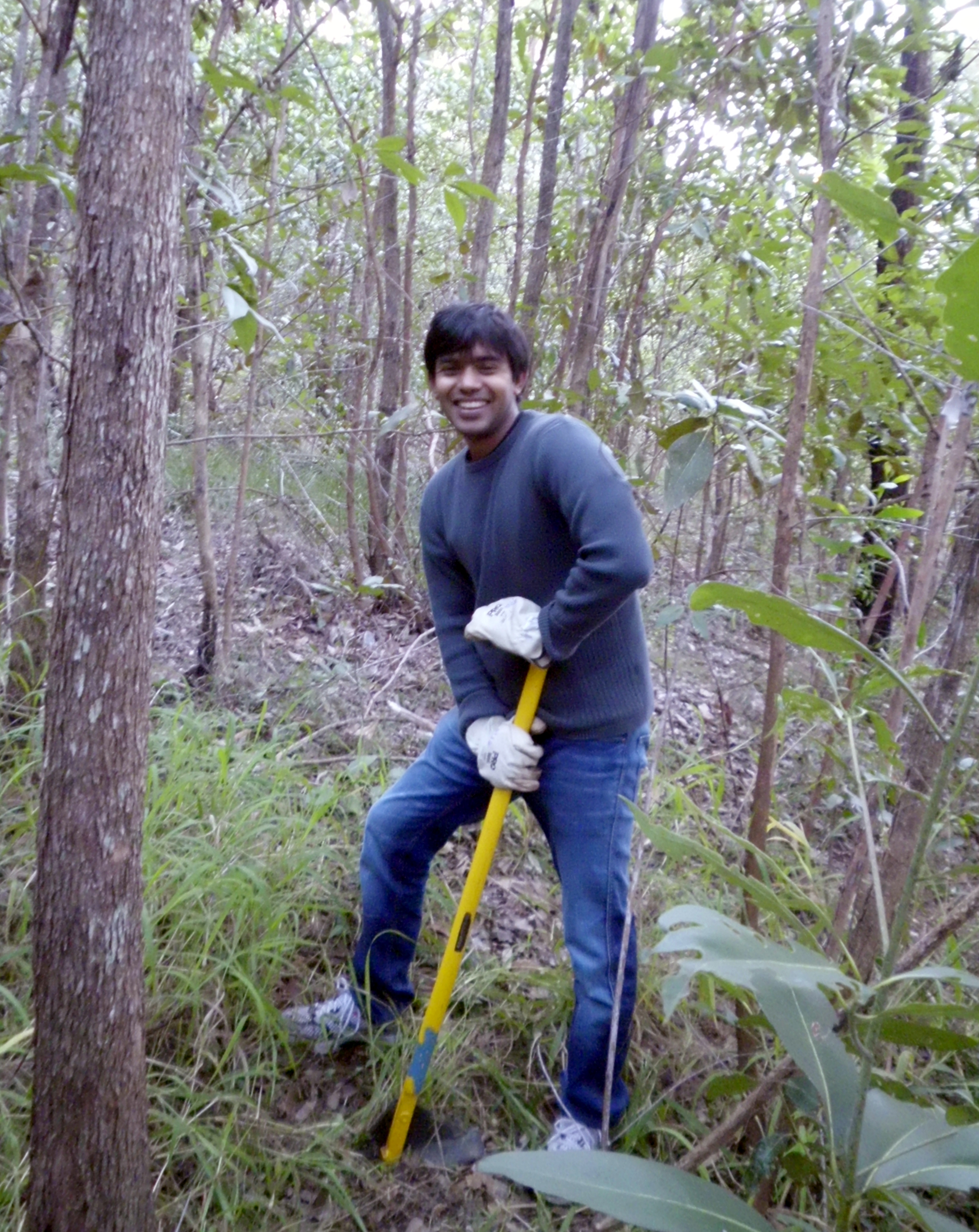
Sandra (left) and David
was pulled out roots and all with the Treepopper. The Asparagus Fern was lifted out whole with two-pronged hoes.
Still plenty of weeds to be cleared but a good morning’s work so we head home. On the way I show David how to wash his hands with “bush soap” made from leaves of the Soapy Ash Alphitonia excelsa.
“I’m out in the bush and still have to wash my hands!”
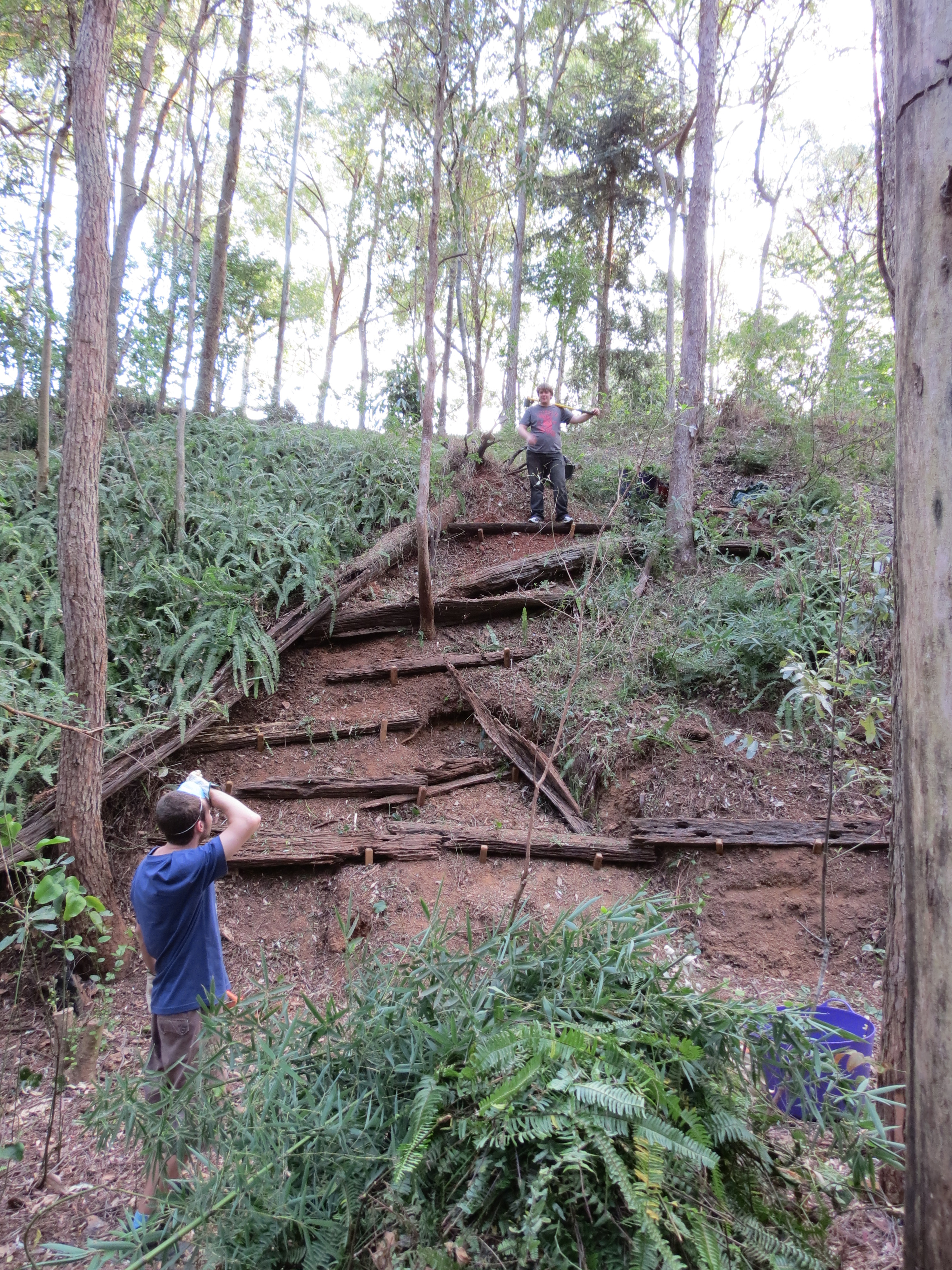
Jonny and James (top) clearing weeds and installing habitat
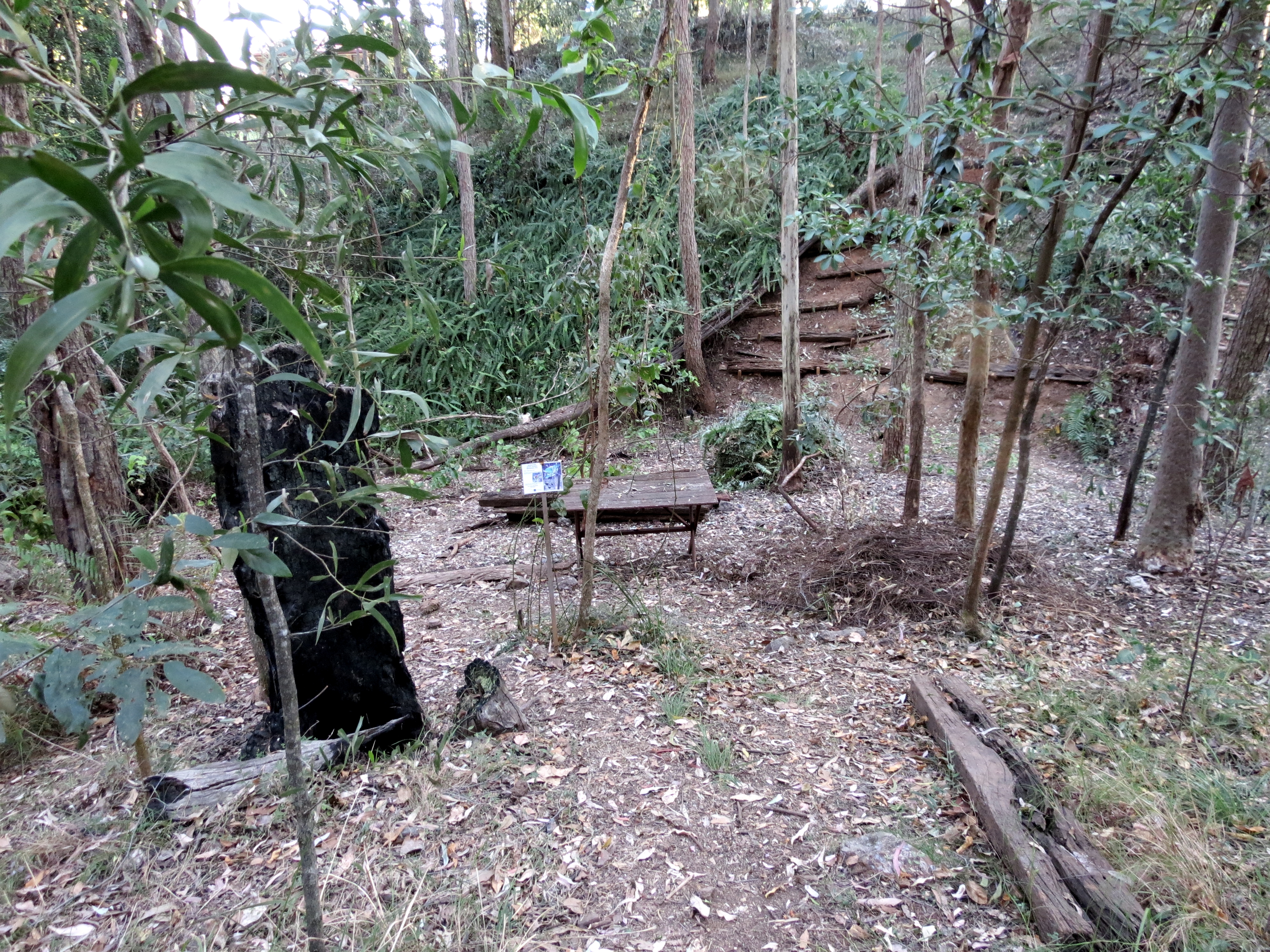
Restoration of Zone 13 is now expanding to include Zone 8 with the Fishbone Fern being cleared from the slope and our Griffith University team install old railway sleepers to stabilise the slope, improve access and provide habitat.
The pile in the foreground is composting weeds. Our best-practice approach means that we recycle 80% of the weeds on-site, reducing workload and fuel used in removing weeds from site while retaining valuable nutrients.
We considered using poison to clear the massive Fishbone infestation. However an on-ground survey found four local fern species surviving among the weeds. Rather than risk losing the surviving specimens we started the
Restoration progress – Sept 2012
slower but, long term, more effective manual removal of the weeds.
Two years and we are past half way. There is still a lot of weed removal to be done but nature is working with us with natural regeneration restoring the native grasses, lomandras, Scrambling Lily and Soapy Ash.
We have achieved a dramatic
No CCA poison – just lots of holes for hiding
reduction in resources required with no new plants or mulch required to achieve this result.
I am particularly proud of our latest initiative, reusing old hardwood railway sleepers – remains of steel spikes can still be seen. Roger, one of our gully neighbours recently replaced a retaining wall built about thirty years ago with second hand railway sleepers. Our fit young Griffith students pitched in loading the sleepers into Roger’s ute and then carrying them down to our work site. Rather than going to landfill we are reusing these sleepers to stabilise slopes and improve access for restoration work.
The sleepers are a particularly valuable resource because they have NOT been treated with copper-arsenate which would kill the wildlife we are working to restore. The solid hardwood has survived insect attack well with softer timber eaten away leaving hollows and cracks providing invaluable habitat for the many species of insects and lizards vital to the health of our bushland. A key finding of last-year’s BAAM report was the lack of fallen timber so these sleepers are addressing that issue.
The Pollinator Link concept was well received at the BCC Habitat Brisbane Citywide Meeting this week. This was an important test of feasibility as the audience included experienced BCC Habitat Offices with university qualifications in environmental science, Robert “Bob the Beeman” Luttrel and bushcare members who know the
on-ground reality of restoring our urban bushland habitats.
The Pollinator Link concept takes this a step further to focus on linking patches of bushland habitat in our urban environment.
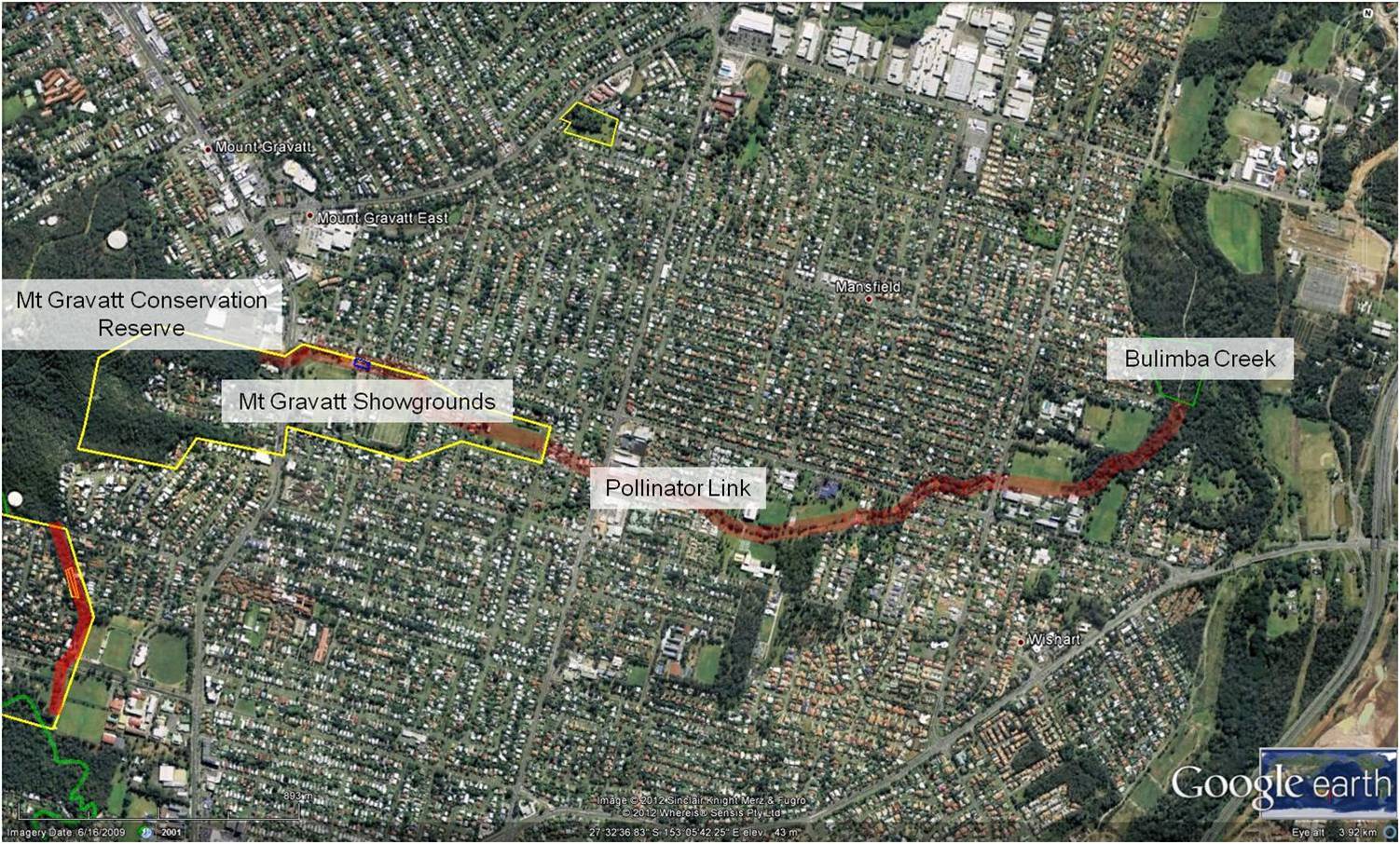
Pollinator Link – Mt Gravatt Conservation Reserve to Bulimba Creek
I developed the concept when I was struggling with the issue of creating a wildlife corridor linking Mt Gravatt Conservation Reserve with Bulimba Creek via Mt Gravatt Showgrounds. The on ground reality is that any effective link through the Showgrounds would hit a wall of houses and backyards. Being able to fly, our pollinators’ – birds, butterflies and bees plus moths, insects, flying foxes, micr0-bats, capacity to cross man-made barriers like roads and fences means they have potential to make an important contribution to ecological biodiversity. My inspiration for the Pollinator Link model came from the Pollinator Pathway in Seattle and the High Line in New York.
Patch-matrix-corridor mosaic – Wellers Hill
As I researched the concept and looked for examples of potential Pollinator Link locations I realised that in some areas like Wellers Hill where there are a number of isolated patches of bushland we could go beyond linking and actually consolidate habitat within urban spaces with a little a 10% of properties engaged. Pollinator Links have potential to create urban pollinator “patch-matrix-corridor mosaic”* habitat by interconnecting patches of bushland with wildlife friendly backyards. (* Habitat Fragmentation and Landscape Change Lindenmayer & Fischer (2006))
The Pollinator Link concept passed the feasibility test now we move to implementation stage:
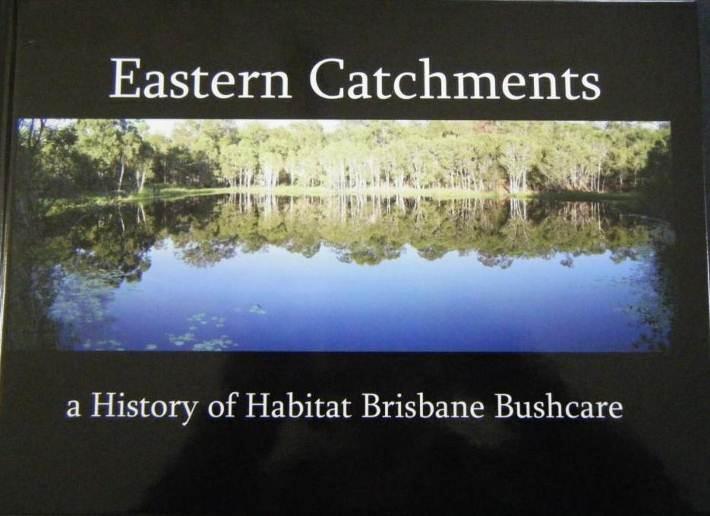
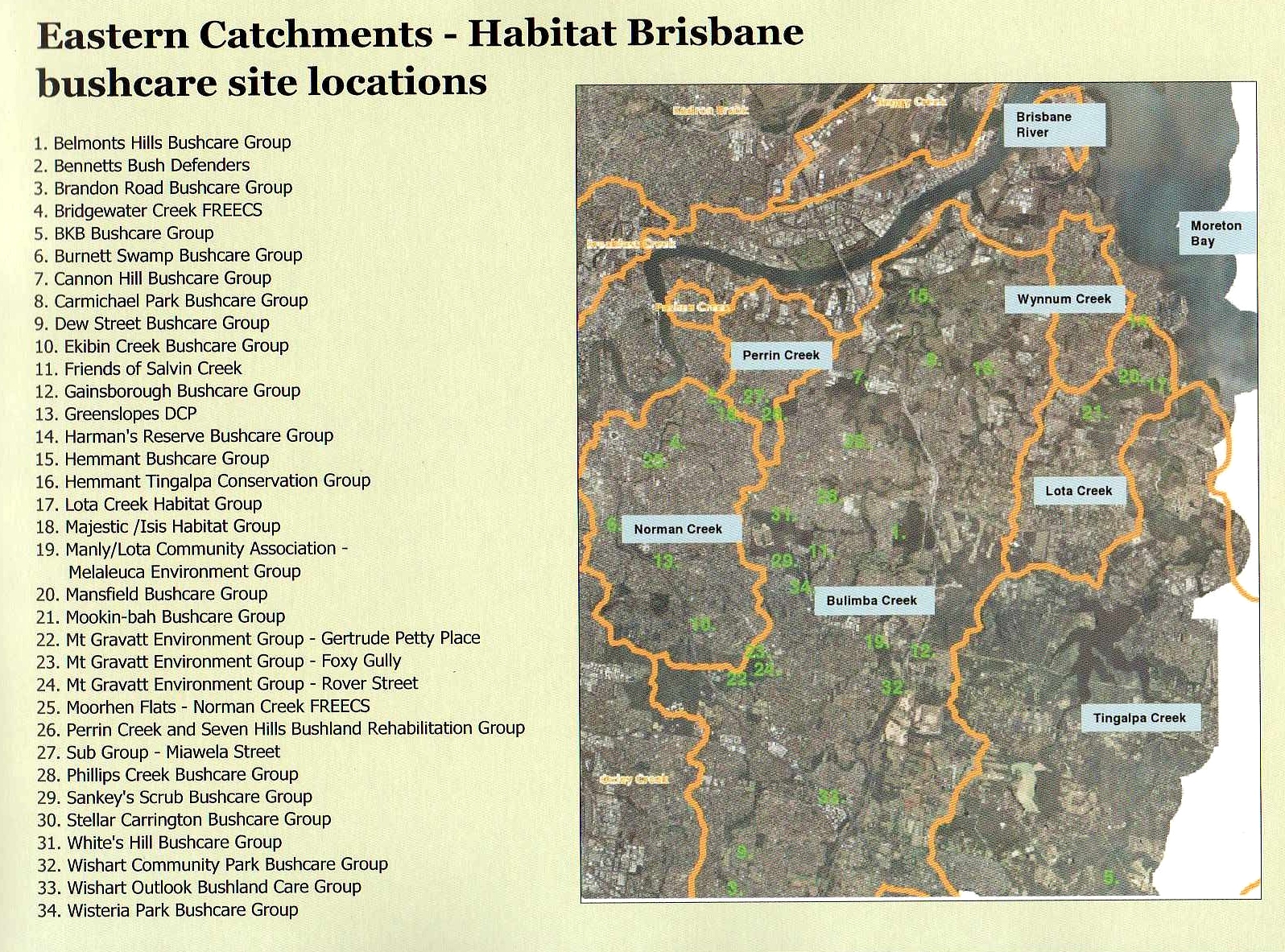
Yesterday I attended the launch of an amazing book which captures the history of habitat groups within the eastern creek catchments of Brisbane. The true genus of this book is that it is a compilation of stories written by group members and illustrated by photos submitted by each group. Each story paints a personal picture of a habitat community with group activities, community events and flora and fauna as seen through the eyes of individuals who truly care about that patch of urban bushland.
Congratulations to the BCC Habitat Brisbane team members who bought this alive and thanks to the BCC Councilors who had the vision to provide the financial support.
Reading the stories and understanding the scope of the Habitat Brisbane programme, this is only the Eastern Catchments, fills me with pride in our Brisbane community and hope for the future.
Copies of this high quality small volume photo book can be ordered by emailing B4C. Cost is $120.
Three Mt Gravatt Environment Group Bushcare sites are represented:
Seriously we were very pleased to welcome the Griffith Uni Bushcare Team to Fox Gully yesterday. Team leader Mirandha, Environmental Law, has been working with Susan Jones at our Gertrude Petty Place Bushcare site.
First order of the day was a sausage sizzle, a very new and Australian experience for Lin, Environmental Science, and Fred, Hotel Management. Marshal operated the BBQ while I show the team the Rainbow Lorikeets Trichoglossus haematodus setting-up home in the Men’s Shed nest-box high in a Tallowwood.
8:30am Briefing the team and taking their minds off the cold (Photo: Alan Moore)
By: Michael Fox
7:45am The first participants have arrived even before I have finished setting up … and it’s cold!
8:30am The team is assembled, time for briefing: we have over 200 plants ready. Plants selected included vines like beautiful butterfly plant Sarsparilla Vine Hardenbergia violacea, trees like Coast Banksia Banksia integrifolia – food plant for Sugar Gliders, and trees like the Blueberry Ash Elaeocarpus reticulatus with its fascinating pretty pink downward facing flowers. Downward hanging flowers are a valuable food source in rainy periods when nectar is washed out of Banksia and Grevillea flowers.
9am Ross & Barry planting large Hickory Wattle (Photo: Alan Moore)
d
d
d
d
9am Planting is well underway with people scattered all over the slope. Ross Vasta MP Federal Member for Bonner and gully neighbour Barry work together planting a large Hickory Wattle Acacia disparrima.
9:50am Miranda and Scott
d
d
d
d
d
9:50am Must be time for morning-tea.
Looking around it is a real pleasure to see our neighbours engaged in a cooperative effort to restore this corridor for our wildlife.
9:50am (l-r) Alistair, Lyn, Ray & Trey
d
d
d
d
Three generations of the Fulton family have been strong supporters of our restoration work with members involved in every planting day since 2008 when they planted two trees in memory of Lyn’s mother. Ray has also propagated Lomandras and potted Acacias that are now thriving in bushcare site.
Madeira Vine is a major problem in the gully, smothering trees and spreading aggressively with hundreds of potato like tubers which can each shoot into two or three new vines.
Devil’s Ivy or Pothos is another invasive weed in the gully, climbing and dragging down trees. Devil’s Ivy, a common house plant, is also toxic to dogs and cats.
10:50am Ann Moran – Field Botanist
d
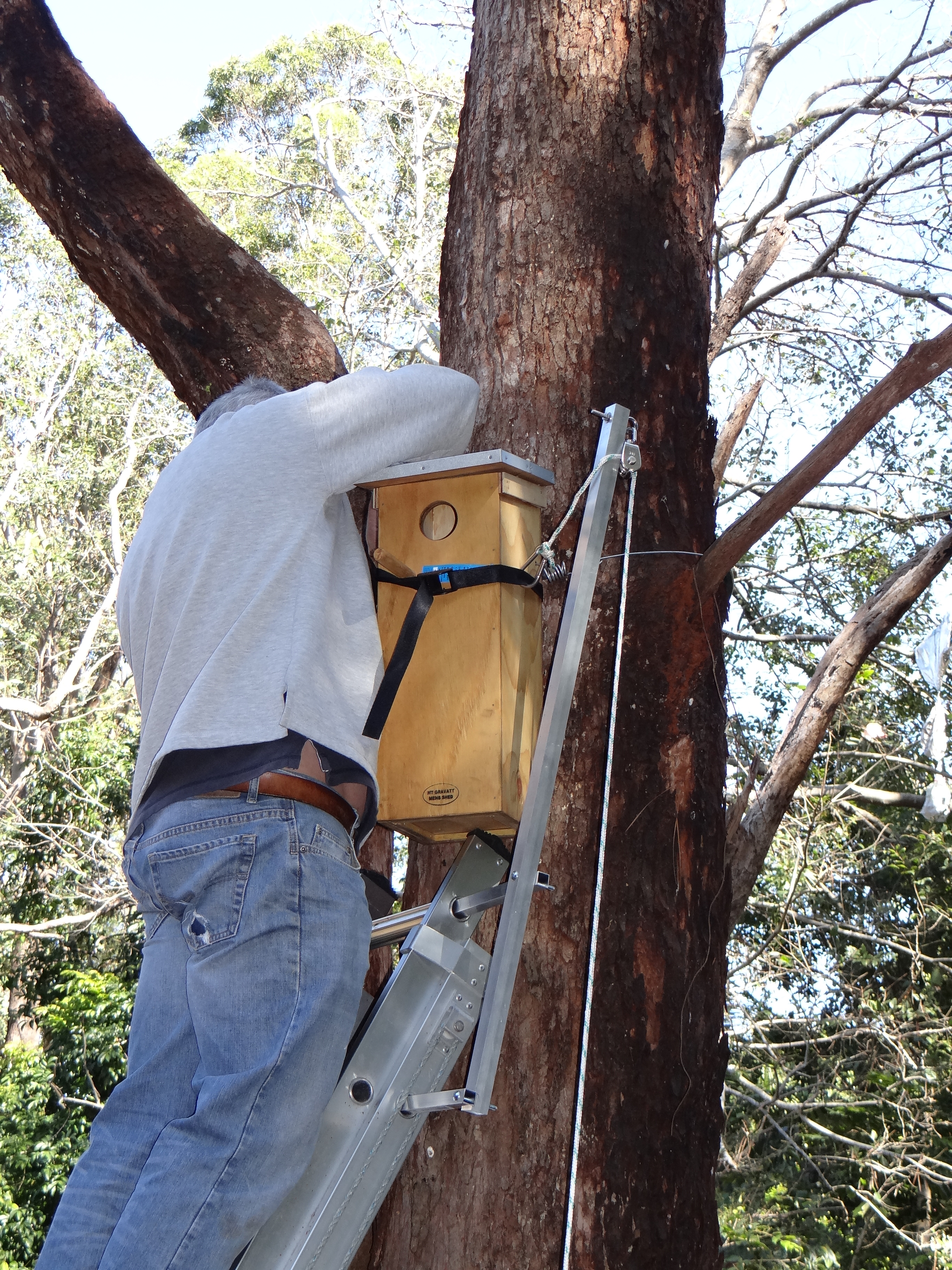
11am Installing Men’s Shed nest box – a new home for Scaly-breasted Lorikeets
d
d
10:50am Further down the gully Ann Moran a Field Botanist with decades of experience, generously shared her amazing knowledge of our native plants. I didn’t realise what looks like multiple leaves on the Black Bean Castanospermum australe are actually one leaf and if you sniff the end of the stem it smells of cucumber.
d
d
d
d
d
dd
d
11am Installing our first nest box. Logging and farming of the mountain habitat means that the forest is less than one hundred years old. Nest hollows typically start to form once trees are over one years old and then can take another fifty years to create. Therefore there is a shortage of nest hollows available for birds and gliders. Mt Gravatt Men’s Shed have now partnered with Mt Gravatt Environment Group to produce high quality nest boxes designed to the needs of local species. Scaly-breasted Lorikeets – all green with flecks (scales) of yellow on the chest, are smaller than Rainbow Lorikeets and have lost out in the fight for available tree hollows. This box with its smaller entry hole which excludes the larger birds will remain available for our Scalies.
Mt Gravatt Environment Group sell Men’s Shed nest boxes for $50. Boxes are available for a number of bird and glider species. For details email: megoutlook@gmail.com
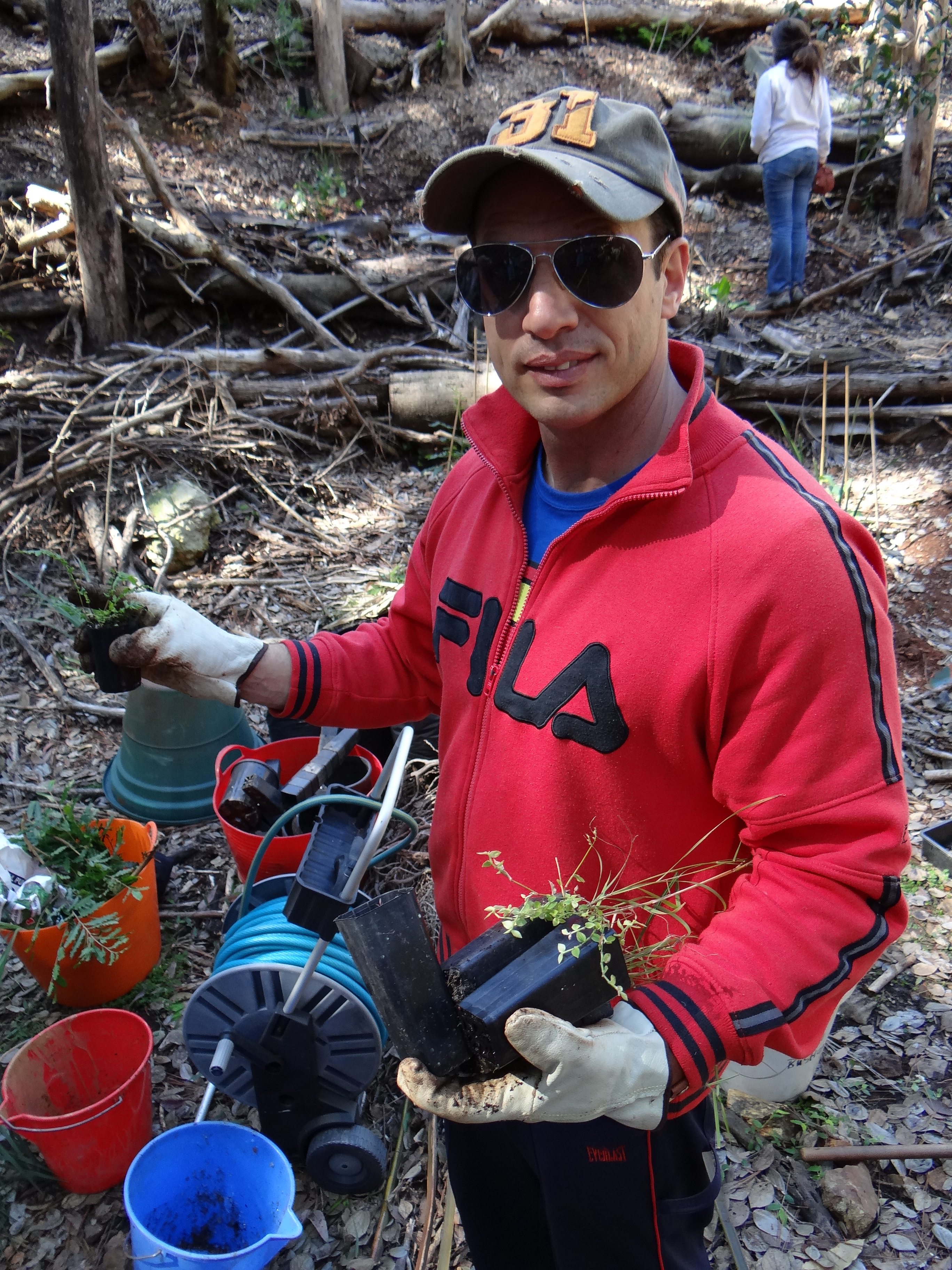
11:20am Andrew with native grasses
11:20am Native grasses like Rainforest Grass Oplismenus aemulus, Graceful Grass Ottochloa gracillima and Scented Top Grass Capillipedium spicigerum operate as Green Mulch suppressing weeds, retaining moisture and reducing erosion. These grasses are also caterpillar food for butterflies like the Orange-streaked Ringlet.
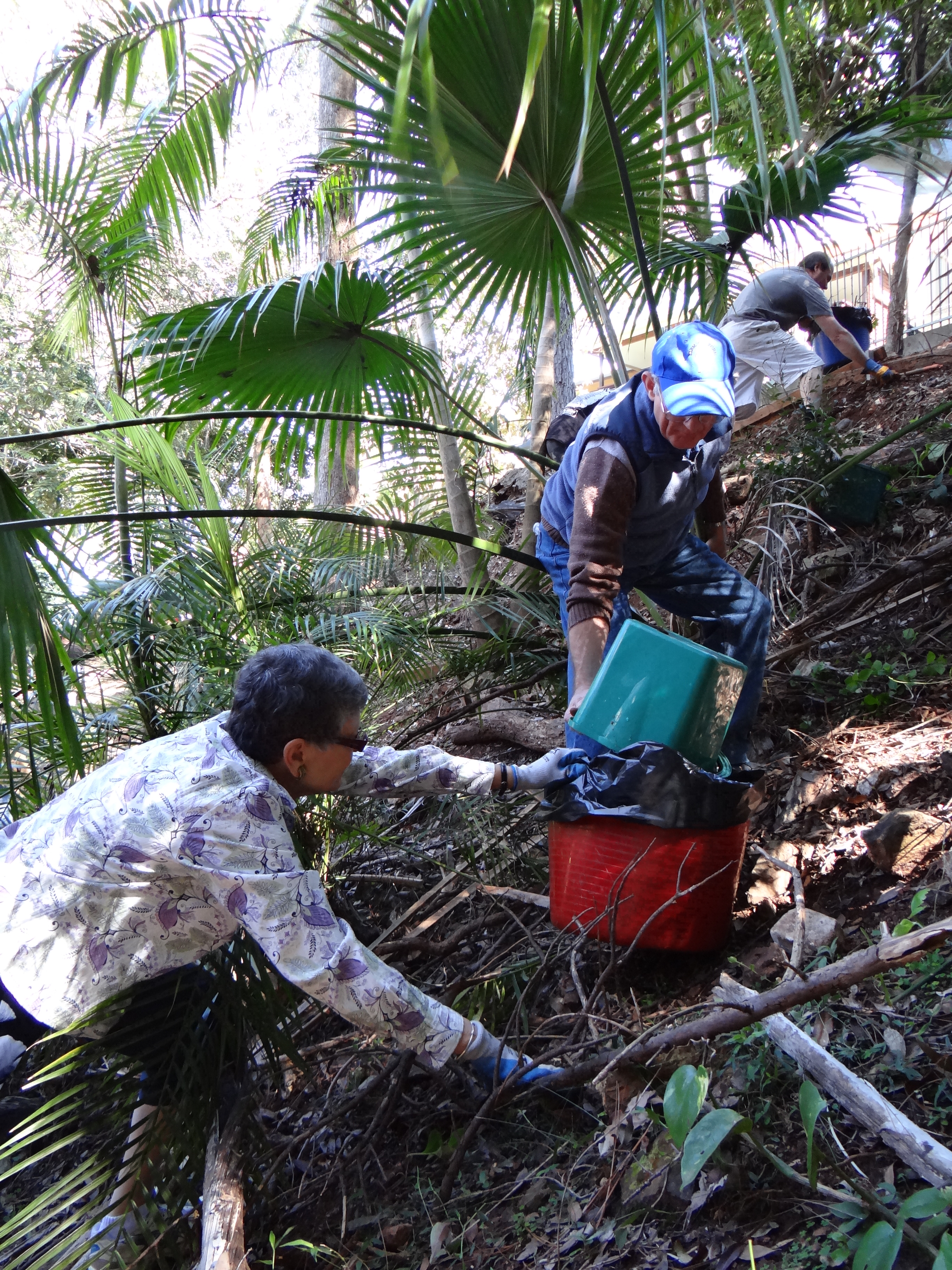
11:30am Susan Jones, Mt Gravatt Environment Group Secretary, pitches in with gully neighbour Don to remove Madeira Vine.
12noon Planting done. Now nature takes over to complete the job
d
d
d
d
d
d
d
d
d
12noon Over 200 plants in place. Now we hand over the nature to complete the job. Come back for the 2013 Community Gully Day to see the results of our partnership with nature.
Thank you to all participants. It is inspiring to be part of such an amazing community event. Also thank you to Annette & Genevieve who hosted the event, Don & Clair, Ray & Lyn and SOWN who donated plants and Jason & Tash who donated timber for the slope.
Some neighbours who were unable to participate on the day made tax-deductible donations that paid for the tube stock.
Our community speaks out against destructive mountain biking on Mt Gravatt:
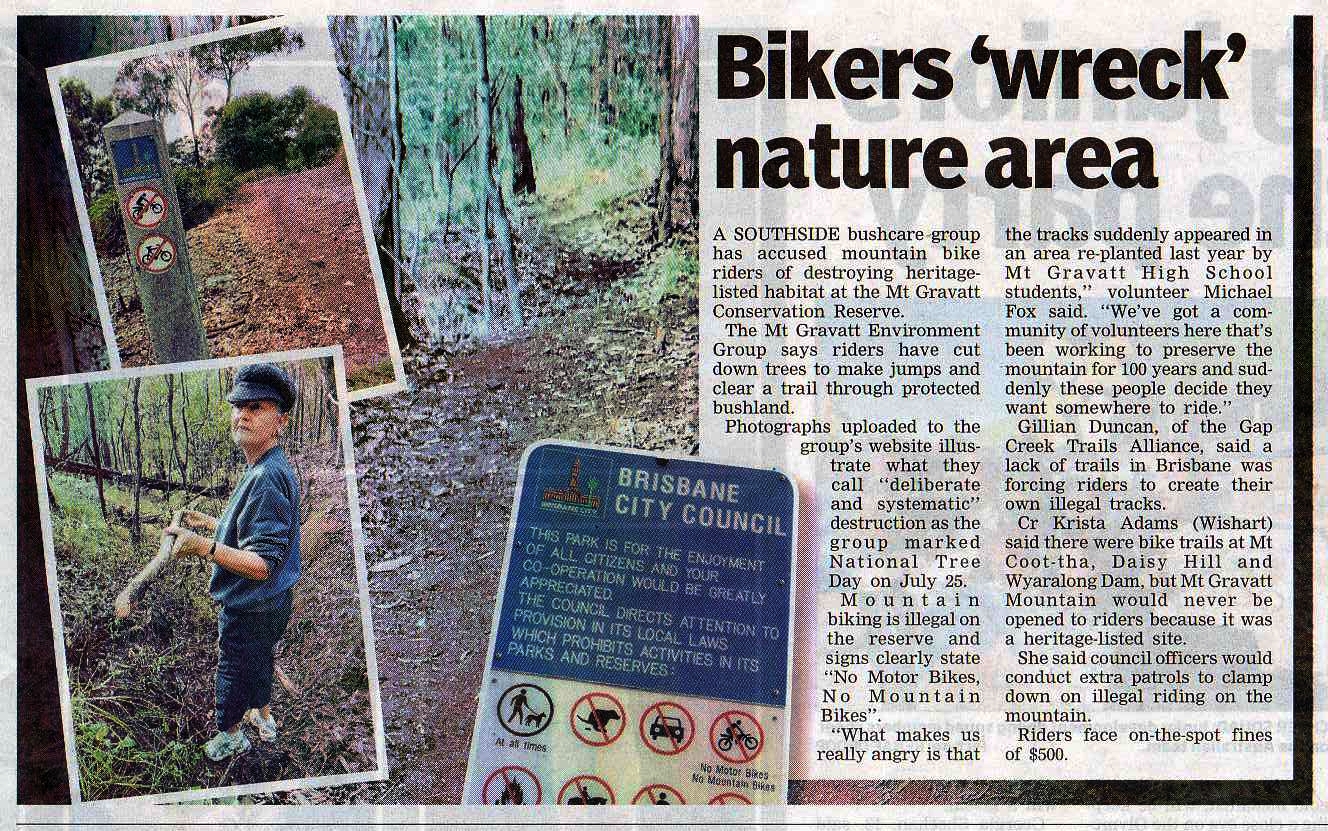
Southern Star – 1 August 2012
Local Councilor Krista Adams has reconfirmed the Council’s long standing commitment to keeping Mt Gravatt Conservation Reserve free of mountain bike riding.
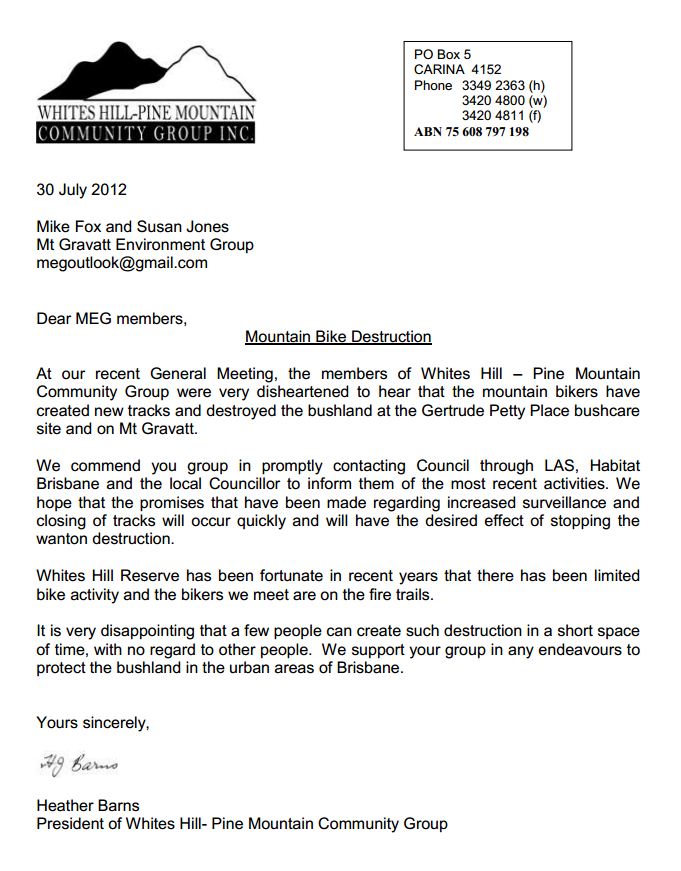
Letter of support – Whites Hill-Pine Mountain Community Group Inc.
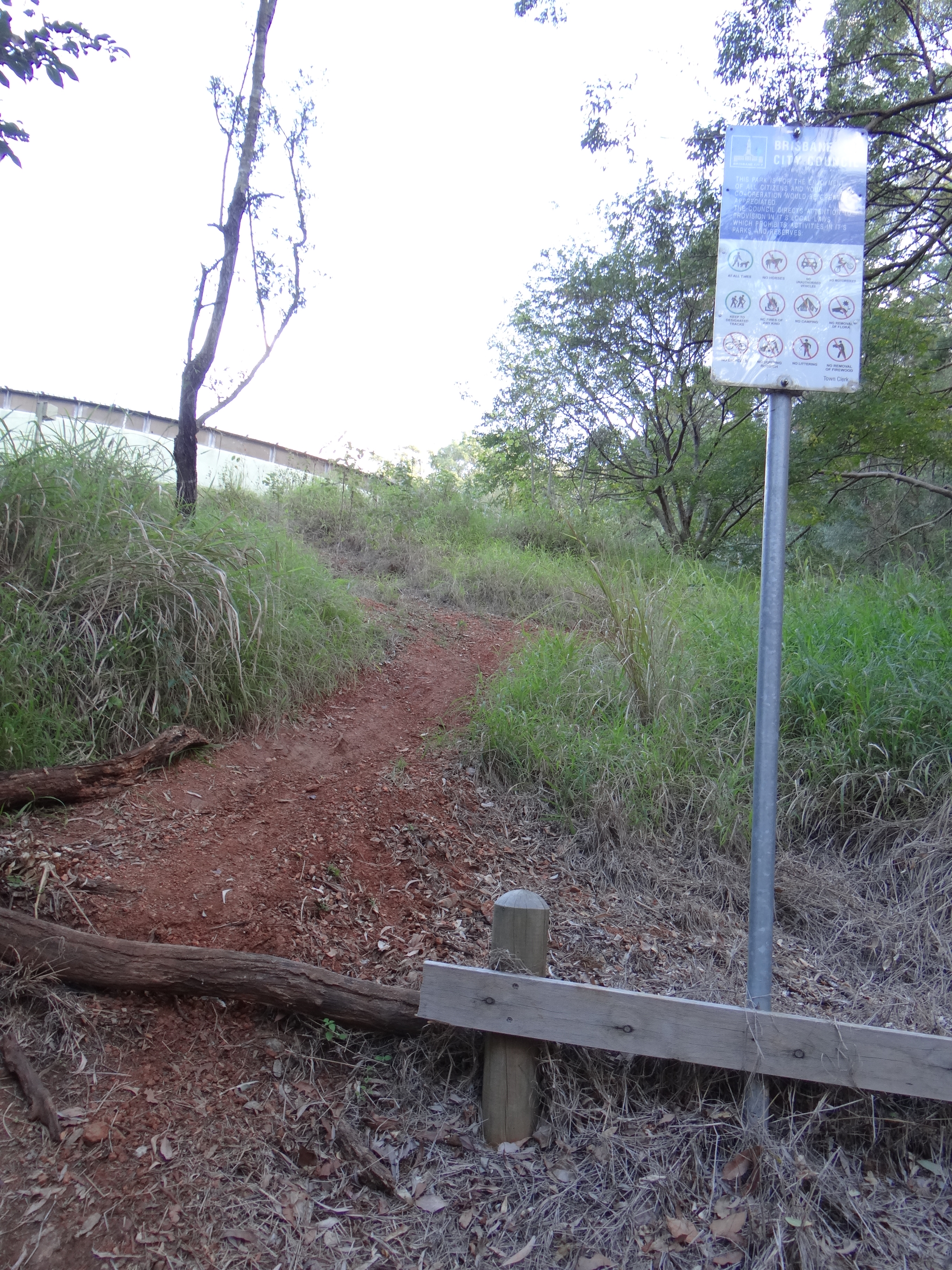
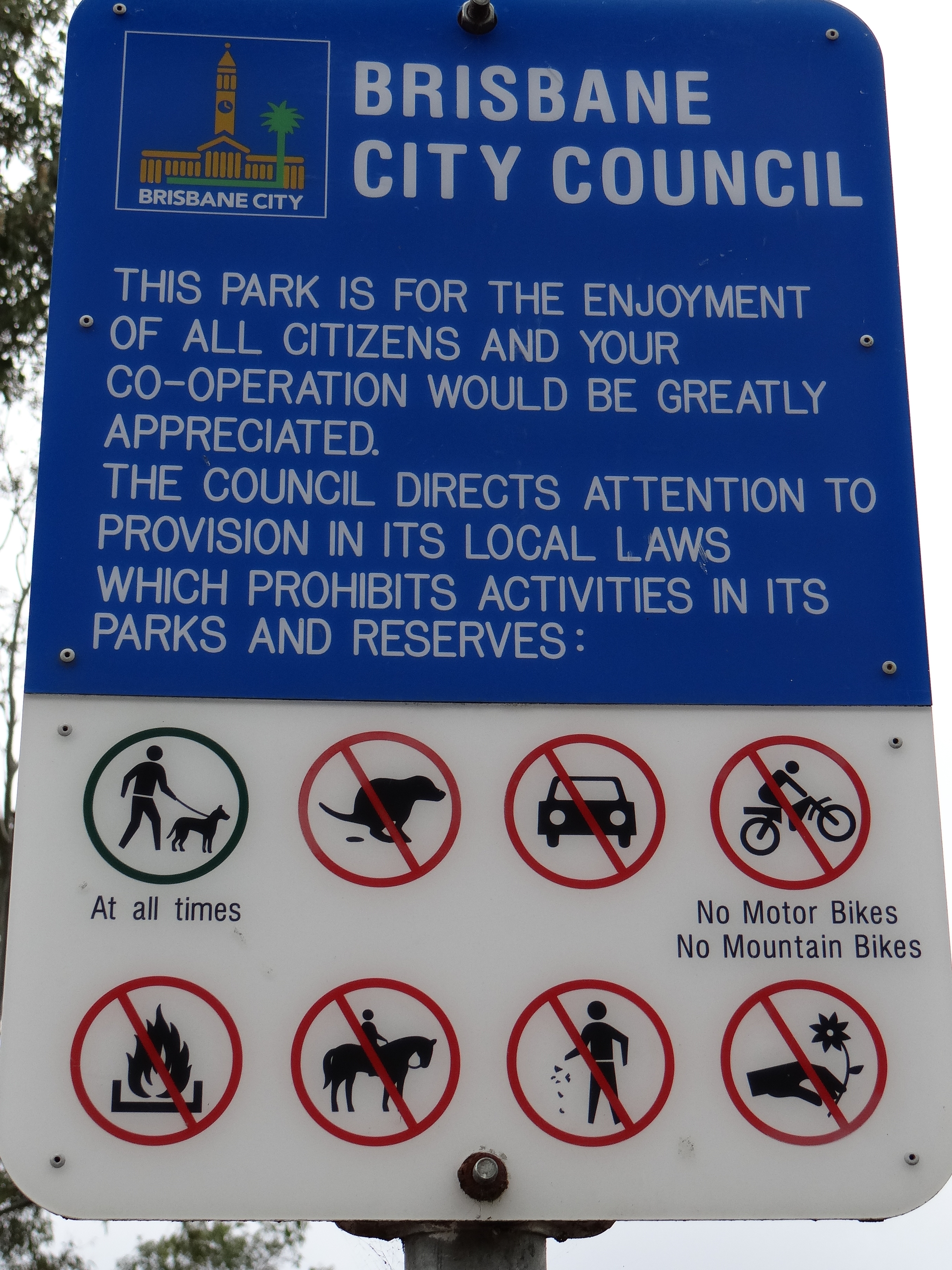
BCC Local Area Services are providing strong on ground action – closing illegal tracks, mulching damaged areas and increasing their presence in the Reserve to catch riders still ignoring our community’s laws. Riders, who apparently could not see multiple signs saying “No Motor Bikes No Mountain Bikes”, have now been told very clearly that off road riding is illegal and subject to $500 fines.
We have also received emails and letters of support by community members and groups heartened by our action and the support we have received from Council.
We are proud of our community
Track exit beside No Mountain Bikes sign
and appreciate the recognition of our work however we know from past experience that illegal mountain bikers will be back fast if we, as a community, don’t stay alert.
As recently as Wednesday last week, National Tree Day, I found fresh bike tracks on in the area just down hill of the water reservoir. I was walking those tracks to document the erosion and tree root damage caused by mountain bikes.
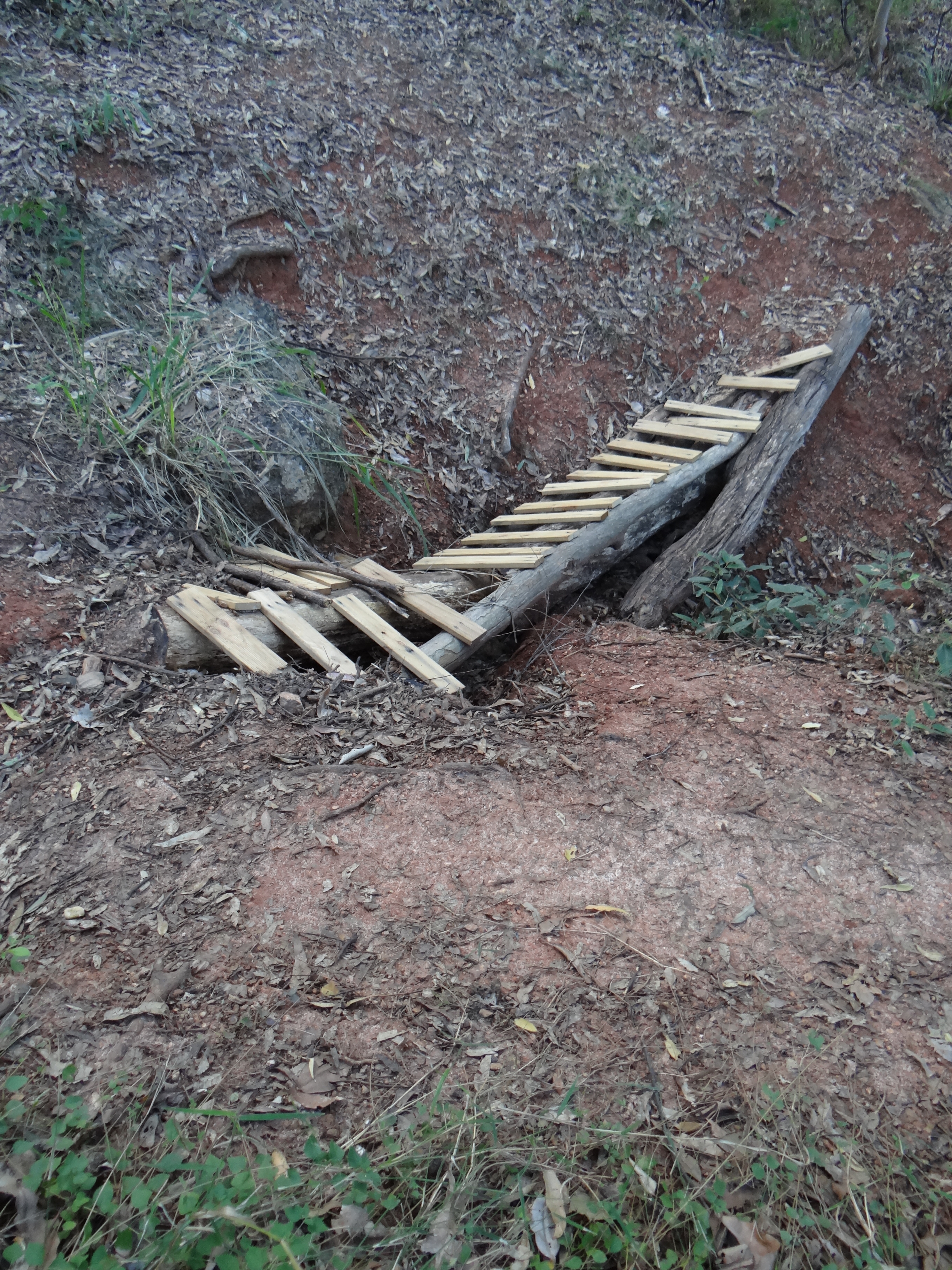
New mountain bike bridge
These were not just tracks cleared through the bush, I even found a what looked like a fairly new timber bridge.
Mountain bike activity in that area has caused erosion up to half a metre deep in places and extensive root damage to mature Koala food trees.
What action can you take?
Illegal mountain biking can be reported to the BCC Call Centre 24/7 on 07 3403 8888
Please be careful about approaching riders by yourself. These riders are already acting illegally and we have had a number of reports recently of community members being subjected to aggressive and violent verbal abuse.
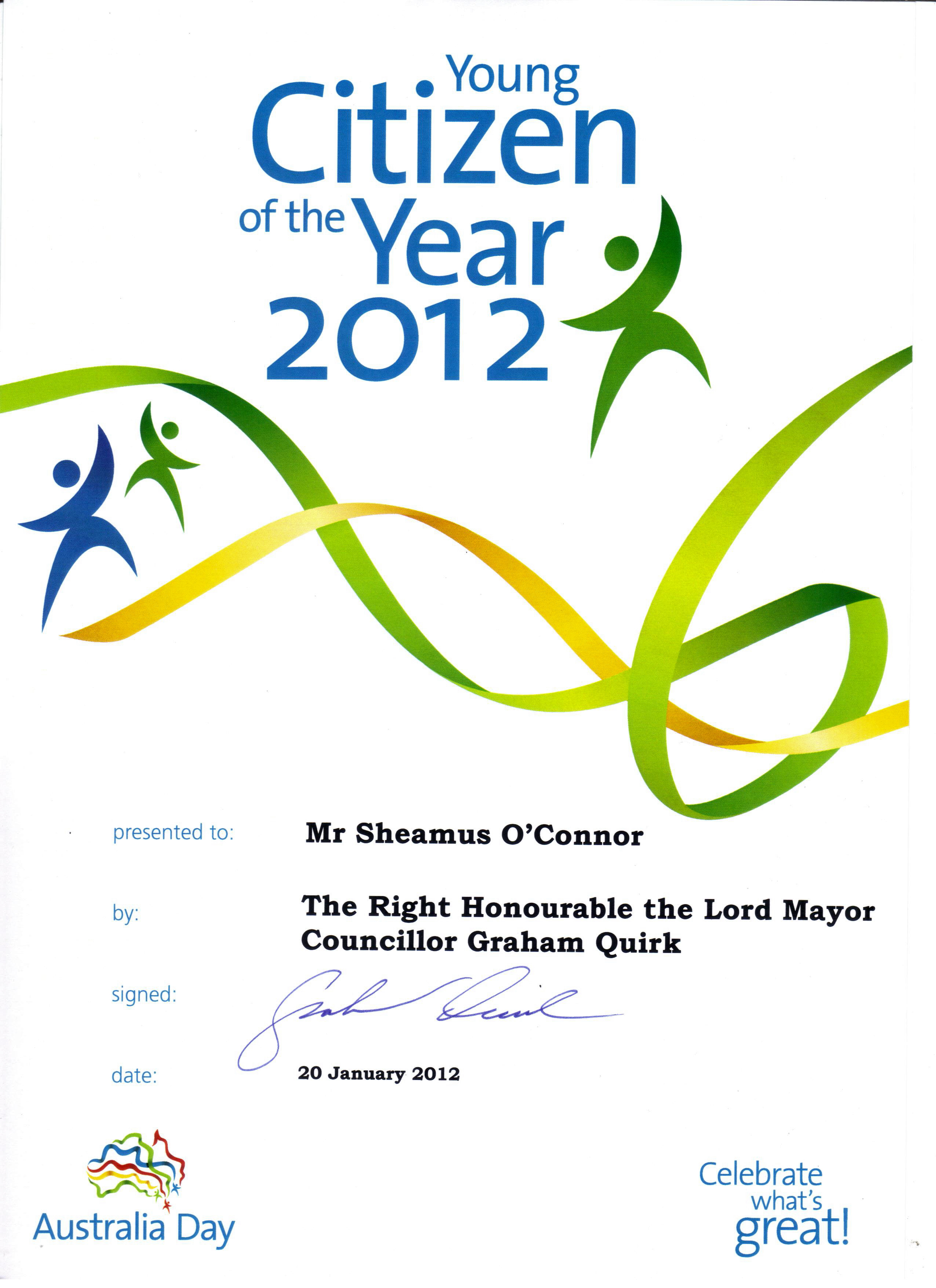
After the fun of last week’s National Tree Day planting of 140 natives to attract birds, bees, butterflies and koalas, it was time to start watering. Council do not supply water for smaller plantings and we are not permitted to use mains water. Consequently we have to depend on water from our own garden tanks, which we bottle in recycled 3 litre milk containers and carry to site. Sheamus shared the load and added a dash of worm juice to his bottles, which will give the plants a good start. We will continue to water weekly for a month, unless it starts to rain again.
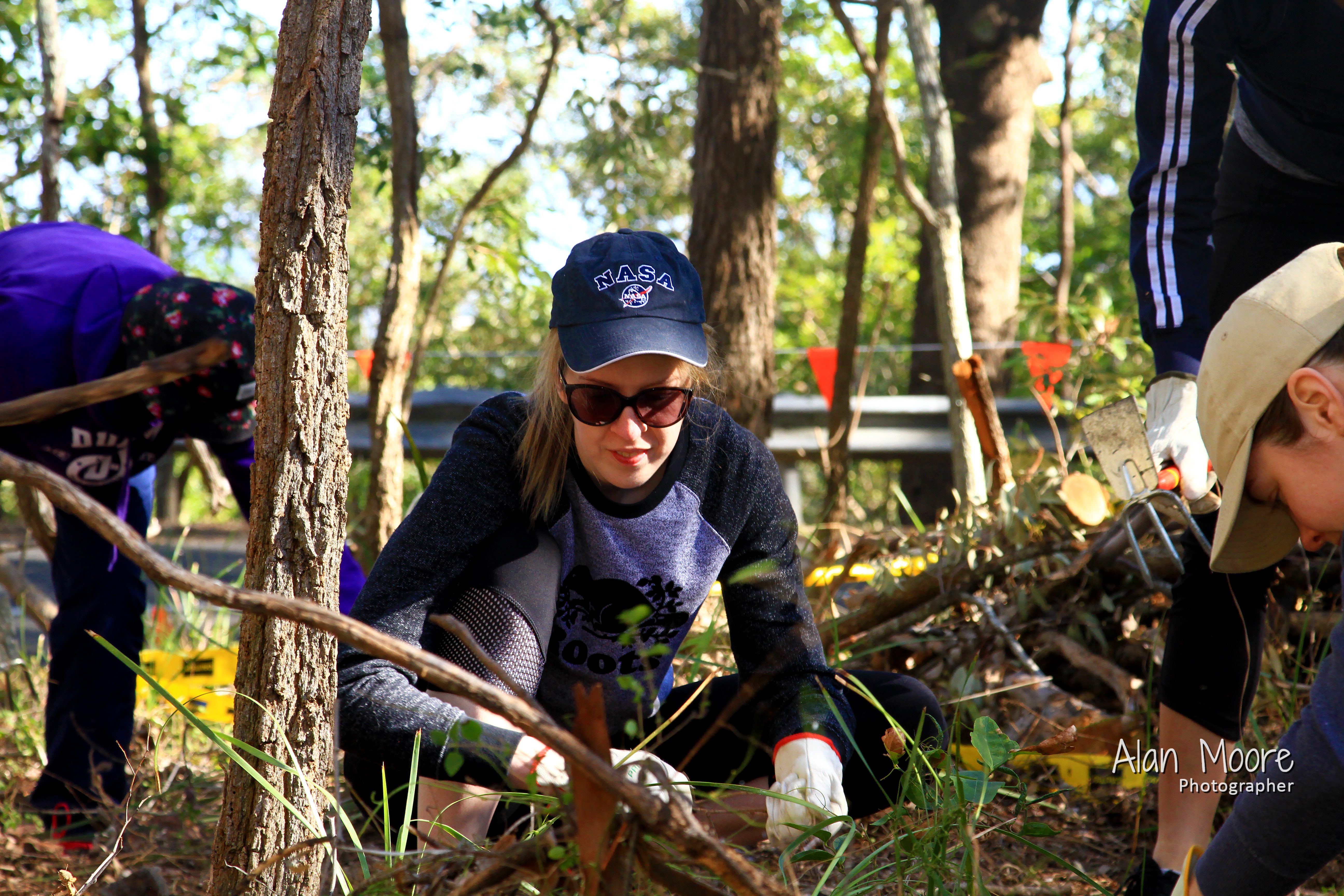
Mirandha and her Griffith Uni volunteer team of Lin, Lyn, Moeko, Thomas and Rashed joined our regular group members and quickly dispersed to water and put mulch around the base of our plantings. Next, it was back to the tedious task of removing Creeping Lantana Lantana montevidensis and Guinea Grass Megathyrsus maximus. Rashed tried his hand at using our Tree Popper, a very handy device that grips and easily pulls deep-rooted weeds from the ground. His target was Mickey Mouse Plant Ochna serrulata, an extremely deep rooted weed that is now showing the first signs of flowering. With the arrival of Spring, the plants will fruit and birds will disperse the seeds all around the mountain and into our gardens. If we do not get all the plants out before fruiting time, we remove fruiting branches and return later to remove the rest of the plant.
A lot of work was achieved at this regular Wednesday afternoon working bee. It’s so beautiful in the bush on a sunny winter’s afternoon – why not come out and join us, and meet delightful young people from all around the globe.
On Wednesday 25 July, students and a science teacher from Mt Gravatt High School, together with a team of Griffith University students rallied to plant 100 native tubestock, specially chosen to provide food and shelter for birds, butterflies, bees – and of course, our resident koalas! What a great team! In just over an hour all the plants were in the ground and it was time to protect them with plastic sleeves, supported by cane stakes.
On Saturday 28 July, we had ready another 40 plants to be put in by volunteers who couldn’t join us on Wednesday. When I arrived on site, I found a female Brush-turkey Alectura lathami checking out all the holes prepared for planting. Her curiosity and anticipation of a free meal made me laugh.
We had …. volunteers of all ages turn up: a special thanks to the three grandparents who more than pulled their weight.
Our 2012 National Tree Day planting was a great success: “ thank you” to everyone involved.
Your generous contribution will enhance amenity for community users and provide healthy habitat for wildlife in our 66 ha Mt Gravatt Conservation Reserve.
Granparents restore Mt Grvatt Conservation Reserve for future generations
Mt gravatt run – Uploaded by swaggydave on 17 Aug 2011
2011 Mt Gravatt SHS – National Tree Day Planting
“We felt gutted seeing the damage they had done. The irony is, that if we, CVA volunteers and Griffith Uni student volunteers hadn’t cleared out the area, they wouldn’t have been able to get through there!”
Susan Jones was talking about finding that mountain bikers have established a brand new trail right through the middle of the area restored by Mt Gravatt SHS students in 2011
No Motor Bikes No Mountain Bikes
and being prepared for our July 25 National Tree Day planting. The action was quite deliberate and systematic as the sign was thrown away and sapling Brush Box, Soapy Ash and Wattles were sawn off as well as broken down.
x
Mountain
Biking is illegal in Mt Gravatt Conservation Reserve
x
Mountain biking is not allowed in the Reserve. Signs at the Summit and at Gertrude Petty Place clearly state “No Motor Bikes No Mountain Bikes”.
Rider ignores No Bike sign
The bike in the video above actually leaves the road and takes a track straight past a No Bikes sign. Click on photo to enlarge. v
The mountain biking is not only illegal it is also damaging a unique environment that our community has fought to protect for over one hundred years: Mt Gravatt Historical Society, tells us that up till July 1893 the mountain and surrounds were designated as a railway timber reserve. In response to community pressure the Queensland Government of the time protected this special habitat by declaring the Reserve.
Mountain bike riders are actively destroying mountain habitat
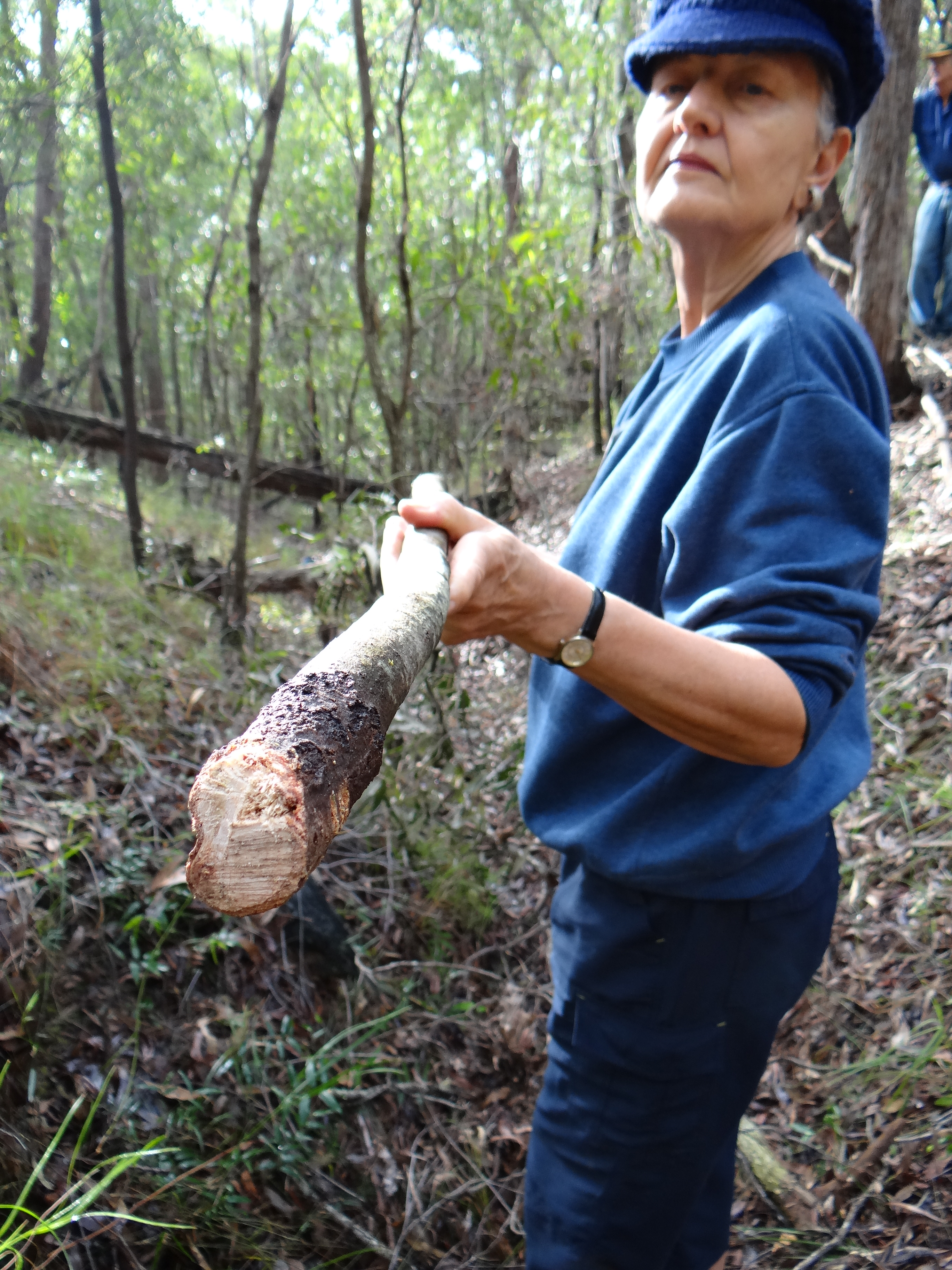
Susan showing cut sapling
a
I inspected the latest damage this week with Susan Jones. What really stunned us was the systematic habitat destruction with saplings sawed or broken off and used to make jumps for riders. Cut and broken trees included a four metre Early Black Wattle Acacia leiocalyx just about to flower. Early Black Wattle is the caterpillar food plant for Imperial Hairstreak Jalmenus evagoras, a beautiful butterfly which is returning to the mountain with the restoration of our bushcare sites. Other trees destroyed included Soapy Ash Alphitonia excelsa, caterpillar food plant for Small Green-banded Blue butterflies Psychonotiscaelius, Brush Box Lophostemon confertus, caterpillar food plant for the
Butterfly trees chopped up for bike jump
fascinating Four-Spotted Cup Moth Doratifera quadriguttata.
Many Lomandras have been destroyed by the action of bikes, including a flowering (male) Many Flowered Mat-rush Lomandra multiflora, caterpillar food plant for Brown Ochre Trapezites iacchus and Black-ringed Ochre Trapezites petalia butterflies: two of forty-five butterfly species found in the Reserve.
Young trees destroyed to make a bike track
It is hard to show the enormity of the damage. None of the trees were very large but the collage of cut stumps gives some idea of the number of trees destroyed to create track for entrainment of a small number of people.
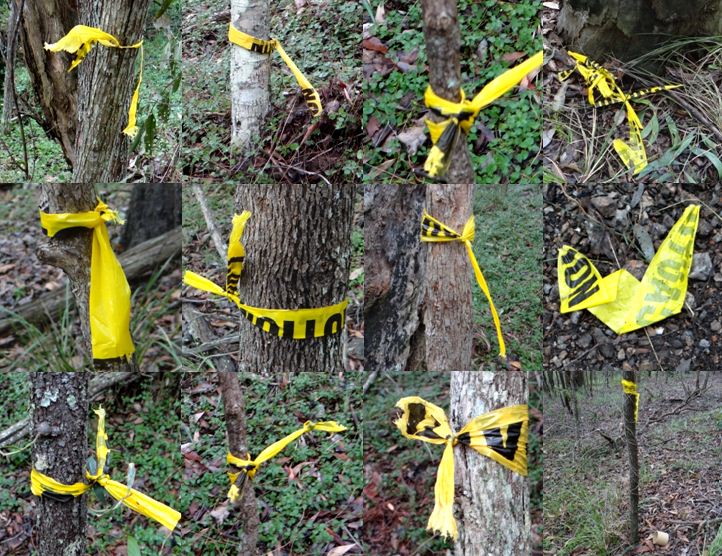
And by the looks of it this is only the start. Following the track down from the Summit we found yellow markers tied to trees, not only along the track but also what appears to be planned as a new track taking off to the south. Trees had been cut or broken and yellow tape tied to others. It seems that this new track planning was only stopped when the tape ran out … evidenced by the empty spool discarded in the bush.
Further evidence of expansion plans is the cache of tools we found locked to a tree just near the path.
Yellow tape marking out track expansion plans
Track clearing tools locked to a tree
Our community investment
c
Seeing the wanton destruction of our special habitat made me very angry, not just because of the personal impact on me, but also because this action ignores the huge ongoing contribution our community is making.
Conservatively calculated, Mt Gravatt Environment Group is responsible for over $30,000 in volunteer contribution during the 2011/12 financial year.
Over the same period our community has invested $19,905 in grants from Queensland Government, Brisbane City Council and Southside Sport & Community Club.
Donations and direct investments by community members exceeded $8,000.
Ongoing support and investment by BCC Habitat Brisbane program: plants for revegetation, equipment, training and public liability insurance.




























 Mount Gravatt Environment Group
