Bushwalks


Morning Mist - 30 June 2015

Winter sun through the mist

By: Michael Fox

Winter is a great time to walk in the bush in Mt Gravatt Conservation Reserve. Misty mornings, bright sunny days and no summer heat.

The light in winter is special – softer. Winter light helps you see and photograph the bush in different ways.

.

.

.

.

.

.

.

Acacia leiocalyx  - flower - Jun 07

Early Black Wattle Acacia leiocalyx

.

Explore the mountain tracks and discover the winter flowers.

Early Black Wattle Acacia leiocalyx is just past its best.

Also called Lamb’s Tail Wattle, it is a key food supply for caterpillars of Imperial Hairstreak butterflies – Jalmenus evagoras. Look for the caterpillars around February-March.

Learn to identify Early Black Wattle with the winter flowers so you can find the trees in summer. The red colour and triangular shape of the stems are key identifiers.

.

Acacia fimbriata - flower - 5 Aug 10

Brisbane Fringed Wattle Acacia fimbriata

.

Brisbane Fringed Wattle Acacia fimbriata is now coming into flower.

With its bright yellow ball shaped flowers this is one of the most attractive trees in the forest.

Once the Acacia fimbriata produces seeds it is very popular with the spectacular King Parrots Alisterus scapularis.

.

Blackthorn Bursaria spinosa - 12 June 2015

Blackthorn Bursaria spinosa

.

Blackthorn Bursaria spinosa flowers all year.

As the name suggests Blackthorn, with its spiky habit, is useful for Security Planting keeping people out of bushland areas and protecting small forest birds from larger more aggressive birds.

Blackthorn nectar is also popular with butterflies like the Blue Tiger Tirumala hamata.

.

Black She-oak Allocasuarina littoralis is one of the most interesting trees flowering at the moment. In March the male Black She-oaks started producing their flowers showing up as the russet brown tips with the trees glowing in direct winter sunlight. Female Black She-oaks only started to produce their distinctive red flowers in June.

Allocasuarina  male female

…………. Black She-oak Allocasuarina littoralis – (left) male (right) female

2015 National Tree Day

Register for Small Forest Bird Habitat Planting

Sunday 26 July – 9am to 12noon

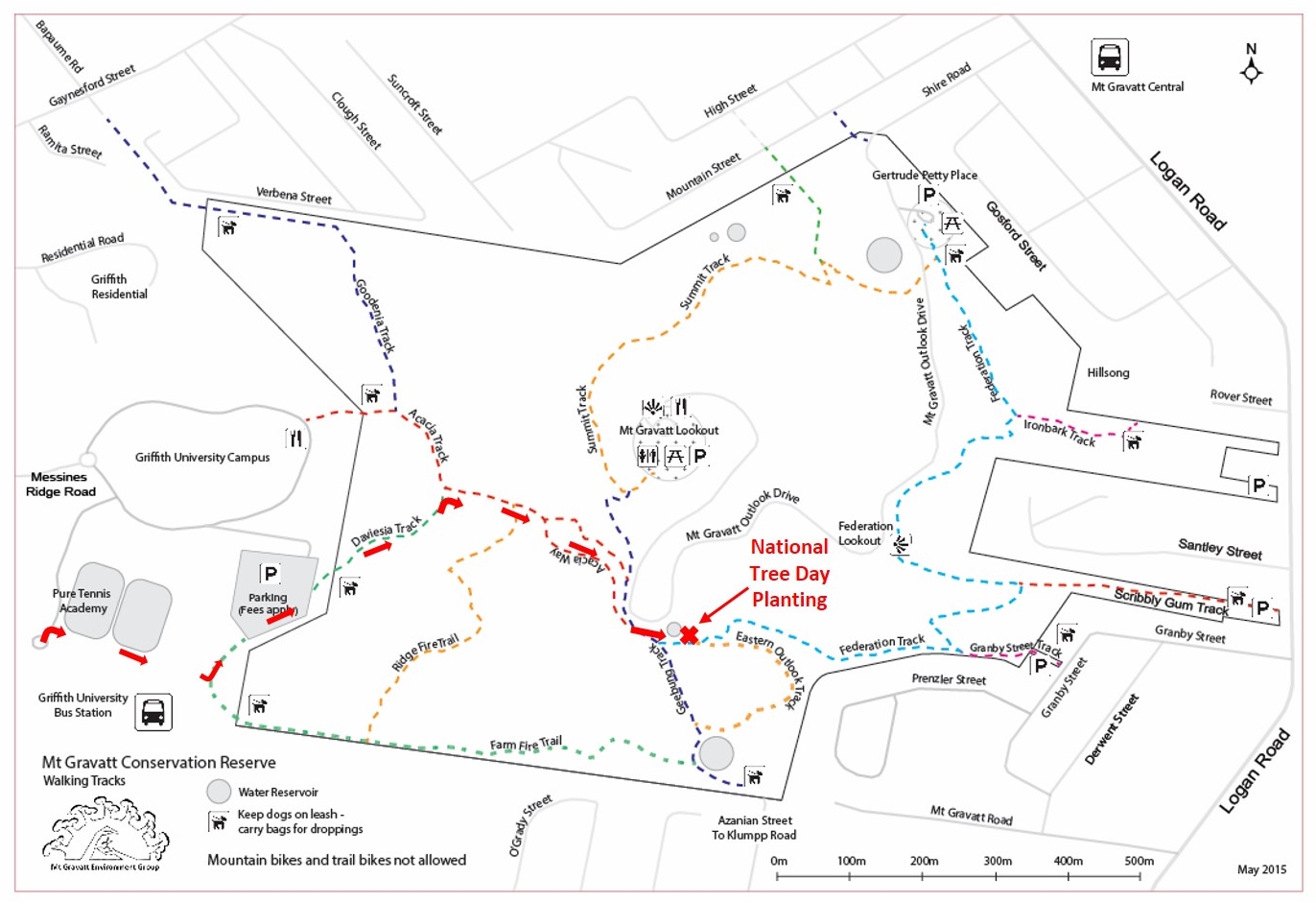
Meet at junction of Federation and Geebung Tracks

National Tree Day public transport2

Drive via Shire Rd – Walk from Griffith Bus Station

Eastern Spinebill 3 - 23 June 2014

Eastern Spinebill Acanthorhynchus tenuirostris

Driving – via Shire Road

Bus – walk from Griffith University Bus Station

Small forest birds need a variety of food ranging from nectar and grass seeds to insects. Also vegetation that provides safety for feed and nesting.

Children welcome with adults..Children welcome with adults.

Join Griffith Mates students and community members for 2015 National Tree Day planting to establish the Small Bird Habitat display garden and plant Koala trees.

Wear enclosed shoes & hat.

Morning tea and equipment provided.

Griffith Mates team - Fox Gully - 21 Mar 2015

Hard workers (l-r) Sienna, Lara, Indya, Dan, Alex, Shiori, Abraham

By: Michael Fox

The Griffith Mates team joined Fox Gully Bushcare again in March. It is always fascinating to have team around. I listened to two students, one from Norway and one from China, who have never met before, having an in-depth discussion of the Chinese economy while pulling weeds in the Australian bush.

Scorpion-tailed Spider - 21 Mar 2015

Scorpion-tailed Spiders Arachnura higginsi

The students are always interested in the wildlife as well. It can be checking Squirrel Gliders in the nest boxes or like this time finding an interesting spider or beetle.

Snail-eating Carabid - 21 Mar 2015

Snail-eating Carabid Pamborus alternans

Scorpion-tailed Spiders Arachnura higginsi are a curious Orbweaver spider. Female Scorpion-tailed spiders develop a long tail that can be arched over the head must like a scorpion’s attack position. This female Scorpion-tailed Spider is the first I have found in the Mt Gravatt Conservation Reserve and a new addition to our Flora & Fauna list.

The team also discovered a Snail-eating Carabid Pamborus alternans which has not been recorded before in the reserve. These beetles live under logs and feed on snails and earthworms.

A great team effort … two new species found and fourteen bags of Fishbone Fern Nephrolepis cordifolia roots removed from site. We concentrate on removing the roots because the leaves have very few fertile leaves to spread spores.This invasive environmental weed is typically spread by dumping of garden waste in bushland. The industry website Grow Me Instead lists alternative garden plants all of which are indigenous to Fox Gully  – Gristle Fern Blechnum cartilagineum, Rasp Fern Doodia aspera and Rough Maidenhair Fern Adiantum hispidulum.

Willow Bottlebrush -Flower - 20 Mar 2015

Willow Bottlebrush Callistemon salignus

By: Michael Fox

If you want a gentle walk or ride though the bush, Roly Chapman Bushland Reserve is worth a visit and the new cycle path crossing Mimosa Creek expands community access to this special place.

Damselfly - 30 Mar 2015

Damselfly (blue) – not identified

IMG_9092

Kate and Liz inspecting new planting

Walking through the Reserve last Friday morning with Liz Pell, restoration project leader and Kate Flink, BCC Habitat Brisbane, was particularly special as I was immersed in a world filled with the scent of honey from the flowering Willow Bottlebrush trees Callistemon salignus and the chattering of dozens of Rainbow Lorikeets Trichoglossus haematodus drunk on the nectar.

IMG_8179

Mimosa Creek in flood – 23 March 2015

Roly Chapman Bushland is very different to Mt Gravatt Conservation Reserve because it has permanent water flowing though Mimosa Creek. Walk quietly as you cross Mimosa Creek. It is common to see turtles in the creek, Eastern Water Dragons Pogona barbata sunning on the rocks. Last Friday Dragonflies and Damselflies were also everywhere resting on leaves or skimming over the water.

IMG_9093

Post flood – no damage to planting

The new cycle path  is a credit to the Brisbane City Council Bikeways Project team and the contractors who did the work. The BCC designers minimised the impact on this sensitive habitat. The new track weaves to reduce loss of trees and, at the same time, creating an interesting and pleasant route instead of a straight strip of concrete. Even the installation of cabling for lights minimised impact on trees by using vacuum excavation around the roots.

.

.

.

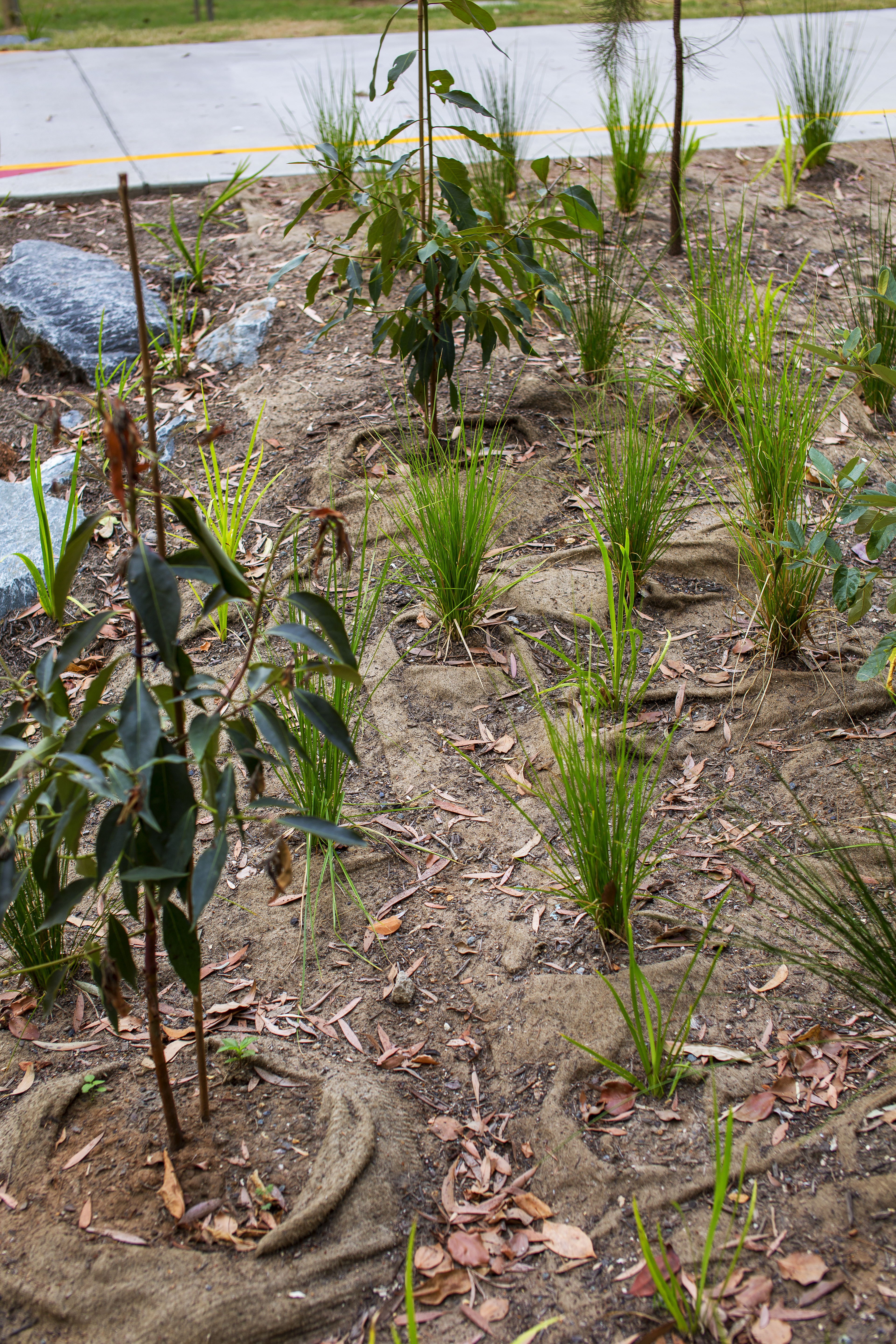
The quality of the restoration planting is evidenced by seeing virtually no damage after the flood water over the track in January. None of the new Lomandras were lost and the fibre matting is hardly disturbed.

.

.

.

.

Orchard Swallowtail caterpillar - 20 Mar 2015

Orchard Swallowtail caterpillar

.

Further along the track only one of the new trees has been lost – we normally consider anything than 80% survival is very good for restoration planting. Orchard Swallowtail Papilio aegeus butterflies are already breeding on the advanced Crow’s Ash Flindersia australis planted.

Tunks Park East Bushcare

Tunks Park East Bushcare

By: Michael Fox

Visiting my daughter in Sydney is a great opportunity to check out the local bushcare sites like Flat Rock Gully  on the boundaries of North Sydney and Willoughby City Councils. Flat Rock Creek is piped under Tunks Park creating a popular community space with children’s playground,  cricket pitches, football fields and great space for dogs to play with their owners.

Difficult bushcare

How do I reach that Asparagus Fern?

Weeds

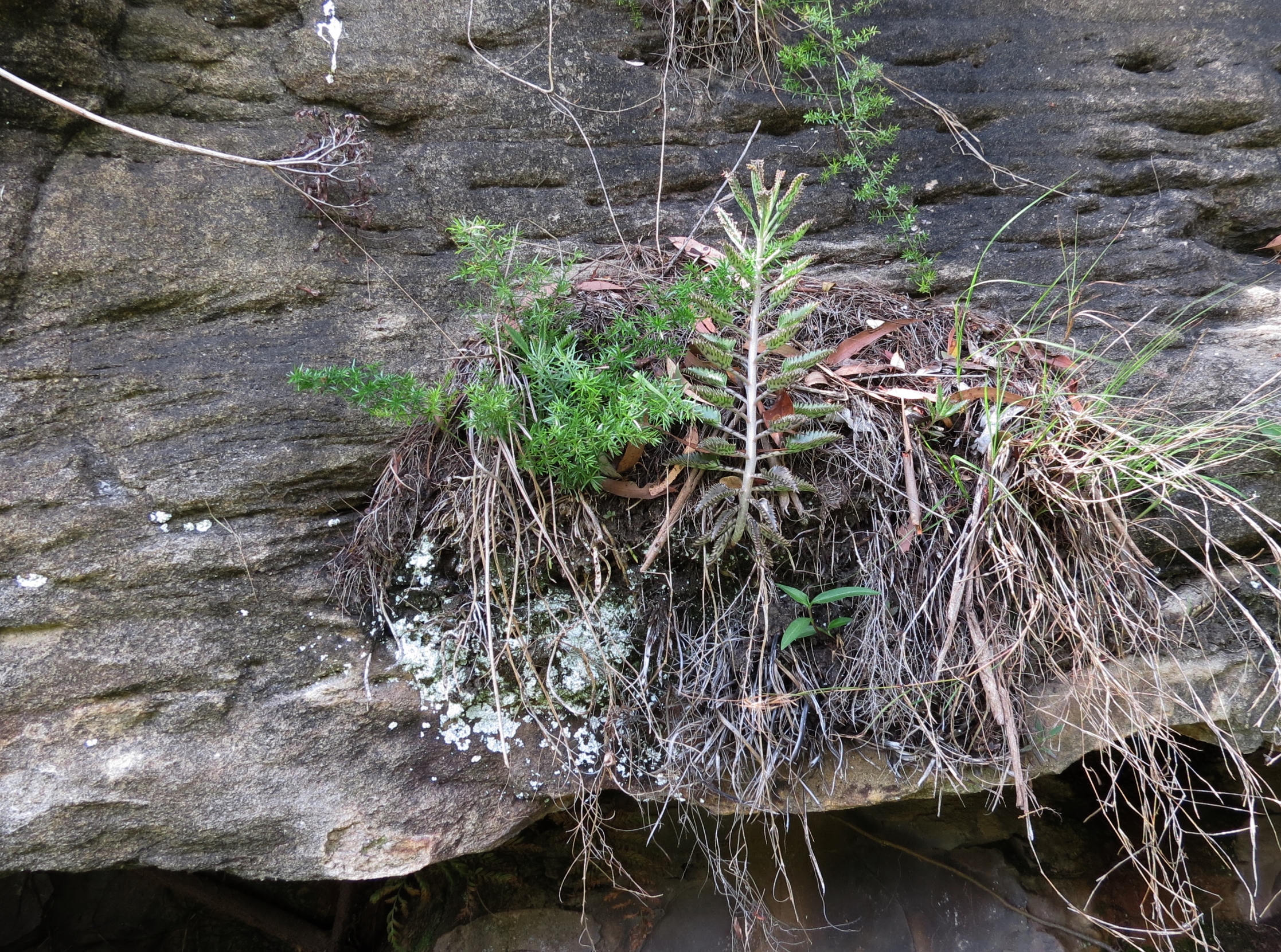
Asparagus Fern and Mother of Millions on rock face

Tunks Park East & West and Mortlock Reserve Bushcare groups (North Sydney Council) are active restoring the along the southern side of Flat Rock Creek while The Drive (Flat Rock Gully) Bushcare group (Willoughby City) is working on the northern side.

The rock formations common in Sydney make very attractive landscape but challenging sites for bushcare.

Tunks Park East group leader Steve Miles who told me that a large  Privet grove had been the priority initially.
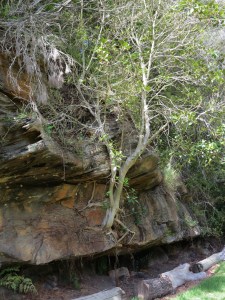
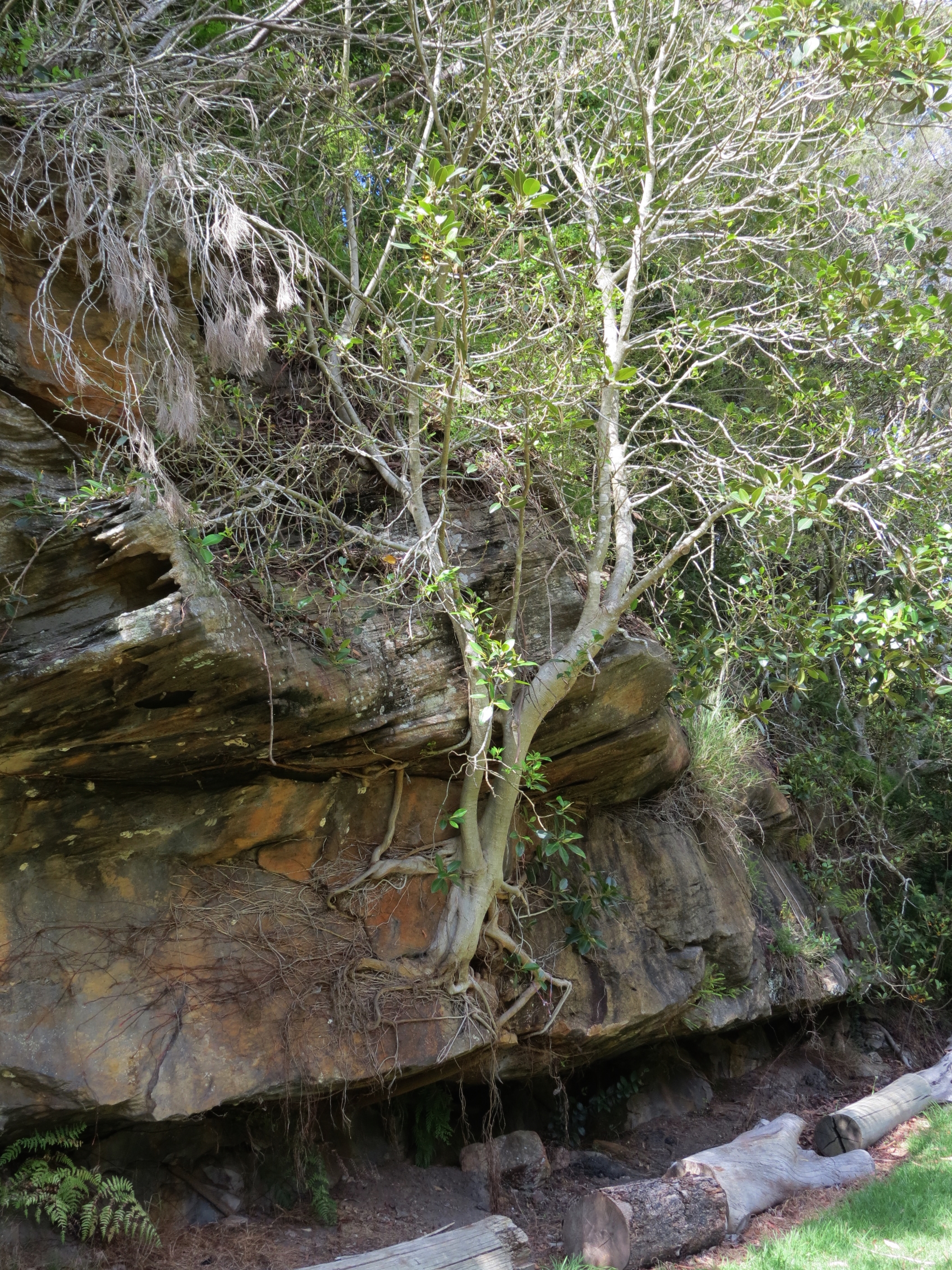
Nature is resilient

Nature is resilient

Steve explained that one of the key issues was that the site, like so many in Sydney, is narrow with housing right along the edge which means dealing constant reinfection with garden escapees.

However, Steve is still optimistic “Nature is resilient and just needs a chance.” Like this native fig finding any crack or fissure for its roots to get a hold. Steve explained that Flat Rock Gully is a diversity hot spot and wildlife is returning as restoration progresses. Aside from a Brush Turkey mound the team regularly sights green tree snakes, king parrots, scaly-breasted lorikeets and bandicoots are returning. The return of bandicoots is excellent news however it does highlight the need for gully neighbours and visitors to control their pets. Dogs on leash in bushland and cats kept inside at night.

IMG_8034

Cammeray Bridge

Bandicoots, like many of the small to medium-sized marsupials of Australia, have undergone several species extinctions and significant contractions in distribution since European settlement because of land clearing and the introduction of predators (foxes, dogs and cats) 

Other exciting news from 2014 is the new native plant nursery at The Coal Loader Sustainability Centre and a couple of sea lions sunning themselves on the shore-front rocks.

.

The spectacular Cammeray Bridge with its castellated towers forms the boundary of Steve’s Tunks Park East site.

Following the tracks up Flat Rock Gully markers tell some of the European history, for example, the original Northbridge Suspension Bridge was a toll bridge built in 1889 and replaced in 1939 with the Cammeray Bridge, retaining the towers.

IMG_8042

Log boundary

.

.

.

.

.

.

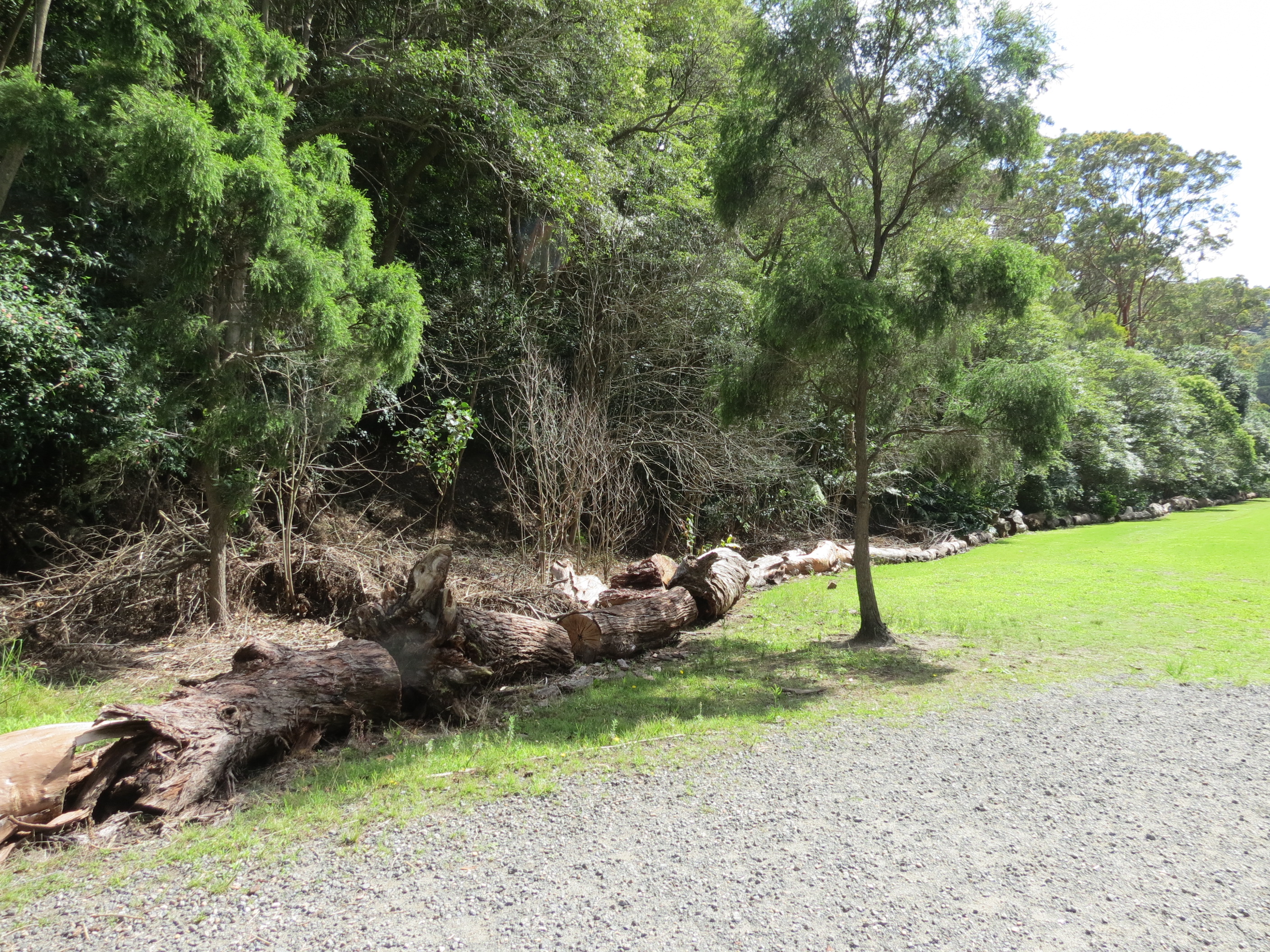
The bushcare teams have been active on both sides of Tunks Park with logs allowing weeds to be composted onsite.

.

Creek crossing

Crossing Flat Rock Creek

.

.

..

.

The track along Flat Rock Creek is cool and peaceful, very popular with walkers and runners. Unfortunately most dog walkers I passed ignored the many signs saying dogs must be on a leash in the bushland area. This is particularly disappointing considering the huge area of parkland just a short distance down the track where dogs are free to run and chase balls.

.
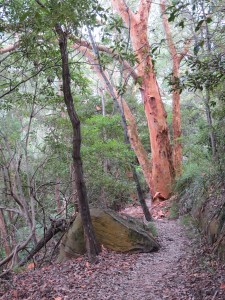
angophora costata

Smooth-barked Apple Angophora costata

.

Many of the native plant species are ones we find in Mt Gravatt Conservation Reserve, like Sweet Sarsaparilla Smilax glyciphylla, Tree Ferns Cyathea cooperi and Creeping Beard Grass Oplismenus aemulus. There were also quite a number of species I didn’t recognise spectacular like Smooth-barked Apple Angophora costata all orange as they shed their bark.

.

.

.

.

.
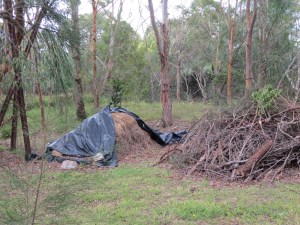
IMG_8087

On-site weed recycling

.

I always get new ideas when visiting other bushcare sites. One interesting idea is the separation of woody weeds from grass and soft weeds which can be covered with black plastic to compost quickly. Simple but effective. We already use black plastic but putting the woody weeds into a different pile will create good habitat for lizards while allowing the softer weeds to compost faster.

I look forward to exploring further up Flat Rock Gully on my next visit to Sydney.

Xanthorrhoea macronema - 22 Nov 2014

Bottle Brush Grass Tree

By: Michael Fox

After the long dry period it is a pleasure to see the bush come back to life. Walking the Eastern Outlook Track this morning we found a number of the uncommon Bottle Brush Grass Trees Xanthorrhoea macronema in flower or getting ready to flower.

Xanthorrhoea macronema - 9 Oct 2014 - Alan Moore low res

New flower ready to burst into life

The Bottle Brush Grass Tree is very different to the better known Grass Tree Xanthorrhoea johnsonii. The johnsonii has tall flower spike (scape) reaching up to 1.9 metres with flowers covering most of its length and over time the tree develops the characteristic fire blackened trunk. The Bottle Brush Grass Tree on the other hand has a scape reaching only 1.6 metres with a striking cream-white bottle brush shaped flower that is only about 13cm at the top of the scape and it remains just a crown of leaves at ground level never developing the characteristic fire blackened trunk of other species.

The furry bottle brush flowers are very popular with native bees both the small black Stingless Native Bees Trigona carbonaria and the solitary Blue Banded Bees Amegilla cingulata.

.

If you are walking keep an eye out for the new flower spikes … they will be ready in a couple of days.

.

.

.

Drynaria rigidula - 22 Nov 2014

New life in Basket Fern

.

.

.

The Basket Ferns Drynaria rigidula are all sending forth new leaves after dying off in the long dry.

.
.

.

.

.

.

.

Coracina novaehollandiae - 22 Nov 2014

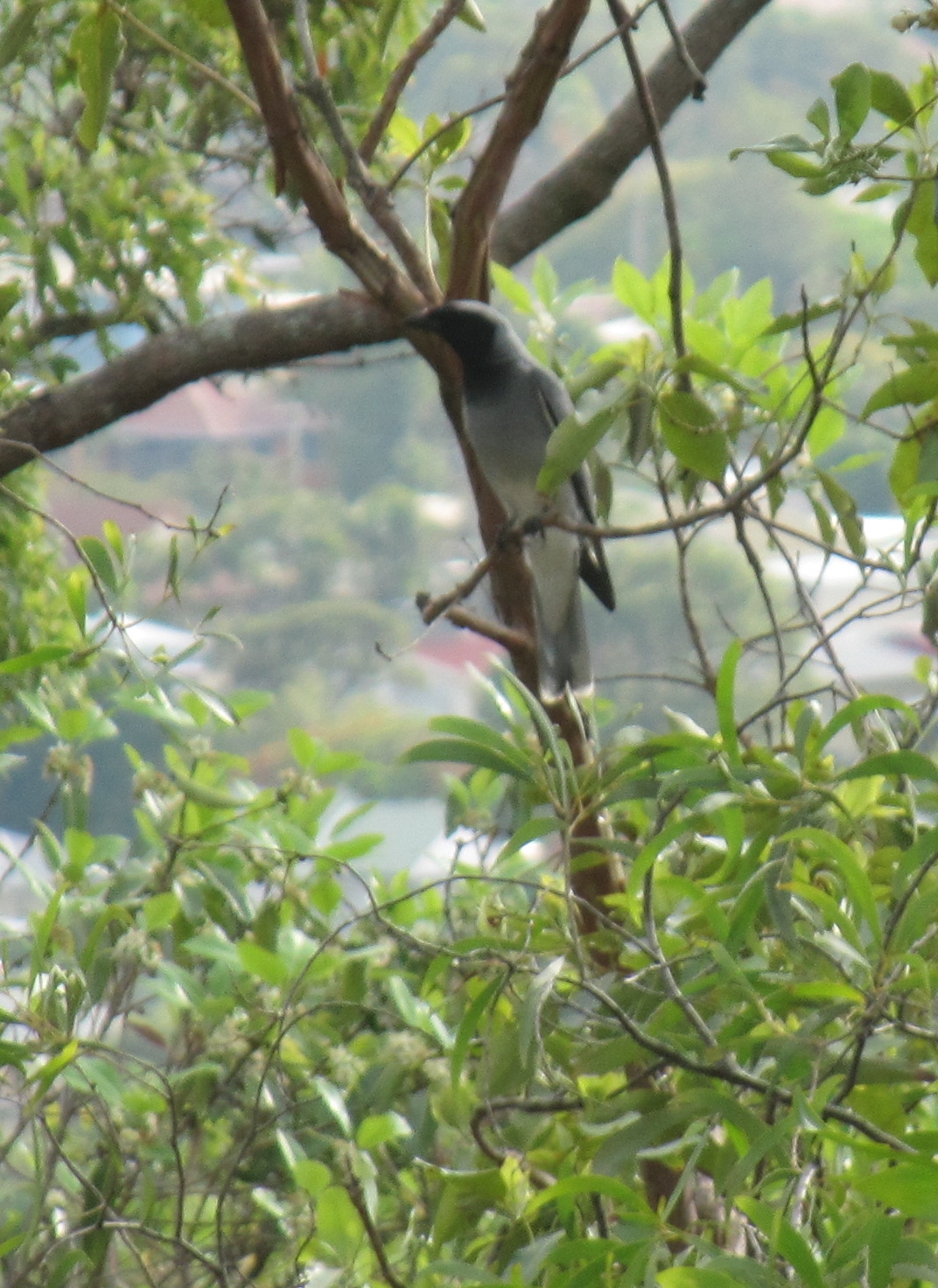
Black-faced Cuckoo-shrike

.

.

A little further along the track you may be lucky to see or hear the Black-faced Cuckoo-shrike Coracina novaehollandiae we met on our walk. Listen to the call on Birds in Backyards site.

.

.

.

.

.

.

.

Todiramphus sanctus - 19 Nov 2014

Forest Kingfisher

.

Or you might see the handsome Forest Kingfisher Todiramphus sanctus.

Please let us know if you have any sightings and photos to share – megoutlook@gmail.com


Track sign Roly Chapman - 29 Oct 2014 - lowres

Cr Krista Adams – new bike path map

By: Michael Fox

Photography: Alan Moore

Inspecting the new bike path through Roly Chapman Bushland Reserve today with  Cr Krista Adams, I commented on the professionalism and design sensitivity the BCC Bikeways Project team and contractors working is a sensitive habitat area.

Cr Krista Adams is a strong supporter of our bush restoration work and keen to explore ways to balance pressure of our urban environment with valuable bushland remnant habitat.

Brisbane best bike path - 29 Oct 2014

Path curves to minimise tree loss

The Mimosa Creek Precinct Landscape Plan identified the bike path will support long term investment in habitat restoration within Roly Chapman Bushland Reserve as community access is enhanced. The more community members value the Reserve as peaceful place to walk or ride, the more the City Council can allocate to habitat restoration and building wild life corridors.

Connecting with the existing path, near the Hoad Street entry to the Reserve, the new bike/walking path weaves its shady way among valuable Ironbarks, Scribbly Gums and Queensland Blue Gums – Koala’s favorite food tree, before crossing Mimosa Creek to link with the Klumpp Road Park & Ride.

Vegetation Communities and Connectivity Options BAAM

Vegetation Communities – BAAM 2011

Thoughtful planning has been critical to minimise impacts on vegetation as it is boarded by two significant remnant vegetation communities identified in the 2011 BAMM corridor assessment report.

20141031_0048_02

Restoration Mimosa Creek crossing

Aside from minimising tree loss with carefully planned curves, the design required the path to be laid above ground to reduce the impact excavation would have on tree roots. Running cabling for lights still required excavation however impact was reduced by use of vacuum excavation around significant tree roots. Were trees did have to be removed the logs were distributed in the bush to create habitat required by species like Echidnas that dig for insects living under fallen timber.

Wildlife Furniture - Mimosa Creek - 30 Oct 2014

Flow disruptors to support fish movement in flood conditions

Crossing Mimosa Creek was sensitive and restoration a work particularly important to manage erosion. One  bonus was removal of a large area of invasive Balloon Vine Cardiospermum grandiflorum and Madeira Vine Anredera cordifolia, as well as, a large Camphor Laurel Cinnamomum camphora.

One unexpected design feature was installation of animal or wildlife furniture in the creek crossing. I had never heard to term “wildlife furniture” before Krista introduced the term when we inspected the creek crossing. BCC designers draw on a range of “furniture” used to create wildlife corridors for everything koalas and gliders to lizards.

In this case heavy water flows in local flood conditions required the installation flow disruptors to allow fish and turtles to move upstream.

Working with the huge City Council bureaucracy can be frustrating, however, the size of the organisation means that it also has the capacity to draw on high quality expert teams for projects.

Acacia Way entry

Acacia Way Track – Mt Gravatt Campus

By: Michael Fox

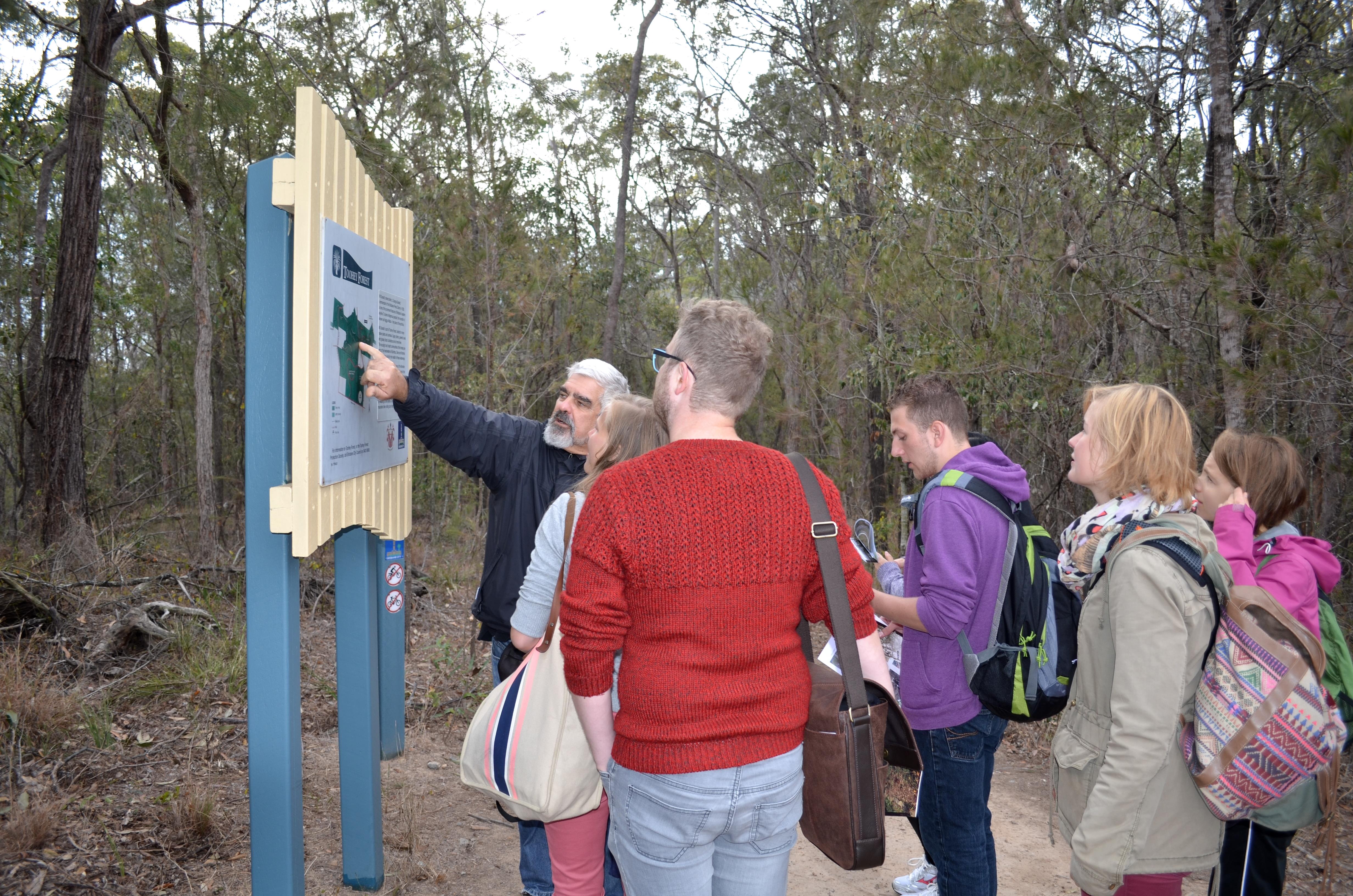
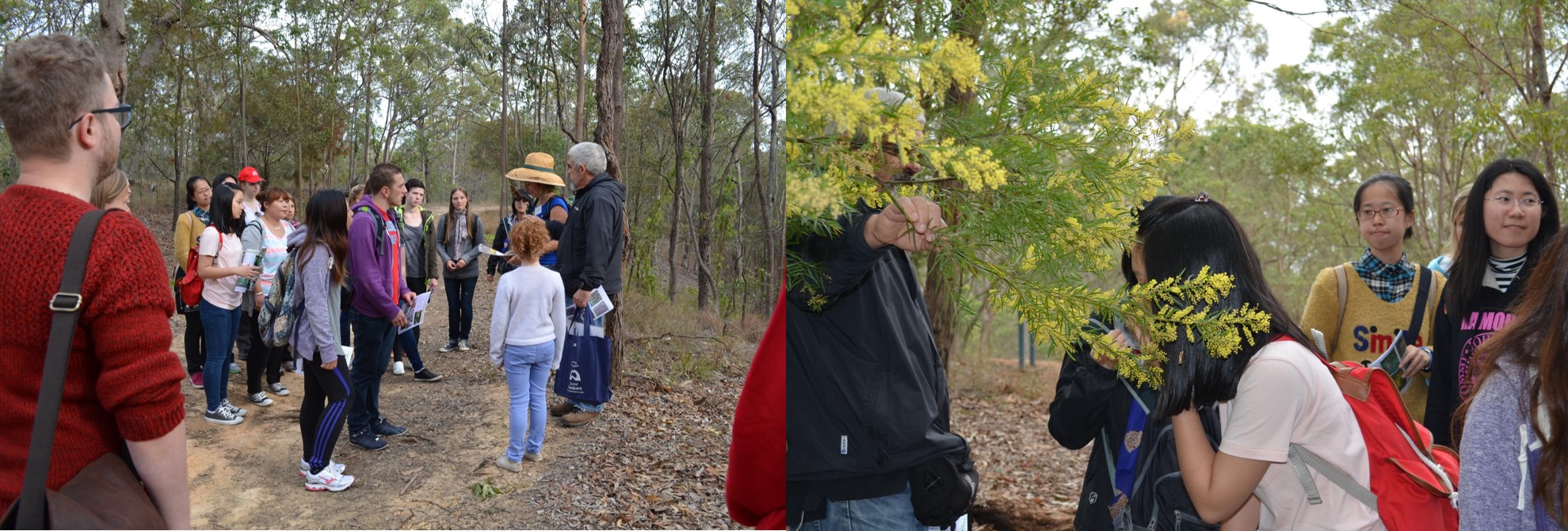
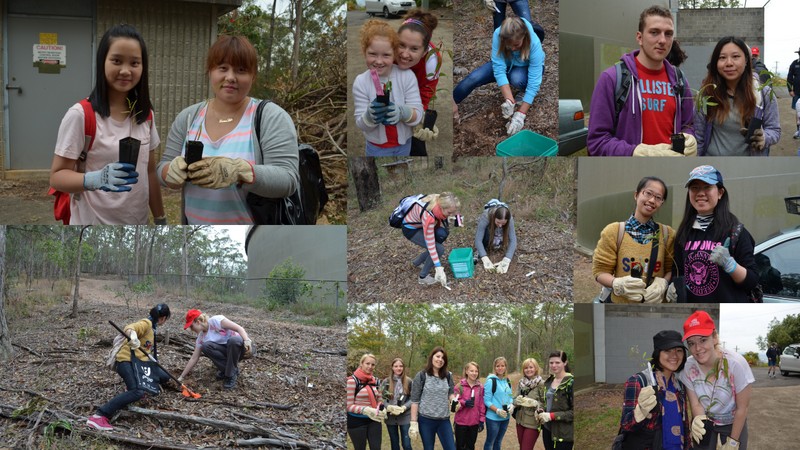
As part of National Tree Day celebrations, Laurie Deacon and I were privileged to lead a guided walk in Mt Gravatt Conservation Reserve for twenty-one Griffith University students and friends. We have partnered with Griffith Mates since 2012 to offer students the opportunity to give back to the tranquil bushland surrounding Griffith University.


Watershed - Bulimba & Norman Creek catchments .......... Acacia

Watershed – Bulimba & Norman Creek ………… Brisbane Fringed Wattle Acacia fimbriata

On track

Fishing line and bush food

Rain falling on Mt Gravatt flows into two different river catchments: Norman Creek catchment via Ekibin Creek and Bulimba Creek catchment via Mimosa Creek. Acacia Way follows the ridge line forming the watershed between the catchments.

Winter is flowering time for many of our wattles, like this beautiful fragment delicate Brisbane Fringed Wattle.

Mt Gravatt Conservation Reserve has an amazing species diversity with two hundred and seventy-one native plant species identified, including Settlers Flax Gymnostachys anceps which was used by indigenous people to make fishing lines, and bush food Molucca Raspberry Rubus moluccanus.

Planting Team

Planting Koala trees

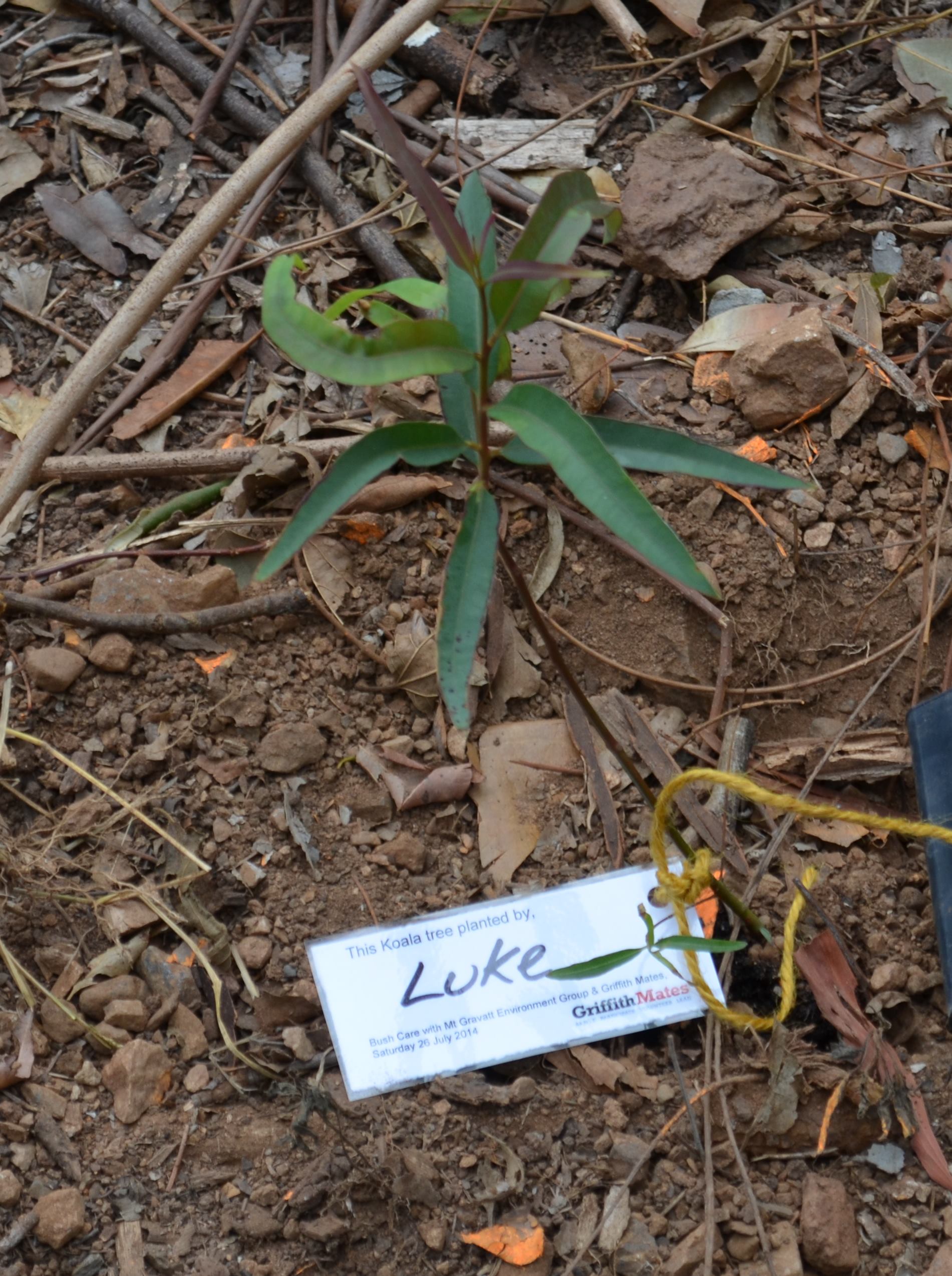
Luke tree

Laminated tags identify each planter


Arriving at Fox Gully Bushcare the team prepare to plant twenty Koala food trees including Small-fruited Grey Gum Eucalyptus propinqua, Scribbly Gum Eucalyptus racemosa and Qld Blue Gum Eucalyptus tereticornis.

.

.

.

.

DSC_1671

Len Kann introducing Australian native bees

.

Len Kann introduced the team to our Australian native bees. Len keeps hives with the small black Stingless Native Bees Trigona carbonaria. He has also developed a deep knowledge of native solitary bees like our local Blue Banded Bees Amegilla cingulata and Teddy Bear Bees Amegilla bombiformis.

.

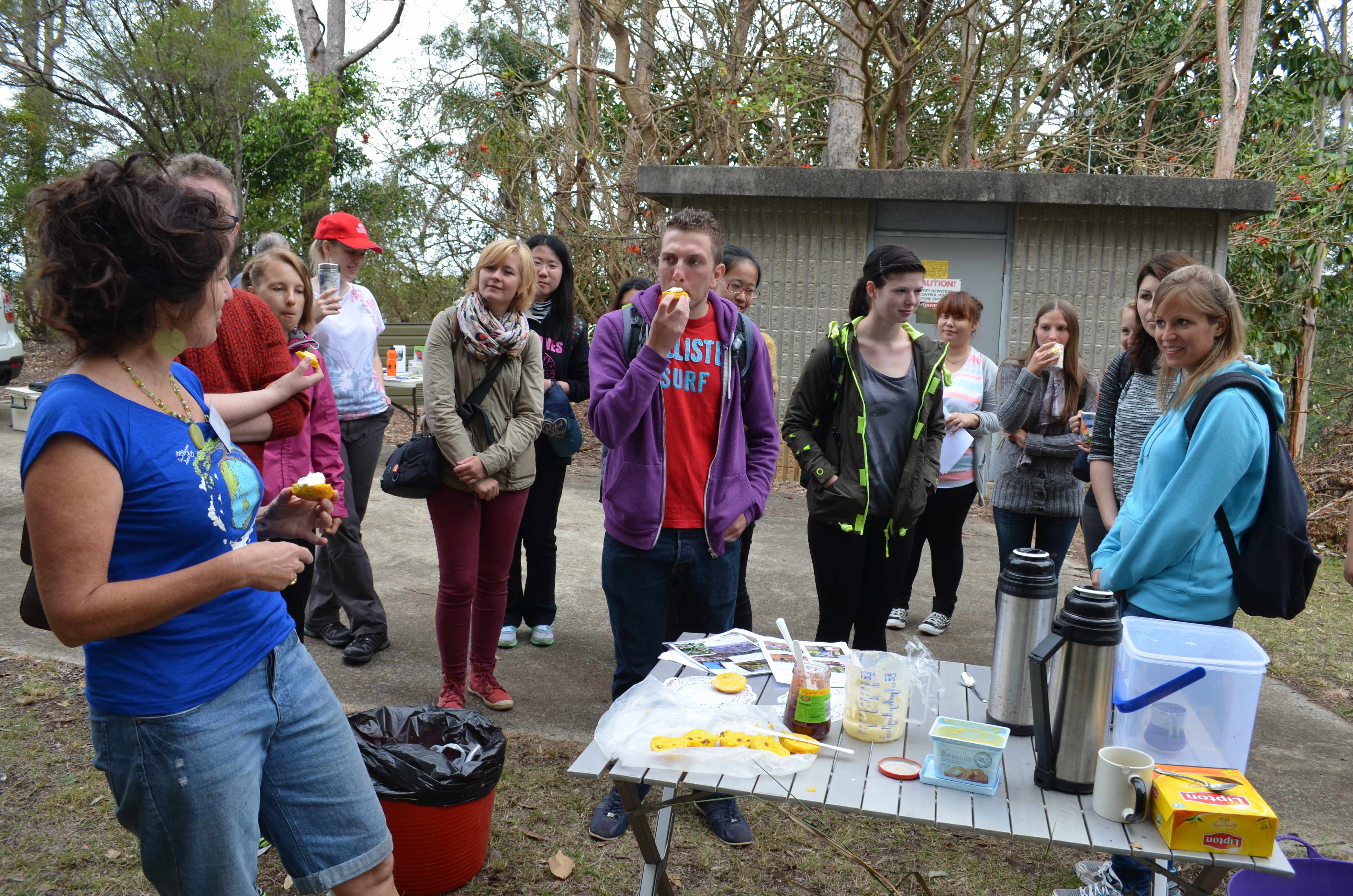
Afternoon tea

Bush food – punkin scones, jam and crea

.

.

With the work done time for the reward. Thanks to Margaret Medland for the delicious home made punkin scones, jam and cream!

.

.

Sign

BCC Habitat Brisbane interpretative sign

.

.

The walk back included a detour to the Summit where we inspected the new interpretative signs installed by BCC Habitat Brisbane team.

Thank you to our Griffith Mates visitors. We look forward to meeting again at a bushcare.


Brushtail Possum

Brushtail Possum

By: Michael Fox

At night in Mt Gravatt Conservation Reserve you see the bush with new eyes … and eyes are what you see.

I knew the eyes of many animals seem to glow in the light of a torch so I was not surprised to find the orange glow of a pair of eyes, was a Brushtail Possum Trichosurus vulpecula, prowling around.

What has been really surprising though are the dozens of sparkling lights on the ground – Wolf spiders Lycosa species. In torch light the eyes of these spiders look like tiny diamonds the reflection is so sharp. When I first saw this the light seemed to flash like Fireflies but that effect was just caused by movement of my torch as I approached. When I held the torch steady the light from the spiders’ eyes was also steady.

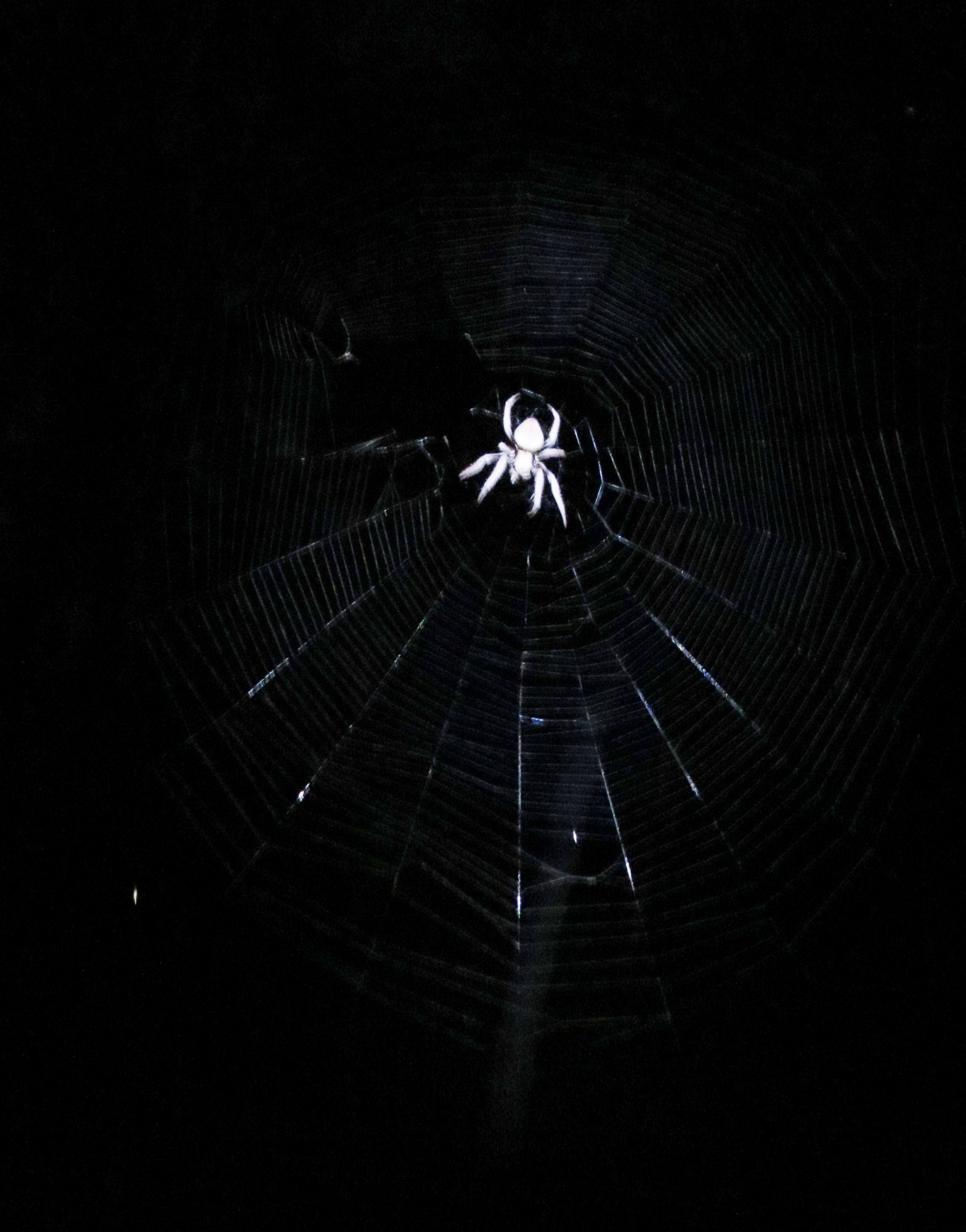
Garden Orb Weaver web

Garden Orb Weaver web

Apparently Wolf spiders are one a small number of spider species that have a layer of light reflecting crystals, tapetum lucidum, right behind the retina of the eye. This reflective layer improves night vision for these nocturnal hunters by bouncing light back to the retina.

It is interesting to see the different shape, colour and intensity of the light reflected by the eyes of different species. The Wolf spiders have small crystal clear light, while the Brushtail’s eyes were larger, wide apart and the reflection was softer. Toads have similar reflecting eyes and I am getting good at spotting them at a distance, keeping them sitting still in the light, then scooping them up in a plastic bag ready for freezing. I have removed ten toads from the Reserve from my last couple of night walks.

Garden Orb Weaver spiders, Eriophora transmarina, are another night time creature making huge webs at night which are cleaned up in the morning before they retreat to spend the day in a leaf shelter. This particular spider likes to make a web across the fire trail in the Fox Gully Bushcare site. The web spans an amazing 5 to 6 metres to bridge the trail. A large bug or something has already flown straight through this web so I ducked under to avoid any more damage to this extraordinary construction.

IMG_6115

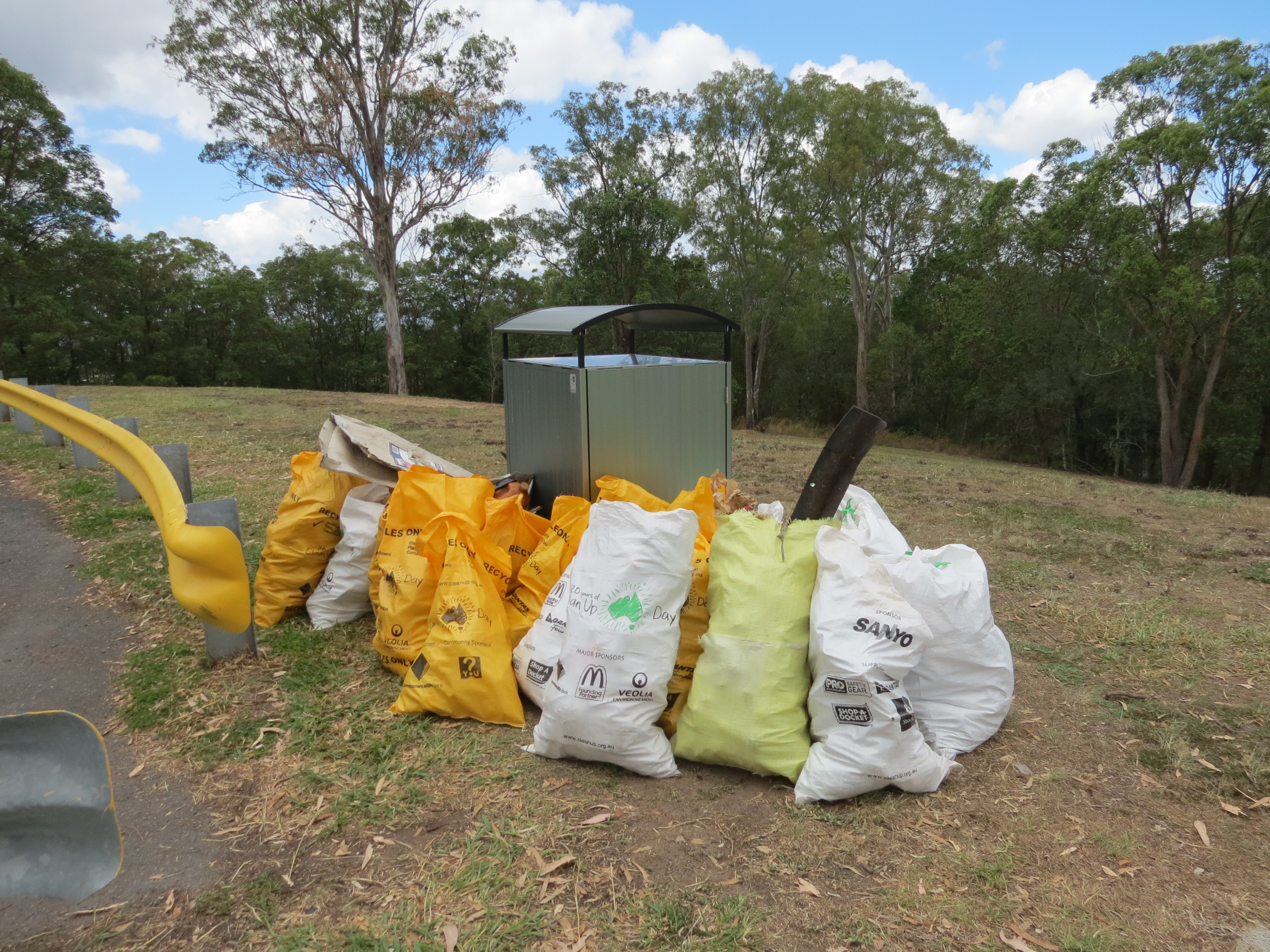
29 bags, one TV and small power poll

By: Michael Fox

Sunday 2nd March CleanUP Australia

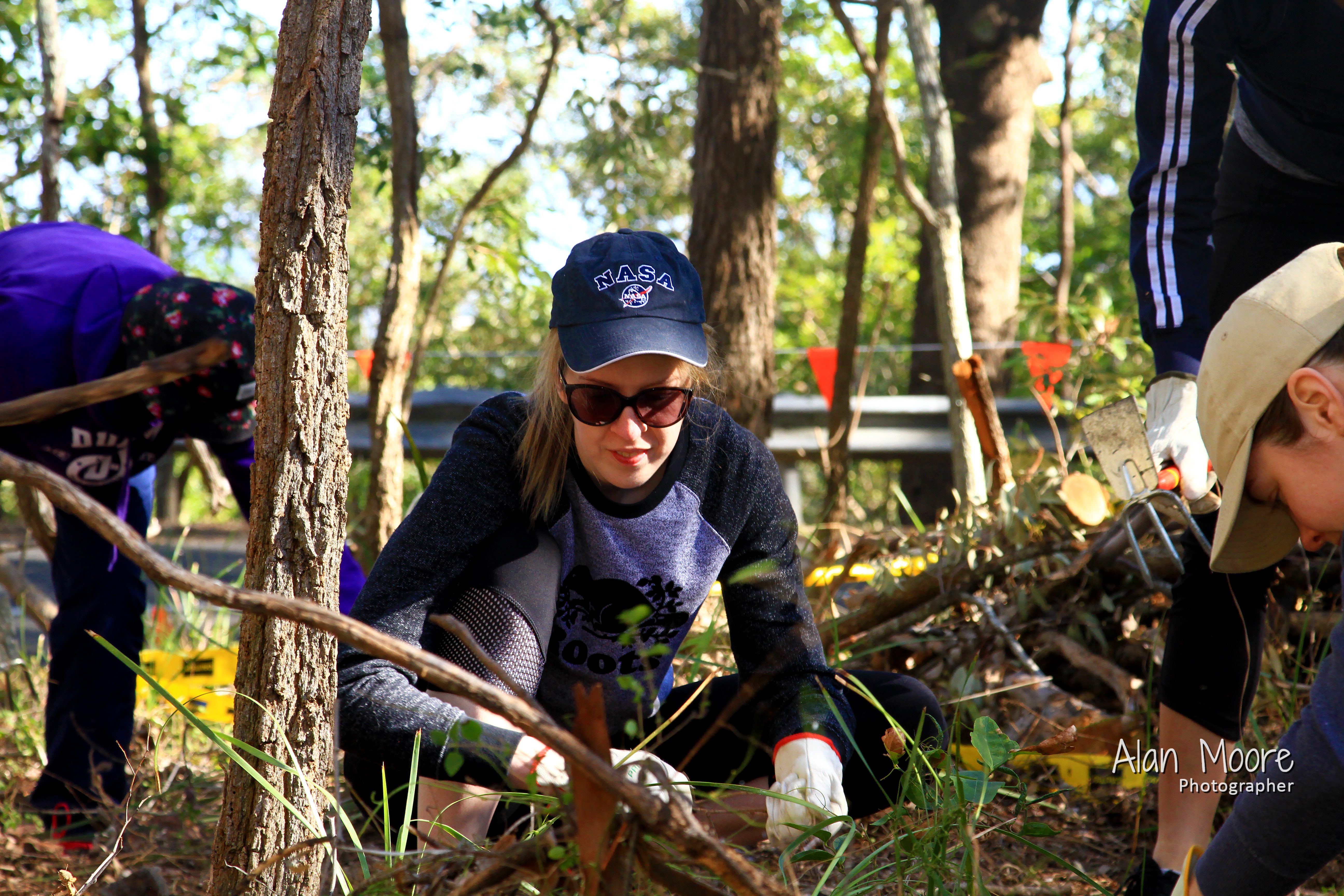
Thanks to coordinator Kerstie Olsson we had a record turn out of approximately 60 volunteers (which included two Scout groups) and collected twenty-nine bags of rubbish (half recycling), a large TV, several pieces of wooden furniture and a small power pole from the top of the mountain, the walking tracks and down the road.

Cub Scouts on patrol - 2 March 2014

Cub Scouts on patrol

The main issue was broken glass, fast food wrappers and dumping large rubbish.

d

I led a group of Cub Scouts down Acacia Way and Geebung Track.

d

IMG_6093

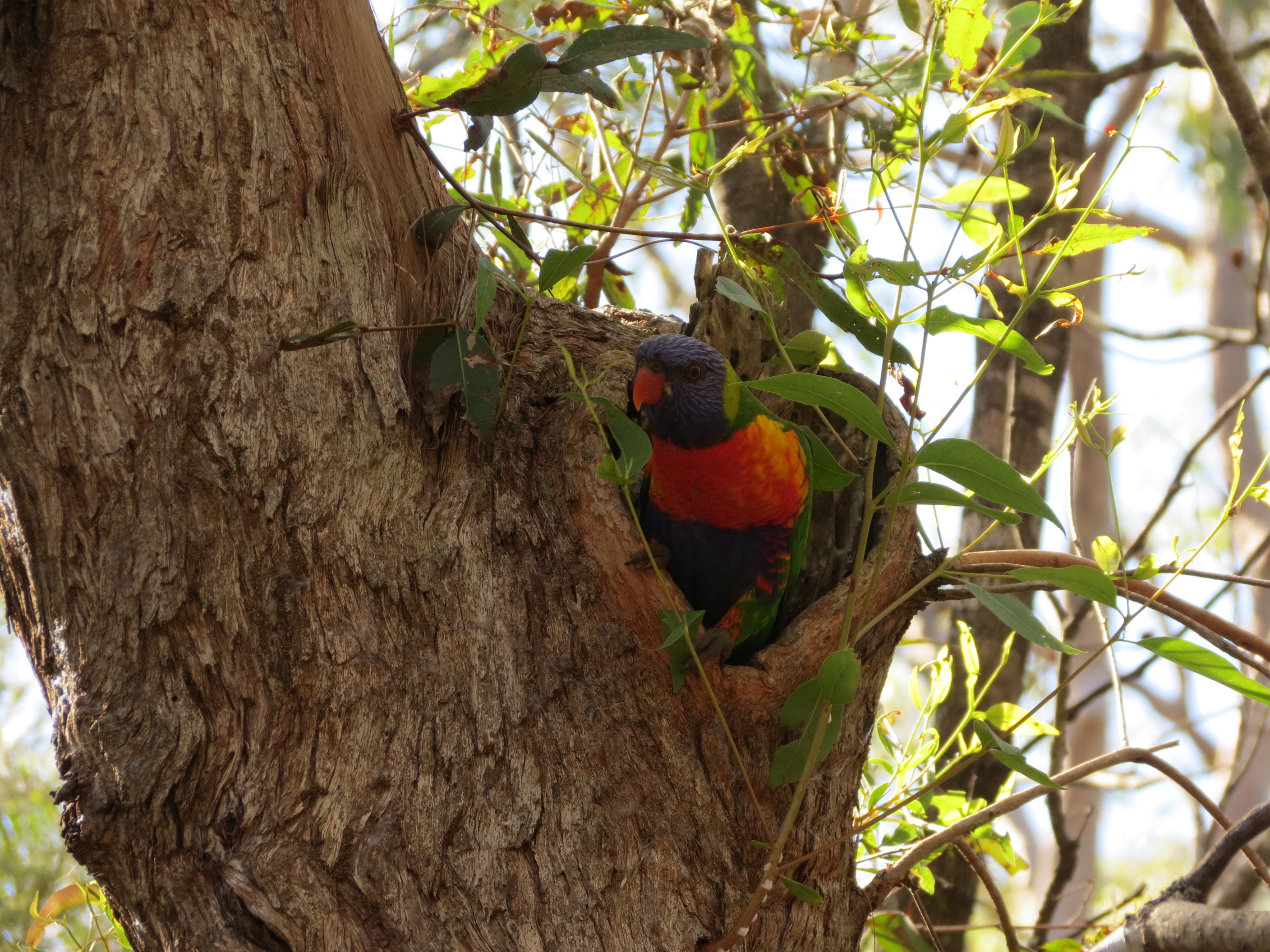
Rainbow Lorikeet emerging from nest hollow

Not a lot of rubbish but we did see a pair of Rainbow Lorikeets Trichoglossus haematodus emerge from a nest hollow, a pair of Galahs Eolophus roseicapillus as well as butterflies and bugs.

IMG_6098

Galahs at home


Spotted Paropsine Beetle - 2 March 2014

Spotted Paropsine Beetle Paropsis maculata


Small Dusky-blue - 2 March 2014

Small Dusky-blue Candalides erinus

« Previous PageNext Page »