Fox Gully Bushcare


By: Michael Fox

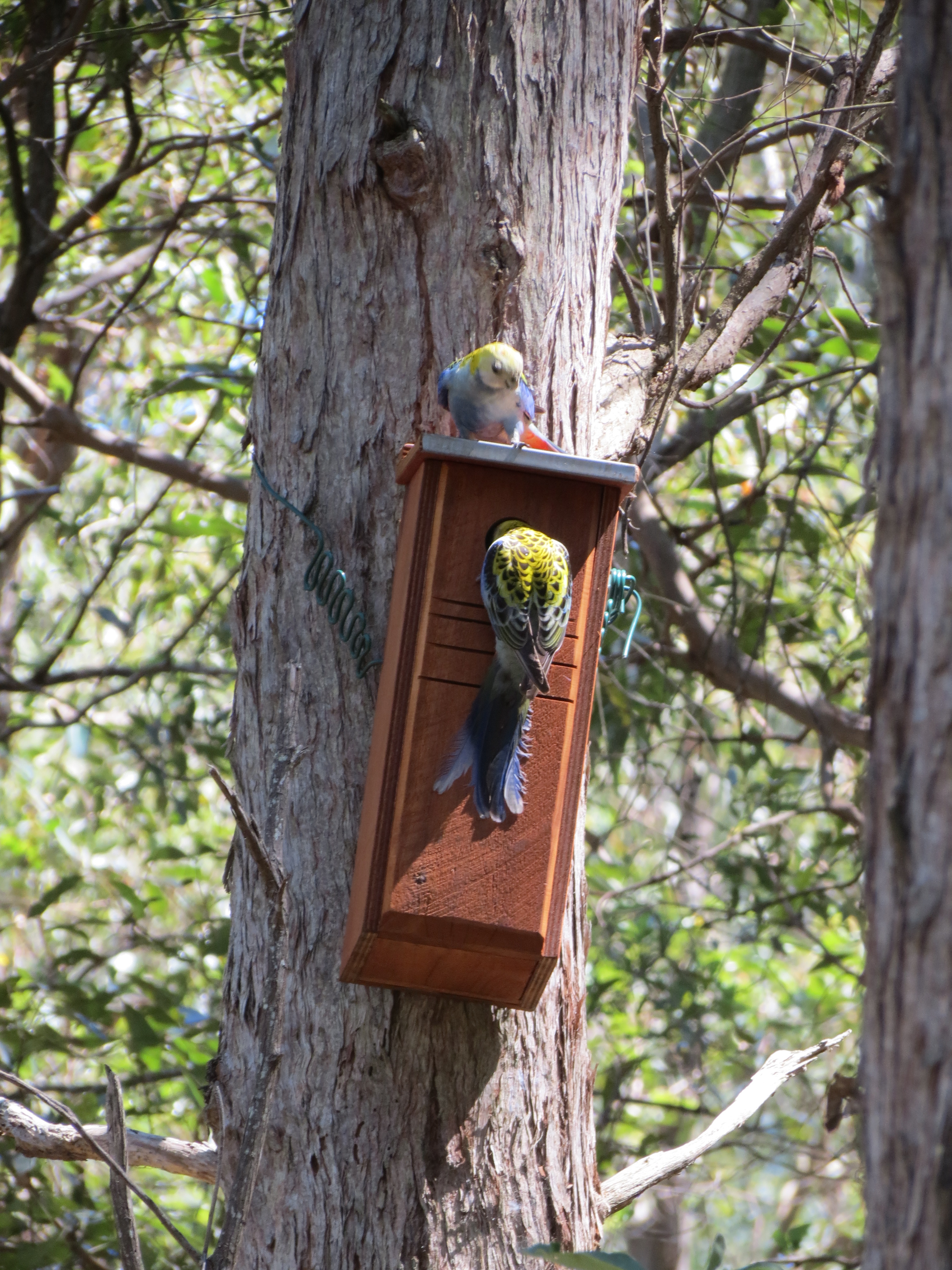
Pale-headed Rosellas inspecting nest box

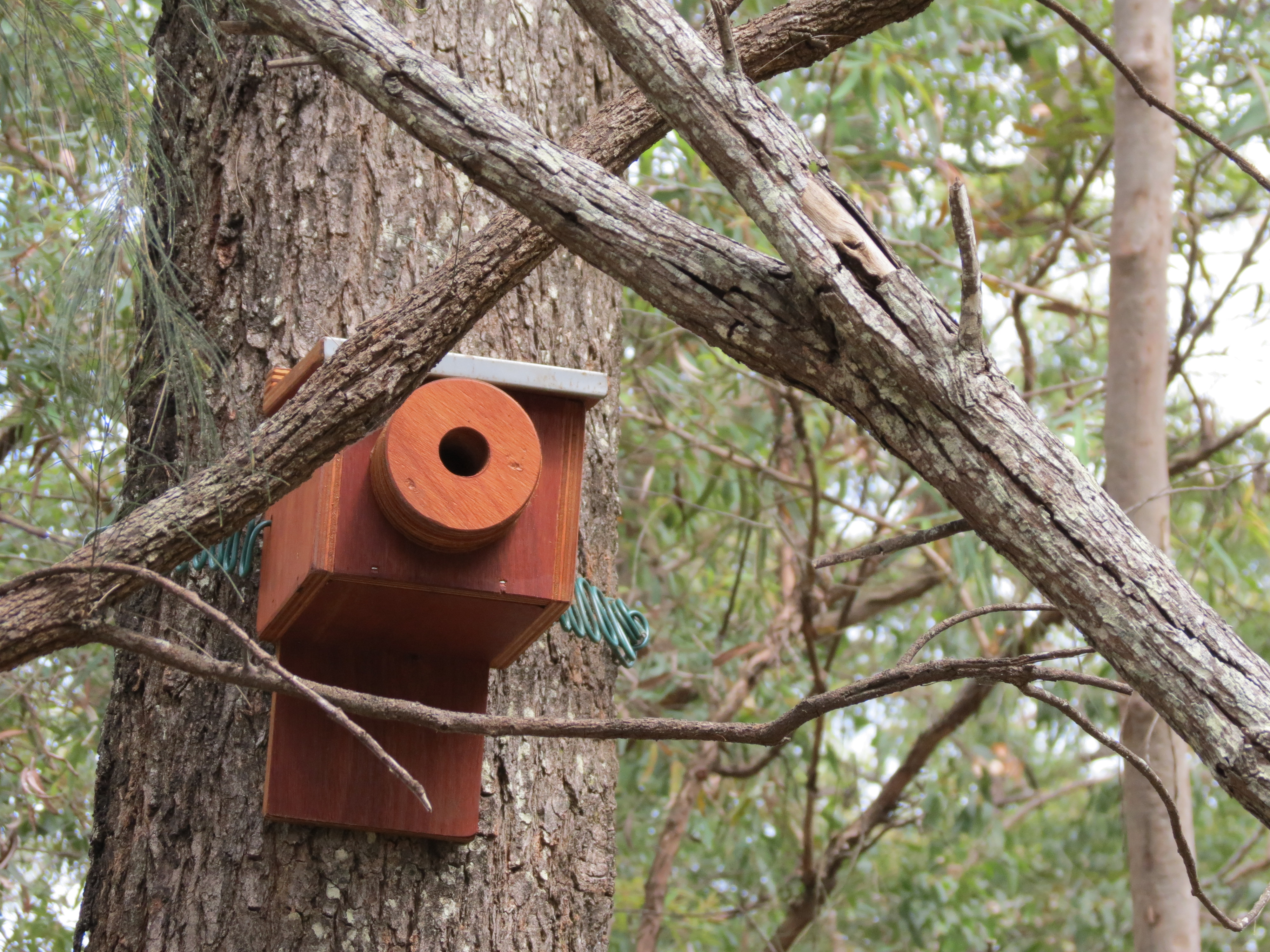
We had a day of inspections today with a pair of Pale-headed Rosellas checking out prospective new homes. Unfortunately they started with two boxes designed for Scaly-breasted Lorikeets. The smaller entrance diameter means the boxes are kept available for these smaller birds that are losing out on breeding sites with resulting drop in numbers.

Fortunately the Pale-headed ended up down behind Alan’s house where there is a box with a larger diameter entry.

d

d

d

d

d

d

They made it too small … let’s chew our way in.

This box looks like someone has had a go at expanding the entry size but still not large enough.

While we were walking we also noticed a pair of Rainbow Lorikeets inspecting the Owl box – designed for Boobook or Barn Owls not Lorikeets.

d

d

d

d

Too small for Kookaburra … need to find a larger termite nest.

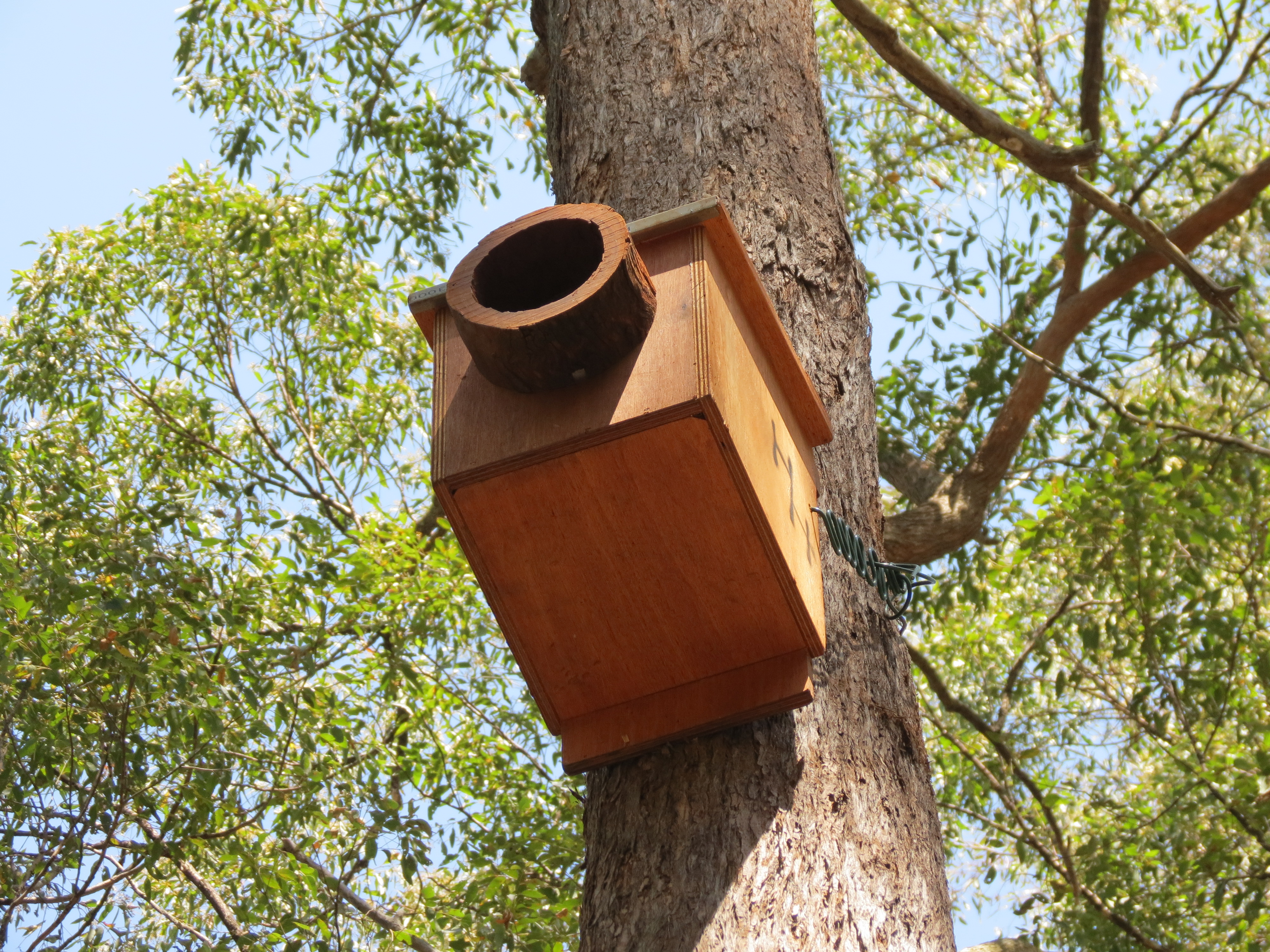
Up the track near the big water reservoir we found two Kookaburras sitting on a branch between the new Kookaburra box and the termite nest they had been trying to hollow out. The Kookaburra box was installed because clearly the termite nest was too small the make an effective nest hollow. Hopefully today’s sighting means they are considering the new box.

d

d

d

d

d

d

d

d

Tawny Frogmouth being a dead branch

d

Of course there is always someone who relaxes and wonders what the fuss is about. We almost didn’t see this Tawny Frogmouth pretending to be a dead tree branch. He deigned to half open an eye to check us out then dismissed us and went back to being a dead branch.

By: Michael Fox

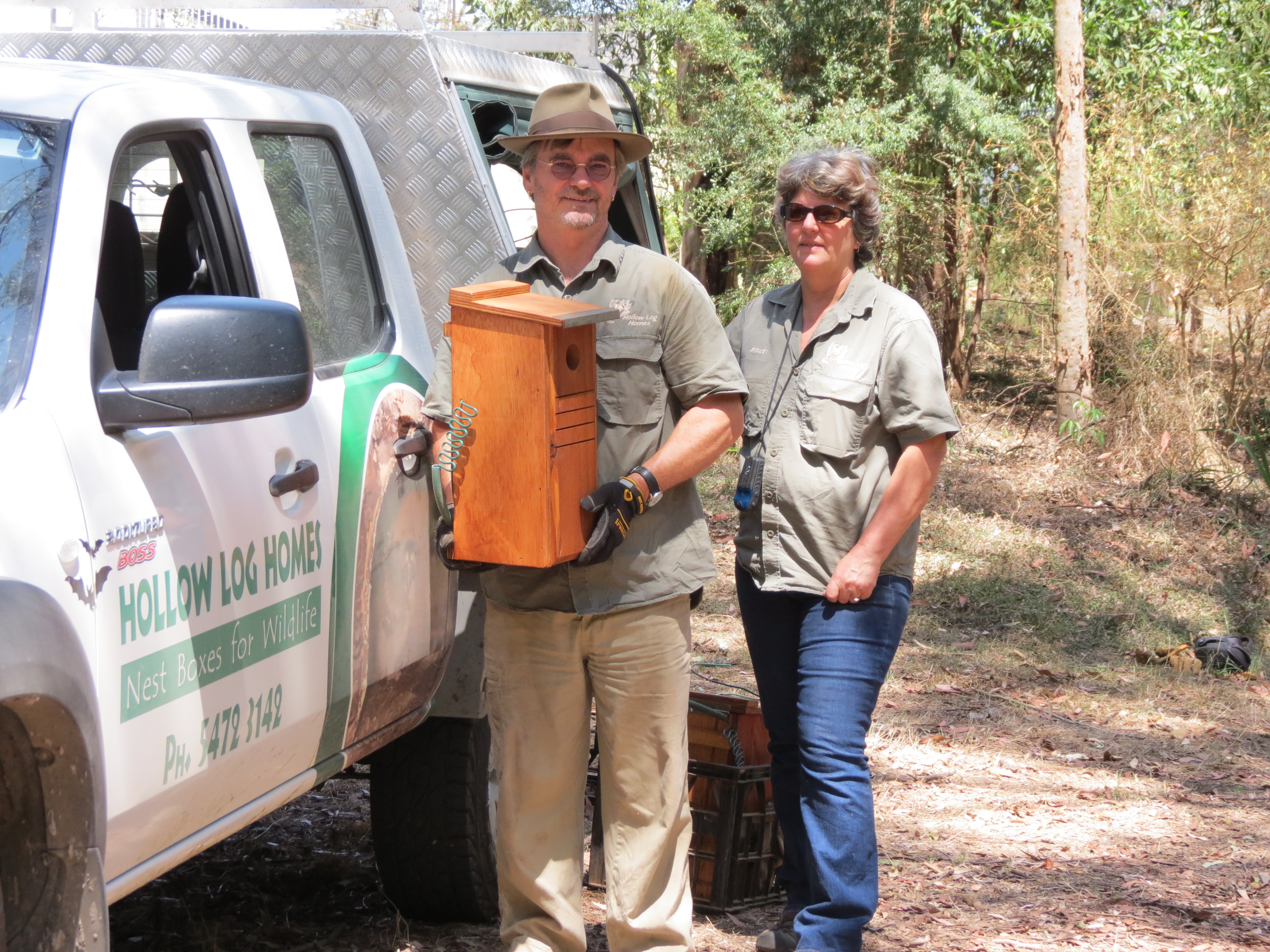
Alan & Stacy with glider box

Alan & Stacy Franks of Hollow Log Homes visited Fox Gully Bushcare today to install ten new nest boxes to provide breeding habitat.

Up to July 1893 Mt Gravatt and surrounds were designated as a railway timber reserve. Kate Flink, BCC Habitat Brisbane, worked with us to research availability of nest hollows within the Fox Gully site reflects this history with only a

Pardalote

limited number of trees older than 100 years and only a very small number of tree hollows suited for nest sites.

Smaller bird species like Scaly-breasted Lorikeets and Pardalotes are particularly impacted as they are out-competed for the limited nest sites. Nest boxes can be used to help restore the balance in the habitat.

Nest box for Boobook and Barn Owls

BCC Habitat Brisbane have contracted Hollow Log Homes to install nest boxes for Boobook and Barn Owls, Kookaburras, Pardalotes, Scaly-breasted Lorikeets, Rainbow Lorikeets/Pale-headed Rosellas as well as boxes for Sugar & Squirrel Gliders.

See one year update – Christmas in Fox Gully

By: Michael Fox

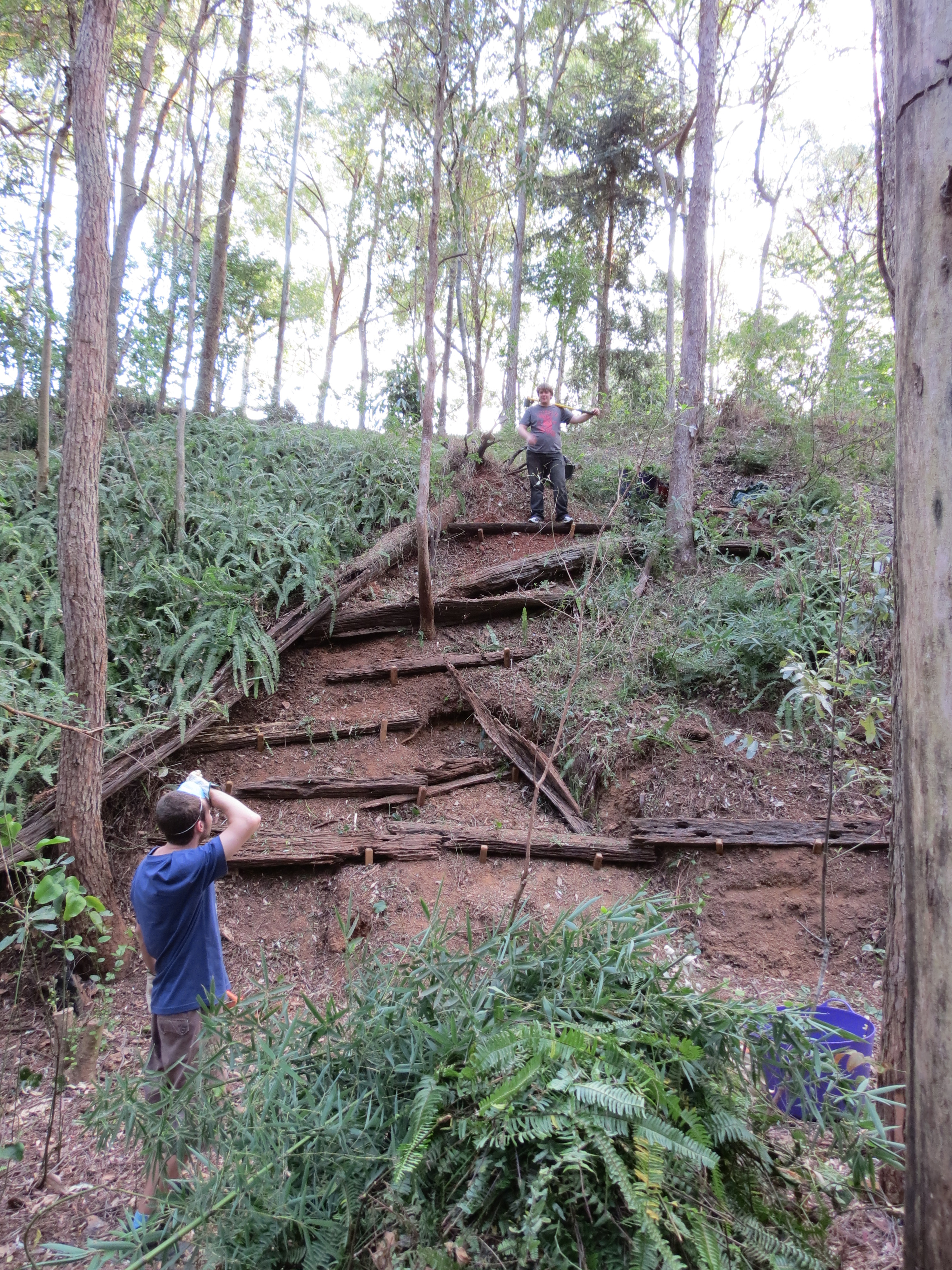
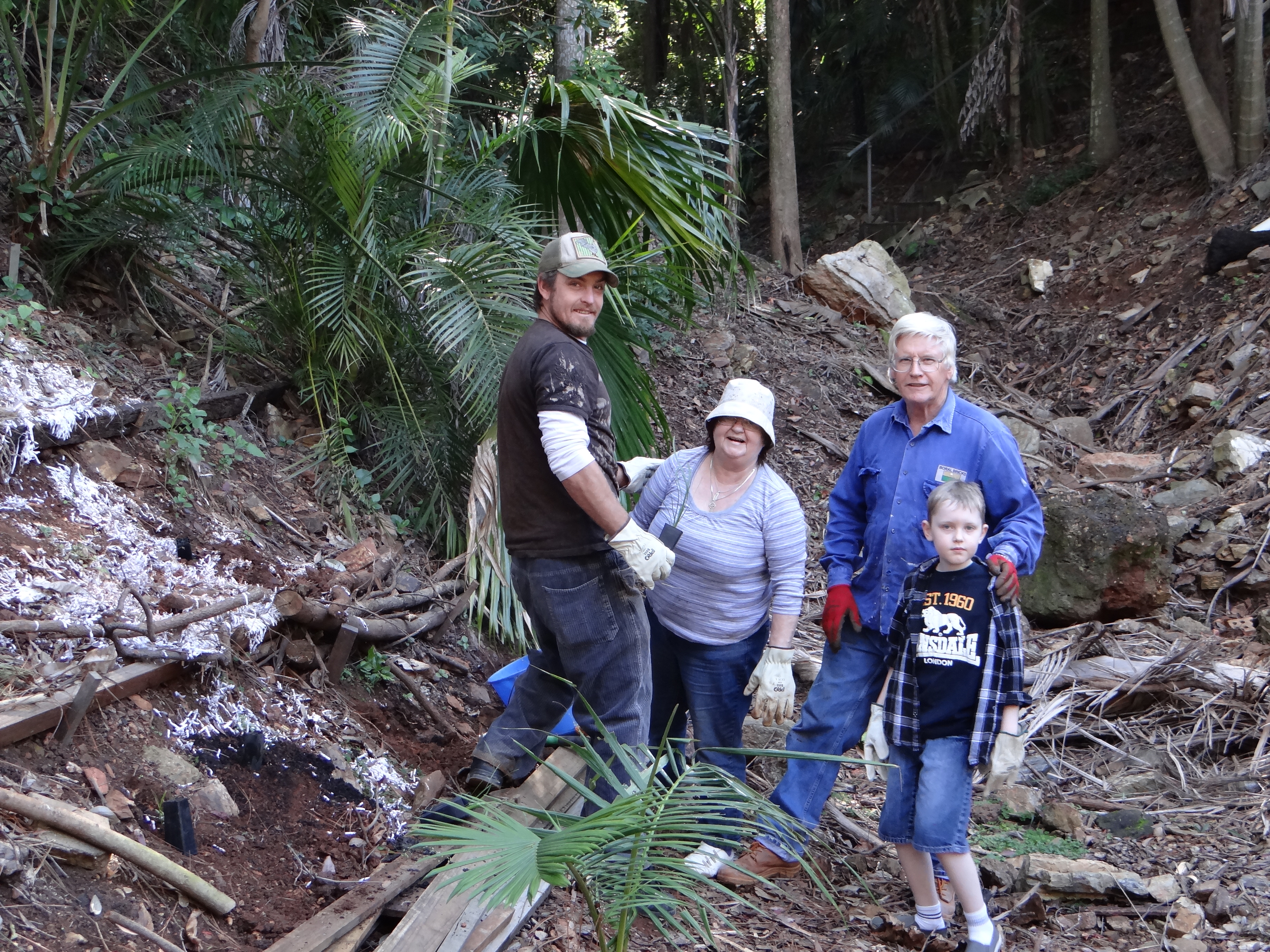
Jonny and James (top) clearing weeds and installing habitat

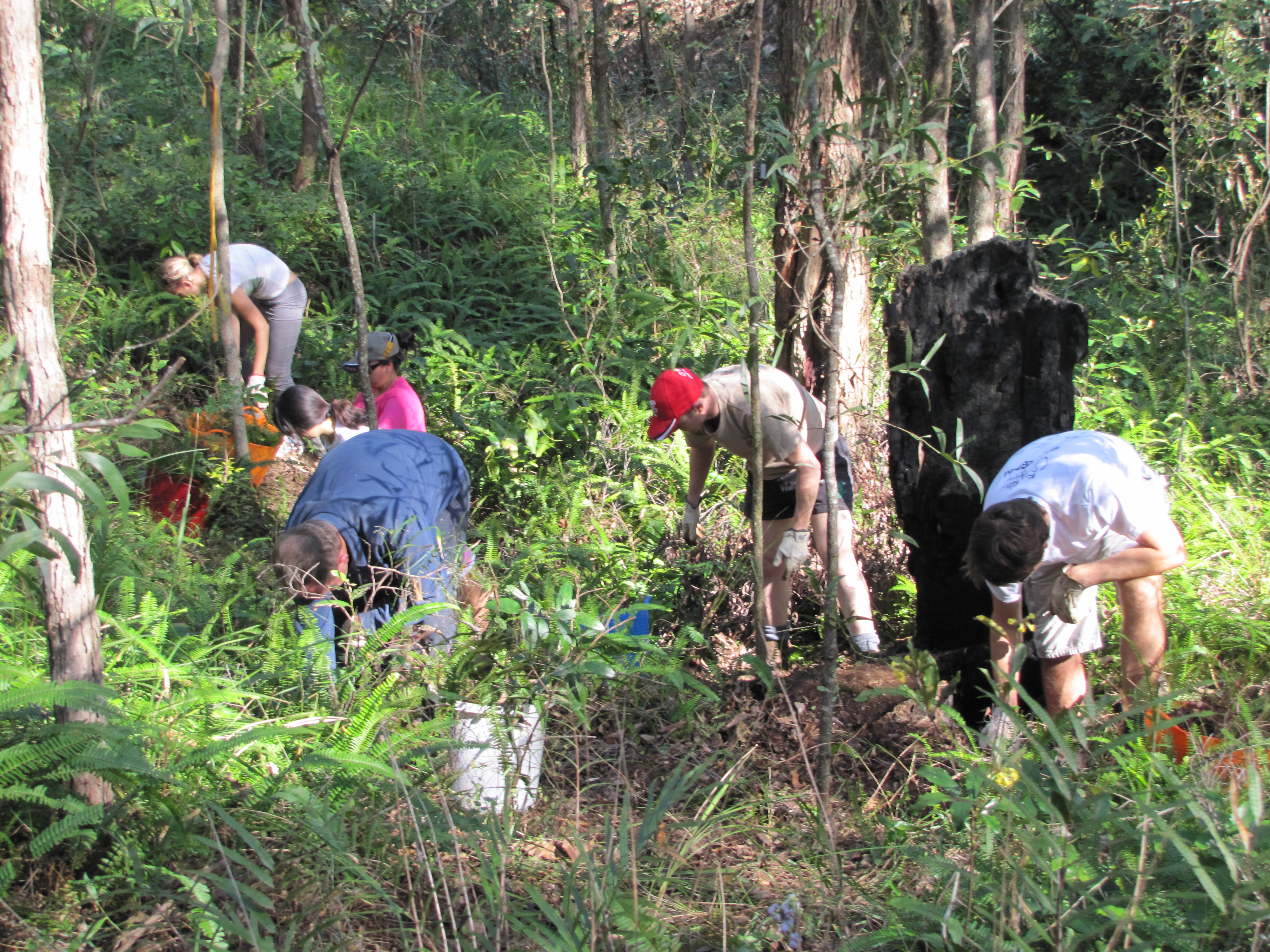
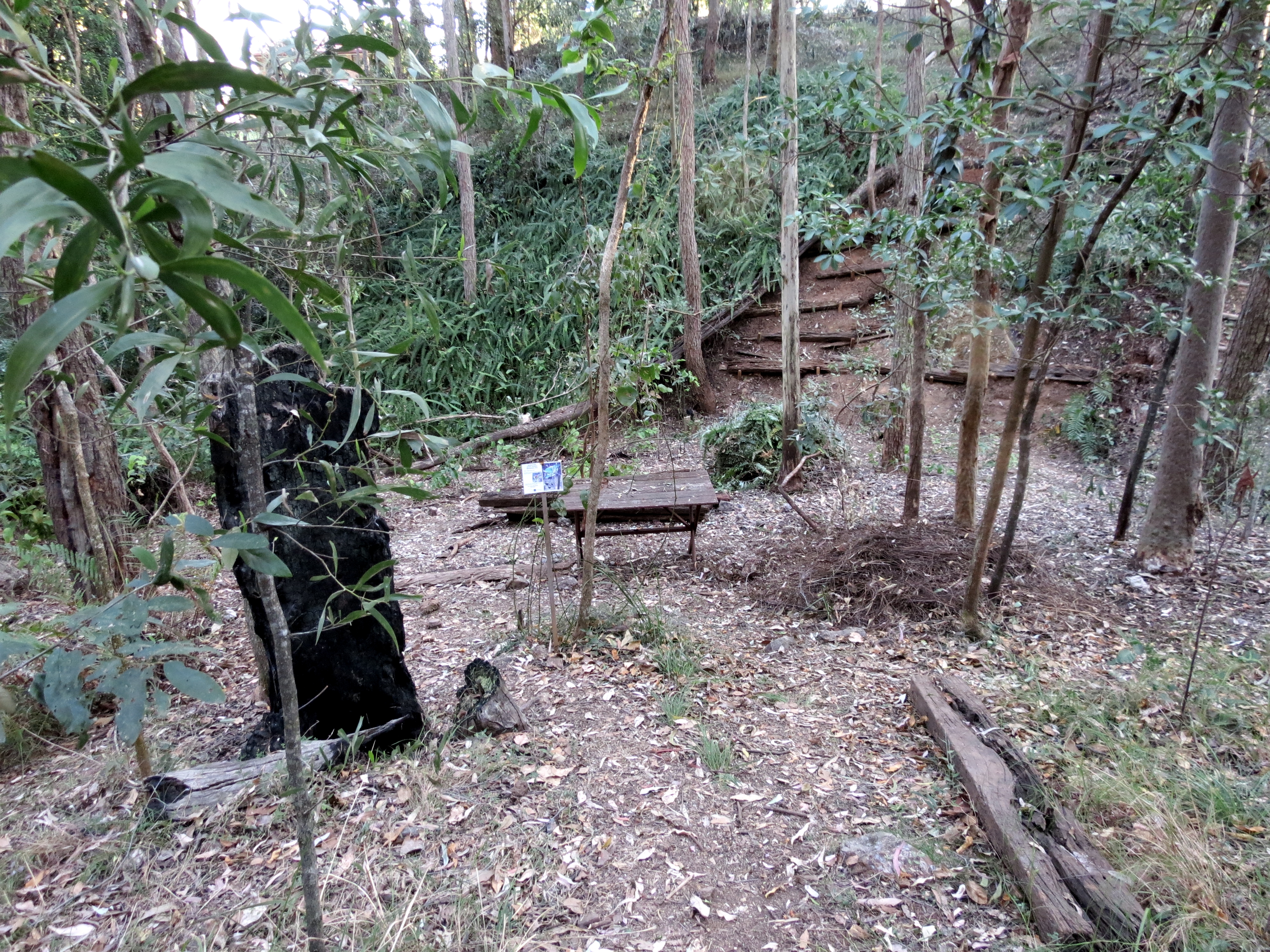
Restoration of Zone 13 is now expanding to include Zone 8 with the Fishbone Fern being cleared from the slope and our Griffith University team install old railway sleepers to stabilise the slope, improve access and provide habitat.

The pile in the foreground is composting weeds. Our best-practice approach means that we recycle 80% of the weeds on-site, reducing workload and fuel used in removing weeds from site while retaining valuable nutrients.

Zo

FWR Group starts restoration – Sept 2010

f

Zone 13 restoration started in September 2010 with the FWR Group corporate team.

We considered using poison to clear the massive Fishbone infestation. However an on-ground survey found four local fern species surviving among the weeds. Rather than risk losing the surviving specimens we started the

Restoration progress – Sept 2012

slower but, long term, more effective manual removal of the weeds.

Two years and we are past half way. There is still a lot of weed removal to be done but nature is working with us with natural regeneration restoring the native grasses, lomandras, Scrambling Lily and Soapy Ash.

We have achieved a dramatic

No CCA poison – just lots of holes for hiding

reduction in resources required with no new plants or mulch required to achieve this result.

I am particularly proud of our latest initiative, reusing old hardwood railway sleepers – remains of steel spikes can still be seen. Roger, one of our gully neighbours recently replaced a retaining wall built about thirty years ago with second hand railway sleepers. Our fit young Griffith students pitched in loading the sleepers into Roger’s ute and then carrying them down to our work site. Rather than going to landfill we are reusing these sleepers to stabilise slopes and improve access for restoration work.

The sleepers are a particularly valuable resource because they have NOT been treated with copper-arsenate which would kill the wildlife we are working to restore. The solid hardwood has survived insect attack well with softer timber eaten away leaving hollows and cracks providing invaluable habitat for the many species of insects and lizards vital to the health of our bushland. A key finding of last-year’s BAAM report was the lack of fallen timber so these sleepers are addressing that issue.

By: Michael Fox

Wishart Ward habitat groups with Cr Krista Adams and Ian Walker MP

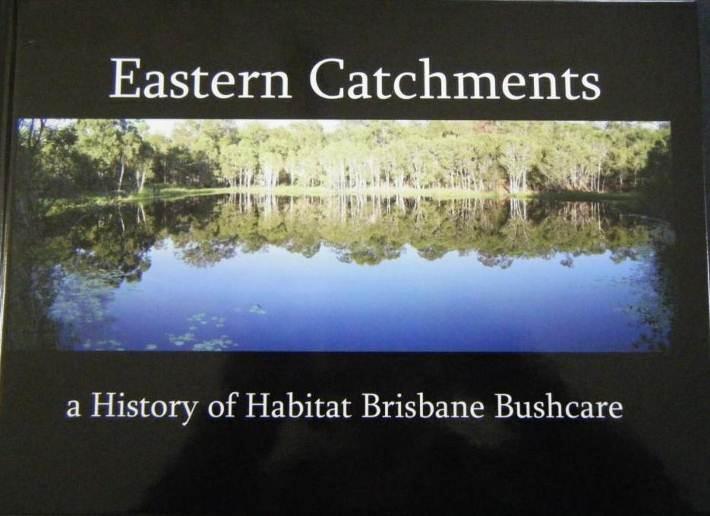
Yesterday I attended the launch of an amazing book which captures the history of  habitat groups within the eastern creek catchments of Brisbane. The true genus of this book is that it is a compilation of stories written by group members and illustrated by photos submitted by each group. Each story paints a personal picture of a habitat community with group activities, community events and flora and fauna as seen through the eyes of individuals who truly care about that patch of urban bushland.

Congratulations to the BCC Habitat Brisbane team members who bought this alive and thanks to the BCC Councilors who had the vision to provide the financial support.

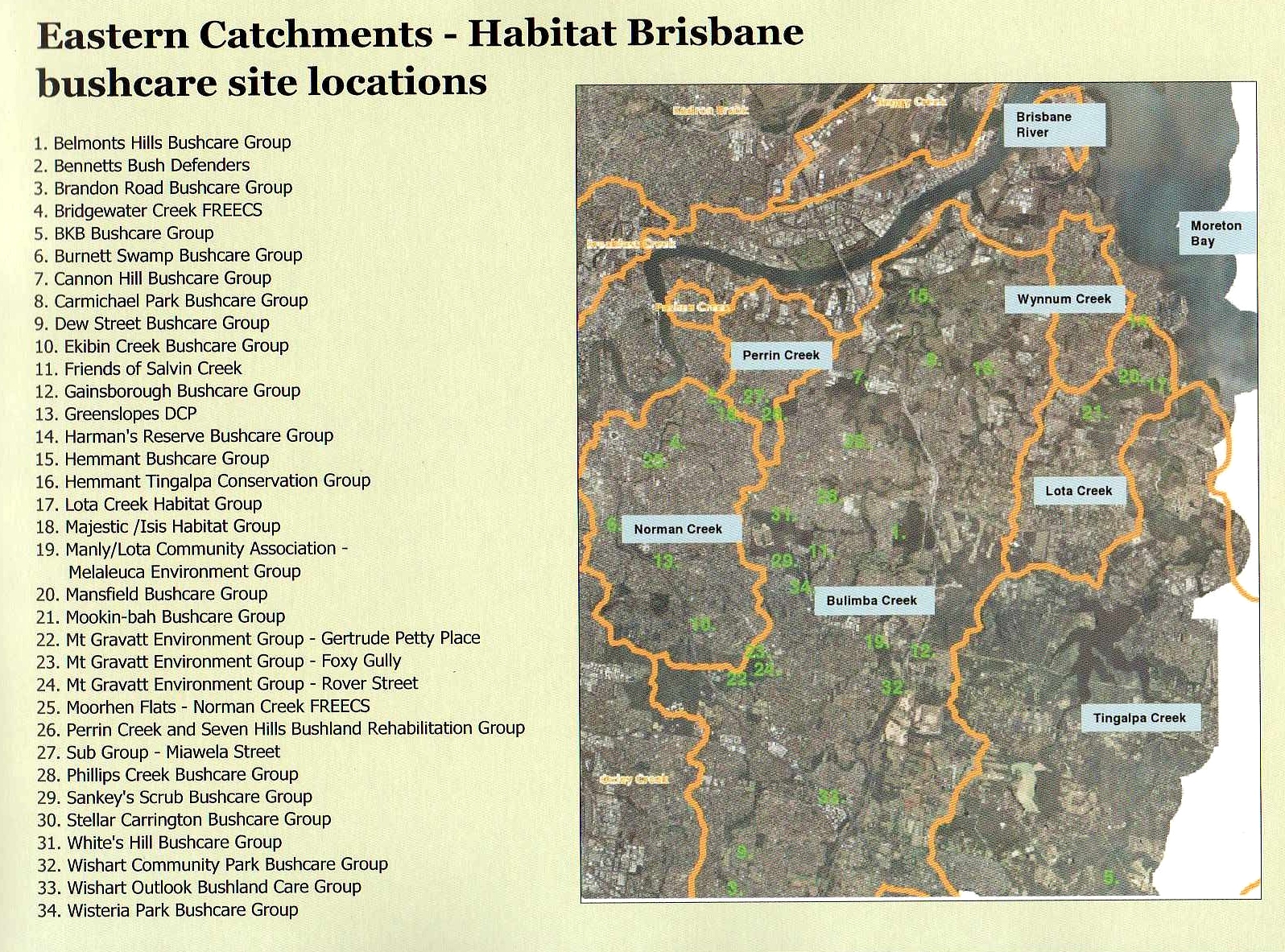
Bushcare groups represented

The launch was hosted by Bulimba Creek Catchment Coordinating Committee (B4C) at the Sustainability Centre and Native Plant Nursery.

Reading the stories and understanding the scope of the Habitat Brisbane programme, this is only the Eastern Catchments, fills me with pride in our Brisbane community and hope for the future.

Copies of this high quality small volume photo book can be ordered by emailing B4C. Cost is $120.

Three Mt Gravatt Environment Group Bushcare sites are represented:

Gertrude Petty Place Bushcare

Rover Street Bushcare

Fox Gully Bushcare

By: Michael Fox

(l-r) Marshal, Mirandha, Lin, Fred, John, Michael

How do you tempt university students into the bush to pull out weeds?

Answer: Put on food!

Seriously we were very pleased to welcome the Griffith Uni Bushcare Team to Fox Gully yesterday. Team leader Mirandha, Environmental Law, has been working with Susan Jones at our Gertrude Petty Place Bushcare site.

First order of the day was a sausage sizzle, a very new and Australian experience for Lin, Environmental Science, and Fred, Hotel Management. Marshal operated the BBQ while I show the team the Rainbow Lorikeets Trichoglossus haematodus setting-up home in the Men’s Shed nest-box high in a Tallowwood.

Clearing Fishbone Fern

Time to get down to work!

We are joined by Kate Flink (yellow tub at bottom), BCC Habitat Brisbane, and continue clearing the invasive Fishbone Fern Nephrolepis cordifolia in Zone 13. Clearing this garden escapee is a big job however as we clear the weed nature is coming behind us working 24/7 to restore native grasses like Graceful Grass Ottochloa gracillima and the seven native ferns that occur naturally in this gully.

8:30am Briefing the team and taking their minds off the cold (Photo: Alan Moore)

By: Michael Fox

7:45am The first participants have arrived even before I have finished setting up … and it’s cold!

8:30am The team is assembled, time for briefing: we have over 200 plants ready. Plants selected included vines like beautiful butterfly plant Sarsparilla Vine Hardenbergia violacea, trees like Coast Banksia Banksia integrifolia
– food plant for Sugar Gliders, and trees like the Blueberry Ash Elaeocarpus reticulatus with its fascinating pretty pink downward facing flowers. Downward hanging flowers are a valuable food source in rainy periods when nectar is washed out of Banksia and Grevillea flowers.

9am Ross & Barry planting large Hickory Wattle (Photo: Alan Moore)

d

d

d

d

9am Planting is well underway with people scattered all over the slope. Ross Vasta MP Federal Member for Bonner and gully neighbour Barry work together planting a large Hickory Wattle Acacia disparrima.

9:50am Miranda and Scott

d

d

d

d

d

9:50am Must be time for morning-tea.

Looking around it is a real pleasure to see our neighbours engaged in a cooperative effort to restore this corridor for our wildlife.

9:50am (l-r) Alistair, Lyn, Ray & Trey

d

d

d

d

Three generations of the Fulton family have been strong supporters of our restoration work with members involved in every planting day since 2008 when they planted two trees in memory of Lyn’s mother. Ray has also propagated Lomandras and potted Acacias that are now thriving in bushcare site.
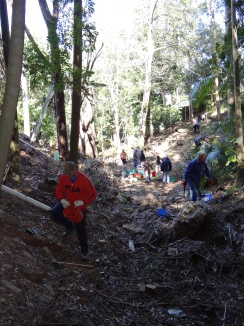
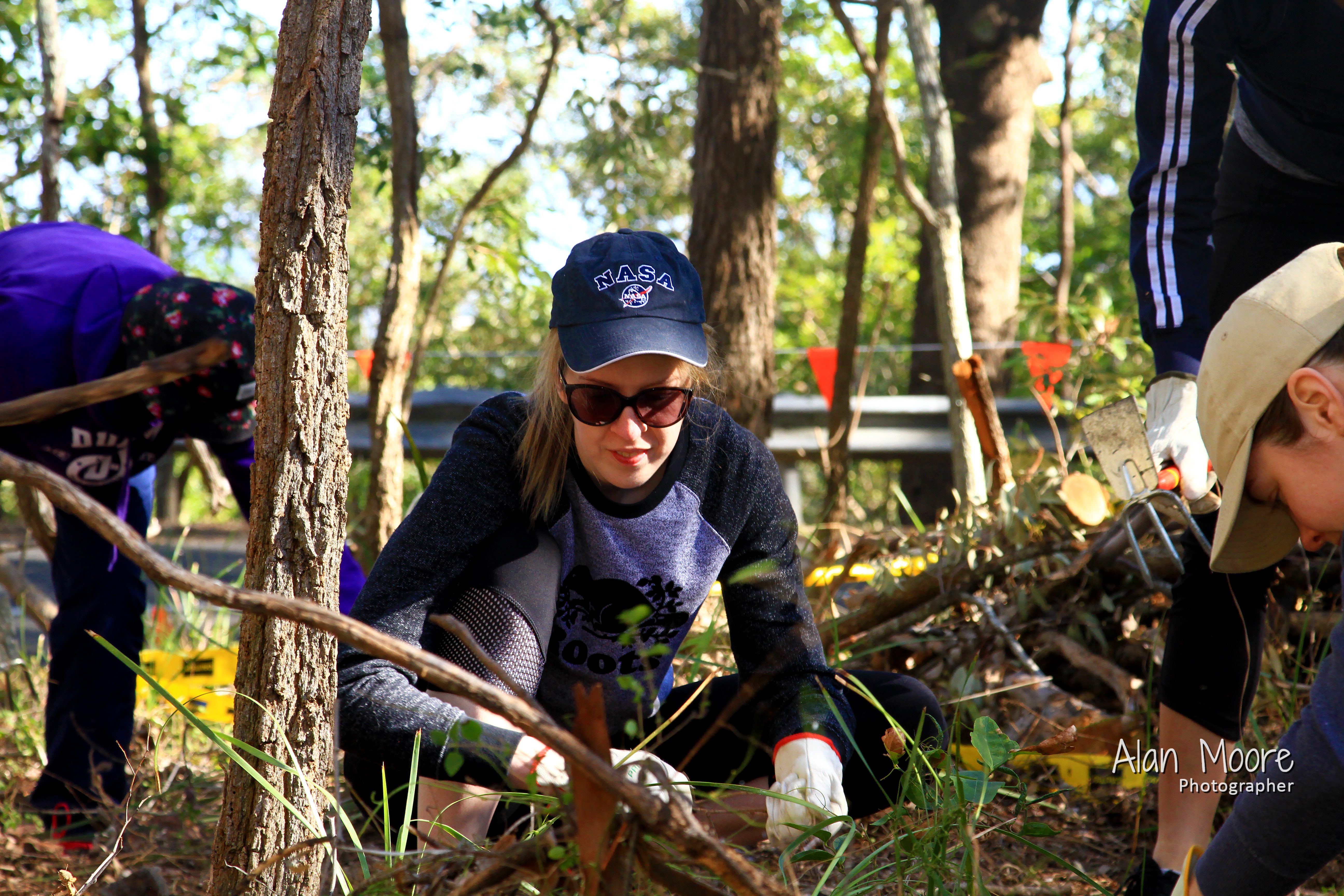
10:45am Community at work

f

f

d

10:45am Planting is almost complete so the team starts moving up the gully clearing Madeira Vine anredera cordifolia and Devil’s Ivy Epipremnum aureum.

Madeira Vine is a major problem in the gully, smothering trees and spreading aggressively with hundreds of potato like tubers which can each shoot into two or three new vines.

Devil’s Ivy or Pothos
is another invasive weed in the gully, climbing and dragging down trees. Devil’s Ivy, a common house plant, is also toxic to dogs and cats.
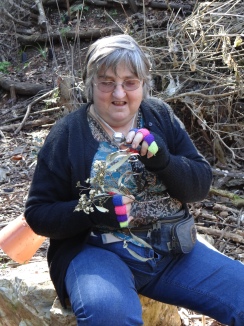
10:50am Ann Moran – Field Botanist

d
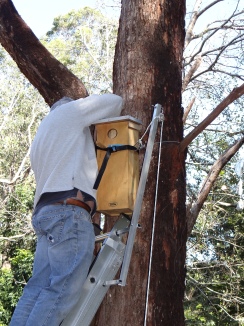
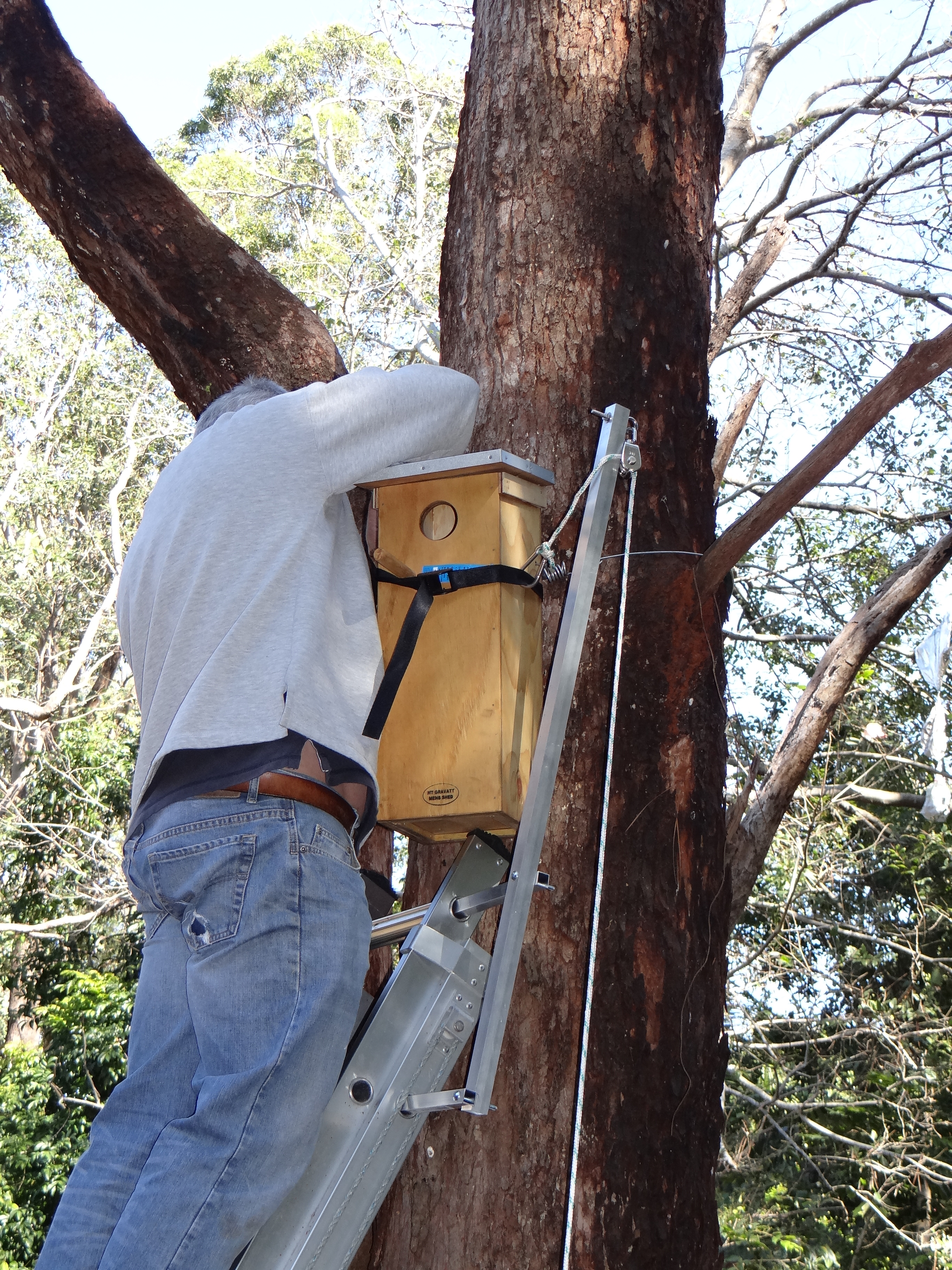
11am Installing Men’s Shed nest box – a new home for Scaly-breasted Lorikeets

d

d

10:50am Further down the gully Ann Moran a Field Botanist with decades of experience, generously shared her amazing knowledge of our native plants. I didn’t realise what looks like multiple leaves on the Black Bean Castanospermum australe are actually one leaf and if you sniff the end of the stem it smells of cucumber.

d

d

d

d

d

dd

d

11am Installing our first nest box. Logging and farming of the mountain habitat means that the forest is less than one hundred years old. Nest hollows typically start to form once trees are over one years old and then can take another fifty years to create. Therefore there is a shortage of nest hollows available for birds and gliders. Mt Gravatt Men’s Shed have now partnered with Mt Gravatt Environment Group to produce high quality nest boxes designed to the needs of local species. Scaly-breasted Lorikeets – all green with flecks (scales) of yellow on the chest, are smaller than Rainbow Lorikeets and have lost out in the fight for available tree hollows. This box with its smaller entry hole which excludes the larger birds will remain available for our Scalies.

Mt Gravatt Environment Group sell Men’s Shed nest boxes for $50. Boxes are available for a number of bird and glider species. For details email: megoutlook@gmail.com

11:20am Andrew with native grasses

11:20am Native grasses like Rainforest Grass Oplismenus aemulus, Graceful Grass Ottochloa gracillima and Scented Top Grass Capillipedium spicigerum  operate as Green Mulch suppressing weeds, retaining moisture and reducing erosion. These grasses are also caterpillar food for butterflies like the Orange-streaked Ringlet.

Andrew get special attention from the photographer: his wife Kerry. A participant in our 2011 Photography Workshop has developed a real skill in capturing the moment and the wildlife.

11:30am Susan (left) and Don clearing weeds

d

d

d

d

11:30am Susan Jones, Mt Gravatt Environment Group Secretary, pitches in with gully neighbour Don to remove Madeira Vine.

12noon Planting done. Now nature takes over to complete the job

d

d

d

d

d

d

d

d

d

12noon Over 200 plants in place. Now we hand over the nature to complete the job. Come back for the 2013 Community Gully Day to see the results of our partnership with nature.

Thank you to all participants. It is inspiring to be part of such an amazing community event. Also thank you to Annette & Genevieve who hosted the event, Don & Clair, Ray & Lyn and SOWN who donated plants and Jason & Tash who donated timber for the slope.

Some neighbours who were unable to participate on the day made tax-deductible donations that paid for the tube stock.
“I remember seeing Koalas in the trees near the creek when I attended St Bernard’s primary school in the ’80s.” I talking with a volunteer at today’s BCC Community Tree Planting at Sunnybank. My informant was pleased to see the new signs on Klumpp Road and hear that Koalas are breeding on the mountain.

Cr Krista Adams organised installation of the signs after the death of a Koala hit by a car on Klumpp Road in December.

Our submission to Cr Adams was supported by our ongoing monitoring of Koalas on the mountain. We are now receiving regular reports from neighbours and people using the walking tracks. Edd and Hazel provided our latest report of a male, female and joey – read Hazel’s Brisbane Adventures for an amazing photo of mother and joey.

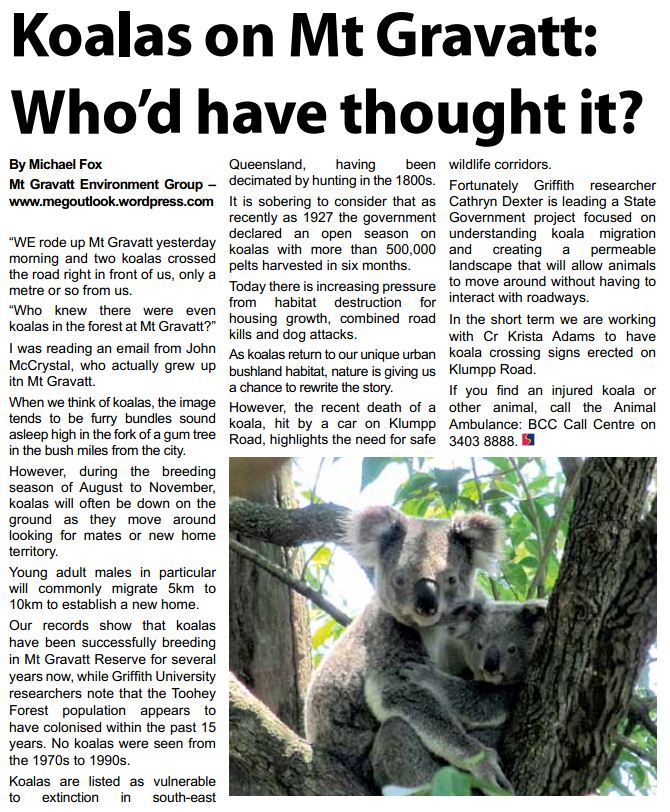
We use Google Maps to record sightings to help us understand their movements and argue for government support for our restoration work. We are also working with Griffith University researchers like Cathryn Dexter – see Koalas returning to Mt Gravatt in Koalas on Mt Gravatt: Who’d have thought it?

Koala Sightings Mimosa Creek Precinct - March 2012

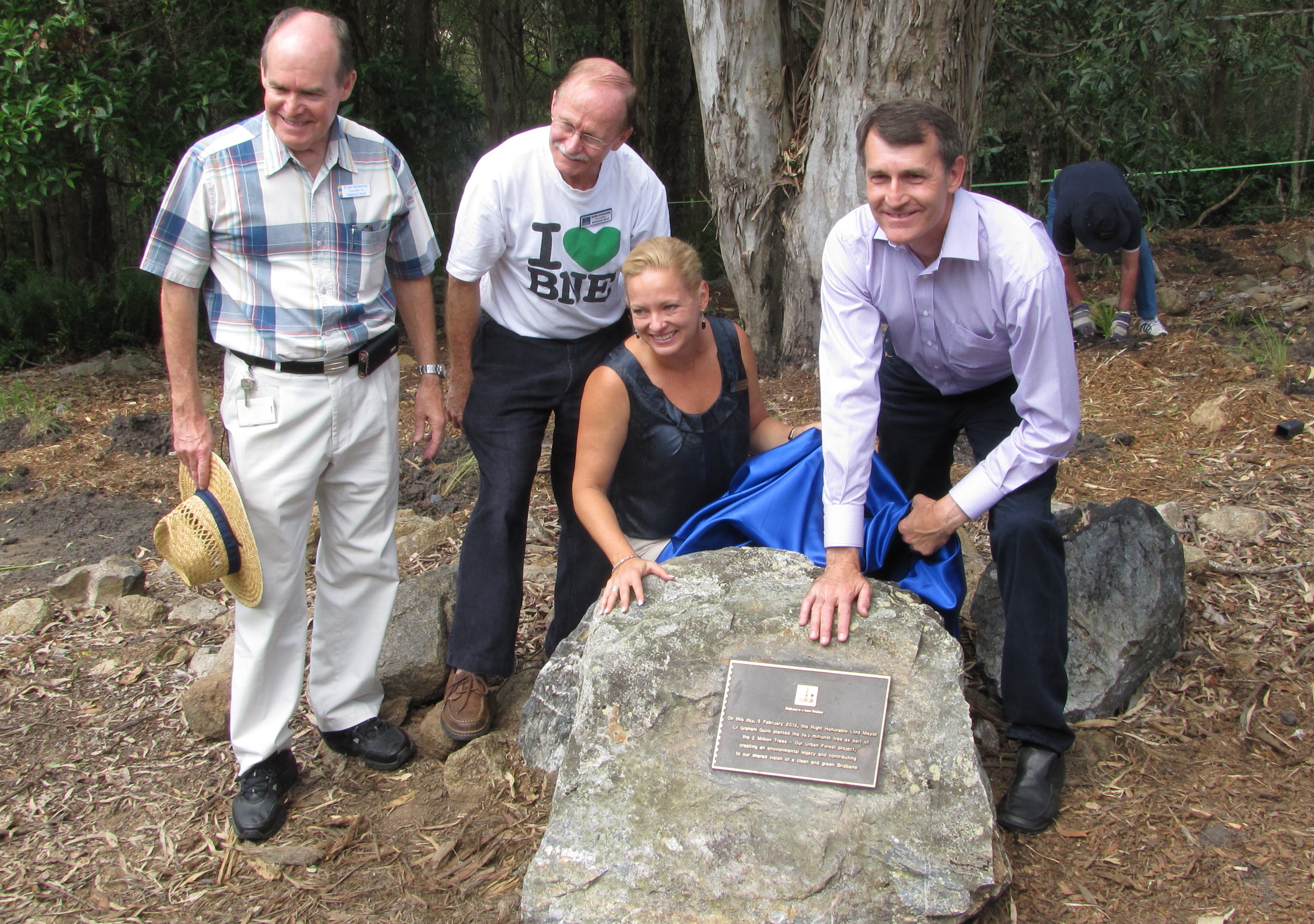
(l-r) Cr Ian McKenzie, Cr Norm Wyndham, Cr Krista Adams and Lord Mayor Graham Quirk

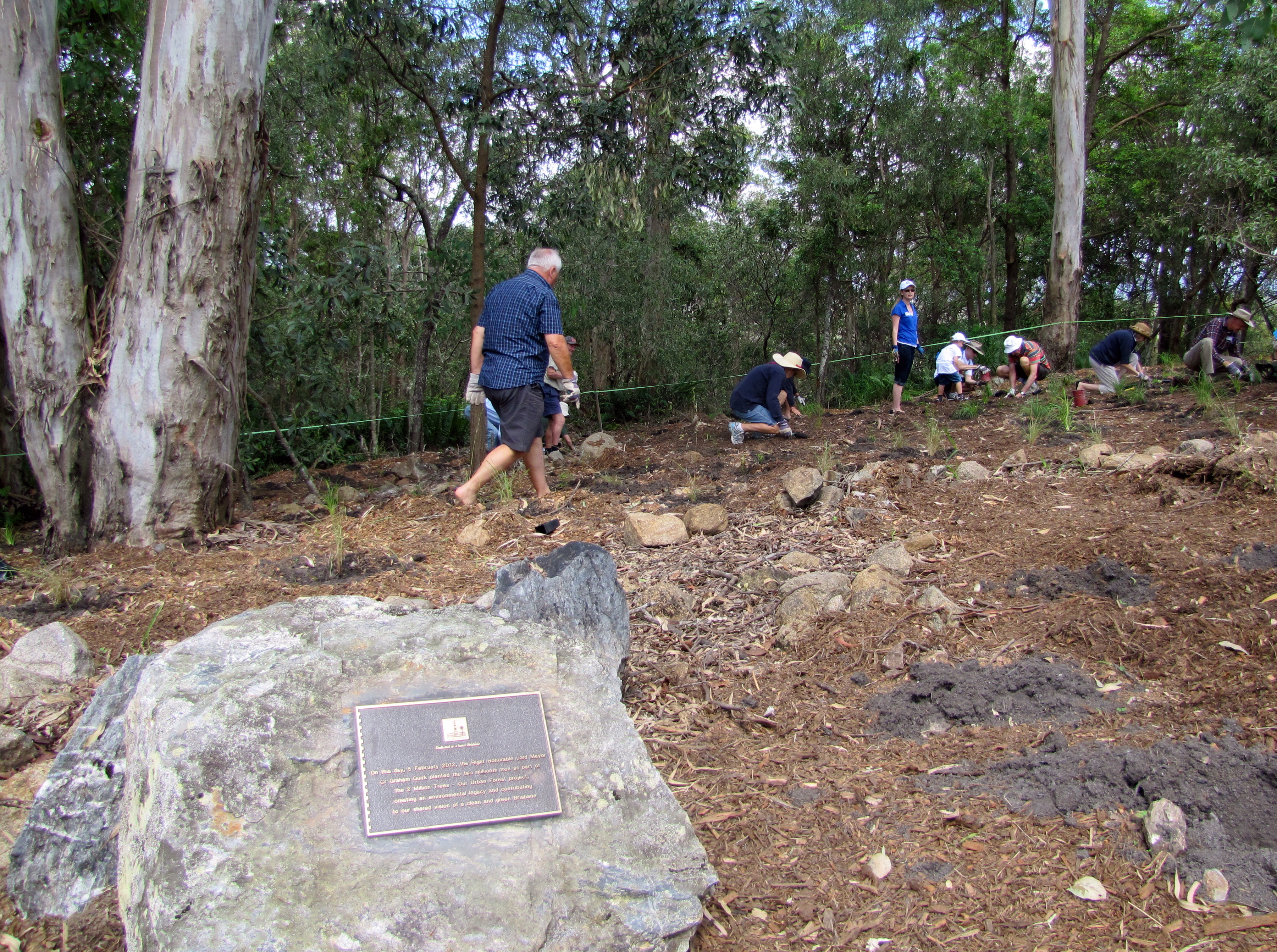
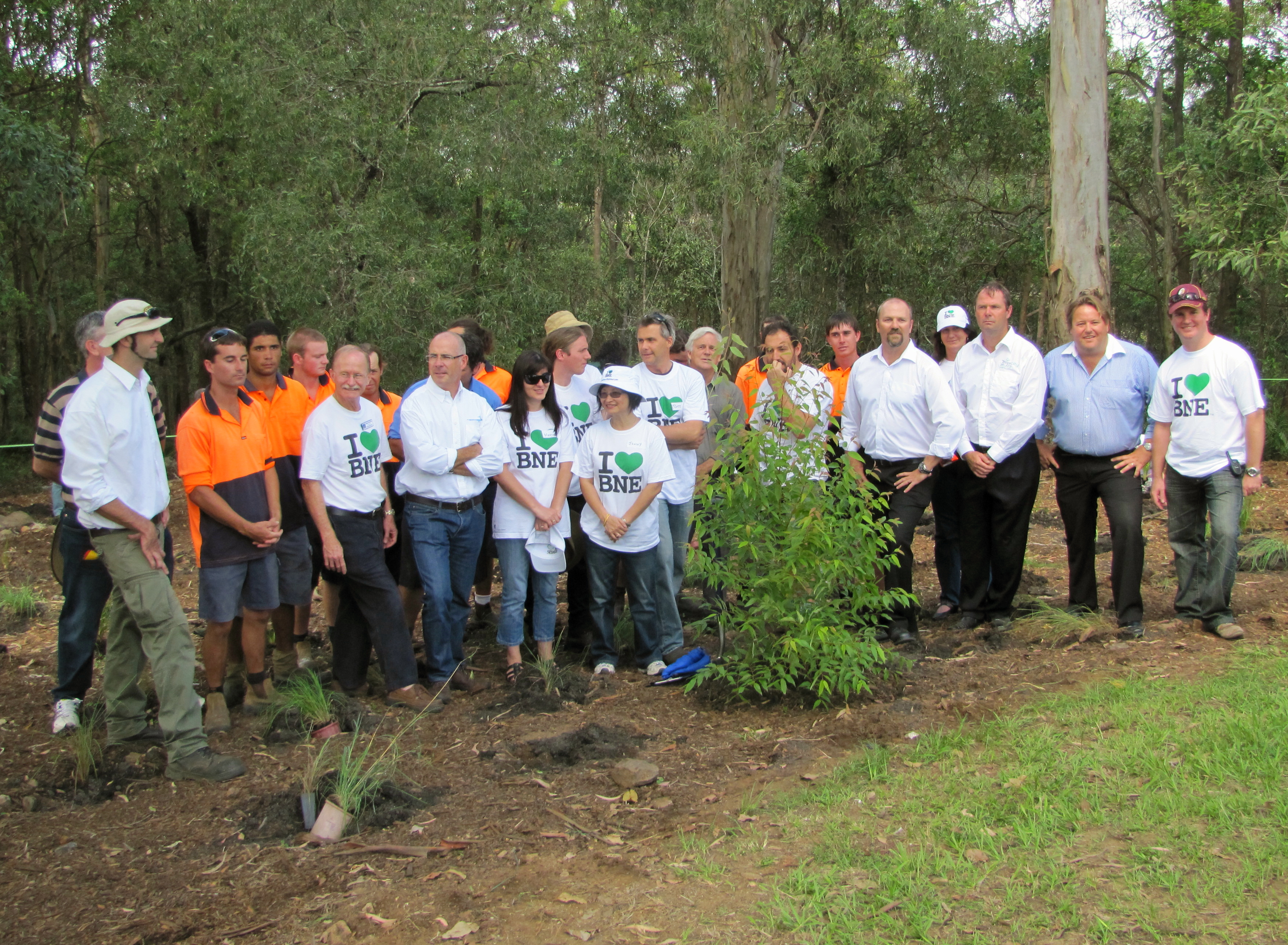
Brisbane achieved a milestone on Sunday 5 February 2012 when Lord Mayor Graham Quirk planted the 2 Millionth Tree at the Lookout picnic area on Mt Gravatt.

2 million trees! WOW!

Community volunteers starting on the next million trees

I am proud of what we have achieved with restoration of the two hectare Fox Gully Bushcare site. We have put in over 3,400 hours of community volunteer labour and we have planted just over 2,000 trees, grasses, herbs and vines. That is just 0.1% of 2 million, so I can truly appreciate what has been achieved by City Council teams, the contractors and volunteers right across the city.

Council and contractor teams

About thirty years ago I gained support of residents in Guthrie Street, Paddington and wrote to the City Council asking for street trees to be planted. I can now look at Guthrie Street on Google Maps and see those trees still growing and still providing shade  in our hot Queensland sun. Not every tree has survived thirty years. Some trees barely survived three weeks before being pulled up by vandals but the Council team persisted quickly replacing the damaged trees. The 2 Million Trees project has persisted against much bigger set-backs, like replacing trees lost in last year’s flood.

So I am now looking forward to another thirty years, watching 2 million trees mature and grow, right across the city.

(l-r) Michael, Lord Mayor Quirk, Sheamus

I was honoured on Friday night to join Sheamus O’Connor at the Cliff’s Cafe for the 2012 Lord Mayor’s Australia Day Awards.

Sheamus and I joined an inspiring group of Award winners honoured for their volunteer work after the January flood, protecting the Gateway Bridge from 150 metre section of the Riverwalk during the flood or helping disadvantaged people reconnect through a street soccer program.

Sheamus O'Conner, Young Citizen of the Year

The Lord Mayor honoured Sheamus, Mt Gravatt State High School Year 11 student, as Young Citizen of the Year for his passionate advocacy for the envirionment including his personal contribution to the restoration of Mt Gravatt Reserve. 2011 National Tree Day Sheamus led a team of fellow students and teachers in rehabilitating the degraded area at the entry to the Summit Track. Within an hour the area had been transformed from a barren wasteland into the makings of a great piece of wildlife habitat.

As a communty we can be proud to be represented by Sheamus who demonstrated his leadership style in his response to the Lord Mayor’s presentation.

(l-r) Michael, Cr Krista Adams, Sheamus

I was honoured to by presentation the Lord Mayor’s Green Heart Award in recognition of restoration work in the Fox Gully Bushcare area, flora and fauna research, ongoing community education with wildlife articles in Southside Community News and presentations at Mt Gravatt Men’s Shed and Griffith University Eco-Centre. The presentation of beautifully wrapped green watering can and tools added a nice bit of fun.

We particularly want to accknowledge the ongoing support Cr Krista Adams.

Sunday morning 4th December and John McCrystal and a friend were riding Shire Road to the summit of Mt Gravatt. John, a member of Team Fatboyz, was practicing for the Rio Tinto Ride to Conquer Cancer – August 18-19, 2012, he certainly didn’t expect to encounter two Koalas running down the road towards him!

Koalas travel 5 to 10km to find new home territory.

“They came running down the mountain and then starting running toward us on the road. They then froze in front of us started snorting, I think they were scared. We had to shoo them off the road. They then climbed the first tree they found.” John

John grew up on the side of Mt Gravatt and he had never heard of Koalas on the Mountain. I have heard from others that there have “never been” Koalas on Mt Gravatt and any animals found must have been relocated there after recovery from injury. This has always seemed to be an unlikely explanation because injured animals, including Koalas, are returned to locations as close as possible to where they were found.

Koalas on Mt Gravatt – What is the answer?

Southside Community News – Jan 2012

.

Professor Carla Catterall, Griffith School of Environment, advises that from the 1970s to the 1990s koalas were not seen in Toohey Forest, in spite of many naturalists  walking in the forest and doing ecological surveys there.  This has been a puzzle given that Koala food trees are present in reasonable numbers.  Professor Catterall suggests that Koalas may have previously been in the forest then extirpated (local extinction) in the early 20th century.

Koala fur industry

.

Hunting for Koala pelts was a major industry after European settlement. Who would want to wear Koala fur? The Koalas I have handled didn’t exactly feel luxurious and soft. Glenn Fowler’s 1993 report, “BLACK AUGUST” Queensland’s Open Season On Koalas in 1927 available at Australian Koala Foundation site, provides and insight into this unlikely trade.

‘Although (fortunately for the koala) not highly valued, the koala’s thick soft fur soon acquired the reputation as being a particularly effective insulator against the cold – ideal for protecting the human body from “the icy blasts of winter in Northern Canada and Europe”. Koala fur was renowned for its ability to withstand any amount of hard usage.’ Fowler, 1993.

For me, the really sobering thing was realising that as recently as 1927 the Queensland Government approved a six month open season on Koalas. More than 500,000 Koala pelts were delivered to market – a huge impact given the number of pelts that would have been unusable and the joeys left to starve.

Koalas returning to Mt Gravatt

Koala sightings Mimosa Creek Precinct

.

Nature is now giving us a second chance with Koalas now breeding successfully in the Reserve and increasing sightings particularly around our Fox Gully Bushcare site: Mimosa Creek Precinct.

Griffith University researchers believe that there is more functional linkage between Toohey Forest and other forest areas in the western past of Brisbane than might easily be assumed: in spite of the hazards of roads. We have one sighting of a Koala successfully crossing the Motorway onramp however the recent death of a Koala hit by a car on Klump Road highlights the need for safe wildlife corridors connecting Mt Gravatt Reserve with Mimosa Creek, Roly Chapman Reserve and Toohey Forest.

Cathyrn Dexter, Griffith University, is leading a project with Main Roads Department which aims to create permeable landscapes that will allow animals to move around without having to interact with roadways: safer for wildlife and drivers.

We will draw on Cathyrn’s research as we restore the Fox Gully wildlife corridor to improve the chance for Koalas to move safely across Klumpp Road. In the short term we are working with Cr Krista Adams to have Koala crossing signs erected on Klumpp Road. While the active police presence is likely to have much greater impact on speeding, Koala crossing signs will be a valuable community education tools building awareness that nature is returning a special animal to our urban bushland environment.

« Previous PageNext Page »