Mt Gravatt Conservation Reserve


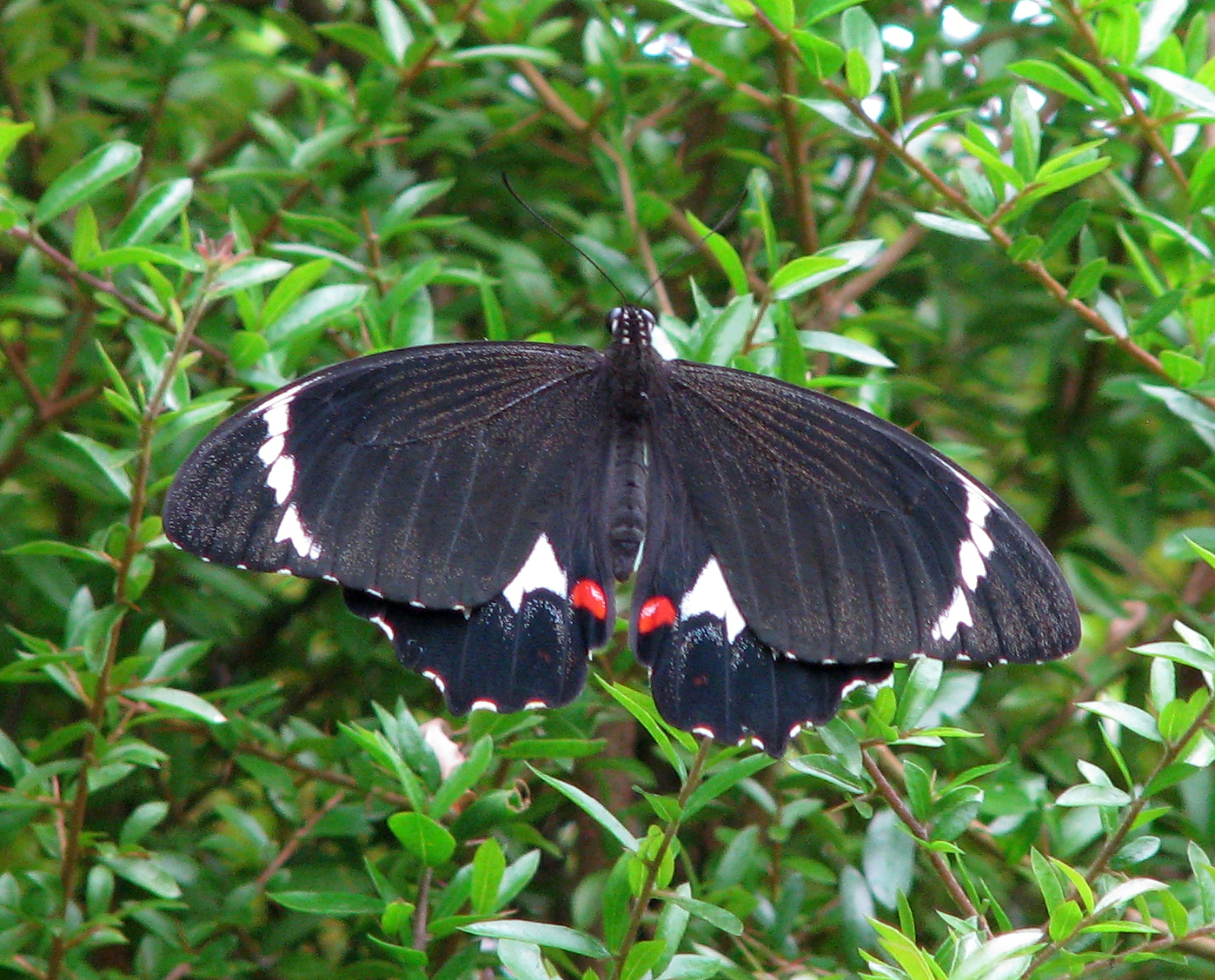
Orchard Swallowtail - Male - Apr10

Orchard Swallowtail – Male

By: Michael Fox

Forty-six butterfly species are found in Mt Gravatt Conservation Reserve with a wide range of colours, sizes and behaviour.

I have been aware, for some time, of the different colours of the male and female Orchard Swallowtail Papilio aegeus.
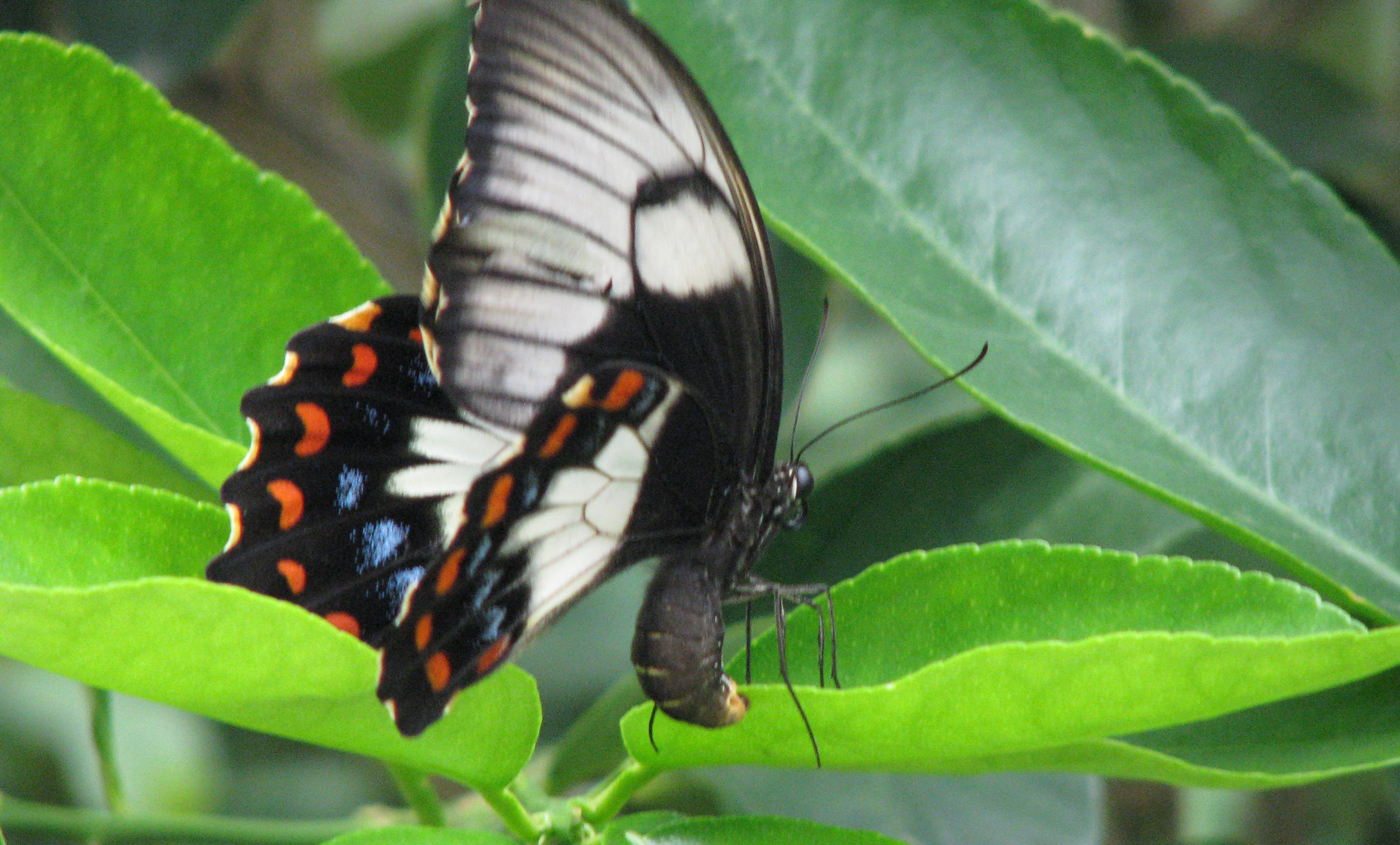
Orchard Swallowtail - Nov 08

Orchard Swallowtail – Female – laying eggs on lemon tree

Orchard Swallowtail butterflies are large  (male 102mm/female 108mm). However, the females are definitely the most attractive to see flitting around your citrus trees.

These beautiful butterflies are a wonderful addition to any backyard, so if you see some strange caterpillars on your citrus trees please check before you pull out the pest spray. The Orchard caterpillars will do very little damage to your trees before they metamorphosise into beautiful colourful butterflies.
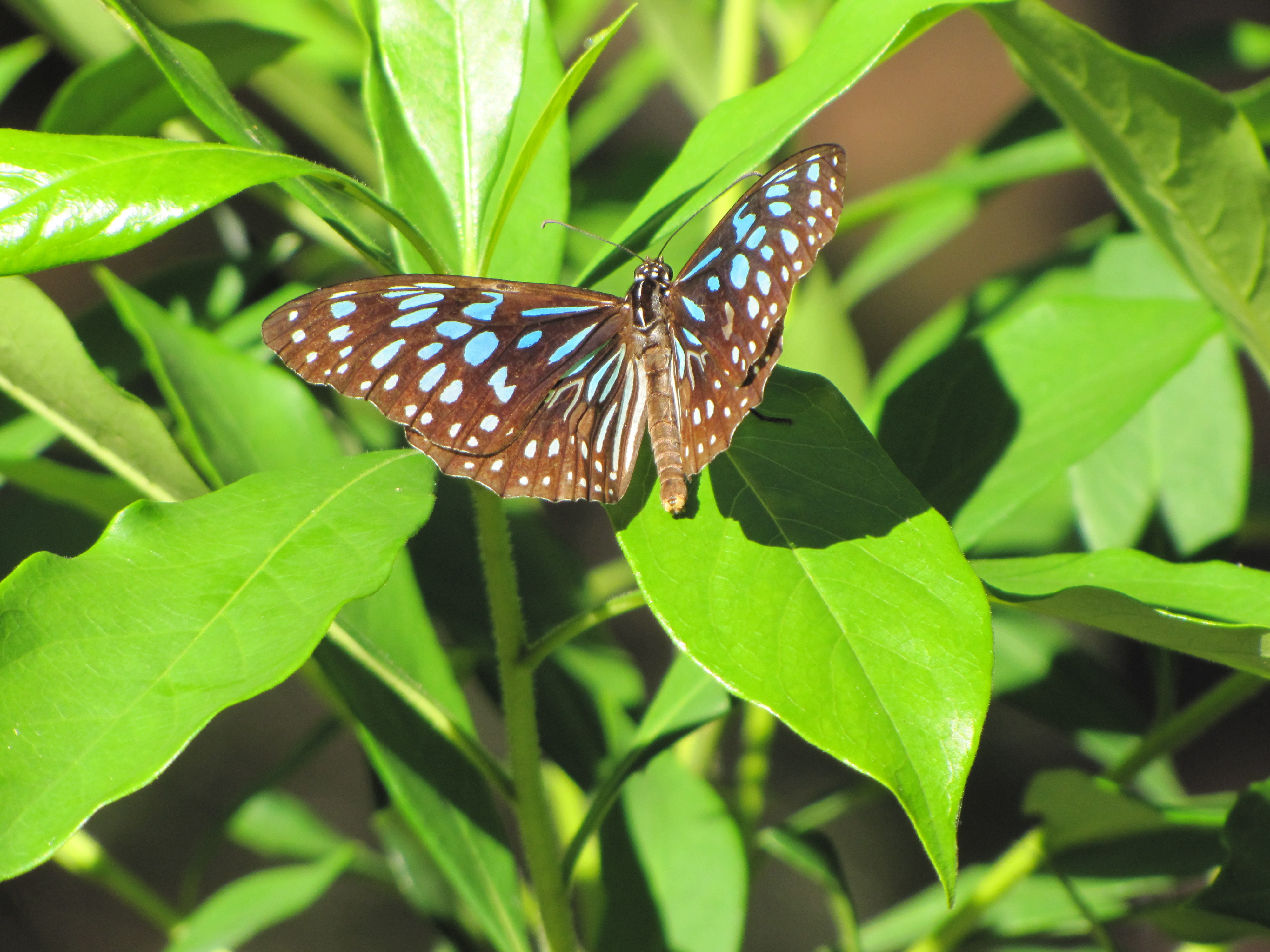
Blue Tiger - male - 17 Oct 10

Blue Tiger – male – on Parsonsia leaf

.

Identifying the sex of Blue Tiger Tirumala hamata butterflies is more difficult. It took a chance comment from Helen Schwencke, Earthling Enterprises, to make me even think to look for a way to identify males vs females. I had sent Helen a picture of a Blue Tiger in the winter sunlight. Helen emailed back commenting that the “male” butterfly would be collecting alkaloids from the Parsonsia leaf to make him more attractive to females.
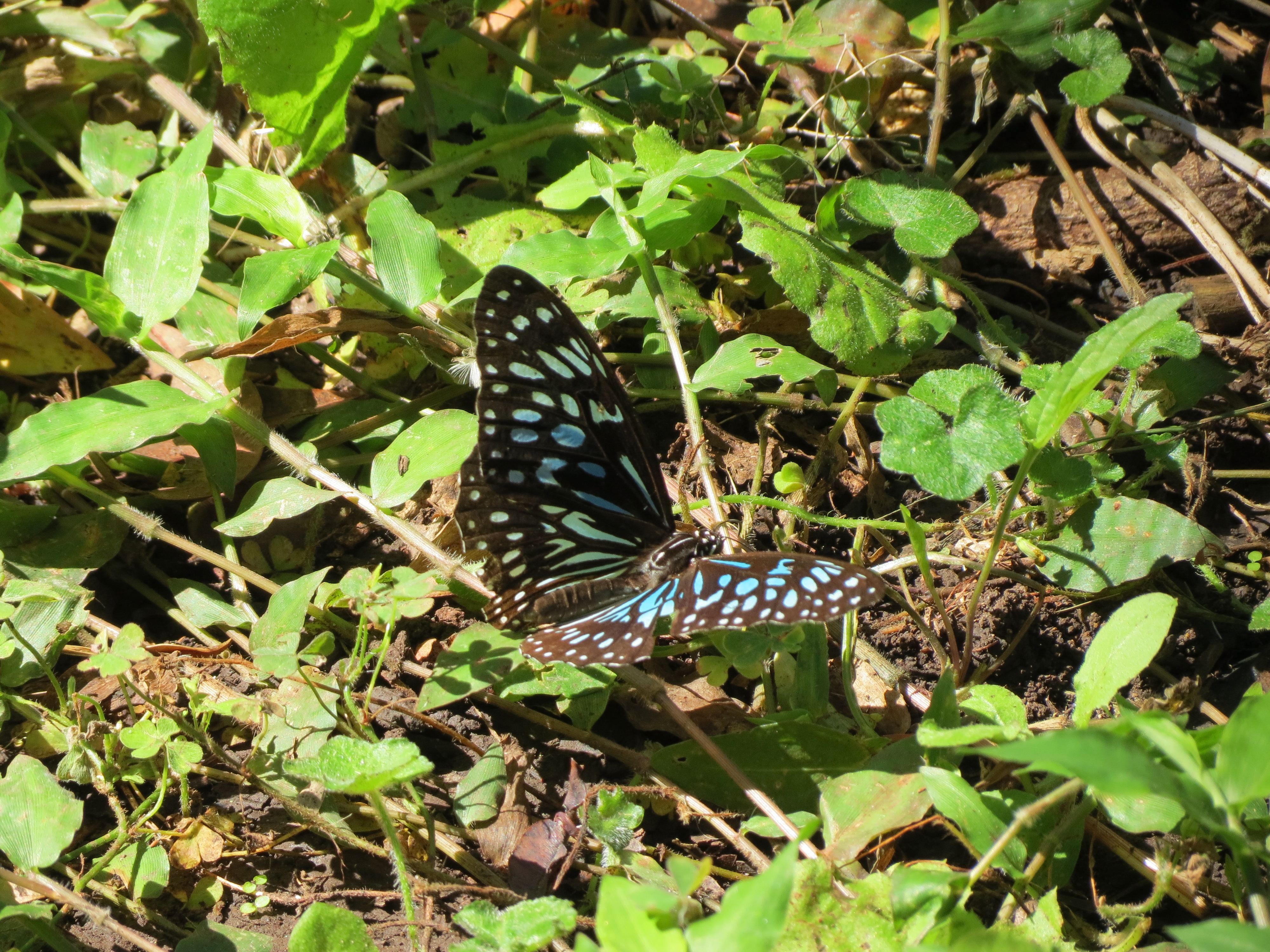
Blue Tiger - female - 24 Aug 2013

Blue Tiger – female

Female Blue Tigers have a very similar patten of colours on their wings. When I asked how Helen identified a male butterfly just from a photo, she introduced me to butterfly “sex brands” which can be found on a number of butterfly species including Blue Tigers and Common Crows.

.

.
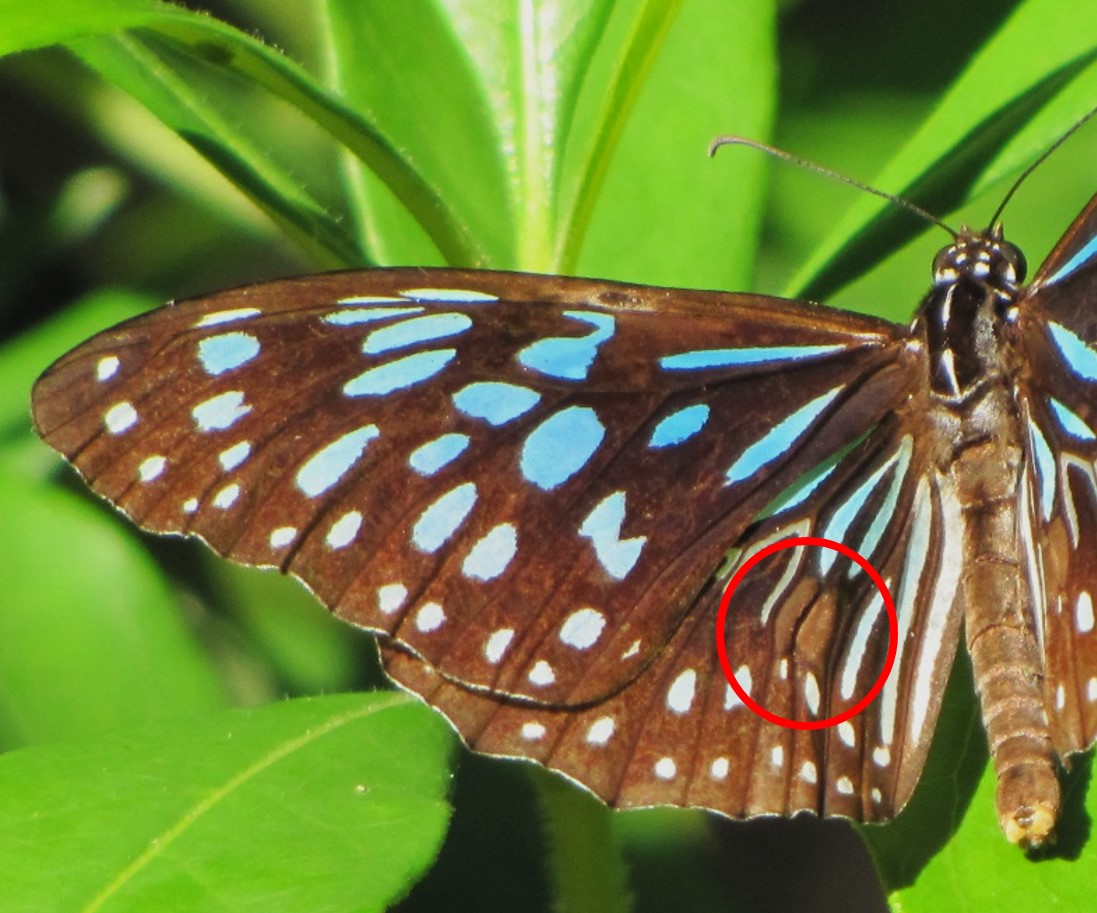
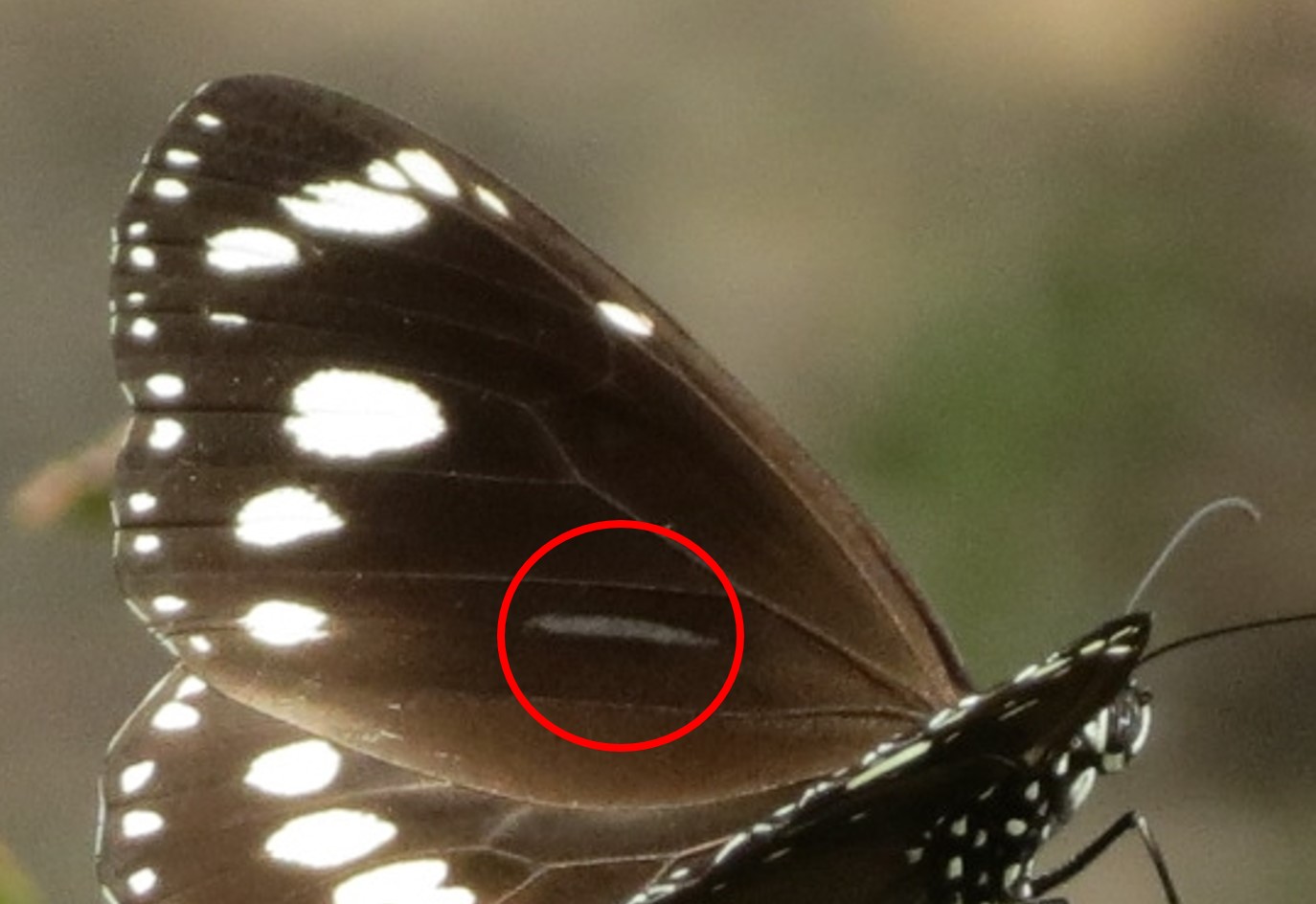
Blue Tiger sex brand

Blue Tiger male sex brands circled

.

.

The Blue Tiger males have distinctive sex brands on the hind wing.

.

.

.

.

.

.
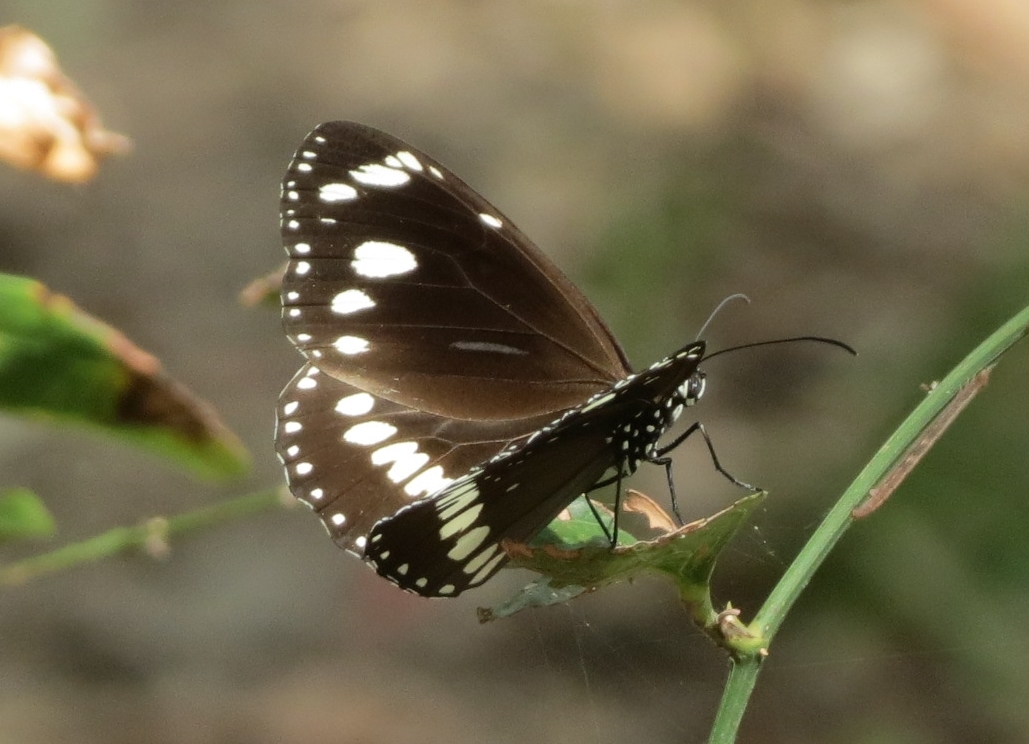
Common Crow - male - 10 Feb 2014 - on barbed wire vine

Common Crow – male.

.

Common Crow - male - sex brand

Common Crow – male – sex brand

The Common Crow Euploea core male has a sex brand on the fore wing.

Now that I am aware of sex brands I will have to ensure all my photographs of mountain butterflies include this information.


.
 

IMG_6877

Michael Fox – Fox Gully Bushcare

By: Michael Fox

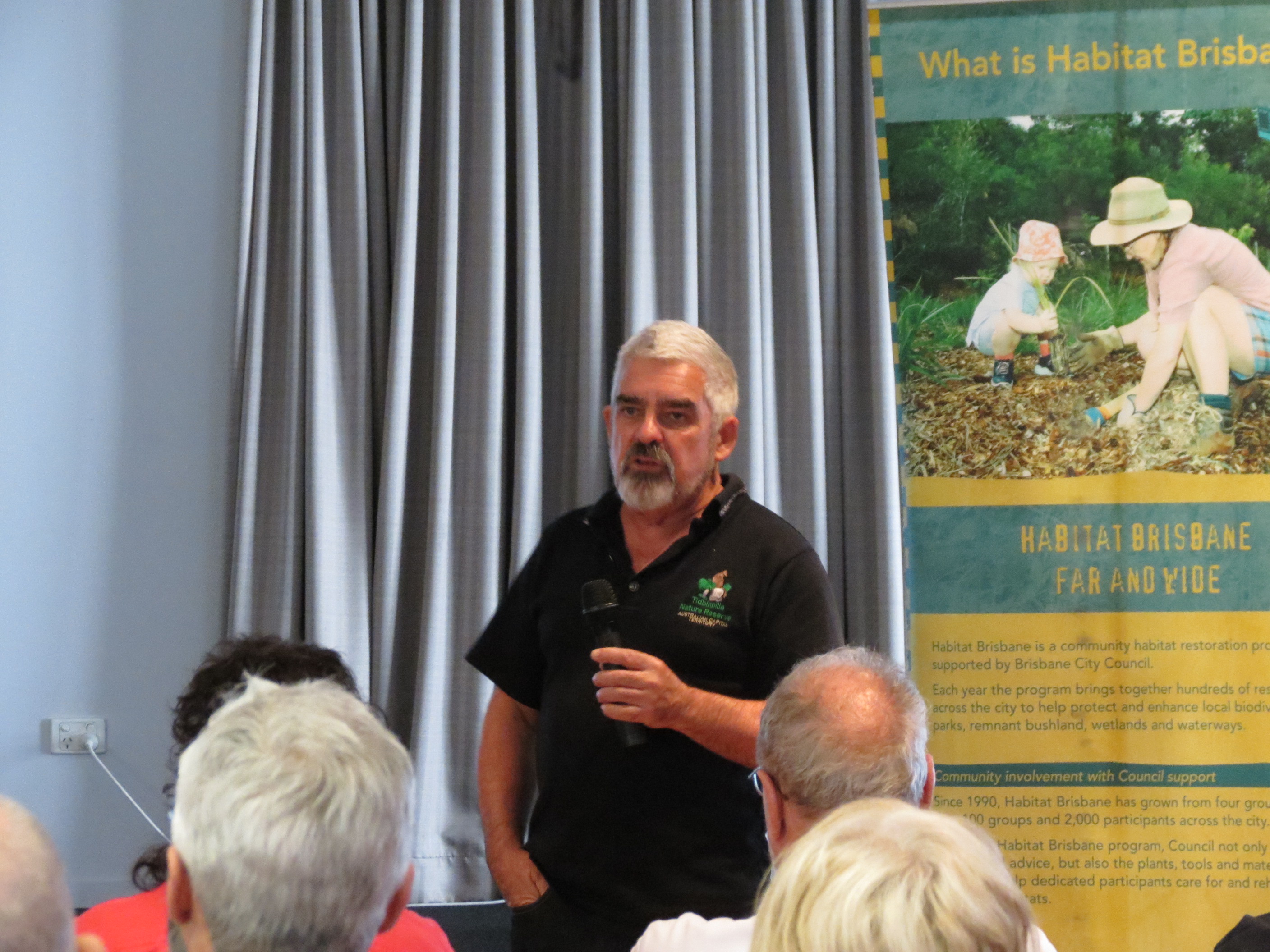
I was honoured, yesterday, to present to  about 40 bushcarers attending the Habitat Brisbane and Wildlife Conservation Partnerships, Orientation day.

Preparing my presentation was a very positive experience as I reviewed and reflected on what I have learned and what out bushcare teams have achieved.

Download a PDF version of presentation

I used a number of videos from our CD Flora & Fauna of Mt Gravatt Conservation Reserve and our website. A sample:

.

Asparagus Fern - 2 Prong Hoe - June 2014

Cyclone 2 Prong Hoe

By: Michael Fox

Garden escapees like Asparagus Fern Asparagus aethiopicus are one of three key threats to the long term future of the two hundred sixty-nine native plant species found in Mt Gravatt Conservation Reserve.

Weeding a 66ha reserve is a bit more of a challenge than managing the average backyard and the bushcare workforce are all volunteers. So getting the “right tool for the job” is critical for team productivity and workplace safety.

Asparagus Fern - 2 Prong - edges - June 2014

Waging war on weeds

The Cyclone 2 Prong Hoe is an excellent general purpose tool for restoration work:

  • light weight allows longer periods of continuous use; and
  • long handle reduces back strain by reducing bending and allows for safer access to weedy slopes.

Most important the 2 Prong Hoe is the ideal weapon for attacking the prickly difficult to tackle Asparagus Fern.

Asparagus Fern - seeds - close - 3 June 2014 - Alan Moore

Major source of re-infection

The strong narrow prongs easily hook in under the crown of the plant allowing the whole root mat to be lifted out in one piece. For larger plants where to root mat for one plant can be cover more than one square metre use the hoe to lift the root mat around the edges to reduce the weight before lifting from the crown.

Remember to wear gloves when you attack this prickly weed. I like the Flex Tuff gloves which offer good protection while allow a good sense of touch.

Asparagus Fern is highly infectious with dozens of seeds that birds love so every plant removed is one less source of re-infection.

By: Michael Fox

As part of the continuing development of Mt Gravatt Environment Group, Laurie Deacon has taken on the role of President. I will continue to work closely with Laurie, continuing as Editor of Mt Gravatt Environment Group blog and Fox Gully Bushcare co-coordinator.

IMG_20140412_132834Over the past decade the team has, expanded restoration activities in seven sites surrounding the Mountain, strengthened relationships with community, university and school stakeholders, contributed to research of Mt Gravatt Conservation Reserve, increased use of the Reserve by community members and developed community education. Membership is strong and members have received local, state and international recognition of their work in Nature Conservation.

Laurie brings a wealth of experience with volunteer groups and environmental work ranging from membership of the management board of a national environmental NGO, protecting endangered Cassowaries in the Daintree, presenting at the UN Congress for Environmental Education: June 2013 in Marrakesh and working with turtles and the local Majestic Park Scout Group.

Laurie is currently taking our Pollinator Link initiative Queensland wide, gaining political support and showing the way with the Pollinator Link garden in Mt Gravatt State High School.

So how does the world create such an amazing person?


photo-2

Laurie was born at Tewantin and grew up on lake Doonela catching mud crabs and feeding pelicans. A family heritage based on  Maroochy River cane farming Grandparents  and Palmwoods orchards Grandparents. Laurie, went to  Nambour State schools doing Agriculture and Animal husbandry with the vision of a future as a vet.

Then changed direction with a Degree in Occupational Therapy specialising in the human species rather than other animal species. Laurie has provided Rehabilitation across a range of physical, paediatric and mental health patient/client groups; across Acute Hospital, Community Health & Tertiary Health Service Models.  Including a time working as Director of Occupational Therapy (OT) at Nambour General Hospital. Laurie’s roles have included designing and developing these services including research, development of standards, planning and implementing interventions and services.

20131123_125338

This broad OT therapy experience allowed allowed Laurie to appreciate the necessity and responsibilities of  providing a healthy natural environment in which humans can learn, grow and thrive. Her interest has always been in getting people to reach their potential for a healthy well balanced life …. doing things of real value! “It’s the people that make the difference but it’s the environment that makes the people.”   Scientific evidence supports the encouragement of  everyone to be active in their neighbourhood doing things they care about … and everyone has a special skill  that is needed to achieve a healthy local community.

As Laurie says: “I am involved in many ‘whole of landscape conservation programs’  as well as individual species programs. Estuaries full of fish and birds and wildlife corridors of any habitat through cities, farms, and bush …I love them, I see them. Biodiversity in all its glory is better than going to the Paris Louvre.

I started my interest  in community service with Save the Franklin Dam campaign at uni in 1982 and then later FIDO as a ‘formal’  socially active community person.

I have seen that folk need to have a one off visceral experience with nature or a ‘over period of time relationship with nature’ before they will care and value it. So getting your feet wet in creeks and looking deep into the eyes of a koala up close and personal is vital for our people to really come alive.”

(l-r) Len Kann, Michael Fox, Laurie Deacon

(l-r) Len Kann, Michael Fox, Laurie Deacon

By: Michael Fox

I joined our President – Laurie Deacon and Len Kann at Mt Gravatt Bowls Club on Saturday to celebrate Queensland Day and join Ian Walker MP, Cr Krista Adams and other community members acknowledging some of the special volunteers who keep our sports teams operating or provide  support for the most vulnerable people in our community.

Southside Sport & Community Club every year provide generous support for community groups with the Community Grants Scheme. Mt Gravatt Environment Group has received a grant that will allow us to purchase specialised equipment for our bush restoration teams. We now have seven teams restoring bushland sites around the mountain and building a Pollinator Link garden at Mt Gravatt SHS.

Southside’s generous support has already allowed us to purchase a chipper for recycling weed trees and GoPro camera used to monitor nesting boxes installed at Fox Gully Bushcare site.


Griffith Mates Team

Griffith Mates Team

By: Michael Fox

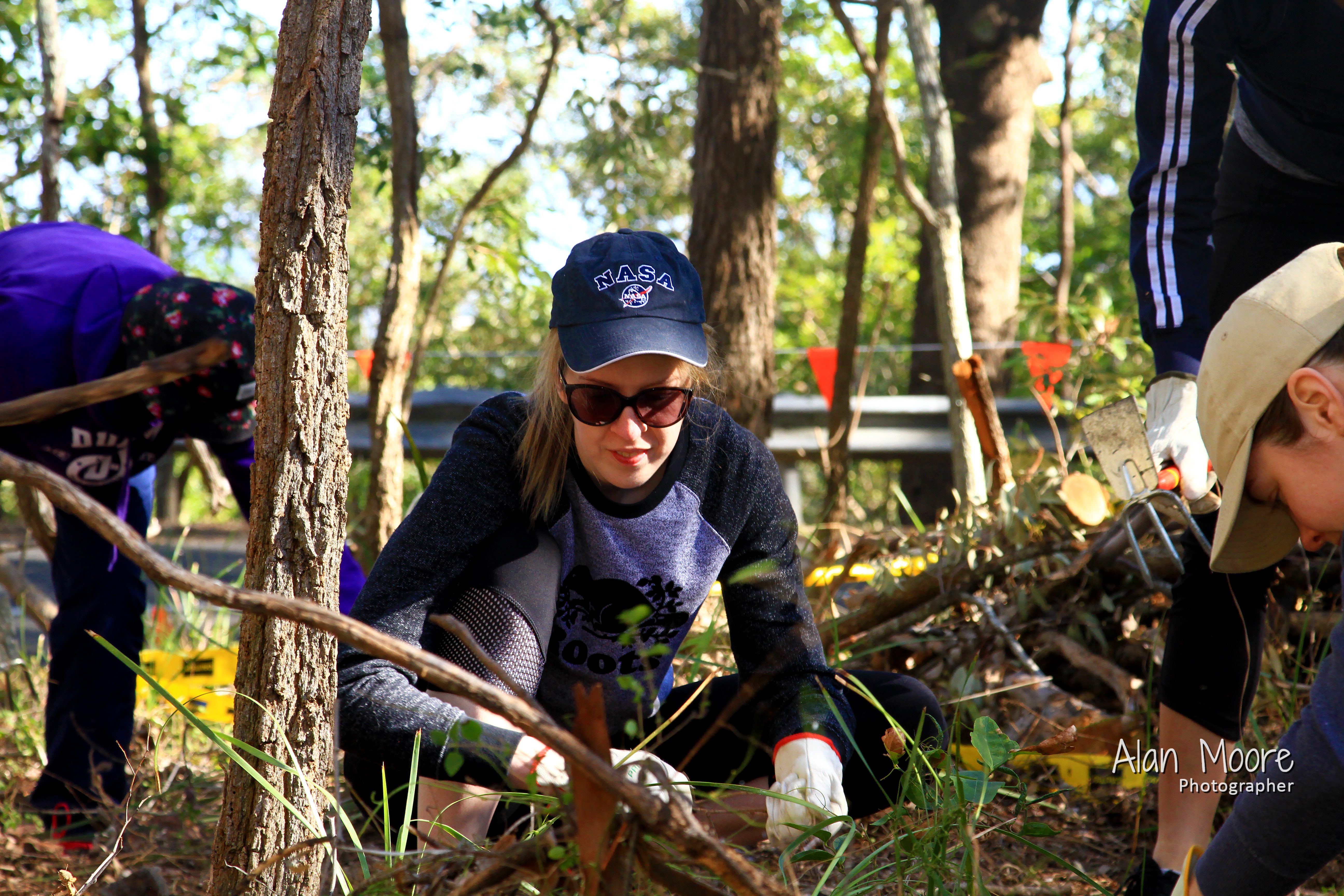
A beautiful autumn Saturday morning and Griffith Mates – Sienna, Ben, Lily, Abraham and Larissa joined Roger and myself at Fox Gully Bushcare site. The team removed another large area of Fishbone/Sword Fern Nephrolepis cordifolia and installed logs on the slope to create a safe work space and control erosion.

When the team from FWR Group joined our Wednesday Bushcare in September 2010 to start clearing, the Fishbone Fern covered an area larger than the average Brisbane house block – approximately 1,000 square metres. By the time the FWR team returned six months later, in March 2011, natural regeneration had already restored a good coverage of native grasses like Ottochloa gracillima Graceful Grass. This Living Mulch of native grasses controlled erosion, suppressed weed regrowth, retained moisture and provided food for caterpillars of the Brown and Orange-streaked Ringlet butterflies.

Ben reaching Glider box with GoPro camera

Ben reaching Glider box with GoPro camera

By the time the Griffith Mates team finished another huge area had been cleared and stabilised with logs. Restoration work on the Fishbone infested areas of Zone 8 is now almost complete and with further help from Griffith Mates we expect to finish the weed clearing this year allowing nature to take over with the natural regeneration of local grasses, herbs, ferns and vines.

To finish the morning I showed the team how we check nest boxes installed to provide substitute nest hollows for birds and gliders.

We found the Squirrel Glider family in two boxes and the female Brushtail Possum is still living in the Kookaburra box. She was quite curious about the camera, reaching up to sniff the lens. It is a particular pleasure to share this wildlife experience with young people from places like Hong Kong.


Removing Chinese Elm with Treepopper

Removing Chinese Elm with Tree Popper

By: Michael Fox

Marshal and I tackled the Chinese Elm Celtis sinensis infestation in Fox Gully Bushcare this morning. Mature Chinese Elms can reach 20 metres in backyard gardens.

A Tree Popper is the ideal tool for this job allowing us to remove all but six larger Elms without using poison. The largest we removed with the Popper as about twice my height with an extensive spreading root system.

In total we removed 40 Chinese Elms, about 30 Umbrella Trees Schefflera actinophylla, dozens of Micky Mouse Plants Ochna serrulata, Camphor Laurels Cinnamomum camphora, Small Leaf Privet Ligustrum sinense and Indian Hawthorne Rhaphiolepis indica.

Chinese Elm with extensive root system

Chinese Elm with extensive root system

The Tree Popper is perfect for use in safely and easily removing these woody weeds in bush restoration sites. The jaws of the Popper clamp around the trunk and the long handle provides leverage to pull the weed roots and all. The Popper is particularly useful for tackling the deep-rooted Micky Mouse Plant.

Using Cyclone 2-Prong Hoe we also removed two garbage bags of Asparagus Fern Asparagus aethiopicus and Climbing Asparagus Fern Asparagus plumosus. The long handle and sharp prongs of the 2-Prong Hoe reach past the prickly leaves and the prongs get right under the crown of the plant allowing the complete weed mat to be removed quickly and easily.


Source of infection - mature Umbrella Tree

Source of infection – mature Umbrella Tree

By: Michael Fox

After inspecting Fox Gully Bushcare site Zone 10, I yesterday removed 53 small and 6 large mature Umbrella Trees Schefflera actinophylla. A similar infestation in Zone 11 will be removed this week. I also removed a number of Camphor Laurel Cinnamomum camphora and Chinese Elm Celtis sinensis trees, as well as, Creeping Lantana Lantana montevidenses. These environmental weeds are all spread by seeds being eaten by birds and other animals.

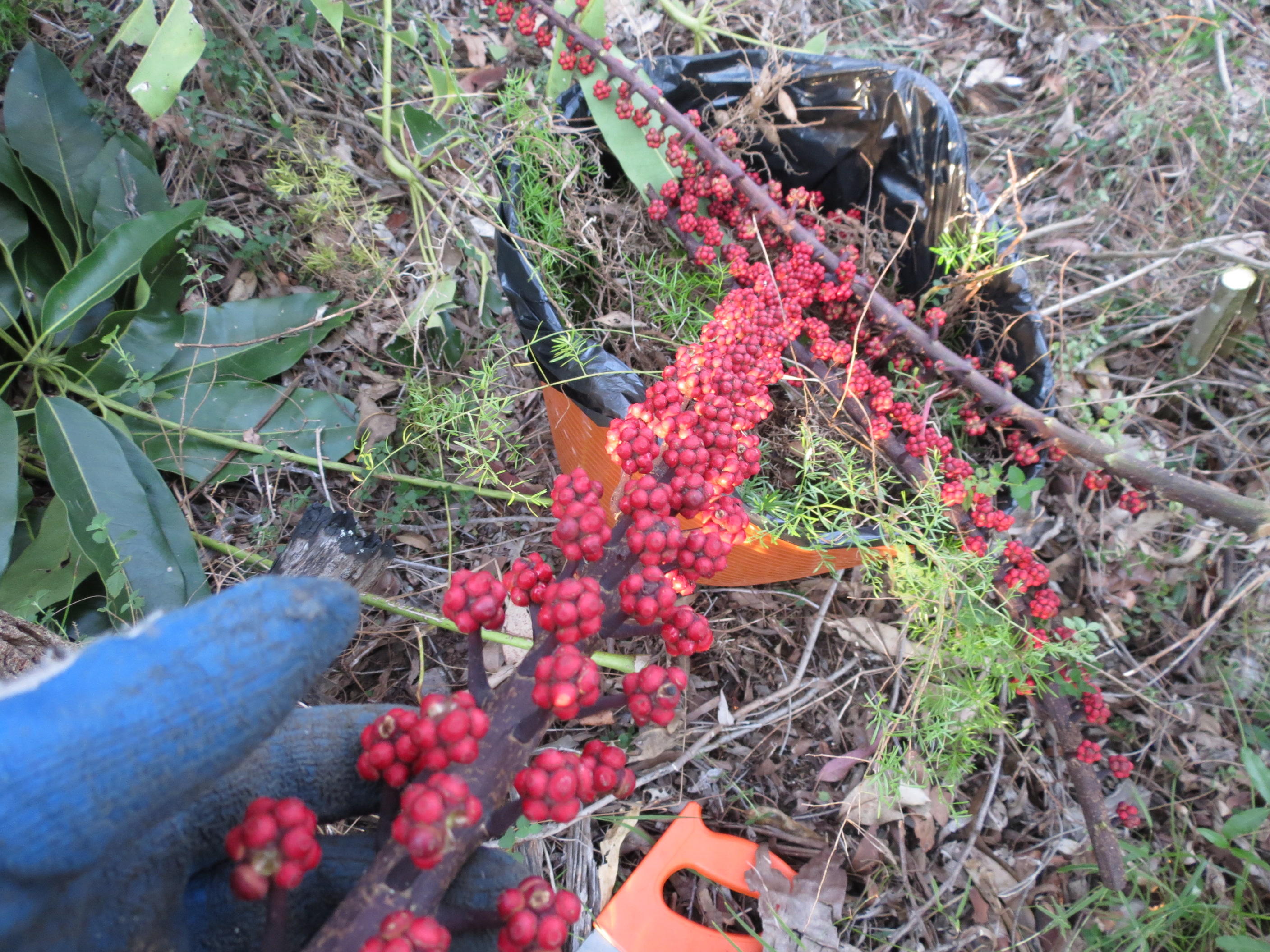
Umbrella Trees, from North Queensland, produce a large number of seeds which are spread from backyards to bushland or other backyards when eaten by birds. The cluster of over fifty small trees in a limited area shows how quickly these environmental weeds can spread and impact on the native plant species or invade a neighbour’s backyard. Seeds from the large trees were bagged for disposal offsite to reduce the risk of re-infection.

Umbrella Tree seeds

Umbrella Tree seeds

Weeds are one of the three key threats to the long term bio-diversity of Mt Gravatt Conservation Reserve. Most weed infections are caused by seeds spread by birds or wind, or result from dumping of garden waste including grass clippings in the bush. One of the most frustrating parts of our bush restoration work is dealing with restored areas re-infected with seeds dispersed from urban backyards.

You can support the efforts of Habitat Brisbane


Cluster of young Umbrella Trees

Cluster of young Umbrella Trees

Bushcare groups across the city by removing the sources of infection from your backyard.

  • Umbrella Trees Schefflera actinophylla
  • Camphor Laurel Cinnamomum camphora
  • Chinese Elm Celtis sinensis
  • Creeping Lantana Lantana montevidenses


By: Michael Fox

Spider web - 29 March 2014

Wolf Spider web

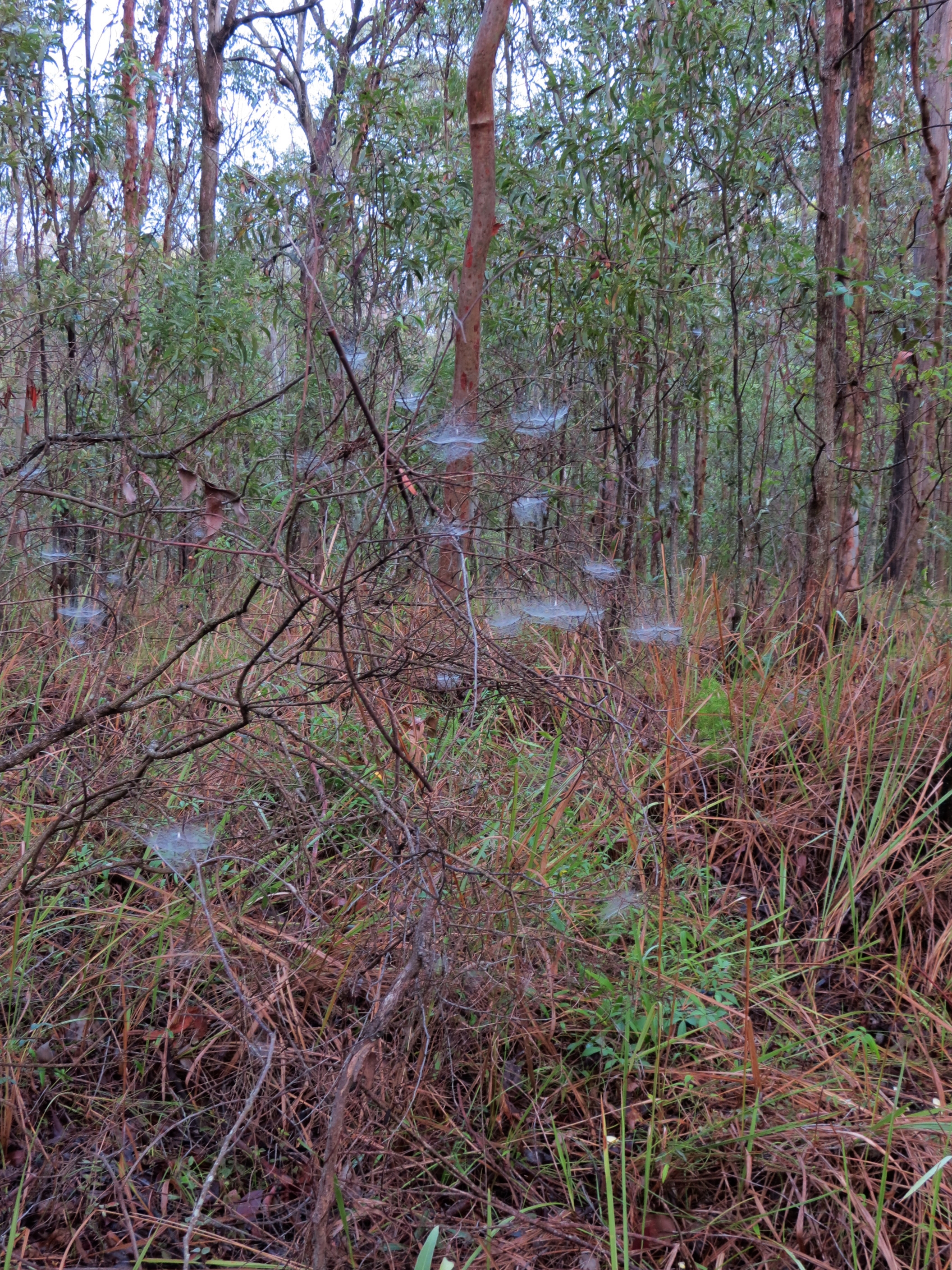
I think I have solved the puzzle of the strange muslin like spider webs on the ground last week.

Julie-Anne suggested wolf spiders so I have been searching for these fearsome hunters among the leaf litter.

.

.

.

.

.

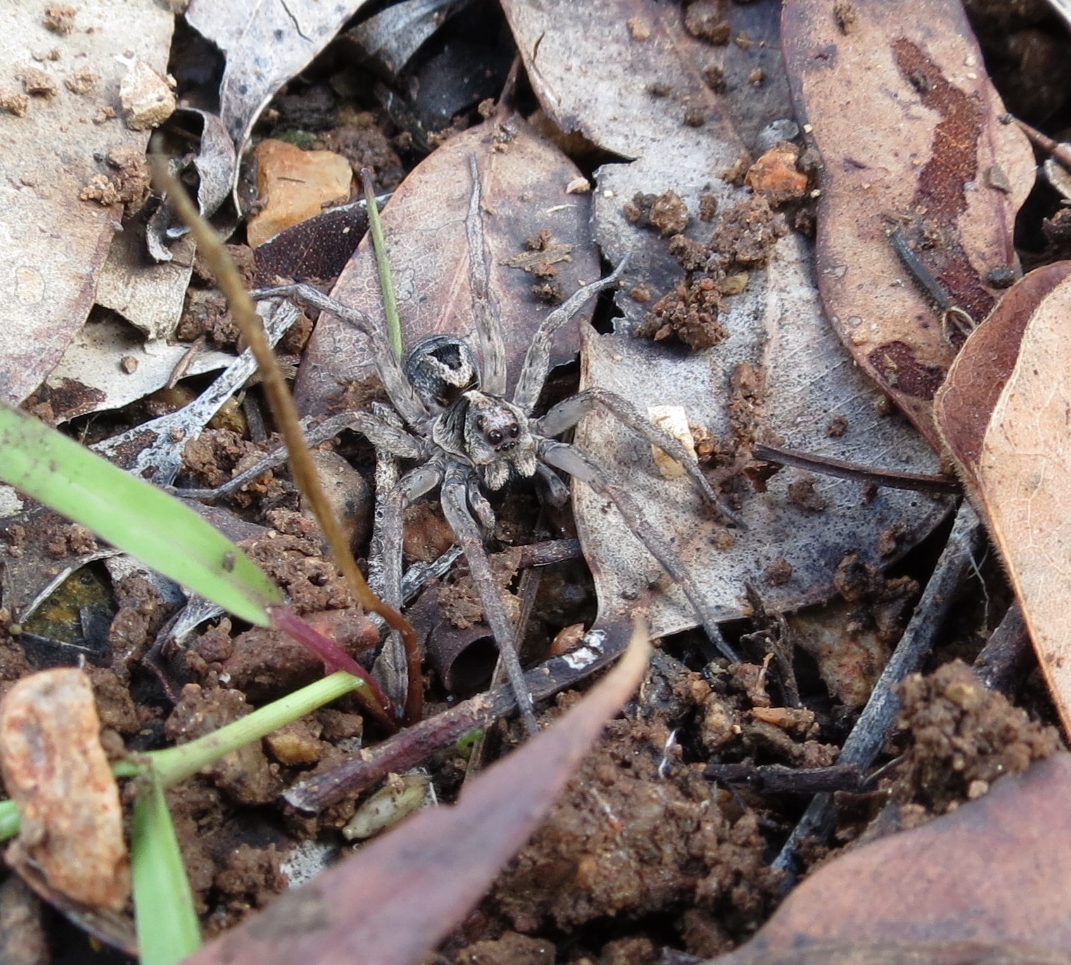
Dark Wolf Spider - 31 March 2014

Dark Wolf Spider

.

I found this this Dark Wolf Spider Lycosa obscuroides morning. These spiders look fearsome but they are small with a body length of approximately 10mm so they would fit the hole in the web I photographed.

.

.

.

Dark Wolf Spider - front - 31 March 2014

Fearsome features – eight eyes

.

.

.

.

.

Wolf spiders hunt among the leaf litter for crickets and lizards. They have also been reported as feeding on Cane Toads. I assume it is the larger species that hunt Cane Toads however it is certainly nice to think some Australian species are fighting back.

Wolf spiders have a distinctive pattern of eight eyes with one row of four small eyes at the front with two large eyes above and another two large mounted on the side of its head.

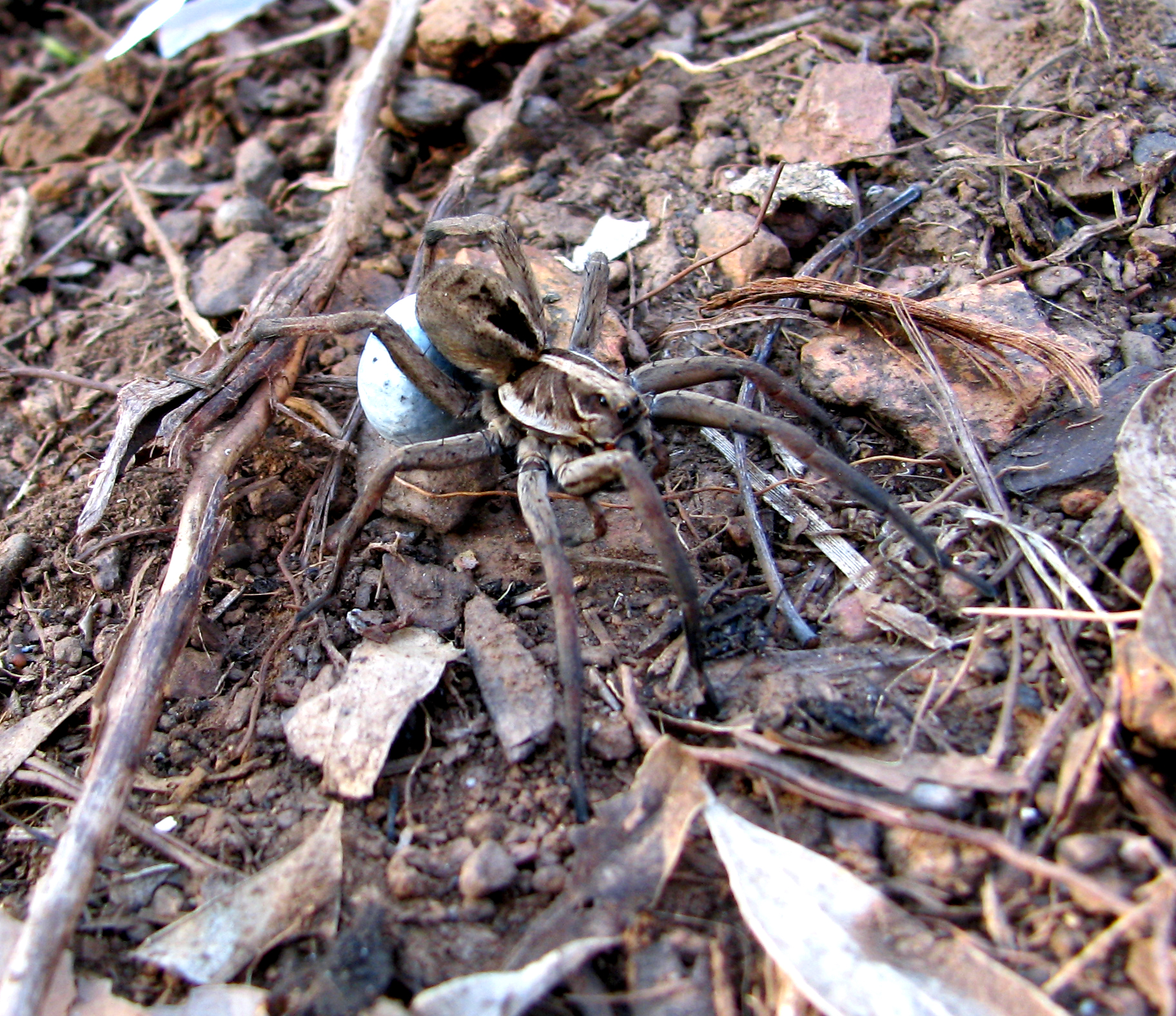
lycosa - with egg sac - Sept08

Female Dark Wolf Spider with egg sac

.

Another interesting characteristic of wolf spiders is the females carrying their egg sac with them. Once the eggs hatch she carries her young on her back. I photographed this female in 2008 and I had forgotten how small these fearsome creatures are.


IMG_6358a

Tent spider webs covered in morning dew Photo: J. Fox

By: Michael Fox

I have spent thousands of hours walking and working in Mt Gravatt Conservation Reserve and I am still seeing things I have never noticed before. The misty mornings air this morning showed dozens of small tent spider webs in communities in the shrubs. The moisture on the webs this morning made for great photography. When I just checked this afternoon these webs are all but invisible.

d

d

d

d

Dome Tent Spider - 29 March 2014

Dome Tent Spider web Photo: J. Fox

d

d

d

I could not find any spiders to photograph however these webs are almost certainly made by Dome Tent Spiders Cyrtophora moluccensis which I have found in the Reserve. This larger web shows the amazing structure with a collection of something, possibly eggs, at the peak.

d

d

d

Dome Tent Spider - close - 29 March 2014

Close up of Tent Spider Web Photo: J. Fox

d

d

d

d

A close up photo shows the neat matrix of thread and the tension cables holding the shape just like a circus bigtop.

d

d

d

d

d

Cyrtophora moluccensis - Jan10

Dome Tent Spider – Photo: M. Fox

d

d

d

Dome Tent Spider I photographed at Mt Gravatt Campus in 2010.

d

Garden Orb Weaver web - 29 March 2014

Garden Orb Weaver web Photo: J. Fox

d

 d

d

d

d

d

We also found this huge beautifully made web, of the Garden Orb Weaver Eriophora transmarina, stretched out between two trees. Another Garden Orb web had stretched right across the track earlier in the week but without the dew droplets it was virtually invisible and didn’t survive as I walked straight into it.

d

d

Gardern Orb Weaver - 29 March 2014

Garden Orb Weaver Photo: M.Fox

d

d

d

d

d

Garden Orb Weaver females build these huge webs as night and usually consume them again in the morning before hiding in a retreat of leaves and twigs. So it was a bit of a surprise to not only find the web still in place this afternoon but also find the owner sitting in the centre. The web had also caught dozens of flying ants during the day.

d

Spider web - 29 March 2014

Mysterious web on ground Photo: M. Fox

d

d

d

d

Another first for me is finding a large number of these webs on the ground which must be there everyday but only noticeable with the heavy dew. These webs are very fine with multiple layers which makes them look like very fine muslin fabric.

d

d

d

Spider web - hole - 29 March 2014

Entry hole in web Photo: M. Fox

d

d

d

I was not able to get a photo of the tiny spiders living in these webs as they quickly disappeared into the hole built into each web.

Any ideas on what spider species makes these fascinating webs?


« Previous PageNext Page »