Photography


Echidna - front - Demmers - 24 June 2013

Echidna – Tachyglossus aculeatus

By: Michael Fox

“My wife says this Echidna was near our house in Mt Gravatt this morning. I am very jealous!! Apparently it bumbled around for ages.” Pieter emailed me today with these amazing photos.

I am jealous as well. I am yet to see an Echidna in the Reserve even though I have walked every track and spent hundreds of hours in bushcare and taking photos.

Early mornings and late afternoon is the time to look for Echidnas as they tend to avoid the hotter times of day.


Echidna - Demmers - 24 June 2013

Termite exterminator at work

If you spot an Echidna you can report the sighting to Wildlife Queensland’s Echidna Watch program which is gathering information on the distribution and abundance of Echidnas.

These unique animals are not just another interesting native animal they are are also valuable urban pest controllers protecting our homes by eating termites as well as ants and, apparently, dirt.

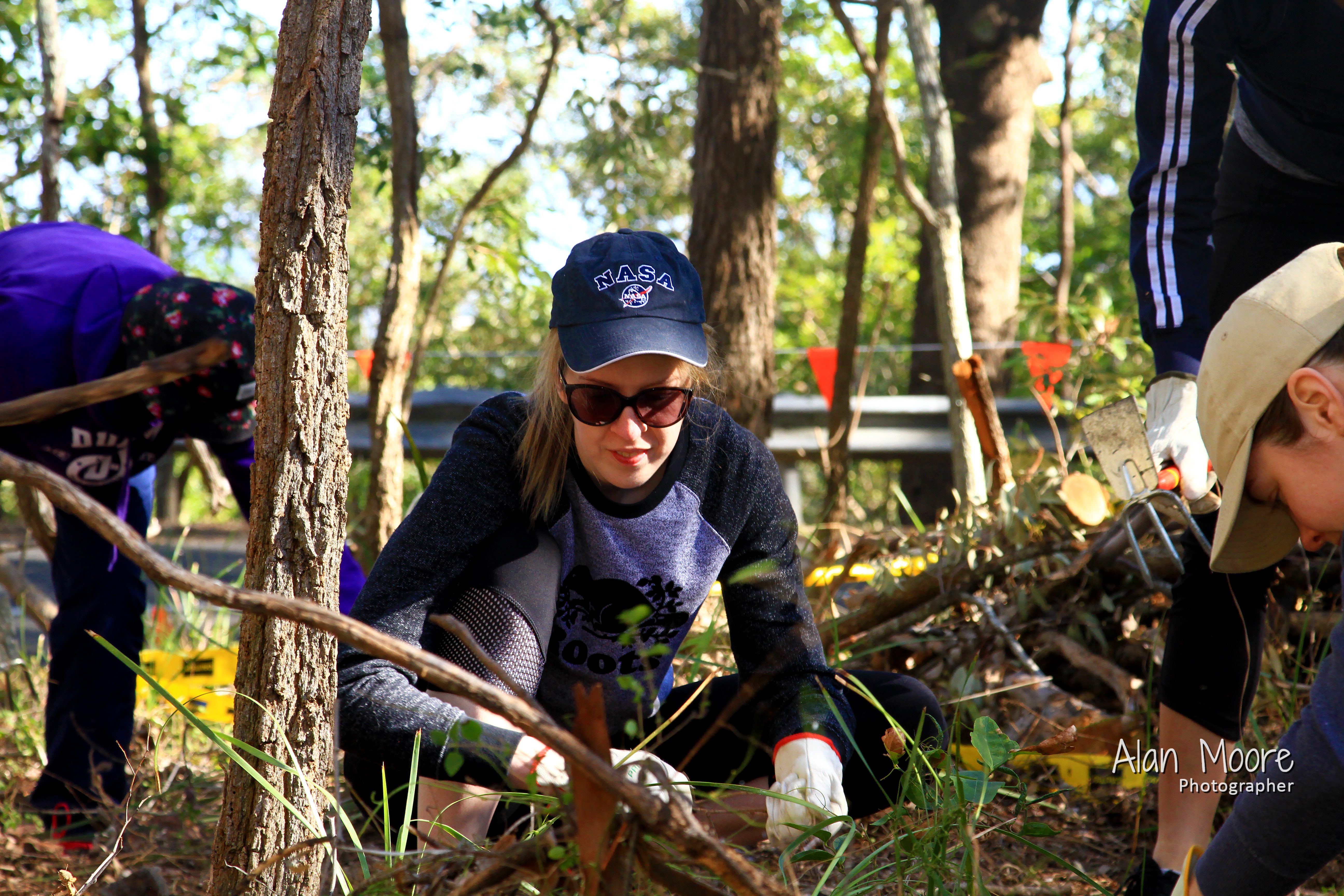
Restoration work at our Bushcare sites is improving habitat. However all mountain neighbours can help by not dumping garden waste/lawn clippings in the bushland and not removing fallen timber for firewood.

j

img137

Click on image to enlarge for reading

d

The 2011 report Mimosa Creek Precinct – Flora, Fauna and Fauna Corridor Assessment,  by Biodiversity Assessment & Management Pty Ltd, identified a lack of fallen timber as a key weakness in the mountain habitat. Fallen logs create ideal food sources for Echidnas as they attract termites and ants. These logs also provide protection as Echidnas avoid extremes in temperature by sheltering in hollow logs, rock crevices and vegetation.

Local Council Ranger, Craig Hardie, has recently distributed letters to properties adjoining the Reserve to highlight the importance of not removing vegetation including fallen logs.

We are lucky to have such a unique habitat right in at our backdoor. I often have people ask amazed: “Koalas are just roaming free?” Therefore, as a community, we have a responsibility to protect this valuable asset by:

  • not dumping rubbish or garden waste; and
  • keeping dog’s on leash within the Reserve.

Like Koalas, the main threats to Echidnas are cars and dogs. If you are walking in the Reserve please keep your dog on a leash.

IMG_3882

Prof. Ian O’Connor with development team

By: Michael Fox

The invitation said business casual, however, it is a university …

… and these green leaves gathered around Vice Chancellor Prof. Ian O’Connor are justly proud to launch this year’s must have App – GrowsAtGriffith.

Primary and secondary teachers, kindergartens, bushcare group members, local government teams, libraries, anyone interested in Australian native plants should download this App today. It’s free but looks and works like a million dollars.

IMG_3886

Discussing Slender Hyacinth Orchid photos with Mark and Catherine

Mt Gravatt Environment Group provided many of the 500 plus photos on this first release of this excellent tool. So I was proud to represent our group at this launch and finally meet the two key drivers of this project – Assoc Prof Catherine Pickering, Griffith School of Environment and post-graduate student Mark Ballantyne.

a

a

a

img057

By: Sharyn Kann

One of the local orchids my bushwalking friend has been telling me about, is the Pterostylus nutans or Nodding Greenhood, a terrestrial orchid I have been keen to see.  Finally, a phone call confirmed that they are out in flower and he was happy to take Len and me on a walk to see them.

Leaves

Nodding Greenhood Orchid leaves

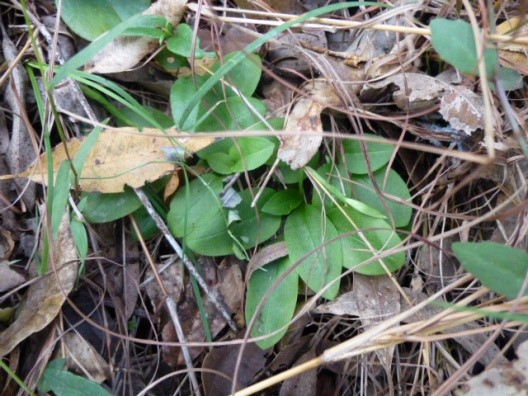
On the high side of the track of the bush reserve was a cluster of several Nodding Greenhoods, some in flower and some yet to flower.  Had I seen them without the flower, I would never have picked the plant as an orchid.

 The first photo here shows the plant itself without a flower spike.  The leaves grow flat to the ground in a basal rosette and the plant has a small underground tuber.  To my untrained eye, they looked like a lot of the other plants growing on the forest floor.

Nodding Orchid

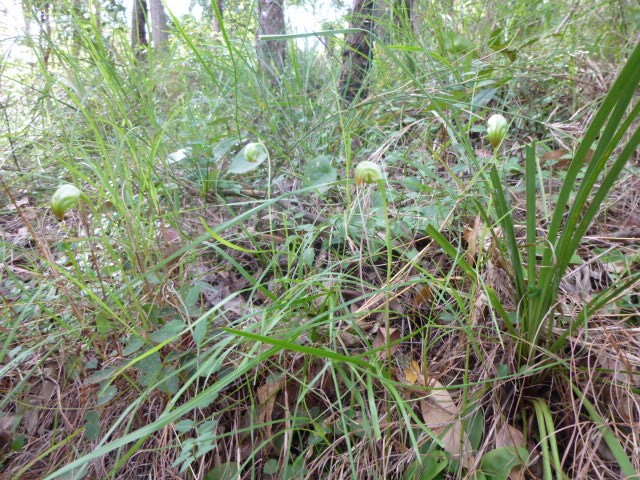
Cluster of orchids in flower

This next photo shows most of the cluster of Greenhoods with their long stem and single blossom.  As you can see, they don’t actually stand out much, blending quite well into the background.

Of the 78 or so named species found in Australia, New Zealand, New Caledonia and Papua, the Nodding Greenhood is probably the most common, occurring in all states, except maybe, Western Australia.

130502_0016_02

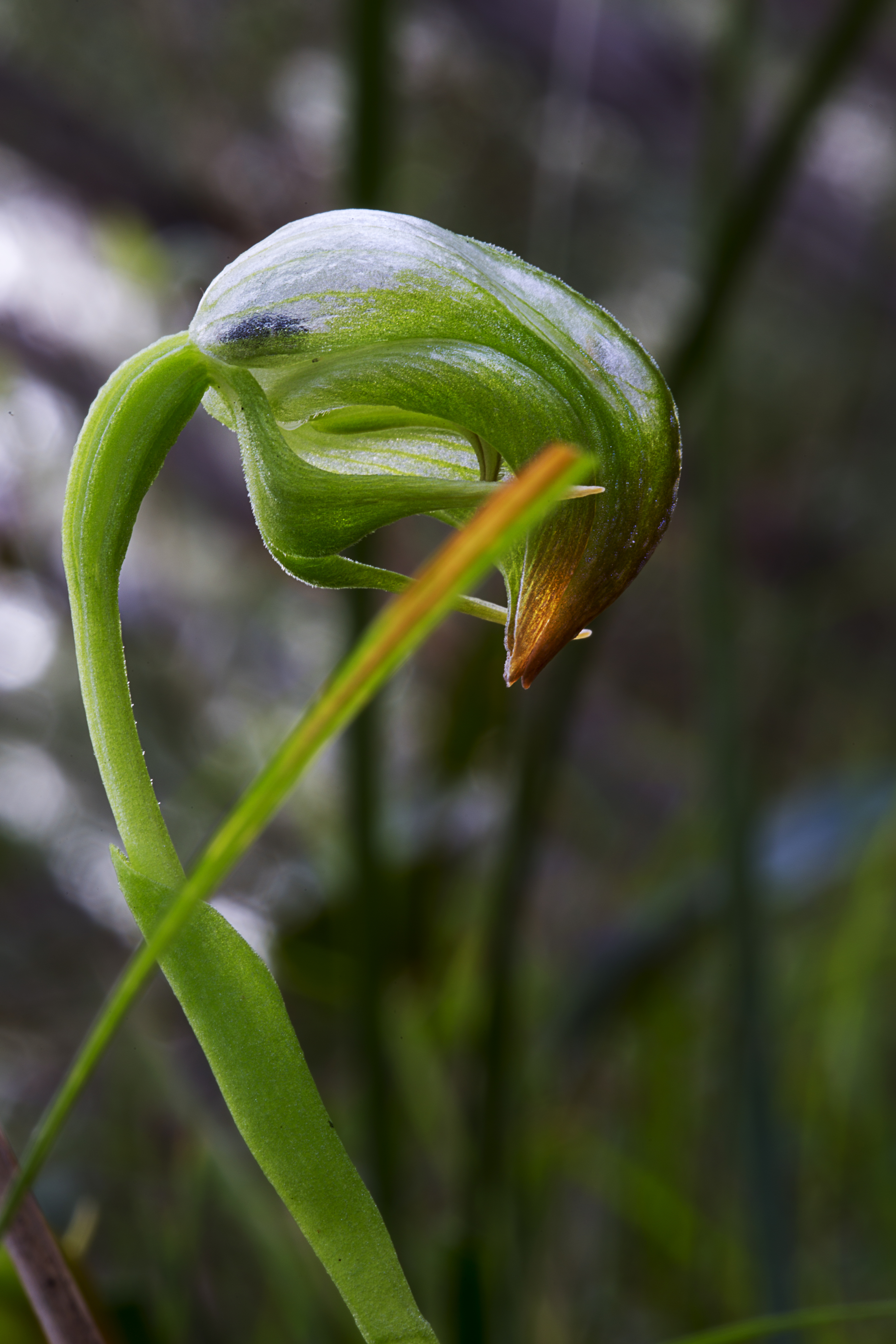
Nodding Greenhood flower with insect inside

Greenhoods are generally fertilised by insects who land on the strap like hinge of the labellum.  They are then flung into the hood with their only escape being the up the tube formed by the closed labellum and the column wings.  At the outlet, the insect has to press past the pollinia where their sticky viscid disc adheres to its back.  As it repeats this process with other greenhoods, the sticky disc on its back is pressed against the stigma beneath the column wings of the next plant and more pollinia is attached as it proceeds out of the flower.

The hood is a soft semi-transparent apple green colour, and insects inside it can easily be seen.

Photos by Sharyn Kann and Alan Moore, with information taken from Australian Native Orchids in Colour by Leo Cady & E R /Rotherham.

Brisbane Orchid Society meet regularly at the refurbished Progress Hall, Upper Mt Gravatt – 4th Monday month at 7:45Pm.

By: Michael Fox


View in Google Maps

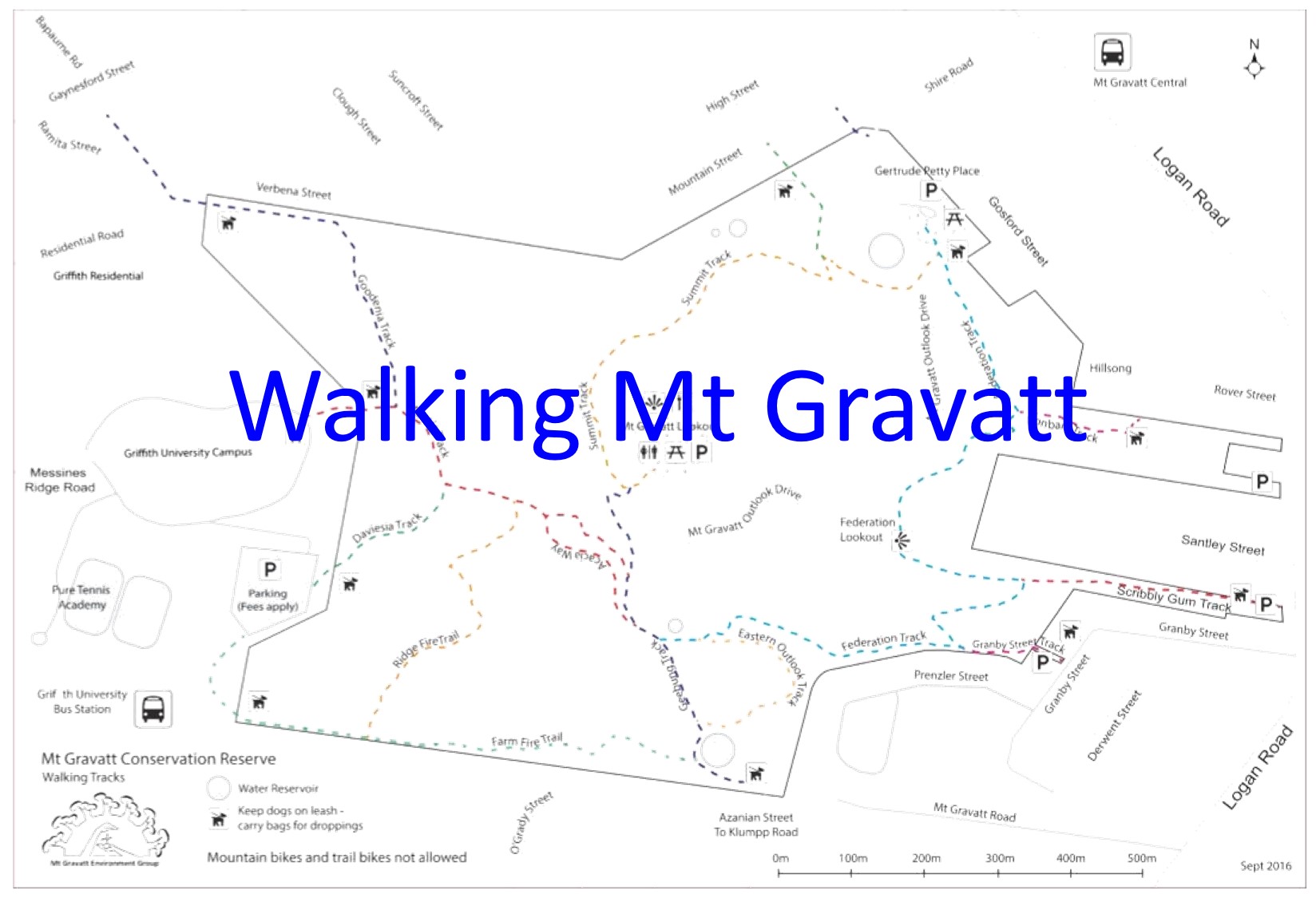
The first stage of the Self-guided Walks Project is now complete thanks to Jon and Karla Henry who have made GPS maps of the existing walking tracks.

We are now researching the information about the tracks – trees, birds, geology, local history – European and Indigenous, stories about the mountain.

What would you like to know about the Reserve or what would you like to share to others?

Do you have a story to share about a walk with your children or perhaps a memory of a visit with a grandparent?

Do you have some pictures to share?

Email your ideas, stories and links to pictures to megoutlook@gmail.com

OLYMPUS DIGITAL CAMERA

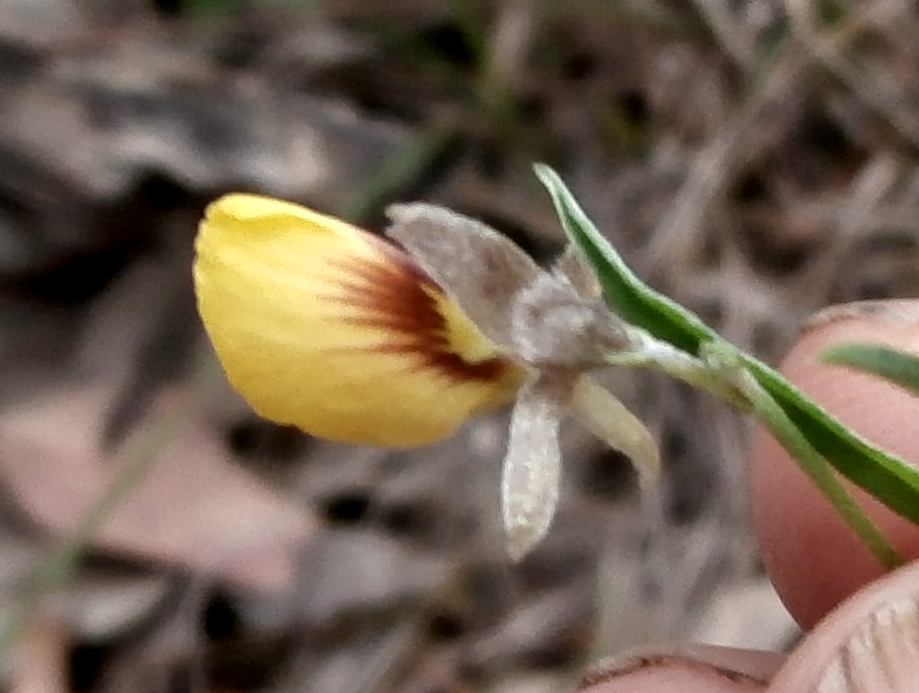
Isotropis filicaulis

By: Michael Fox

The rain is frustrating when we have to cancel Bushcare events, however, it is also bringing the forest alive with three new plant species added in one week.

Susan Jones has found that removal of weeds and restoration at the Gertrude Petty Place Bushcare site has allowed natural regeneration of a number of plant species including this rare/threatened Fabaceae species Isotropis filicaulis.

OLYMPUS DIGITAL CAMERA

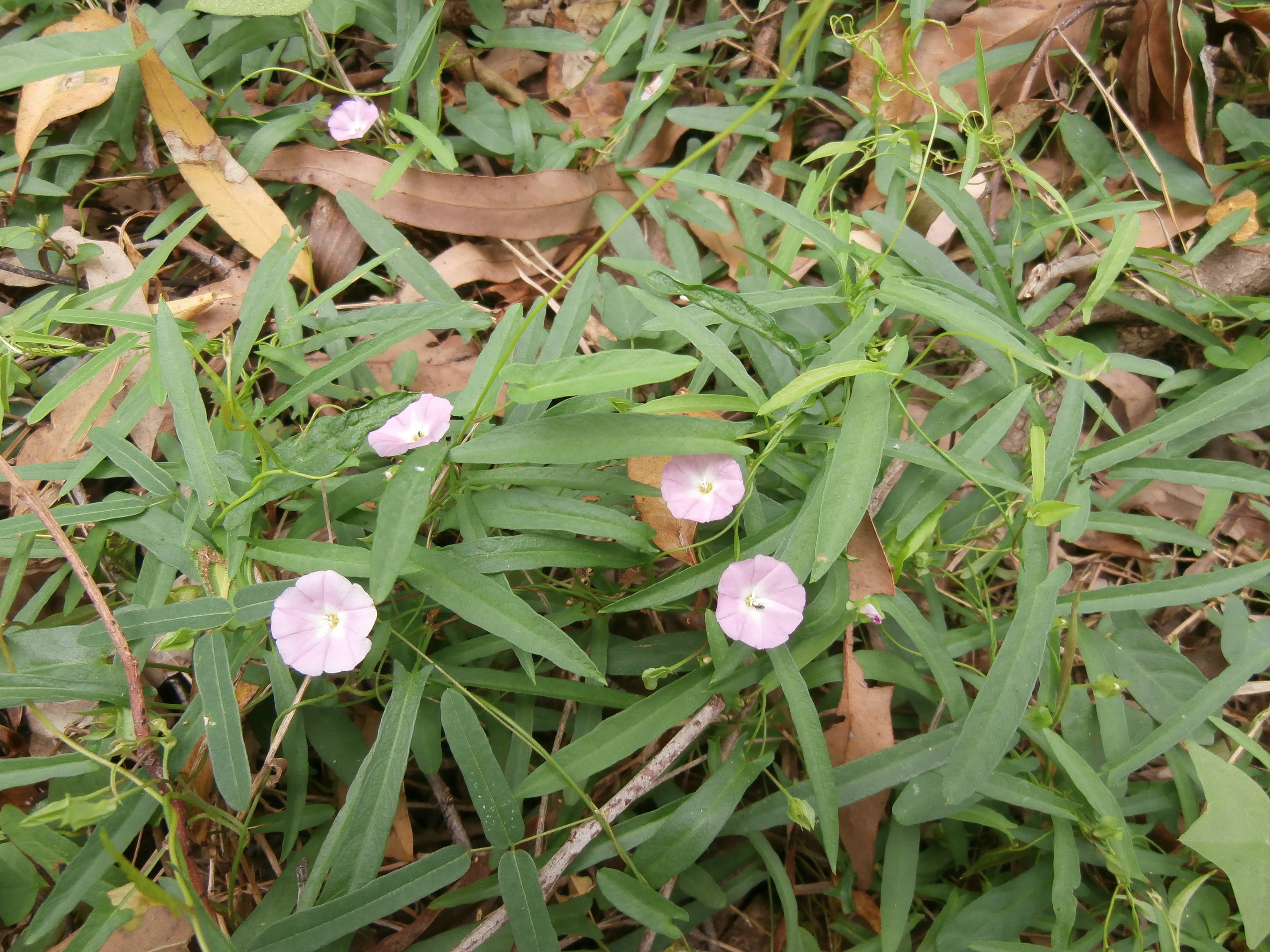
Polymeria calycina

d

Swamp Bindweed Polymeria calycina a delicate creeper with pink flowers.

d

d

d

d

d

Plantago debilis - 7 Apr 2013

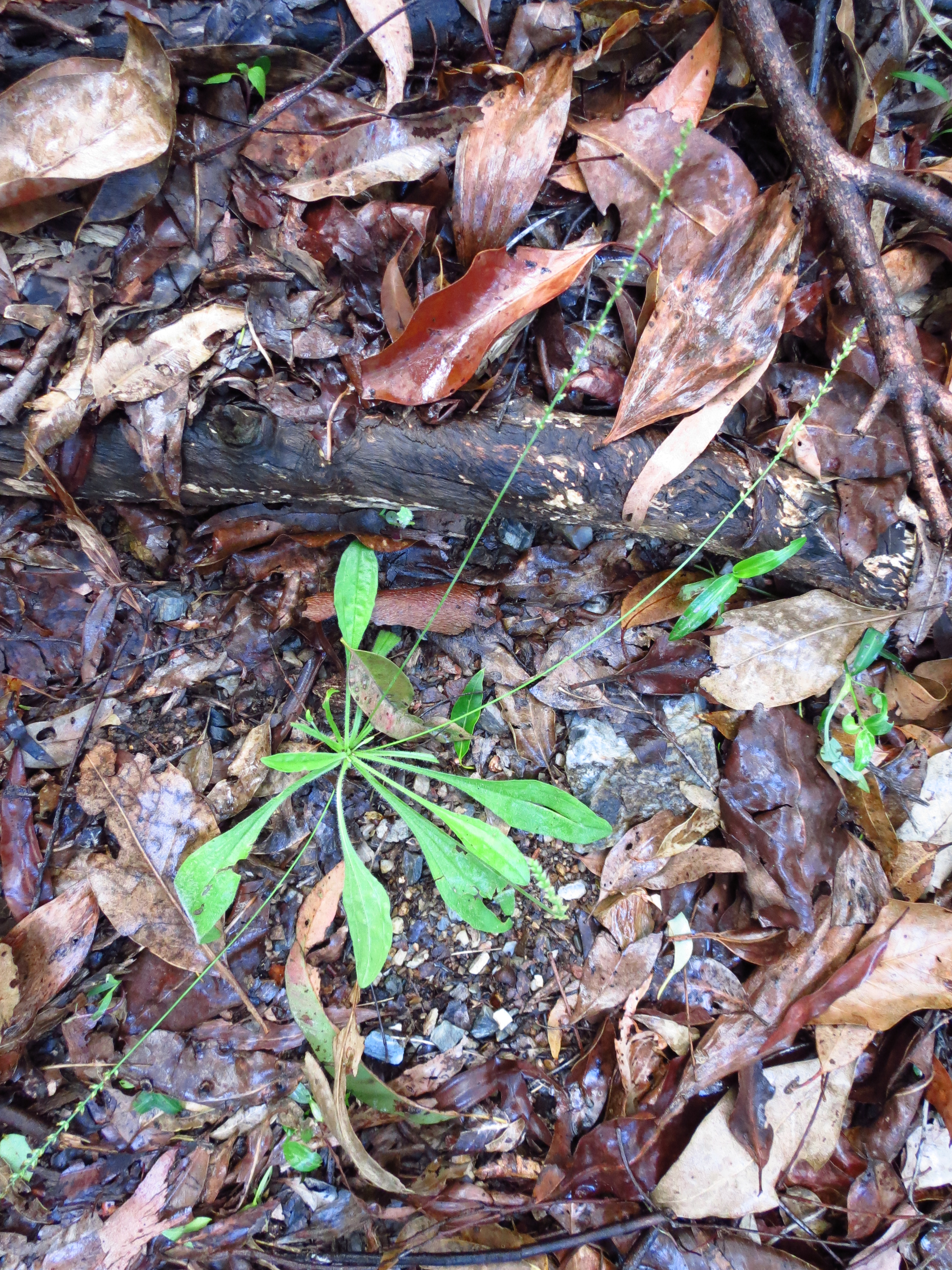
Plantago debilis

d

d

Plantago debilis a small native herb that provides seeds for native birds. Addition of these three new species means we now have 268 native plant species in Mt Gravatt Conservation Reserve.

Thanks to Ann Moran, Jaeger-Moran Environmental, for help with identification.

a

a

On the other side of the mountain Alan Moore got this amazing close-up of an Eastern Bearded Dragon with its beard on display in Fox Gully Bushcare.

a

Bearded Dragon - Mar 2013 - Alan Moore

Bearded Dragon Pogona barbata – Photo: Alan Moore

By: Michael Fox

IMG_1117

Rainbow Lorikeet at home in Fox Gully

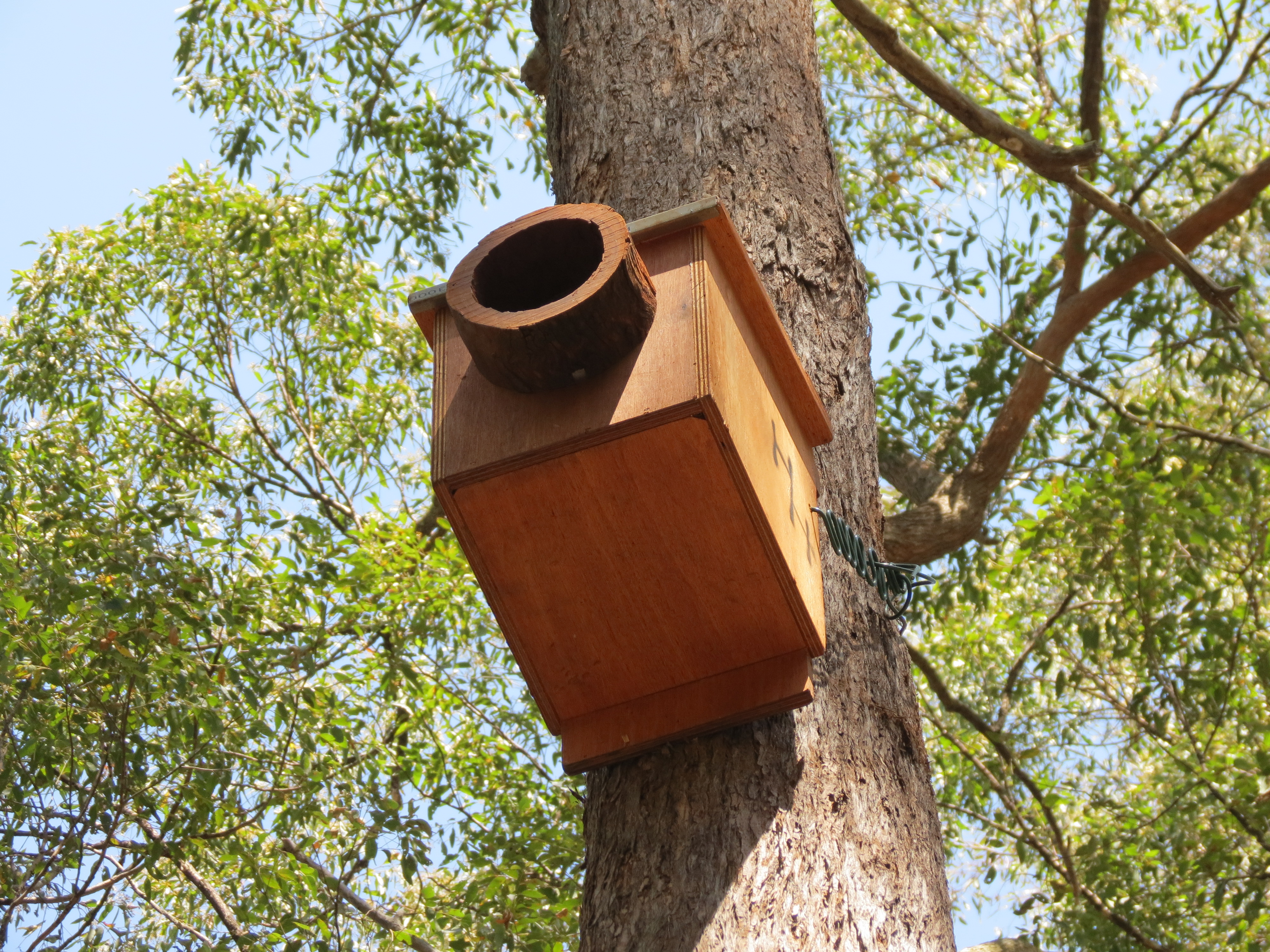
A pair of Rainbow Lorikeets Trichoglossus haematodus are the first to successfully hatch a family in our Fox Gully nest-boxes. Two chicks have been hatched out and seem to be doing ok although the parents are rarely home.

At least we think they are Rainbow chicks. This particular nest box was originally occupied by a pair of Pale Headed Rosellas Platycercus eximius who laid three eggs before they were kicked out by the Rainbow couple.

Rainbow chicks - 7 Dec 12

Rainbow Lorikeets chicks or Pale-headed Rosella?

a

Given the increasingly blue colour of the chicks we are wondering if our Rainbows are raising a pair of Pale-headed Rosellas.

This nest box was made by Mt Gravatt Men’s Shed and our nest-box monitoring equipment is a GoPro camera on a 7 metre pole and connected by WiFi to an iPad on the ground. The equipment was purchased with a grant from Southside Sport and Community Club.

Laughing Kookaburra Dacelo novaeguineae

Laughing Kookaburra Dacelo novaeguineae

I also checked the new Hollow Log Home nest-boxes but no eggs or chicks in any yet. However, as I was walking back I saw this Kookaburra sitting in the entry to the owl box. Unfortunately I was carrying the monitoring equipment and was not quick enough to get a photo of him actually sitting in the owl box.

a

a

a

a

a

a

New tennents

New tenants – Photo: Alan Moore

a

a

Alan Moore also reported some hopeful news on the Pale-headed Rosellas. A pair seem to be very interested in one of the new Hollow Log nest-boxes.

IMG_1304

Magic of the Mountain at Mt Gravatt Library

By: Michael Fox

Next time you visit Mt Gravatt Library check out the photography of participants from this year’s Photography Workshop.

It is an honour to host this workshops with Alan Moore sharing his exprience of capturing the feeling of being in the bush and seeing the extraordinary results achieved by workshop participants. Alan refers to his workshop as “Magic of the Mountain – see it through other eyes” and participants photos demonstrate just how differntly people “see” exactly the same scene.

Feedback from participants has been very positive with individuals saying they are now using camera features they never tried before. Also our 2013 Photo Calendar displaying participants work has already sold out!


By: Michael Fox20121126_0016_03

Sometimes I see photos that just blow my mind and I have to visit to see it for myself. Something so special I have to speak out on its behalf.

I was recently asked to sign a petition “Port of Brisbane Pty Ltd: Request – Port of Brisbane – Save an iconic lake at Fisherman’s Island, QLD“. I am reluctant to sign petitions if I don’t know much about the issues involved. However, a colleague at B4C suggested I have a look at the photos on Facebook. I was hooked. I have never seen such a diversity of waterbirds all together in one place: Black Swans, Pelicans, Spoonbills, a diversity of ducks, Cormorants, etc. 20121126_0088_02
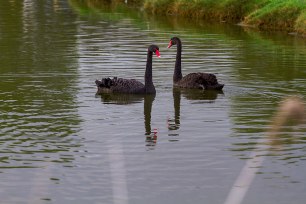
So my photographer neighbour and I visited last Monday morning – early because Alan tells me you get the best light for photography.  The Port of Brisbane Visitors Centre lake … whoops, I mean the lake beside the ex-Port of Brisbane Visitors Centre, is a haven of calm embeded in a 24/7 city of industrial activity. IMG_1247

While Alan took photos I puzzled over why anyone would close the amazing Visitor Centre and propose to bulldoze this amazing waterbird habitat that is thriving against all odds right in the middle of an industrial maze. The faded signs show that the Port of Brisbane was proud of this important habitat for migratory shorebirds and I still recall Brownie on 4KQ spruking the wonders for the Visitor Centre and the amazing environmental achievements of the Port of Brisbane.

Perhaps my memory was inaccurate so I did a bit of quick Google research and found that the Port of Brisbane Visitor’s Centre is described in Weekend Notes as:

“… set on a lakefront and is surrounded by wetlands and a migratory shorebird roosting area. As well as the interactive displays that describe the port and its operations which include imports and exports of goods, the building itself is spectacular to look at and mirrors its natural environment. The architecture has received industry commendations, including commendations for its sustainability efforts which include a design that incorporates generous amounts of natural light (which limits the need for artificial lighting) and the ability to use natural air for cooling purposes.

Over 15,000 migatory and resident shorebirds make their home at the Port of Brisbane including ibis, herons, pelicans and black swans and the port has developed a 12 hectare habitat for the birds. Birdwatchers can access the Shorebird Roost via the Port of Brisbane Visitor’s Centre. Many birds including black swans and if you’re lucky cygnets can be seen swimming in the lake that surrounds the visitor’s centre.” http://www.weekendnotes.com/port-of-brisbane-visitors-centre/ – 1 Dec 2012

The architecture received comendations – Australian Institute of Architects – Entered 2002Event Connect
Interestingly the Port of Brisbane Visitors Centre now seems to be the Port of Brisbane corporate office but visitors to Brisbane are offered wonderful views of “the lake”.
Apparently a significant tourist attraction for Brisbane.

“Venue Highlights

The Port of Brisbane Visitors Centre is located at the heart of Australia’s fastest-growing container port. Opened in 2001, the Centre sits on the shore of a four-hectare lake and boasts state-of-the-art conferencing facilities, including a 100-seat auditorium, meeting/function room and boardroom. Visitors can explore the Centre’s interpretative displays, take a port tour or dine in the Eco Café or On the Lake Restaurant.” http://www.eventconnect.com/display-venues/460/Port-of-Brisbane-Visitors-Centre.aspx

So still puzzled about why an award winning and seemingly popular Visitor Centre would closed and valuable migratory bird habitat bulldozed, I used Google Earth to try and understand what was going on.
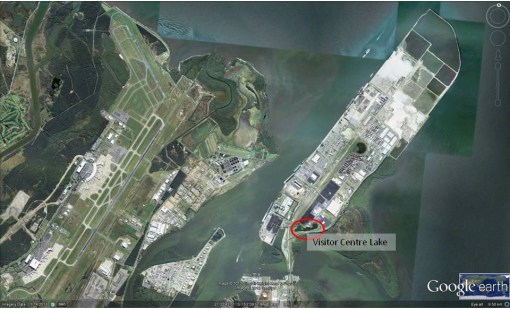
Visitor Centre Lake - Google Earth

Visitor Centre Lake – migratory bird habitat

By my estimation this valuable 5ha migratory bird habitat and popular tourist destination is about half of one percent of the total 770ha Port of Brisbane site.

So why is it so important to destroy this piece of wildlife habitat that has clung on despite the massive development surrounding?

While the Port of Brisbane development is clearly important for the Queensland it has already absorbed a large area of mangrove habitat. If you think the Port of Brisbane Corporation needs to be challenged on this issue please:

Just a note, if you plan to visit the lake expect to be challenged by security. Alan was asked what he was doing and told he was only allowed to take photos of the birds. A logical impossibility and a bit odd considering the detail I have just downloaded from Google Earth and Google Maps.

By: Michael Fox

Alan Moore, workshop leader 2012 Photography Workshop, has generously provided comment on results achieved by workshop participants 2012 Photography Workshop – Comments

Alan has also demonstrated the enhanced results that can be achieved with tools like Photoshop. The original and adjusted photos are presented side by side with Alan’s comments.

A selection of participants’ images of the forest is now available as our 2013 Photo Calendar. Upper Mt Gravatt Worldwide Online Printing has done an amazing job putting to together a high quality product.

Purchase of calendars will contribute to restoration of the unique Mt Gravatt Conservation Reserve.

Order your 2013 Photo Calendar today.

Participants’ work will also be on display at Mt Gravatt Library during December – January.

Mycena lampadis Luminous Mushroom

I had the pleasure, this week, of introducing our local state member – Phil Reeves MP, to one of the extraordinary and little known features of our unique mountain habitat – Luminous Mushrooms Mycena lampadis.

A lucky photograph, with a torch lighting a snail having a mushroom meal, also caught a group of mushrooms glowing in the dark. I don’t have an identification on snail yet however I will have a look at Semislugs – Family Helicorionidae – thanks to Helen Schwencke, Butterflies & Other Invertebrates Club.

Jon Kloske took some amazing photos like this amazing shot of mushrooms growing in a line on a rotting log over the track.

The mushrooms were first reported in January last year and at the time featured on 612ABC with Kelly Higgins-Devine.

Firefly Gully is one of the wildlife corridors identified in the 2011 Flora, Fauna and Fauna Corridor Assessment, and now being restored by property owners.

« Previous PageNext Page »