Pollinator Link


Click to view presentation

By: Michael Fox

The Pollinator Link concept was well received at the BCC Habitat Brisbane Citywide Meeting this week. This was an important test of feasibility as the audience included experienced BCC Habitat Offices with university qualifications in environmental science, Robert “Bob the Beeman” Luttrel and bushcare members who know the

on-ground reality of restoring our urban bushland habitats.

Backyards, parks and even unit block balconies represent habitat opportunities for our native flora and fauna. Examples include Garden for Wildlife Alice Springs, The Wildlife Trusts in UK and the National Wildlife Federation Garden for Wildlife in USA.

The Pollinator Link concept takes this a step further to focus on linking patches of bushland habitat in our urban environment.
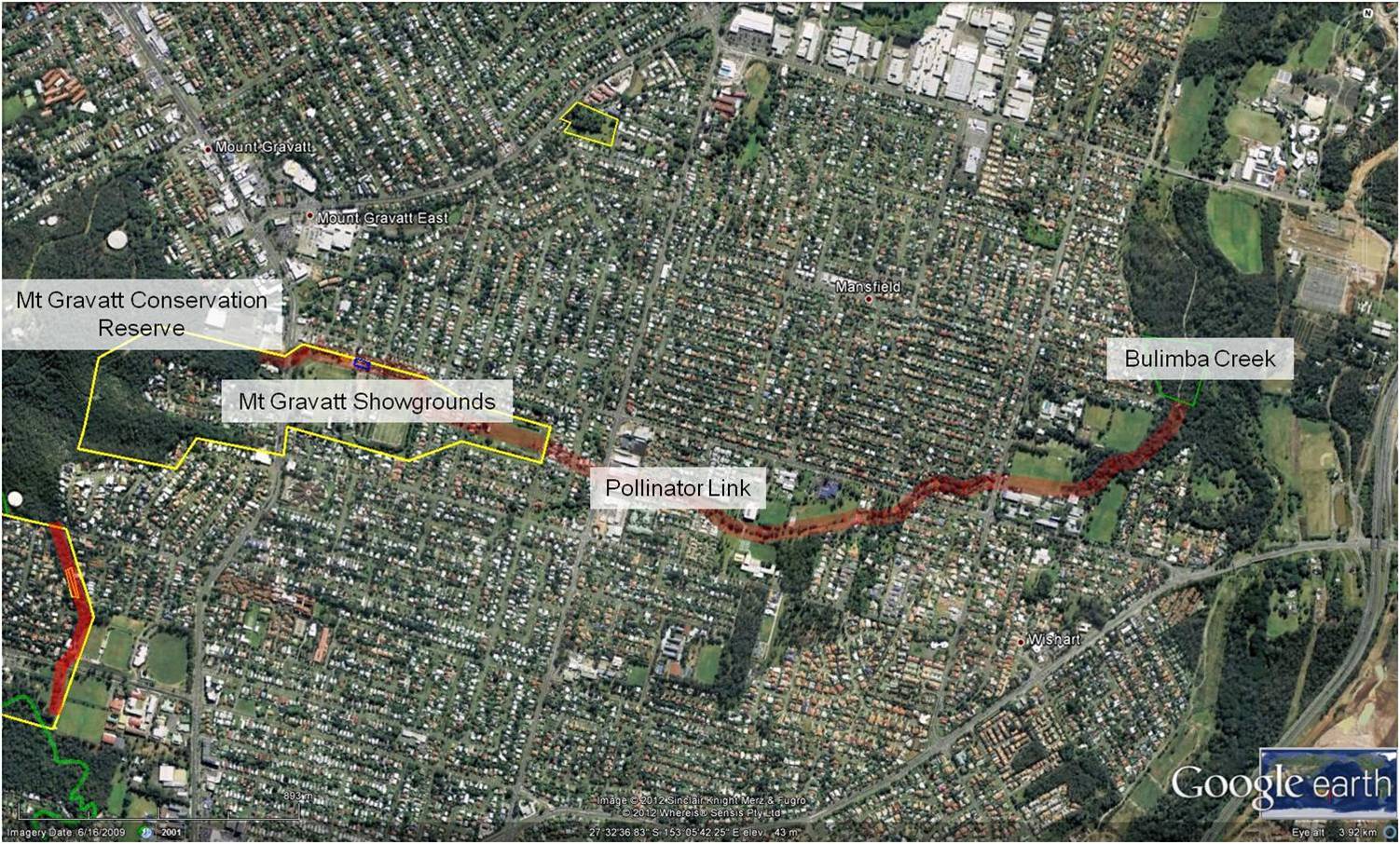
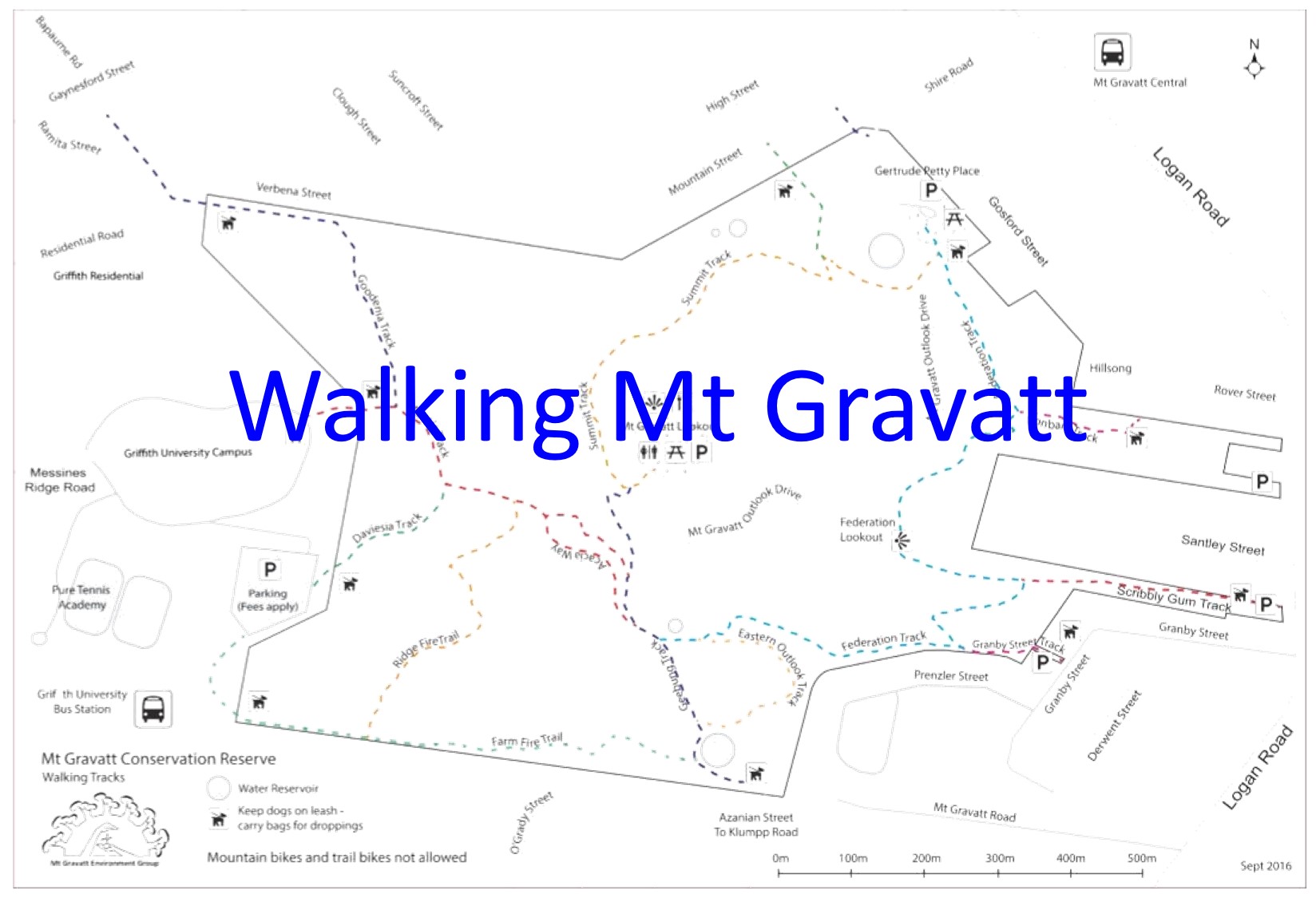
Pollinator Link – Mt Gravatt Conservation Reserve to Bulimba Creek

I developed the concept when I was struggling with the issue of creating a wildlife corridor linking Mt Gravatt Conservation Reserve with Bulimba Creek via Mt Gravatt Showgrounds. The on ground reality is that any effective link through the Showgrounds would hit a wall of houses and backyards. Being able to fly, our pollinators’ – birds, butterflies and bees plus moths, insects, flying foxes, micr0-bats, capacity to cross man-made barriers like roads and fences means they have potential to make an important contribution to ecological biodiversity. My inspiration for the Pollinator Link model came from the Pollinator Pathway in Seattle and the High Line in New York.

Patch-matrix-corridor mosaic – Wellers Hill

As I researched the concept and looked for examples of potential Pollinator Link locations I realised that in some areas like Wellers Hill where there are a number of isolated patches of bushland we could go beyond linking and actually consolidate habitat within urban spaces with a little a 10% of properties engaged. Pollinator Links have potential to create urban pollinator “patch-matrix-corridor mosaic”* habitat by interconnecting patches of bushland with wildlife friendly backyards. (* Habitat Fragmentation and Landscape Change Lindenmayer & Fischer (2006))

The Pollinator Link concept passed the feasibility test now we move to implementation stage:

How would you like to be involved?

  • Identify sites to be linked.
  • Join the 2013 Pollinator Link Week

Landscape Plan

By Michael Fox

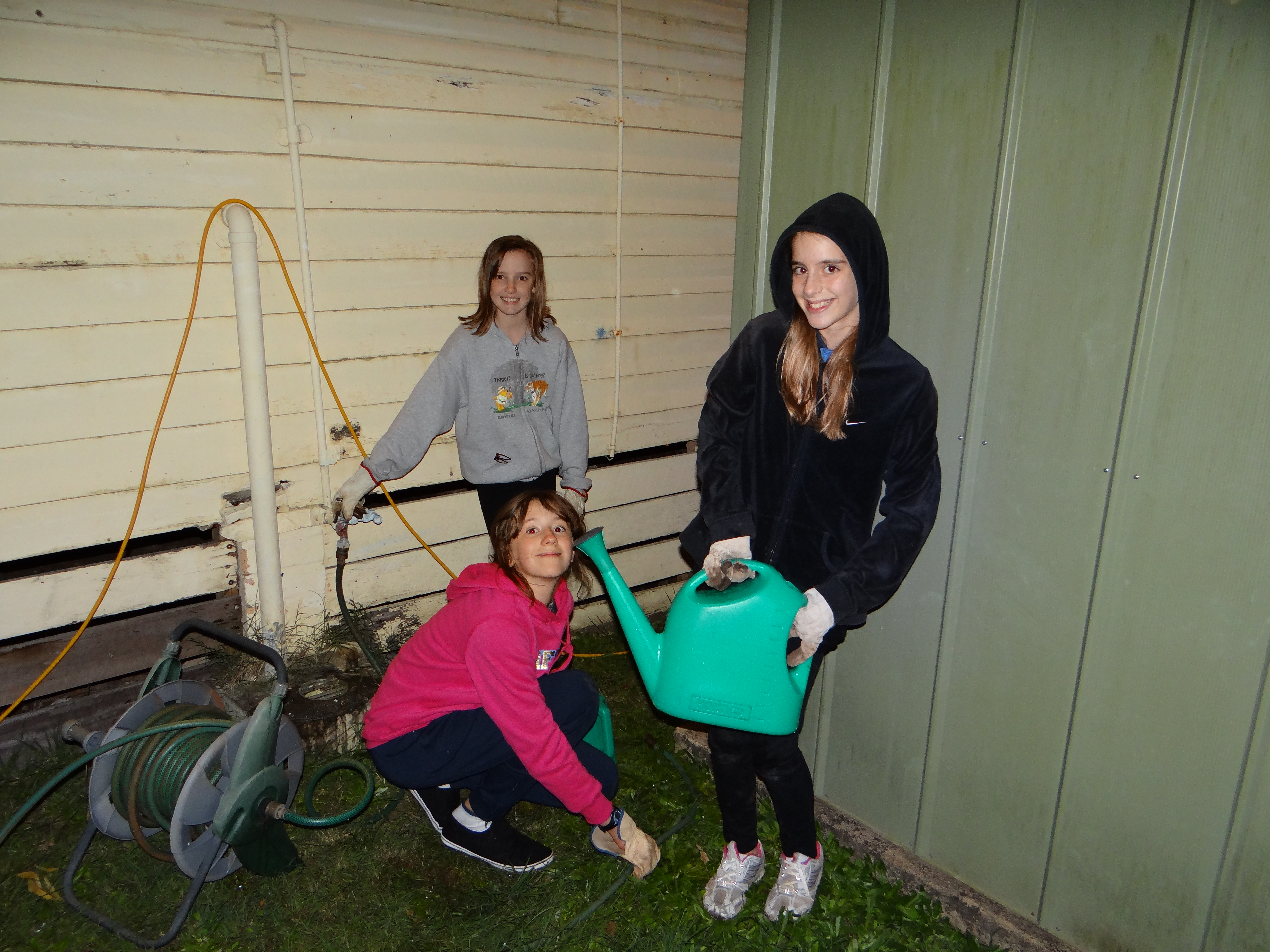
Sue Jones and I joined Mt Gravatt Girl Guides for World Environment Day last Tuesday night, to plant our first Pollinator Link garden. (Pollinator Link is a trademark of Mt Gravatt Environment Group)

Planting Team in action

Guide Leader, Lizi Dyrsdale, approached us at the 2 Millionth Tree planting in February with the idea of partnering in an environmental project. The project has become a real community effort with a grant from the Lord Mayor’s Suburban Initiative Fund supported by Cr

Watering Team

Krista Adams, raised gardens beds designed and constructed by Mt Gravatt Men’s Shed, Western Landscape Supplies providing a discount on garden soil and mature Grass Trees Xanthorrhoea johnsonii contributed by Bulimba Creek Catchment Coordinating Committee (B4C) (relocated from road development site with DERM approval).

c

c

Sue (left) and the team planting butterfly vines

On Tuesday night a team of Girl Guides, parents and friends planted, watered, dug out weeds and removed rubbish.

g

g

g

g

Sue Jones worked with one team planting butterfly vines – Running Postman Kennedia rubicunda – caterpillar food plant for Long-tailed Pea-blue, and Waxflower Vine Hoya australis – caterpillar food for Common Crow butterflies.

The Team … dirty gloves and all


lkj

lkjl

c

f

We finished the night with a proud and happy team.

k

k

d

Oval Woodland Cockroach

d

d

The local wildlife also appreciated our efforts. Our Australian bushland cockroaches are not the home invaders we commonly see. Species like this Oval  Woodland Cockroach live in leaf litter and do a valuable composting job.

b

Ringtail Possum

b

b

And a final inspection by this handsome Ringtail Possum.

c

Pollinator Link plants were sourced from B4C Native Plant Nursery at Carindale.

By Michael Fox

I am always learning something new about our extraordinary local environment. Until recently I had never heard of Finger Lime Citrus australasica or any of the other native citrus.

Finger Lime surprise capsules

I discovered these fascinating plants when researching species for use in building Pollinator Links through our suburbs. Finger Limes are native to rainforests in south-east Queensland and northern New South Wales, where they typically grow as an understory plant.

White Chocolate Finger Lime Cheesecake

Finger Limes have come out of the rainforest and into commercial orchards growing in the full sun. Chris Bourke of Tamborine Native Citrus can supply Finger Limes grafted onto commercial citrus root stock which will promote rapid growth and produce smaller trees suited to backyards. Finger Limes can also be successfully grown in pots so even unit dwellers can join in the fun. What colour will you grow?

Orchard Swallowtail laying her eggs
Photographer – Jude Fox

The lime juice comes in tiny surprise packs that stay intact when cooked in a cheesecake, ready to explode in your mouth as you eat. If you would like to make your own bush tucker cheesecake you can find the recipe at Marvick Native Farms. Substitute Finger Lime for Desert Lime and of course use Queensland Nut Macadamia integrifolia instead of Hazelnuts. Don’t whiz all the limes. Fold some juice capsules into the mix before pouring into the cake tin.

Better still you can grow your own Finger Limes and bring beautiful Orchard Swallowtail butterflies to your backyard. Be patient with the butterfly caterpillars, they will do very little damage to your lime tree. Eating the citrus leaves allows the caterpillars store toxins that transfer through to the butterflies making them taste unpleasant to bird predators.


Mt Gravatt Summit

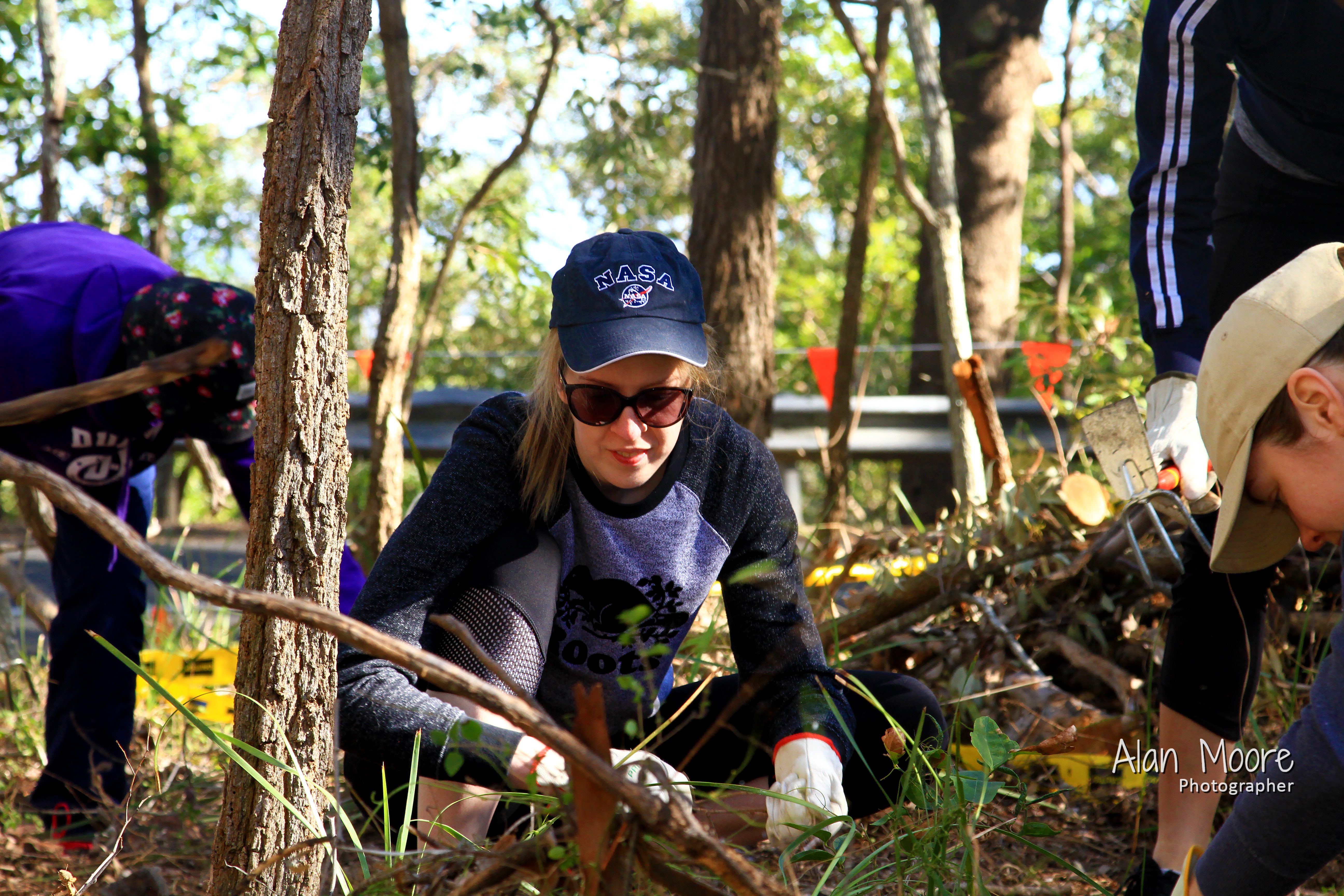
Twenty five volunteers, including a team from Queensland Institute of Business Technology (QIBT) and Cr Krista Adams, joined co-ordinator Kersite Olsson at Mt Gravatt Summit for Clean Up Australia last Sunday.

The team filled 11 recycle bags and 10 general waste bags, as well as, collecting a tyre, chair, metal, etc.

f

Mt Gravatt Girl Guides – Showground

Nine volunteers joined co-ordinator Lizi Drysdale at the Guide Hut to Clean Up Mt Gravatt Showgrounds.

We are partnering with the Girl Guides this year to launch the first Pollinator Link between Mt Gravatt Reserve and Bulimba Creek with a pollinator garden around the Guide Hut.

h

Roly Chapman Reserve

Brett Simpson led another team for Clean Up Australia in Roly Chapman Bushland Reserve.

It is inspiring to be able to join with other community groups to Clean Up our community.

n

Living on the edge of Mt Gravatt Reserve we often have butterflies visiting our yard. Today I videoed this Cabbage White Pieris rapae feeding on the Thyme flowers in our rose garden.

Michael Braby in Butterflies of Australia describes this erratic flight and feeding behaviour. This butterfly is using his proboscis or haustellum, a hollow straw-like tongue, to feed on nectar. The proposcis in normally kept rolled and extended for feeding.

Southside Community News - December 2011

a

Our Pollinator Link initiative, described in my Southside News article, aims to bring more butterflies to suburban backyards.

If you have citrus trees you may find the leaves being eaten by the caterpillars of Orchard Swallowtail Papilio aegeus butterflies.

kjkjadhfkjh adfjlkadf  lkfdsdk jaldkfj  lkajsdf  lkdf lakd flk df lk lkj df lkaj df alkdjf lakdsf

lasdkf adlkflakdsjf  lkajdf

laskdjf ladf

lasdkflkjlkjafds  adsfkl

In Mt Gravatt Reserve the caterpillars of these spectacular butterflies feed on Crow’s Ash Flindersia australis. 

However if you can be put up with a few chewed leaves on your fruit trees these “bird-dropping” caterpillars

ver if you can be put up with a few chewed leaves on your fruit trees these “bird-dropping”

ver if you can be put up with a few chewed leaves on your b

b

will grow into this larger caterpillar

ver if you can be put up with a few chewed leaves on your fruit trees these “bird-dropping”v

b

b

b

b

which builds this delicate chrysalis suspended from a branch

lkajdflaksjdf la;lskd ;alkdj fa ;laksdj flakjsdf ;lakdj falksdjf

lkaldjf aldskfj adlfkj jl;akds falksdfj asdjf l;akj ;ldkfj aa;sldkf

;alksdjf ;alskdjf a;sldkfja sd;flkasjd f;alksjf asld;kfj  asdlkfj

sdfg

sfg

emerging as this spectacular Orchard Swallowtail butterfly we found in the garden this week.

a

A Blue Banded Bee – Amegilla cingulata getting nectar from one of our special Bottle Brush Grass Tree – Xanthorrhoea macronema.

It is particularly pleasing to photograph my first Blue Banded Bee today because I am currently writing an article on Pollinator Links for the Southside Community News. Pollinator Links are a form of wildlife corridor that has potential to work in our fragmented urban landscape and they are a key strategy in our Mt Gravatt Showgrounds Precinct Landscape Plan.

Blue Banded Bees are an Australian native bee and an important pollinator of our food crops like tomatoes. Some plants will only release pollen when the flower is vibrated rapidly – buzz pollination.

The importance of these and other native buzz pollinators is highlighted by the fact that the commercial honey bee – Apis mellifera, cannot perform buzz pollination. The Blue Banded Bees website cites significant benefits for crops such as tomatoes, kiwi fruit, eggplants and chillies. Blue Banded Bees are thought to improve yields in Australia by at least 30% overall.

I also managed to photograph one of our beautiful Variegated Fairy Wrens Malurus lamberti. A male in full breeding colour. There was a least one female around but she would not sit still for a photo. These delicate little birds like scrubby areas where they are safe from predators, often Lantana. So part of our bush restoration work is ensuring there is that there is replacement habitat established before we remove large areas of Lantana. As we establish Pollinator Links we aim to bring special birds like these back into our community backyards.

« Previous Page