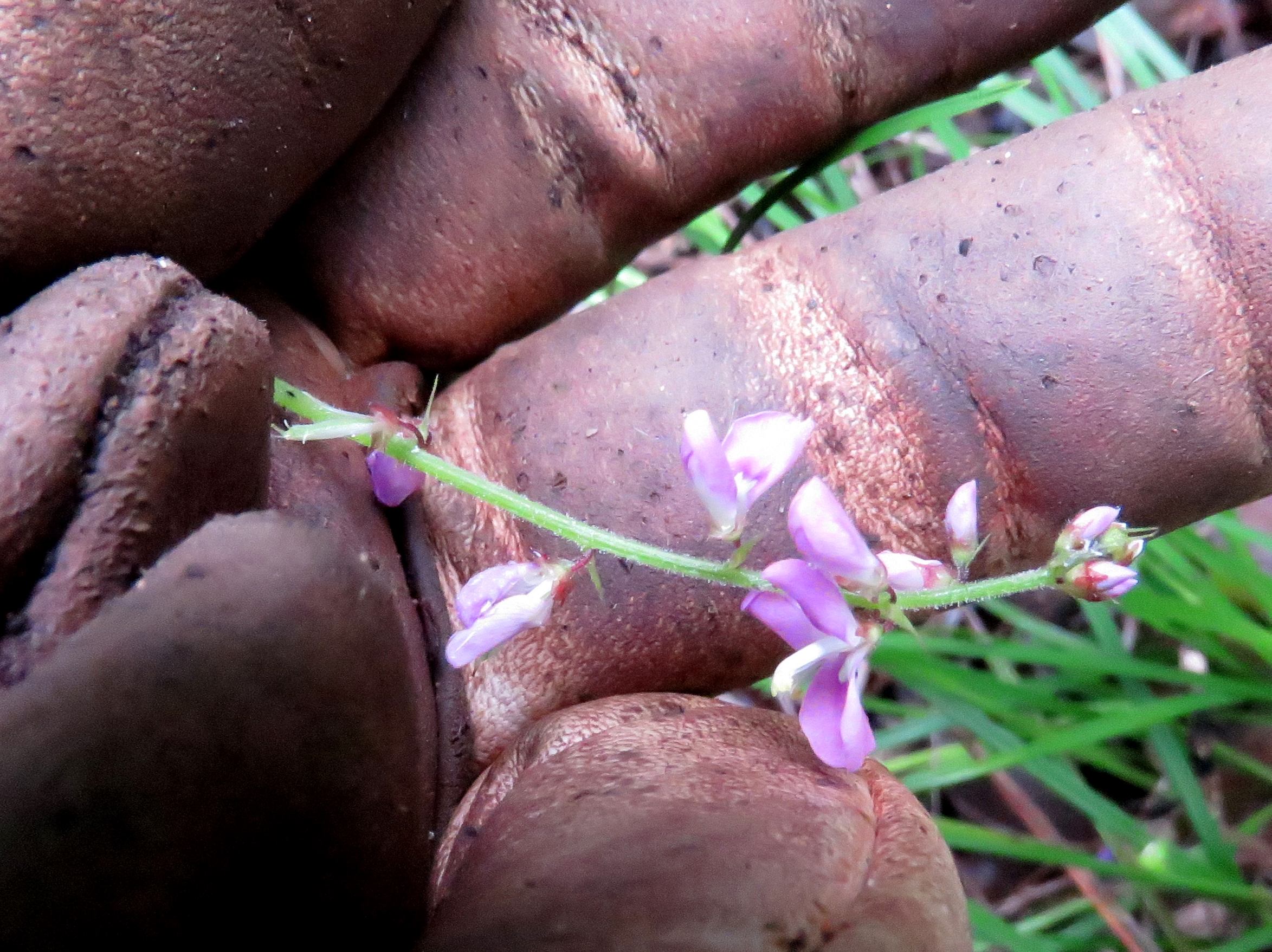
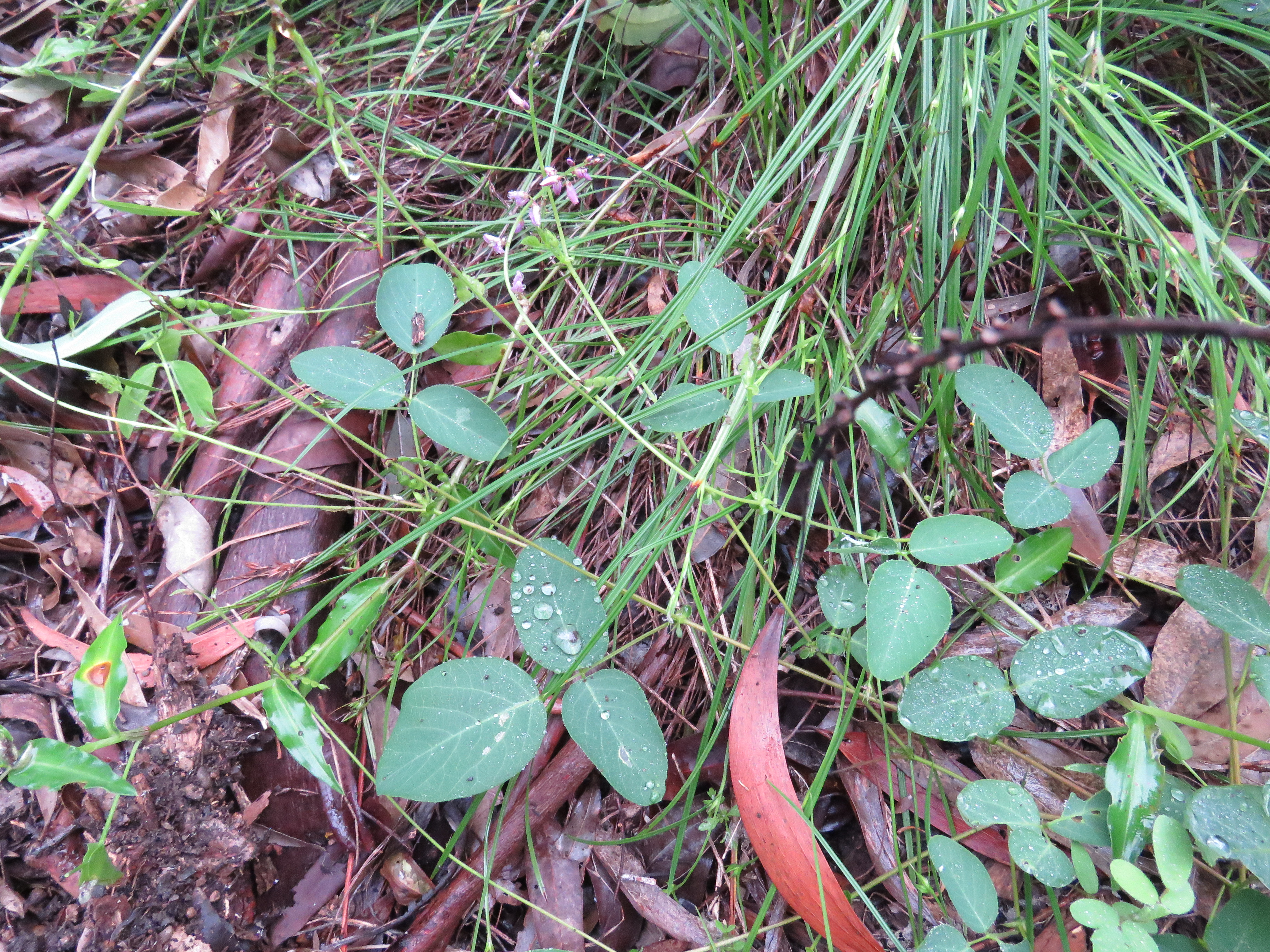
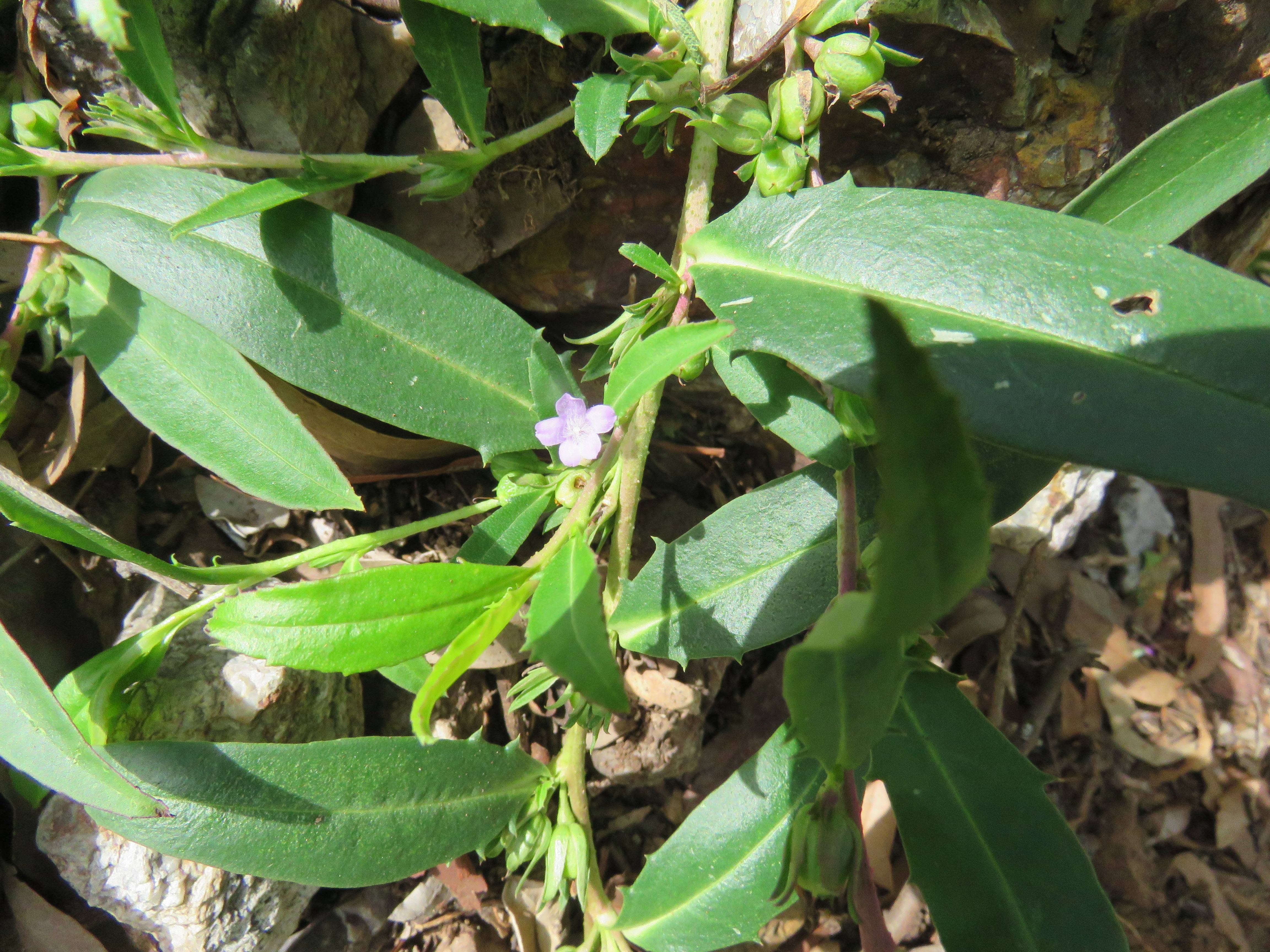
Today, botanist Ann Moran, identified the plant I photographed yesterday as Large Tick-trefoil Desmodium brachypodum a new addition to our list of plants found in the Reserve.
Large Tick-trefoil
We have already identified two other native Desmodiums growing in the Reserve:
Slender Tick Trefoil Desmodium gunnii
Hairy/Rusty Tic-trefoil Desmodium rhytidophyllum
Finding Large Tick-trefoil means we now have two hundred and eighty three native plant species identified in the Reserve.
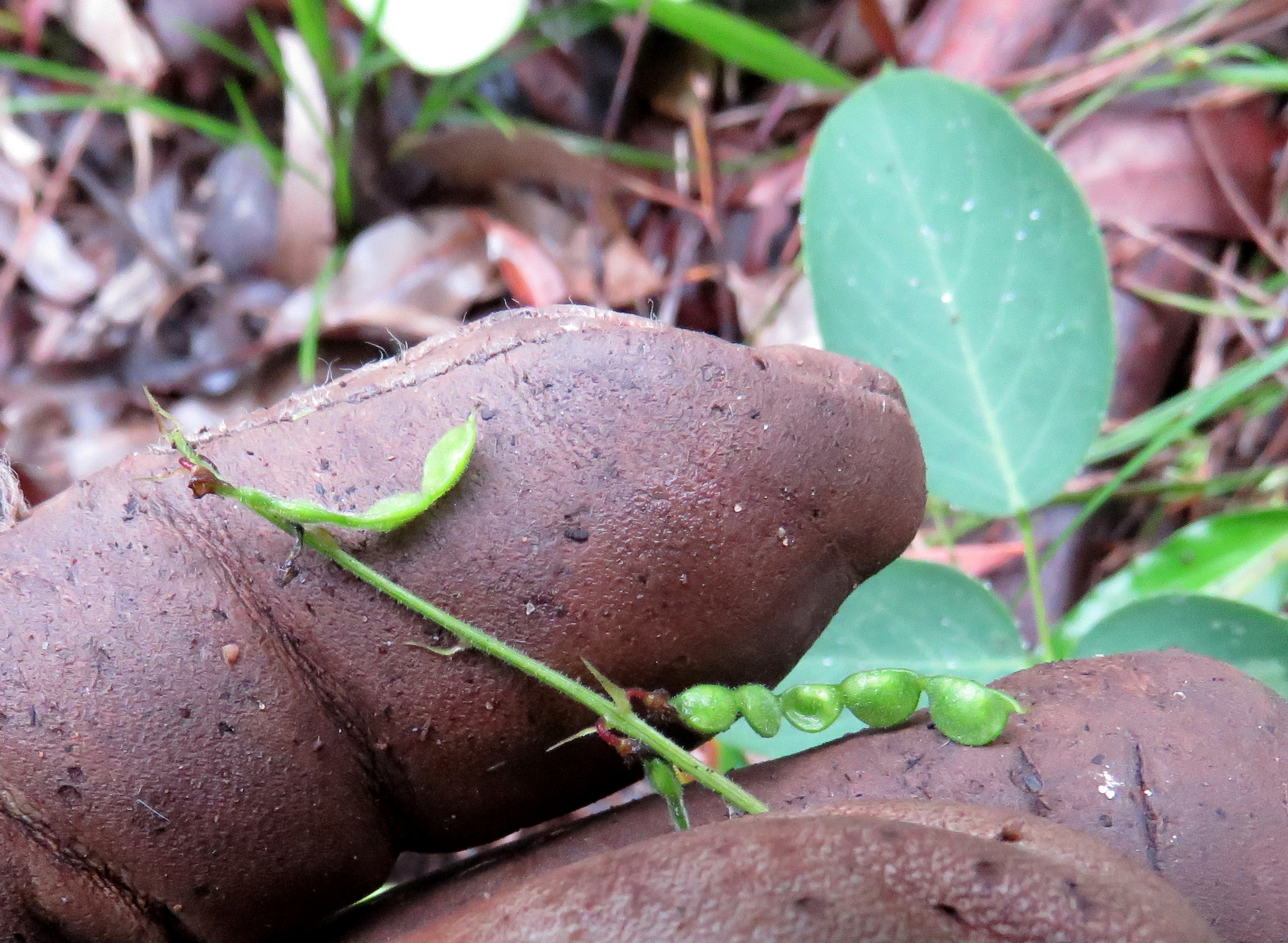
Large Tick-trefoil – seed pods
Equal to 20% of the total native species found in the 32 million hectares of the United Kingdom, two hundred and eighty three native plant species is an excellent measure of the species diversity found in Mt Gravatt Conservation Reserve.
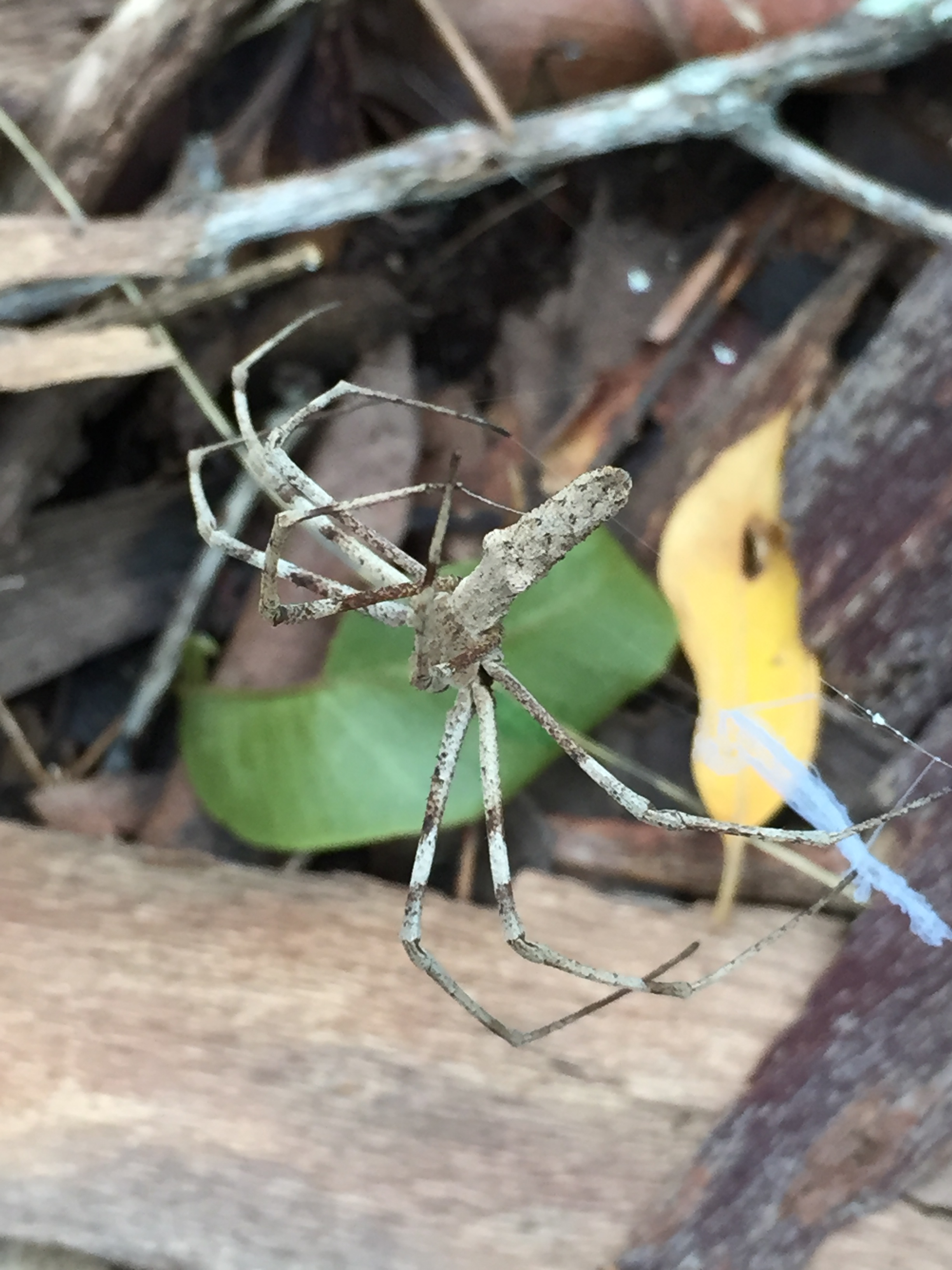
Net Casting Spider – female
This morning’s find was a different species of the curious Net Casting Spider Deinopis ravida. The two bumps on its sides identifies this as a female.
Net Casting Spiders have a unique way of catching breakfast. They sit with their web held between their front legs ready to quickly spread and trap prey. See the web on lower right of photo.
Macro photography is about concentrating on small details. You, the photographer, control subject selection, isolation, lighting, perspective and camera controls to create a spectacular visual narrative.
We will start by running through some camera basics (controls, modes, settings) before exploring how to use camera settings to isolate close-up subjects and get the most from lighting and angles.
Then we put it into practice exploring Mt Gravatt Conservation Reserve to find your story to share with the group.
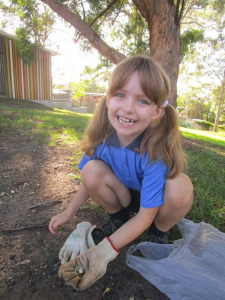
Heather Woods and her family, again hosted our annual Clean Up Australia event.
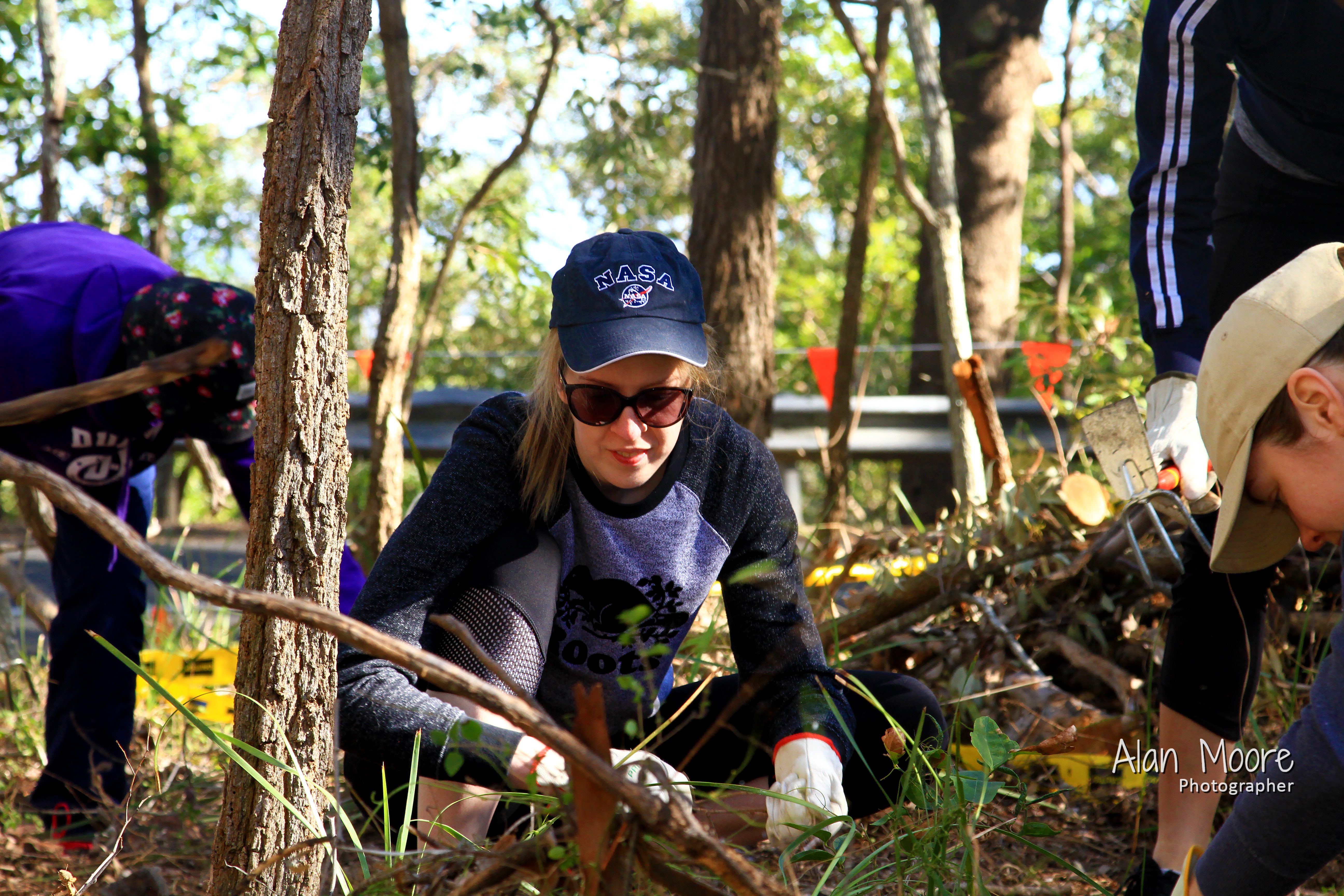
Twenty-nine community members, including Cr Krista Adams and Corrine McMillan MP collected seventeen bags of rubbish: drink bottles, McDonalds’ bags and car parts.
Heather organised us into three teams:
Summit Team – families cleaning up the Summit;
Guide Eliose on the job
Road Team collecting rubbish from Mt Gravatt Outlook Drive; and
Weeding Team – Lantana busting at the 2017 National Tree Day site.
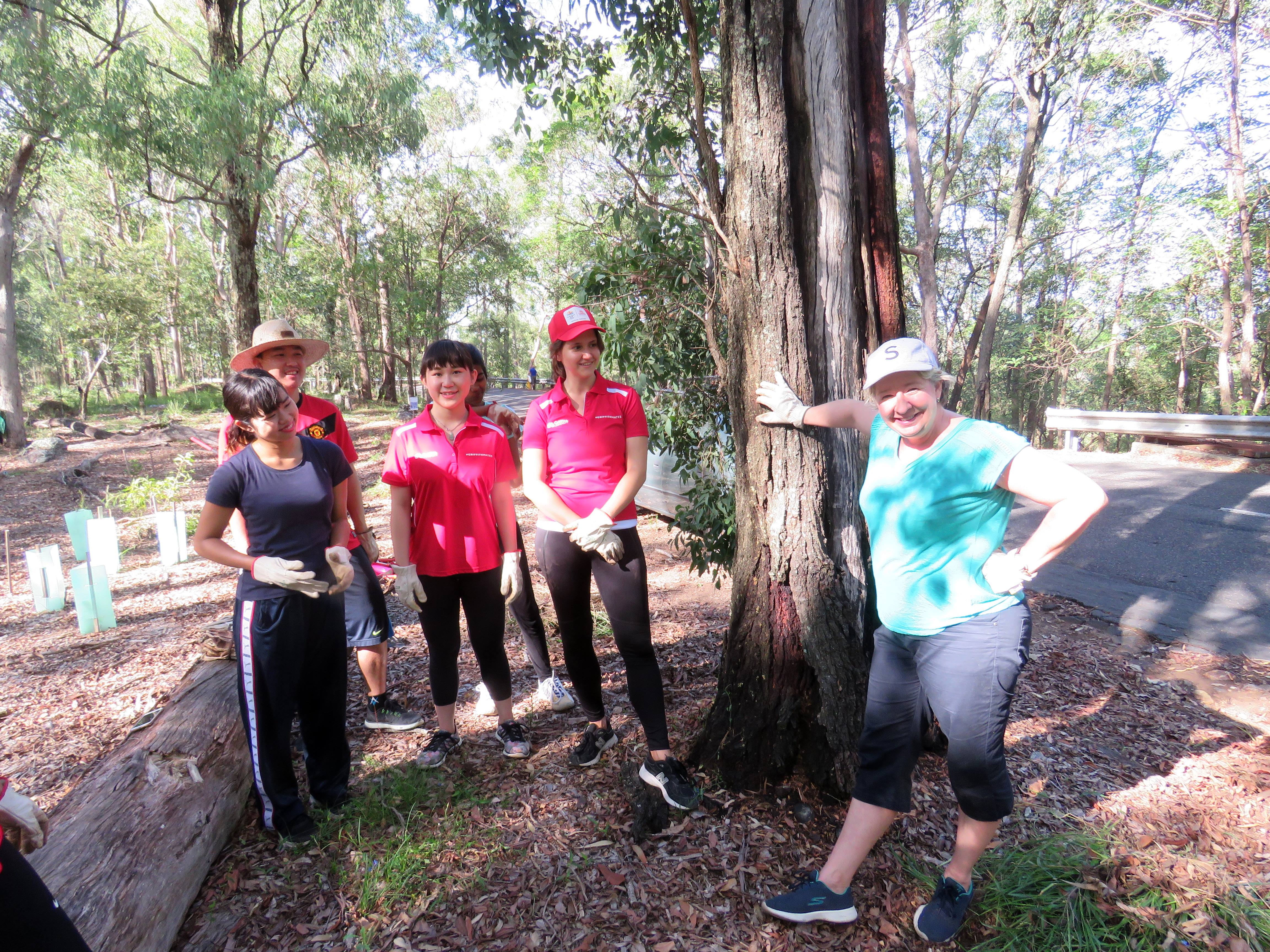
I was able to show the Weeding Team members the natural regeneration of native plants where the Creeping Lantana was removed as part of National Tree Day.
Bell Flower vine is a delicate scrambler spreading in the cleared area.
Cr. Steven Huang was interested in everything when he visited Roly Chapman Bushcare in February. He was particularly impressed with the Gross Pollution Trap installed to catch drink containers and plastic bags washed out of the storm water drain.
The trap was made with a recycled security screen and star pickets. We have been waiting on a storm event to test out the structure. Last week’s storms dumped about 170 mm of rain on Upper Mt Gravatt in 24 hours. A good test for the Pollution Trap.
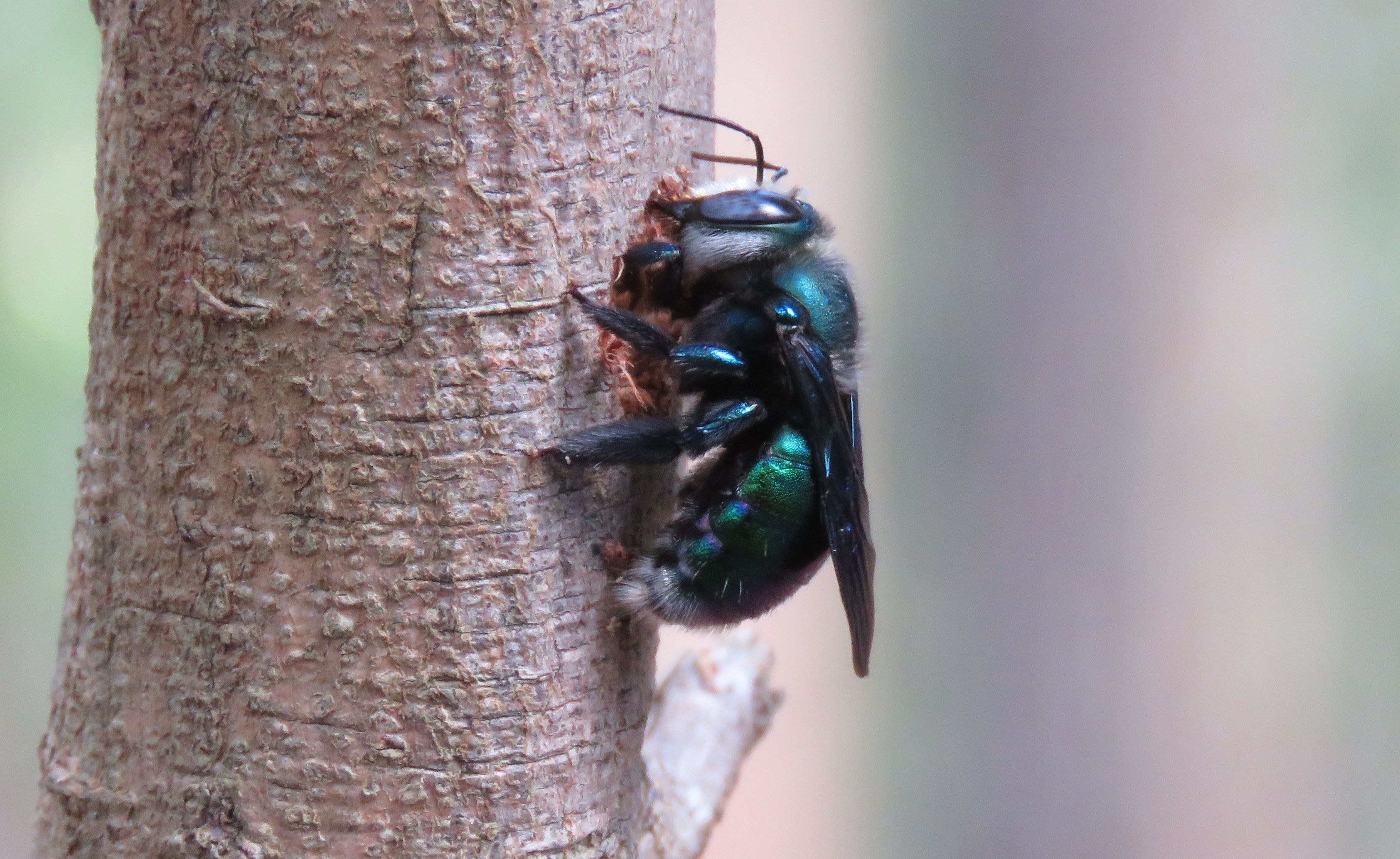
Clean Up and restoration work is making an impact with wildlife like this female Green Carpenter Bee Xylocopa (Lestis) aeratus returning to the restored habitat. Video shows the female chewing a nest hollow into an Acacia.
Date: March 4th 2018
Start time: 7:30 AM to 9:30 AM
Meet at: Mt Gravatt Summit carpark – near Love Well Project
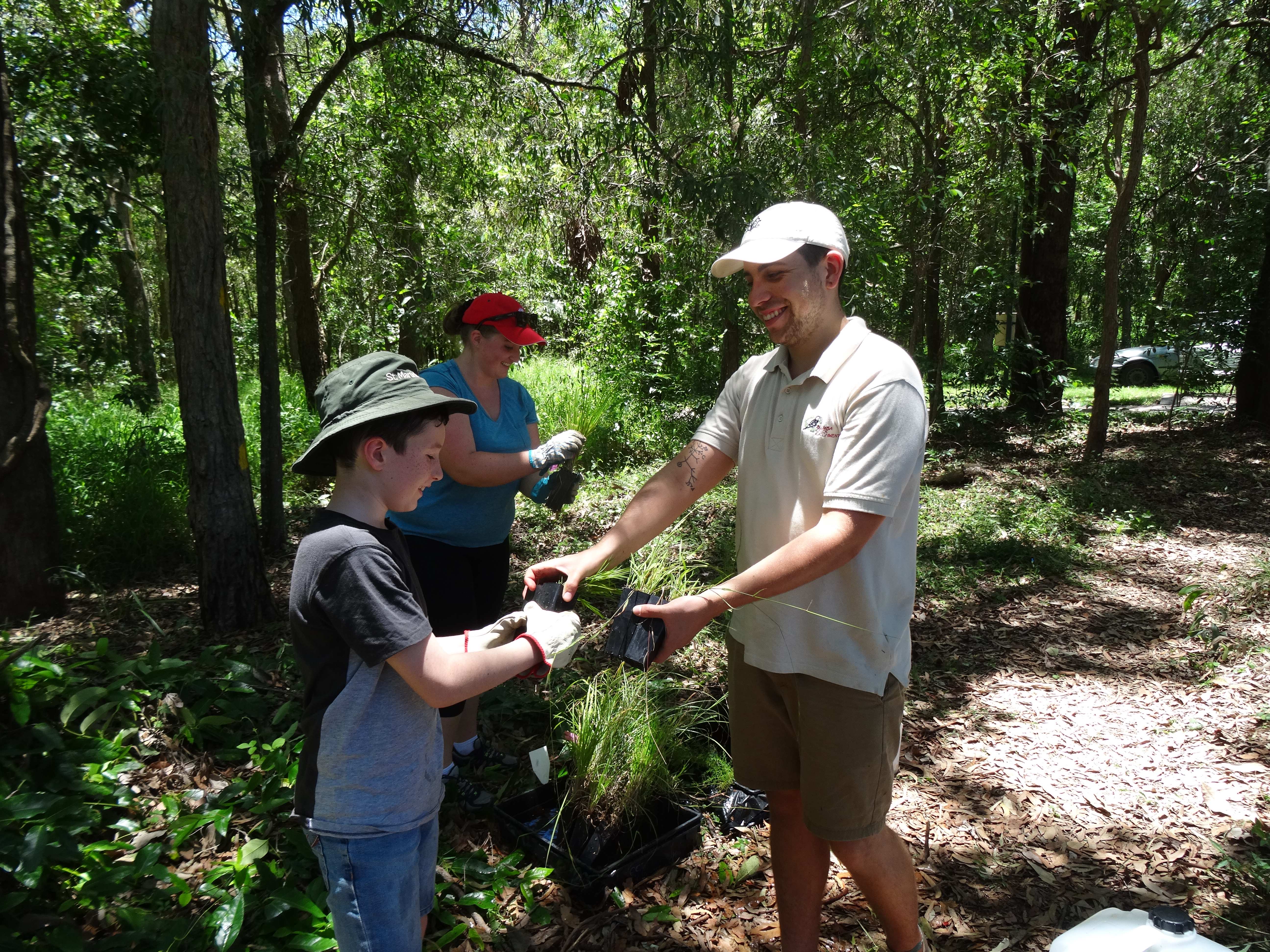
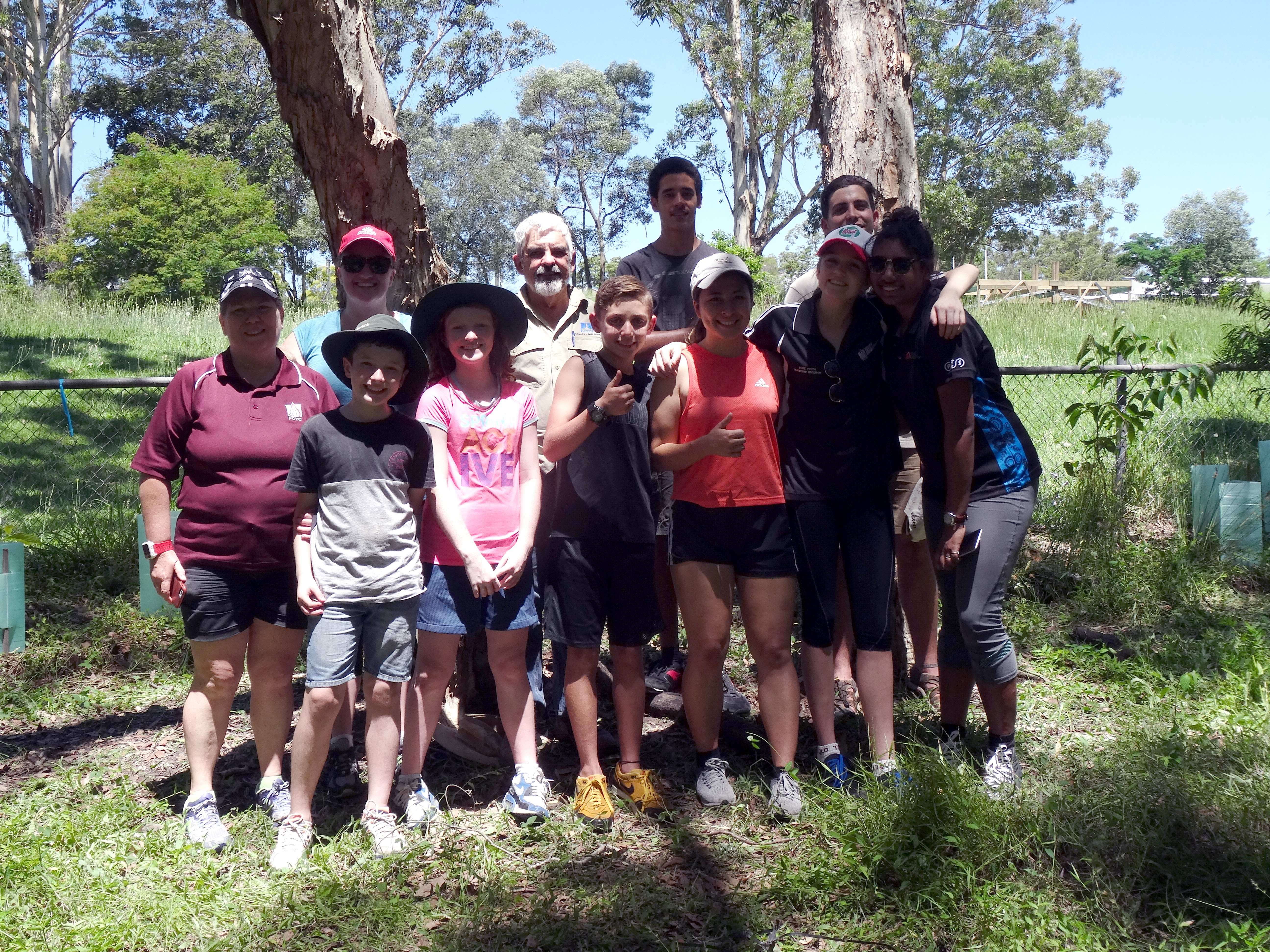
Thursday last week the Mt Gravatt PCYC Bush Restorers joined us at Roly Chapman Bushcare to clear weed regrowth and plant 160 vines, grasses and shrubs to create an edge seal along the primary school fence.
Restoration work in Roly Chapman is part of the Mimosa Creek Precinct Landscape Plan to link Mt Gravatt Conservation Reserve with Bulimba Creek.
An edge seal is a barrier to protect natural bushland from weed invasion. For example, reduce the feathery seeds from the yellow flowering Flatweed (Catsear) Hypochaeris radicata blowing over from the school oval.
Clearing weed regrowth was required to prepare for planting. I started by explaining the Bradley Method of regeneration:
Word from strength – work from least weed infected to worst infected;
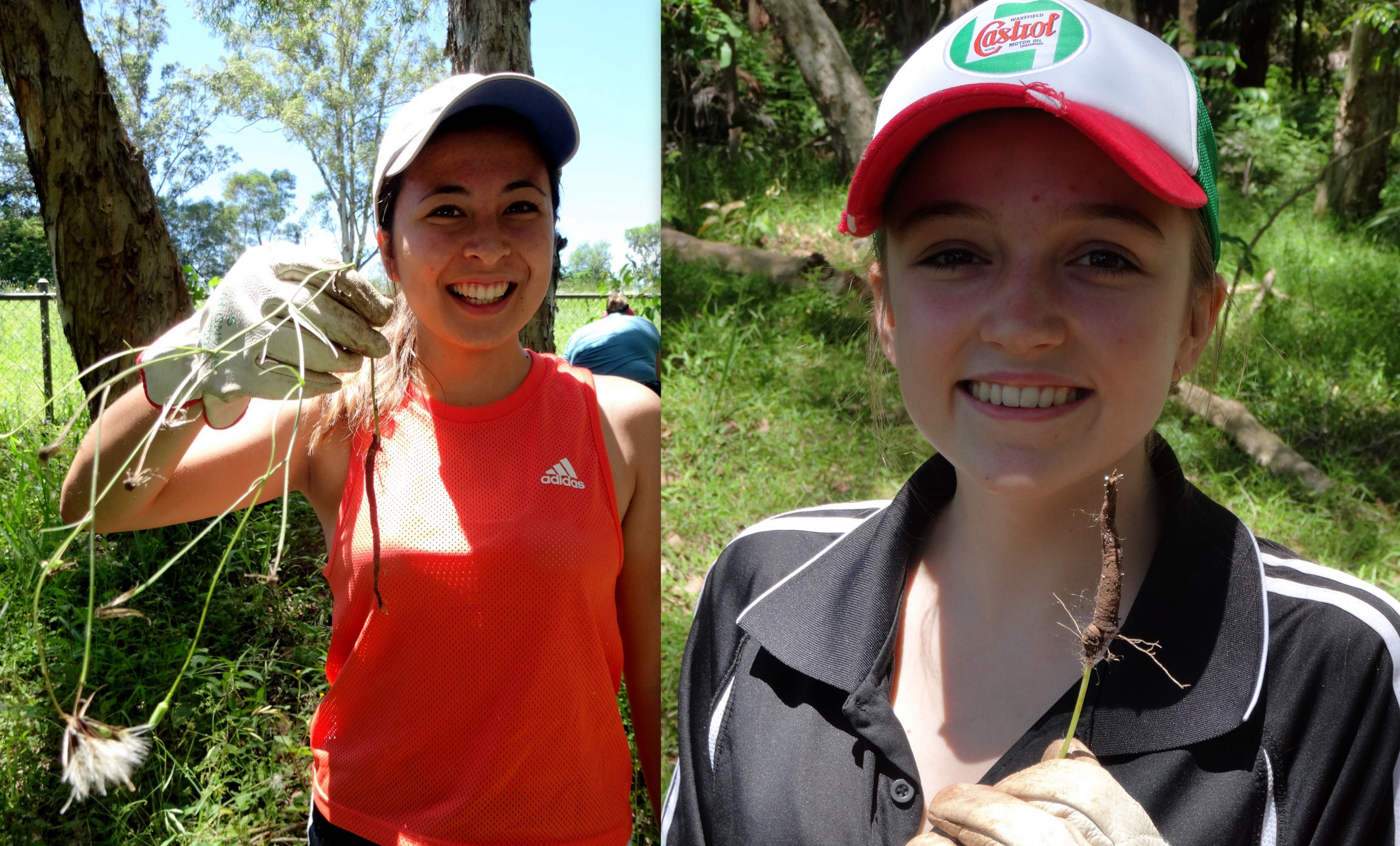
Expert Weed Eradicators
Minimise soil disturbance to maintain the diverse life in the soil
The Bradley Method does require skilled workers. So it was a real pleasure to work with two expert Weed Eradicators to remove the deep-rooted Flatweed. The ground was soft from recent rain so with carefully pulling the the weed vertically allowed removal roots and all with minimal disturbance to soil.
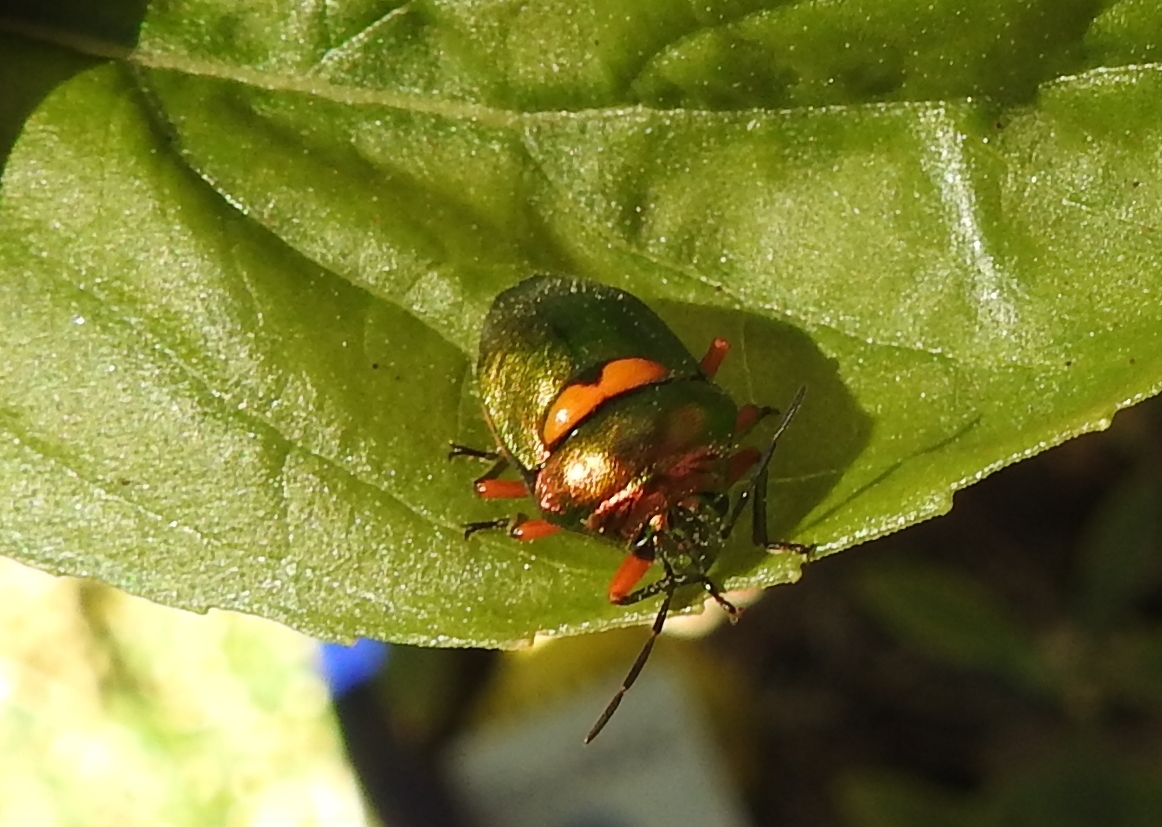
Plants were selected from species already found in Roly Chapman Bushland Reserve. Vines Hardenbergia violacea and Smilax australis are a good way to hid a chain-wire fence and provide food for butterfly caterpillar and fruit for fruit eating birds. Growing to 3 metres with a 2 metre spread and reddish green foliage the Coffee Bush Breynia oblongifolia is an attractive garden feeding butterfly caterpillars and decorative Green Jewel Bugs Lampromicra senator.
Green Jewel Bug
Grasses like Barbed Wire Grass Cymbopogon refractus and Kangaroo Grass Themeda australis will create an edge seal below the shrubs and feed seed eating birds. Sedges and rushes like Tall Sedge Carex appressa and Common Rush Juncus usitatus thrive along the fence line where run off from the school oval creates a damp habitat most of the year.
Mt Gravatt PCYC Bush Restorers
Thank you Mt Gravatt PCYC Bush Restorers … looking forward to welcoming you back in 2018.
Walking the Mountain this morning we saw a pair of Sulphur-crested Cockatoos Cacatua galerita high in the trees getting very upset about something. Initially we thought they were getting upset with a murder of Crows in the trees.
Stingless Native Bee
Then Jude spotted a Koala hanging on for dear life as the Cockatoos and Crows all harried it.
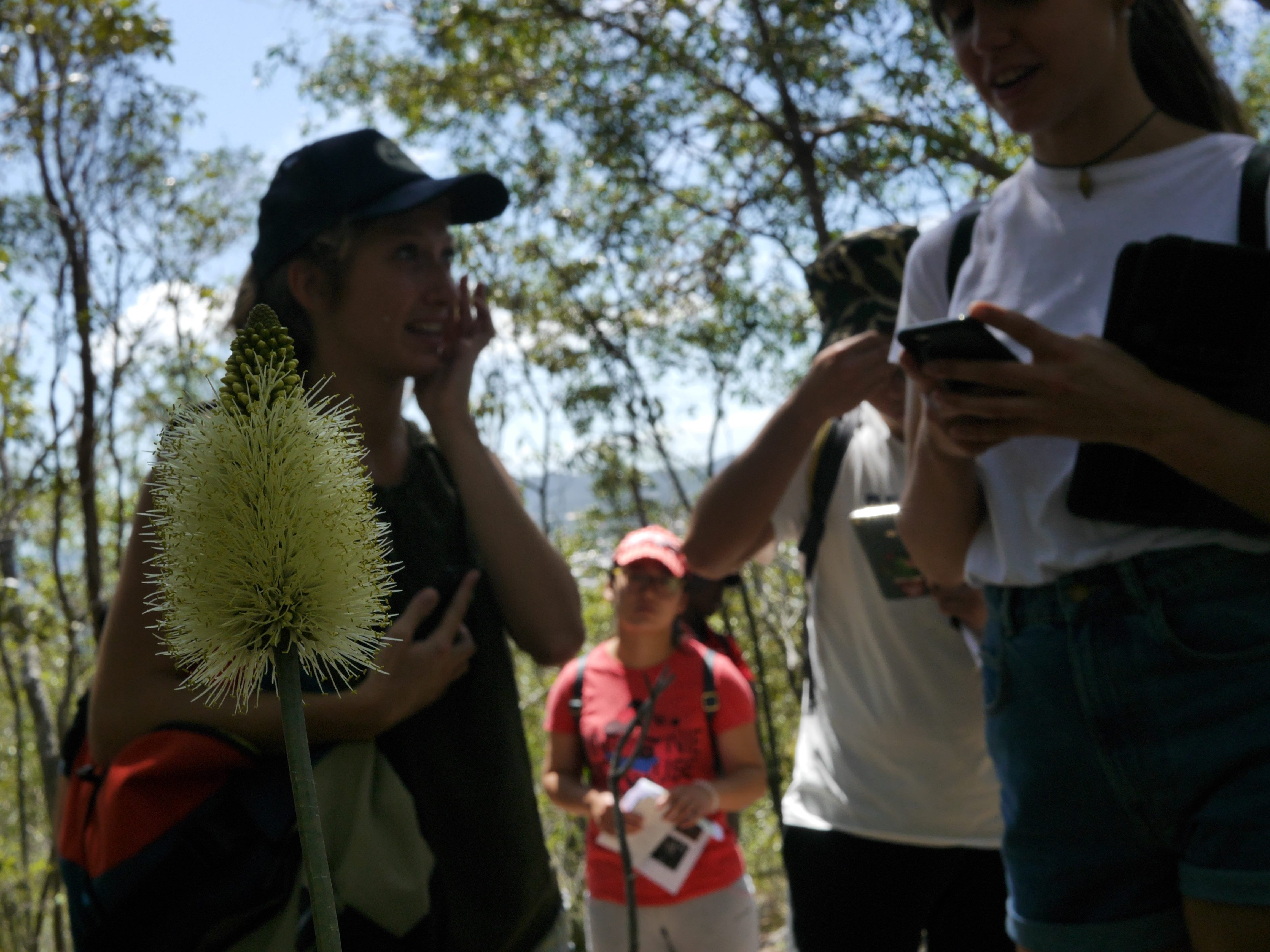
In the same area I found tiny Stingless Native Bees Tetragonula sp. collecting nectar and pollen on Bottle Brush Grass Tree Xanthorrhoea macronema flowers.
Look for the pollen on legs.
Ringtail Possum nesting in dead tree
Our last find was a Ringtail Possum Pseudocheirus peregrinus asleep in its nest in a dead tree.
Dead trees (called stags) are an important part of our bushland habitat providing homes for insects, lizards, birds and even Possums.
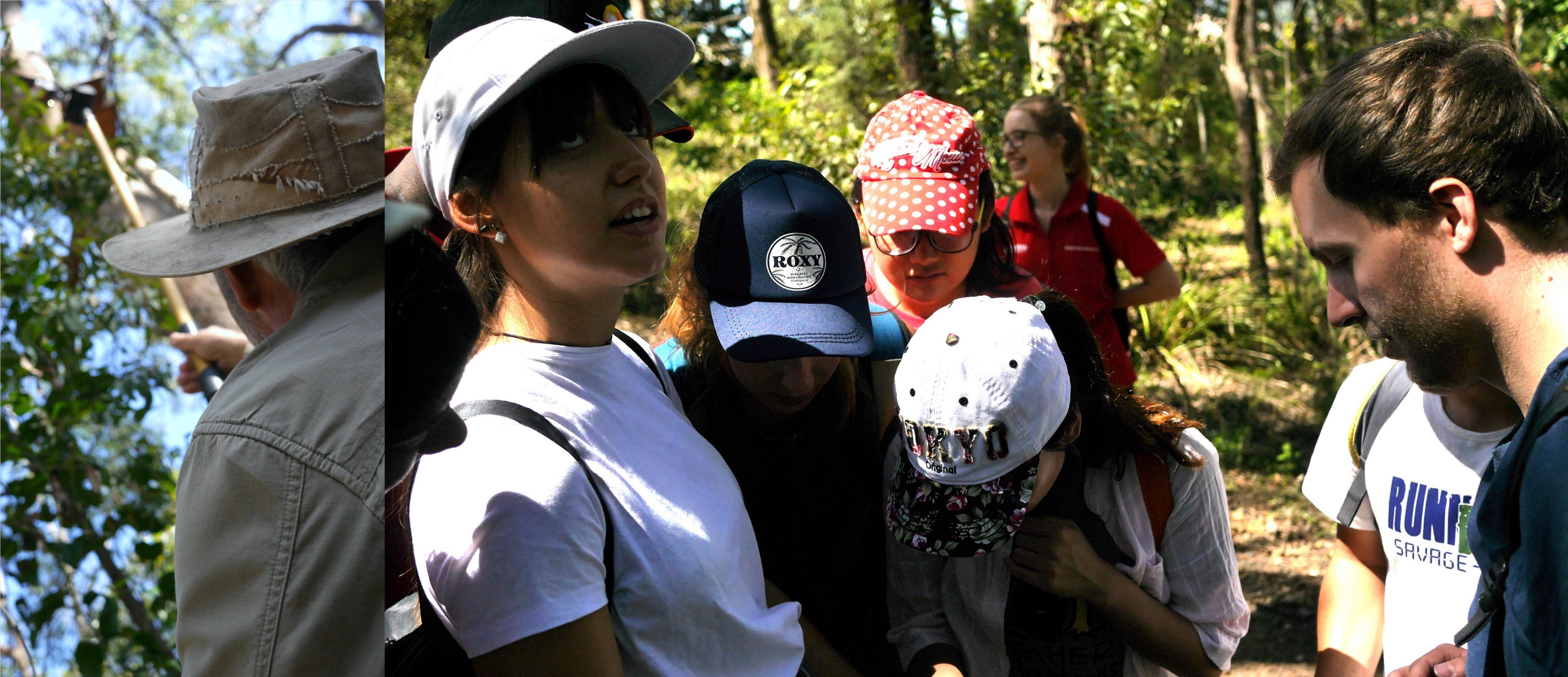
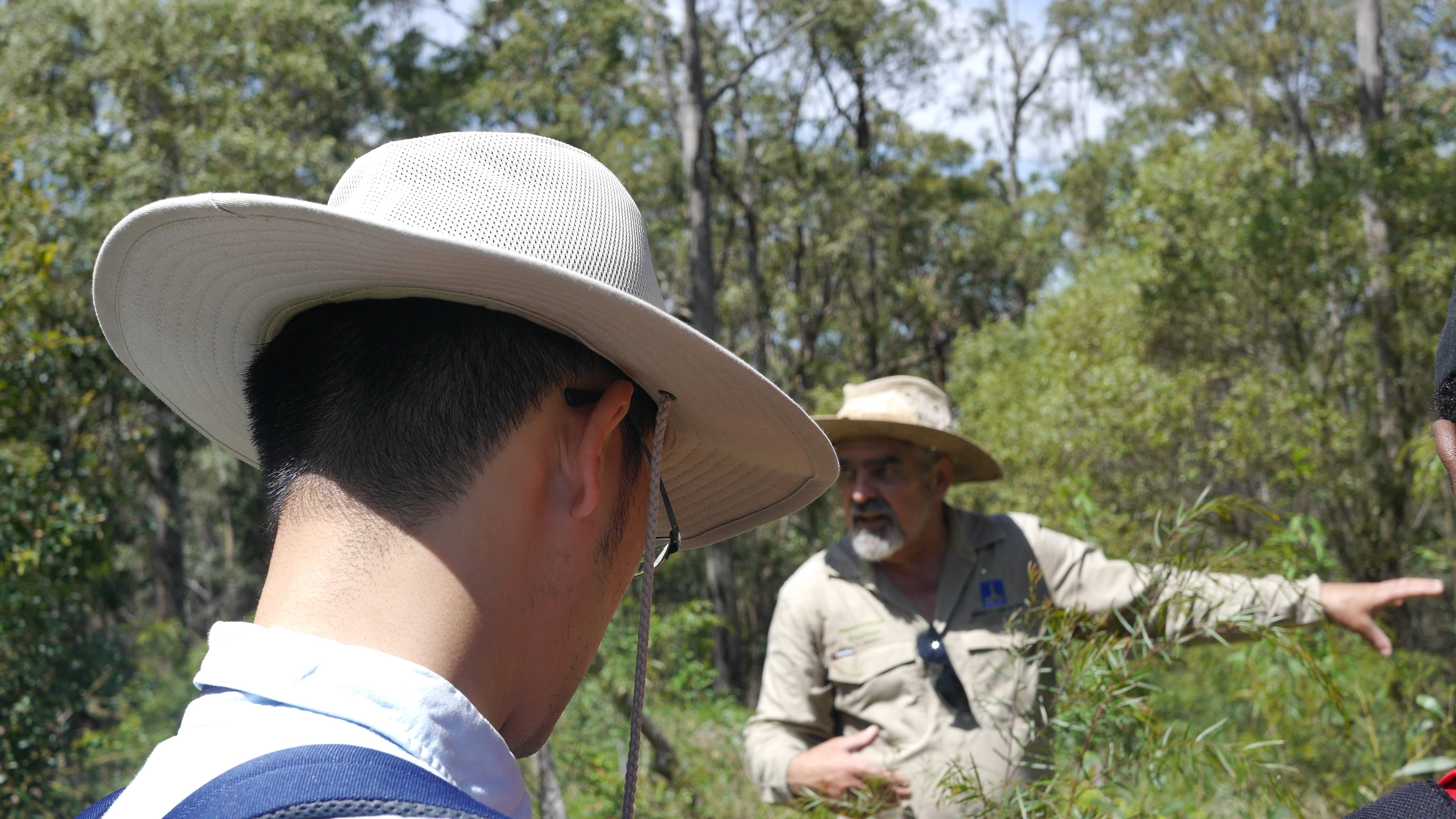
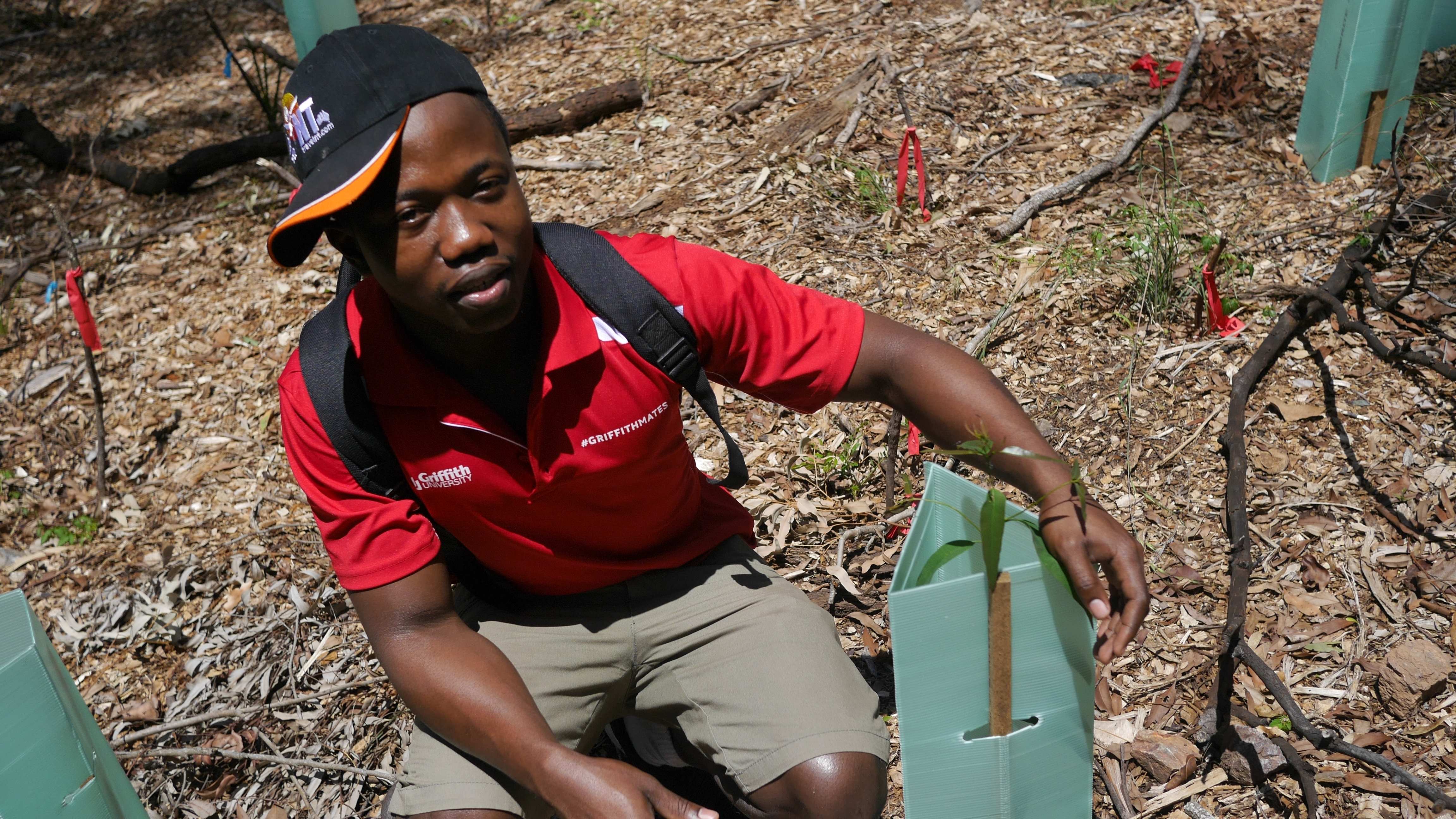
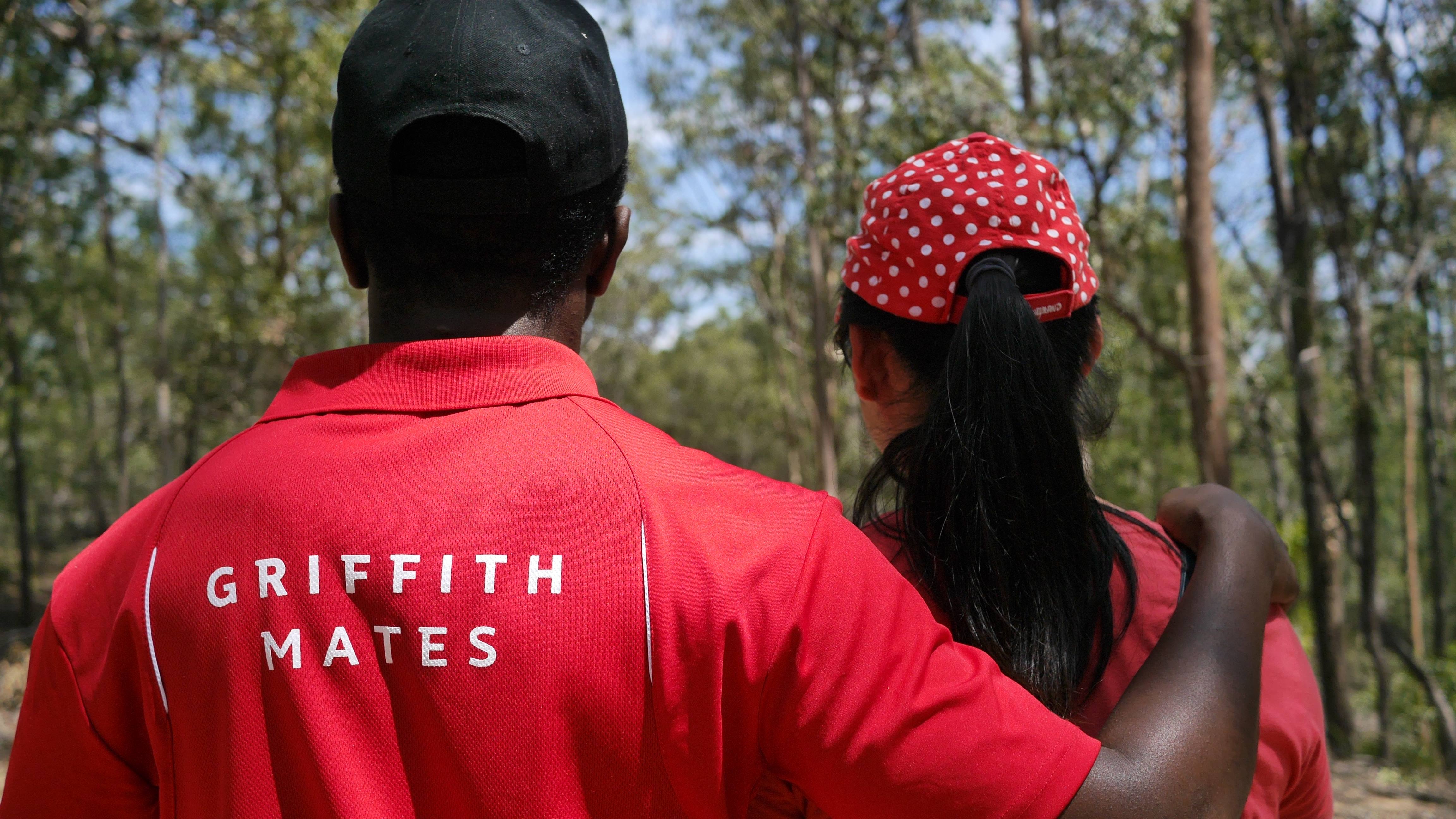
A beautiful Saturday morning and I met up with an inspiring group students for our regular Griffith Mates OWeek guided walk in Mt Gravatt Conservation Reserve. I vary the walk each time to highlight plants in flower and other special sights and sounds. A highlight this time was meeting Ma Poss (Brushtail Possum Trichosurus vulpecula) and her joey. (Baby possums are called ‘joey’.)
Checking nest box with GoPro and excited students watching on the iPad
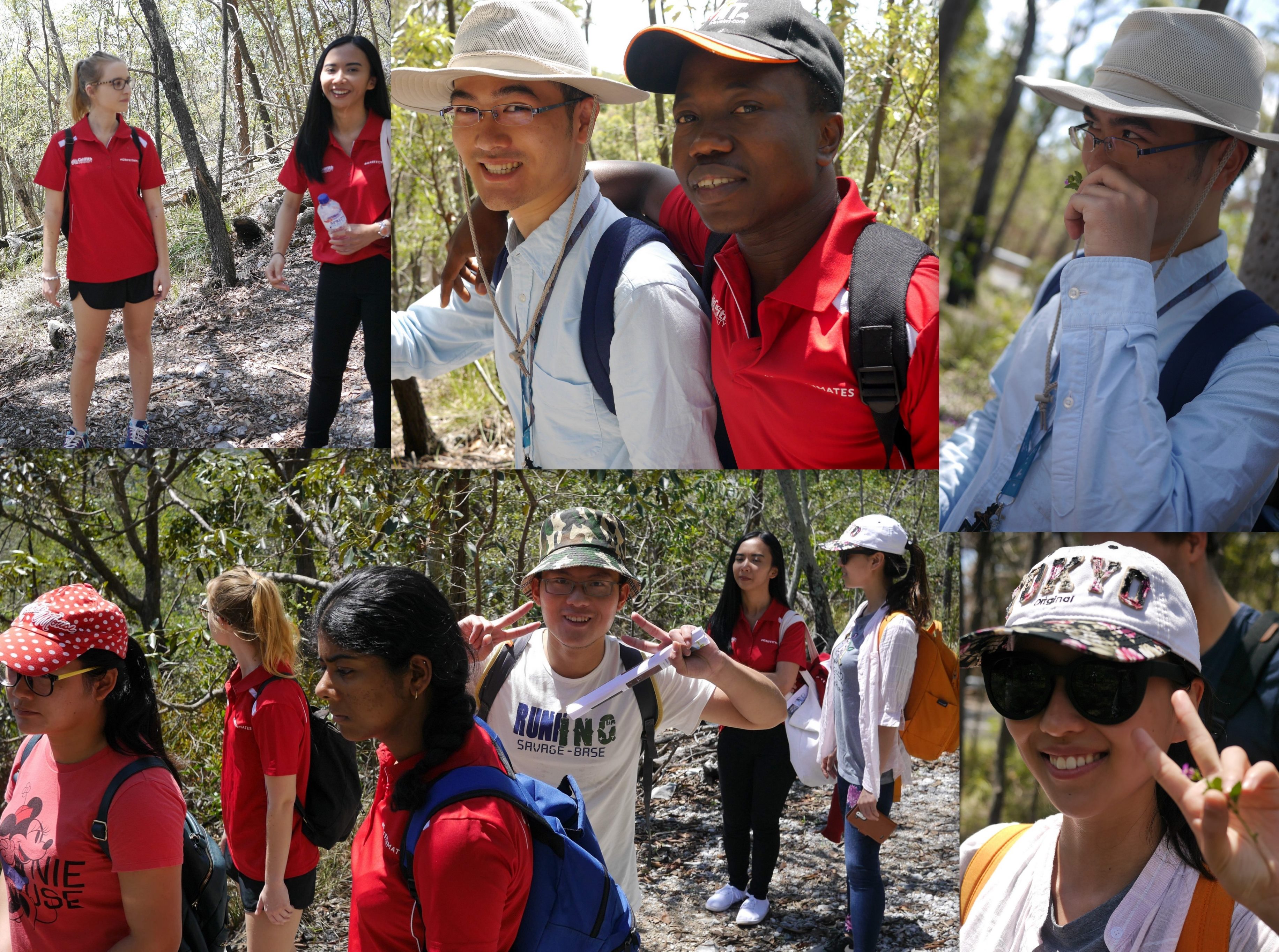
Meeting at Mt Gravatt Campus the Griffith Mates team introduced students from Germany, South America, China and Japan all keen to learn more about the Australian bush.
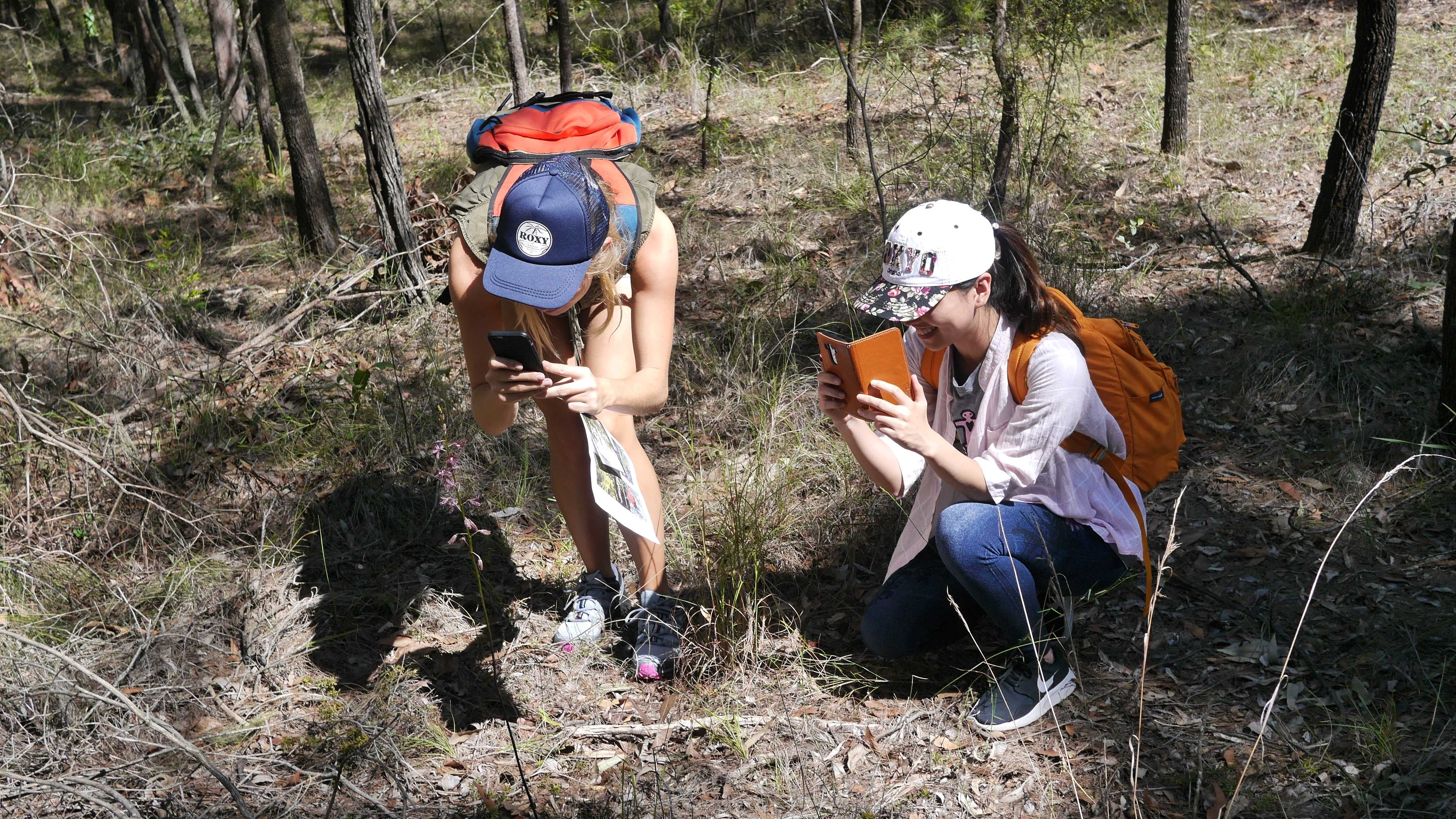
The students were very interested in learning about our native ground orchids: Slender Hyacinth Orchid Dipodium variegatum.
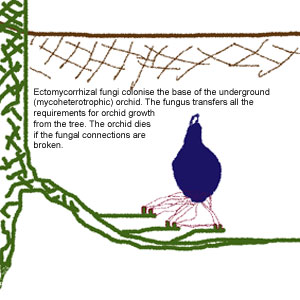
I explained that, lacking any leaves, these orchids are critically dependent on their relationship with fungi in the ground. The fungi mycorrhiza, fine root like fibres, feed the underground orchid with organic carbon and minerals collected from roots of adjacent trees.
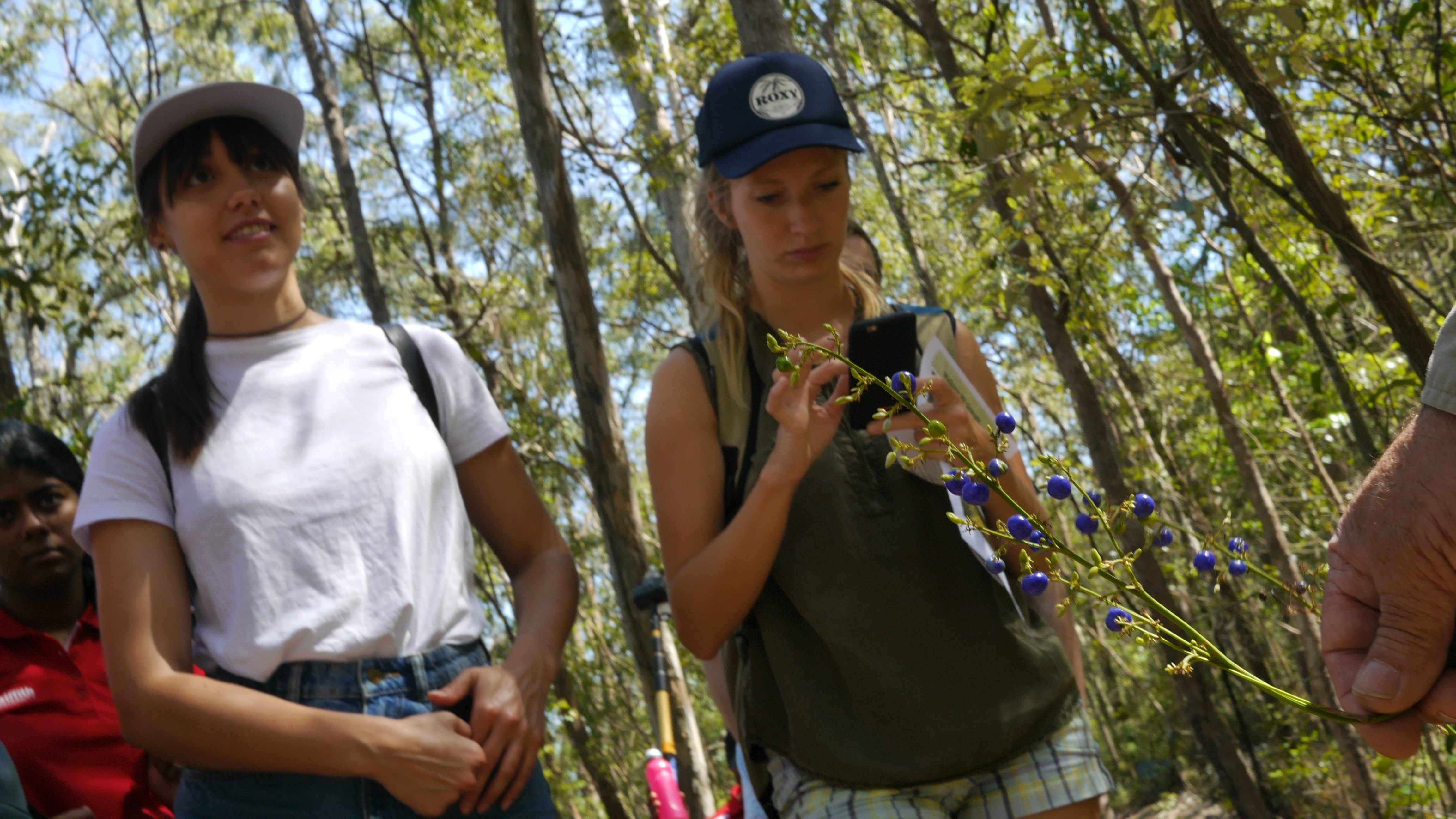
Along Acacia Way we found Settlers Flax Gymnostachys anceps: used by early settlers to sew bags and indigenous people combined it with bark to make fishing line, Blueberry Lily Dianella longifolia and Native Raspberry Rubus moluccanus.
Leading guided walks with Griffith Mates is always a pleasure … lots of smiles and laughter along the Eastern Outlook Track.
2016 National Tree Day planting
A quick stop to inspect results from the 2016 National Tree Day planting: thickening nicely and some trees over 3 metres.
I showed the natural regeneration in the area where the invasive weed Creeping Lantana Lantana montevidenses was cleared as part of National Tree Day. Nature is very resilient if we give it a chance and the returning natives are strong evidence of the effectiveness of our Bushcare work.
Vincent and his tree
Vincent took the opportunity to check in on the tree he planted on National Tree Day.
A great walk … everyone seemed to be inspired to return and help with our Bushcare work.
Thanks to Andreas Listle for staying behind the camera and capturing memories.























 Mount Gravatt Environment Group