Echidna - front - Demmers - 24 June 2013

Echidna – Tachyglossus aculeatus

By: Michael Fox

“My wife says this Echidna was near our house in Mt Gravatt this morning. I am very jealous!! Apparently it bumbled around for ages.” Pieter emailed me today with these amazing photos.

I am jealous as well. I am yet to see an Echidna in the Reserve even though I have walked every track and spent hundreds of hours in bushcare and taking photos.

Early mornings and late afternoon is the time to look for Echidnas as they tend to avoid the hotter times of day.


Echidna - Demmers - 24 June 2013

Termite exterminator at work

If you spot an Echidna you can report the sighting to Wildlife Queensland’s Echidna Watch program which is gathering information on the distribution and abundance of Echidnas.

These unique animals are not just another interesting native animal they are are also valuable urban pest controllers protecting our homes by eating termites as well as ants and, apparently, dirt.

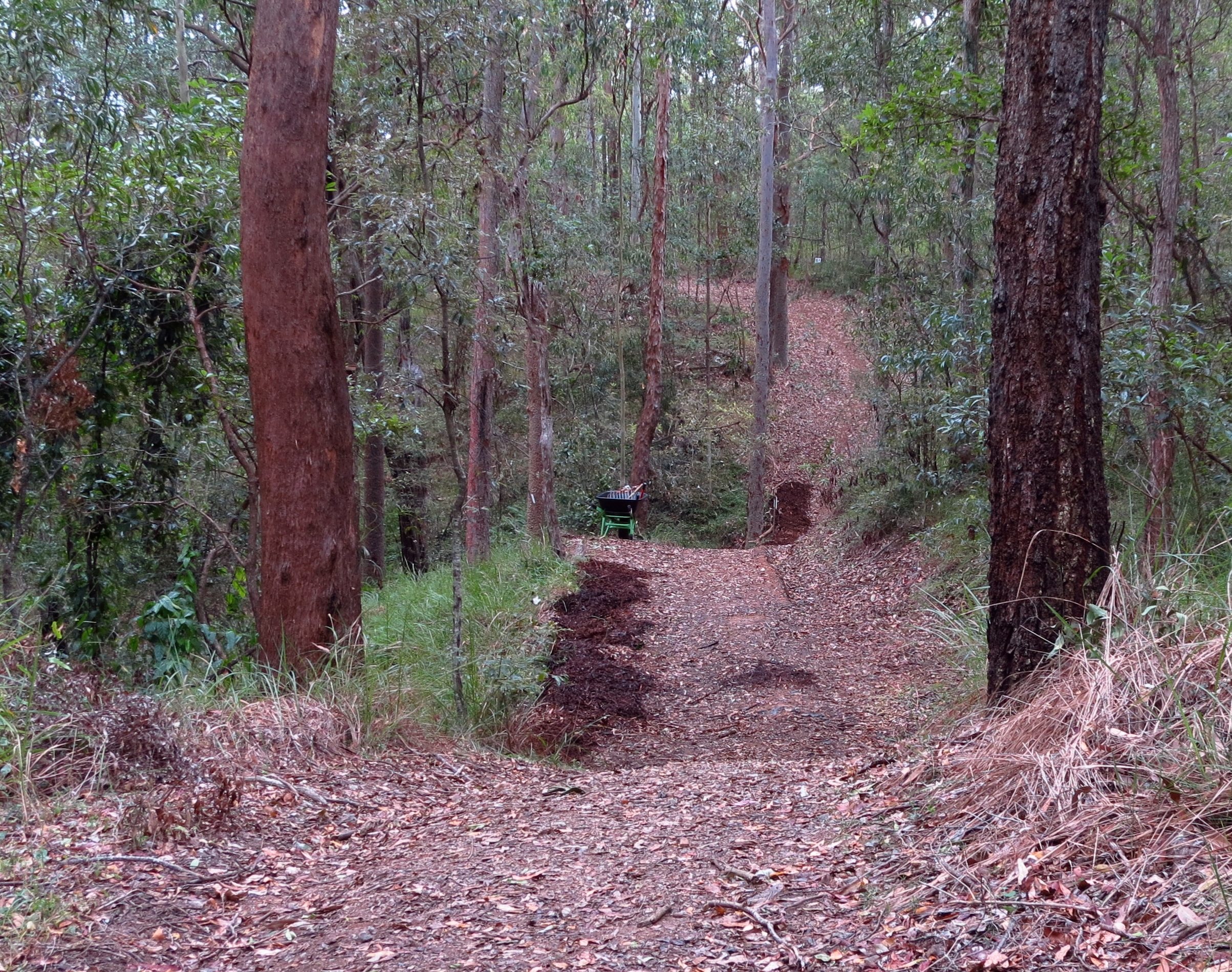
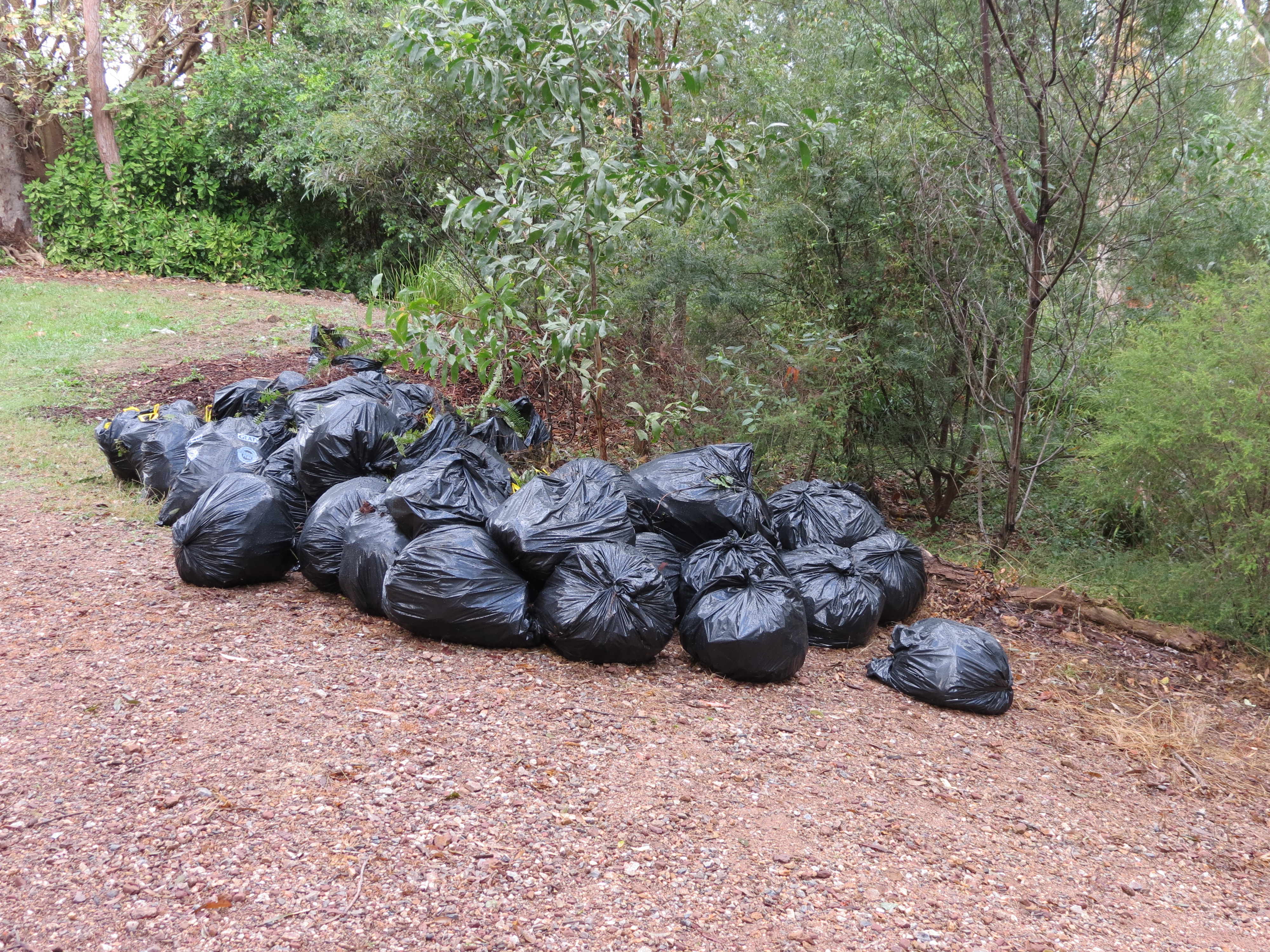
Restoration work at our Bushcare sites is improving habitat. However all mountain neighbours can help by not dumping garden waste/lawn clippings in the bushland and not removing fallen timber for firewood.

j

img137

Click on image to enlarge for reading

d

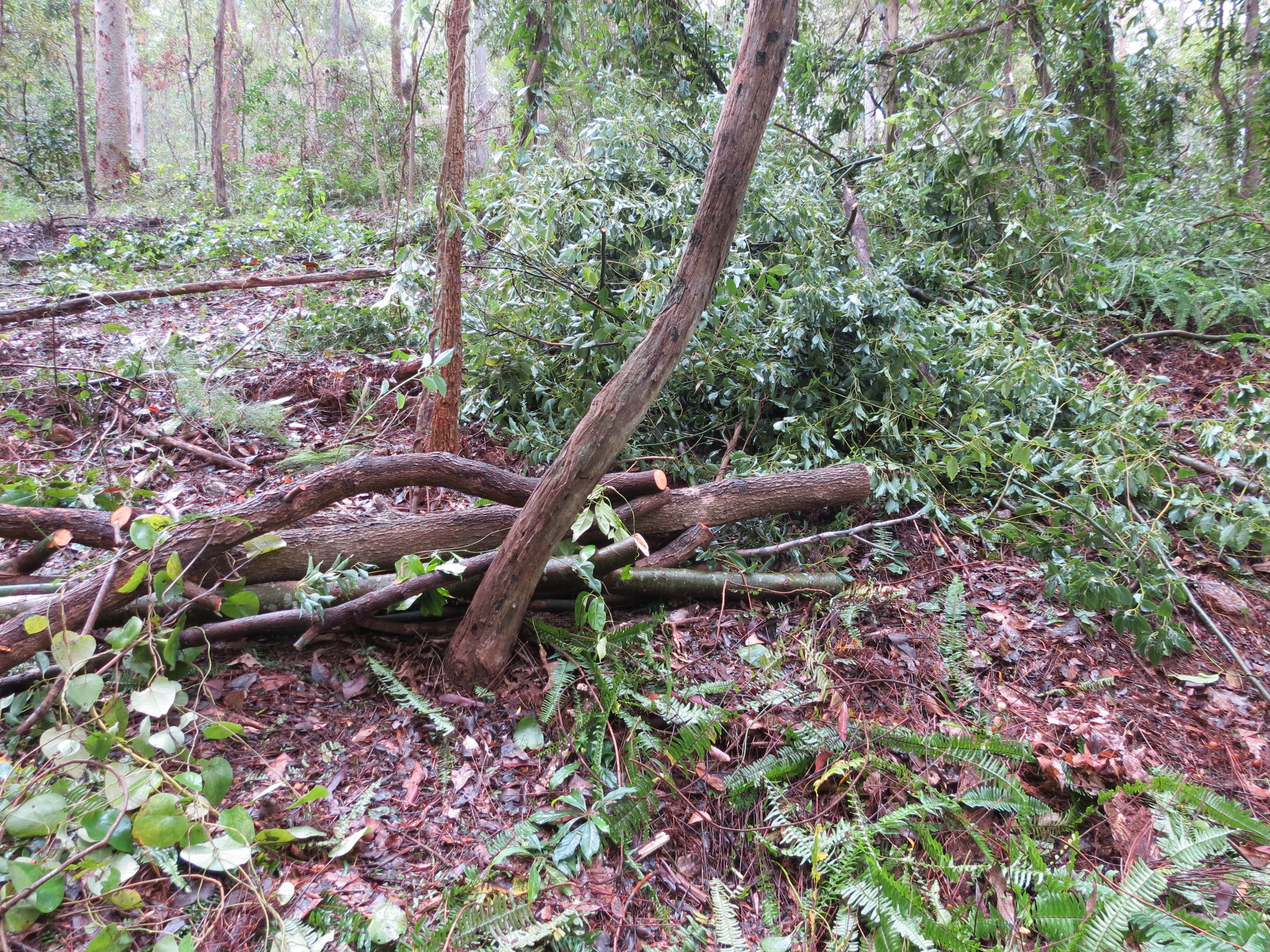
The 2011 report Mimosa Creek Precinct – Flora, Fauna and Fauna Corridor Assessment,  by Biodiversity Assessment & Management Pty Ltd, identified a lack of fallen timber as a key weakness in the mountain habitat. Fallen logs create ideal food sources for Echidnas as they attract termites and ants. These logs also provide protection as Echidnas avoid extremes in temperature by sheltering in hollow logs, rock crevices and vegetation.

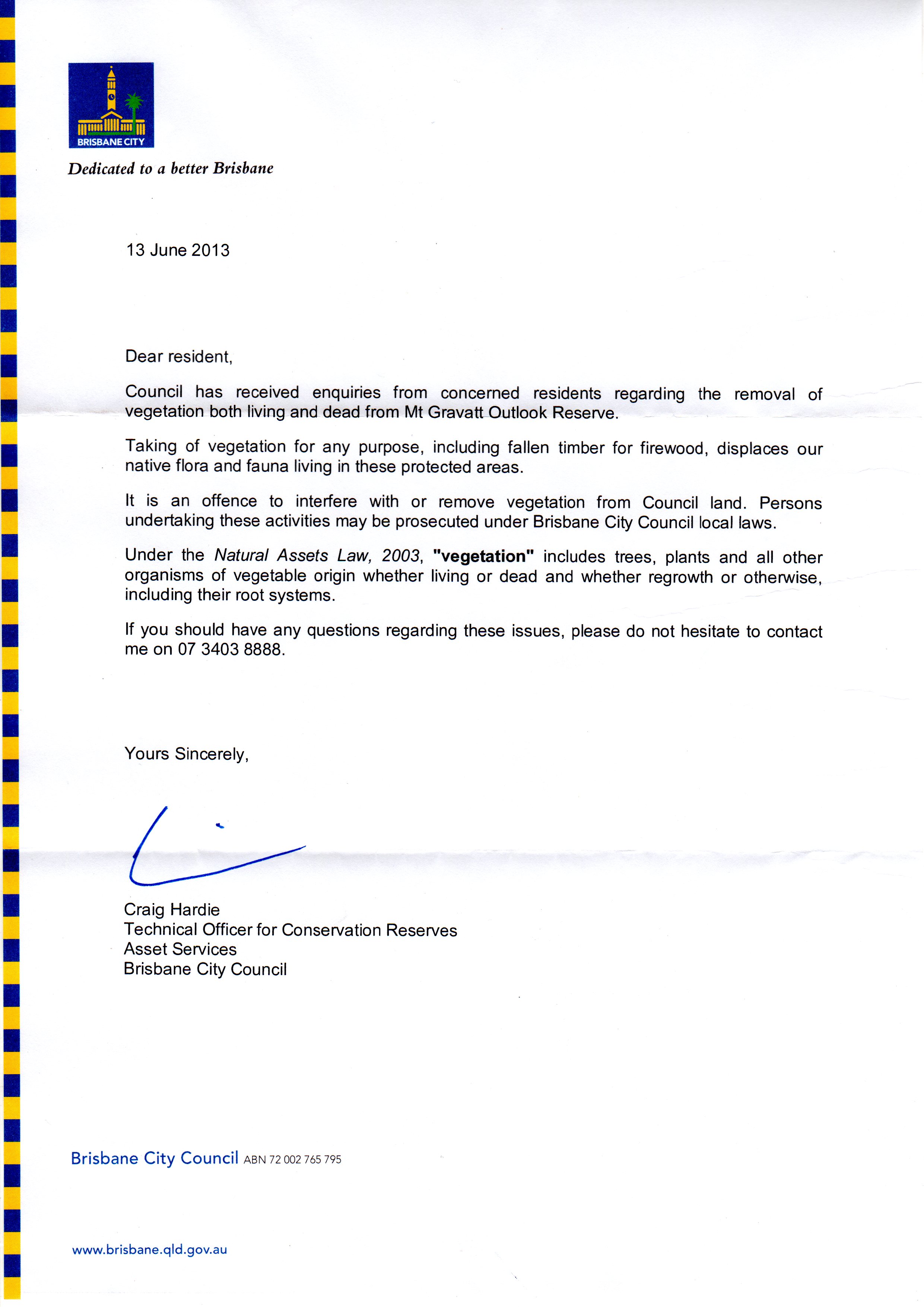
Local Council Ranger, Craig Hardie, has recently distributed letters to properties adjoining the Reserve to highlight the importance of not removing vegetation including fallen logs.

We are lucky to have such a unique habitat right in at our backdoor. I often have people ask amazed: “Koalas are just roaming free?” Therefore, as a community, we have a responsibility to protect this valuable asset by:

  • not dumping rubbish or garden waste; and
  • keeping dog’s on leash within the Reserve.

Like Koalas, the main threats to Echidnas are cars and dogs. If you are walking in the Reserve please keep your dog on a leash.

By: Michael Fox

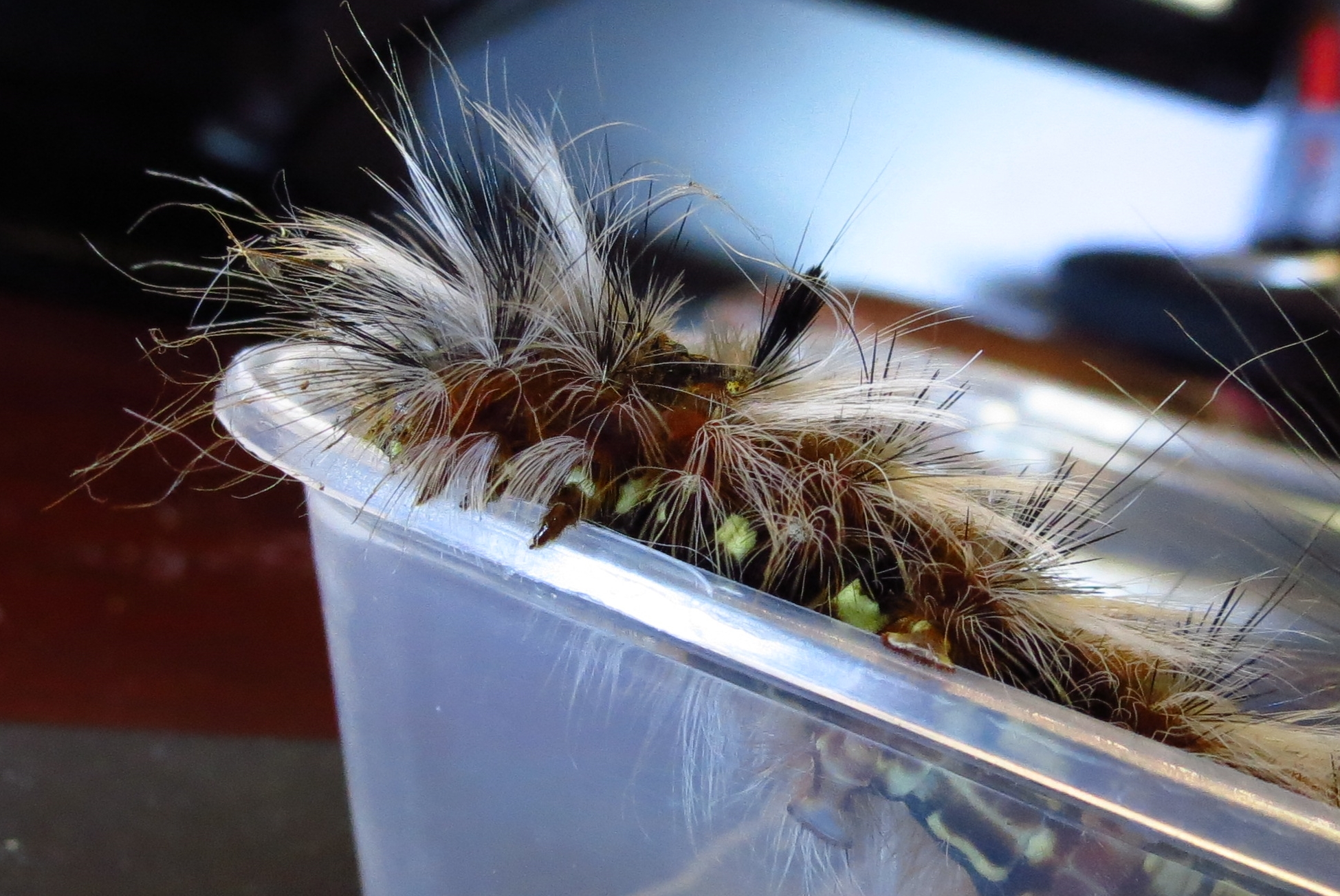
Anthela canescens 2 - 8 June 2013

Large Anthelid Moth – Anthela canescens
(head to left)

I am often asked what keeps me with the huge job of engaging our community in restoration of Mt Gravatt Conservation Reserve.

Today I realised that one thing that keeps me going is the sense of achievement when a young neighbour knocks on my door with a native snail or today a moth caterpillar in a box. When I was Liam’s age I was inspired by David Fleay’s nature notes in the Courier Mail, so I feel honoured to have to opportunity to help another young naturalist.

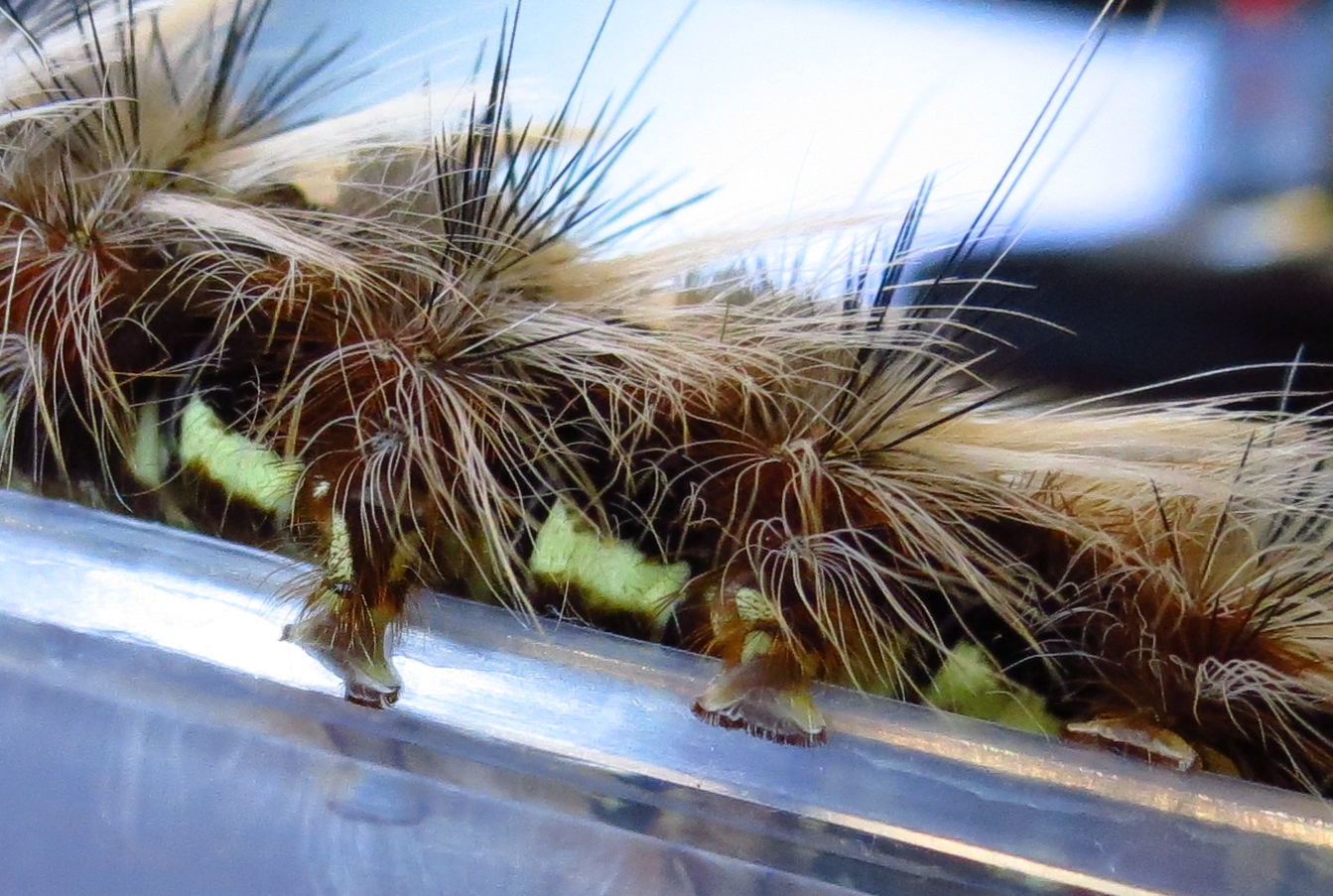
Anthela canescens - feet & prolegs - 8 June 2013

True legs and prolegs

I have added this new specimen to Flora and Fauna of Mt Gravatt Conservation Reserve crediting Liam.

Every time I find a new animal or plant, or have them arrive at my door, I learn something new as I work through identification and take close-up photos.

Anthela canescens - feet close - 8 June 2013

Prolegs gripping plastic box

Brisbane Insects (see photos of moth) and Lepidoptera Butterfly House are two valuable sites for identification of moths and butterflies.

My wife took one look at this specimen and said it looks like a Chinese Shih Tzu … all hair and attitude.

Anthela canescens - wiskers - 8 June 2013

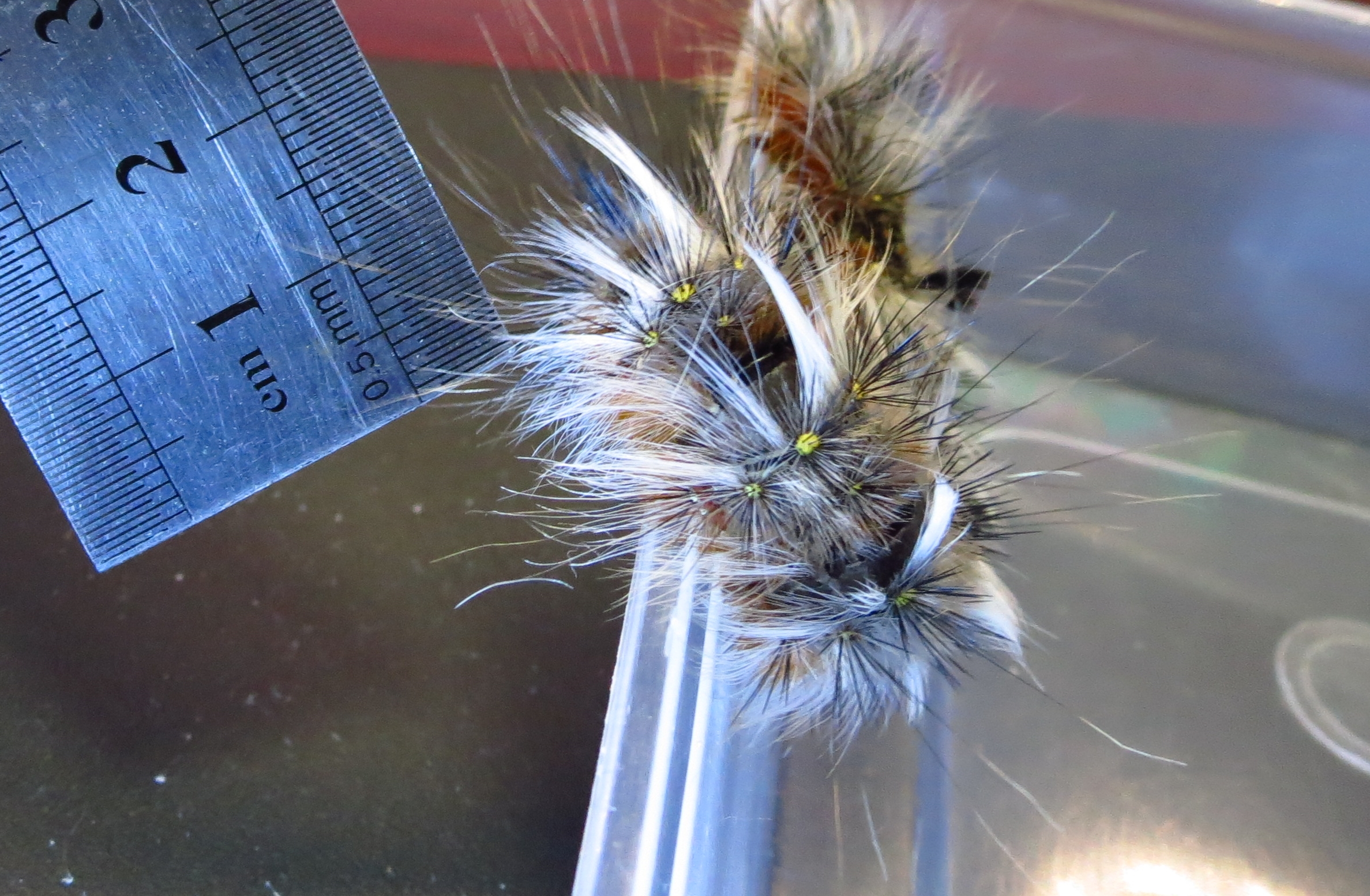
Black spine like hairs

Macro-photos of the caterpillar legs shows the dramatic difference between the true legs attached to the thorax near the head and the prolegs attached to the abdomen. The prolegs look like large pads for gripping while the true legs look like something from a science fiction monster.

A close up photo of the hairy monster showed clusters of black spine like hairs growing out of bright yellow balls. These non-envenomating (no venom) hairs produced a mechanical irritation on contact. The hairs are fragile and easily dislodged from the caterpillar, they adhere to the surface of skin when the caterpillar is contacted. (Uni Sydney Department of Medical Entomology – Caterpillars)

The addition of Liam’s specimen means we now have twenty seven different moths photographed and identified and living in Mt Gravatt Conservation Reserve.

IMG_3882

Prof. Ian O’Connor with development team

By: Michael Fox

The invitation said business casual, however, it is a university …

… and these green leaves gathered around Vice Chancellor Prof. Ian O’Connor are justly proud to launch this year’s must have App – GrowsAtGriffith.

Primary and secondary teachers, kindergartens, bushcare group members, local government teams, libraries, anyone interested in Australian native plants should download this App today. It’s free but looks and works like a million dollars.

IMG_3886

Discussing Slender Hyacinth Orchid photos with Mark and Catherine

Mt Gravatt Environment Group provided many of the 500 plus photos on this first release of this excellent tool. So I was proud to represent our group at this launch and finally meet the two key drivers of this project – Assoc Prof Catherine Pickering, Griffith School of Environment and post-graduate student Mark Ballantyne.

a

a

a

img057

DSCN0089

Sheamus O’Connor – Water Warrior

By: Michael Fox

Congratulations to Sheamus O’Connor who received the Water Warrior Award (Secondary) at Friday’s Healthy Waterways Awards.

Presented by Target Australia the award is open to to individual secondary school students who are undertaking activities that improve the health of our waterways and make a positive difference in our local communities.

Sheamus is a passionate advocate for environmental sustainability, improving bushland and waterways in his local area.  Sheamus became a volunteer and member at the Mt Gravatt Environment Group and Bulimba Creek Catchment in 2010, assisting with the bushcare group every Wednesday after school, and on weekend working bees along side other local residents and the Rotary group.

 In 2011, on National Tree Day, he was responsible for organising 20 students, teachers and family members to rehabilitate the entry of the Mt Gravatt Summit track, in conjunction with the bushcare group. The area was quickly transformed from a weed infested eyesore into the makings of wildlife habitat. In 2012, he continued working in the area, training international and local students from Griffith University, and  again organised a group of students to plant in the area for National Tree Day. Sheamus represented the bushcare group at the 2012 Lord Mayor’s Diamond Jubilee Walk tree planting in Victoria Park.

Sheamus has participated in Clean Up Australia Day for several years, assisting with the Scouts who come along.  He is very mindful that litter on the mountain makes its way into the creeks and degrades habitat for wildlife and explains this to the younger children.

During 2011 and 2012, Sheamus has been a regular attendee at the monthly  Open Days at the Bulimba Creek Catchment Sustainability Centre. He has the role of introducing or thanking the guest presenters, taking new people on a tour of the centre and has given a presentation himself about looking after chickens.  He is very knowledgeable about native plants and assists others to make selections for their yards. Sheamus has also assisted the catchment group at an information stall for Green Heart Fair.  He talked to many people about bushcare, looking after waterways, and plants to encourage native species in the home garden.

In 2012, Sheamus was invited to be part of Council’s school holiday program, giving a presentation about chickens at the Holland Park library.  The children were fascinated with his chickens and the information given about their habits and needs.

His concern for the environment has extended to his own home, where the O’Connor family now uses many sustainable living practices.He has constructed fruit and vegetable gardens, a compost bin, worm farm and chicken coop, recycling as much waste as possible into the garden. The native gardens provide habitat for the endangered Richmond Birdwing Butterfly as well as the usual animals found in urban backyards.  He even persuaded his parent’s to install solar panels.

Sheamus’s efforts have been recognised by the Lord Mayor’s Young Citizen of the Year in 2012 and Quest Newspaper’s Young Star Community Award in 2012.  In 2011 he had the opportunity of meeting the Premier, and he took the opportunity to explain his outlook on the environment and the importance of people acting now to protect natural areas for the future.

Sheamus is a passionate advocate for environmental sustainability and has just begun an Environmental Course at Griffith University.  He is not only an articulate spokesperson for future generations, he is recognised for his personal contribution to the restoration of Mt Gravatt Conservation Reserve.
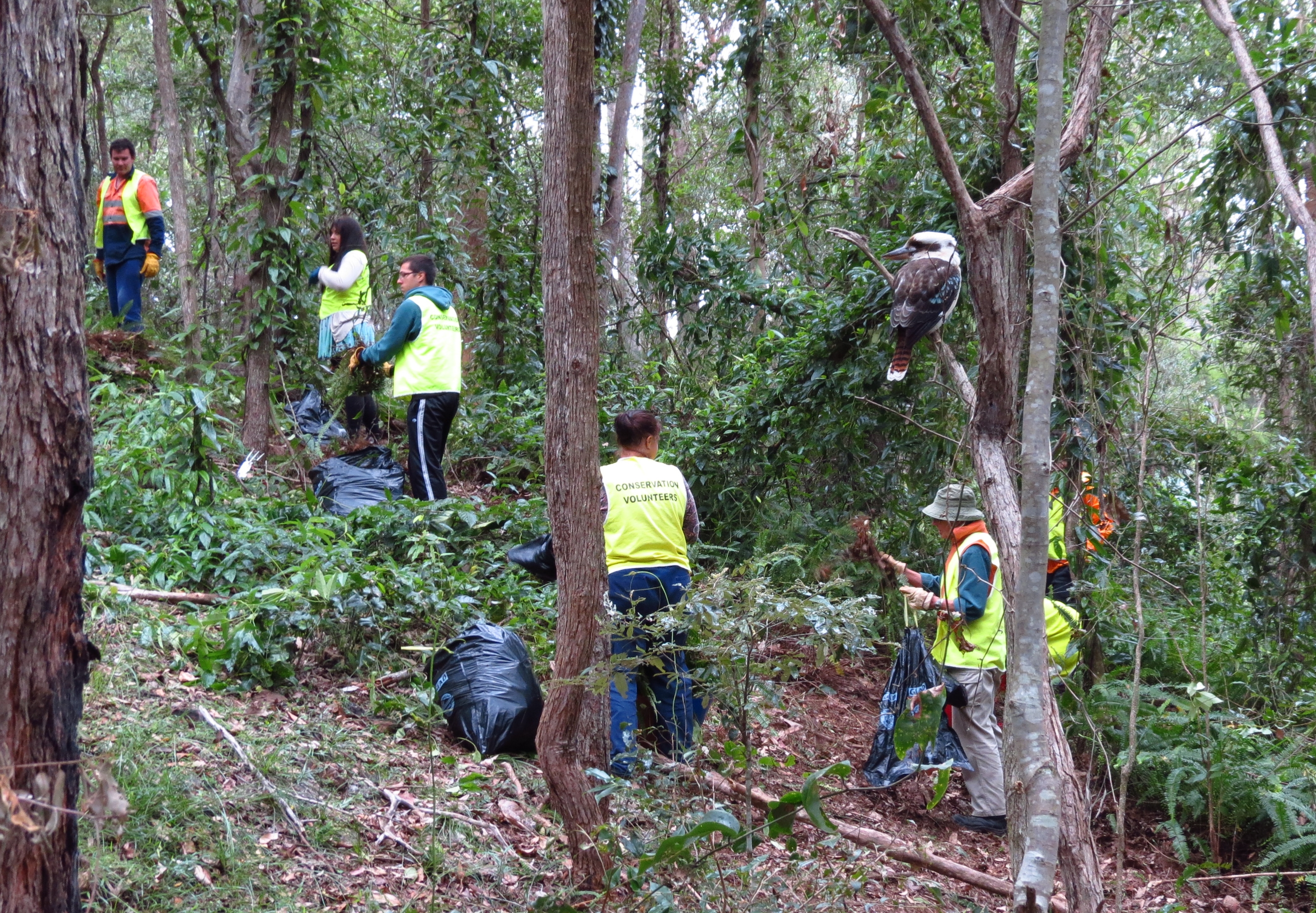
CVA team - 22 May 2013

CVA volunteers with Kookaburra supervisor

By: Michael Fox

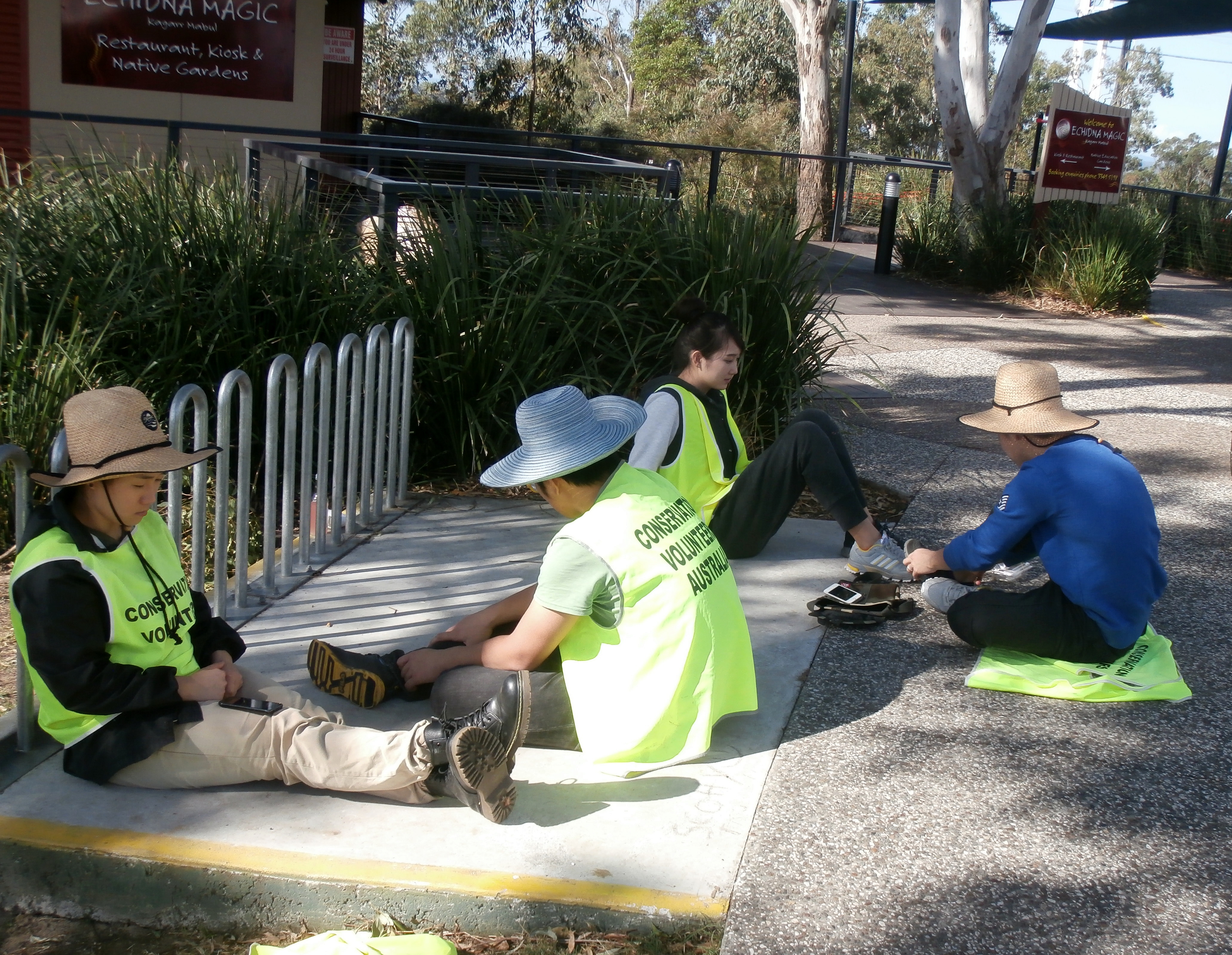
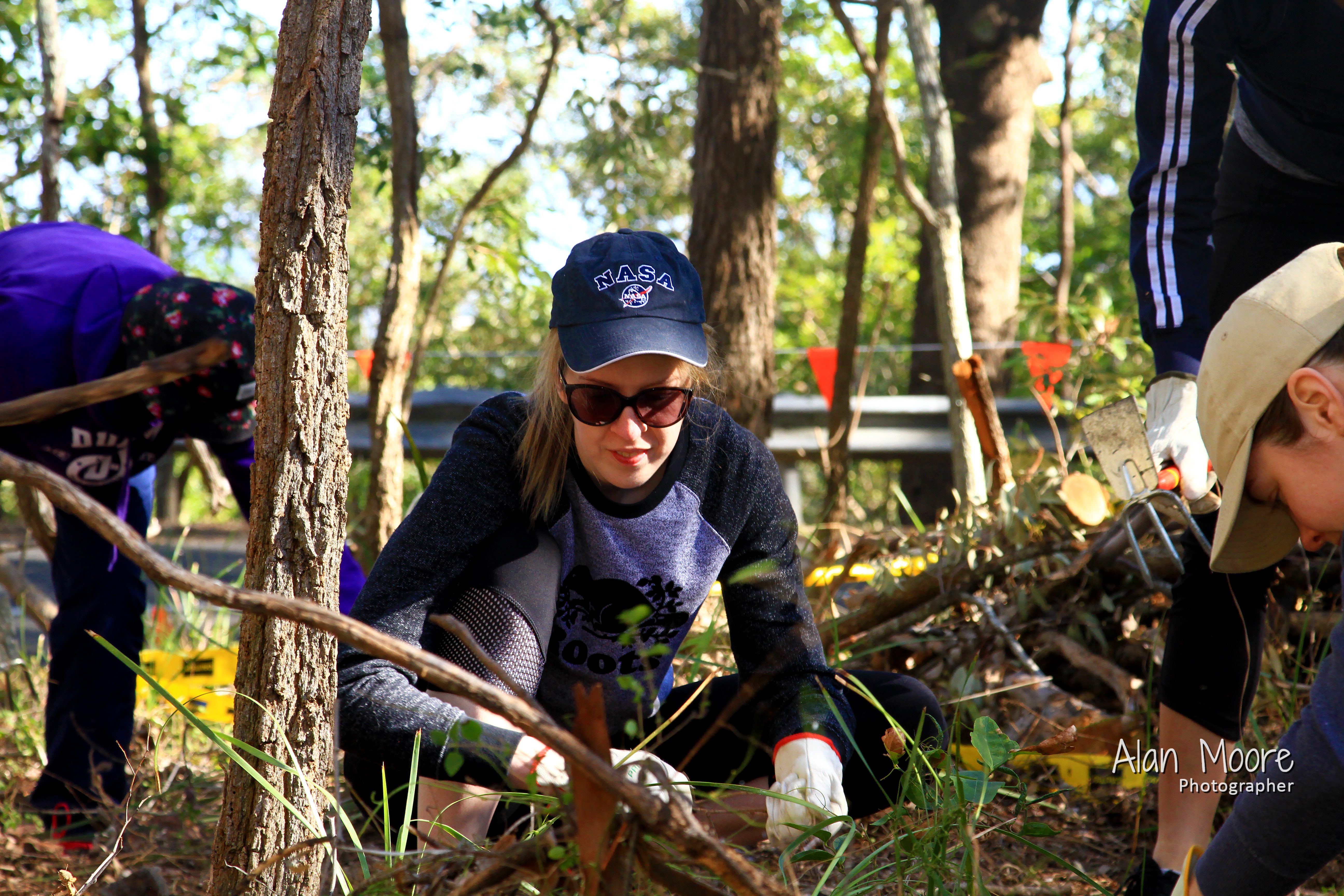
Conservation Volunteer Australia (CVA) teams worked at our Fox Gully Bushcare site the last two Wednesdays, restoring the silt filters along the track, removing a huge area of Fishbone Fern Nephrolepis cordifolia.

l

l

Silt filters - 22 May 2013

Mulch silt filters clean run-off water

l

Reducing erosion and keeping silt our of our waterways is an important part of our bushcare work. Silt filters created with logs and mulch at run-off points along the dirt maintenance track slow the water and allow silt to settle out. The filters have done an excellent job managing the extreme conditions over the last few years however they needed to be made more permanent with logs and fresh mulch.

Removing Fishbone - 29 May 2013

Chris, CVA supervisor (orange vest), explaining best-practice weed removal

e

The CVA supervisors are very professional, delivering their team, ensuring they have all the necessary safety equipment then providing practical support and guidance. Chris is reinventing his career as a recent mature age graduate from Queensland University, so he combines strong environmental knowledge with practical work experience. Here he is explaining our best-practice procedure for clearing Fishbone – tear off and bin the roots then the leaves are composted on-site.

Internet Generation meet Australian bush

Gen Y meet Australian bush

a

I often hear people comment that young people today a don’t have the same commitment we Baby Boomers demonstrate. So it is a real pleasure to have the opportunity to work with individuals like the young Korean girl not only on a working holiday in Australia bur also volunteering to restore our Conservation Reserve.

IMG_3774

Camphor Laurel and Chinese Elm removed

d

k

d

The CVA teams made a major contribution progressing our restoration of Zone 13. Clearing the Fishbone Fern so the native grasses and ferns return to the gully.

d

IMG_3777

Bags of Fishbone roots ready for removal

d

Multinational volunteer team

By: Susan Jones

We were fortunate to have a multinational group of eleven Conservation Volunteers Australia (CVA) volunteers at Gertrude Petty Place today to clear a large garden bed of Cobblers Pegs Bidens pilosa and lay mulch.

d

d

CVA Mulch Team

d

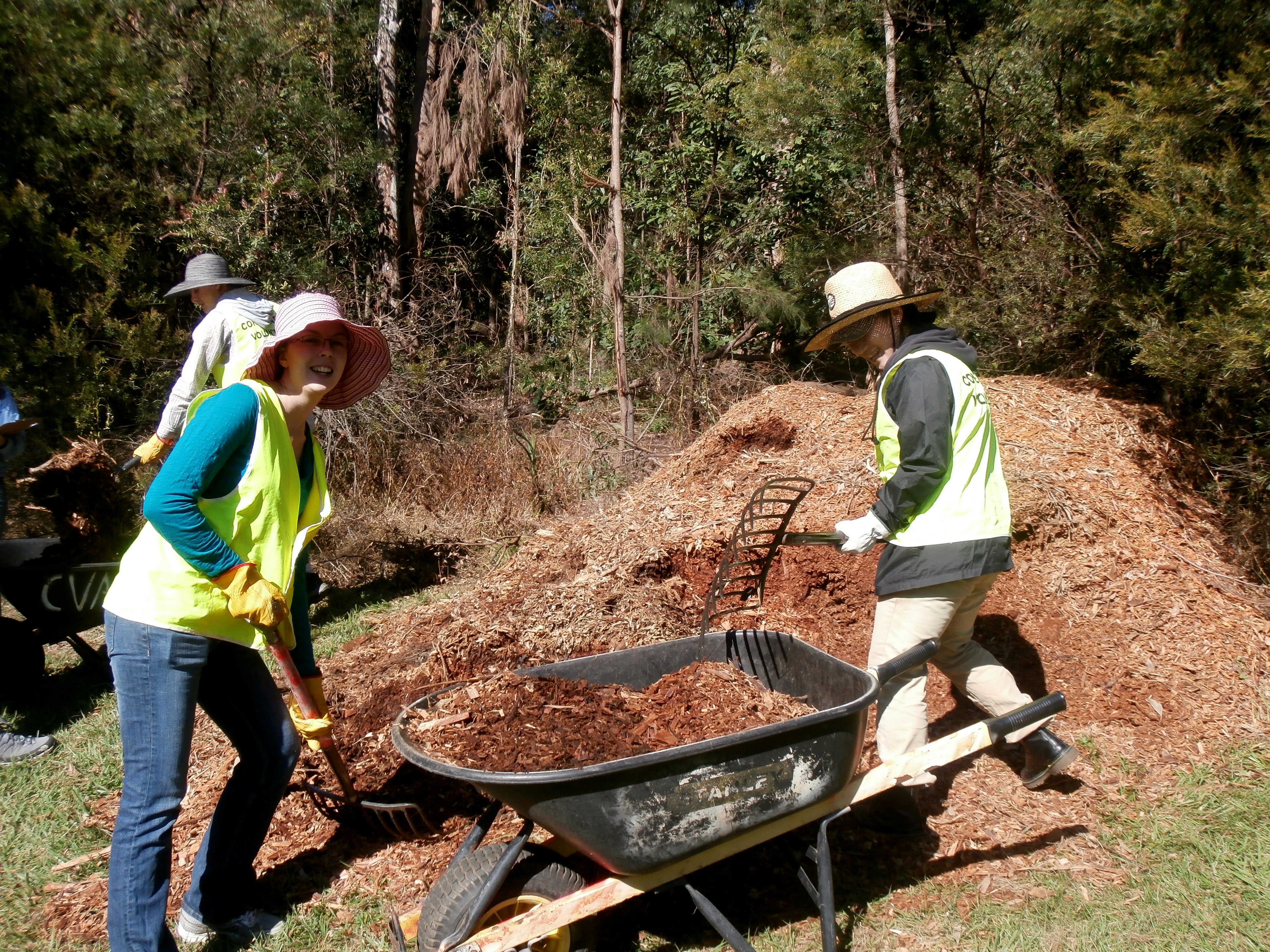
One team removed the weeds, whilst the other barrowed in mulch sourced from trees blown down in the March 20 storm.

We were unable to finish the job as we had to stop work when a nest of Green-Head Ants Rhytidoponera metallica swarmed out of a nest in the mulch, threatening volunteers with painful stings.

Well earned break at Summit

d

d

d

We stopped for lunch at the summit, which proved a real treat for everyone.   Our international friends were amazed at the expansive views and the locals declared it better than that from Mt Coot-tha.

Removing Creeping Lantana

d


Afterwards, we returned to clear Creeping Lantana Lantana montevidensis at the entrance to the Summit Walk, where we found a hive of Sugarbag native bees Trigona carbonaria.

Our day concluded with a tour of the Mt Gravatt High School National Tree Day Planting site, and a look at an old termite’s nest in an Ironbark gum,  which has provided a breeding site over many years for our local Laughing Kookaburras Dacelo novaeguineae.

A heartfelt thanks to these delightful volunteers who worked so hard to strengthen the environmental values of our Reserve.

By: Laurie Deacon

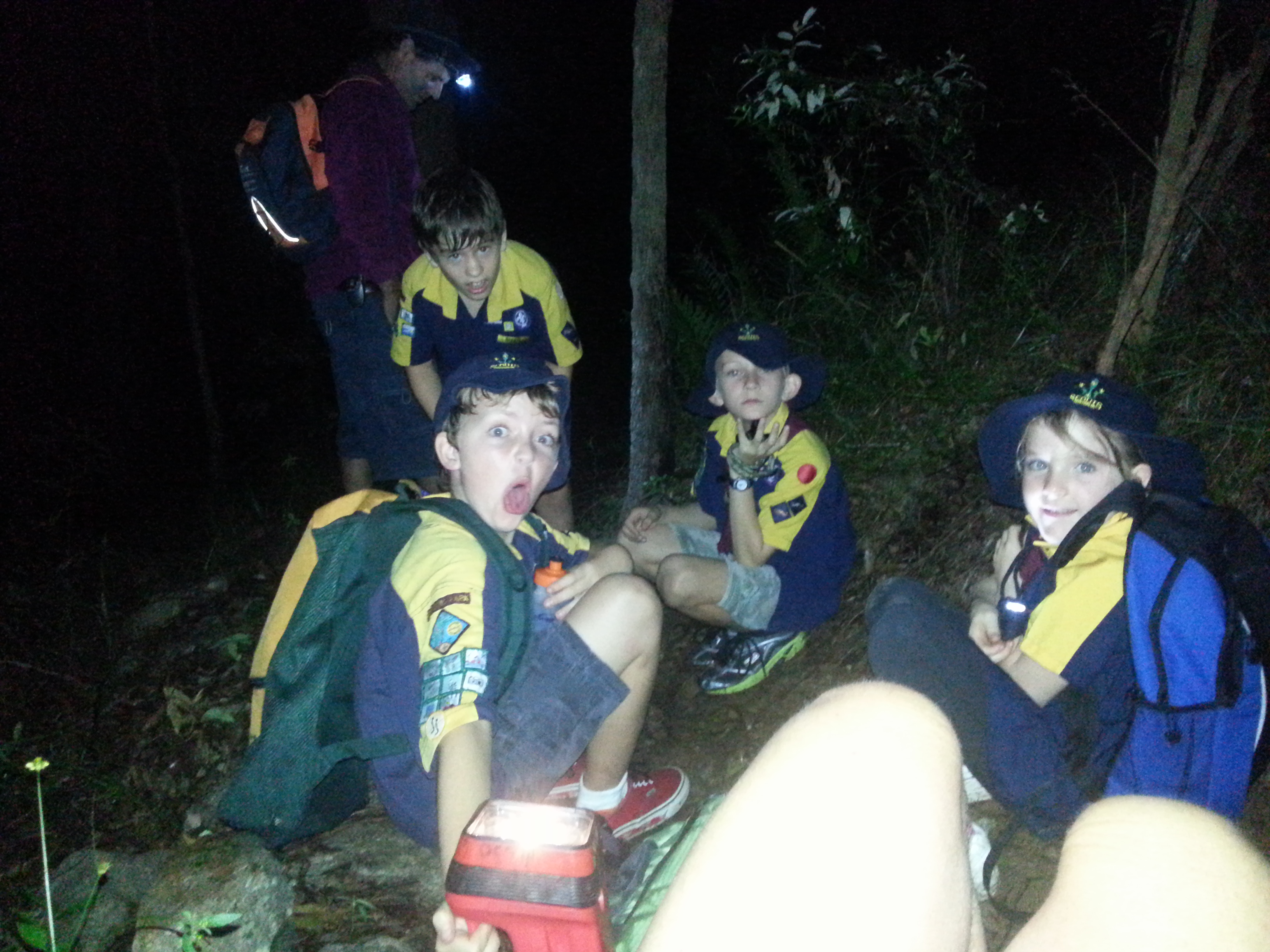
Hawkeye, Rama, Malia and Lorikeet get prepared like all good Cub Scout leaders!!

We are taking forty little Cubs with Mums and Dads up Mt Gravatt for a bit of night spotting in the Conservation Reserve.

Walk on your wild side

Mt Gravatt night creatures

Now night spotting for shy furry creatures or sleeping birds with forty noisy Cubs sounds like a optimist’s nightmare….and it was!  Every self respecting Koala, Glider, Possum or bird would have heard the happy sounds of children squealing with joy at being out in the night time … in the dark in the bush … on an adventure! Torch lights waving everywhere but on the trees, usually in little Mary’s face, by accident of course!

We stopped many times along the track, all in single file with Cub leaders and parents interspersed between the badge wearing “baby elephants” to keep them on task and on the track! “Now, no going off the track as you’ll trash the sensitive bush plants and you may crush a flowering orchid” , yells Lorikeet one of the Cub leaders! “Let’s stop and  Listen to the sounds of the bush at night and see what we can hear?” yells Lorikeet again to all the Cubs …. muffled joy was heard, and a few mysterious animal sounds.

Then we all reached the top of the Mountain, had a wonderful Mountain top ceremony for a few Cubs receiving awards for jobs well done, then back we plunge into the deep dark forest and back down the mountain track!

Malia a leader says she will go ahead with a few Cubs and the rest of us follow behind.  Ooops!  Then as the rest of us all come to the fork in the track there is no sign of Malias foot prints and her Pack following the correct route!

So the next adventure starts (with the aid of a mobile phone) we call in the renegade Pack who had gone off in the wrong direction and send a search party to “bring them home”! Some became heroes out of the story and  some became legends!  At the bottom of the Mount all Cubs and Leaders had hot chocolate and piled back into their suburban cars and lives … and beds. WHAT AN ADVENTURE THEY HAD … and all in suburbia!

So I reflect on the Mountain walk that Thursday night (only a few hours and home to bed by 8pm), and think how forty young minds would be changed for life after that night. The wildness around them, the confidence gained within them; the uncertainty felt, the competencies gained; the seemingly insurmountable walk for some, the caring and  sharing offered from others; the uniqueness of the mountain at night, and the humility and familiarity that bred caring in their souls for the bush.

AND THAT WAS ONLY THE PARENTS THAT CAME ALONG ! 🙂

Fond regards

The Wood Sprites

By: Sharyn Kann

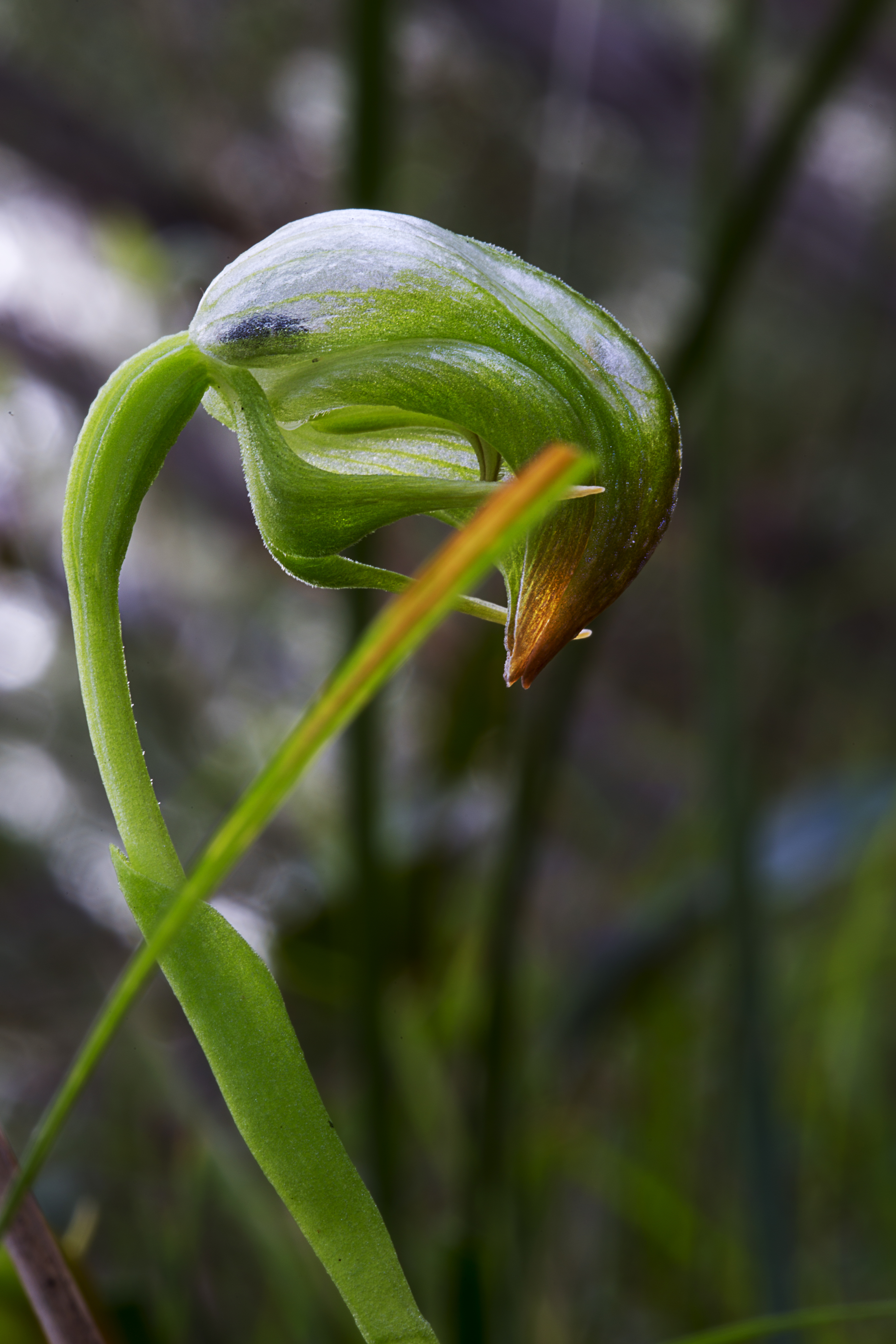
One of the local orchids my bushwalking friend has been telling me about, is the Pterostylus nutans or Nodding Greenhood, a terrestrial orchid I have been keen to see.  Finally, a phone call confirmed that they are out in flower and he was happy to take Len and me on a walk to see them.

Leaves

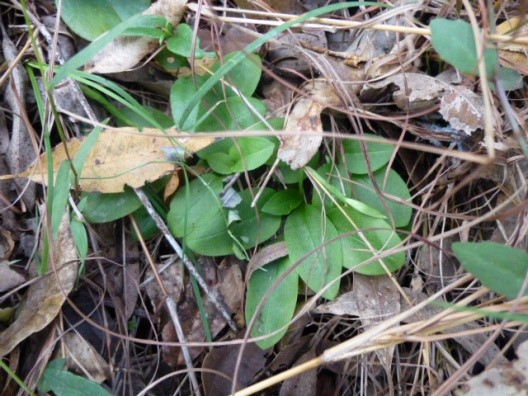
Nodding Greenhood Orchid leaves

On the high side of the track of the bush reserve was a cluster of several Nodding Greenhoods, some in flower and some yet to flower.  Had I seen them without the flower, I would never have picked the plant as an orchid.

 The first photo here shows the plant itself without a flower spike.  The leaves grow flat to the ground in a basal rosette and the plant has a small underground tuber.  To my untrained eye, they looked like a lot of the other plants growing on the forest floor.

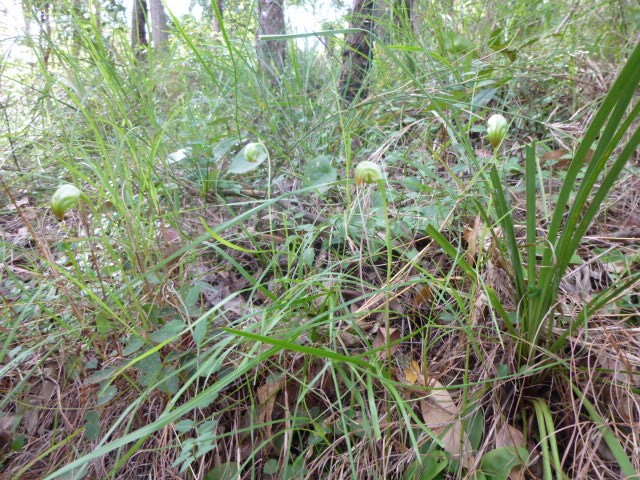
Nodding Orchid

Cluster of orchids in flower

This next photo shows most of the cluster of Greenhoods with their long stem and single blossom.  As you can see, they don’t actually stand out much, blending quite well into the background.

Of the 78 or so named species found in Australia, New Zealand, New Caledonia and Papua, the Nodding Greenhood is probably the most common, occurring in all states, except maybe, Western Australia.

130502_0016_02

Nodding Greenhood flower with insect inside

Greenhoods are generally fertilised by insects who land on the strap like hinge of the labellum.  They are then flung into the hood with their only escape being the up the tube formed by the closed labellum and the column wings.  At the outlet, the insect has to press past the pollinia where their sticky viscid disc adheres to its back.  As it repeats this process with other greenhoods, the sticky disc on its back is pressed against the stigma beneath the column wings of the next plant and more pollinia is attached as it proceeds out of the flower.

The hood is a soft semi-transparent apple green colour, and insects inside it can easily be seen.

Photos by Sharyn Kann and Alan Moore, with information taken from Australian Native Orchids in Colour by Leo Cady & E R /Rotherham.

Brisbane Orchid Society meet regularly at the refurbished Progress Hall, Upper Mt Gravatt – 4th Monday month at 7:45Pm.

(l-r) Mirandha, David, Joseph

By: Michael Fox

Mirandha Escott-Burton is the driving force behind our partnership with the Griffith Bushcare Team which aims to engage our local university students in our restoration work.

We are currently planning a series of Saturday morning events and projects at our six Bushcare sites.

Saturday was at Gertrude Petty Place Bushcare where Mirandha and Joseph worked with local resident David, Team Leader Sue Jones and other volunteers who meet on site the last Saturday of each month between 8am and 10am.

Recycle photos

Support our Mountain restoration projects
Recycle your biscuit and lolly bags at Coles

By: Michael Fox

Replas Bollards are to used as station markers for the self-guided walks through Mt Gravatt Conservation Reserve. So it is inspiring to learn that our plastic shopping bags as well as biscuit and lolly packets can now be recycled at our local Coles store.
Planet ARK blog post An Australian first – Free soft plastic recycling at Coles tells the story and lists the soft plastics we can now recycle rather than throw it in your Red Lid rubbish bin. Red Lid bins are gradually replacing the Green Lid general waste bins in line with the Australian Standard for waste bins.

Soft plastic you can recycle in the new Coles bins includes:

  • Bread bags
  • Biscuit packets
  • Frozen food bags
  • Rice and pasta Bags
  • Confectionery packets
  • Newspaper wrap (plastic)
  • Plastic shopping bags
  • Old green bags

Soft plastics like these cannot be recycled in the Yellow Lid household bins.