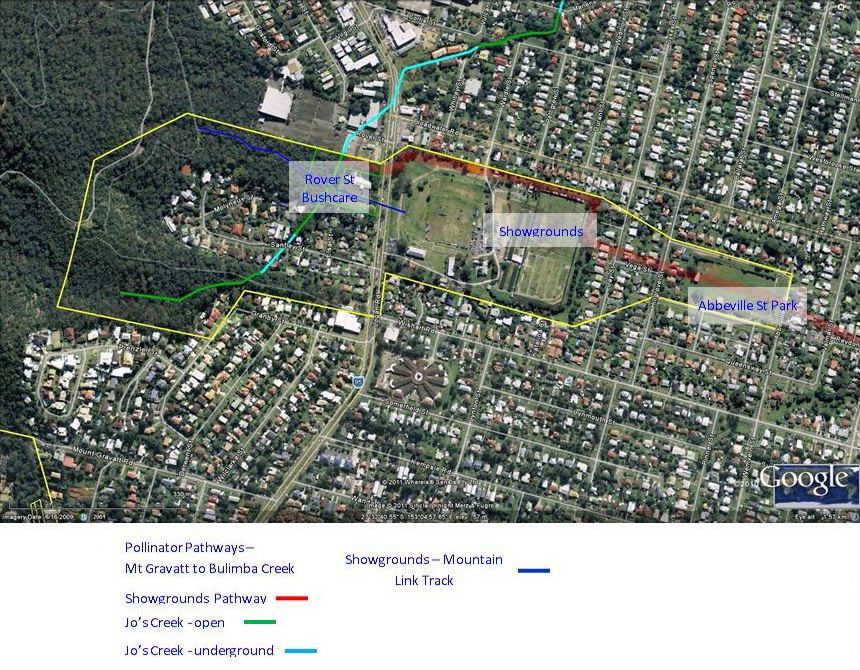
Showgrounds Precinct - click to enlarge

Mt Gravatt forms an inspiring backdrop for Showground events like last Sunday’s Green Heart Fair and the Showgrounds link our mountain heart with our community in a way unique in Brisbane and possibly the world.

The Mt Gravatt Precinct Landscape Plan aims to build those community links as an integral part of the environmental restoration of this important and diverse Australian bush habitat only 10 kilometres from Brisbane CBD.

Click here to download the plan: Mt Gravatt Showgrounds Precinct Landscape Plan – ver 3.0 email

The plan is based on our vision for the restoration of Mt Gravatt and complements the Mimosa Creek Precinct Landscape Plan.

Pollinator Links, a key part of the Landscape Plan, will link Mt Gravatt Reserve with Bulimba Creek via the Showgrounds and Jo’s Creek. Pollinator Links are an innovative approach to creating wildlife corridors through the fragmented urban landscape. These urban ecological corridors will allow pollinators such as Sugarbag Stingless, Leafcutter and Blue-banded bees (all recorded on Mt Gravatt) to move between fragmented habitats.  Birds like Grey Fantails and Golden Whistlers, butterflies like Orchard Swallowtails and Tailed Emperor will also utilise these pathways, thereby returning these species to our backyards.

While the environment is the key focus building and maintaining long-term financial and community commitment requires creation of shared value through identification of business opportunities and community benefits derived from habitat restoration. The Showgrounds – Mountain Link Track is one example of shared value creation – creating easier access to mountain walking tracks and opportunities for “King of the Mountain” type tourism events based at the Showgrounds.

Any feedback or ideas for business or community opportunities? Email Mt Gravatt Environment Group

By Susan Jones

Worldwide, Lions Clubs are planting 25 trees annually in support their local environment.

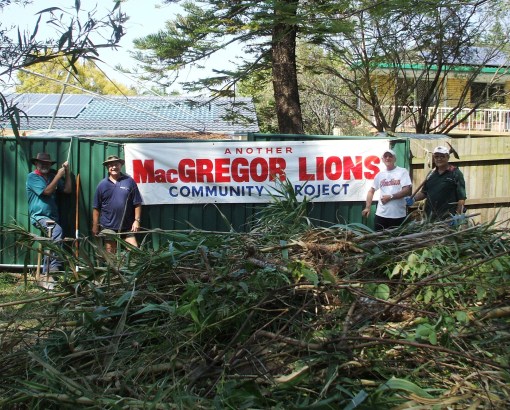
MacGregor Lions have chosen as their 2011 project, refurbishment of native gardens on the Roly Chapman Reserve pathway.  These five gardens are in a poor state, with weeds strangling earlier plantings.  BCC Habitat Brisbane and Mt Gravatt Environment Group are delighted to support MacGregor Lions in this venture which will visually improve the Reserve for walkers and provide valuable habitat for wildlife.
Kookaburras welcome the Lions

Saturday 1st October was Lions’ first working bee and the welcoming committee was ready!

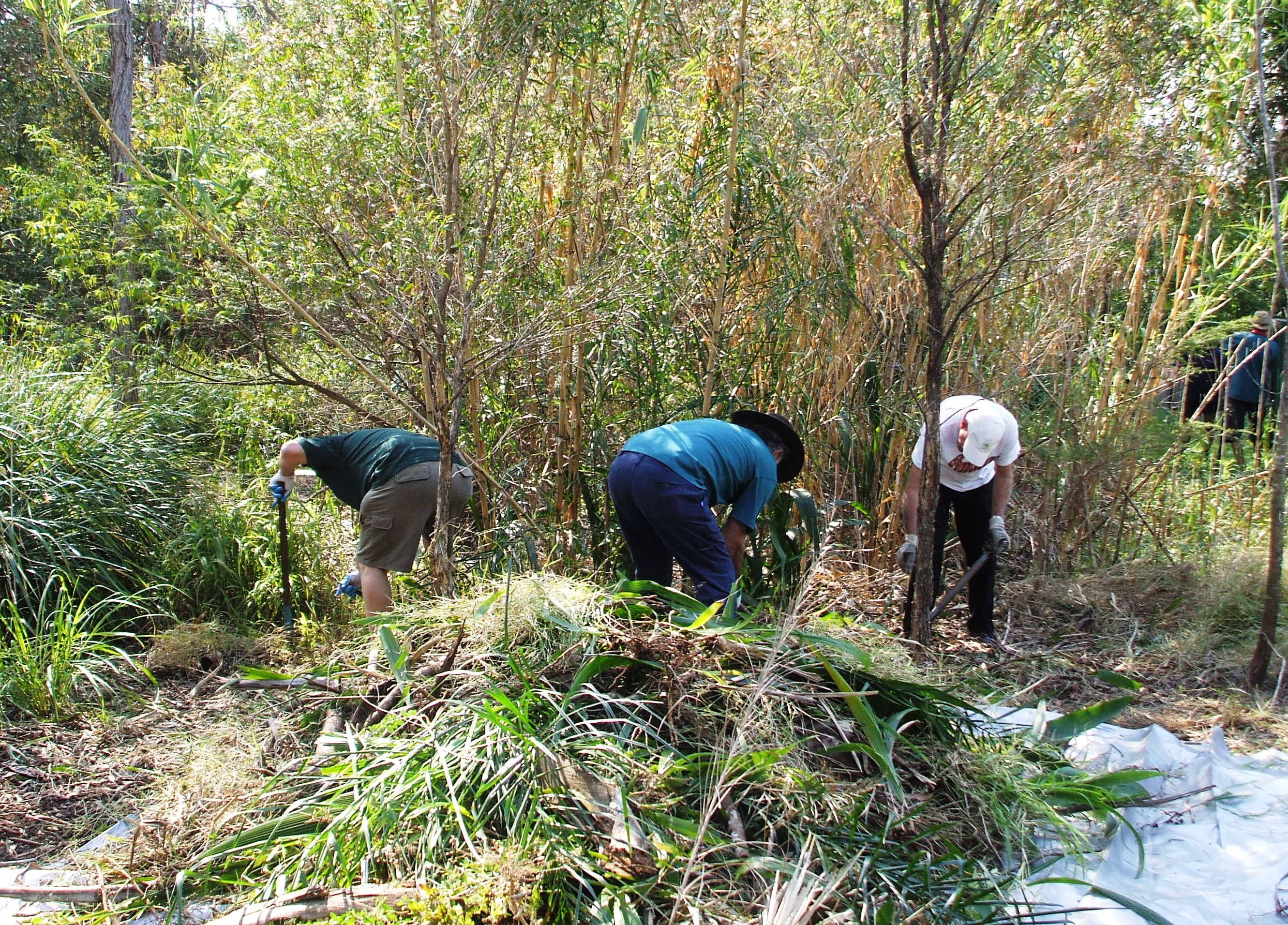
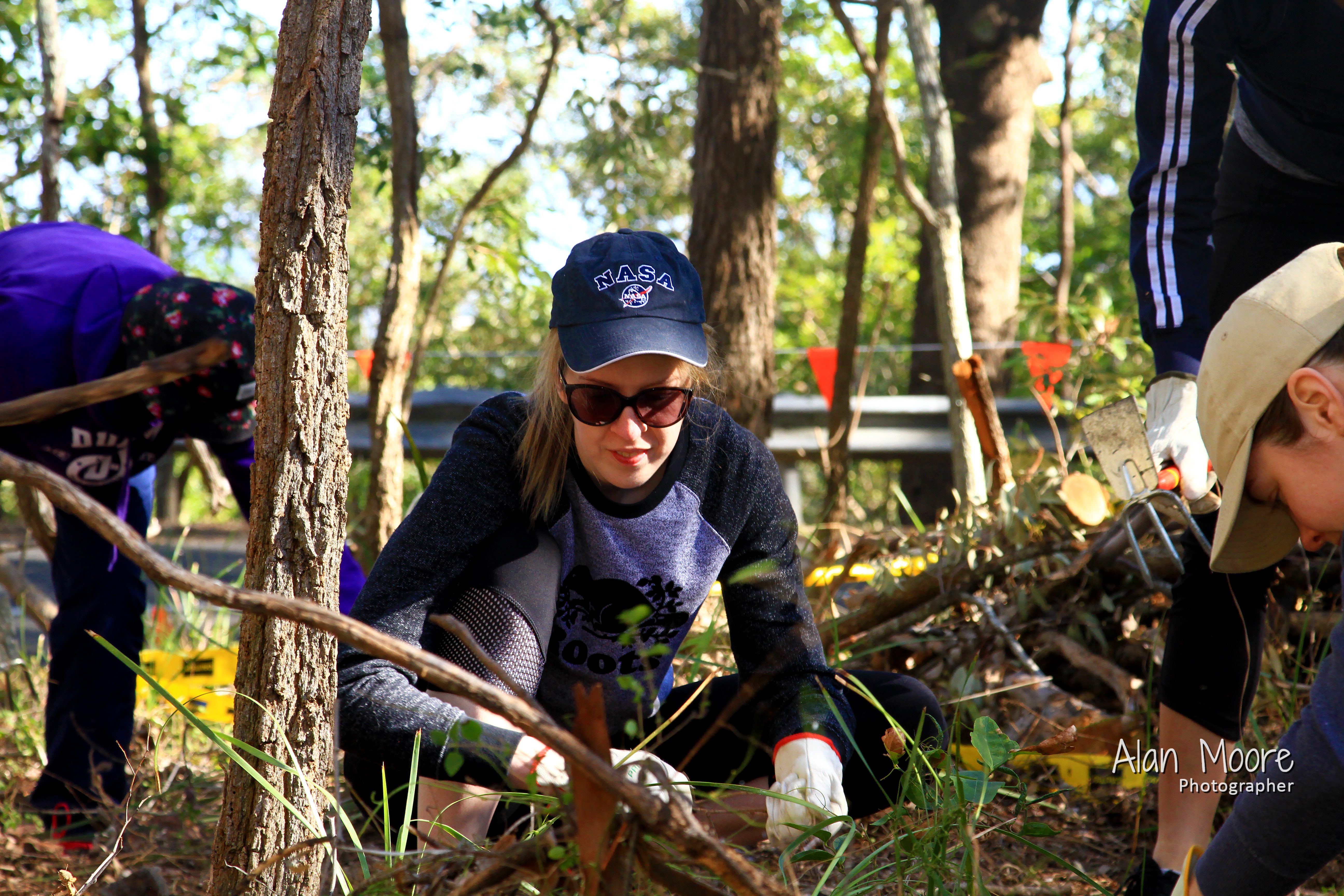
Five Lions’ members rolled their sleeves up and tackled a jungle of Cocos/Queens Palm Syagrus romanzoffiana and Elephant Grass Penisteu purpureum.

n

n

n

n

A large tarp was laid out onto which weeds were piled for mulching and recycling.

n

n

n

n

n

A good morning’s effort!

n

If you would like to help MacGregor Lions with this project, their next working bee will be on Saturday 5th November 8 am – 10 am, at the Hoad Street end of the Roly Chapman pathway.  (UBD 201:A9).

For more information visit Lions MacGregor website at www.brisbane.macgregor.qld.lions.org.au

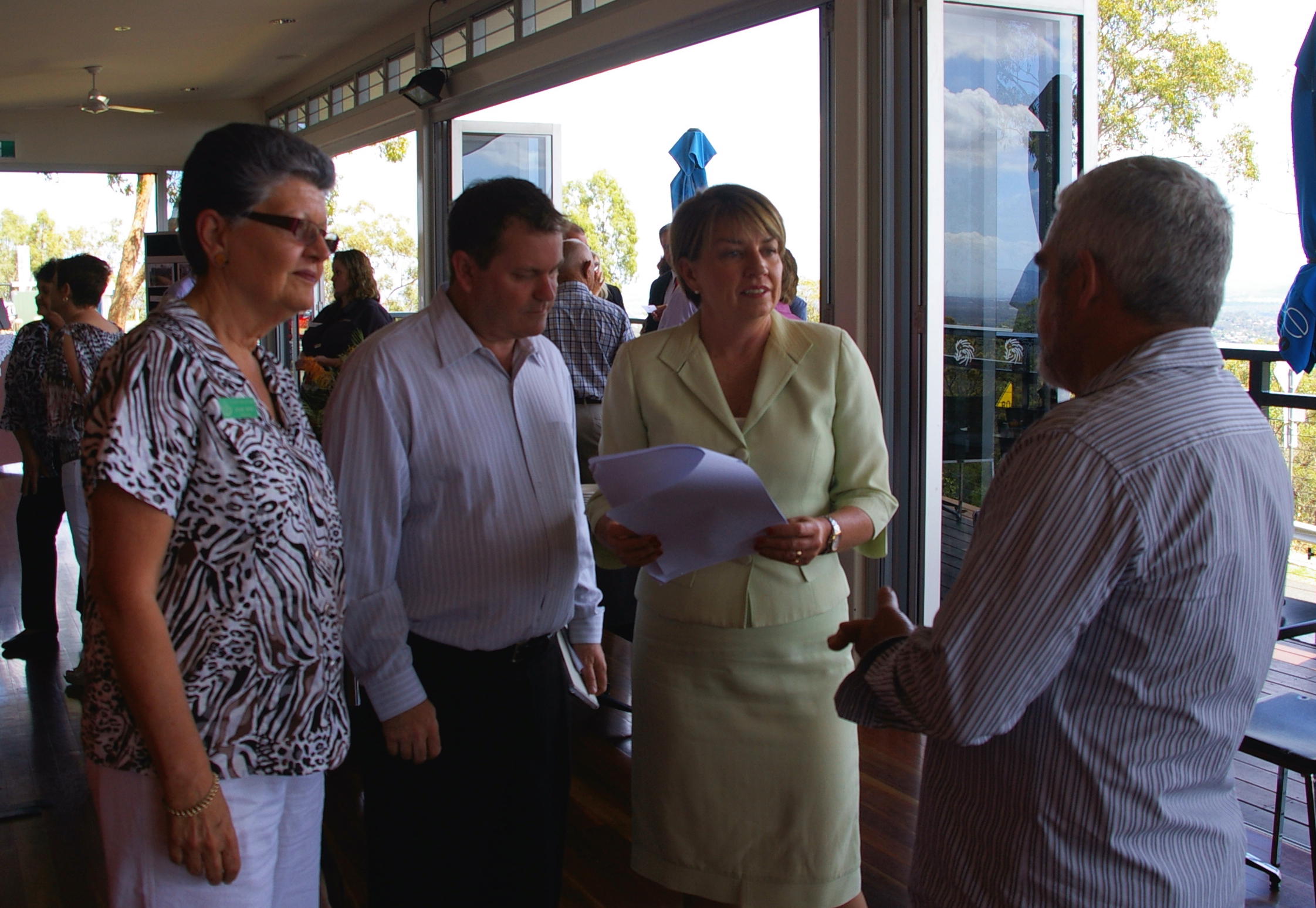
Anna Bligh, Premier of Queensland, joined local member Phil Reeves and community members on Tuesday, for morning tea at Echidna Magic.

(l-r) Sheamus O'Connor, Premier Anna Bligh, Hon Phil Reeves

Sheamus O’Connor, Sue Jones and I (Michael Fox) represented Mt Gravatt Environment Group. Sheamus took the opportunity to explain his outlook on the environment to Anna. An articulate spokesperson for future generations, Sheamus’ credibility is firmly grounded in his personal contribution to restoration of Mt Gravatt Reserve. Not satisfied with joining the Gertrude Petty Place Bushcare team, Sheamus organised a group of fellow students from Mt Gravatt SHS to replant the degraded area at the entry to the Summit Track.

(l-r) Sue Jones, Hon Phil Reeves, Premier Anna Bligh, Michael Fox

I took the opportunity to brief the Premier about the wildlife in the Reserve and the baseline fauna and flora research being undertaken with a grant from the Department of Environment. Anna was particularly pleased to hear that Koalas are breeding in the Reserve and that the BAAM researchers had already identified three species of micro-bats and Topknot Pigeons previously unknown to be present on the mountain.

(l-r) Premier Anna Bligh, Michael Fox, Hon Phil Reeves, Sue Jones

We also presented the Premier with a reminder of the unique nature of this Reserve. The glow-in-the-dark mushrooms Mycena lampadis were only identified on the mountain earlier this year. Queensland is a large and amazing state so it is a real pleasure to surprise our Premier with the unique flora and fauna that can be found only ten kilometres from the CBD.


I represented Mt Gravatt Environment Group at the recent Threatened Species Week event at Griffith University EcoCentre.

Click to read Southside Community News report

My presentation Blurring the Boundaries addressed our community effort to restore wildlife corridors on the southern face of Mt Gravatt. Two key corridors, Fox Gully and Firefly Gully, are almost totally made up of household blocks. To date we have owners of nineteen properties committed to restoration of these corridors.

Blurring the Boundaries refers to the fact that wildlife does not recognize human created boundaries, effective habitat consolidation and linking requires cooperation of a diverse range of property owners. Our Mimosa Creek Precinct Landscape Plan is a community initiative to blur the property boundaries by creating a vision for sustainable restoration based on initiatives that create community and business benefits, as well as, environmental benefits. Download my presentation: Blurring the Boundaries

Cathryn Dexter’s earlier presentation focused on creating a permeable landscape that will allow animals to move around without having to interact with roadways. A member of Griffith’s Environmental Futures Centre, Cathryn is the Project Manager for a major koala road kill mitigation project funded by the Qld Government.  The first study of its kind in Australia, the project’s ultimate goal is to have wildlife mitigation become standard government policy for all linear infrastructure (roads) design.

In a powerful presentation Cathryn shared horrifying road kill statistics balanced with a hopeful view of a future where roads are not barriers to connected habitat and risks to wildlife are dramatically reduced. particularly interesting were the creative solutions being used in Europe and the US where wildlife movement solutions have been actively pursued for decades.

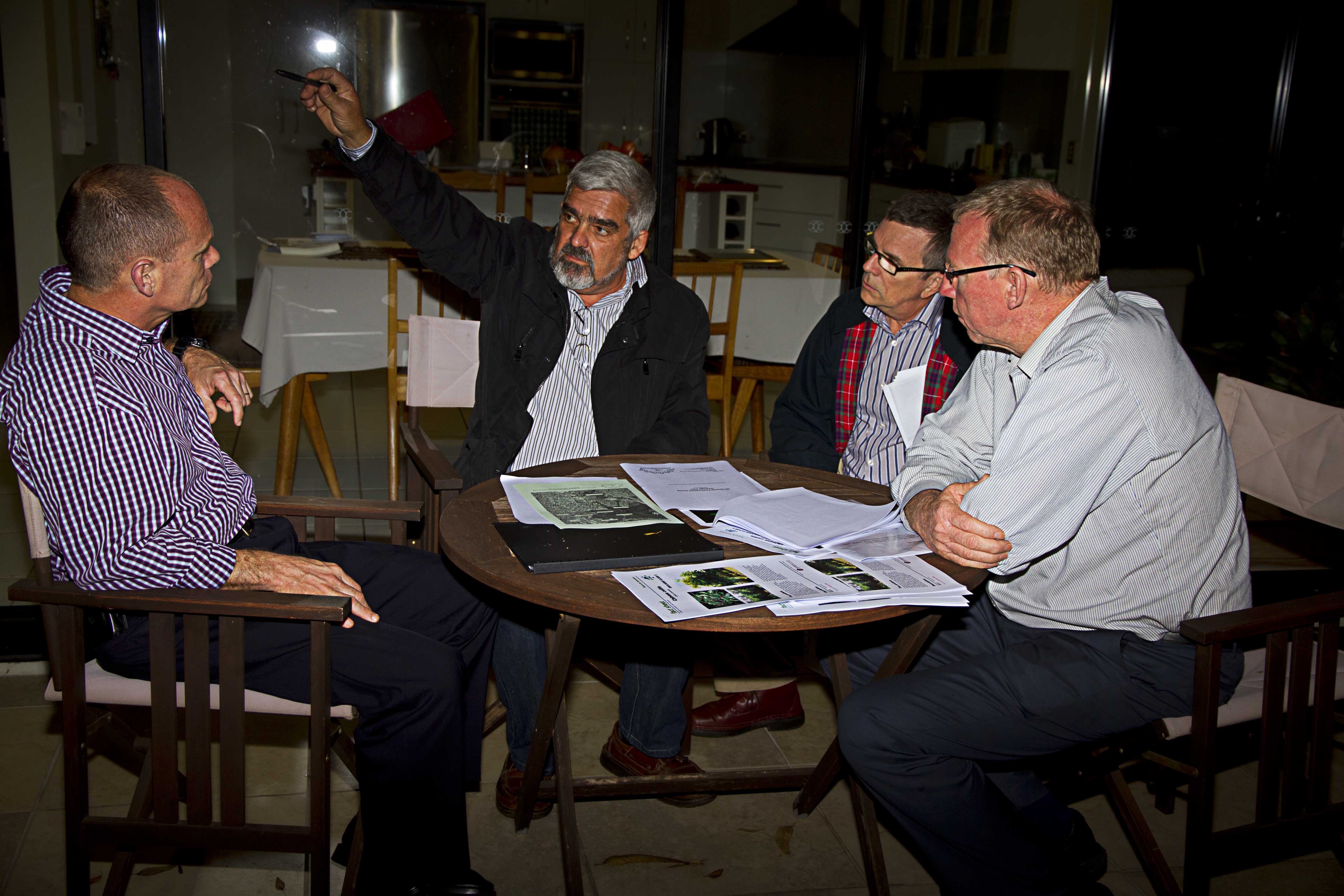
Campbell Newman & Ian trying Treepopper

We were honoured to host local LNP candidate Ian Walker with Campbell Newman and Jeff Seeney at our Fox Gully Bushcare site yesterday.

Late in day and the light was fading however our visitors were still keen get out into the bush and see our restoration work. Campbell was particularly impressed with the elegant design of the Treepopper we use to remove difficult weed trees like Chinese Elm Celtis sinensis and Micky Mouse Plant Ochna serrulata. Specialist tools like the Treepopper dramatically increase productivity of our bushcare team allowing us to start getting ahead of these invasive weeds.

(l-r) Michael Fox, Campbell Newman, Jeff Seeney, Ian Walker

Jeff Seeney, with his Landcare experience, was particularly interested in our focus on natural regeneration. I was happy to show how, in less than twelve months, native Graceful Grass Ottochloa gracillima has returned to act as Green Mulch in the area cleared of Fishbone Fern Nephrolepis cordifolia.

m

m

Briefing on Mimosa Creek Precinct Landscape Plan

I was proud to explain that sixteen households in our community have committed to restoring the gully wildlife corridors on their properties. However, briefing these experienced professionals on the Mimosa Creek Precinct Landscape Plan was challenging, with Campbell in particular, cutting right to the core in critiquing our cost estimates for some initiatives. So we can be proud as a community group to have Campbell Newman sum up the visit with: “Having seen first hand what is being done here I am not surprised that MEG has won two Spotless Suburbs awards in the recent 2011 announcements.”

My thanks to Ian Walker for the opportunity to present our community initiative and Alan Moore, a Fox Gully Bushcare volunteer, who tackled to fading light to provide our excellent photos.

Echidna - Photo Bill Semple


Phil Reeves
, State Member for Mansfield, has now confirmed funding for our key research project: Flora and Fauna Assessment – Management Issue Identification and Fauna Movement Solutions.

This research,  to be conducted by respected professionals at Biodiversity Assessment and Management Pty Ltd, is a key part of our Mimosa Creek Precinct Landscape Plan. The southern face of Mt Gravatt, adjoining Klumpp Road, includes three strategic wildlife corridors which have the potential to link Mt Gravatt Reserve with Mimosa/Bulimba Creek and Toohey Forest habitats.

Imperial Hairstreak - Photo Sue Jones

Environmental restoration and long-term protection of our mountain habitat will strengthen existing populations of Koalas, Echidnas, Gliders and a wide diversity of birds and butterflies. A unique bushland experience right in our suburbs and only ten minutes from Brisbane CBD.

Mt Gravatt Environment Group is developing long term strategic plans for restoration and protection of Mt Gravatt Reserve through consolidation of existing habitat parcels and creation of wildlife links between habitat parcels. Queensland Government funding for this research will complement the strong community commitment represented by over 4,000 hours of volunteer labour and commitment of sixteen private property owners to restoration of their land in the Fox Gully and Firefly Gully wildlife corridors.
(l-r) Hon Kate Jones, Helen Schwencke, Michael Fox, Hon Phil Reeves

On behalf of our Mountain community, I thank Phil Reeves and his electoral office team for their ongoing support and encouragement. I also thank the Hon Kate Jones, Member for Ashgrove, who in her role as Minister for Environment and Resource Management visited Mt Gravatt Outlook then approved our research funding. In her letter, Kate acknowledged “The strong commitment and efforts of the community group for restoring, strengthening and linking Mimosa Creek, Roly Chapman Reserve and Mt Gravatt Reserve.”

We can all be proud of the strong community we are building with the support of our government representatives.  Reading Mt Gravatt Then and Now, Mt Gravatt Historical Society, tells us that this strong community spirit has a long history with the Queensland Premier acknowledging the community commitment in July 1893 when announcing the establishment of Mt Gravatt as an environmental reserve.

At a recent Westpac Mt Gravatt luncheon to recognize local volunteers, Branch Manager Paul Dennett presented Nancy Hodge with a ‘Community Champion’ certificate for her work with Mt Gravatt Environment Group.

Nancy has propagated hundreds of local native seedlings which she has then assisted us to plant.    She is a regular volunteer at group working bees and our annual Clean Up Australia Day event.

Congratulations Nancy, on your award!

Fox Gully Bushcare is a finalist in the 2011 Keep Australia BeautifulSpotless Suburbs Award.

Fox Gully Bushcare, located on the southern face of Mt Gravatt, is one of four communtiy bushcare groups working with Mt Gravat Environment Group on restoration of this unique pieces of Australian bushland.

Reaching the finals of the Brisbane’s Spotless Suburbs competition is recognition of the strength of our local community, the important role of sponsoring organisations and the quality of the BCC Habitat Brisbane program.

Walking the Summit Track on Saturday I saw this extraordinary looking growth on the underside a branch high up in a Spotted Gum Corymbia citriodra.

Spotted Gums grow to 45m so this photo was taken at about x60 digital zoom on my Canon SX20. So viewing the photo later it looked like some sort of sculpture made of concrete and hung on a tree 30 or 40 metres in the air.

My excellent network of experts came to my rescue suggesting a wasp nest. Some more research on Google gave me the answer: Yellow Paper Wasp Ropalidia romandi . Links:  Queensland Museum Fact Sheet and Queensland Naturalists Club article.

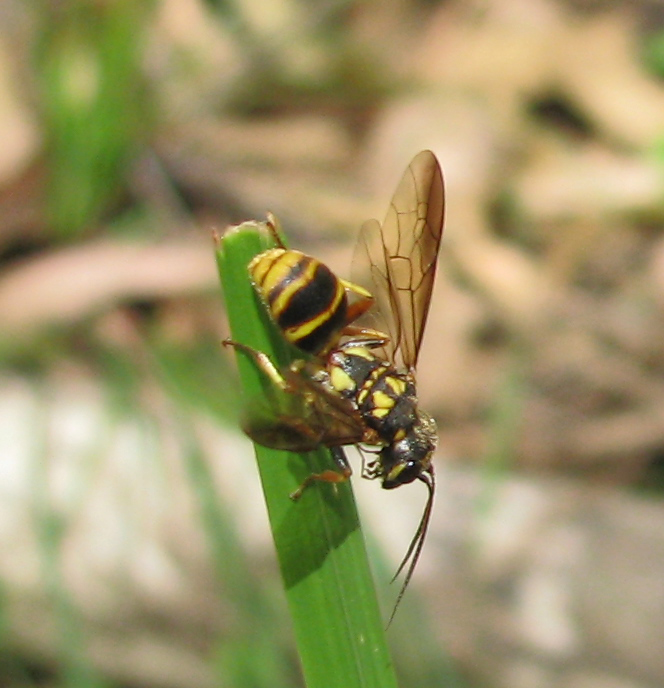
I have photographed Yellow Paper Wasp for Flora & Fauna of Mt Gravatt Reserve however I did not realise that this tiny wasp: at 6-8mm it is the smallest of our local paper wasps, builds these huge paper nests. Up to 1 metre long these amazing sculptures are made up of multiple paper combs all wrapped in a paper skin.

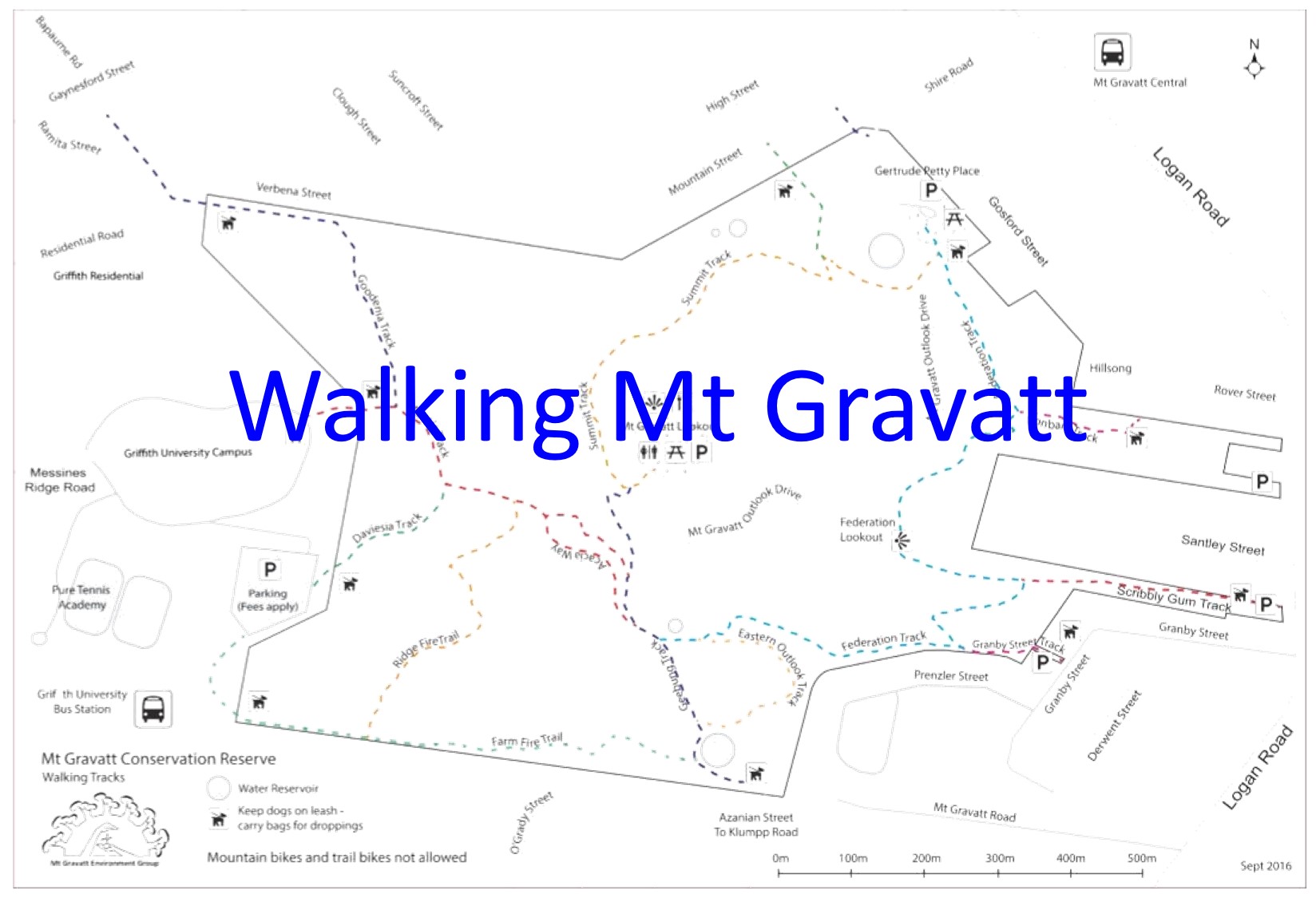
I found this nest while researching our new self-guided Summit Track tail brochure. If you are walking the Summit track stop at Station 6 and look west-north-west for a large Spotted Gum then follow the trunk up to the branch growing out to the right. The nest looks like a concrete sculpture hanging under the branch.

You can see the Mt Gravatt Summit Track on MapMyWalk

Our new trail guide will be available early August ready for the Environmental & Photography Workshops. The guide will also be available online and copies available at a local BCC Library.

My past visits to Sydney have mostly been for business or restricted to being a tourist in the city centre, so staying in Hornsby: surrounded by Ku-ring-gai Chase National Park (east) and Berowra Valley Regional Park (west), showed me a very different Sydney.

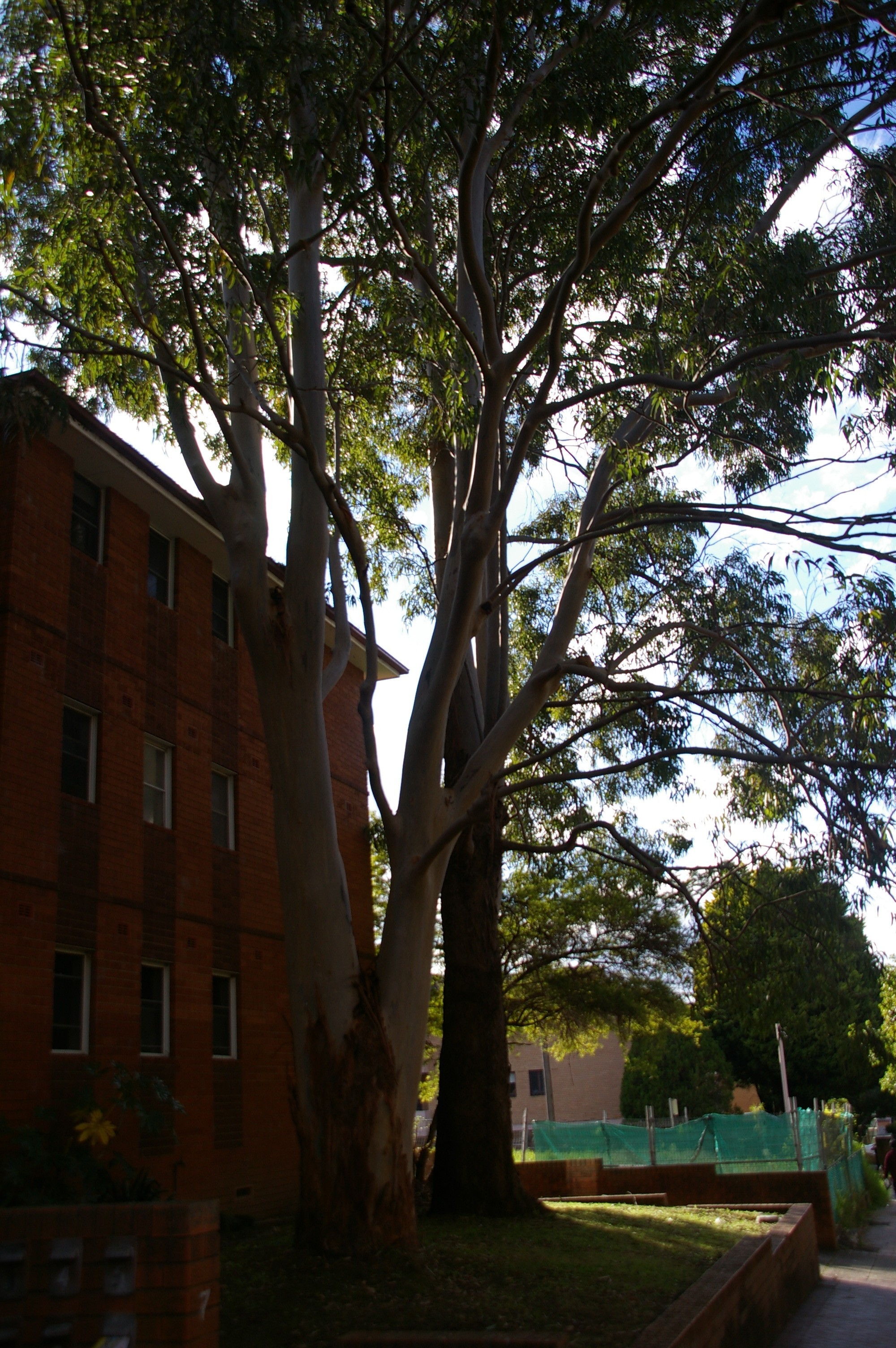
One thing that particularly struck me was the large number of “old growth” trees right in the suburban areas. There must be something very different about Sydney climate and/or building techniques that allows huge trees of one and fifty years or more to co-exist with multi-story unit blocks or the multi-level Westfield parking station just across the road.

A couple of blocks further on I found another pleasant surprise, the Edgeworth David Garden: an interesting balance of bush restoration and community access to a significant part of local history.

This small site combines aspects of suburban park with its well maintained walkways and bridges, an accessible and interesting experience of local history: the original garden of Edgeworth David and his wife, Caroline, provides a quiet place to sit and read, or have your eye drawn by the path to their house, Coringah.

Public park and private space working well together: the house is a private residence, and those formal components sit comfortably with an active bushcare site restoring the pretty Hornsby Creek.

Gross pollution control devices in-place to catch waste washed into stormwater drains mean that the water is clear and coir  matting controls bank erosion while the new plantings establish. It is also interesting to note the bushcare team also  use black plastic covered compost piles to recycle weeds on-site.

This tiny bushcare site, just over half a hectare, is particularly valuable because Hornsby Creek appears out of drains then only flows exposed for two hundred metres before disappearing back into the drains. A small precious piece of bush being cared for by the local community.

For information link to Hornsby Shire Bushcare or email bushcare@hornsby.nsw.gov.au

Follow Us on Twitter