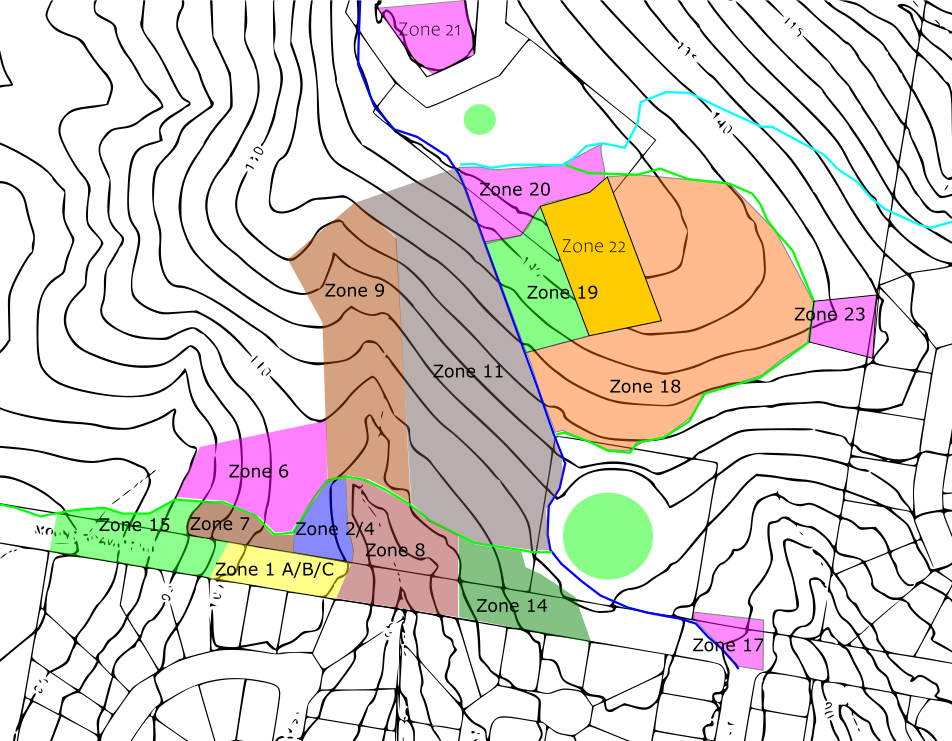
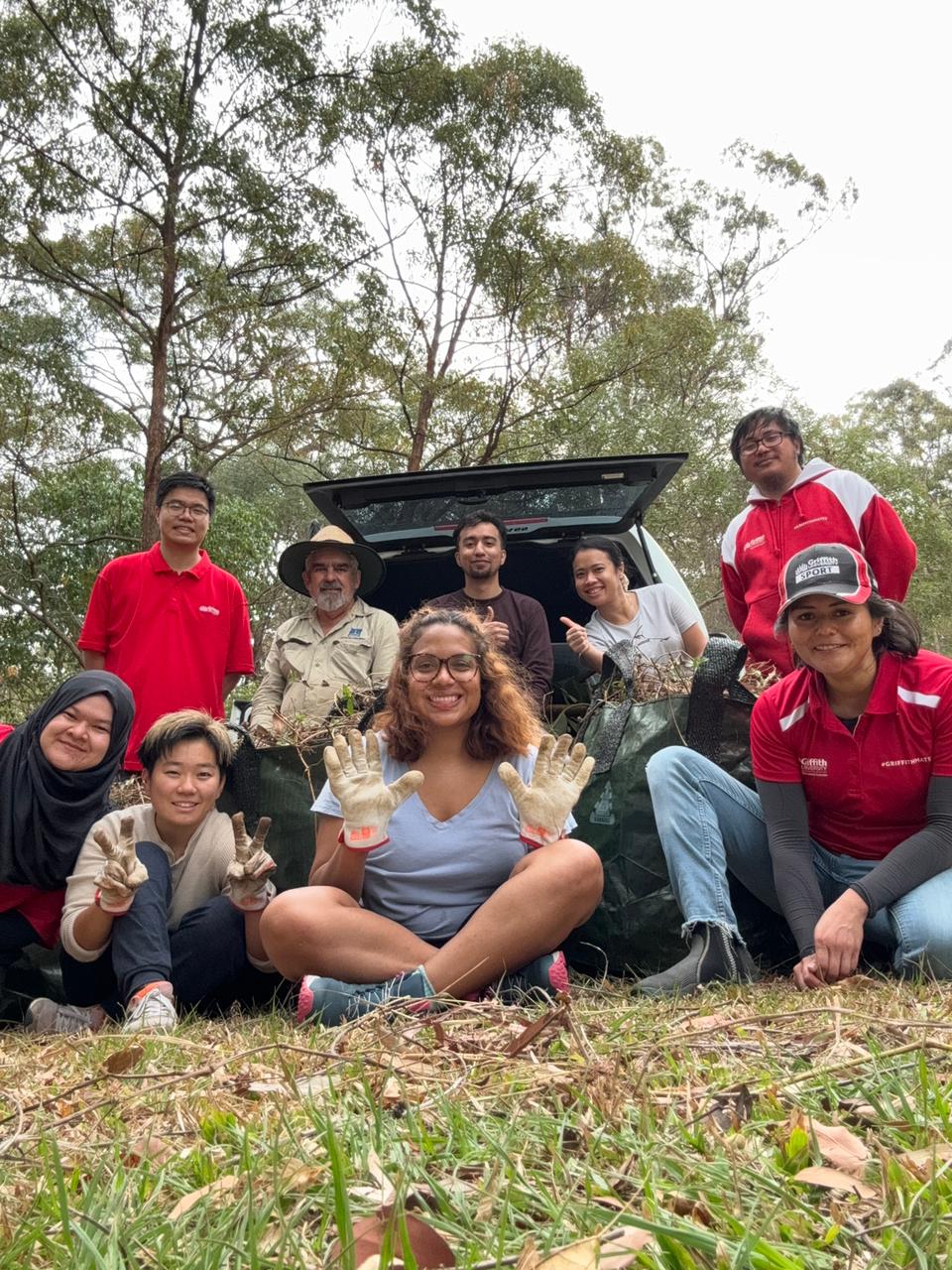
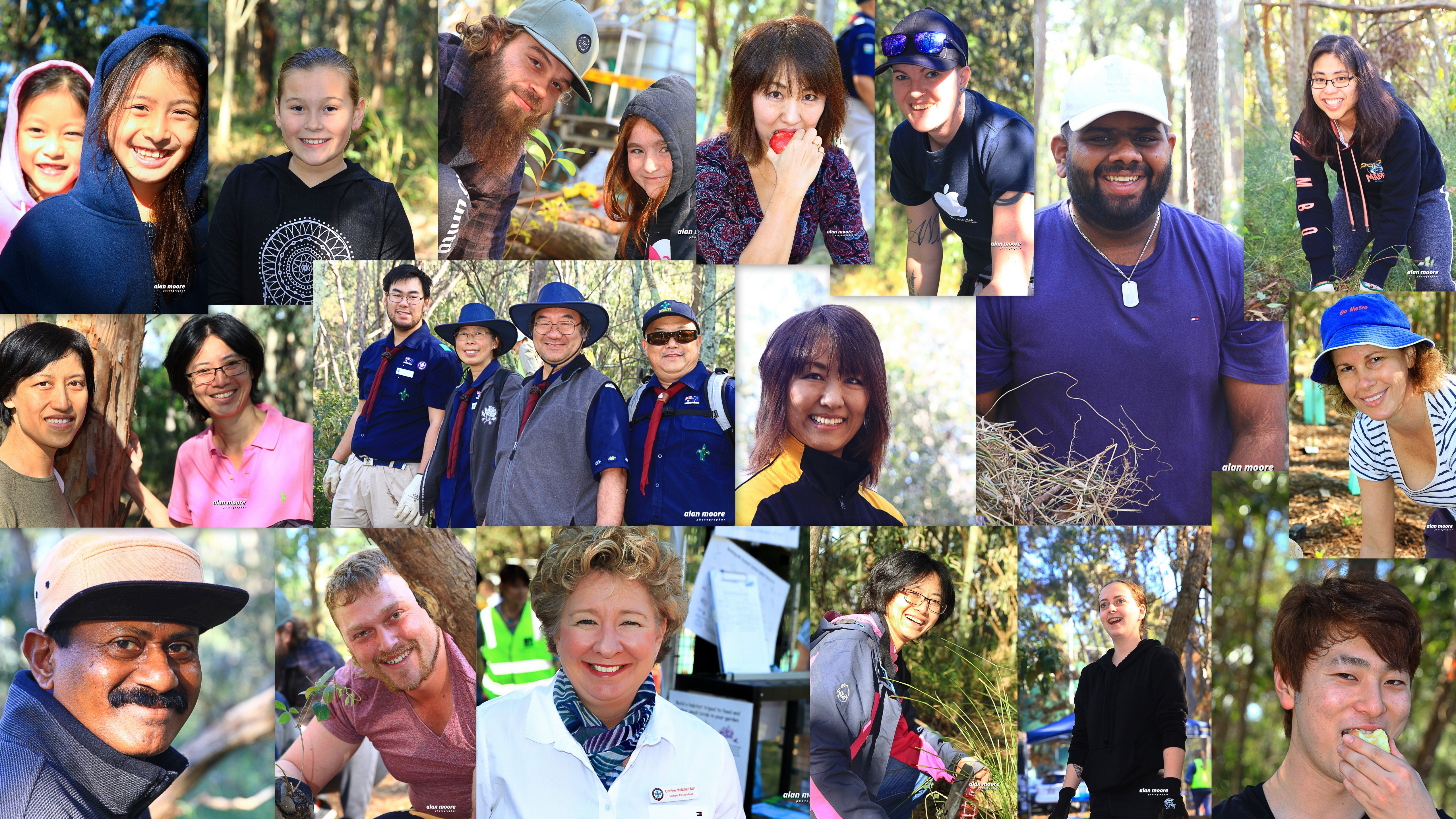
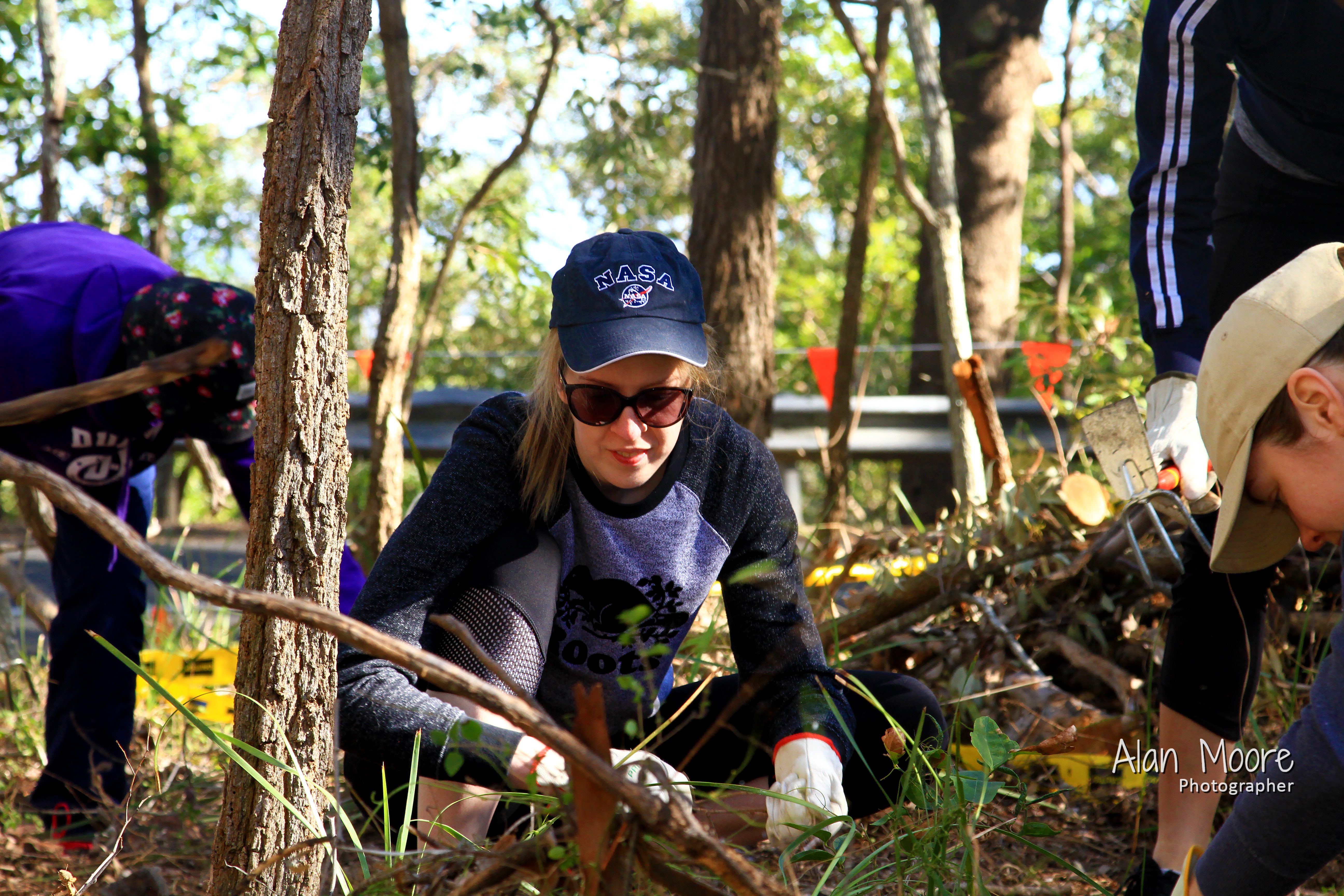
Our Griffith Mates Bushcare Team joined us again on Saturday to continue restoration of Zone 14 in our Fox Gully Bushcare site. The Mates Team was truly multinational with participants from Indonesia, Vietnam, Pakistan, Japan, Venezuela, Mexico and Malaysia.
Community Planting October 2009Team hard at work
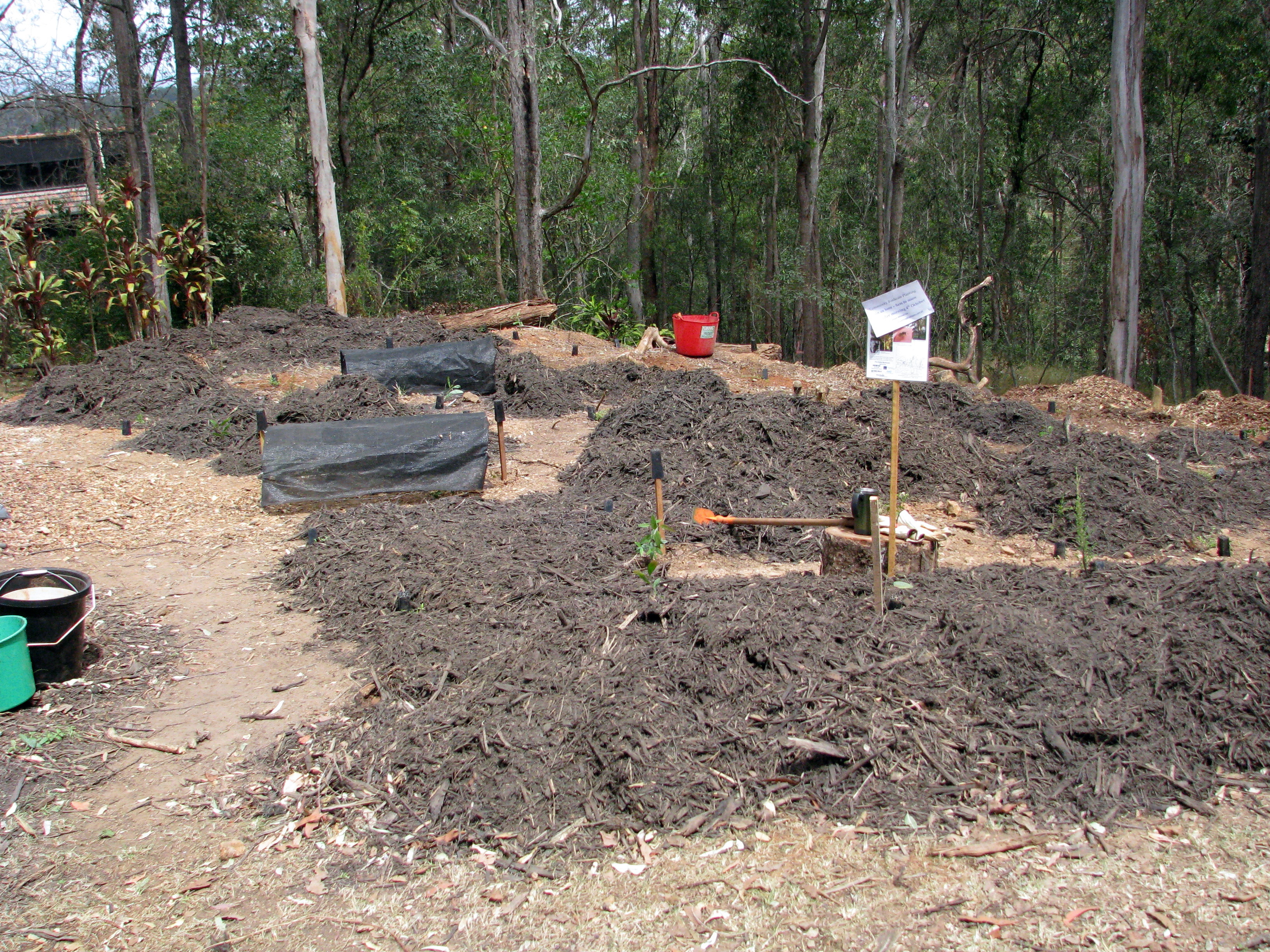
The team worked hard clearing invasive weeds like Singapore Daisy Sphagneticola trilobata and Guinea Grass Megathyrsus maximus var. maximus. Sometimes weeding seems frustrating but look at the trees in the background that were planted in October 2009 which have gone from bare ground to trees large enough for Koalas. The part of the Zone with the trees is relatively weed free so we need to do some infill planting to take advantage of the Mates Team’s work.
Cutting back an Indian Rubber TreeBreaking down dead Acacia branches
Cutting back an Indian Rubber Tree Ficus elasticato improve access. Longer term, the plan to remove the tree. Rubber Trees are not a big problem with spreading but the roots are very aggressive and steal a lot of water from local natives. While these extraordinary trees are a problem here they provide an unique community service in their natural habitat. In places like northern India and Bhutan these trees are used to create Living Bridges.
Breaking down dead Acacia branches allowed them to be added to the onsite compost pile rather than taking to the dump.
I always love working with the diverse teams of Griffith University students. Fascinating stories and full of energy.
The Team are very proud of their efforts so it is time to head for the Summit and pizza, and of course see if we can find more Koalas Phascolarctos cinereus.
By the time we reached ten Koalas had be sighed. That included two mum’s and joeys.
Brisbane’s natural areas are a precious resource for both nature and people.
Please provide Council with feedback on the draft Brisbane Off-Road Cycling Strategy. The current strategy is putting large areas of our limited urban bushland at risk.
The Council’s Brisbane Off-Road Cycling Strategy which focuses on opening up bushland for mountain biking, may be a threat to special places like Mt Gravatt Conservation Reserve.
In the past a small number of illegal mountain bikers ignoring Council signs have caused huge damage to the sensitive bushland our community members have spent thousands of hours restoring: 176 volunteers contributed 606 hours in the 2019/20 financial year.
Erosion caused by illegal mountain biking – Jan 2021
.
While less of problem in 2021, illegal mountain bikers are still making new tracks destroying plants and causing erosion. Even riders on the fire roads can’t resist the temptation to go “off-road”. Riders using the Acacia Way maintenance track have caused erosion that is undermining a mature eucalypt tree.
.
Branches and mulch used to close tracks
.
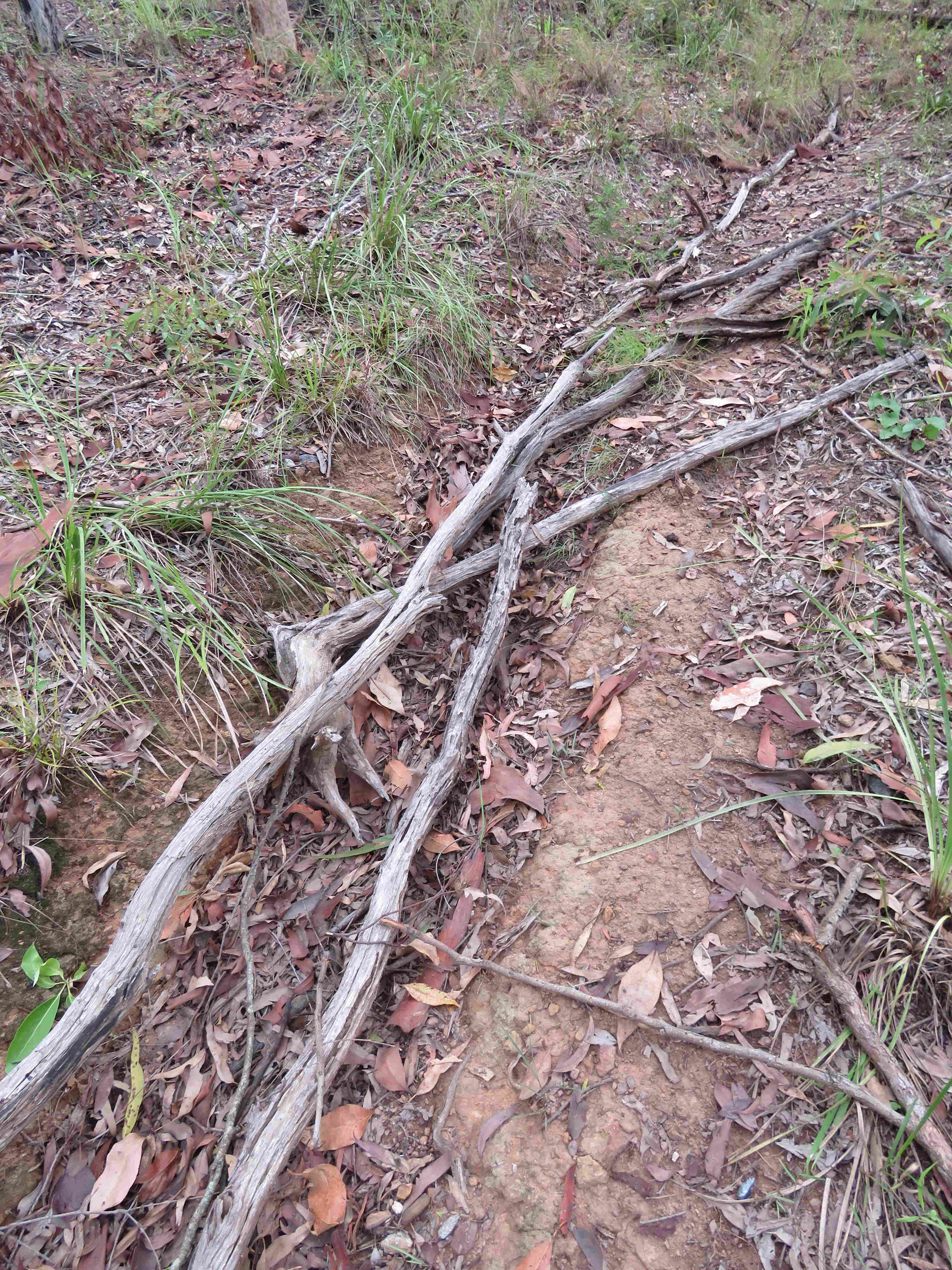
Illegal tracks dramatically increase erosion on steep slopes as water is channelled down hill. Closing down and repairing illegal tracks is a labour intensive and costly exercise: closing one track has required several metres of mulch, hundreds of branches recovered from the bush and laid on the track to stop bikes and start restoring the ground by collecting silt before it is washed downhill.
Even with these efforts by Council staff are not enough. I received a report this morning of orange barrier fences being removed and a father and son riding though the bush from the Summit to Gertrude Petty Place. Repair work like this uses scarce Council funds that could be used for improving facilities for all visitors.
National Tree Day 2018
As a BCC ratepayer and volunteer Habitat Brisbane Bushcare leader I am very concerned that a small percentage of our community are lobbying for a “free-ride” with access our bushland reserves without accepting the cost of that access. (A free-rider problem is a type of market failure that occurs when those who benefit from resources, public goods (such as public roads or hospitals), or services of a communal nature do not pay for them.)
.
National Tree Day 2015
Habitat Brisbane Bushcare volunteer contribution is typically $4 for every $1 invested by Council: provision of plants, tools and training. Bushcare is a very low risk activity which contributes to the health of our urban bushland while reducing maintenance costs for Council. On the other hand, off-road cycling is a relatively high risk recreational activity that damages bushland, increases maintenance costs and dramatically increases the potential for legal action against Council.
This article focuses on Mt Gravatt Conservation Reserve because I have deep knowledge of this area with fourteen years actively restoring the Reserve, researching the flora and fauna and engaging an increasing number of community members in restoration or observing the dramatic increase community members walking in the bush. While I do not have the same knowledge of other Brisbane bushland reserves they will have same sensitive habitat and I can make general observations about the potential impact of off-road cycling on other reserves.
Signage: The current track no bikes signage is very small, very limited and ineffective for the target audience: typically young males riding fast and totally focused on riding not signs. Tourists are one group that definitely better signage: one rider I stopped going down the walking track from the Summit was a visitor from South America. Others simply claim they have not seen signs. Signs need to be larger and spread along the tracks so everyone is well aware of the rules: no excuses.
Vandalised no-bike sign
Fines with no Enforcement = no behaviour change: While off-ride cycling is illegal in the Reserve and subject to $500 fines enforcement appears to be non-existent. As I understand the situation the very Council Officers, Rangers / Habitat Brisbane Officers, who spend time on the ground in the Reserves are not allowed to even issue fines, let alone that stronger action.
The draft Brisbane Off-Road Cycling Strategy (BORCS) “seeks to reduce unauthorised [illegal] track construction” (page 6). It is hard to understand the logic of a strategy that manages illegal behaviour by rewarding the bad behaviour.
Most visitors to the Reserve are responsible however there are a small number that ignore the rules putting walkers at risk, damaging sensitive wildlife habitat, increasing maintenance costs, even vandalising the limited signage that exists.
The Off-Road Cycling Strategy suggests that “Increasing the authorised recreational use of natural areas will also increase casual surveillance which helps to deter illegal activity.” (BORCS page 11) While Cialdini’s Social proof is a valuable tool for influencing and changing behaviour, our experience using this to manage behaviour Mt Gravatt Conservation Reserve has had mixed success. The very demographic we are dealing with: young males, means that our Bushcarers: typically retired and female, have to be very careful because violent verbal abuse is common. If this is an ongoing problem in a popular and busy Reserve like Mt Gravatt what control will there be in other reserves that do not have active Bushcare groups.
User Pays: Any football club or other community group that wants to uses Council land like parks and reserves are responsible for their own costs: lease fees, public liability insurance and property maintenance. While many and possibly most off-road cyclists are not part of a formal group that could provide public liability insurance and pay lease fees, they are still increasing costs and litigation risk. If the Council accepts this as a cost of providing valuable recreational activities this must not come out of limited environment budgets that are critical to habitat protection and restoration: “Council is continuing to invest in the protection and restoration of our city’s biodiversity, and we are on track to achieve the target of having 40% of Brisbane as natural habitat by 2031.” (BORCS page 8)
As a ratepayer I have contributed to Bushland Acquisition Program. I am concerned that land purchased to protect our urban bushland may now be “given” to a very small percentage of community members for their personal use. “More than 4300 hectares of land have been purchased and protected through Council’s Bushland Acquisition Program since 1990. The preservation and management of biodiversity within Brisbane’s natural areas is of vital importance.” (BORCS page 8)
We have regular sightings on Koalas Phascolarctos cinereus in the Reserve and we know they have been breeding for several years. See the 2011 report about Sparky and her joey, they live near an Energex sub-station.
What we have not yet been able to do is identify individuals. While we are getting more sightings reported we don’t know how many different individuals live in the Reserve and what area their territory covers.
Is today’s Koala visitor the same one I videoed in March grazing on fresh Tallowwood Eucalyptus microcorys in Fox Gully Bushcare?
…… Female Koala – snowy white chest ……… 28 Mar 2015
One thing we can do is identify that both individuals are females. The pure white chest fur is typical of female Koalas. Males have dirty chests from rubbing their scent glands on tree bark to mark their territory.
Further research is needed to establish ways to identify individuals by differences in facial features and fur patterns.
Join 928 other subscribers
Volunteering Mt Gravatt Conservation Reserve
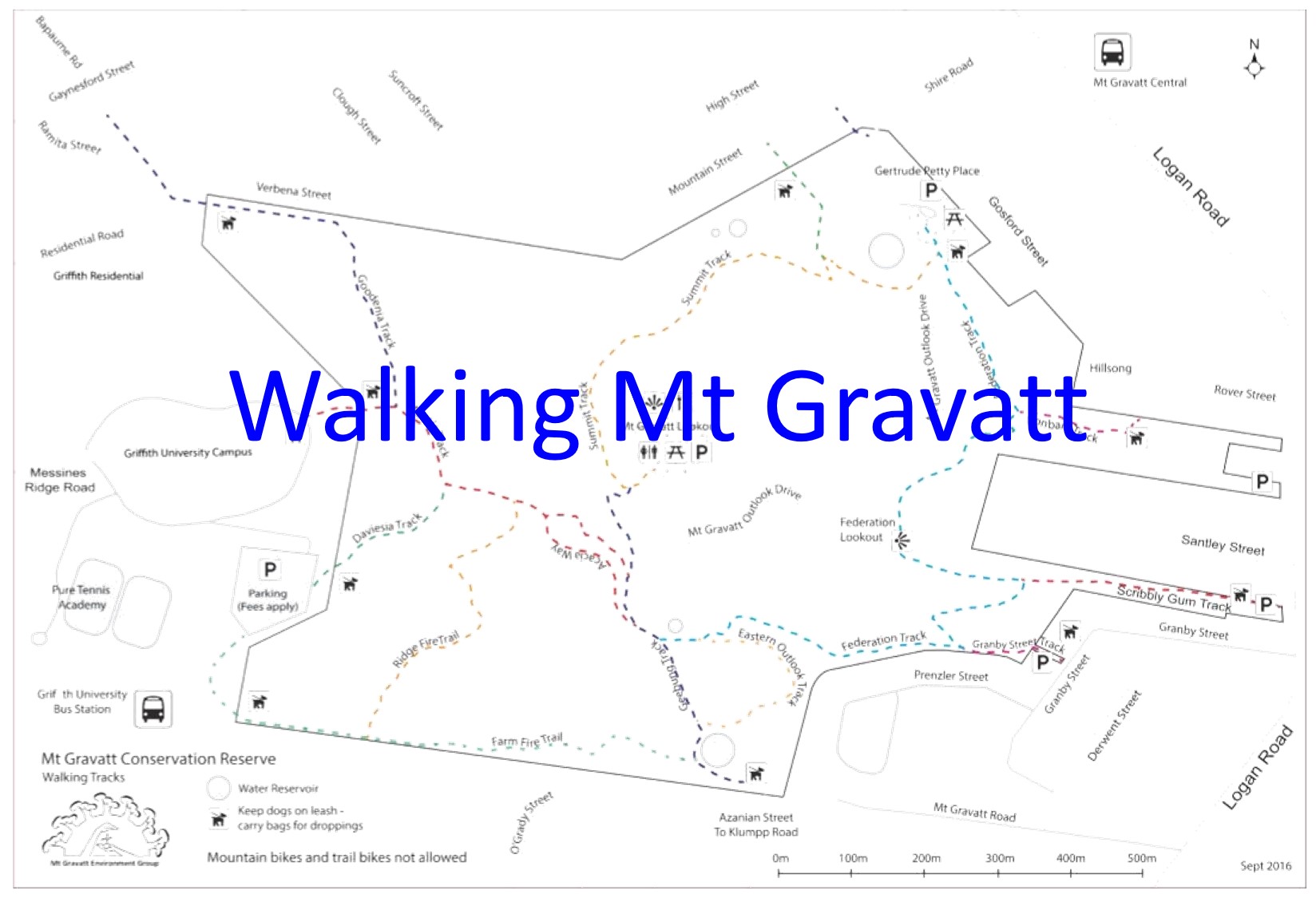
Maps of walking tracks
Follow our restoration work
Links
Report Koala sightings
Contacts:
Co-Presidents:
Michael Fox
Laurie Deacon
Susan Jones - Secretary megoutlook@gmail.com















 Mount Gravatt Environment Group