By: Michael Fox

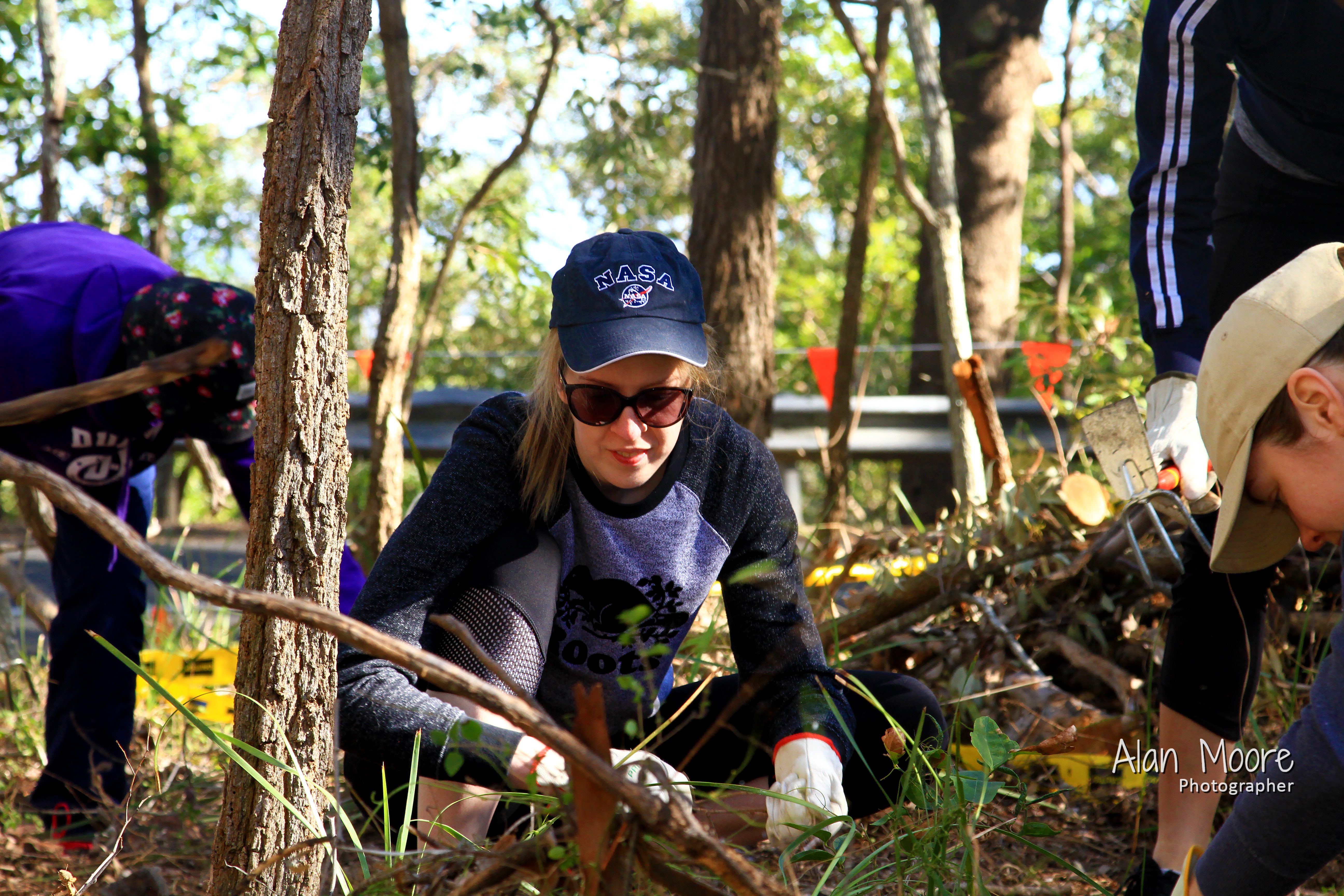
A nice cool morning in the forest and eleven volunteers came together to attack the invasion of Cobbler’s Pegs Bidens pilosa and Corky Passionvine Passiflora suberosa.

Weed Buster Team in action

Eloise and Bettina have been coming every week volunteering as part of their work towards their Bronze Duke of Edinburgh Awards.

Eloise found a Yam Hawkmoth Theretra nessus caterpillar. Easily identified as a Hawkmoth by the horn on it’s tail.

.

Melanitis leda Evening Brown

.

.

.

.

.

We also have two volunteers who just finished their Masters of Conservation Biology at University of Queensland, Denise and Max.

.

Denise in particular wants to learn about everything from the curious Melanitis leda Evening Brown caterpillar with its two horns …

.

.

.

.

.

.

.

.

.

… to the way Ottochloa gracillima Graceful Grass: food plant for the Evening Brown, is forming Living Mulch reducing evaporation and keeping the ground cool supporting the soil microbiology.

.

.

.

.

.

.

.

.

.

.

.

Benno as usual found several insects for me to photograph.

Like the Oides dorsosignata Orange Oides Leaf Beetle

.

.

.

.

.

.

.

.

.

… and the curious looking Neola semiaurata Wattle Notodontid Moth. What looks like the head is actually the tail.

.

.

.

.

.

.

.

The Noliphus erythrocephalus Colourful Board-headed Bug is a new addition to Flora and Fauna of Mt Gravatt Reserve.

Volunteers are welcome join us on Tuesday mornings or at one of our other events.

By: Michael Fox

A team of energetic young students and a huge pile of mulch … a great combination!

We split the team with one group put to work spreading mulch and another working on weed busting clearing Corky Passion Vine Passiflora suberosa and Creeping Lantana Lantana montevidenses.

Mulching the ground is an important part of our restoration of the forest habitat. I explained that mulch have three functions:

  1. Retaining soil moisture.
  2. Reducing erosion.
  3. Most important is keeping soil cool. Soil is teeming with living organisms: microorganisms like bacteria, fungi, algae and macro-organisms like springtails, mites, nematodes, earthworms, ants that recycle organic material refreshing and boosting soil health. Average soil temperatures for bioactivity range from 10-24°C. Mulch keeps soil warm in cold weather and more important for Brisbane it keeps the soil cool in summer.

.

Long term our objective is to grow Living Mulch which performs all the same functions: vines like Wonga Vine Pandorea pandorana providing safe habitat for lizards and food for Common Crow butterfly caterpillars while grasses like Graceful Grass Ottochloa gracillima provide seed for Pale Headed Rosella Platycercus adscitus.

Griffith Mates Team

Griffith Mates Team

By: Michael Fox

A beautiful autumn Saturday morning and Griffith Mates – Sienna, Ben, Lily, Abraham and Larissa joined Roger and myself at Fox Gully Bushcare site. The team removed another large area of Fishbone/Sword Fern Nephrolepis cordifolia and installed logs on the slope to create a safe work space and control erosion.

When the team from FWR Group joined our Wednesday Bushcare in September 2010 to start clearing, the Fishbone Fern covered an area larger than the average Brisbane house block – approximately 1,000 square metres. By the time the FWR team returned six months later, in March 2011, natural regeneration had already restored a good coverage of native grasses like Ottochloa gracillima Graceful Grass. This Living Mulch of native grasses controlled erosion, suppressed weed regrowth, retained moisture and provided food for caterpillars of the Brown and Orange-streaked Ringlet butterflies.

Ben reaching Glider box with GoPro camera

Ben reaching Glider box with GoPro camera

By the time the Griffith Mates team finished another huge area had been cleared and stabilised with logs. Restoration work on the Fishbone infested areas of Zone 8 is now almost complete and with further help from Griffith Mates we expect to finish the weed clearing this year allowing nature to take over with the natural regeneration of local grasses, herbs, ferns and vines.

To finish the morning I showed the team how we check nest boxes installed to provide substitute nest hollows for birds and gliders.

We found the Squirrel Glider family in two boxes and the female Brushtail Possum is still living in the Kookaburra box. She was quite curious about the camera, reaching up to sniff the lens. It is a particular pleasure to share this wildlife experience with young people from places like Hong Kong.