Fox Gully Bushcare


IMG_6038

Count the Scaly’s

By: Michael Fox

We often have Scaly-breasted Lorikeets Trichoglossus chlorolepidotus visiting our birdbaths. However in the past it was always two or three at a time. A little smaller than their cousins the Rainbow Lorikeet Trichoglossus haematodus these cute birds with their flashing orange under-wings flock with the Rainbows.

Scaly’s are often out competed for nest hollows by their larger cousins. So it was a real pleasure to see at least eight, I had trouble counting as they flitted around, having fun in the water today.

Water for wildlife is really important in the current dry spell we are having in SE Queensland and we are rewarded by a constant stream of colourful visitors.

IMG_6039

Scaly-breasted Lorikeets


IMG_6016

Toni – woman of action

By: Michael Fox

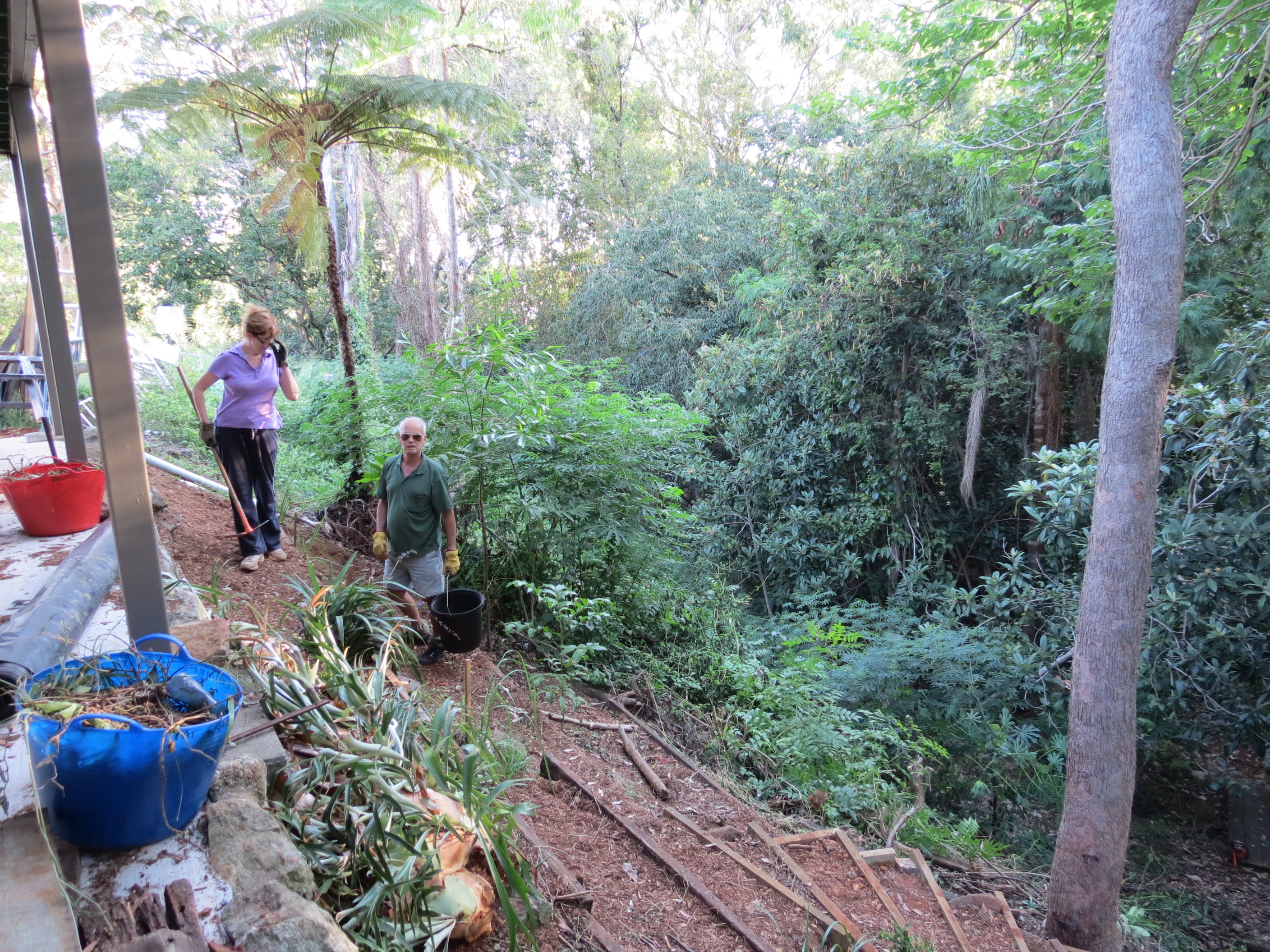
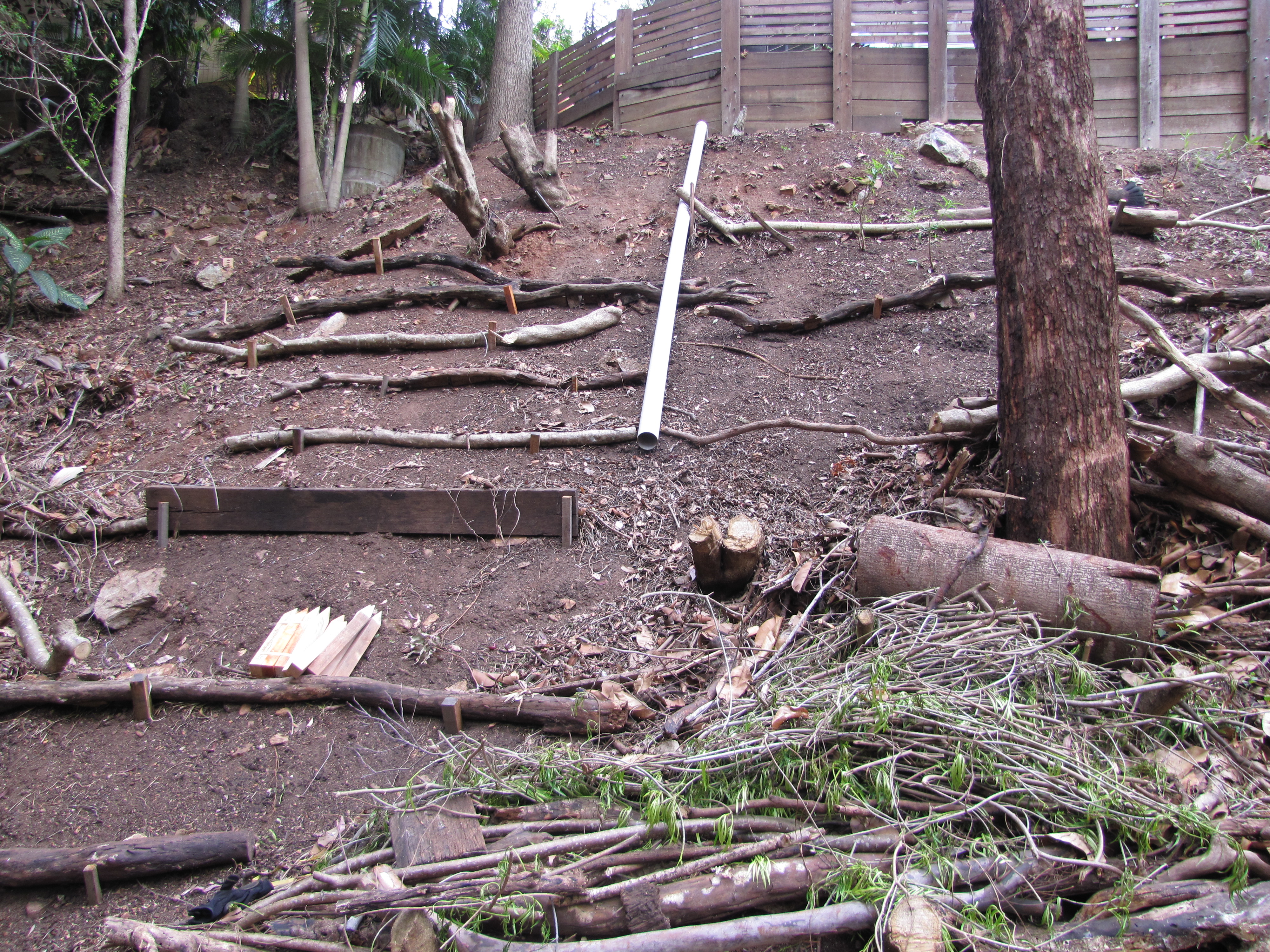
Restoration of Firefly Gully wildlife corridor has reached a new stage with the on Toni McDonald’s section of the gully.

Like Fox Gully, the wildlife corridor is being created on private property which includes the gully, so success is critically dependent on property owners being engaged.

Marshal has already done extensive restoration on the other side of the gully where he has nurtured the Glow in the Dark Mushrooms. Firefly Gully is named for the fireflies which are found in wet weather.

Years of rubbish dumping by previous owners and infestation of the steep slope with weeds like Guinea  Grass Panicum maximum v maximum, Castor Oil Plant Ricinus communis and Madeira Vine Anredera cordifolia has created a significant challenge.

IMG_6020

Toni and Marshal reflecting on a good afternoon’s work

The first step for a job like this is getting access infrastructure in-place to make a safe work place, save time and effort and retain mulch on the slope. Steps will give access to the bottom of the slope and allow easy access to planks laid across the slop at approximately one metre spacing. Planks came from Fox Gully neighbours who are currently replacing their deck. Stakes to hold planks in-place are recycled decking timber, cut to length and pointed. This not only reduces the cost of the project it also reduces waste going to landfill.

Recycling also extends to a lot of the rubbish being removed with old stair stringers being used for planks on the slope and broken bricks used as back fill to make the steps. We even found a complete roll of builder’s black plastic that will be used at our other sites for composting weeds.

Restoring Firefly Gully is part of the initiative to rebuild wildlife corridors between Mt Gravatt Conservation Reserve and Mimosa Creek outlined in Mimosa Creek Precinct Landscape Plan. Koalas are already moving into these gully corridors.


By: Michael Fox

2014 is off to a good start. Lots of Koala sightings, including a joey which gives us two joey in Fox Gully in the last twelve months, Kookaburras hatching chicks and Squirrel Gliders breeding in our nest boxes and today a Brush-turkey chick.

IMG_4148

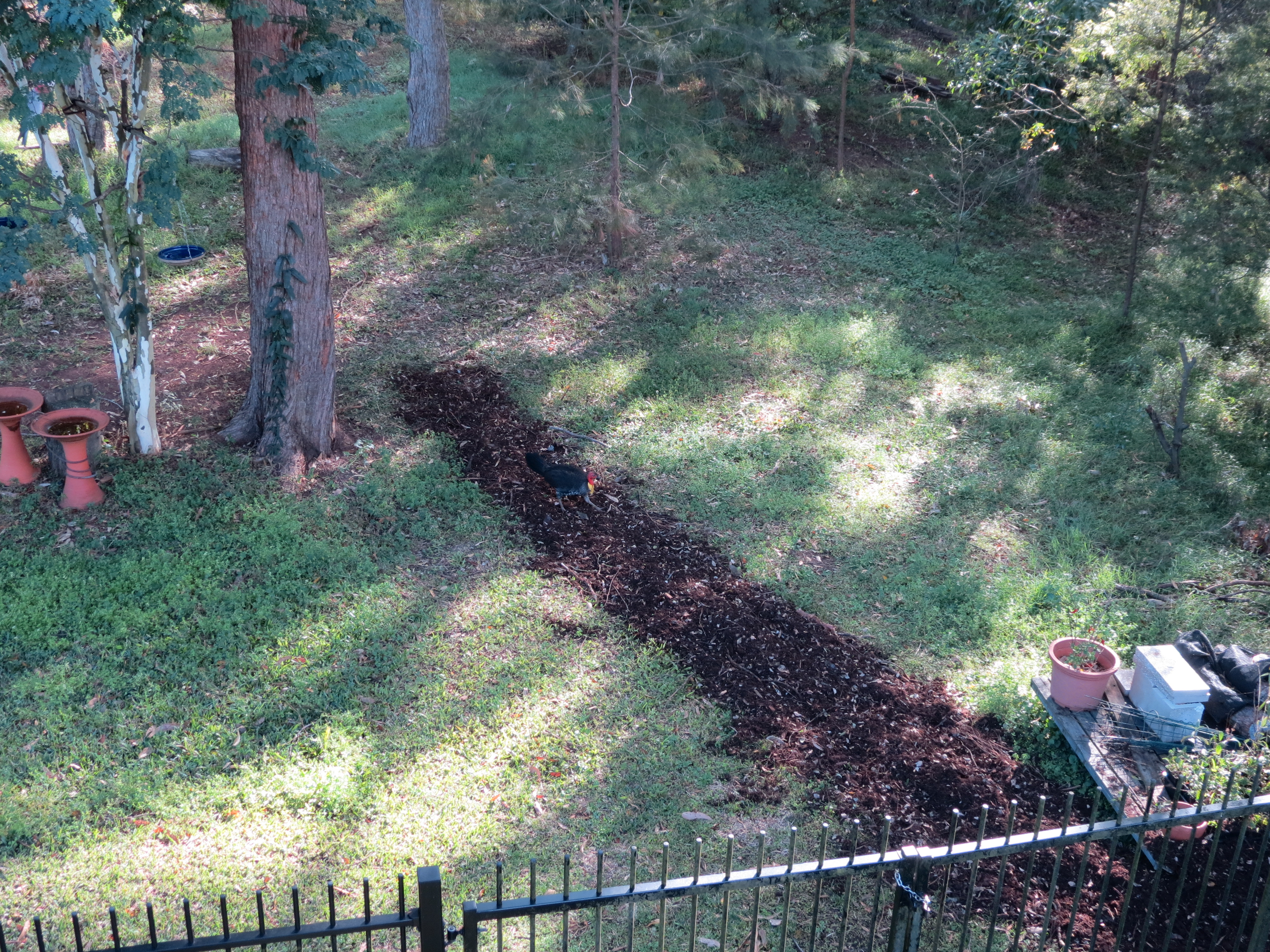
Very neat gardener – Brush-turkey pinching mulch

MVI_5711.MOV.Still004

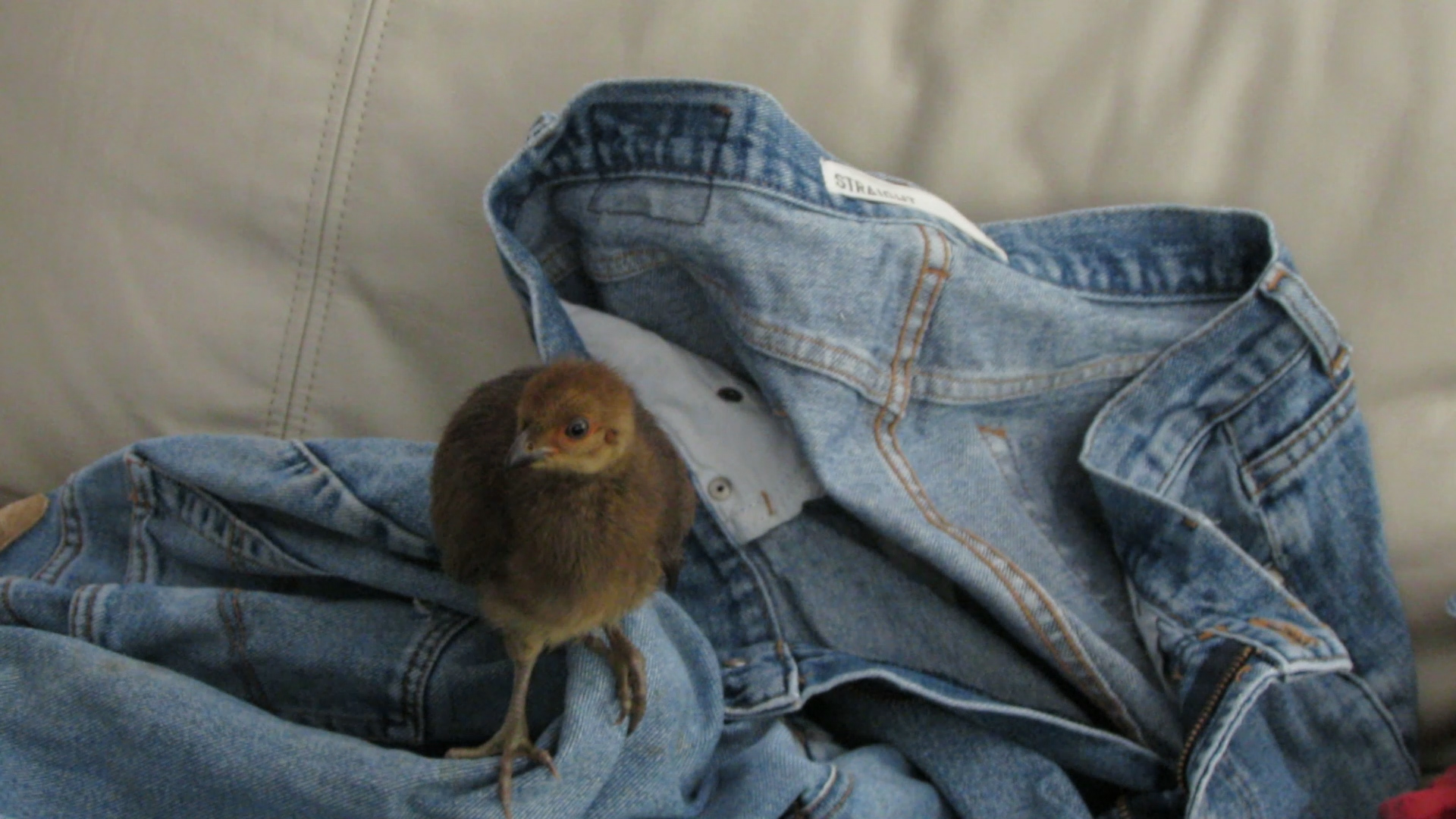
Mmmm … do I like this place?

We have been watching the male Brush-turkey building his mound and playing host to visiting females since July last year. One morning we looked out to find him pinching mulch … a very tidy gardener, he neatly scraped the mulch about 4o metres from our yard to his mound and left the grass spotless by the end of the day.

MVI_5711.MOV.Still010

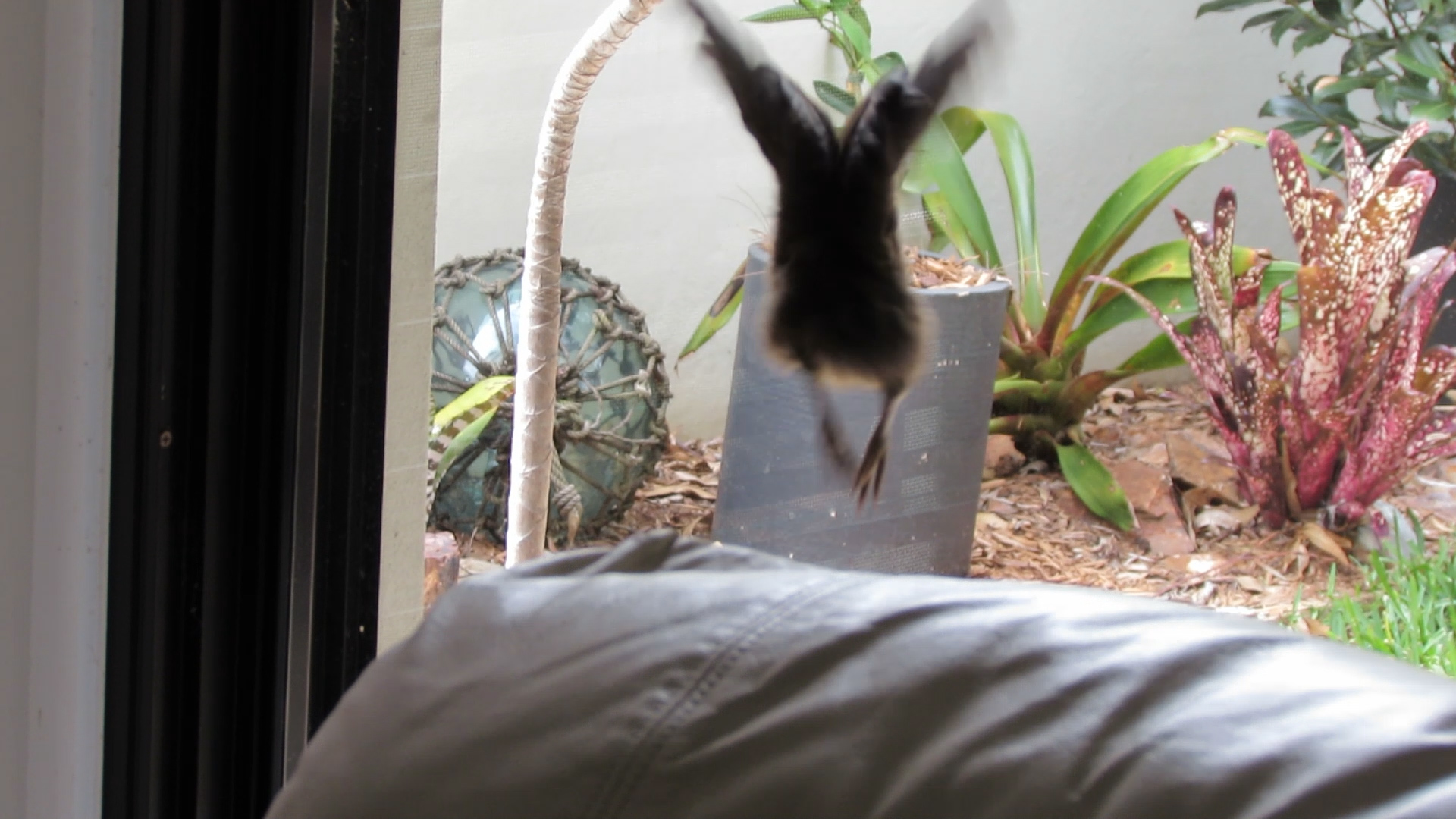
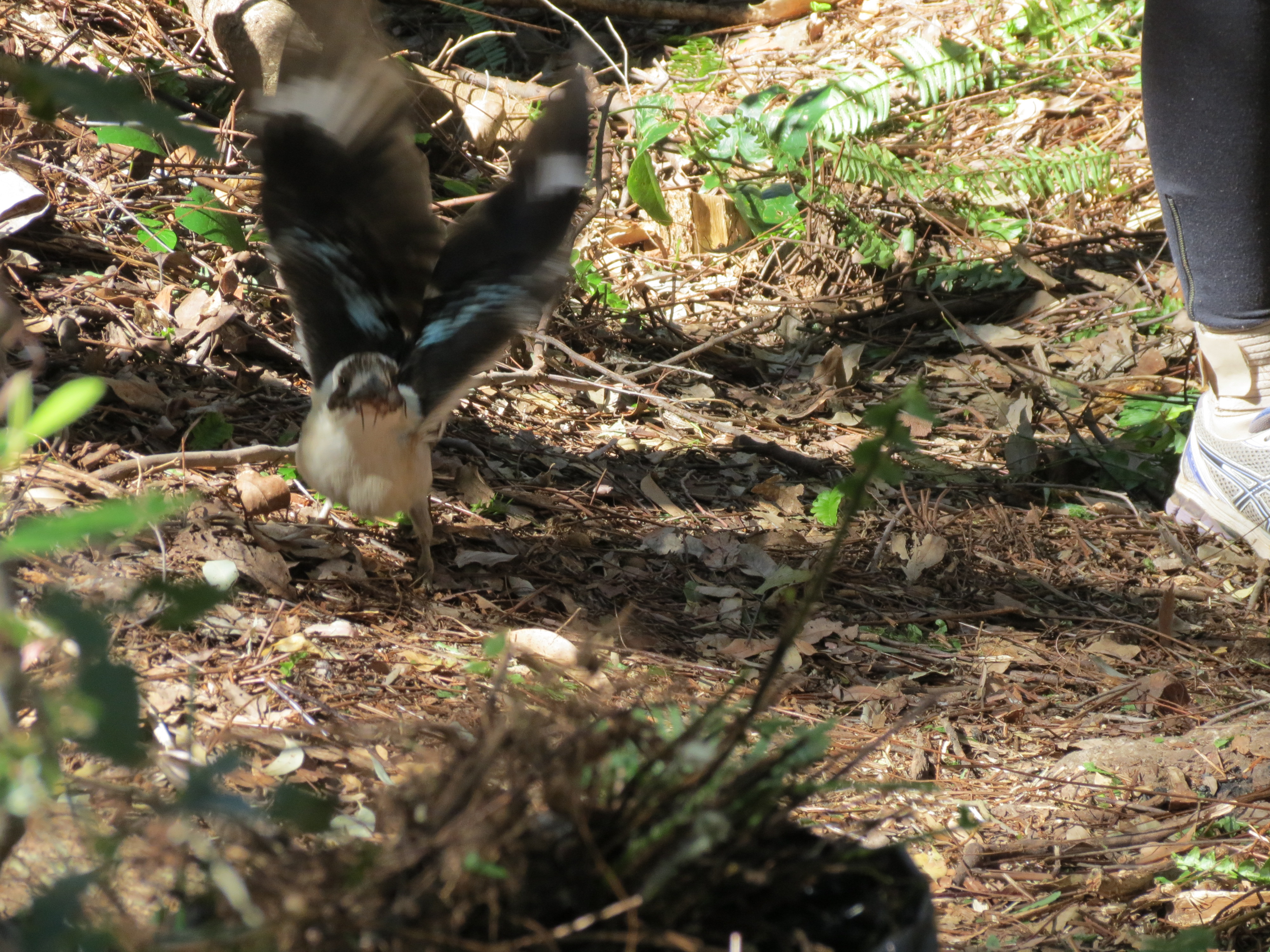
I can fly … whoops … what is that invisible wall?

We have been worried that we missed any hatching’s or that chicks had been taken by a fox or a cat. Today that changed when I walked into the lounge to find this beautiful and confused Turkey chick standing on my clean washing – fortunately just the old jeans I wear for bushcare.

IMG_5715

Released in relative safety of Fox Gully

I quickly grabbed the camera and recorded the visit. Obviously the chick decided the bush was more attractive than my old jeans, however, while he could fly he still has to learn about windows.

I caught him(or her) before he could hurt himself and released him in the safety of the tree cover of the gully.

I hope we have more Turkey chicks visit … perhaps outside so I don’t have to clean up the little gifts they leave behind on the furniture.

By: Jude Fox

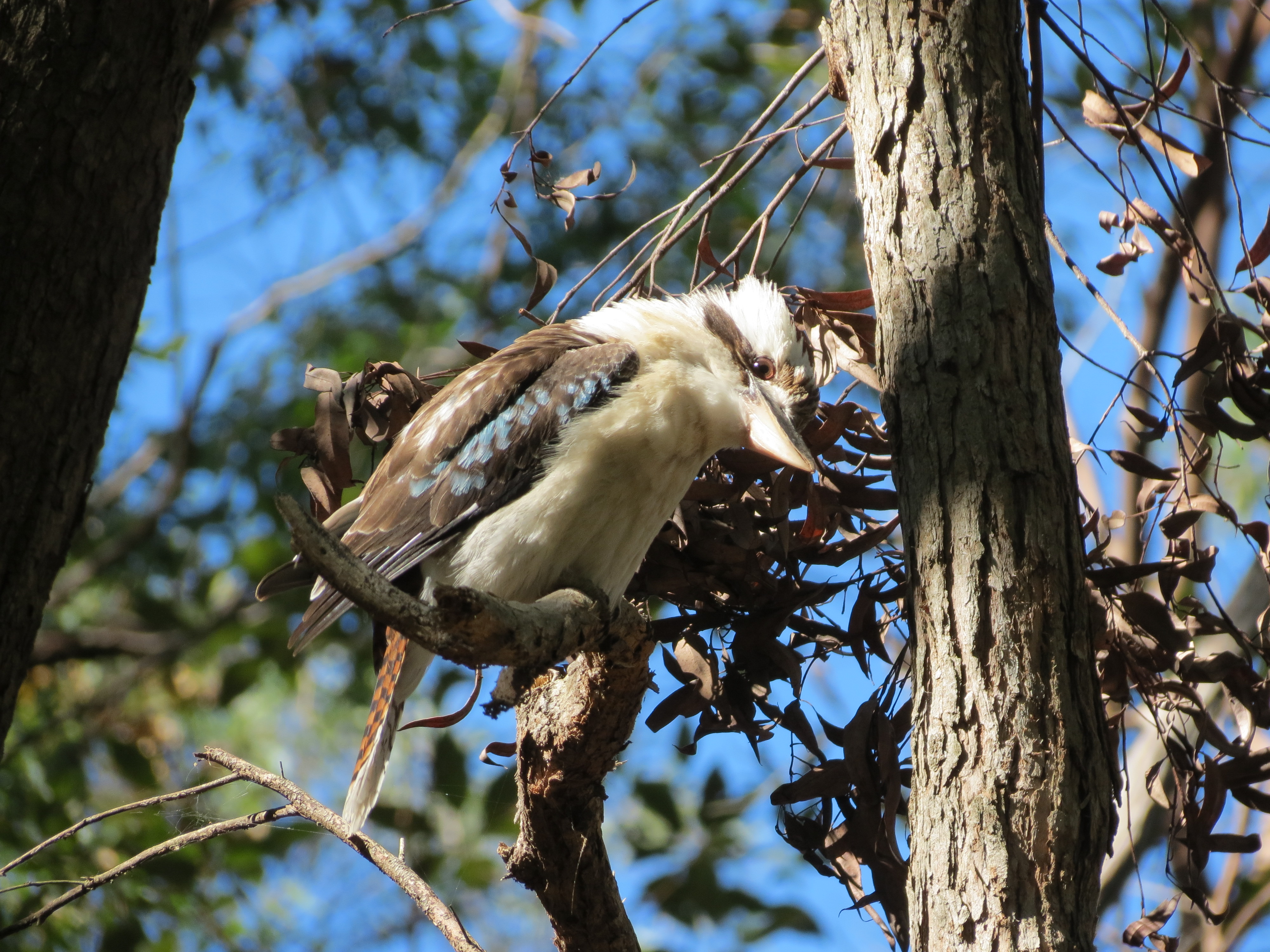
Kookaburra feeding chicks - 25 Dec 2013

Kookaburra feeding chicks

On Christmas Day we noticed Kookaburras making regular visits to a nest box installed for Boobook Owls. Observing from the bush track, we watched as a parent Kookaburra landed in the entry of the nest box and heard a great chattering from inside as the parent bird’s head disappeared from view.

Later, using the go pro camera we were able to observe four Kookaburra chicks inside the nest box. Inspired by this finding, on Boxing Day we decided to investigate all the other nest boxes we had installed in the gully. This yielded three Glider boxes containing Gliders and two boxes containing Possums. The Possums were in a box intended for Pale Headed Rosellas and Kookaburras, proving that Possums don’t read nearly as well as do Gliders!!!

Including the nest box that the Lorikeets have used to hatch at least three clutches of chicks that we know of, this is a usage rate of about 75%…not bad for nest boxes that have only been in place just over a year.

Glider - 26 Dec 2013 Gliders - 26 Dec 2013 crop Possum - Pale Headed Box - 26 Dec 2013 crop Kookaburra chicks2 - 26 Dec 2013

IMG_4362

Alan “Photography lighting doesn’t have to be expensive.”

By: Michael Fox

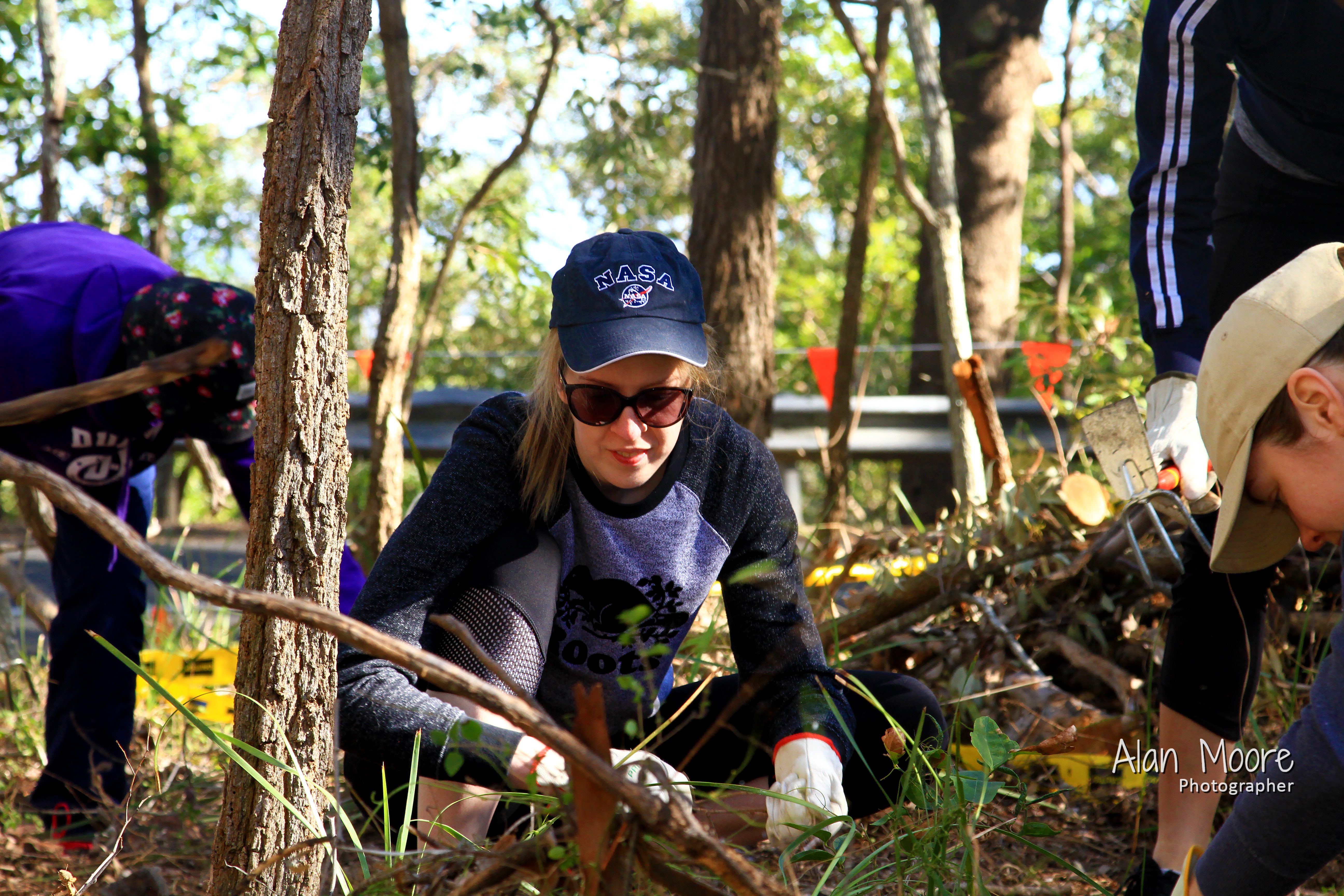
Alan Moore led our annual Photography Workshop again this year with seventeen participants learning to use their camera, differences between landscape and macro photography and even tips on low cost recycled photography lighting tools like this simple cardboard and aluminum foil reflector for macro photography.

The workshop venue was the Fox Gully Bushcare site with the marque set-up among the trees for a real photography in the bush experience. After learning the basics participants were sent on assignment to practice their skills. Over lunch Alan critiqued a selection of photos from each participant giving feedback on lighting, focus and composition. Read Alan’s review.

IMG_4382

Bush fashion in the bush

After lunch, a new feature of this year’s workshop was fashion shoot the inspiration of our our Co-President, Laurie Deacon. Alan presented the basics of photographing people before participants were again sent on assignment into the bush, this time for a fashion shoot.

d

IMG_4389

Fashion and nature

ng

d

The bush themed fashions, creations of Jolanta Szymczyk, had just been featured in a fashion parade at the Ekka. The models, Liliana, Georgina, Diana and Maria generously gave their afternoon to model Jolanta’s fashions and Alan organised lighting in the most unlikely venue.

Congratulations to all participants for the amazing photography and Alan, Jolanta, Liliana, Georgina, Diana and Maria for your generous support.


IMG_4263

Griffith Bush Care Team

By: Michael Fox

Reviewing the photos preparing to write this blog it was like being there all over again. The laughter, the smiles, the generosity, the sharing of stories about families and different countries … it was one of the most inspiring bushcare events I have attended.

IMG_4239

Bamboo Team in action

IMG_4241

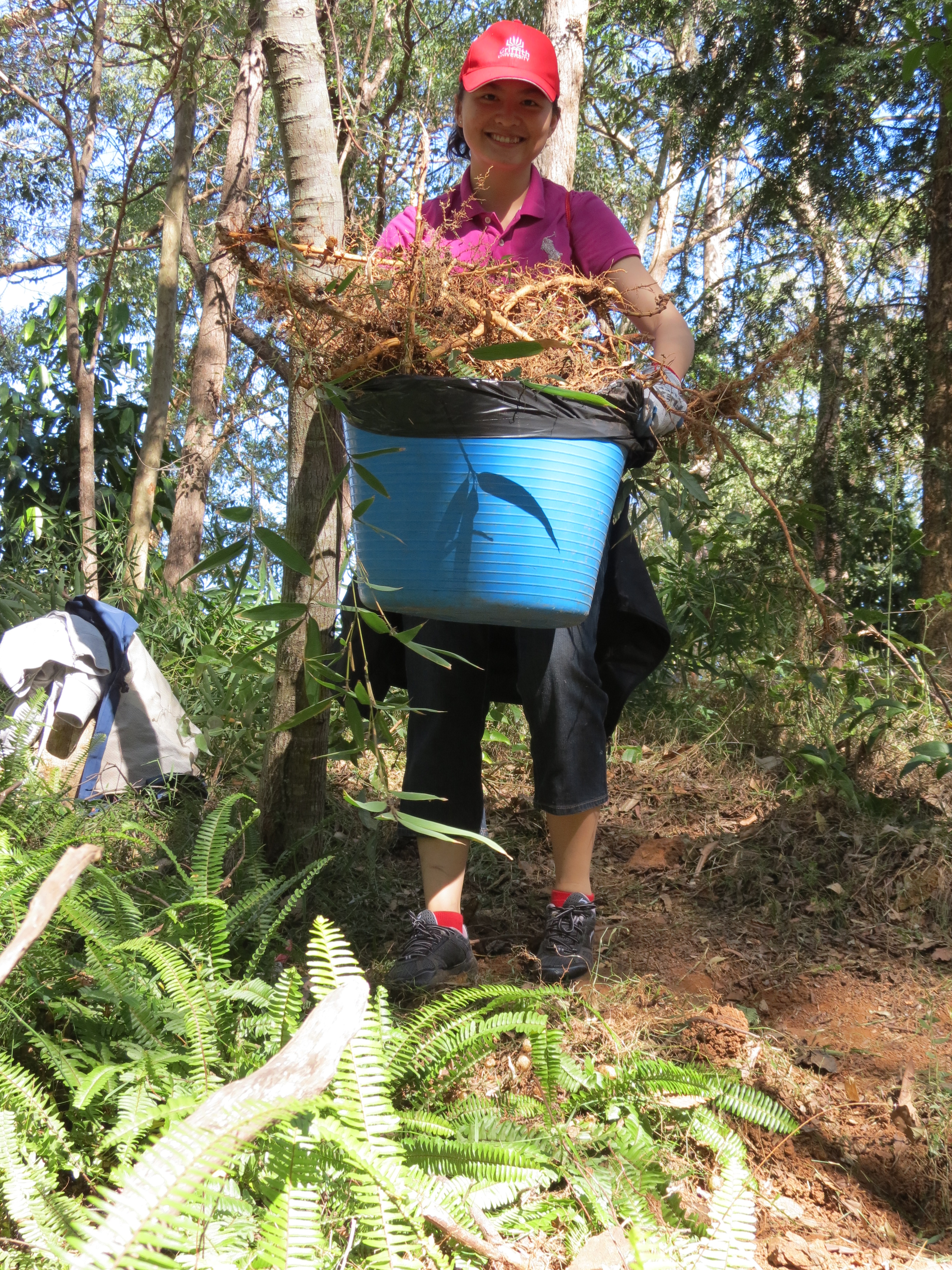
Bamboo roots grubbed out for disposal

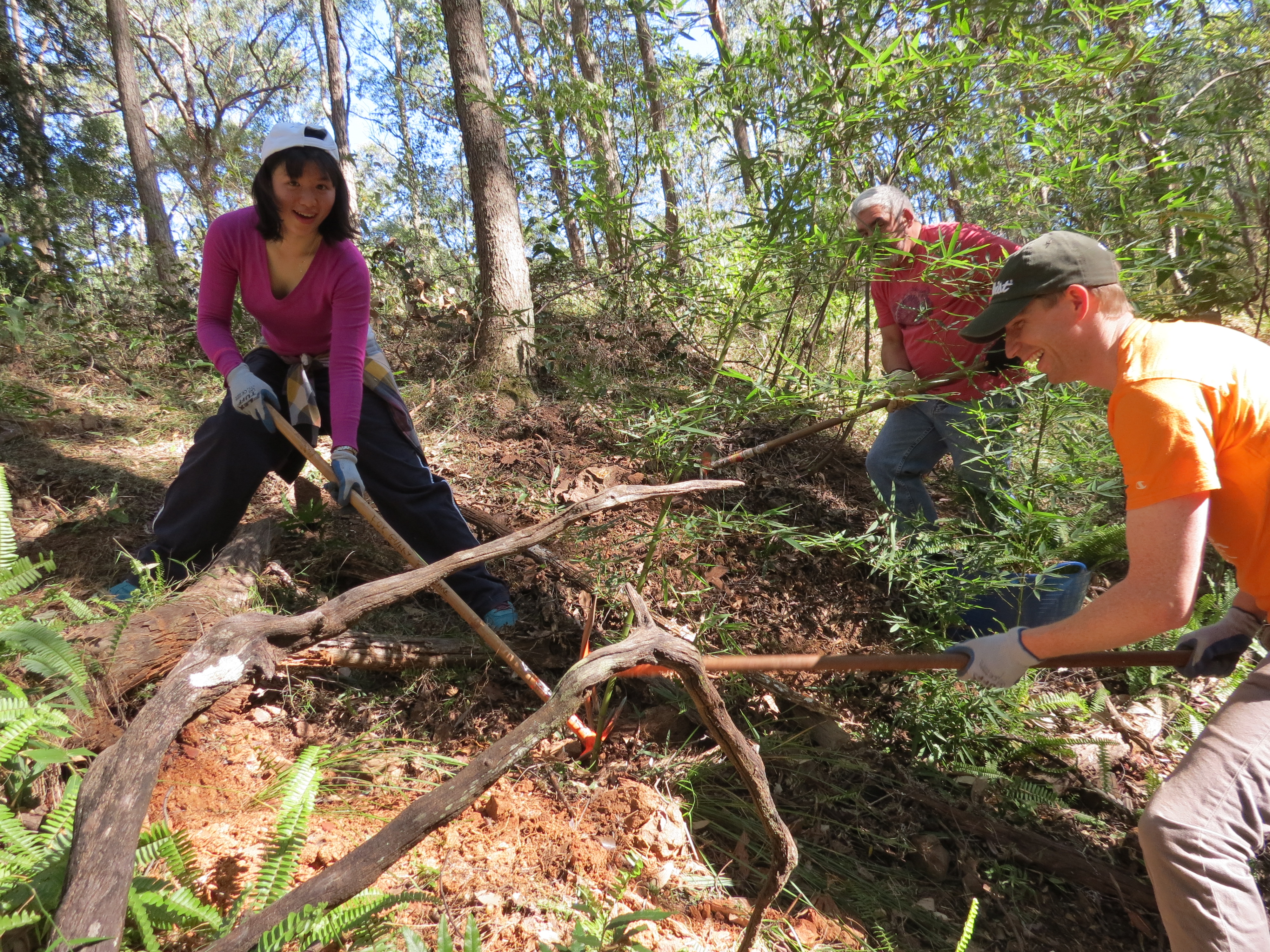
Working on the “Bamboo Team” I learned about the different qualities of bamboo and the preferences of Pandas for the tender new shoots. I heard the story of a person so inspired by their Chinese school principal father that they followed their undergraduate business degree with a PhD focused on education so they can give back to their community with education. I talked with a student that is studying international relations and shared his vision of how his career could go in directions directions ranging from trade negotiations to more general diplomatic work, all of which will clearly be underpinned by an intelligence and  compassion that gives me hope for future global relations.

a

a

Walking through the Sagano bamboo forest, in Arashiyama, Japan, was a special experience. A bamboo is forest is beautiful and peaceful producing strong versatile valuable wood. However bamboo does not belong in the Australian bush. Once established in the Reserve the bamboo spread and over a huge area crowding out native plants and making monoculture so thick it was impenetrable to wildlife. Removing bamboo is a hard work as all the roots have be dug out by hand for disposal off-site.

a

IMG_4233

Fishbone Team starts at bottom of slope

a

a

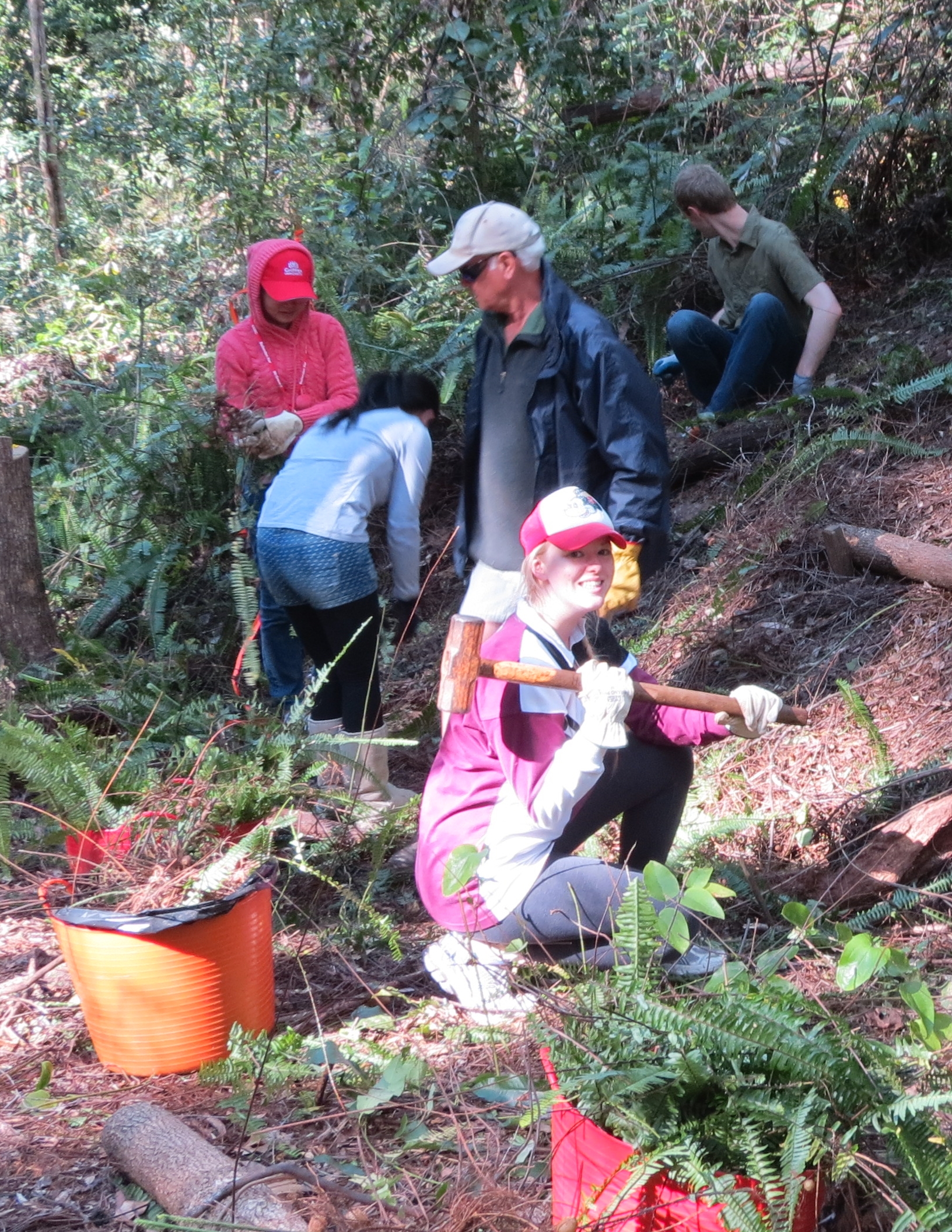
The “Fishbone Team” worked to clear a huge area of Fishbone Fern Nephrolepis cordifolia on the slope. Working from the bottom the team removed the weeds and placed logs to stabilise the slope and provide access.

a

Weilding the sledge - 24 Aug 2013

Banging in stakes to hold logs

a

a

a

a

a

Bushcare participants get to do a bit of everything at Fox Gully. Wielding a sledge hammer is change from writing assignments.

a

a

a

a

a

IMG_4248

“Thanks for helping me find a feed.”

a

a

They even met some of the local wildlife. The male Brush-turkey Alectura lathami was working on his nest mound when the team arrived. Then one of the local Kookaburras came to visit looking for a feed in the area that has been cleared.

a

a

IMG_4249

Huge area cleared of Fishbone and logs in place

a

a

Morning tea time and we have achieved an amazing amount of valuable restoration work. The Fishbone Team has cleared a huge area on the slope and installed logs to manage erosion and allow safe access.

a

IMG_4255

Composting weeds

a

a

a

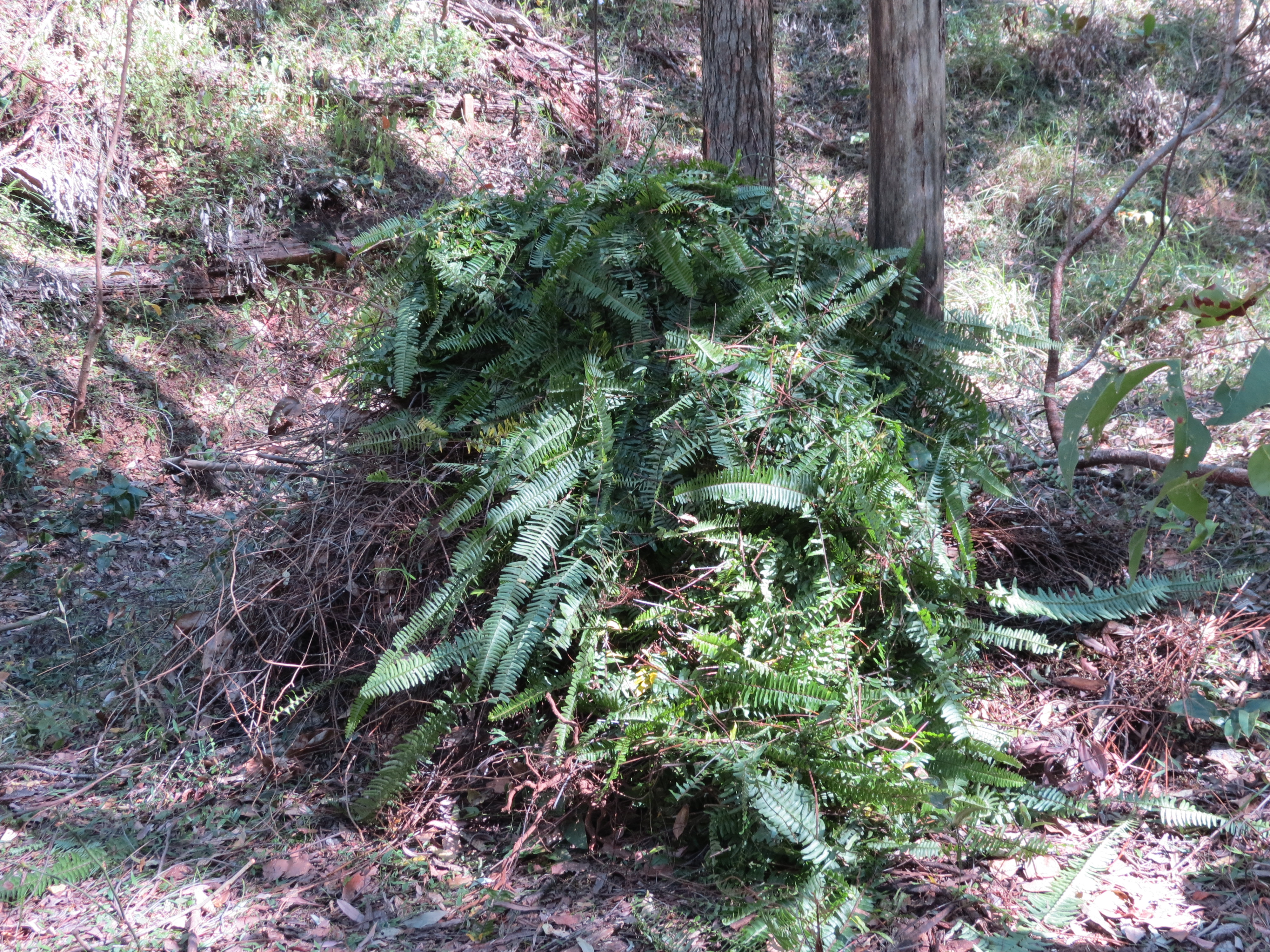
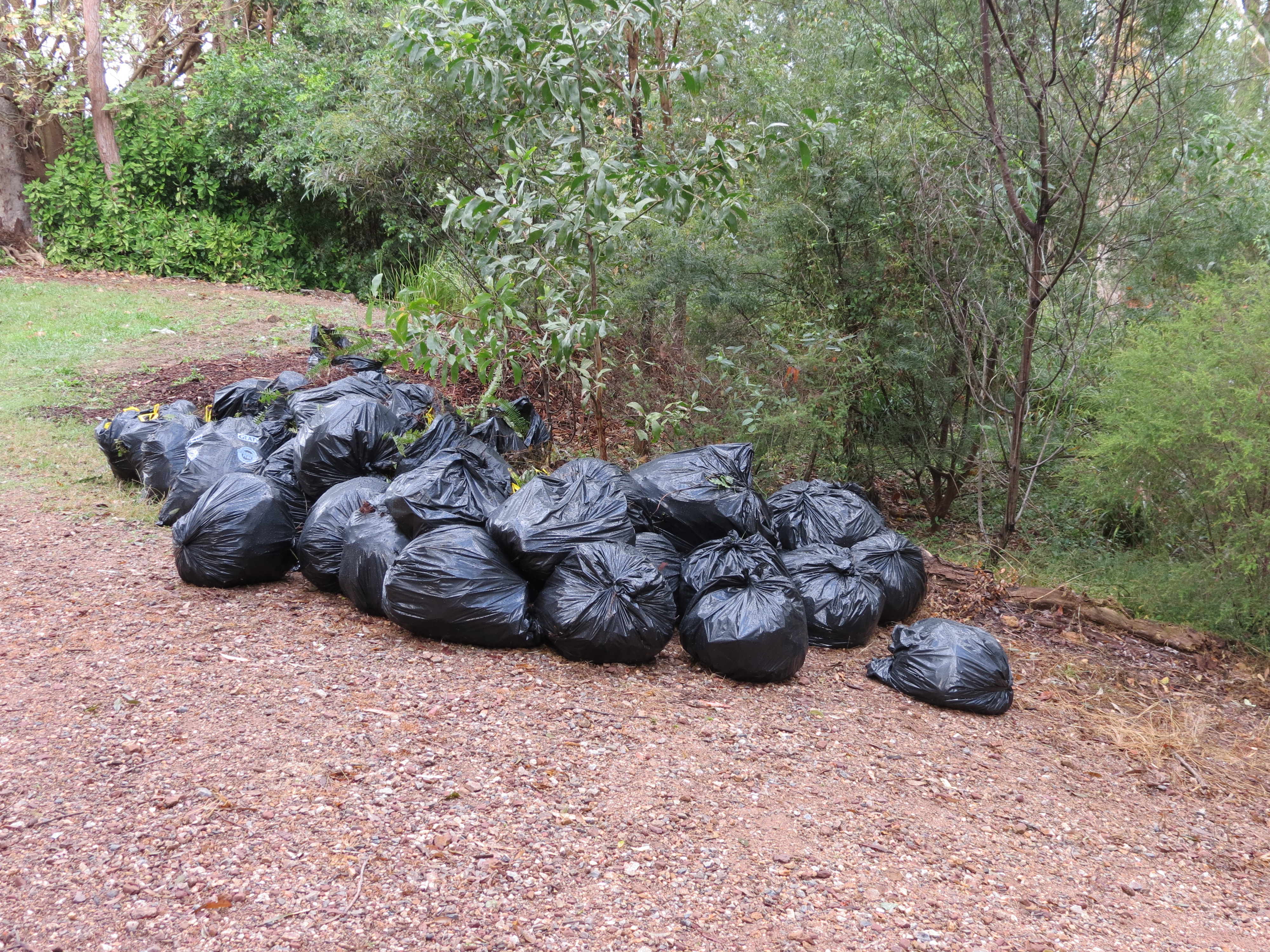
A large pile of Fishbone leaves have been added to the compost pile and sixteen garbage bags have been filled with the roots of Fishbone and bamboo.

a

a

IMG_4257

Looking for lunch

a

a

a

The Kookaburra has come back to inspect the results and look for lunch …

a

a

a

IMG_4259

Catching a fat spider for lunch

a

a

a

Spotting a nice fat Huntsman spider he flies down right among the team, snaps the spider and flies off again.

a

a

IMG_4252

Mirandha hamming it up for the camera

a

At the finish shaking each person’s hand and thanking them for their contribution was a real pleasure and a singular honour. However, I must acknowledge Mirandha Escott-Burton whose vision and persistence has created the Griffith Bush Care  which is becoming a valuable source of volunteers supporting our restoration work and providing a real Australian bush experience for international students.

Mirandha is building a partnership between Griffith University Student Linx and Mt Gravatt Environment Group.

IMG_8873

November 2011

By: Michael Fox

2011 Our first Community Gully Day, two years ago, saw the removal of six cubic metres of rubbish, poisonous Yellow Oleander Thevetia peruviana and Madeira Vine Anredera cordifolia, stabilised the banks with logs leaving the ground bare and storm water pipes a visual blight.
IMG_0872

November 2012

d

d

d

d

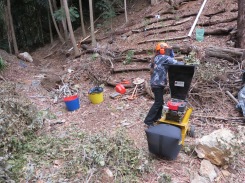
2012 Between Gully Days restoration work continues with regular Tuesday Bushcare events. Mirandha, Griffith University Bushcare Club, feeds Chinese Elm branches into out chipper.
IMG_4190

August 2013

d

d

d

d

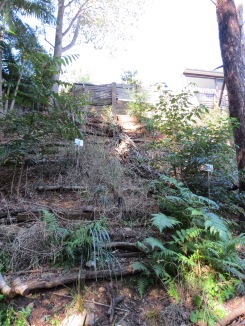
Coin-spot Treeferns Cyathea cooperi are thriving, bush foods like Native Mulberry Pipturus argenteus will growing and the storm water pipes are disappearing under branches creating ideal habitat for lizards and improving visual amenity.

d

d

Living mulch - 11 Aug 2013

Living Mulch reducing erosion and creating mico-habitat

d

d

d

d

d

d

d

2013 8am The team getting to work, Scott, Barry, Carol, Don and Marshal in background, with Matt and myself delivering hollow logs for habitat.

IMG_1048

November 2012

Note the amazing mico-habitat created by the Living Mulch of native grasses – Rainforest Grass Oplismenus aemulus, Graceful Grass Ottochloa gracillima, and self-sown herbs like Native Hawksbeard Youngia japonica.

Even without the tree cover this area was several degrees cooler than the area just a little down the gully.

d
Marshal Carol Scott removing weeds - 11 Aug 2013

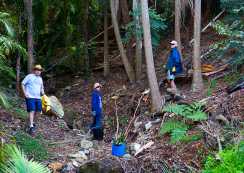
Clearing weed regrowth

d

d

d

d

A huge change from November 2012 when the gully was still bare.

d

d
Madeira Vine tuba - 5 Mar 13

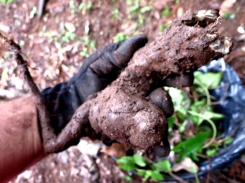
Madeira Vine tuba removed from gully

d

d

d

d

8:30am Scott, Carol and Marshal have been busy clearing Mother-in-law’s Tongue Sansevieria trifasciata and Madeira Vine regrowth.

Matt Mike hollow log (low) - 11 Aug 2013

Matt and I install habitat log

Matt Russ Shawn placing logs 2 - 11 Aug 2013

Matt, Russ and Shawn positioning logs

d

d

d

Eradicating Madeira Vine in the gully is a long term project. The most effective removal approach for this fast growing invasive weed is simply digging out and immediately bagging the tubers. Madeira produced hundreds of tubers along the vine. Those tubers are viable for a long time and sprout like potatoes when they land in a suitable environment. The size of these tubers mean that using poison is often not an effective particularly in a vulnerable water course.

d

d

9am Matt and I install one of the hollow logs donated by Scott at Tree Bracers (eco-friendly) Tree Removal Specialists.  Scott contacted me asking if we could use the logs as he did not want to simply chip this valuable habitat resource. Roger Medland and I collected the logs in Rogers ute.
Marshal splitting logs - 16 Jul 2013

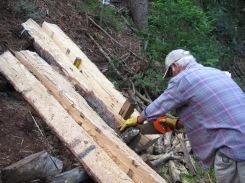
Marshal splitting logs for stablising banks

Hollow logs are valuable habitat for wildlife and installing these logs will provide Possums and Gliders safe escape from Foxes and cats.

d

d

d

d

d

d

9:30am Matt, Russ and Shawn are positioning logs on the bank further down the gully. Logs reduce erosion, allow mulch and leaves to collect retaining water and keeping weeds down. Restoration work is also much faster and safer as the logs create a working platform for removing weeds and planting grasses, vines and trees.

d

d

d

d

d

d

The logs were recycled from a tree removed after the January storms. Dale from Climb n Grind returned to safely remove the tree leaving the trunk cut to useful lengths. Marshal and I then used a chainsaw and steel wedges to split the logs into manageable quarters ready for the Gully Day.

IMG_3660

Len Kann with Stingless Bee hive

d

d

d

10:30am Time for a break. Genevieve has organised a sausage sizzle, coffee, tea, cake and fruit … mmmm.

IMG_0839 (1)

Teddy Bear and Blue Banded native bees

While we eat, native bee expert and Mt Gravatt Environment Group member, Len Kann shares his passion for this fascinating wildlife we can bring to our backyards to pollinate our Queensland Nut trees and vegetables.

d

d

Stingless bee hive (low) - 11 Aug 2013

Inside the hive – Stingless Bees

Len explained that there are over 2,000 native bee species in Australia with many providing farmers with unique pollination services not provided by European Honey bees.

IMG_0837 (1)

Rebecca planting

Len has put together a bee presentation box using one of his own empty hive boxes, specimen boxes with Blue Banded and Teddy Bear bees that we have collected in the Reserve, and excellent macro photos taken by member Alan Moore.

Len has generously provided one of his Stingless Bee hives on secondment in the gully and for his talk he bought along a hive he could open to let us see inside. For an ex-beekeeper like me it was fascinating to see the very different structure for storing honey and pollen, and, yes, it is nice not to collect the dozen of stings I received when robbing my European bee hives.

d

11am Rebecca is back to work planting the bank behind her property.

I am proud to live in a community that can come together on a long term project like this. Currently the owners of twenty properties are committed to restoration of their backyards as a wildlife corridor down Fox Gully and importantly work together to eradicate Madeira Vine.

We had twenty people participate in the 2013 Community Gully Day including people like Marshal and Carol who live beside Firefly Gully, Nancy who has propagated most of the Lomandras in the gully and Len who shared his passion for native bees.

Three hundred grasses, herbs, vines, shrubs and trees have been planted this year. Save Our Waterways Now (SOWN) generously gifted $400 worth of plants with other plants and resources purchased with over $200 in tax deductible donations from neighbours.

Snapshot - 3

Brushtail on patrol

By: Michael Fox

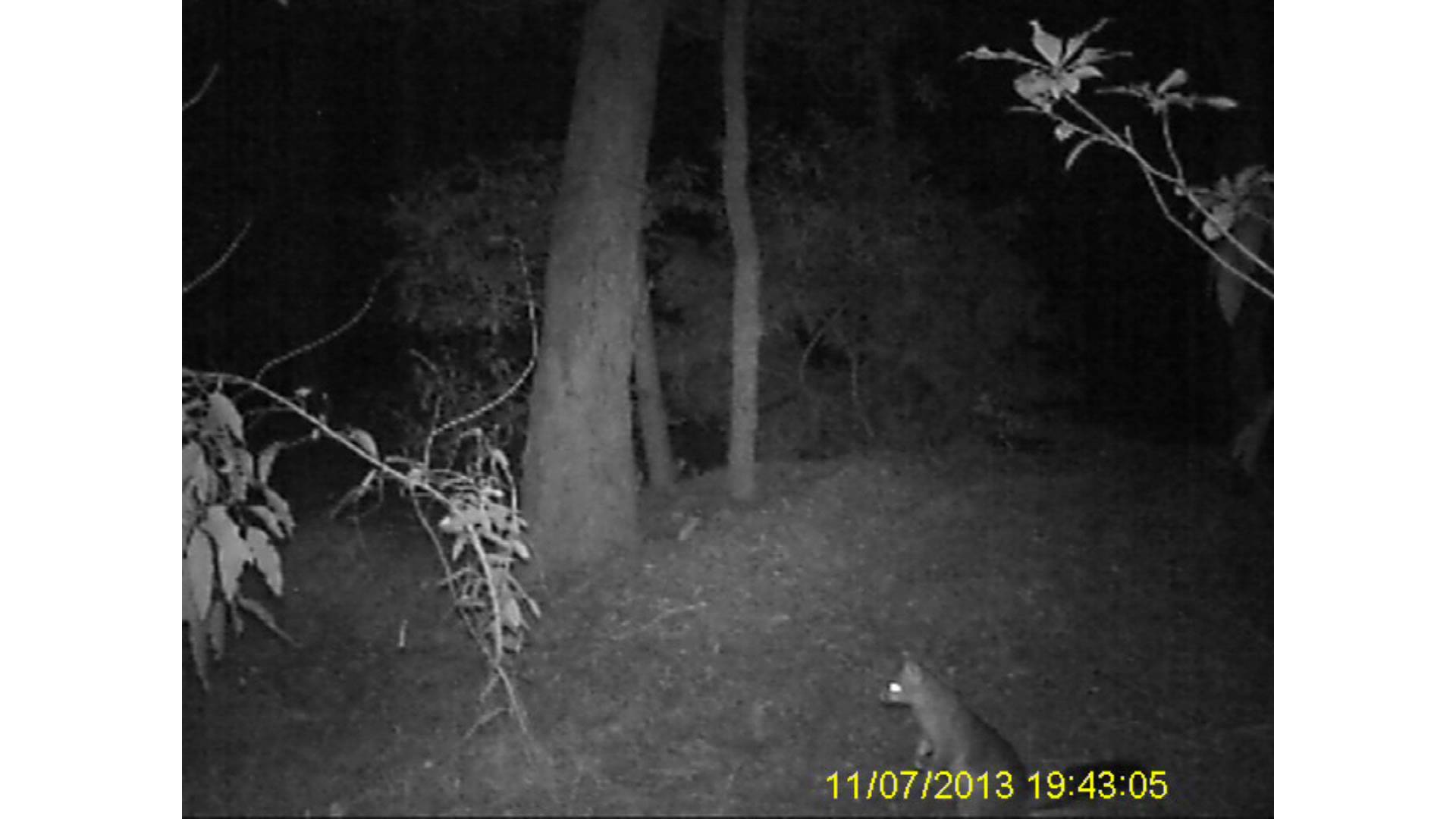
The new Aldi Maginon wildlife camera is helping us learn more about wildlife in Mt Gravatt Conservation Reserve. Currently the camera is monitoring a Brush-turkey Alectura lathami  building a nest mound.

The infrared camera is also monitoring nighttime activity like this Common Brushtail Possum Trichosurus vulpecula on patrol on two different nights.

Monitoring the movement and behaviour of our wildlife will help us learn how to protect and restore the habitat.

IMG_4023

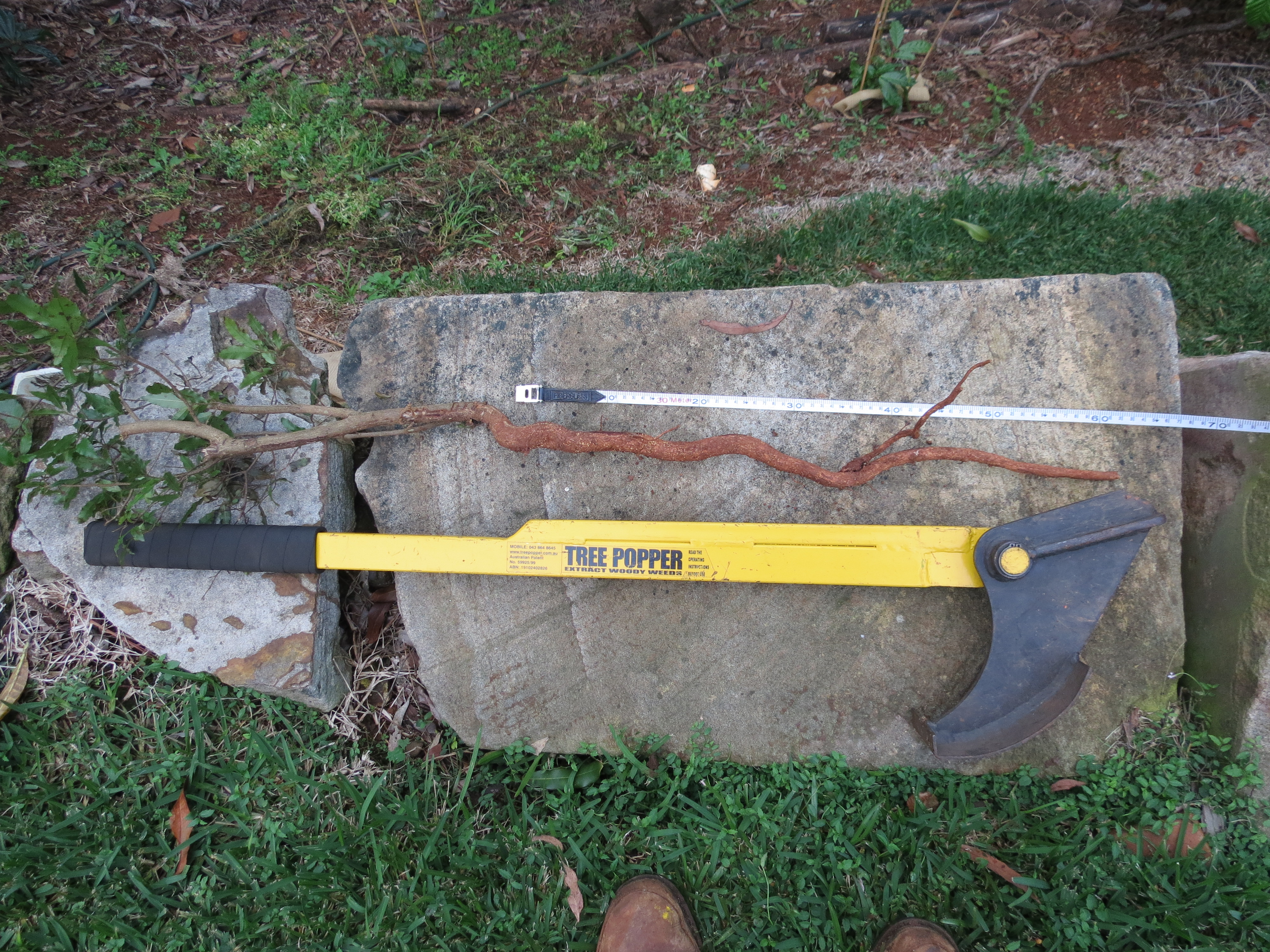
Ochna removed with Tree Popper

By: Michael Fox

Mickey Mouse Plant Ochna serrulata is one of the most difficult woody weeds to remove or even poison.

One of our key Bushcare tools, the Tree Popper is an ideal weapon to attack Ochna and no poison required.

Ochna bushes commonly have extraordinarily deep tap roots out of proportion to the size of the bush. This Ochna removed at Fox Gully Bushcare is an excellent example – a thick 60cm tap root hidden under a tiny bush.

The Tree Popper is an excellent tool for Bushcare work however best results are obviously achieved when the ground is soft after rain.

CVA team - 22 May 2013

CVA volunteers with Kookaburra supervisor

By: Michael Fox

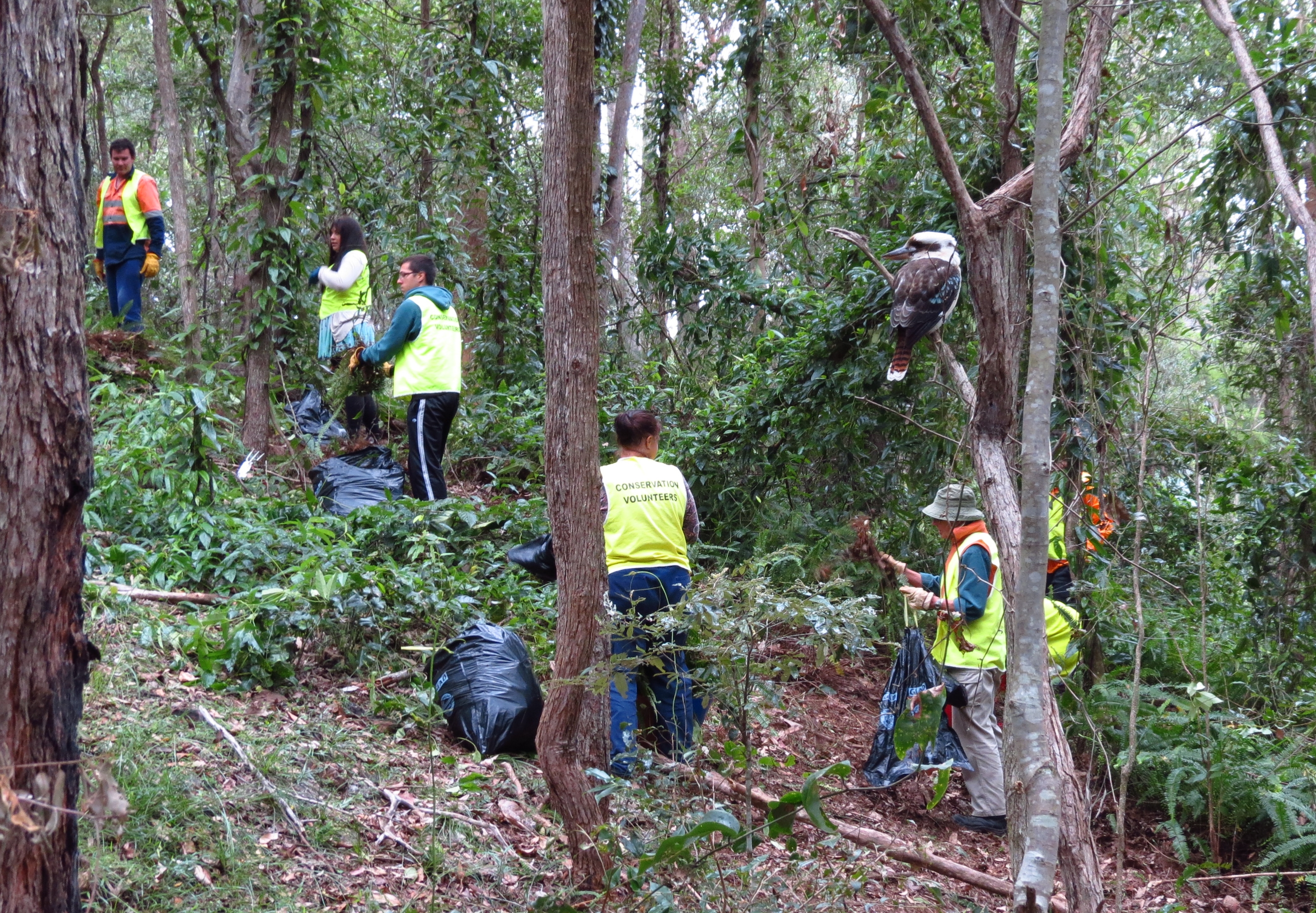
Conservation Volunteer Australia (CVA) teams worked at our Fox Gully Bushcare site the last two Wednesdays, restoring the silt filters along the track, removing a huge area of Fishbone Fern Nephrolepis cordifolia.

l

l

Silt filters - 22 May 2013

Mulch silt filters clean run-off water

l

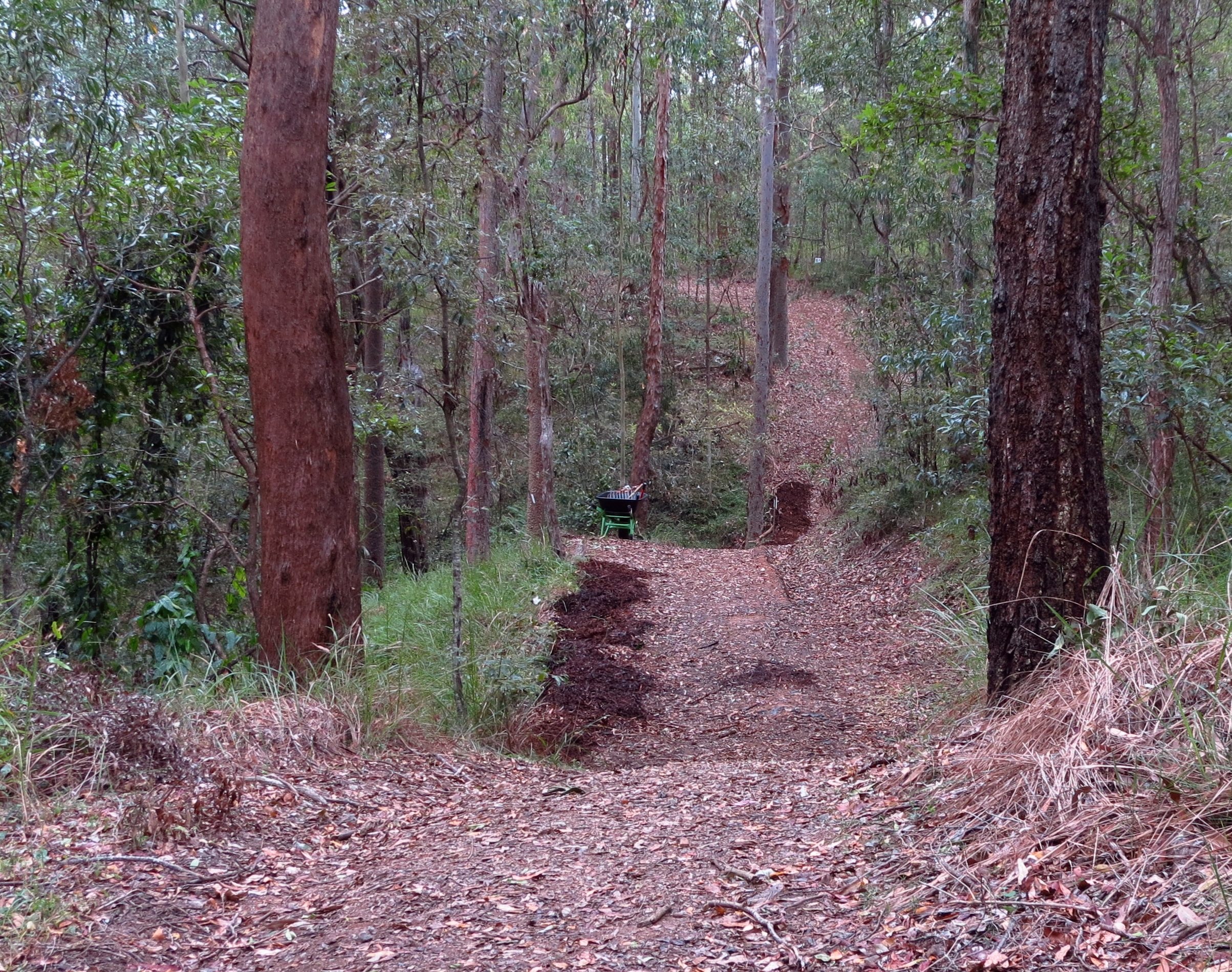
Reducing erosion and keeping silt our of our waterways is an important part of our bushcare work. Silt filters created with logs and mulch at run-off points along the dirt maintenance track slow the water and allow silt to settle out. The filters have done an excellent job managing the extreme conditions over the last few years however they needed to be made more permanent with logs and fresh mulch.

Removing Fishbone - 29 May 2013

Chris, CVA supervisor (orange vest), explaining best-practice weed removal

e

The CVA supervisors are very professional, delivering their team, ensuring they have all the necessary safety equipment then providing practical support and guidance. Chris is reinventing his career as a recent mature age graduate from Queensland University, so he combines strong environmental knowledge with practical work experience. Here he is explaining our best-practice procedure for clearing Fishbone – tear off and bin the roots then the leaves are composted on-site.

Internet Generation meet Australian bush

Gen Y meet Australian bush

a

I often hear people comment that young people today a don’t have the same commitment we Baby Boomers demonstrate. So it is a real pleasure to have the opportunity to work with individuals like the young Korean girl not only on a working holiday in Australia bur also volunteering to restore our Conservation Reserve.

IMG_3774

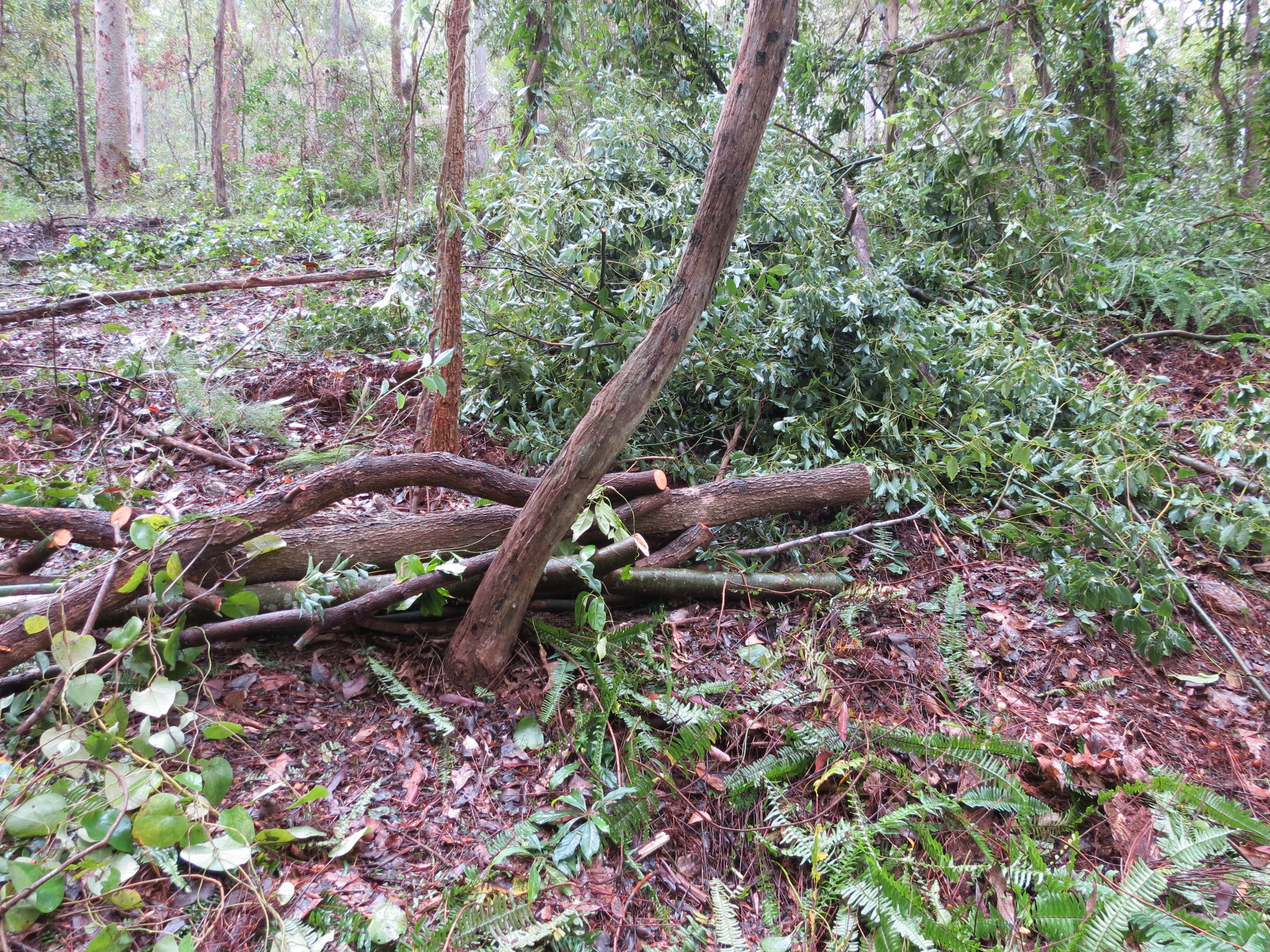
Camphor Laurel and Chinese Elm removed

d

k

d

The CVA teams made a major contribution progressing our restoration of Zone 13. Clearing the Fishbone Fern so the native grasses and ferns return to the gully.

d

IMG_3777

Bags of Fishbone roots ready for removal

d

« Previous PageNext Page »