Wildlife


By: Michael Fox

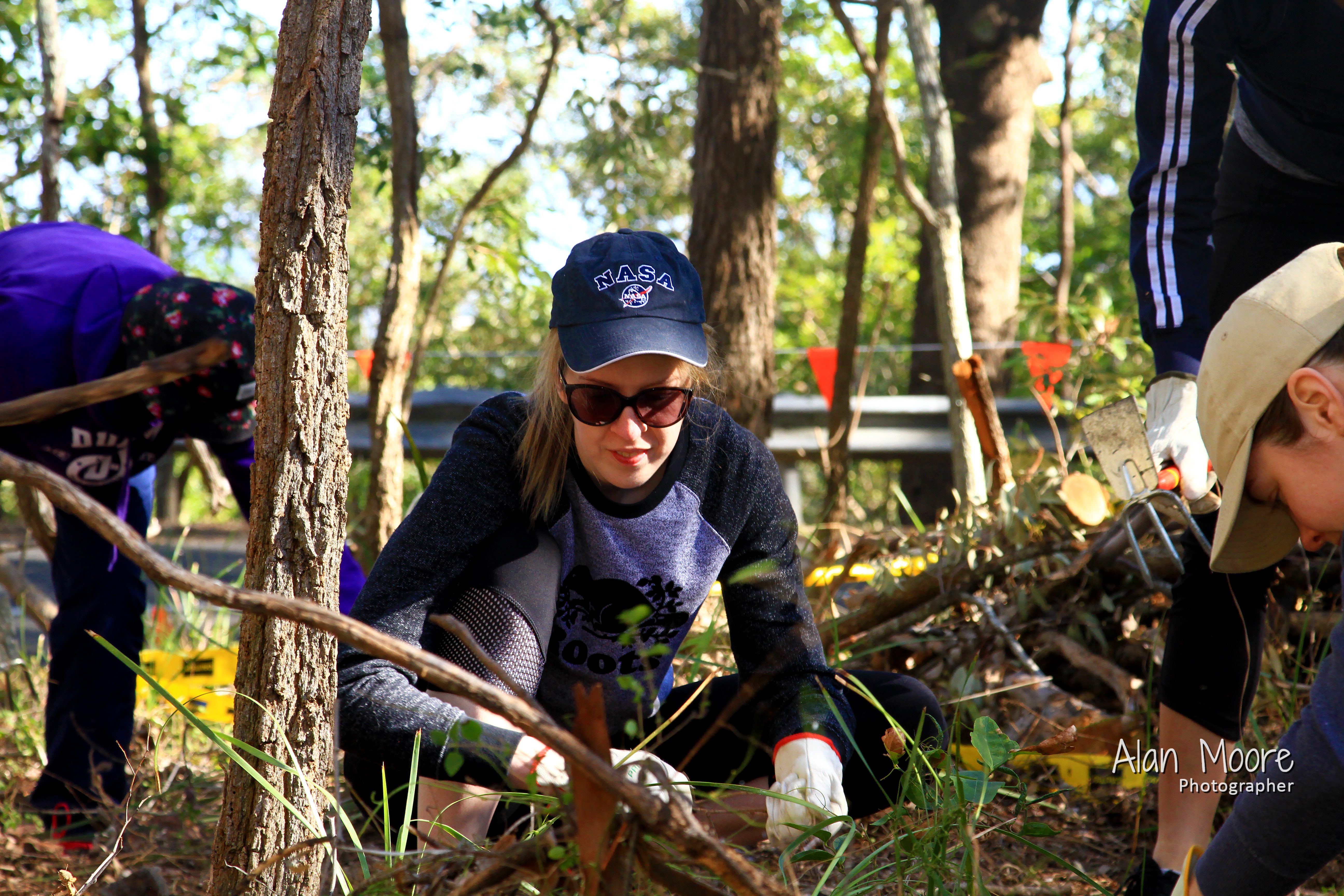
A nice cool morning in the forest and eleven volunteers came together to attack the invasion of Cobbler’s Pegs Bidens pilosa and Corky Passionvine Passiflora suberosa.

Weed Buster Team in action

Eloise and Bettina have been coming every week volunteering as part of their work towards their Bronze Duke of Edinburgh Awards.

Eloise found a Yam Hawkmoth Theretra nessus caterpillar. Easily identified as a Hawkmoth by the horn on it’s tail.

.

Melanitis leda Evening Brown

.

.

.

.

.

We also have two volunteers who just finished their Masters of Conservation Biology at University of Queensland, Denise and Max.

.

Denise in particular wants to learn about everything from the curious Melanitis leda Evening Brown caterpillar with its two horns …

.

.

.

.

.

.

.

.

.

… to the way Ottochloa gracillima Graceful Grass: food plant for the Evening Brown, is forming Living Mulch reducing evaporation and keeping the ground cool supporting the soil microbiology.

.

.

.

.

.

.

.

.

.

.

.

Benno as usual found several insects for me to photograph.

Like the Oides dorsosignata Orange Oides Leaf Beetle

.

.

.

.

.

.

.

.

.

… and the curious looking Neola semiaurata Wattle Notodontid Moth. What looks like the head is actually the tail.

.

.

.

.

.

.

.

The Noliphus erythrocephalus Colourful Board-headed Bug is a new addition to Flora and Fauna of Mt Gravatt Reserve.

Volunteers are welcome join us on Tuesday mornings or at one of our other events.

Square-tailed Kite chicks in nest

By Michael Fox

A beautiful sunny morning and in the sky two beautiful Square-tailed Kites Lophoictinia isura soaring wings spread wide as they do lazy loops above the trees.

The kites have returned for the forth year to their nest in the Spotted Gum and now have two chicks poking their heads up. The kites are top level predator feeding on small birds, insects and lizards so to have a pair breeding in the forest provides some evidence of a healthy habitat providing sufficient food.

Koala Mum and Joey

Tuesday Bushcare is always an adventure in spotting flora and fauna. Spring breeding season however is special.

Koala Spotter Steph found a Mum and Joey in a tree above where we were working.

.

.

Bearded Dragon

.

.

.

.

We also spotted a handsome Beaded Dragon Pogona barbata hiding in plain sight. Good camouflage.

.

.

Australian Painted Lady drinking

.

.

.

.

.

.

..

.

.

.

.

Butterflies are also thriving. We found this Australian Painted Lady Vanessa kershawi getting a drink from the damp ground. Note the distinctive club antenna.

Plant native daisy species like Golden Everlasting Daisy Xerochrysum bracteatum to attract and feed the Painted Lady caterpillars.

Rosella Hibiscus heterophyllus

.

.

..

.

.

The beautiful Rosella Hibiscus heterophyllus attracts native bees, insect eating birds and is also edible.

.

.

.

.

Mike Fox using TreePopper to remove Ochna

.

.

Spring means the weed Mickey Mouse Plant Ochna serrulata is covered in seed: one bush completely filled a weed tub. Recent rain also softened to ground so we were able to use the TreePopper to remove the weed with minimal disturbance to the soil and no use of herbicide.

.

.

.

.

.

.

.

Corky Passion Vine – variety of leaf shapes

Most of our work at this season is removing Corky Passion Vine Passiflora suberosa which has spread aggressively in areas where we have cleared other weeds. Corky Passion Vine can have very different leaf shapes so we are careful to follow the vines to the base so we can check for the corky stem and remove the roots to stop re shooting.

Preparing the installation.

By: Michael Fox

The Mt Gravatt Environment Group team installed a second Koala Tree Troff in the forest this morning.

Artwork by Chrys O’Hare

Laurie, Alan, myself management the installation with the valuable help of David Fechner, Koala researcher from Griffith University, who we recruited on-site.

.

.

The Tree Troff is installed beside a Tallowood Eucalyptus microcorys a favourate Koala food tree. Note the scratching of the bark.

This innovative design by Robert Frend of Wildsip, and manufactured by local Gunnedah business and donated by WIRES NSW.

The Tree Troff simply balances against the tree with the weight of 220 litres of water transferred directly to the ground.

Koala Drinker Research Project

.

.

.

.

.

.

.

.

.

While we were on-site I showed our team the Bottle Brush Grass Tree Xanthorrhoea macronema. This has been the best flowering I have ever seen in sixteen years with more plants spreading near the Eastern Outlook Track.

.

.

.

.

.

.

.

.

.

.

Sago Flower

.

We also checked the July National Tree Day planting where Ozothamnus diosmifolius Sago Flower is already in flower.

Sago Flower is an attractive garden plant with leaves that can be used in cooking as a substitute rosemary.

.

.

Laurie and I also found the pretty Pandorea jasminoides Bower Vine at the site.

.

Thanks to Alan Moore for the photos.

.

Pandorea jasminoides Bower Vine

.

.

.

By: Michael Fox

How many Koalas are there in Mt Gravatt Conservation Reserve? I am often asked that question.

As part of our 2021 Koala Drinker Research Project and work by Peter Demmers we know there are at least thirteen individual Koalas in the Reserve. We now have a couple with excellent Koala spotting skills they share with other visitors by marking sightings with an arrow on the track.

If you see an arrow on the track, pause look around and say hi to our special locals.

By: Michael Fox

Michelle, Phil and Benno

Our Tuesday Bushcare team relocated this week to help Pieter Demmers with his restoration of Coucal Corner on one of the Mountain gullies feeding into Ekibin Creek.

.

.

.

.

.

Coucal Corner is named after the beautiful Pheasant Coucals Centropus phasianinus that live in the gullies. Listen for the characteristic ‘oop-oop-oop-opp’ call. Our Coucals feed on the ground on large insects, frogs, lizards, eggs and young of birds so they need a scrubby habitat that attracts their food. Norman Creek Catchment Coordinating Committee (N4C) contributed two hundred and fifty local grasses, vines, shrubs and trees for the restoration.

.

One of the locals, a Tawny Frogmouth Podargus strigoides, was supervising our work.

.

.

.

.

.

.

.

We also found a Union-Jack Wolf Spider Tasmanicosa godeffroyi … ideal food for a foraging Coucal.

.

Koala Mum and Joey – Fox Gully Bushcare

By: Michael Fox

Mt Gravatt Conservation Reserve has no permanent water and no safe access to water or breeding opportunities in surrounding bushland.

The Koala Drinker research is providing vital baseline information on the potential of providing water for wildlife to maintain and strengthen populations of  vulnerable Koala Phascolarctos cinereus and other species in isolated urban bushland habitats. The Koala Drinker Research Project is supported by Communities Environment Program and sponsored by Ross Vasta MP.

Combined with the excellent Koala fencing built by Department of Transport and Main Roads (Queensland) keeping Koalas from being killed on the Motorway water for wildlife drinkers will strengthen the Koala population in the Reserve.

.

Concept Koala bridge – Cr Steven Huang

.

We are also working with Cr Steve Huang on his concept for a wildlife bridge across Klumpp Road from the bottom of Fox Gully to the Hibiscus Sports Complex then Mimosa Creek.

.

.

.

.

One very clear result of our research is how water for wildlife is valued by a wide range of species, particularly with over 6,000 visits by birds in a 6 month period. Special visitors are three bird species not previously identified in the Reserve: Brown Goshawk Accipiter fasciatus, White-throated Honeyeater Melithreptus albogularis and Yellow-faced Honeyeater Lichenostomus chrysops.

Some of birds using the Koala Drinkers:

Other regular visitors to the water include Lace Monitors Varanus varius, Sugar Gliders Petaurus breviceps, Brush-tail Possums Trichosurus vulpecula, Koalas Phascolarctos cinereus, Long-tailed Rat (Research required to identify). The wildlife cameras also captured Wallabies and a European Red Fox Vulpes vulpes.

White Throated Honeyeater is one of the species added to Flora and Fauna of Mt Gravatt Conservation Reserve:

Little Eagle 3 - Hieraaetus morphnoides - 13 May 2020 - P Demmers

Square-tailed Kite (pair)

By: Michael Fox

A pair of Square-tailed Kite Lophoictinia isura seem to be making our Reserve their home. Pieter Demmers sighted the pair at a possible nest site at the top of the Goodenia Track near Mt Gravatt Campus. Stacey McLean kindly provided the correct identification.

Friday, I actually watched one of these impressive birds circling over our National Tree Day plantings. I’m hoping this is a sign of habitat health, as large raptors are unlikely to take up residence in the Reserve if there is not plenty of food.


Eupanacra splendens - Hawkmoth -11 May 2020

Eupanacra splendens Hawk Moth

This been a great season for butterflies and moths with thousands of sightings of Hummingbird like creatures hovering in front of flowers. Hawk Moths long tongues allow them to hover in front of flowers while drinking the nectar.

We love butterflies in our gardens tend to ignore moths. However, moths vastly outnumber butterflies with 11,000 species compared to about 400 species of butterflies.

Eupanacra splendens - 13 Apr 2018

Eupanacra splendens caterpillar

On Gardening Australia, Professor Ken Walker, senior curator of entomology at Museums Victoria, explained the importance moths in our gardens. Moths work hard under cover of darkness providing valuable pollination services. Moths are also valuable food for birds visiting our gardens as well as lizards and other animals.


Butterfly and moth caterpillars feed on our garden plants, like this Eupanacra splendens caterpillar on my Peace Lily Spathiphyllum sp. However, they rarely do a much damage and we end up beautiful butterflies and interesting and valuable moth pollinators.


Banded pupa parasite wasp - Gotra sp. - female - ovipositor 2 - 2 May 2020

Banded Pupa Parasite Wasp


Professor Walker also refers to beneficial garden insects which includes some some of the ichneumon parasitic wasps found in Mt Gravatt Conservation Reserve. The ichneumon wasps have no sting and perform valuable pest control activities.

The female Banded Pupa Parasite Wasp – Gotra sp. has no sting but a long ovipositor used to lay eggs on caterpillars. (Latin ovi = egg, posit = placed)


Tiger Ichneumon Wasp - Metopius sp. 2- 1 May 2020

Tiger Ichneumon Wasp


Tiger Ichneumon Wasp Metopius sp.

Ichneumon wasps are some of the most attractive insects you can see in the Reserve.


Alan Moore photographed this Yellow-banded Ichneumon Wasp Echthromorpha agrestoria 

Yellow-banded Ichneumon Wasp - Echthromorpha agrestoria - A Moore 28 May 2020 lr

Yellow-banded Ichneumon Wasp Echthromorpha agrestoria


Griffith Mates at work - 1 Mar 2020

Weeding Team in action

By: Michael Fox

I love our annual Clean Up when the community turns out to help maintain our special Reserve. Heather Woods, our event coordinator, registered our largest ever team:
  • 75 Volunteers;
  • 66 Adults; and
  • 9 Children (under 16)

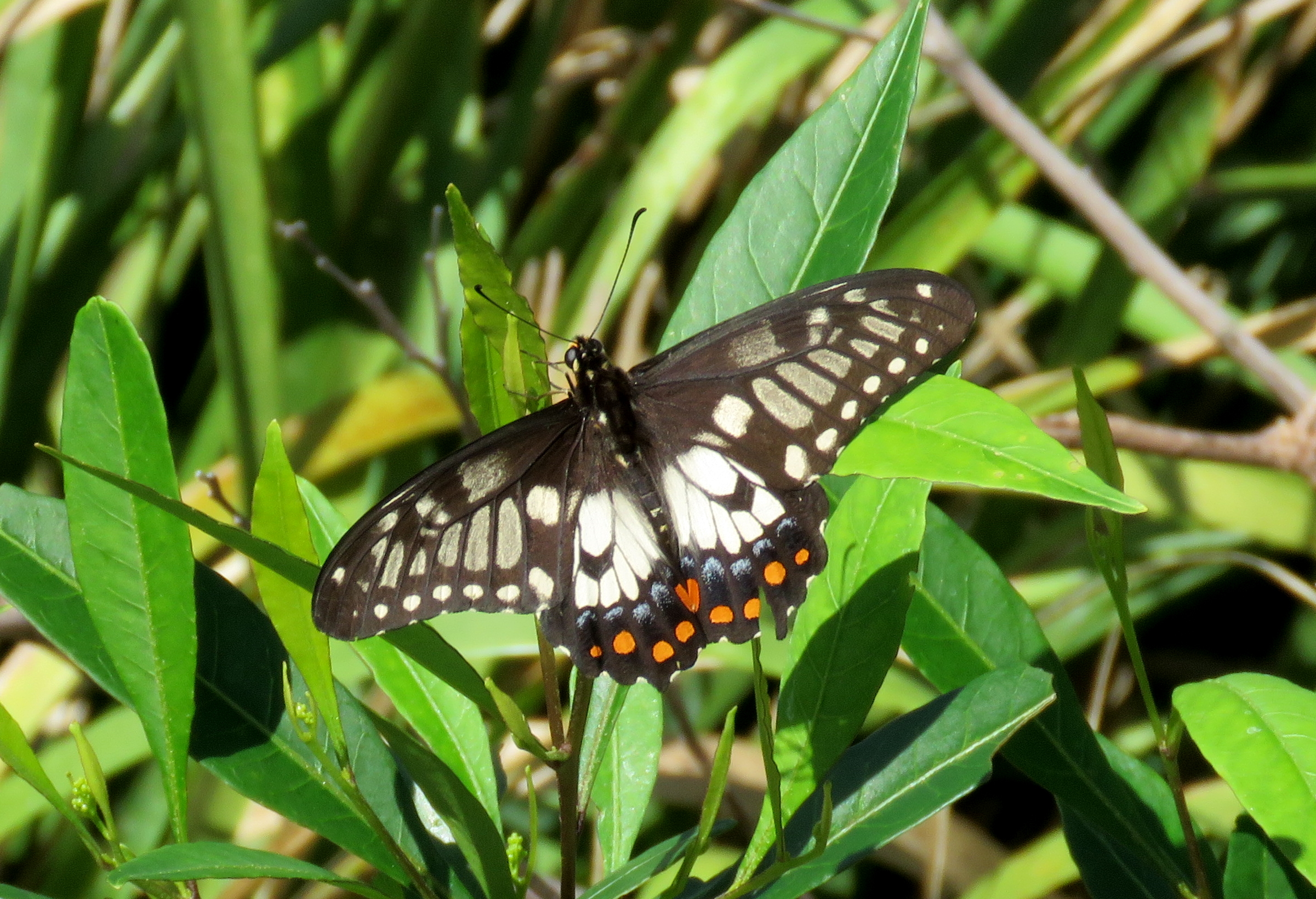
Dainty Swallowtail - Papilio anactus - 1 Mar 2020

Dainty Swallowtail Papilio anactus


The reduction in rubbish to be cleaned up means the largest group joined the Weeding Team this year.

We are working with the Council Rangers and Habitat Brisbane team to prepare the site for the 2020 National Tree Day Planting on Sunday, 02 August. Special focus will be planting species that enhance the visitor experience by attracting butterflies, like the beautiful Dainty Swallowtail Papilio anactus, while maintaining the views to the city and Glass House Mountains.

Weeds cleared - 1 Mar 2020

Huge area of Guinea Grass and Creeping Lantana cleared


The weeding team did a great job clearing a huge area of Guinea Grass Panicum maximum, Creeping Lantana Lantana montevidensis and Glycine Neonotonia wightii. Clearing the weeds and removing trip hazards is the first step in site preparation for planting.


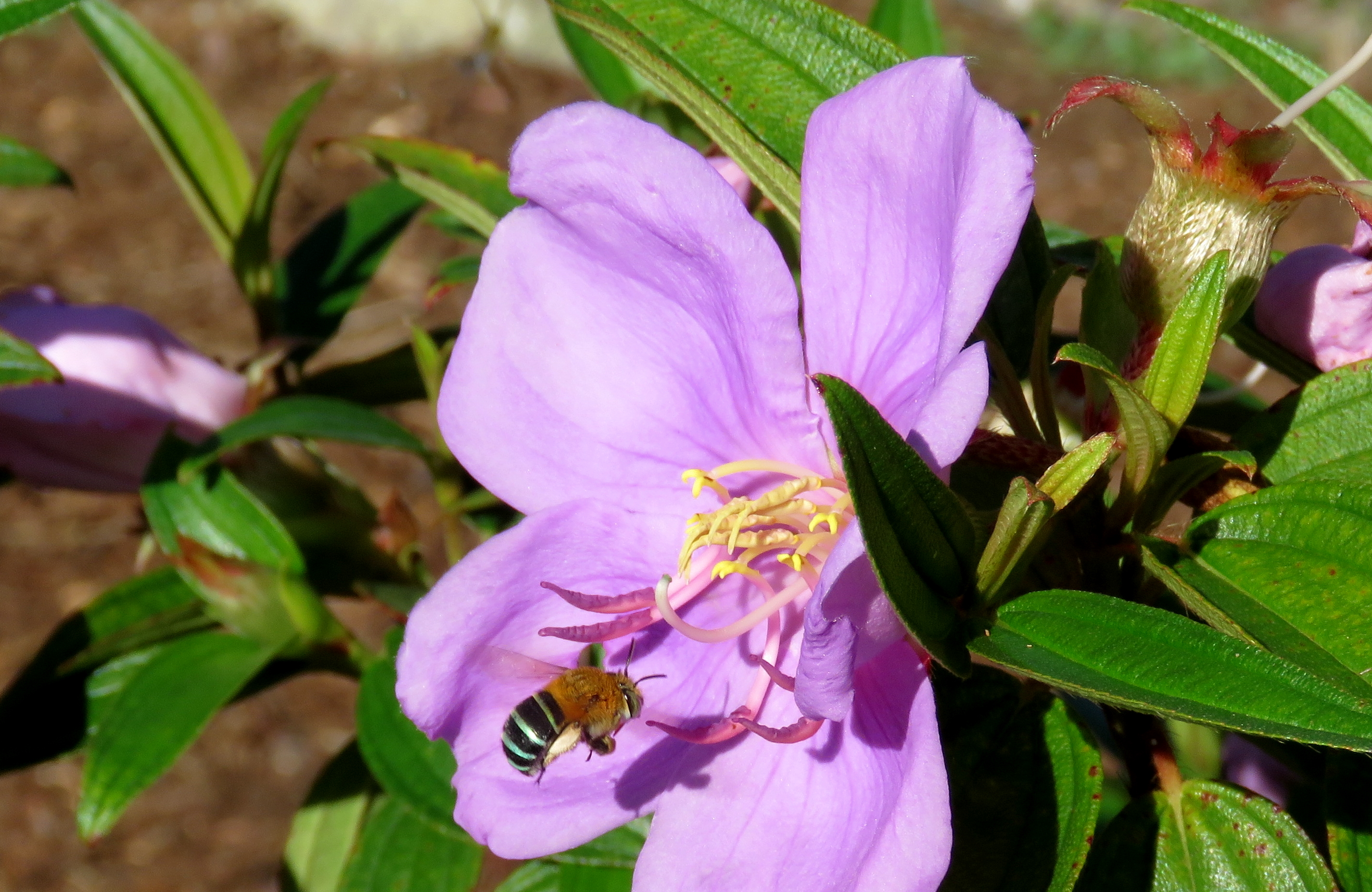
Blue Banded Bee - Amegilla cingulata - 1 Mar 2020

Blue Banded Bee visiting Blue Tongue flower


Species for planting will be based on our research for Mt Gravatt Conservation Reserve. Blue Tongue or Native Lasiandra Melastoma affine, currently flowering at the Lookout, is very popular with the solitary native bees in the Reserve. Like Blue Banded Bees Amegilla cingulata

Other species observed on the day were Great Carpenter Bees Xylocopa sp., Stingless Native Bees Trigona sp., and caterpillars of Glasswing Acraea andromacha and Imperial Hairstreak Jalmenus evagoras butterflies and Pale Brown Hawk Moth Theretra latreillii.

Guide on Patrol 2 - 1 Mar 2020

Guide on Patrol


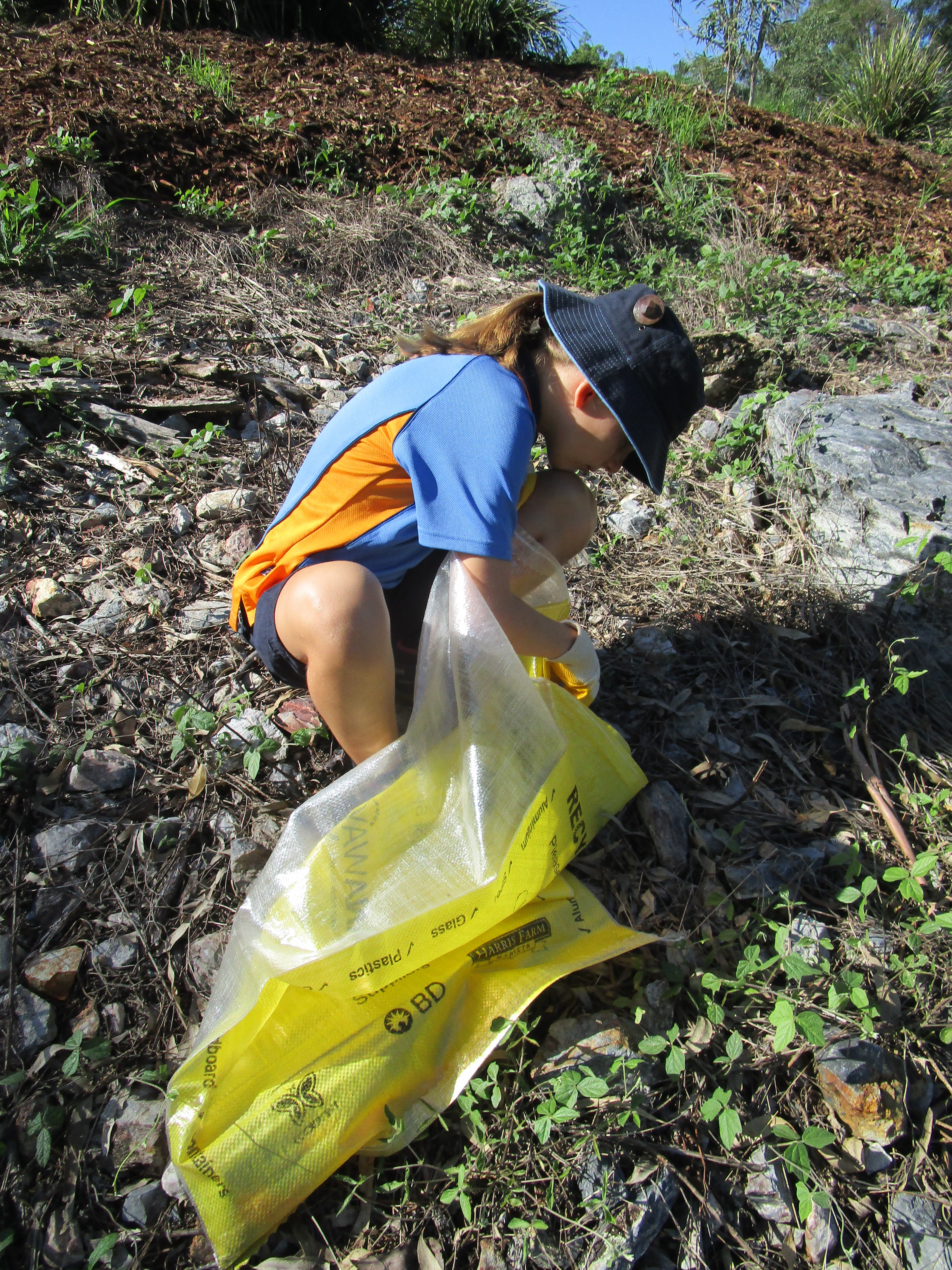
Meanwhile the Rubbish Teams were busy around the Summit and along the roadway collecting the usual fastfood packages and some strange parts fallen off cars.


Griffith Mates Team - 1 Mar 2020

Griffith Mates Bushcare Team


IMG_9218

Heather with rubbish collection


Thank you to all the community members, the Holland Park Girl Guides and Griffith Mates.


Thank you to Heather Woods for organising the event.

By: Michael Fox

Sheamus O’Connor, Group Leader of Gertrude Petty Place Bushcare, reported on the Group’s first event for 2020 with sad news:

“Unfortunately, an injured koala was found about 50m down from GPP, up on the hill, sitting at the bottom of a tree. She had been bitten by a dog on her wrist and was very sick from infection. Angela, the local wildlife rescuer, collected her however has little hope in full recovery. Let’s hope she recovers.

We’ve got signs now but that is obviously not enough, people ignore them and continue to have their dogs off lead. What will it take for people to take responsibility for their pets?” Sheamus Dog Kills Koala - Feb 2020 adj


.

.

.

.

.

.

.

.

.

.

.

.

.

.

.

.

.

.

.

.

.

.

As reported in the Southern Star this week the Koala Phascolarctos cinereus did not survive this dog attack.

It is very disappointing that irresponsible individuals still ignore the signs and let their dogs run loose in the Reserve.

Mt Gravatt Conservation Reserve is a special place with a wide diversity of flora and fauna including a healthy breeding population of Koalas appreciated by tourists, international students and even increasing property values in the area.

Dogs off-leash are also a problem for walkers with children or people walking their own dogs on-leash. For other people, even a well behaved dog off-leash creates uncertainty because they don’t know how that strange dog will behave around their children or their dog.

Unfortunately, we have reports that challenging walkers with dogs off-leash is often met with aggressive rudeness. So consider simply taking a photo, from a distance, and reporting to Brisbane City Council call centre on 07 3403 8888.

Dogs do love to run loose, so consider visiting the local Abbeville Street Park off-leash area or look for one of the other 150 City Council dog off-leash areas


By: Michael Fox

Fruit Piercing Moth - Eudocima fullonia - caterpillar 1- 20 May 2019

Fruit Piercing Moth Eudocima fullonia

The Clairvaux Bushcare Team are not only great at clearing weeds they also love finding wildlife and added a new moth species to our Flora & Fauna for Mt Gravatt Conservation Reserve database: Fruit Piercing Moth Eudocima fullonia


Hairy Mary - Anthela varia 2 - 22 June 2019

Hairy Mary Anthela varia


Morag McKinnon found a Hairy Mary Anthela varia moth caterpillar at Gertrude Petty Place Bushcare.

The Hairy Mary caterpillar has stiff spines that tend to break off in your skin and make it itchy.

Flora & Fauna Moths

Next Page »