By: Michael Fox

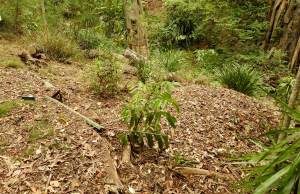
Brush-turkey mound - 27 Dec 2015

Enter a caption

A special Christmas with a Brush-turkey Alectura lathami chick hatched from mound built in the Fox Gully wildlife corridor. The male turkey has been scratching together mulch, and some plants to build a mound to impress his two girlfriends. He obviously did a good job as we now have at least one new chick in the gully.

Brush-turkeys are a challenge for gardeners however they are part of our bush habitat.

IMG_8179

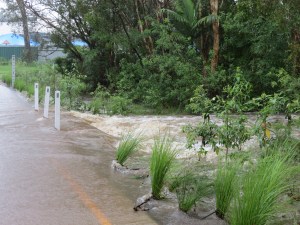
Mimosa Creek in flood – Jan 2015

Edited By: Michael Fox

Saturday December 5th was the last working bee of the year at Roly Chapman Bushland Reserve.

2015 started out very wet with January storms flooding the new bikeway bridge over Mimosa Creek.

.

.

.

IMG_9412

Flood damage repair – straightening and staking

.

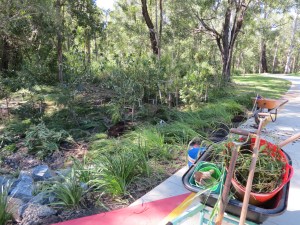
After the flood Lomandras have done there job holding the bank in place. However, the newly planted trees are a different story with most knocked flat by flood water.  Liz, Marshal and I moved in to straighten and stake before this beautiful new planting is lost.

Zone 2 - 22 May 2015

Zone 2 – weed infestation May 2015

.

.

.

.

Repairs done our Bushcare team returned to working in Zone 2 to tackle the infestation of Guinea Grass Panicum maximum, Small Leafed Privet Ligustrum sinense, Easter Cassia Senna pendula and Asparagus Fern Asparagus aethiopicus.

.

.

.

Zone 2 - 15 Dec 2015

Zone 2 – weeds gone – natives returning

.

.

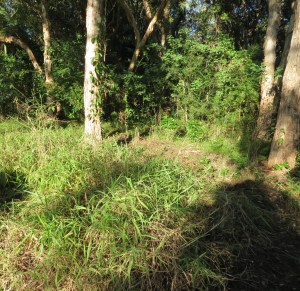
Having cleared the larger weed species the area we are working on near the boundary with Upper Mount Gravatt School now resembles a primary forest. In the open spaces, native plants no longer smothered in weeds, are springing back to life. Many Cheese trees Glochidion ferdinandi, free from competition are racing for the sky. Ground covers such as Native Wandering Jew Commelina diffusa and Creeping Beard Grass Oplismenus aemulus are protecting the soil from erosion and keeping it cool, acting as Living Mulch.
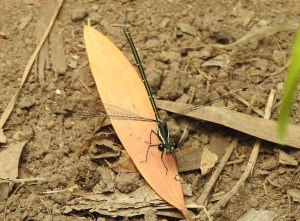
Common Flatwing Austroargiolestes icteromelas - 15 Dec 2015

Common Flatwing Austroargiolestes icteromelas

.

As we were packing up and looking forward to morning tea, a delicate Common Flatwing Austroargiolestes icteromelas damselfly with bright metallic green stripes paid a visit, hovering over a small patch of vegetation.

.

.

Koala 13 Nov 2015

Koala Phascolarctos cinereus

.

We now have proof at last that it’s not just Mount Gravatt that is home to Koalas Phascolarctos cinereus. The one pictured here, almost invisible from the path was spotted last month by a dog walker. A mother and baby have also been sighted. This is another good reason to keep weeds at bay. Koalas need to come to the ground and move across the forest floor to look for suitable food trees. Their task is made much harder when there’s a lot of thick weedy vegetation in the way.

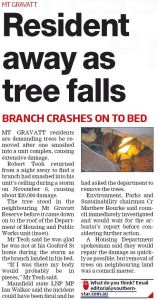
Tree falls - Southern Star - 18 Nov 2015

Southern Star – 18 Nov 2015

By: Michael Fox

Susan Jones and I met with a specialist Council arborist today at Gertrude Petty Place Bushcare, to discuss action required to improve public safety for mountain neighbours in Gosford Street.

Balancing public safety and wildlife habitat is always complex. Brisbane City Council’s arborist team have checked the health of trees along the property boundary and identified a number of removal. The team’s assessment was then matched against an independent arborist’s report for confirmation.

Long term safety will be managed by replanting with native grasses and low ground covers. Offset planting to replace trees will be undertaken away from the boundary.

.

.

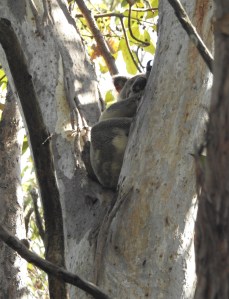
Koala - Gertrude Petty Place - 23 Nov 2015 lowres

Koala – Queensland Blue Gum

.

Finding a Koala sleeping in a Queensland Blue Gum Eucalyptus tereticornis in another part of the Buscare site, highlights the importance of replacing canopy when trees are removed for public safety reason.


Noisy Miner - feeding chicks2 - Roly C - 16 Oct 2015

Noisy Miner feeding chicks in nest

By: Michael Fox

Some species, like the Noisy Miner Manorina melanocephala, are quite happy to share our urban environment. These Miners like to make their nest in the protective wire basket on the lights. Very clever … protection from bigger birds and warmth at night for the eggs.

Now they just need food for the chicks. Nectar feeders, Noisy Miners are honeyeaters, still need protein from insects for their growing chicks.

So it was interesting to have Helen Schwencke, Earthling Enterprises, join us for Roly Chapman Reserve Bushcase last Friday.

Monarch Danaus plexippus - caterpillar - Roly C - 16 Oct 2015

Monarch butterfly caterpillar feeding on Red-headed Cotton Bush

.

We found a number of fascinating and photogenic insects in the Reserve.

.

Sometimes environmental weeds are the place to look for some of our most attractive insects. The milkweed species, Red-headed Cotton Bush Asclepias curassavica is a favourite of the Monarch or Wanderer butterfly Danaus plexippus.

.

.

.

Small Green-banded Blue - Psychonotis caelius - caterpillar2 - Roly C - 16 Oct 2015

Small Green-banded Blue caterpillar on Red Ash

.

One way to find micro-locals is to look for chewed leaves. An expert like Helen Schwencke can even tell what insect she is looking for just from the pattern of chewing on a leaf.

Caterpillars of the Small Green-banded Blue Psychonotis caelius feed on leaves of the Red Ash/Soapy Ash Alphitonia excelsa. The caterpillar’s lime green colour blends perfectly with the underside of the leaves.

DSCN1268

Native Hibiscus Hibiscus heterophyllus

The name Soapy Ash comes from the effects of saponins on the leaves which create a foaming soapy action. A useful bush soap.

The attractive Native Hibiscus Hibiscus heterophyllus growing in the Pollinator Link display gardens are fast growing and good plants for attracting food for insect eating birds.

.

.

.

Small Brown-black Leaf Beetle - Nisotra bicolorata - Roly C - 16 Oct 2015

Small Brown-black Leaf Beetle on Native Hibiscus

.

We found a number of Small Brown-black Leaf Beetle Nisotra bicolorata feeding on Native Hibiscus.

.

.

.

Ladybird Coelophora inaequalis - wings - 16 Oct 2015

Ladybird Coelophora inaequalis

..

.

.

Seeing a Ladybird Coelophora inaequalis spreading its wings is something special. The pattern of dots is a key to identification of Ladybird species.

.

.

.

Milkweed Aphid - Aphis nerii - 16 Oct 2015 crop

Infestation of Milkweed Aphid Aphis nerii

.

.

Ladybirds are particularly valuable for control of infestations of Aphids.

Aphid infestations can cause massive damage as they suck juice from plants. Ladybirds are particularly valuable for garden pest control as both adult and larvae Ladybirds are predators.

.

Sawfly - 16 Oct 2015

Sawfly – species not identified

.

We found this beautiful Sawfly adult feeding on Sandpaper Fig Ficus opposita. We have not identified the particular species of Sawfly. I have sent the photo to the Queensland Museum Ask a question team for identification.

Sawfly larvae are curious looking caterpillars that feed on native plants.

The Sandpaper Fig is often called the Supermarket Tree. It attracts birds, can be used for shade, food, medicine, tools, fire and string to make nets and traps.

Calendar coverBring mountain magic into your home or office or share the with family and friends.

Alan Moore, Photography Workshop leader has produced a special 2016 calendar as a fundraising initiative for Mt Gravatt Environment Group.

This year’s Photography Workshop was called Nature Close-up, so Alan has selected participants pictures show the mountain habitat up through a macro lens.

Order your 2016 Magic of the Mountain calendar and put a bit of Nature Close-up on your wall at home or share with family and friends around Australia or overseas.

Thumbnails example

.

“Stunning, well done!”

Robert Ashdown – Nature Photography

Peek inside your calendar

Price: $15 plus $3.00 post & packing.

Purchase calendars at:

All funds raised will contribute to Mt Gravatt Environment Group research and community education activities.

Amanda McArthur 2 - 26 Sept 2016

Amanda launched her attack on Ochna

By: Michael Fox

Our Griffith Mates friends returned for Fox Gully Bushcare last Saturday.

The job for the day was attacking our three most invasive weeds.

Amanda launched her attack on the Mickey Mouse Plant Ochna serrulata. Ochna is a garden escapee that spreads when birds eat the bright coloured berries then fly into the bush, then spreads quickly as the shrubs get established.

Ochna is a particularly difficult weed to remove because of the deep tap-root.  The Treepopper is the ideal weapon attack these woody weeds and you get a great sense of satisfaction as you pull these weeds out roots and all, and no poison needed.

.

Emmanuel - 26 Sept 2015

Emmanuel attacks Asparagus Fern

Emmanuel launched his attack on another garden escapee – Asparagus Fern Asparagus aethiopicus – again spread by birds eating the red fruit.

Emmanuel used a Cyclone 2 Prong Hoe to remove the Asparagus Fern before trimming off the leaves and roots and collecting the crown for removal off-site. The crown is the brain of the Asparagus Fern, so removal means the plant will not regrow.

.

.

,

,

,

Tomorrow - 26 Sept 2015

Tomorrow identifies Basket Fern from her visit to Cairns

,

It is a real pleasure to share the forest with our international visitors. I was particularly impressed when Tomorrow identified Basket Fern Drynaria rigidula.

,

,

,

.

.

Emmanuel and Tomorrow - team - 26 Sept 2015

Emmanuel and Tomorrow team up against Ochna

.

Emmanuel and Tomorrow teamed up to tackle the Ochna.

.

.

.

.

.

.

Emmanuel and Tomorrow - 26 Sept 2015

WOW! That is a big Ochna root

.

With Tomorrow digging using the 2 Prong Hoe and Emmanuel on the Treepopper the team managed to pull out the largest Ochna trunk I have seen.

.

,

.

.

.

Lantana team - 26 Sept 2015

Lantana team (l-r) Sienna, Amanda, Ho Yi and Sau To

.

Sienna, Amanda, Ho Yi and Sau To attacked the Creeping Lantana Lantana montevidenses again a garden escapee spread by birds eating the purple fruit.

The Lantana team cleared a large area of weed, raking it into swales to compost, control water runoff and reduce spread of weed seed.

.

.

.

.

Stick Case Moth - 26 Sept 2015

Stick Case Moth Clania lewinii

.

A successful morning for all. Amanda filled her five specimen containers with a bush cockroach, butterfly and other insects for her university collection.

We also added Stick Case Moth Clania lewinii to our species list for the Reserve.

The shape and construction materials of a case moth’s portable home allow identification of the moth species. Stick Case Moths build their case moth bags using sticks of similar length. Similar bags are built the Faggot Case Moth Clania ignobilis with one or two longer sticks.

.

Ants - 26 Sept 2015

Meeting the locals – Golden-tailed Spiny Ant nest

.

How better to finish the day?

I showed how turning over a couple of rocks could expose a whole new world.

.

.

.

.

.

Golden-tailed Spiny Ant - 22 July 2014 - Alan Moore - close

Golden-tailed Spiny Ant up close

.

The Golden-tailed Spiny Ant Polyrhachis ammon really are spiny. Click on photo to enlarge.

.

.


Koala & Joey - Fox Gully 3 - 4 Jan 2014 close

Please slow down at night … Koala Mum and Joey – Fox Gully Bushcare

By: Michael Fox

15 September 2015 Breaking news:

Koala Superman to the rescue.

Local resident David Kloske is now being called the Koala Superman by family and friends after his dramatic rescue of a young Koala trying to cross busy Klumpp Road on last night.

“Poor little guy was wandering across the road and seemed very lost and confused and kept stopping and turning back etc. So I blocked the traffic for a bit with hazard while I scared it off the road onto the pool side [footpath]. Then I parked my car and ushered the little fellow down the bike path and back into the trees.” David Kloske

Koala breeding season runs from spring to mid-summer. So please be careful on our local roads at night.

Found a sick or injured Koala?

Call RSPCA Rescue Hotline Phone: 1300 ANIMAL (1300 264 625)

Mt Gravatt Environment Group's avatarPollinator Link

By: Michael Fox

Our second Pollinator Link article in Living in the Shires magazine looks at that great friend of our weekend backyard barbecue events, Micro-bats.

I met the magazine editor, Susan Prior, this week and discussed her article, Nancy on Nolan, which left me wishing we had visited MONA when we were in Tasmania last month. David Gowdie, Harcourts Graceville, sponsors this excellent community magazine. See David’s article – Spring Time = Growth Time on page 3.

Mighty Fine Book Swap - 14 Sept 2015 Need a book to read?

Susan herself is interesting. After I left the Harcourts office I stopped to photograph this curious footpath bookcase. The sign reads Mighty Fine Book Swap. Another generous community initiative of Susan’s. The Shires are looking like a good community to live in.

Learn more about microbats:

Bat Conservation & Rescue QLD Inc.

Microbats of Brisbane’s Inner West (2015)
A report for the Cubberla-Witton Catchments Network…

View original post 15 more words

WOW! What a powerful community effort!
Justin your Pollinator Link project is, like Laurie and Sheamus’ project at Mt Gravatt SHS, is linking people as well as wildlife.
I know from our work in Mt Gravatt Conservation Reserve that you definitely will find yourselves looking, sooner than you expect, at what you have achieved with pride.
Congratulations to you and the team.
Michael Fox
Project Director
Pollinator Link Project

justinschreiweis's avatarMGESS Pollinator Link

Twenty-oddpeople turned up, and the plants were all planted in blinding speed! Not only that, but we successfully mulched not just the planting but the whole southern half of the embankment.

Our first community planting day was a resounding success. Our first community planting day was a resounding success. Rubbish accumulating in the above car park is also an ongoing problem, Claudia T hooked in and had it all picked up and bagged in the blink of an eye. With the plants in and the watering done, everyone was onto mulch. Gareth J had buckets filling with mulch in the trailer and a conga-line that would leave any Cuban envious!

Gareth came up with the brilliant idea of setting the buckets up in a grid pattern in the trailer and shovelling mulch straight in over the top. Paul and Gareth hard at work at the head of the mulching production line. thanks goes to Terra Regenerators and Damian Green for lending their mulch forks. Gareth came up with the brilliant idea of setting the buckets up in a grid pattern in the trailer and shovelling mulch…

View original post 200 more words

By: Michael Fox

Thanks to our local Southern Star team for the great coverage of our 2015 National Tree Day.

Are you in the news?

Southern Star