Koala mapping - Mar 2015

First Koala sightings 2015

By: Michael Fox

2015 is off to a good start with six sightings of Koalas reported already, and, importantly, the sightings have been right around the Reserve.

Koala - Mt Gravatt Campus - 23 Feb 2015 - Michael McGeever

          Koala – Griffith Uni Mt Gravatt Campus                          Photo: Michael McGeever

The latest sighting was on Sunday while we were doing a guided walk for our Griffith Mates visitors. Pieter Demmers spotted the Koala high in a tree beside Acacia Way. Seeing this Koala in the bush was particularly special for our visitors from Germany, France and China.

Michael McGeever spotted another Koala, probably a male,  just at the entry to the Mt Gravatt Campus

.

.

.

.

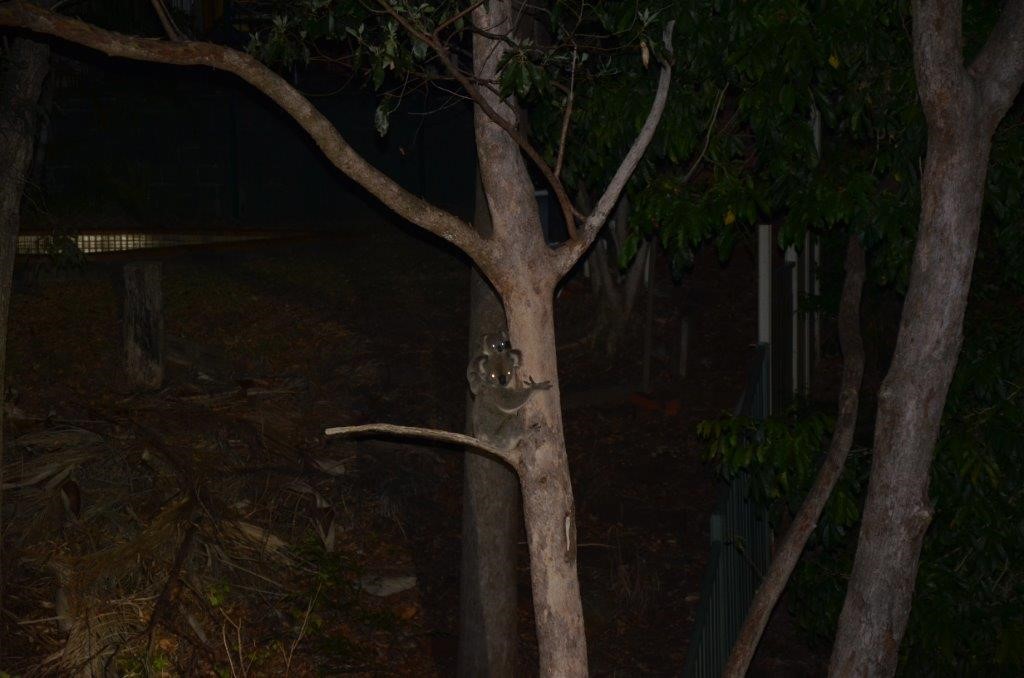
Koala - Fox Gully - 27 Feb 2015

Young Koala Fox Gully

.

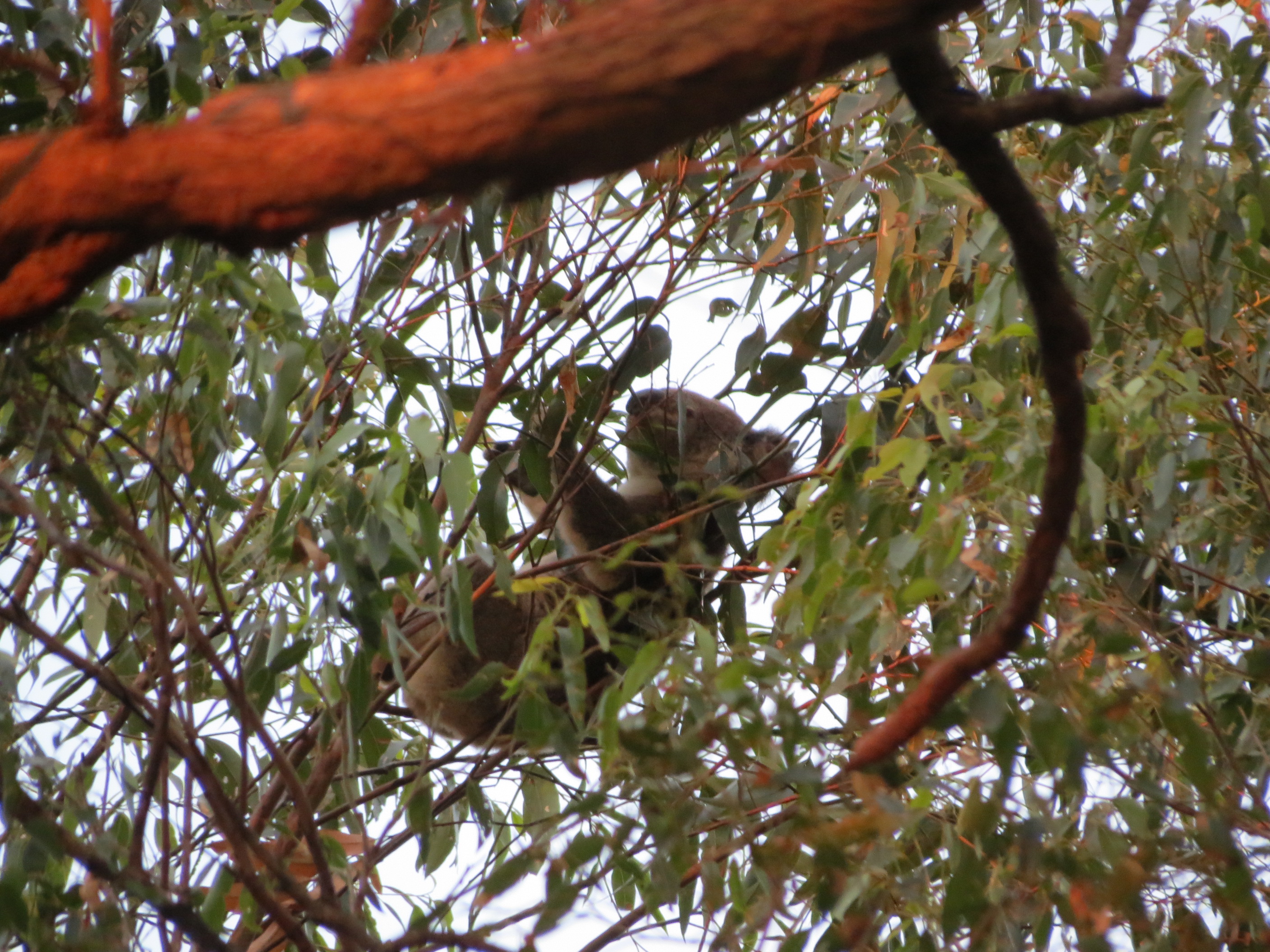
Then we were woken about 4am last week. A young Koala seemed to be calling its mother with the short squeal – almost a ‘yip’, they use to communicate. I was able to get a photo when is climbed an Acacia near the house.

In 2014 at least two Joeys (baby Koalas) were born in Mt Gravatt Conservation Reserve. In 2015 we want to do more tracking of Koalas with the aim of identifying and tracking individuals to help us understand their movement patterns and how to reduce the number killed on the South-east Freeway.

So if you see a Koala, please take a photo – phone camera is ok, note the location and any comments eg. mother with joey or walking along the road.

Sightings can be reported to Koala Tracker and/or emailed to megoutlook@gmail.com.

Roly Chapman - Zone 2 - 27 Feb 2015

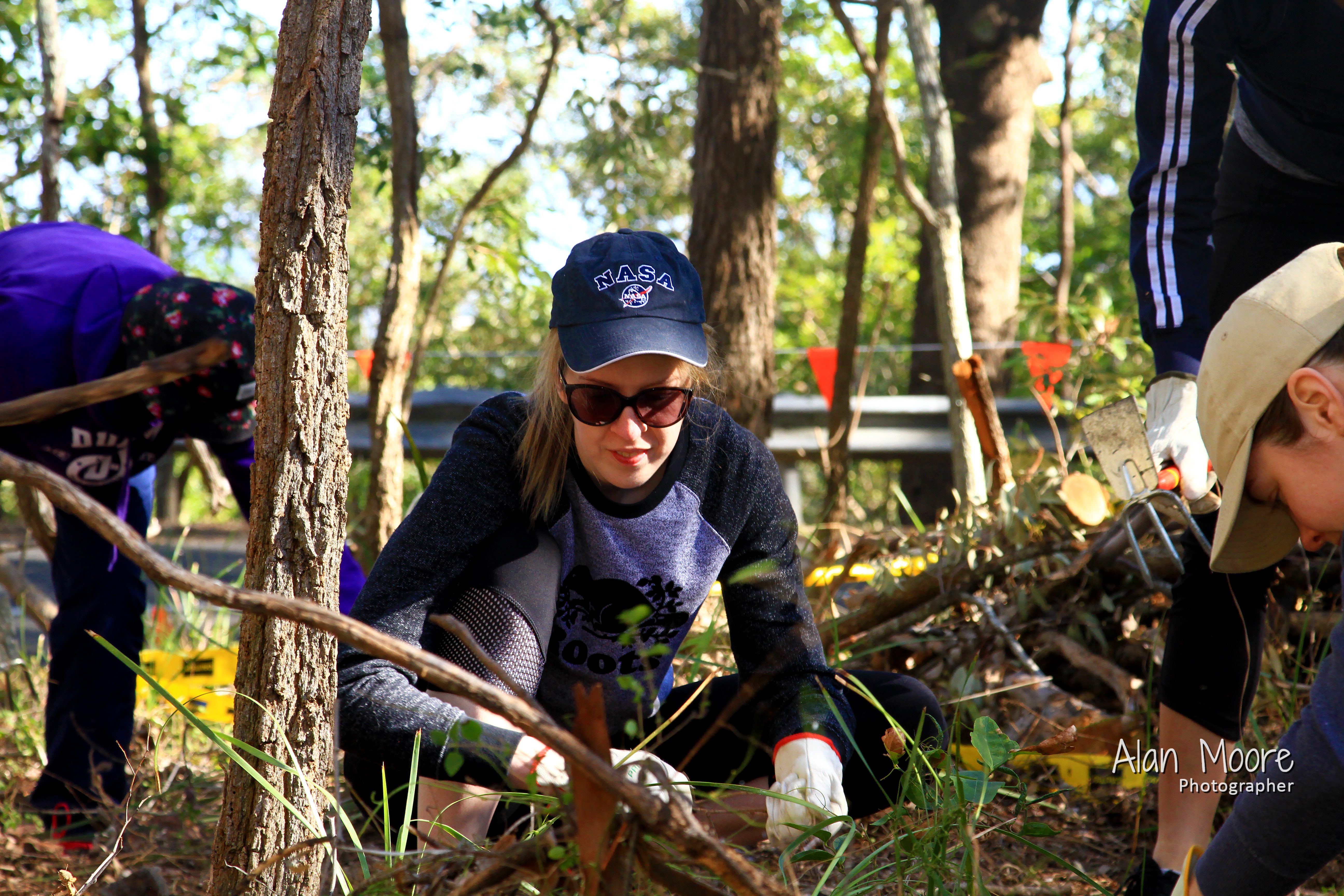
Restoration team at work – Liz, Heather, Eloise & Lincon

By: Michael Fox

Our Roly Chapman restoration team has made good progress clearing Guinea Grass Panicum maximum, Sword/Fishbone Fern Nephrolepis cordifolia and Easter Cassia Senna pendula from Zone 2.

Natural regen - Zone 2 - 27 Feb 2015

Parsonsia vine, Creeping Beard Grass, Slender Grape and Native Wandering Jew (blue flower)

Bushland restoration can be slow as breaking the cycle of weeds retuning means removing seeds and roots left in the ground. Seed heads need to be clipped off Guinea Grass then bagged. Fishbone Fern is particularly slow as all the brown fibrous roots need to be dug up and bagged for removal, leaves can be composted on-site.

DSC06230

Marshal chatting to a local Magpie

However, watching the natural regeneration of native species provides inspiration to keep going with the work. Each time we come on-site the Slender Grape Cayratia clematidea, Wombat Berry Eustrephus latifolius, Creeping Beard Grass Oplismenus aemulus, Native Wandering Jew Commelina diffusa and Parsonsia vines are returning where the weeds have been removed.

Restoration of Roly Chapman Bushland Reserve will take another ten or twenty years however with the new cycle path and bridge over Mimosa Creek this is already becoming a special place to walk or cycle.

Water Dragon - 16 Oct 2014

Eastern Water Dragon

Marshal and I took at walk through the Reserve to check out the fungi that has appeared after the rain. Eastern Water Dragons Physignathus lesueurii and turtles can often be seen beside the causeway across Mimosa Creek. This morning it was just a family of Australian Magpies Gymnorhna tibicen. One Magpie was particularly taken with Marshal when he stopped for a chat.

DSC06236

Yellow Fleshy Pore Fungi

.

.

.

.

Some beautiful fungi fruit have appeared, like the Yellow Fleshy Pore Fungi with its charismatic underside with pores rather than the more common finned underside. Click on image to enlarge.

.

.

.

White Mushroom fungi - 27 Feb 2015

White gilled fungi in composting weeds

.

This white gilled fungi is growing out of one the weed composting piles.

.

.

.

Gilled fungi - 27 Feb 2015

Gilled fungi

.

.

.

Delicate gilled fungi.

.

.

.

.

Mushroom cluster - 27 Feb 2015

Gilled fungi cluster

.

.

.

.

.

.

Gilled fungi cluster on stick.

.

.

DSC06265

Laughing Kookaburra

.

.

.

.

.

While we are working we always have local wildlife visiting. Laughing Kookaburras Dacelo novaeguineae and Grey Butcherbirds Cracticus torquatus arrive as soon as we start clearing weeds exposing small insects and spiders.

Grey Butcherbird - 27 Feb 2015

Grey Butcherbird looking for breakfast

.

Blue Tiger - 5 Jan 2014

Blue Tiger feeding on Blackthorn nectar

By: Michael Fox

Blue Tiger butterflies Tirumala hamata are one of the most beautiful found in Mt Gravatt Conservation Reserve and this has been amazing season for all butterflies as reported by ABC News – Butterflies booming in south-east Queensland

Blue Tiger butterfly caterpillars feed on only three plant species, none of which are found in the Reserve. Reference: Butterfly host plants of south-east Queensland and northern New South Wales (2013) – Moss, J. T.

Fortunately the adult Blue Tigers are less choosy, visiting the Reserve to feed on nectar of the Blackthorn Bursaria spinosa.

Imperial Hairstreak - pupation - 2 Feb 2015

Imperial Hairstreak caterpillar forming pupa

Watch carefully to see the butterfly’s proboscis flicking in and out the reach the nectar deep in the flower.

Imperial Hairstreak - roosting - 4 Feb 2015

Imperial Hairstreak roosting at night

Imperial Hairstreak Jalmenus evagoras butterflies are breeding in the Reserve with caterpillars feeding on Early Black Wattle Acacia leiocalyx. Imperial Hairstreak caterpillar and chrysalis also depend on attendant “Kropotkin” ants – Small Meat Ant Ants Iridomyrmex sp. which provide protection in return for sugary fluids secreted by caterpillar. Click on photo to enlarge.

Last night I learned something new about Imperial Hairstreak butterflies, they roost at night on their caterpillar food trees. At great time to get a close up photo as they slow moving in the cool night air. I was helping Helen Schwencke – Earthling Enterprises, as she collected Acacia leaves for the Hairstreak butterflies she is raising for her life-cycle research. We were both surprised to find the adult butterflies roosting on the same trees.

Yellow Albatross - close - 20 Jan 2015

Yellow Albatross Appias paulina

By: Michael Fox

Finding a new butterfly species in Mt Gravatt Conservation Reserve is special, a small surprise adding colour to your walk in the bush. The Yellow Albatross Appias paulina brings the number of butterfly species found in the Reserve to forty-eight.

Caterpillar food plant for the Yellow Albatross is the attractive Native Holly Alchornea ilicifolia.

Glasswing - 26 Apr 12

Glasswing Acraea andromacha

Glasswing - caterpillar - crop - 5 Jan 2015

Glasswing caterpillar on Spade Flower


Our butterfly species information has also been updated with a photo of a Glasswing caterpillar on a Spade Flower Hybanthus stellarioides.

Visit the Flora & Fauna pages to explore the amazing species diversity in the Reserve.

Tunks Park East Bushcare

Tunks Park East Bushcare

By: Michael Fox

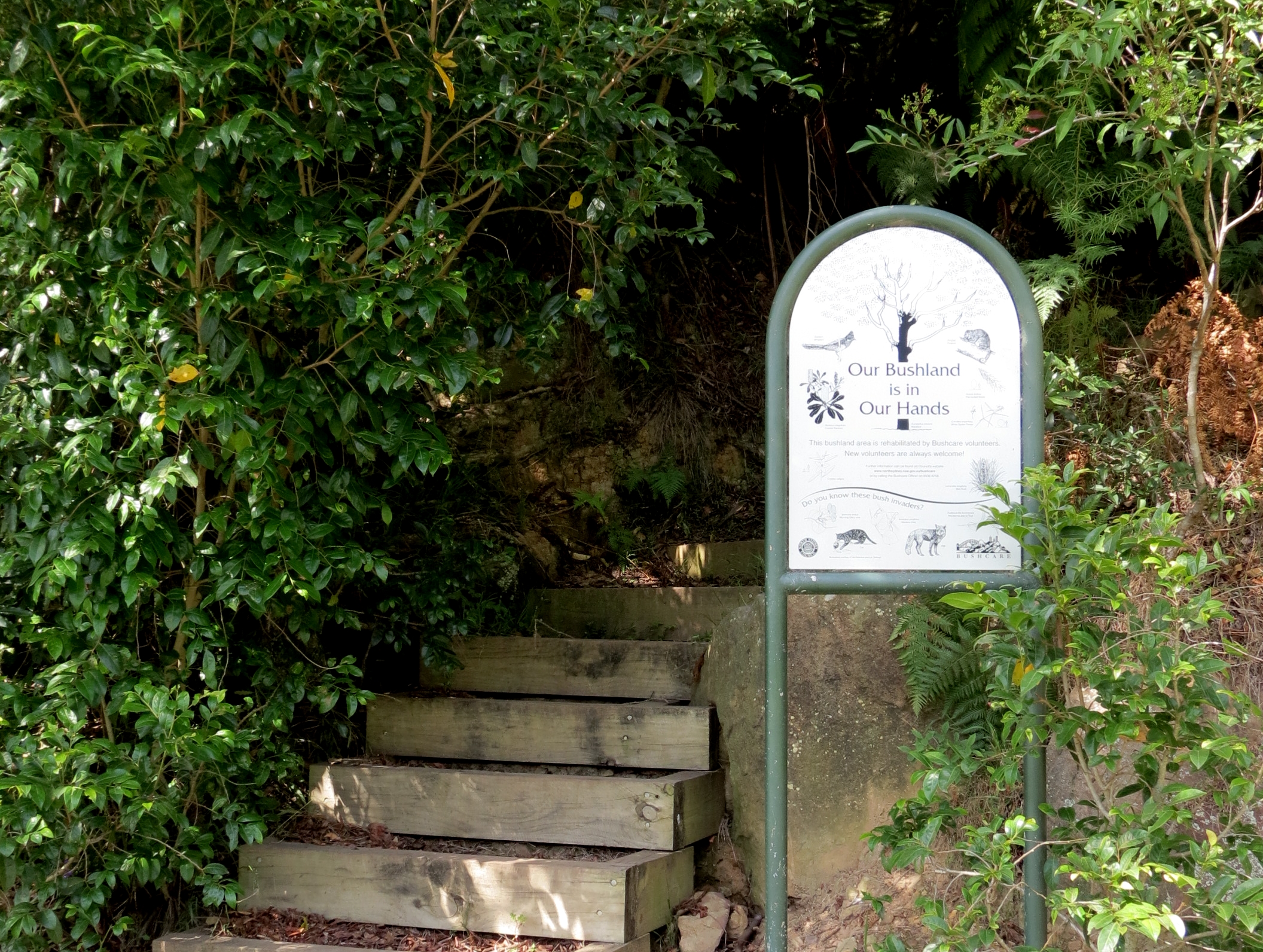
Visiting my daughter in Sydney is a great opportunity to check out the local bushcare sites like Flat Rock Gully  on the boundaries of North Sydney and Willoughby City Councils. Flat Rock Creek is piped under Tunks Park creating a popular community space with children’s playground,  cricket pitches, football fields and great space for dogs to play with their owners.

Difficult bushcare

How do I reach that Asparagus Fern?

Weeds

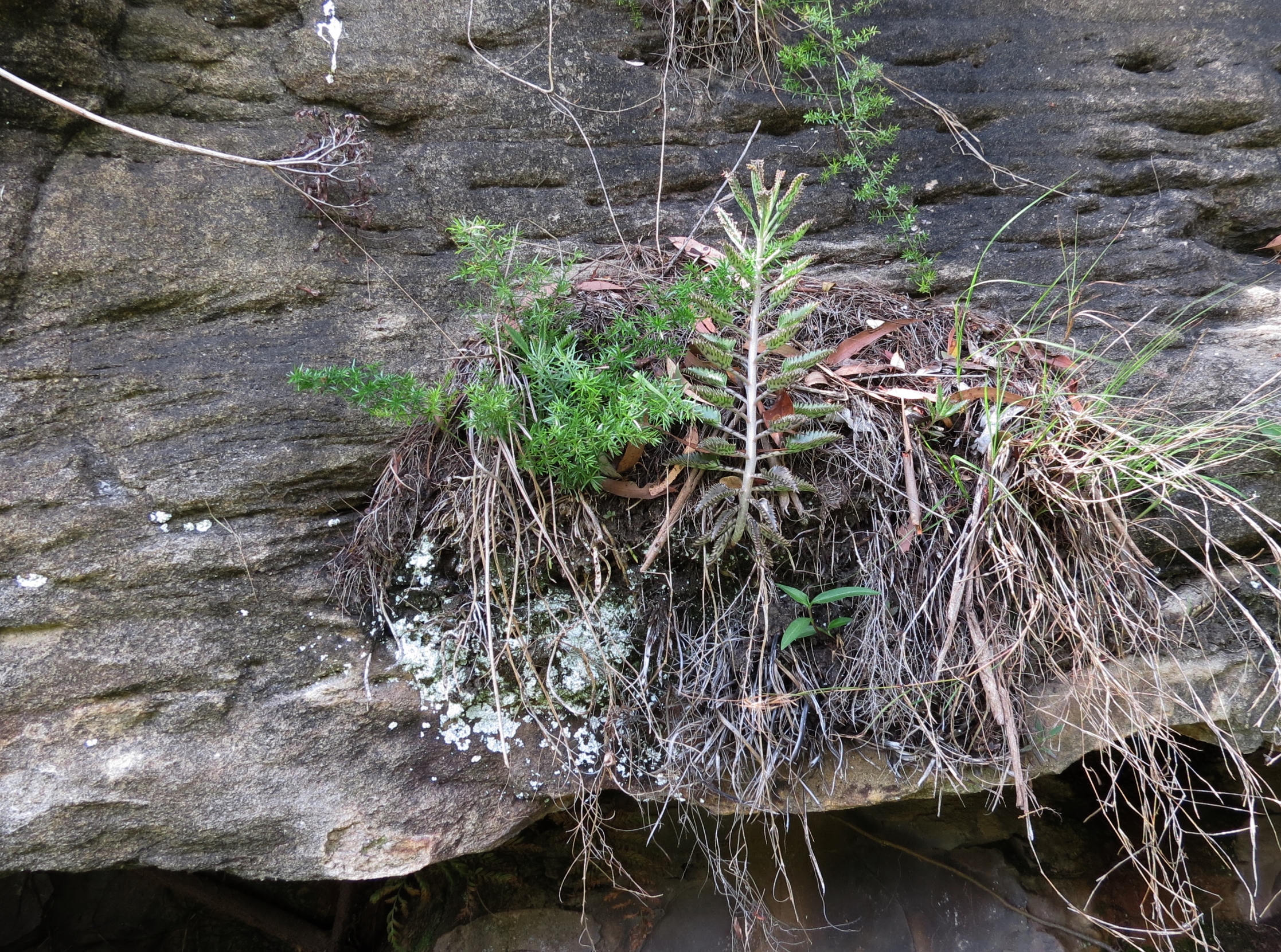
Asparagus Fern and Mother of Millions on rock face

Tunks Park East & West and Mortlock Reserve Bushcare groups (North Sydney Council) are active restoring the along the southern side of Flat Rock Creek while The Drive (Flat Rock Gully) Bushcare group (Willoughby City) is working on the northern side.

The rock formations common in Sydney make very attractive landscape but challenging sites for bushcare.

Tunks Park East group leader Steve Miles who told me that a large  Privet grove had been the priority initially.
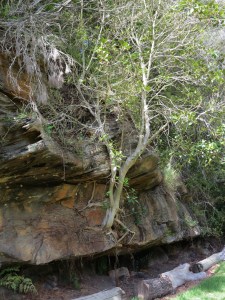
Nature is resilient

Nature is resilient

Steve explained that one of the key issues was that the site, like so many in Sydney, is narrow with housing right along the edge which means dealing constant reinfection with garden escapees.

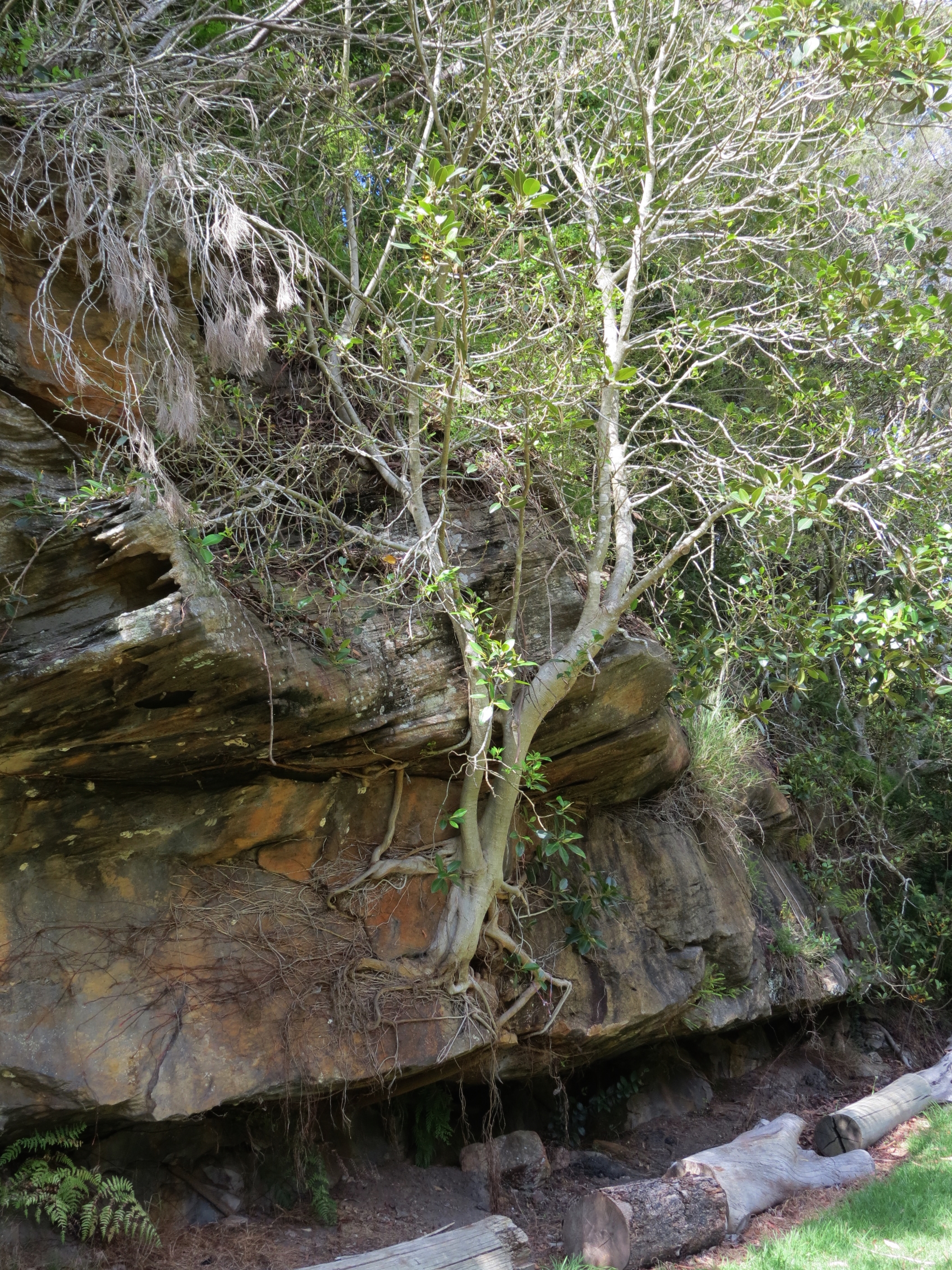
However, Steve is still optimistic “Nature is resilient and just needs a chance.” Like this native fig finding any crack or fissure for its roots to get a hold. Steve explained that Flat Rock Gully is a diversity hot spot and wildlife is returning as restoration progresses. Aside from a Brush Turkey mound the team regularly sights green tree snakes, king parrots, scaly-breasted lorikeets and bandicoots are returning. The return of bandicoots is excellent news however it does highlight the need for gully neighbours and visitors to control their pets. Dogs on leash in bushland and cats kept inside at night.

IMG_8034

Cammeray Bridge

Bandicoots, like many of the small to medium-sized marsupials of Australia, have undergone several species extinctions and significant contractions in distribution since European settlement because of land clearing and the introduction of predators (foxes, dogs and cats) 

Other exciting news from 2014 is the new native plant nursery at The Coal Loader Sustainability Centre and a couple of sea lions sunning themselves on the shore-front rocks.

.

The spectacular Cammeray Bridge with its castellated towers forms the boundary of Steve’s Tunks Park East site.

Following the tracks up Flat Rock Gully markers tell some of the European history, for example, the original Northbridge Suspension Bridge was a toll bridge built in 1889 and replaced in 1939 with the Cammeray Bridge, retaining the towers.

IMG_8042

Log boundary

.

.

.

.

.

.

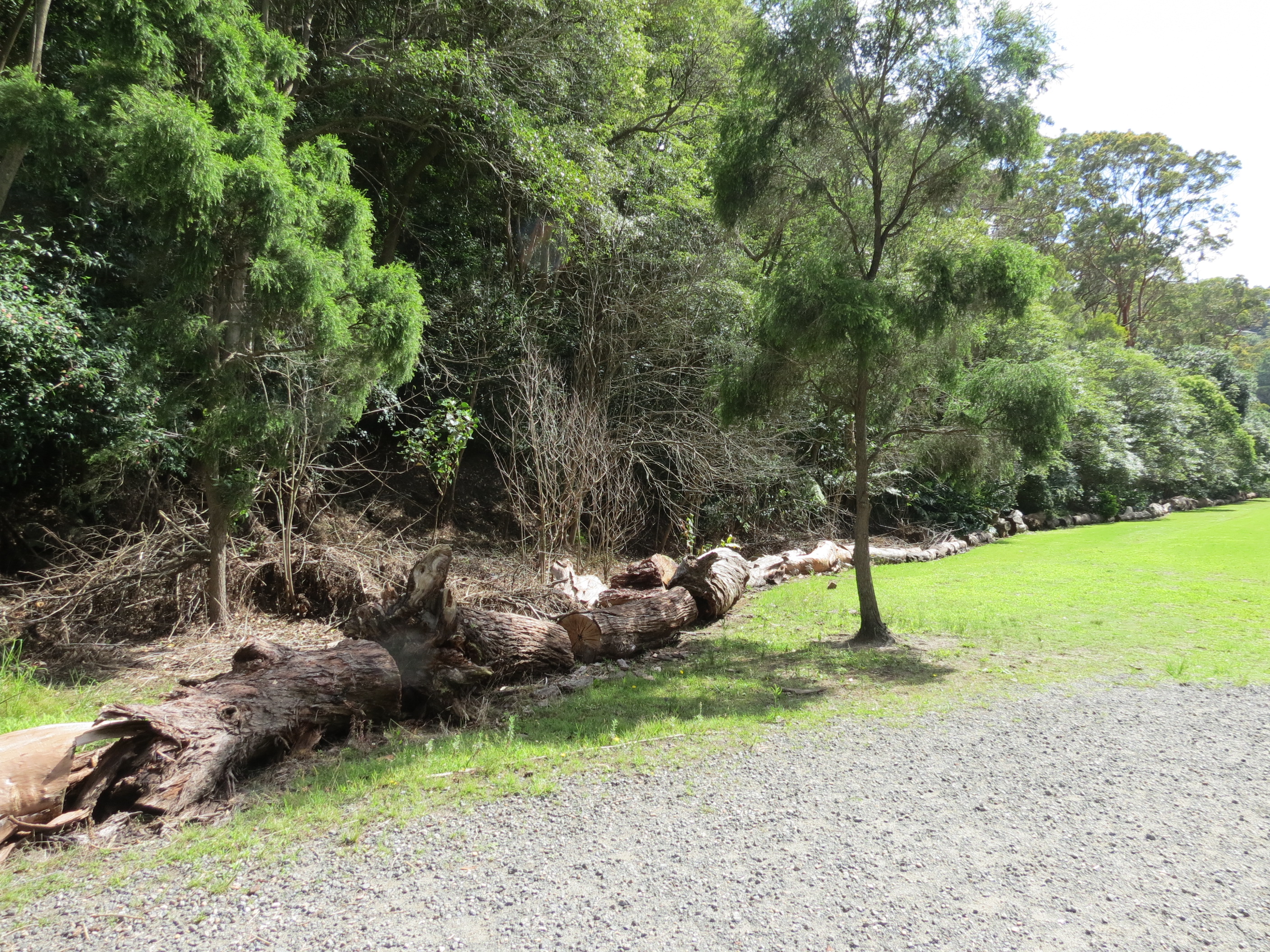
The bushcare teams have been active on both sides of Tunks Park with logs allowing weeds to be composted onsite.

.

Creek crossing

Crossing Flat Rock Creek

.

.

..

.

The track along Flat Rock Creek is cool and peaceful, very popular with walkers and runners. Unfortunately most dog walkers I passed ignored the many signs saying dogs must be on a leash in the bushland area. This is particularly disappointing considering the huge area of parkland just a short distance down the track where dogs are free to run and chase balls.

.
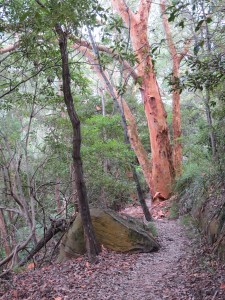
angophora costata

Smooth-barked Apple Angophora costata

.

Many of the native plant species are ones we find in Mt Gravatt Conservation Reserve, like Sweet Sarsaparilla Smilax glyciphylla, Tree Ferns Cyathea cooperi and Creeping Beard Grass Oplismenus aemulus. There were also quite a number of species I didn’t recognise spectacular like Smooth-barked Apple Angophora costata all orange as they shed their bark.

.

.

.

.

.
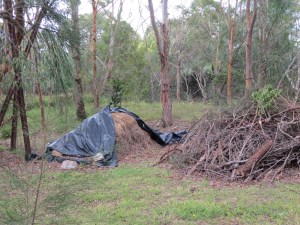
IMG_8087

On-site weed recycling

.

I always get new ideas when visiting other bushcare sites. One interesting idea is the separation of woody weeds from grass and soft weeds which can be covered with black plastic to compost quickly. Simple but effective. We already use black plastic but putting the woody weeds into a different pile will create good habitat for lizards while allowing the softer weeds to compost faster.

I look forward to exploring further up Flat Rock Gully on my next visit to Sydney.

Xanthorrhoea macronema - 22 Nov 2014

Bottle Brush Grass Tree

By: Michael Fox

After the long dry period it is a pleasure to see the bush come back to life. Walking the Eastern Outlook Track this morning we found a number of the uncommon Bottle Brush Grass Trees Xanthorrhoea macronema in flower or getting ready to flower.

Xanthorrhoea macronema - 9 Oct 2014 - Alan Moore low res

New flower ready to burst into life

The Bottle Brush Grass Tree is very different to the better known Grass Tree Xanthorrhoea johnsonii. The johnsonii has tall flower spike (scape) reaching up to 1.9 metres with flowers covering most of its length and over time the tree develops the characteristic fire blackened trunk. The Bottle Brush Grass Tree on the other hand has a scape reaching only 1.6 metres with a striking cream-white bottle brush shaped flower that is only about 13cm at the top of the scape and it remains just a crown of leaves at ground level never developing the characteristic fire blackened trunk of other species.

The furry bottle brush flowers are very popular with native bees both the small black Stingless Native Bees Trigona carbonaria and the solitary Blue Banded Bees Amegilla cingulata.

.

If you are walking keep an eye out for the new flower spikes … they will be ready in a couple of days.

.

.

.

Drynaria rigidula - 22 Nov 2014

New life in Basket Fern

.

.

.

The Basket Ferns Drynaria rigidula are all sending forth new leaves after dying off in the long dry.

.
.

.

.

.

.

.

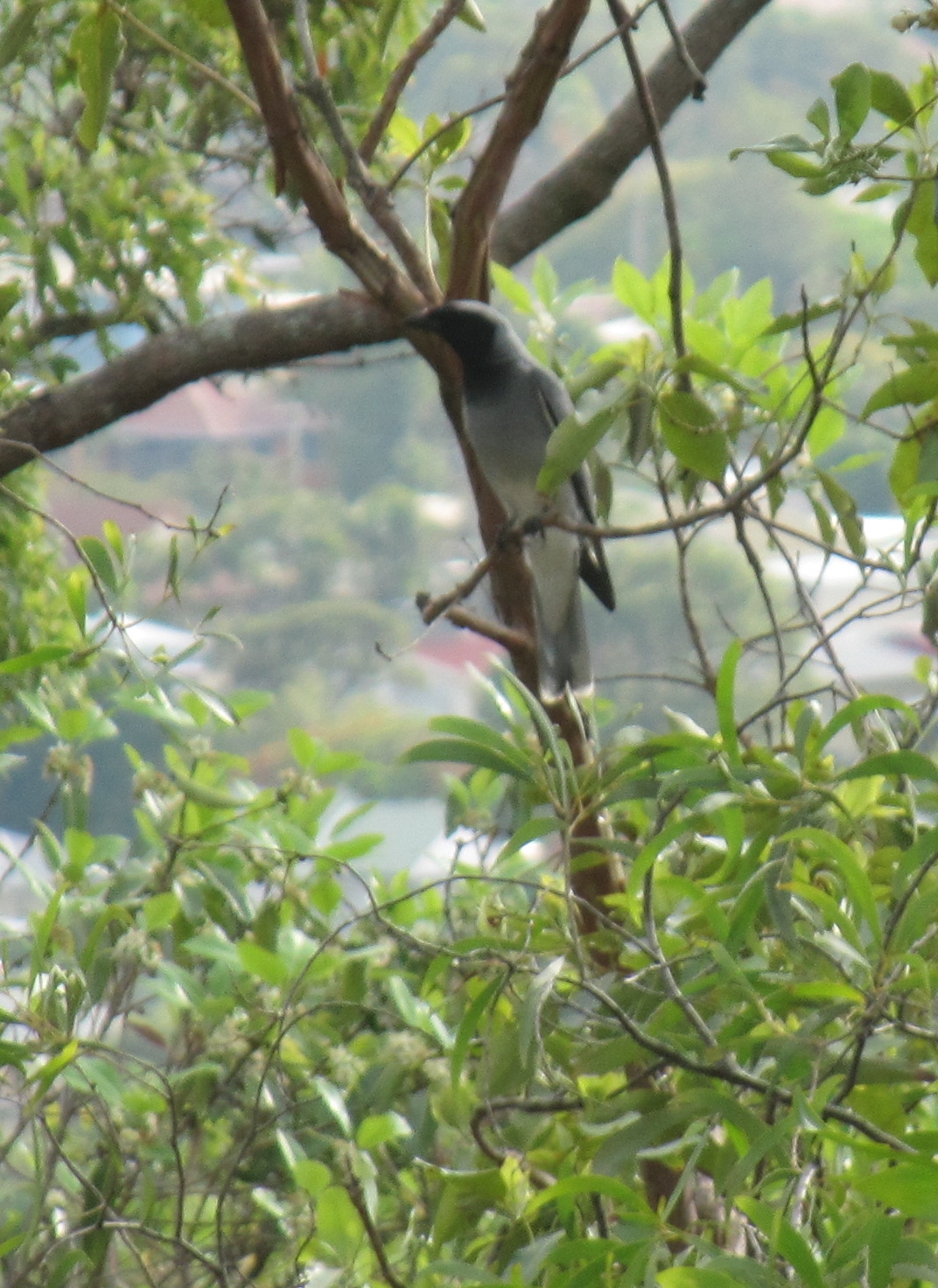
Coracina novaehollandiae - 22 Nov 2014

Black-faced Cuckoo-shrike

.

.

A little further along the track you may be lucky to see or hear the Black-faced Cuckoo-shrike Coracina novaehollandiae we met on our walk. Listen to the call on Birds in Backyards site.

.

.

.

.

.

.

.

Todiramphus sanctus - 19 Nov 2014

Forest Kingfisher

.

Or you might see the handsome Forest Kingfisher Todiramphus sanctus.

Please let us know if you have any sightings and photos to share – megoutlook@gmail.com


Exocarpos cupressiformis - 22 Nov 2014By: Michael Fox

Identification of Native Cherry Exocarpos cupressiformis brings to two hundred and seventy-four plant species identified within Mt Gravatt Conservation Reserve.

 Mt Gravatt Then and Now, Mt Gravatt Historical Society, records that in July 1883 our local Mt Gravatt community convinced the state government to protect the Reserve which had previously been logged as railway timber reserve.

In 2014 it is our turn to protect this unique high diversity habitat. The 274 native plant species our 66 hectare Reserve is equal to 11% of of all species in Great Britain which is 22.6 million hectares.

Protecting and restoring this habitat is a whole of community effort with Griffith Mates joining our Bushcare teams, Mt Gravatt Kindy protecting their part of the habitat and installing nest boxes  so the next generation learns, Mt Gravatt State High School and Fox Gully neighbours supporting efforts to build Pollinator Link wildlife corridors linking the Reserve to other habitats.

Koalas breeding successfully is one measure of our progress.

IMG_7853

Fox Gully Bushcare – 13 Nov 2014

By: Michael Fox

Things can be a little noisy at night in Fox Gully with Kenny, Jenny and her joey as well as what seems to be another young Koala in residence. It is a real pleasure to walk in the bush and see Koalas and even more amazing when you don’t even have to leave home.

We were sitting outside on dusk yesterday when I noticed this Koala climbing down one of the big Tallowwoods Eucalyptus microcorys.

IMG_7856

Eucalypt branches are amazingly strong


Disappearing on the ground it soon reappeared climbing a another much smaller eucalyptus. The new leaves at the very top were the target. Don’t worry that the branches are very thin and Koalas are solid weights. Settling in among the very top branches sitting on something that would be less that 2cm thick our young visitor started reaching out for dinner of gum leaves.


Koala Mum and joey - Fox Gully - Alan Moore - 9 Nov 2014 - lowres

Koala mum & joey – Photo: Alan Moore

On Sunday we spotted a Koala mum and joey just beside the Farm Fire Trail.


Koala Mum and joey - Fox Gully - Barry Flower - 9 Nov 2014

Jenny and joey – Photo: Barry Flower


Then later that night I received a text message from Miranda whose Arafura Street property forms part of the Fox Gully wildlife corridor. The Koala mum (Jenny) and joey were in their favorite tree and Kenny the father was around making his usual grunting noises.

Track sign Roly Chapman - 29 Oct 2014 - lowres

Cr Krista Adams – new bike path map

By: Michael Fox

Photography: Alan Moore

Inspecting the new bike path through Roly Chapman Bushland Reserve today with  Cr Krista Adams, I commented on the professionalism and design sensitivity the BCC Bikeways Project team and contractors working is a sensitive habitat area.

Cr Krista Adams is a strong supporter of our bush restoration work and keen to explore ways to balance pressure of our urban environment with valuable bushland remnant habitat.

Brisbane best bike path - 29 Oct 2014

Path curves to minimise tree loss

The Mimosa Creek Precinct Landscape Plan identified the bike path will support long term investment in habitat restoration within Roly Chapman Bushland Reserve as community access is enhanced. The more community members value the Reserve as peaceful place to walk or ride, the more the City Council can allocate to habitat restoration and building wild life corridors.

Connecting with the existing path, near the Hoad Street entry to the Reserve, the new bike/walking path weaves its shady way among valuable Ironbarks, Scribbly Gums and Queensland Blue Gums – Koala’s favorite food tree, before crossing Mimosa Creek to link with the Klumpp Road Park & Ride.

Vegetation Communities and Connectivity Options BAAM

Vegetation Communities – BAAM 2011

Thoughtful planning has been critical to minimise impacts on vegetation as it is boarded by two significant remnant vegetation communities identified in the 2011 BAMM corridor assessment report.

20141031_0048_02

Restoration Mimosa Creek crossing

Aside from minimising tree loss with carefully planned curves, the design required the path to be laid above ground to reduce the impact excavation would have on tree roots. Running cabling for lights still required excavation however impact was reduced by use of vacuum excavation around significant tree roots. Were trees did have to be removed the logs were distributed in the bush to create habitat required by species like Echidnas that dig for insects living under fallen timber.

Wildlife Furniture - Mimosa Creek - 30 Oct 2014

Flow disruptors to support fish movement in flood conditions

Crossing Mimosa Creek was sensitive and restoration a work particularly important to manage erosion. One  bonus was removal of a large area of invasive Balloon Vine Cardiospermum grandiflorum and Madeira Vine Anredera cordifolia, as well as, a large Camphor Laurel Cinnamomum camphora.

One unexpected design feature was installation of animal or wildlife furniture in the creek crossing. I had never heard to term “wildlife furniture” before Krista introduced the term when we inspected the creek crossing. BCC designers draw on a range of “furniture” used to create wildlife corridors for everything koalas and gliders to lizards.

In this case heavy water flows in local flood conditions required the installation flow disruptors to allow fish and turtles to move upstream.

Working with the huge City Council bureaucracy can be frustrating, however, the size of the organisation means that it also has the capacity to draw on high quality expert teams for projects.

Mt Gravatt Environment Group's avatarPollinator Link

Team briefing - 14 Oct 2014 - Larissa Roberts “Ok team, this is the plan.”

By: Laurie Deacon & Larissa Roberts

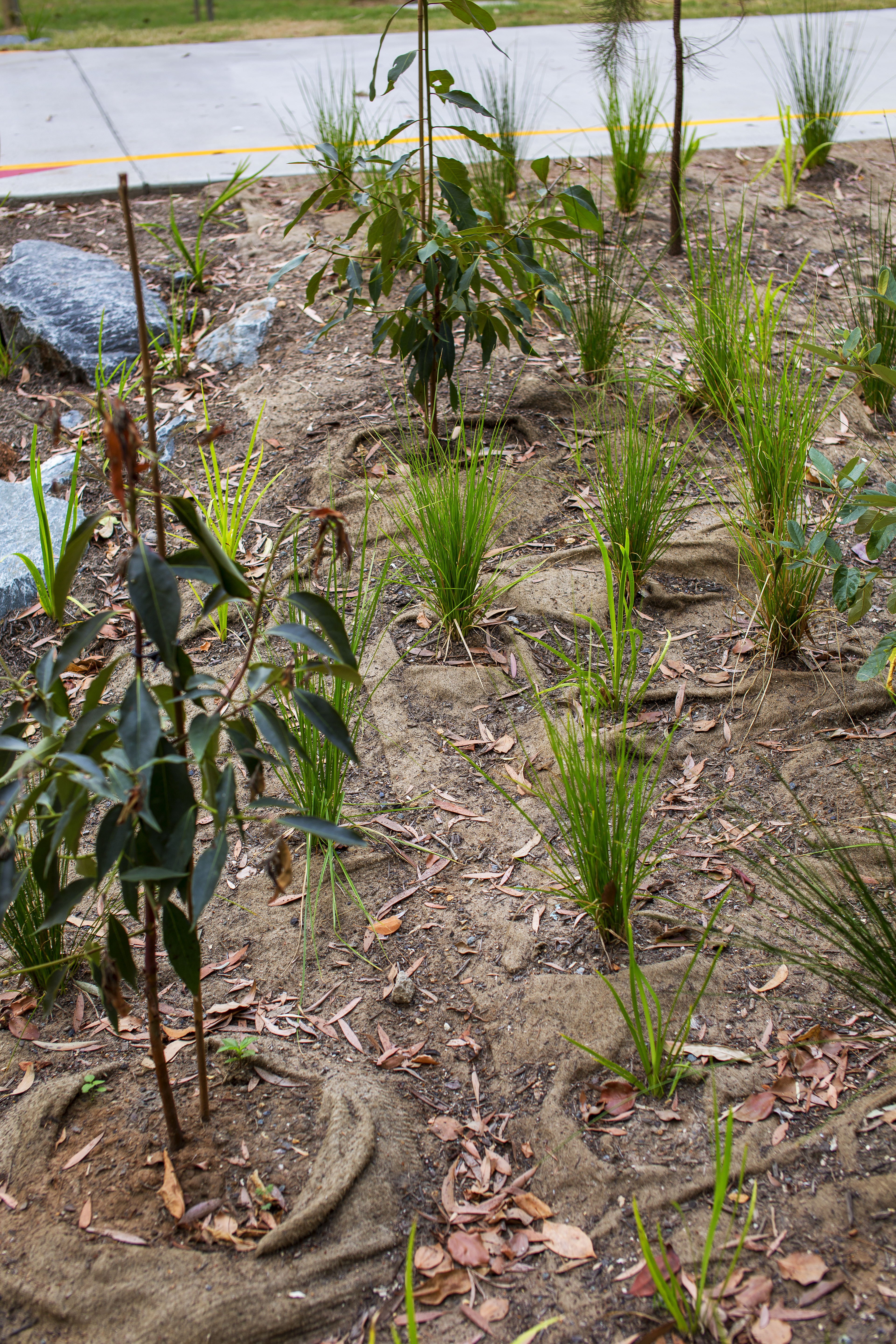
A team of 27 Griffith Mates students and community members! “Ok team, this is the plan. We have thirty plants to go in, logs and mulch to stabilise the banks reducing erosion.”

Sheamus shows how to plant on a slope Sheamus shows how it is done.

.

.

First Sheamus shows how to plant the Lomandras, Wombat Berry and Scrambling Lilly generously donated by SOWN (Save Our Waterways Now).

.

Then the team gets down to action.

PLG 14 Oct 2014Our photographer Larissa also interviewed participants as part of her university project about activism.

2014-10-12 16.22.58Phoebe: What made you come along today? “I’m part of the Griffith Honours College and we were looking at some way we could get involved with the local community and one of the girls from Griffith said Griffith University had a partnership with the bushcare people and we could come along and help out so…

View original post 419 more words