(l-r) Len Kann, Michael Fox, Laurie Deacon

(l-r) Len Kann, Michael Fox, Laurie Deacon

By: Michael Fox

I joined our President – Laurie Deacon and Len Kann at Mt Gravatt Bowls Club on Saturday to celebrate Queensland Day and join Ian Walker MP, Cr Krista Adams and other community members acknowledging some of the special volunteers who keep our sports teams operating or provide  support for the most vulnerable people in our community.

Southside Sport & Community Club every year provide generous support for community groups with the Community Grants Scheme. Mt Gravatt Environment Group has received a grant that will allow us to purchase specialised equipment for our bush restoration teams. We now have seven teams restoring bushland sites around the mountain and building a Pollinator Link garden at Mt Gravatt SHS.

Southside’s generous support has already allowed us to purchase a chipper for recycling weed trees and GoPro camera used to monitor nesting boxes installed at Fox Gully Bushcare site.


Griffith Mates Team

Griffith Mates Team

By: Michael Fox

A beautiful autumn Saturday morning and Griffith Mates – Sienna, Ben, Lily, Abraham and Larissa joined Roger and myself at Fox Gully Bushcare site. The team removed another large area of Fishbone/Sword Fern Nephrolepis cordifolia and installed logs on the slope to create a safe work space and control erosion.

When the team from FWR Group joined our Wednesday Bushcare in September 2010 to start clearing, the Fishbone Fern covered an area larger than the average Brisbane house block – approximately 1,000 square metres. By the time the FWR team returned six months later, in March 2011, natural regeneration had already restored a good coverage of native grasses like Ottochloa gracillima Graceful Grass. This Living Mulch of native grasses controlled erosion, suppressed weed regrowth, retained moisture and provided food for caterpillars of the Brown and Orange-streaked Ringlet butterflies.

Ben reaching Glider box with GoPro camera

Ben reaching Glider box with GoPro camera

By the time the Griffith Mates team finished another huge area had been cleared and stabilised with logs. Restoration work on the Fishbone infested areas of Zone 8 is now almost complete and with further help from Griffith Mates we expect to finish the weed clearing this year allowing nature to take over with the natural regeneration of local grasses, herbs, ferns and vines.

To finish the morning I showed the team how we check nest boxes installed to provide substitute nest hollows for birds and gliders.

We found the Squirrel Glider family in two boxes and the female Brushtail Possum is still living in the Kookaburra box. She was quite curious about the camera, reaching up to sniff the lens. It is a particular pleasure to share this wildlife experience with young people from places like Hong Kong.


Mt Gravatt Environment Group's avatarPollinator Link

By: Laurie Deacon

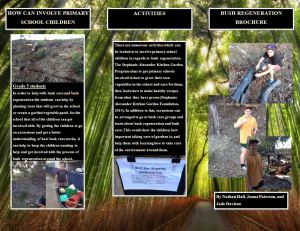
ACU student brochure ACU student brochure

Our ACU student teacher friends have used their bushcare experience to produce an excellent brochure to promote bushcare to other teachers.

Jade Davison, James Paterson and Nathan Hall … sharing a vision of a sustainable future with the next generation. With teachers like this we can look forward with hope.

View original post

Mt Gravatt Environment Group's avatarPollinator Link

Mt Gravatt SHS Pollinator Link 1 - 13 April 2014 Planting native grasses to create habitat

By: Laurie Deacon

The forecast was rain. Cyclone Ita had just crossed the coast in north Queensland and the outlook looked bleak in Brisbane. Do we cancel our monthly working bee?

We did have the Bushcare in the end with some lovely uni students from the Australian Catholic University (Banyo)

Team proud of their achievement Team proud of their achievement

who came over under their own steam in a car and they were a delight. They were all studying Degree in Primary School teaching. The rain in fact was light and eased so it was perfect gardening weather.

The team planted native grasses including Creeping Beard Grass Oplismenus aemulus and Pademelon Grass Oplismenus imbecillis. The first step in restoring bushland is often counter intutive – plant grass first and trees later.

Orange-streaked Ringlet butterfly Orange-streaked Ringlet butterfly

These grasses act as a Living Mulch spreading by nodes they quickly cover the ground

View original post 94 more words

Removing Chinese Elm with Treepopper

Removing Chinese Elm with Tree Popper

By: Michael Fox

Marshal and I tackled the Chinese Elm Celtis sinensis infestation in Fox Gully Bushcare this morning. Mature Chinese Elms can reach 20 metres in backyard gardens.

A Tree Popper is the ideal tool for this job allowing us to remove all but six larger Elms without using poison. The largest we removed with the Popper as about twice my height with an extensive spreading root system.

In total we removed 40 Chinese Elms, about 30 Umbrella Trees Schefflera actinophylla, dozens of Micky Mouse Plants Ochna serrulata, Camphor Laurels Cinnamomum camphora, Small Leaf Privet Ligustrum sinense and Indian Hawthorne Rhaphiolepis indica.

Chinese Elm with extensive root system

Chinese Elm with extensive root system

The Tree Popper is perfect for use in safely and easily removing these woody weeds in bush restoration sites. The jaws of the Popper clamp around the trunk and the long handle provides leverage to pull the weed roots and all. The Popper is particularly useful for tackling the deep-rooted Micky Mouse Plant.

Using Cyclone 2-Prong Hoe we also removed two garbage bags of Asparagus Fern Asparagus aethiopicus and Climbing Asparagus Fern Asparagus plumosus. The long handle and sharp prongs of the 2-Prong Hoe reach past the prickly leaves and the prongs get right under the crown of the plant allowing the complete weed mat to be removed quickly and easily.


Source of infection - mature Umbrella Tree

Source of infection – mature Umbrella Tree

By: Michael Fox

After inspecting Fox Gully Bushcare site Zone 10, I yesterday removed 53 small and 6 large mature Umbrella Trees Schefflera actinophylla. A similar infestation in Zone 11 will be removed this week. I also removed a number of Camphor Laurel Cinnamomum camphora and Chinese Elm Celtis sinensis trees, as well as, Creeping Lantana Lantana montevidenses. These environmental weeds are all spread by seeds being eaten by birds and other animals.

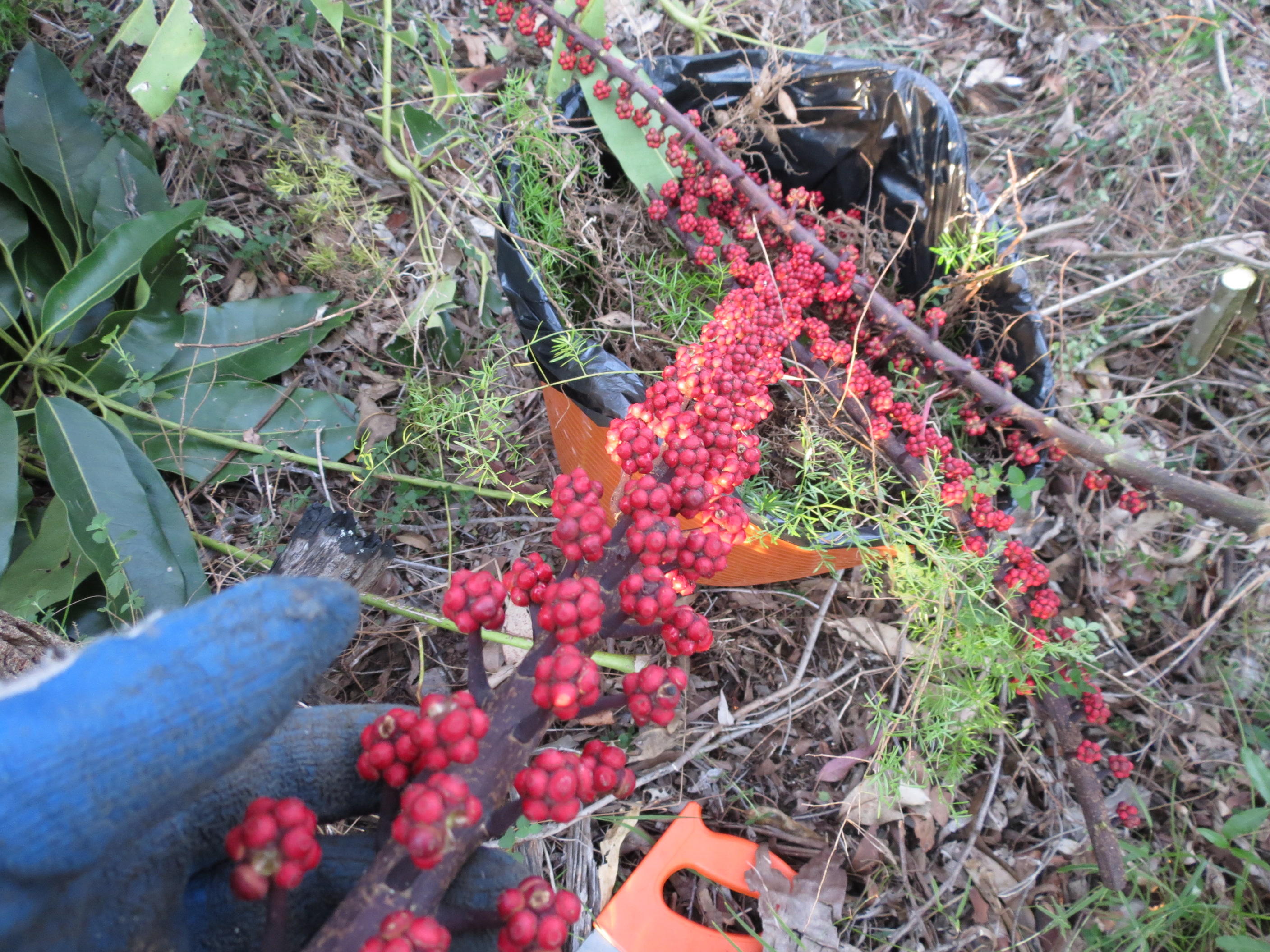
Umbrella Trees, from North Queensland, produce a large number of seeds which are spread from backyards to bushland or other backyards when eaten by birds. The cluster of over fifty small trees in a limited area shows how quickly these environmental weeds can spread and impact on the native plant species or invade a neighbour’s backyard. Seeds from the large trees were bagged for disposal offsite to reduce the risk of re-infection.

Umbrella Tree seeds

Umbrella Tree seeds

Weeds are one of the three key threats to the long term bio-diversity of Mt Gravatt Conservation Reserve. Most weed infections are caused by seeds spread by birds or wind, or result from dumping of garden waste including grass clippings in the bush. One of the most frustrating parts of our bush restoration work is dealing with restored areas re-infected with seeds dispersed from urban backyards.

You can support the efforts of Habitat Brisbane


Cluster of young Umbrella Trees

Cluster of young Umbrella Trees

Bushcare groups across the city by removing the sources of infection from your backyard.

  • Umbrella Trees Schefflera actinophylla
  • Camphor Laurel Cinnamomum camphora
  • Chinese Elm Celtis sinensis
  • Creeping Lantana Lantana montevidenses


Brushtail Possum

Brushtail Possum

By: Michael Fox

At night in Mt Gravatt Conservation Reserve you see the bush with new eyes … and eyes are what you see.

I knew the eyes of many animals seem to glow in the light of a torch so I was not surprised to find the orange glow of a pair of eyes, was a Brushtail Possum Trichosurus vulpecula, prowling around.

What has been really surprising though are the dozens of sparkling lights on the ground – Wolf spiders Lycosa species. In torch light the eyes of these spiders look like tiny diamonds the reflection is so sharp. When I first saw this the light seemed to flash like Fireflies but that effect was just caused by movement of my torch as I approached. When I held the torch steady the light from the spiders’ eyes was also steady.

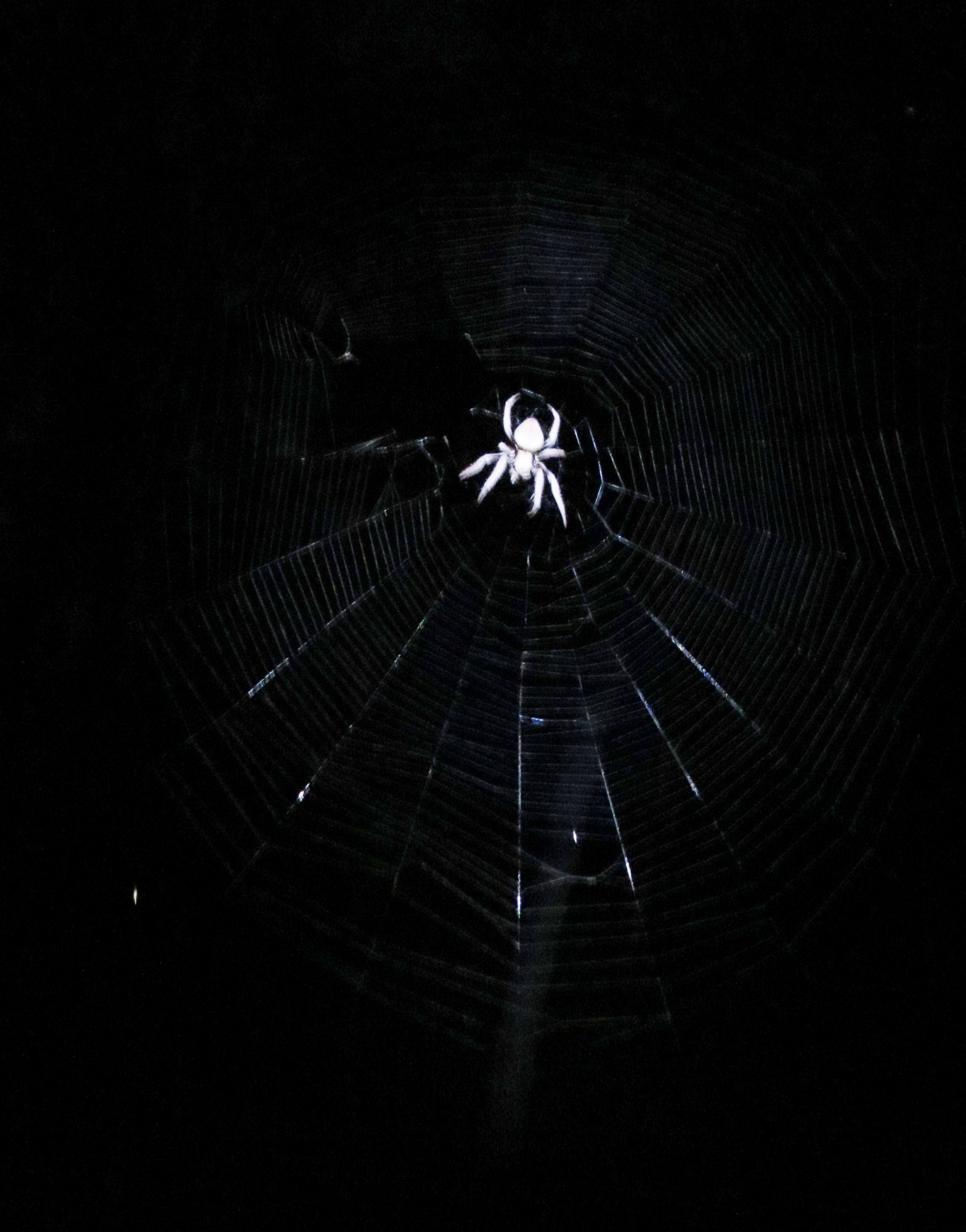
Garden Orb Weaver web

Garden Orb Weaver web

Apparently Wolf spiders are one a small number of spider species that have a layer of light reflecting crystals, tapetum lucidum, right behind the retina of the eye. This reflective layer improves night vision for these nocturnal hunters by bouncing light back to the retina.

It is interesting to see the different shape, colour and intensity of the light reflected by the eyes of different species. The Wolf spiders have small crystal clear light, while the Brushtail’s eyes were larger, wide apart and the reflection was softer. Toads have similar reflecting eyes and I am getting good at spotting them at a distance, keeping them sitting still in the light, then scooping them up in a plastic bag ready for freezing. I have removed ten toads from the Reserve from my last couple of night walks.

Garden Orb Weaver spiders, Eriophora transmarina, are another night time creature making huge webs at night which are cleaned up in the morning before they retreat to spend the day in a leaf shelter. This particular spider likes to make a web across the fire trail in the Fox Gully Bushcare site. The web spans an amazing 5 to 6 metres to bridge the trail. A large bug or something has already flown straight through this web so I ducked under to avoid any more damage to this extraordinary construction.

By: Michael Fox

Spider web - 29 March 2014

Wolf Spider web

I think I have solved the puzzle of the strange muslin like spider webs on the ground last week.

Julie-Anne suggested wolf spiders so I have been searching for these fearsome hunters among the leaf litter.

.

.

.

.

.

Dark Wolf Spider - 31 March 2014

Dark Wolf Spider

.

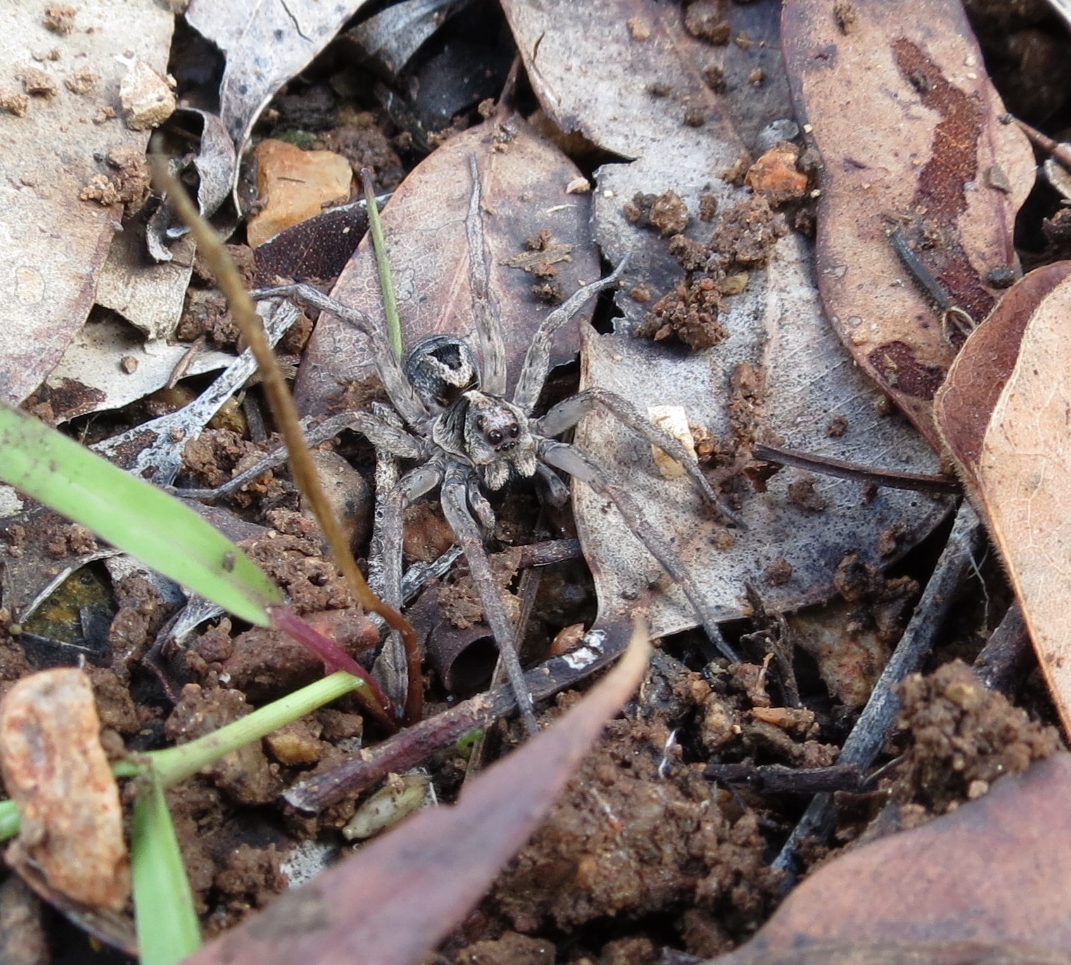
I found this this Dark Wolf Spider Lycosa obscuroides morning. These spiders look fearsome but they are small with a body length of approximately 10mm so they would fit the hole in the web I photographed.

.

.

.

Dark Wolf Spider - front - 31 March 2014

Fearsome features – eight eyes

.

.

.

.

.

Wolf spiders hunt among the leaf litter for crickets and lizards. They have also been reported as feeding on Cane Toads. I assume it is the larger species that hunt Cane Toads however it is certainly nice to think some Australian species are fighting back.

Wolf spiders have a distinctive pattern of eight eyes with one row of four small eyes at the front with two large eyes above and another two large mounted on the side of its head.

lycosa - with egg sac - Sept08

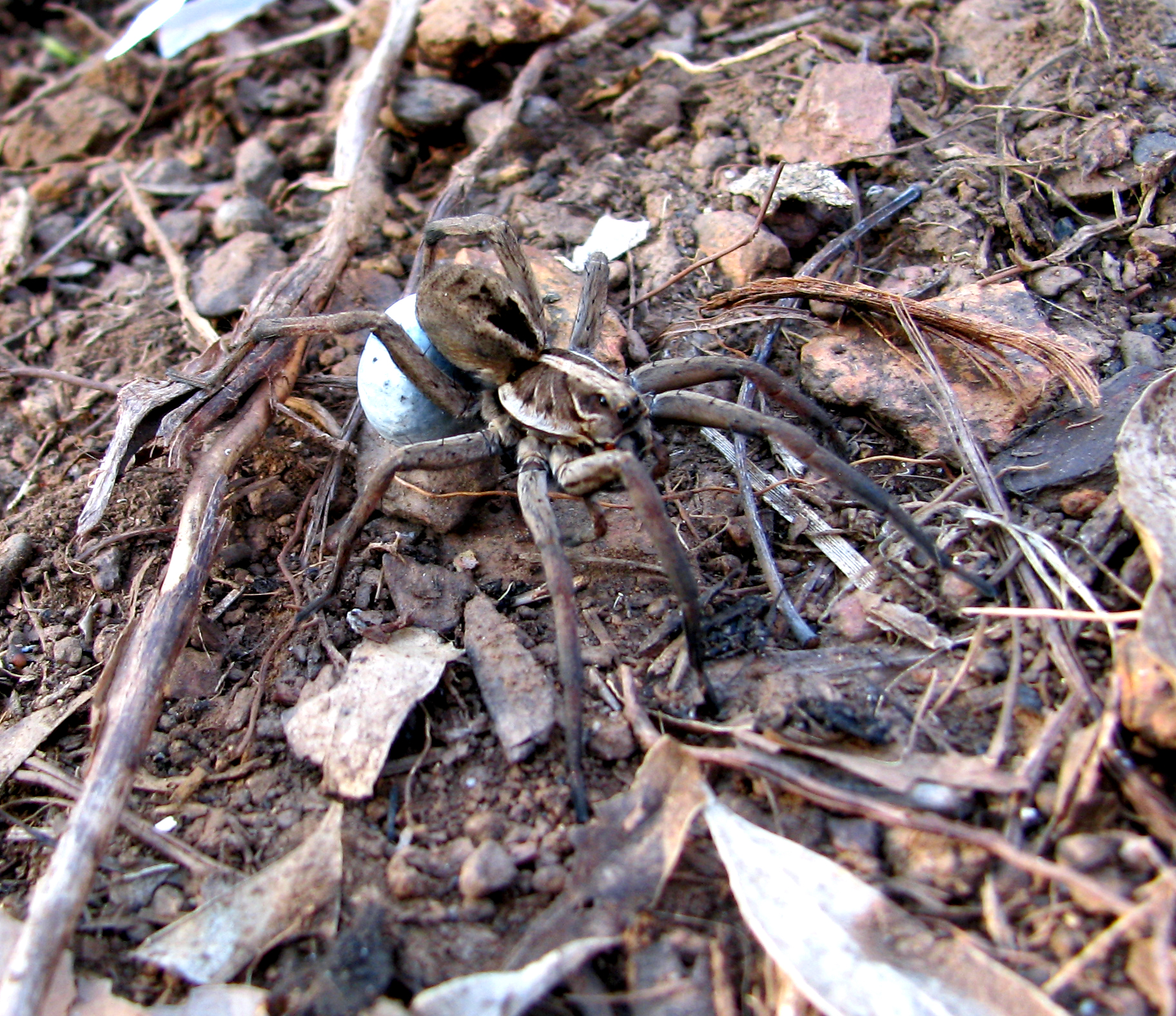
Female Dark Wolf Spider with egg sac

.

Another interesting characteristic of wolf spiders is the females carrying their egg sac with them. Once the eggs hatch she carries her young on her back. I photographed this female in 2008 and I had forgotten how small these fearsome creatures are.


IMG_6358a

Tent spider webs covered in morning dew Photo: J. Fox

By: Michael Fox

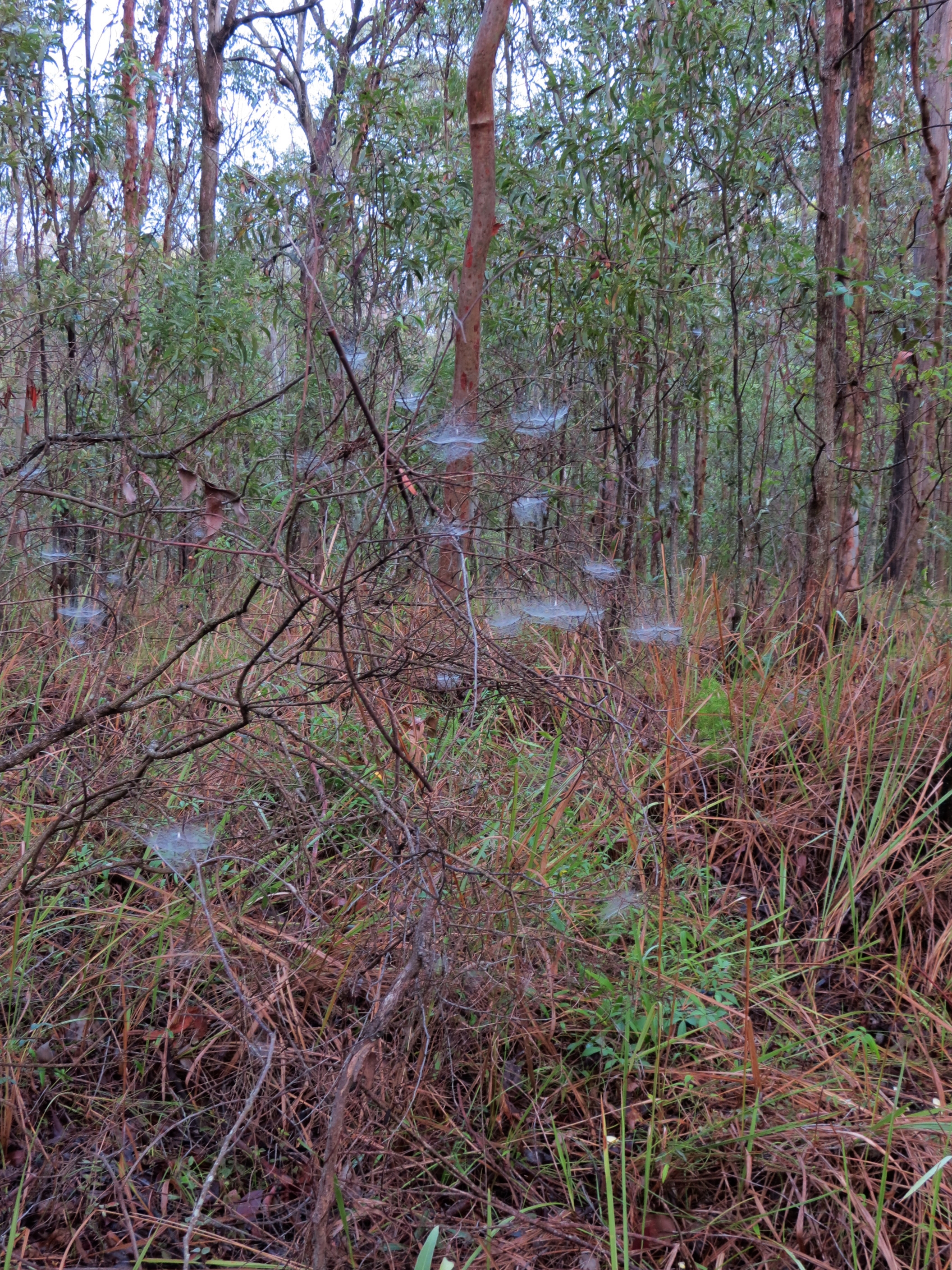
I have spent thousands of hours walking and working in Mt Gravatt Conservation Reserve and I am still seeing things I have never noticed before. The misty mornings air this morning showed dozens of small tent spider webs in communities in the shrubs. The moisture on the webs this morning made for great photography. When I just checked this afternoon these webs are all but invisible.

d

d

d

d

Dome Tent Spider - 29 March 2014

Dome Tent Spider web Photo: J. Fox

d

d

d

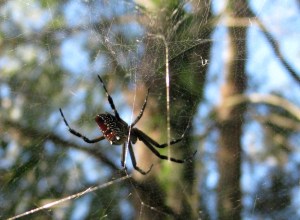
I could not find any spiders to photograph however these webs are almost certainly made by Dome Tent Spiders Cyrtophora moluccensis which I have found in the Reserve. This larger web shows the amazing structure with a collection of something, possibly eggs, at the peak.

d

d

d

Dome Tent Spider - close - 29 March 2014

Close up of Tent Spider Web Photo: J. Fox

d

d

d

d

A close up photo shows the neat matrix of thread and the tension cables holding the shape just like a circus bigtop.

d

d

d

d

d
Cyrtophora moluccensis - Jan10

Dome Tent Spider – Photo: M. Fox

d

d

d

Dome Tent Spider I photographed at Mt Gravatt Campus in 2010.

d

Garden Orb Weaver web - 29 March 2014

Garden Orb Weaver web Photo: J. Fox

d

 d

d

d

d

d

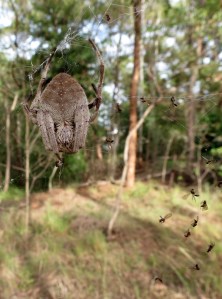
We also found this huge beautifully made web, of the Garden Orb Weaver Eriophora transmarina, stretched out between two trees. Another Garden Orb web had stretched right across the track earlier in the week but without the dew droplets it was virtually invisible and didn’t survive as I walked straight into it.

d

d
Gardern Orb Weaver - 29 March 2014

Garden Orb Weaver Photo: M.Fox

d

d

d

d

d

Garden Orb Weaver females build these huge webs as night and usually consume them again in the morning before hiding in a retreat of leaves and twigs. So it was a bit of a surprise to not only find the web still in place this afternoon but also find the owner sitting in the centre. The web had also caught dozens of flying ants during the day.

d
Spider web - 29 March 2014

Mysterious web on ground Photo: M. Fox

d

d

d

d

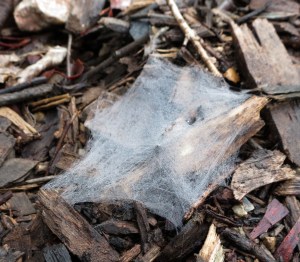
Another first for me is finding a large number of these webs on the ground which must be there everyday but only noticeable with the heavy dew. These webs are very fine with multiple layers which makes them look like very fine muslin fabric.

d

d

d
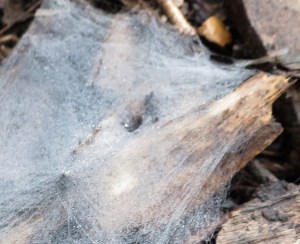
Spider web - hole - 29 March 2014

Entry hole in web Photo: M. Fox

d

d

d

I was not able to get a photo of the tiny spiders living in these webs as they quickly disappeared into the hole built into each web.

Any ideas on what spider species makes these fascinating webs?


Mt Gravatt Environment Group's avatarPollinator Link

By: Michael Fox

Australian Painted  Lady - 14 Sept 2013 Australian Painted Lady Vanessa kershawi

“It is not often that members rise in this House to speak about butterflies … ” local member and Minister for Science, Information Technology, Innovation and the Arts, the Hon. Ian Walker, introducing his Parliamentary Adjournment Speech in Queensland Parliament.

Ian is a strong supporter of Mt Gravatt Environment Group and the Pollinator Link initiative. As Minister for Science combined with his role Urban Development Institute of Queensland, Ian’s support presents an opportunity to introduce the concept of Pollinator Link wildlife corridors for new urban developments across Queensland.

Read Ian’s speech below or in Hansard.Ian Walker - State Parliament - 18 March 2014

Picture1        King Parrot Alisterus scapularis                                                               Blue Banded Bee Amegilla cingulata

View original post