“It is not often that members rise in this House to speak about butterflies … ” local member and Minister for Science, Information Technology, Innovation and the Arts, the Hon. Ian Walker, introducing his Parliamentary Adjournment Speech in Queensland Parliament.
Ian is a strong supporter of Mt Gravatt Environment Group and the Pollinator Link initiative. As Minister for Science combined with his role Urban Development Institute of Queensland, Ian’s support presents an opportunity to introduce the concept of Pollinator Link wildlife corridors for new urban developments across Queensland.
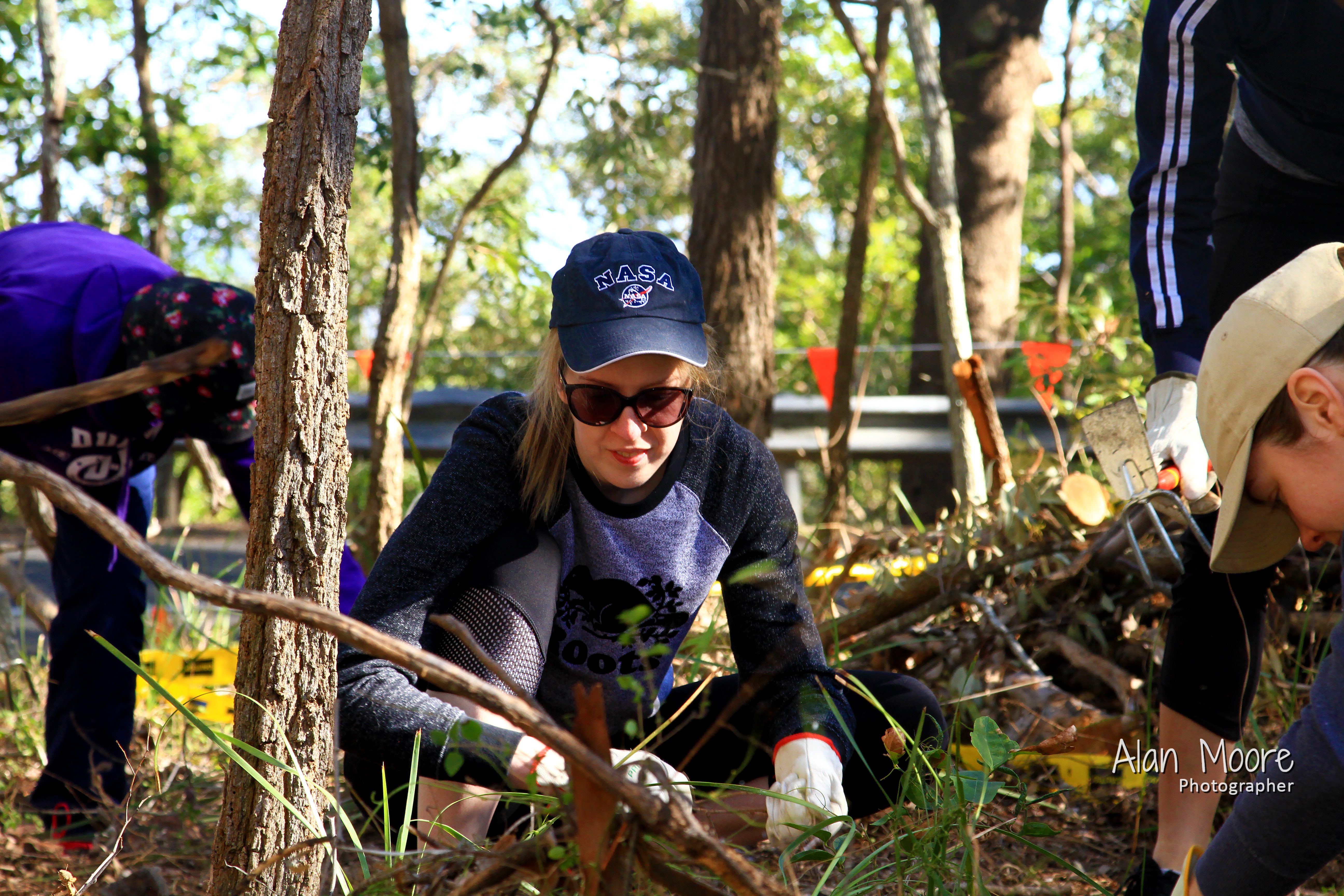
Thanks to coordinator Kerstie Olsson we had a record turn out of approximately 60 volunteers (which included two Scout groups) and collected twenty-nine bags of rubbish (half recycling), a large TV, several pieces of wooden furniture and a small power pole from the top of the mountain, the walking tracks and down the road.
Cub Scouts on patrol
The main issue was broken glass, fast food wrappers and dumping large rubbish.
d
I led a group of Cub Scouts down Acacia Way and Geebung Track.
d
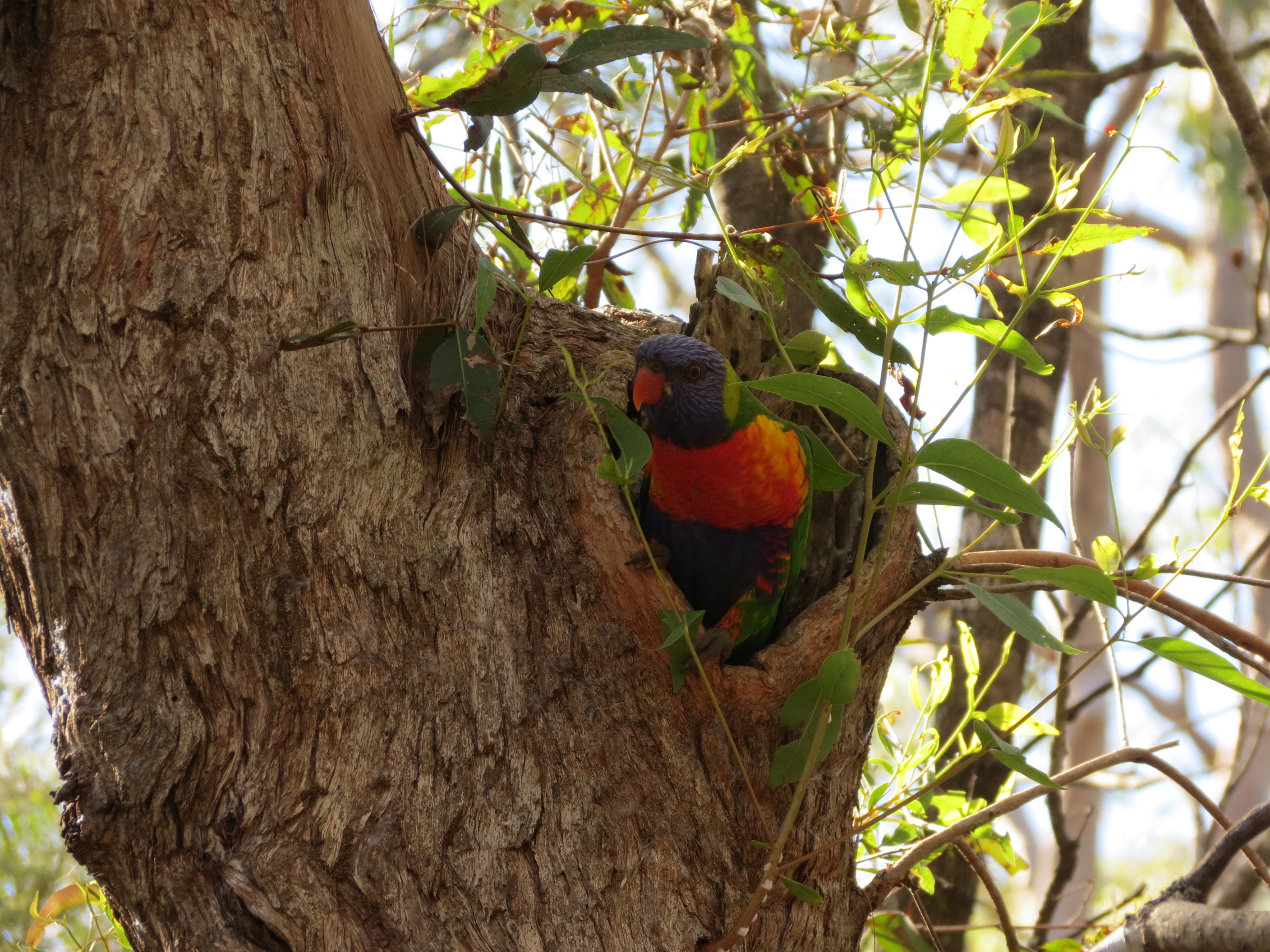
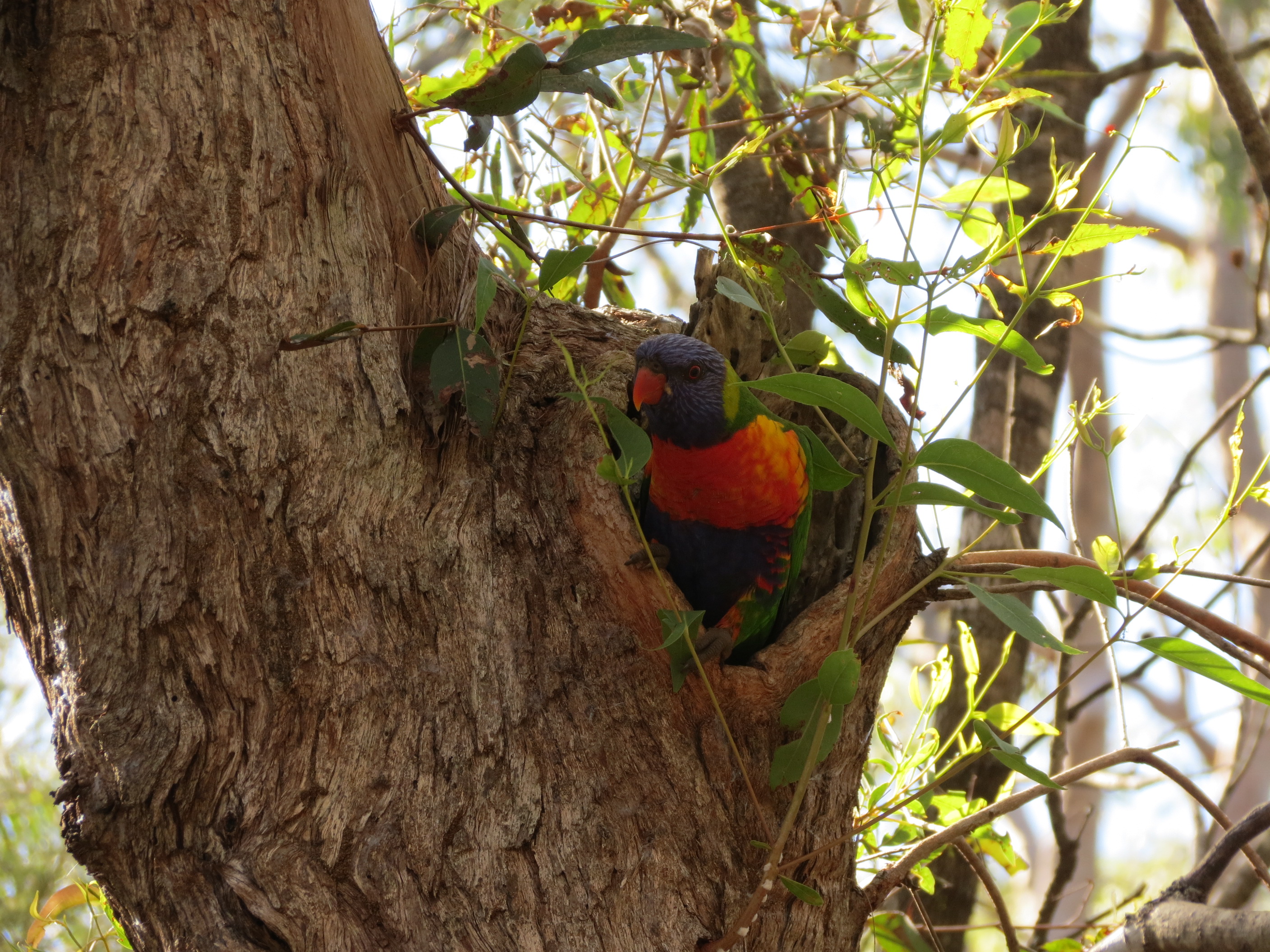
Rainbow Lorikeet emerging from nest hollow
Not a lot of rubbish but we did see a pair of Rainbow Lorikeets Trichoglossus haematodus emerge from a nest hollow, a pair of Galahs Eolophus roseicapillus as well as butterflies and bugs.
“What is this white thing that looks like a tea bag” Alan asked, leading me to a dead tree beside the Farm Fire Trail through Fox Gully Bushcare.
The “tea bag” is actually an egg sac of a Grey Huntsman Spider Heteropoda immanis.
d
d
d
d
d
d
Grey Huntsman Heteropoda immanis
d
d
d
d
A fearsome looking creature these spiders can inflict a painful but not poisonous bite. Generally timid the females will strongly maternal and will protect egg sac. http://www.arachne.org.au
d
d
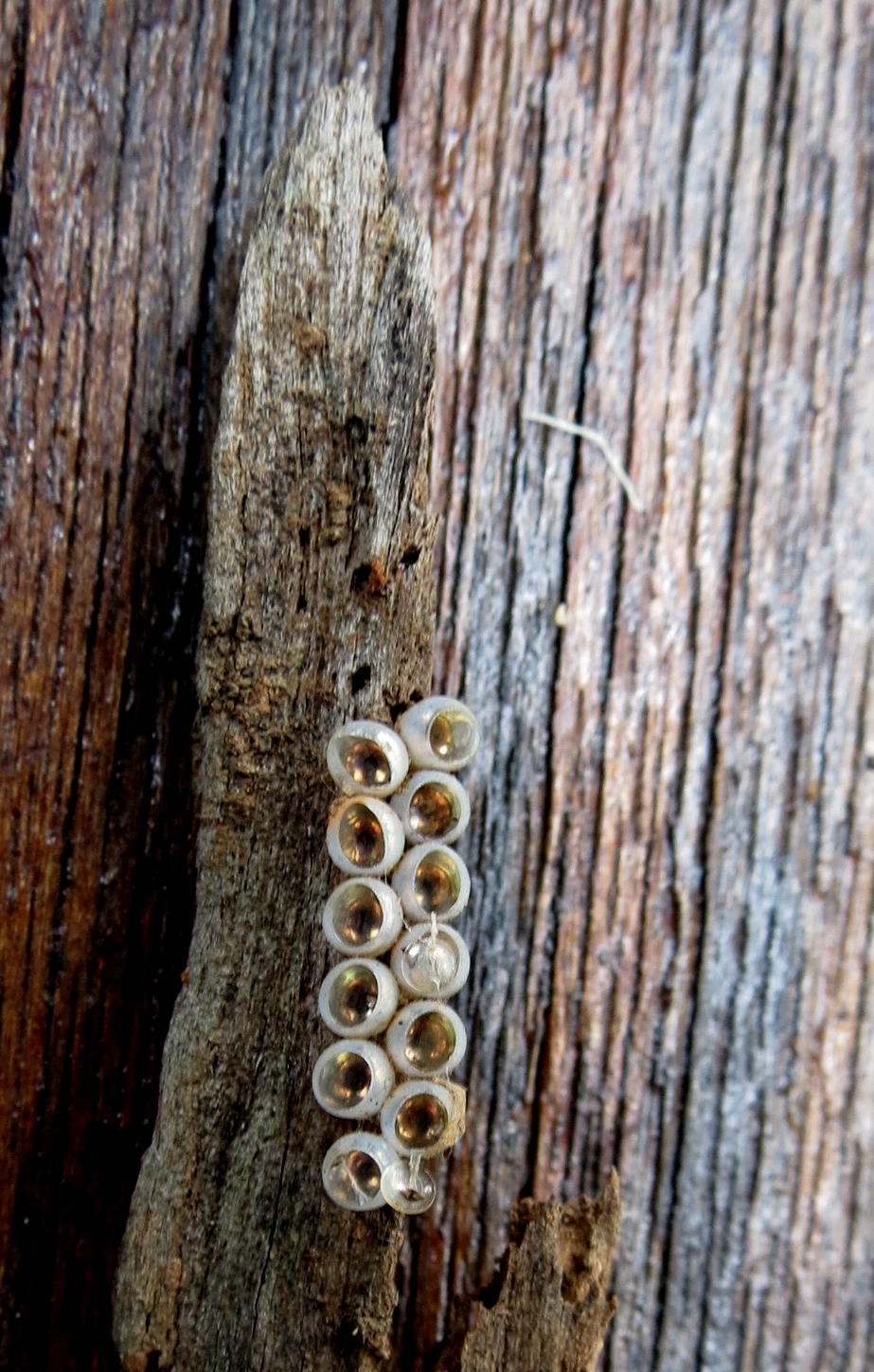
Egg capsules – Photo: A. Moore
d
d
d
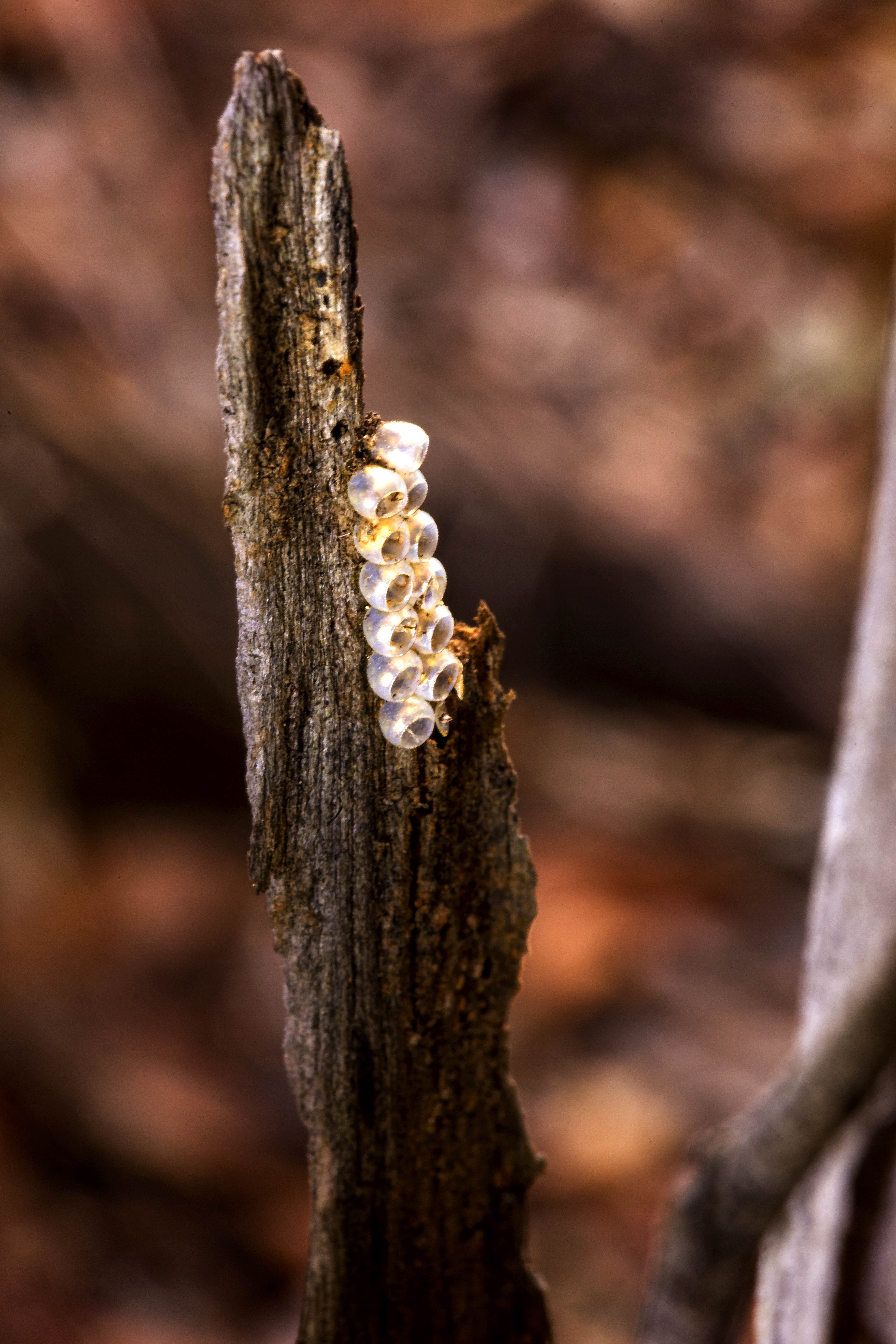
Having found the spider eggs Alan explored the dead tree to see what else is living in this unexpected habitat. Macro photography of empty egg capsules show that the tree is also home to shield bugs, probably the Common Gum Tree Shield Bug.
We tend to assume a dead tree, or stag, is only useful for firewood. Alan’s photos show that this “dead” habitat is still alive with species that depend on it for breeding.
d
d
d
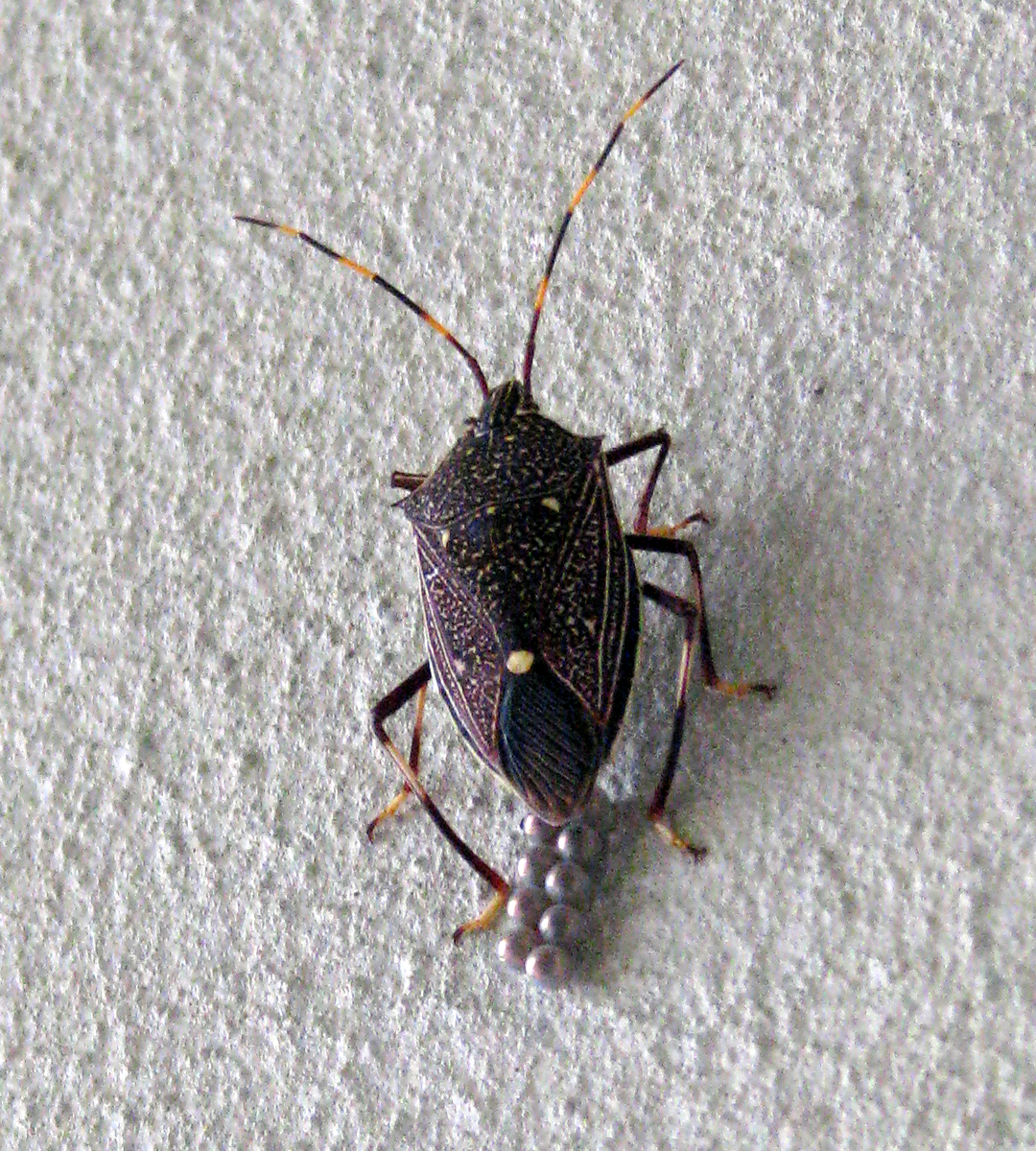
Common Gum Tree Shield Bug
d
d
I have photographed this Common Gum Tree Shield Bug Poecilometis patruelis laying her eggs in 2010.
d
d
d
d
d
d
Perfectly formed egg capsule lids
d
d
Zooming in even closer we can see that these neat capsules also have perfectly formed lids that pop off as the bugs hatch out. Click on photo to expand and look at bottom right capsule.
d
d
d
d
d
Lacewing eggs – Photo: A. Moore
d
d
d
d
d
Alan was also fascinated by the hundreds of tiny mushrooms growing on the tree. However, when I received Alan’s macro picture I realised these were Lacewing eggs each one mounted on an individual thin stalk.
Autumn is a wonderful time of year for a morning walk in Mt Gravatt Conservation Reserve. The air is fresh and cool and alive with the sound of birds.
Every morning is different. One day the morning sun is putting on a show peaking over the clouds while this morning I saw a new bird to photograph and identify. (Not always easy when you only catch one view of the bird.)
What bird is this? Ideas anyone?
Are we really in the middle of a city?
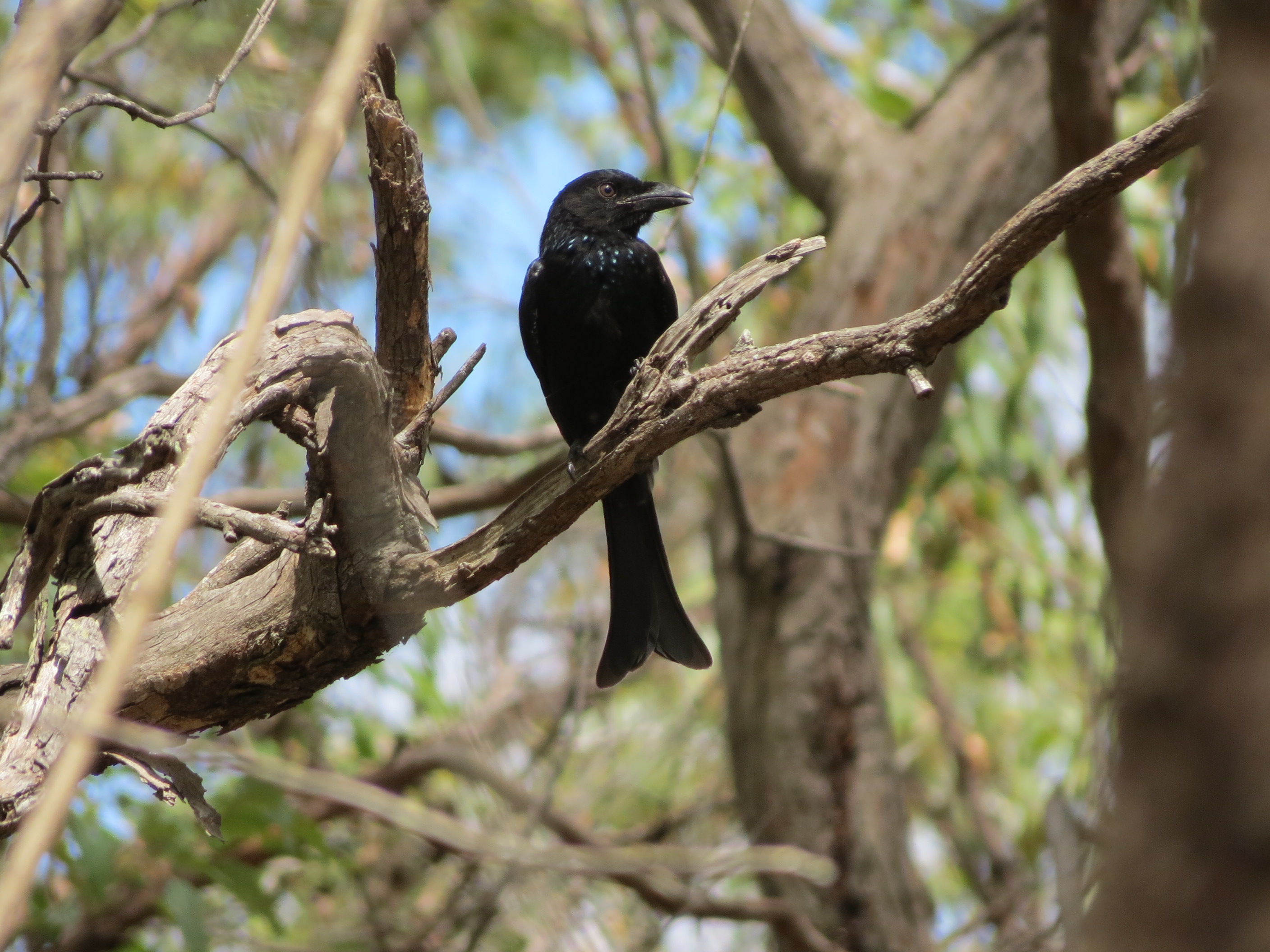
We also saw a Spangled Drongo Dicrurus bracteatus on the Eastern Outlook Track and another pair on the Farm Fire Trail.
We did not see any Wallabies, there have been three reliable sightings over the past twelve months, but we did have a pair of Galahs Eolophus roseicapillus fly past and saw two Black Faced Cuckoo Shrikes Coracina novaehollandiae.
Every track has different vegetation and a different feel depending on the time of day and position of the sun.
Saturday morning I was preparing to lead a guided walk for students from Griffith University and QIBT when my wife, Jude, calls to tell me there is a Koala in the tree behind our house. This is exciting because I can always find a tree with scratches to show people but if I can lead these students to a Koala in the wild right beside their university campus, that will be something special.
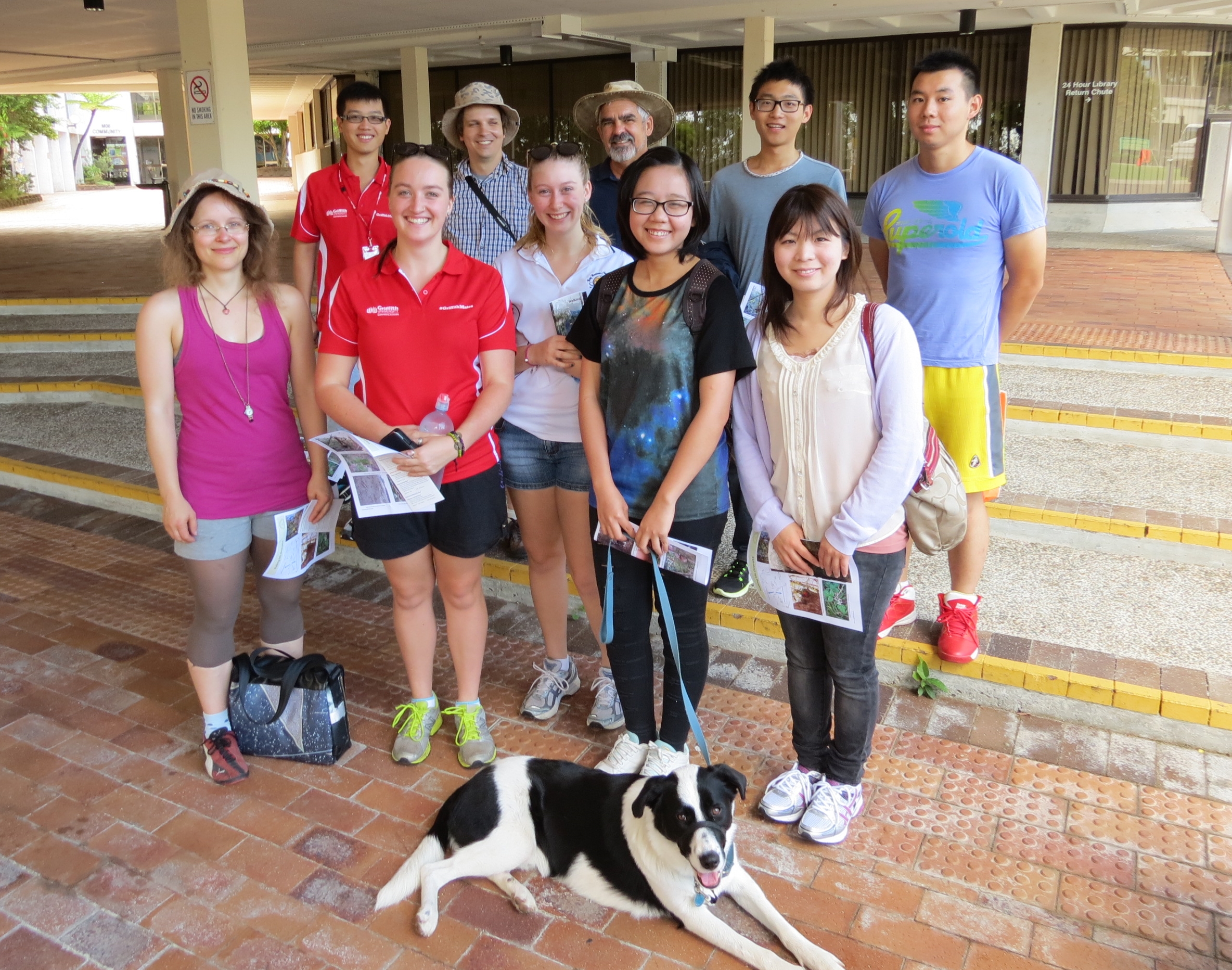
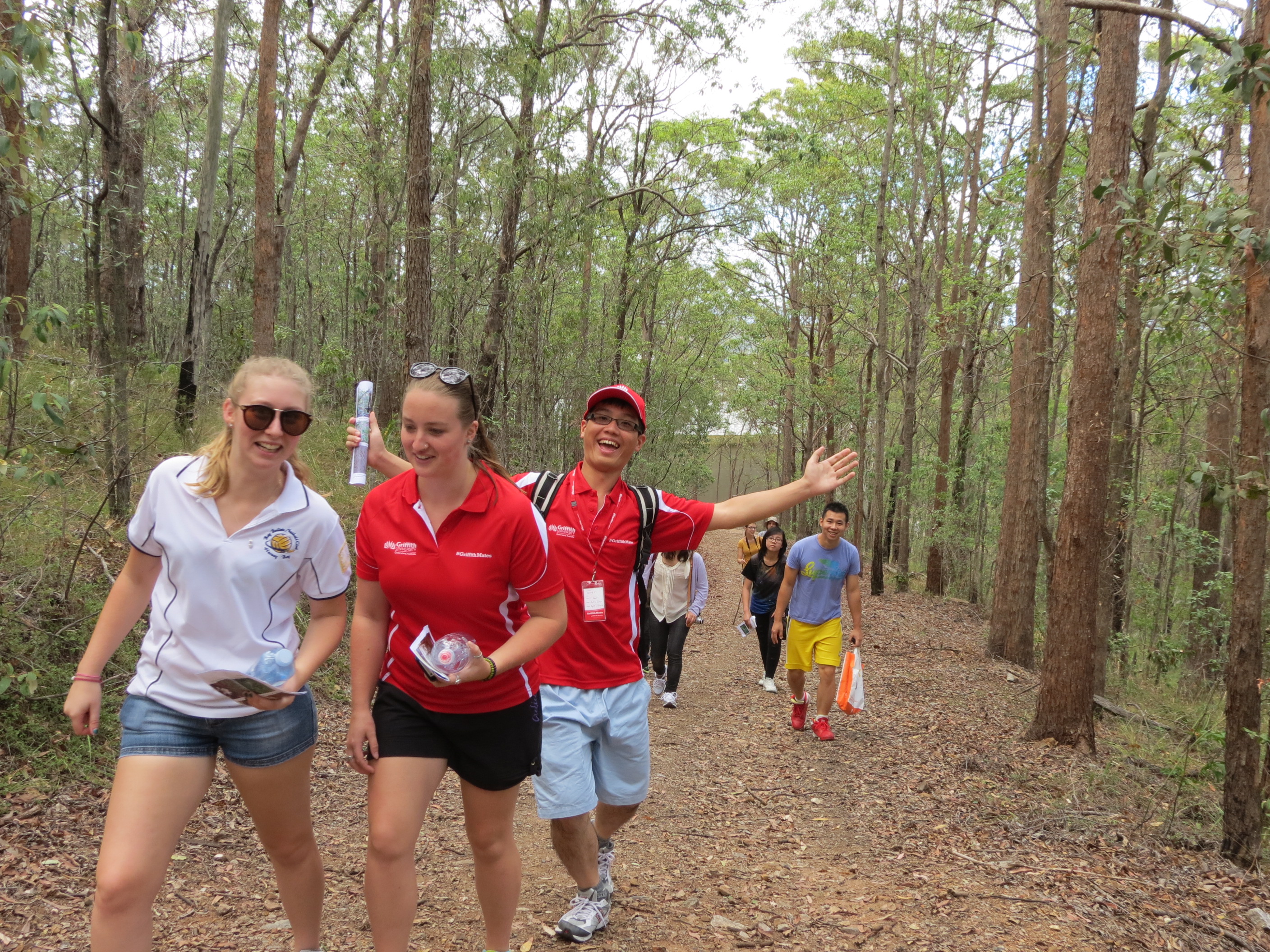
Griffith and QIBT student explorers
Rainbow Lorikeets
Laurie Deacon and I are joined by ten enthusiastic participants from all over the world – Europe, China, Japan, as well as country Victoria, all keen to explore Mt Gravatt walking tracks.
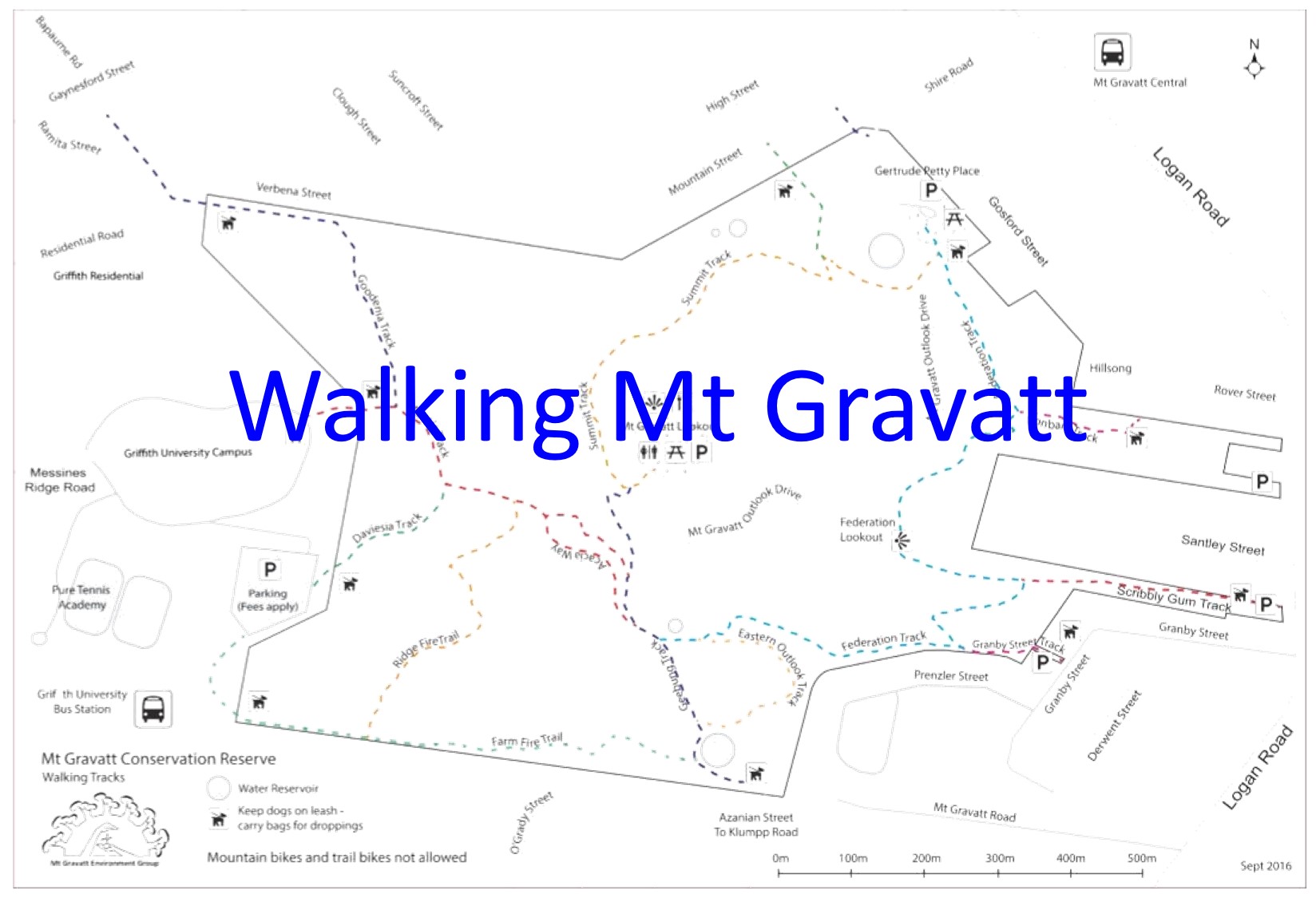
Acacia Way from Mt Gravatt Campus leads along the ridge that acts as the watershed between Ekibin/Norman Creek catchment and Mimosa/Bulimba Creek catchment passing a tree with a nest hollow being used by a pair of Rainbow Lorikeets Trichoglossus haematodus.
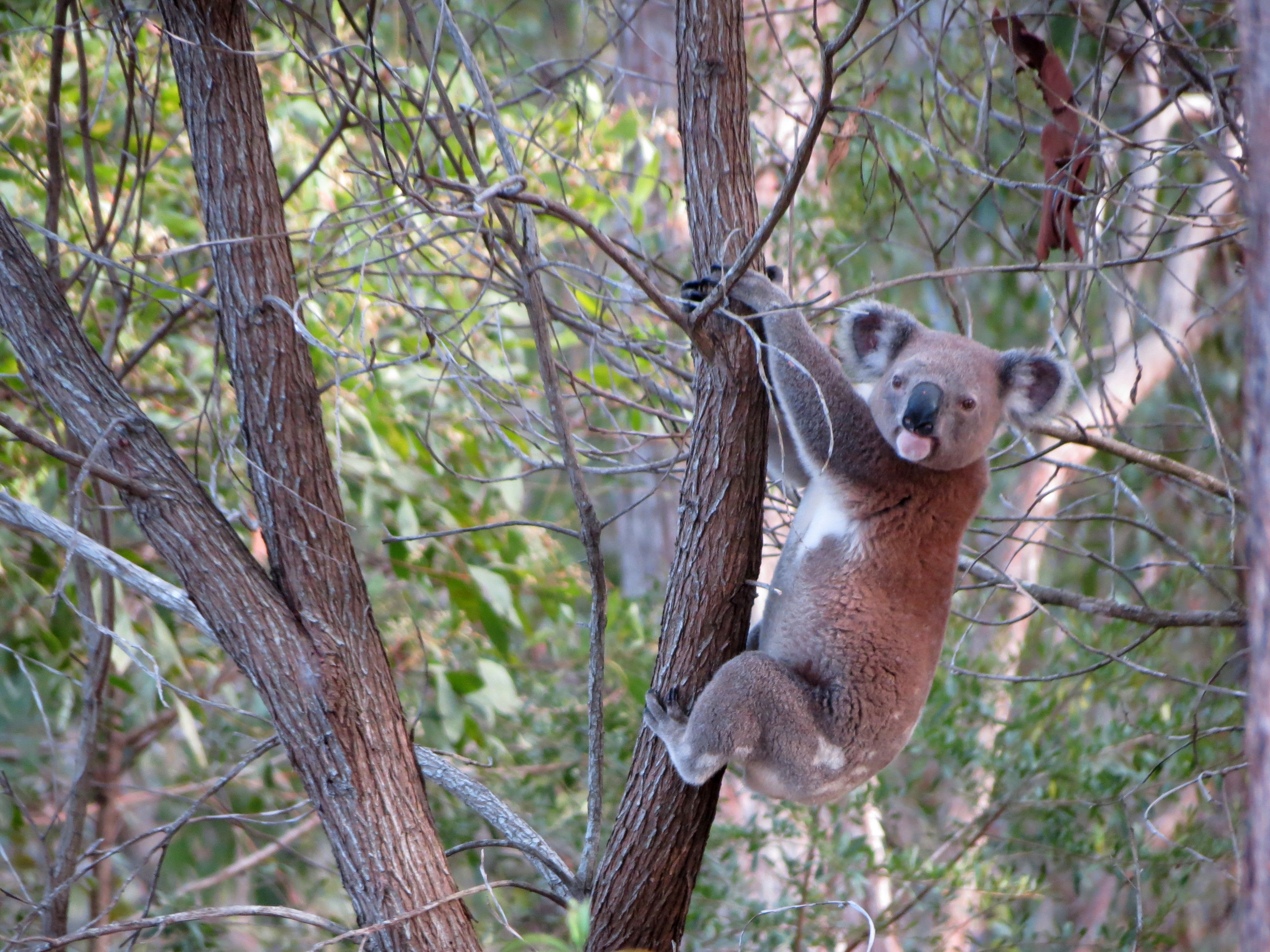
Koala Phascolarctos cinereus
I was able to introduce our visitors to bush food – Native Raspberry Rubus moluccanus, unfortunately not in fruit at the moment, and Settlers Flax Gymnostachys anceps with tough fibers used by aborigines to make fishing lines.
Joining the Geebung Track we continued onto the Fox Gully Bushcare site where I explained the nestbox project that is providing breeding habitat for Squirrel Gliders Petaurus norfolcensis and Kookaburras Dacelo novaeguineae.
Mountain explorers powering up the hill
.
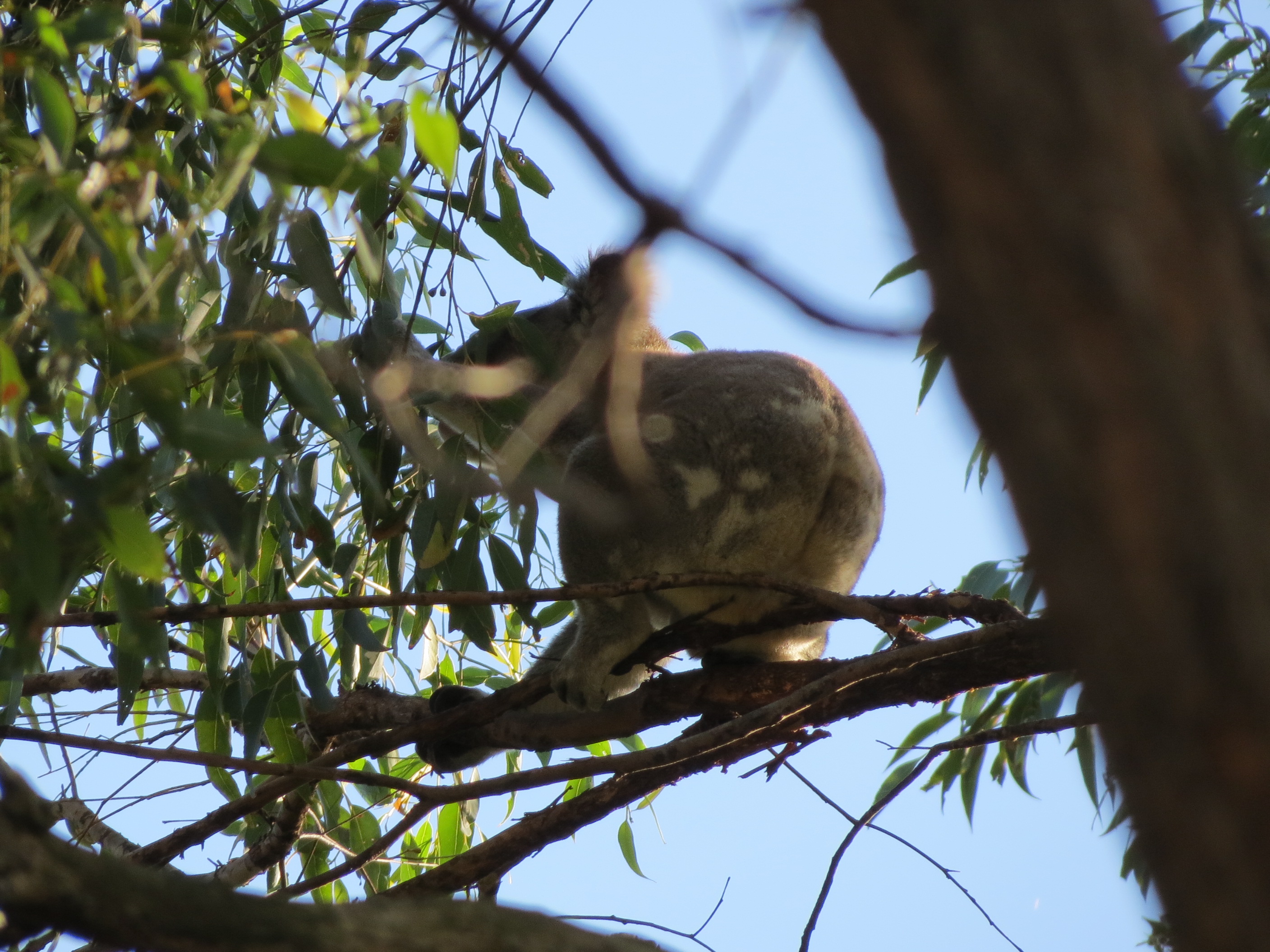
Our friendly Koala has moved high up into the branches, however, it was still a special opportunity to show visitors one of these amazing animals in the wild, not in a zoo, just 15 minutes from the city and right beside their campus.
.
.
.
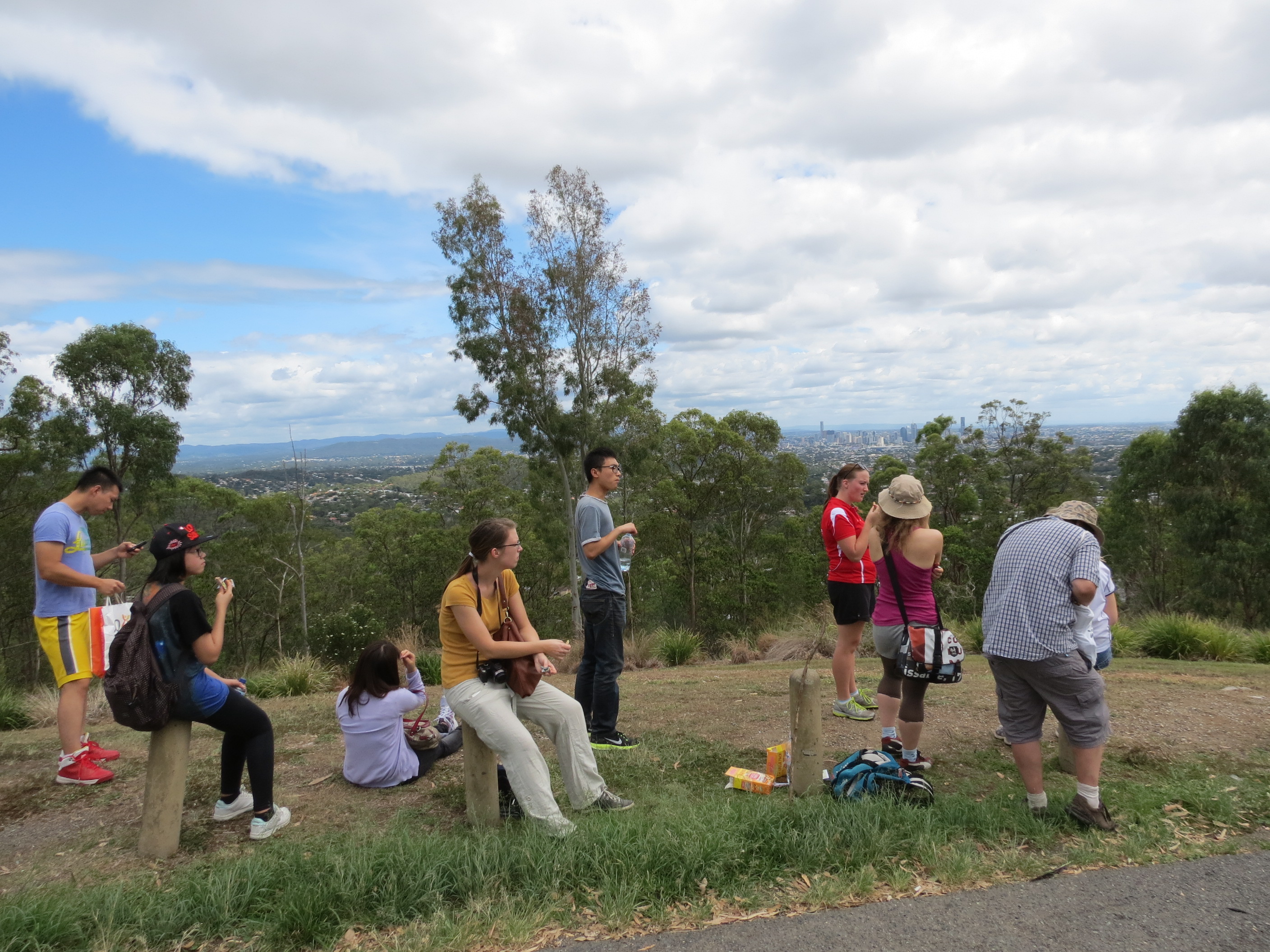
Re-energised our team powered on to Mt Gravatt Lookout for a break before returning to campus.
I was particularly pleased to photograph a Spangled Drongo on the way back. We had the Spangled Drongo on our species list but no photograph.
Restoring our local forest must be done without contributing to deforestation and/or damage to poor communities in other countries. Developing printed material like flyers and newsletters seems to run counter to this vision. However, even with the active use of social media like Facebook and email, effective engagement of community members still depends on delivering physical documents that can be read and discussed by family members or picked up in the local library.
Since 2011 Worldwide Printing Solutions at Upper Mt Gravatt have been providing us with high quality printed products, excellent advice and support, all delivered at competitive prices. Worldwide also share our respect for the environment and focus on sustainability:
“In October 2012, we became the very first printing franchise in Australia to be certified NoCO2, meaning we’re 100% carbon neutral in a majority of our national network of centres. We’ve achieved this through making big positive changes internally, while also investing heavily in three major sustainability projects in India, Cambodia and China.” Our sustainability ripples worldwide
It was a pleasure to read the Worldwide report showing that the paper in flyers and newsletters we distribute is certified sustainably sourced – FSC (Forest Stewardship Council of Australia), the factory printing our material is solar powered, environmental inks are used and carbon offset credits are used to fund projects in countries across the world including biofuelling in India, low impact house stoves in Cambodia and wind power in China.
Working with suppliers who share our values is an important part of building a community group that continually works to add value to our environment, community and local business.
International students are an important group of potential volunteers for bush restoration work so Kristen and Elsa the Koala joined us at the QIBT (Queensland Institute of Business Technology) OWeek Market.
Elsa, who normally lives at the Daisy Hill Koala Centre, was a real hit with students from as far away as Japan, China and Sri Lanka. Kristan also amazed students with the body of a three day old joey Koala. Just 30mm long the joey would have made an extraordinary journey to its mother pouch after birth. Unfortunately the mother was hit by a car shortly after and the joey was found in the mother’s pouch.
Elsa – Koala Phascolarctos cinereus
In south-east Queensland we are lucky to still have some significant Koala habitat with protected areas like Daisy Hill Koala Centre however development pressure is impacting. In Mt Gravatt Conservation Reserve and surrounding urban areas we are seeing a return of Koalas that, as recently as 1927, were hunted for their pelts. Nature is giving us a second chance with Koalas so students engaged in restoration of Mt Gravatt Conservation Reserve will be making a valuable contribution to a unique Koala habitat just fifteen minutes from Brisbane CBD and right beside their university campus. Students are also invited to visit Daisy Hill Koala Centre – free entry.
Daisy Hill Koala Centre – Sunday 30 March. Dogs off-leash are one of the three key threats to Mt Gravatt Conservation Reserve. Take the opportunity to learn about making your dog wildlife friendly.
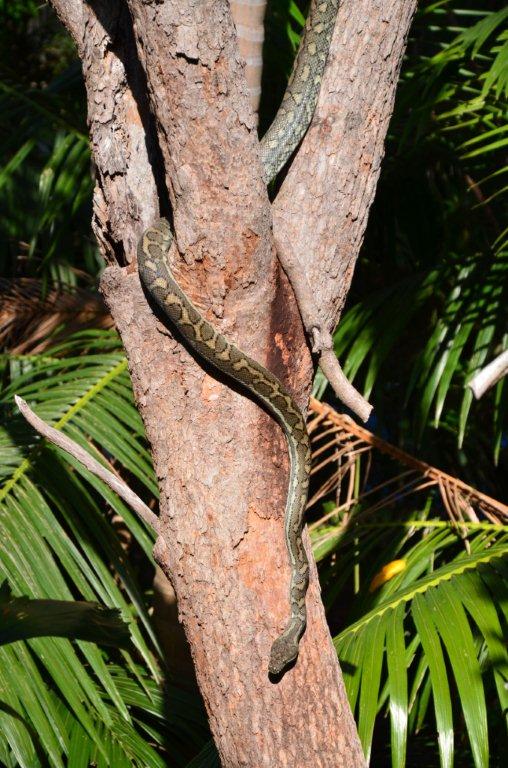
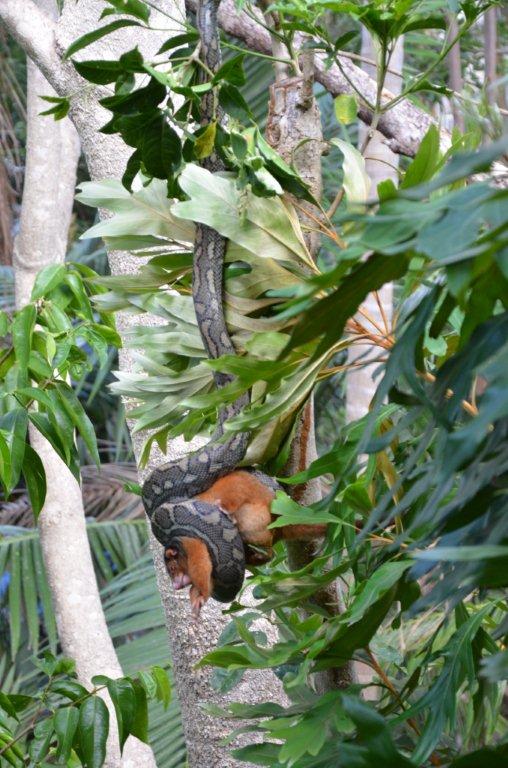
If you want to know anything about stalking, talk to the carpet snake and the possum outside the sunroom this morning. Guess what, the possum escaped after the ‘capture’ from its nest (drey)! A pity that I didn’t have a video of it all, as the speed with which the snake struck was unreal.
I initially spotted the carpet snake in the gum outside our sunroom where it appeared to be sunning itself. In time it moved across two adjacent trees moving towards the tree about a metre away from our room. We knew that it housed a possum nest for years but we have not seen any movement within it for over 12 months so assumed it was abandoned (it is well camouflaged).
Python vs Possum – who wins?
Then the snake approached it and within a fraction of a second had the possum within its grasp. It grappled with it for about a minute as in the position of the final photograph but somehow the possum found its way to freedom when it dropped about 3 or 4 metres and disappeared in a hurry.
Editor’s note: Unlike, Brushtail Possums Trichosurus vulpecula, Ringtail Possums Pseudocheirus peregrinus don’t invade the roofs in our houses, they make a spherical nest or drey from grass and shredded bark. The drey is built in a tree hole, tree fork or dense vegetation. If you have Ringtails in your area consider building a drey in your backyard.
We often have Scaly-breasted LorikeetsTrichoglossus chlorolepidotus visiting our birdbaths. However in the past it was always two or three at a time. A little smaller than their cousins the Rainbow Lorikeet Trichoglossus haematodus these cute birds with their flashing orange under-wings flock with the Rainbows.
Scaly’s are often out competed for nest hollows by their larger cousins. So it was a real pleasure to see at least eight, I had trouble counting as they flitted around, having fun in the water today.
Water for wildlife is really important in the current dry spell we are having in SE Queensland and we are rewarded by a constant stream of colourful visitors.
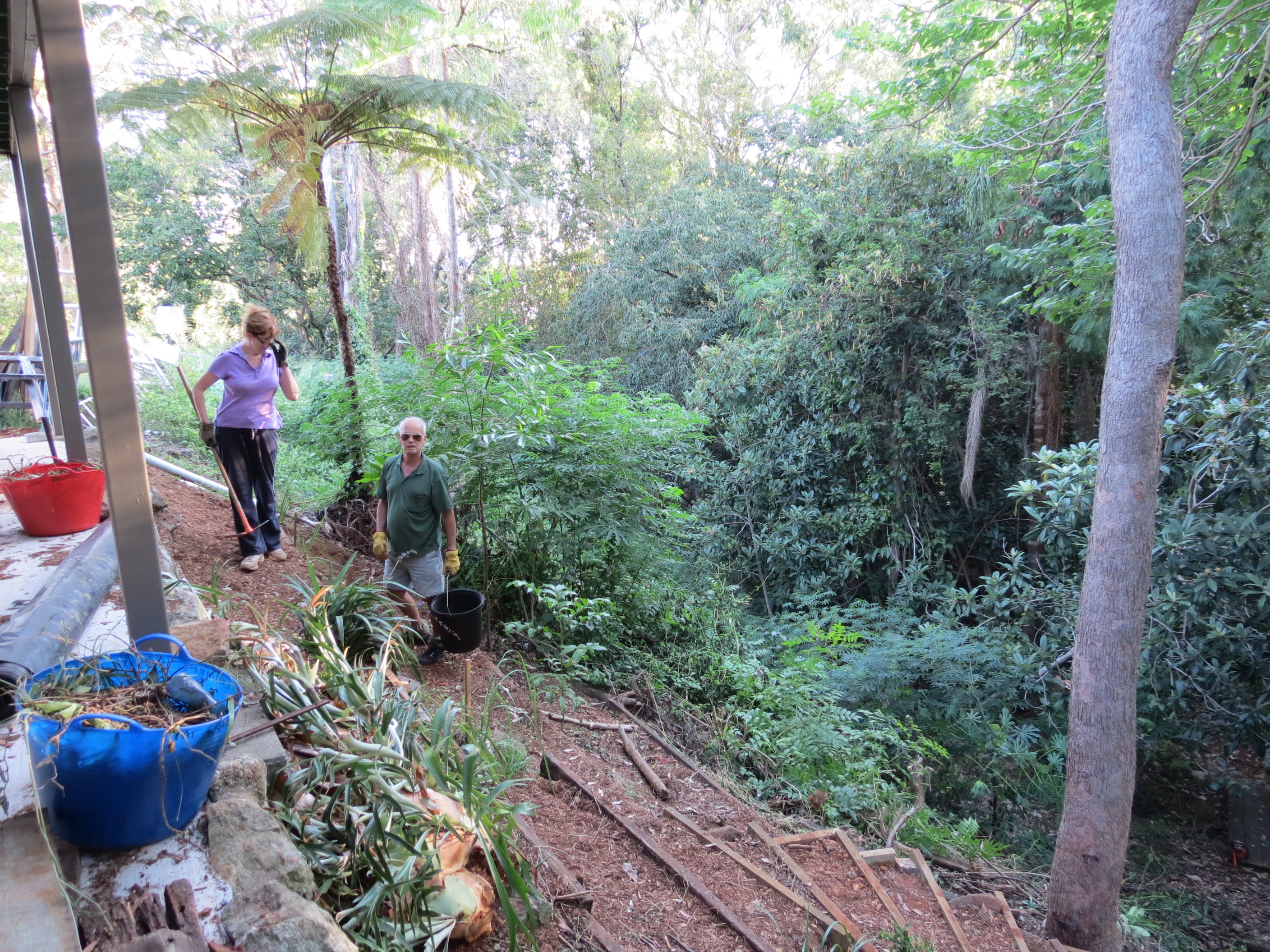
Restoration of Firefly Gully wildlife corridor has reached a new stage with the on Toni McDonald’s section of the gully.
Like Fox Gully, the wildlife corridor is being created on private property which includes the gully, so success is critically dependent on property owners being engaged.
Marshal has already done extensive restoration on the other side of the gully where he has nurtured the Glow in the Dark Mushrooms. Firefly Gully is named for the fireflies which are found in wet weather.
Years of rubbish dumping by previous owners and infestation of the steep slope with weeds like Guinea Grass Panicum maximum v maximum, Castor Oil Plant Ricinus communis and Madeira Vine Anredera cordifolia hascreated a significant challenge.
Toni and Marshal reflecting on a good afternoon’s work
The first step for a job like this is getting access infrastructure in-place to make a safe work place, save time and effort and retain mulch on the slope. Steps will give access to the bottom of the slope and allow easy access to planks laid across the slop at approximately one metre spacing. Planks came from Fox Gully neighbours who are currently replacing their deck. Stakes to hold planks in-place are recycled decking timber, cut to length and pointed. This not only reduces the cost of the project it also reduces waste going to landfill.
Recycling also extends to a lot of the rubbish being removed with old stair stringers being used for planks on the slope and broken bricks used as back fill to make the steps. We even found a complete roll of builder’s black plastic that will be used at our other sites for composting weeds.

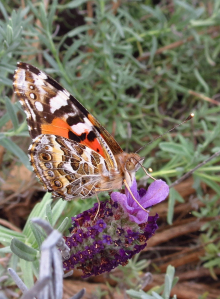 Australian Painted Lady Vanessa kershawi
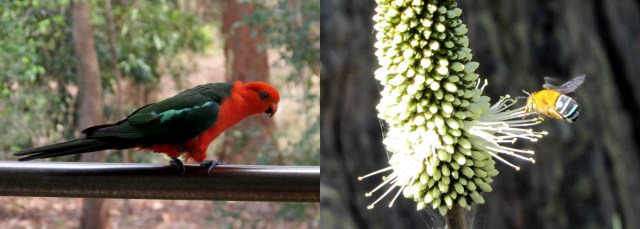 King Parrot Alisterus scapularis Blue Banded Bee Amegilla cingulata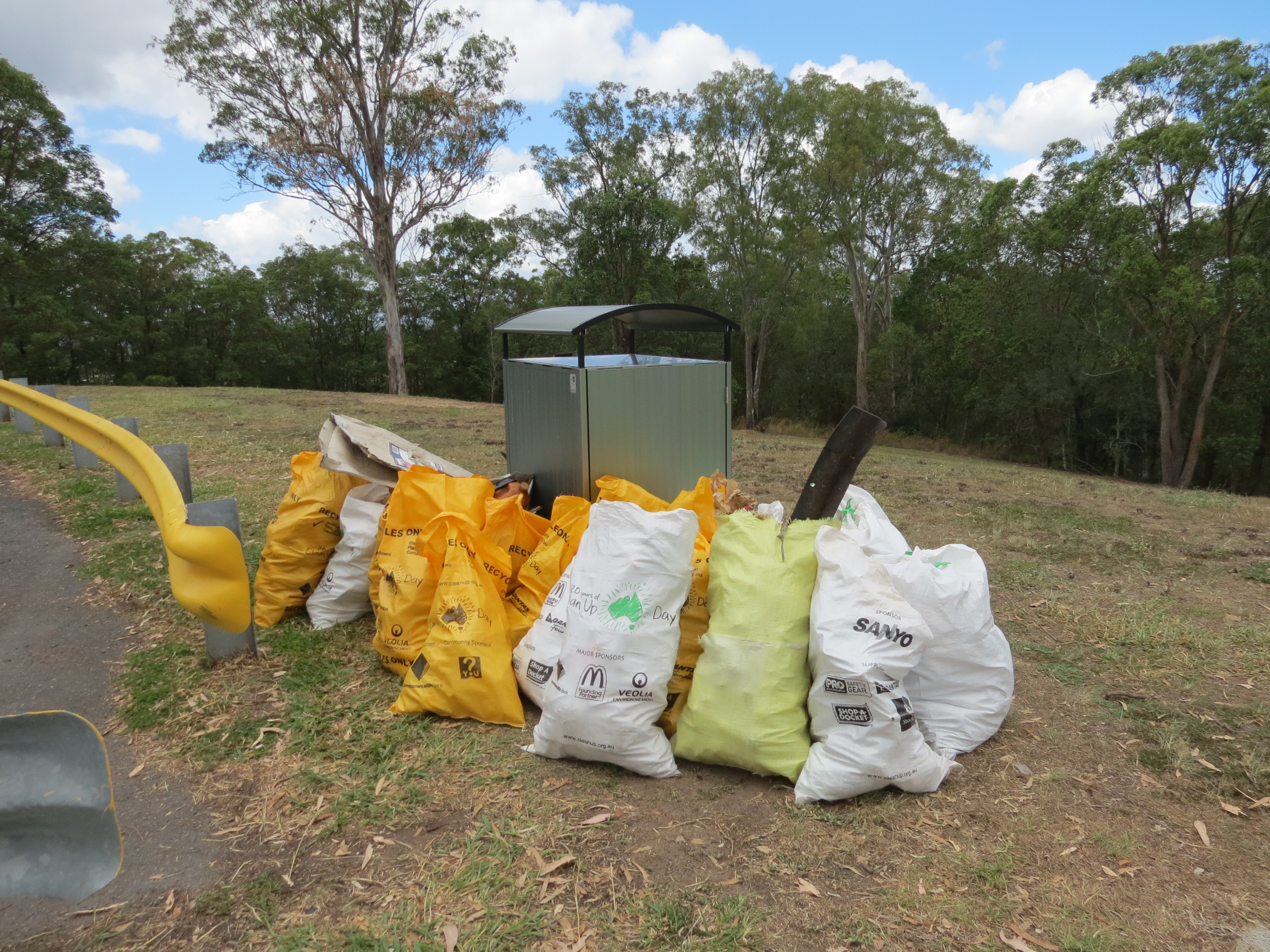



















 Mount Gravatt Environment Group