What is the Koala’s favourite food tree?

How do I photograph the feeling of being in the bush?

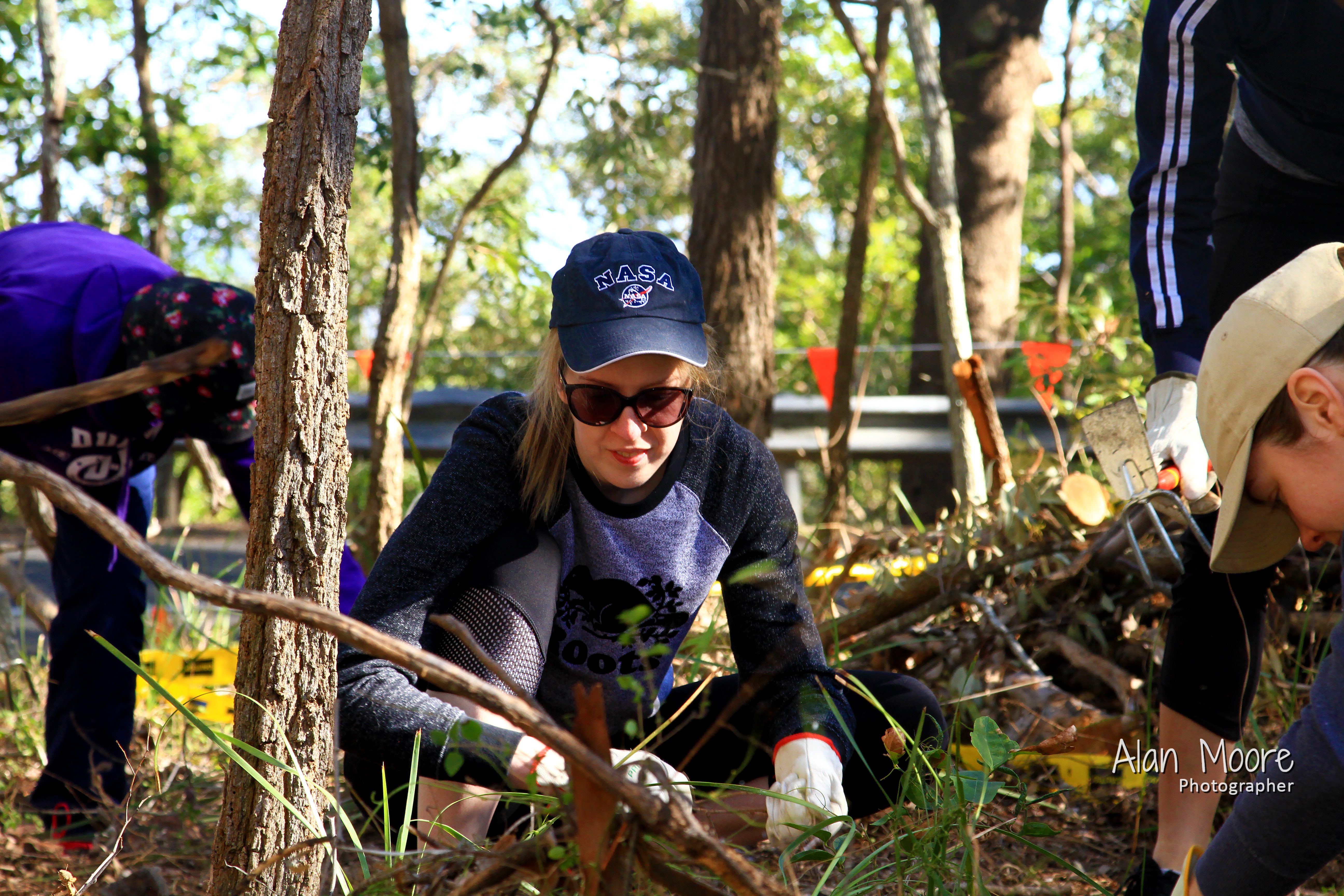
These were some of the questions answered for participants at our first Environmental and Photography Workshops held at the Fox Gully Bushcare site. The workshops were made possible by a 2010 BCC Environmental Grant.

Visit Mt Gravatt Library during October to see our display or view online The Mountain Through Other Eyes The Mountain Through Other Eyes

Field Botanist, Ann Moran, has thirty years practical experience in biodiversity assessment, weed management and revegetation planning. Ann also has a passion for working with people: indigenous communities, teaching at university or simply sharing her knowledge on guided walks.   I first met Ann in 2007 when she was doing an environmental survey on the mountain. Since then Ann has generously shared her expertise by identifying plant species I have photographed. Ann’s commitment to community groups has allowed me to quickly nail invasive weeds like Whiskey Grass, while adding one hundred native plant species not previously identified in Mt Gravatt Reserve. Ann is currently helping us edit the first published version of Flora & Fauna of Mt Gravatt Reserve.

Ann’s presentation built up our understanding of the complexity of our local habitat starting with the basics: understanding the importance of wildlife corridors for movement,  the major threats to biodiversity (like the clearing of native vegetation and invasion by alien species through garden waste dumping), changed fire management practices and global warming. All this information was related to our local flora and fauna species with powerful insights into the relationships between the plants and their dependent animals.It was a real pleasure to watch Ann’s information being soaked up by participants who took lots of notes and asked questions as Ann led a short walk around our restored areas.

As Ann was depending crutches that day, I led the group on a tour of the less accessible restoration areas explaining the effectiveness of natural re-generation. Nature is now repairing the area where Fishbone Fern has been removed in Zone 13. In less than twelve months native grasses have already covered cleared areas and is now suppressing weed growth, all with no action other than weed removal. Ann calls this Green Mulching: using native grasses to control erosion, retain moisture and suppress weeds. We also inspected the native grass lawn established at the rear of Heather and Alan’s house: taking the bush into the backyards to reverse the edge-effect.

Local photographer, Alan Moore is a passionate amateur who has that rare ability to capture the elusive feeling of being in the bush so you can put it on your wall at home. At Christmas 2009 Alan blew me away when he presented me with a custom made professional quality 2010 calendar with these extraordinary photos that truly captured our bushland home. So when it came planning our workshop I asked Alan if he would share his knowledge and creativity with our community.

Alan’s presentation, Pixplore, introduced simple techniques like the flat plane concept to manage the very short depth of field typical of macro photography: hold the camera parallel to the subject to ensure the best focus for the whole subject. Now I understand why I often have trouble when photographing small insects with the head in focus but the body blurred.

Following the presentation Alan sent the group off on assignment to apply their new knowledge to capture the feeling of being in the bush. Alan shared his creative insights and introduced participants to new ways to see the bush, new ways to experience the flora, fauna, geology and human structures in the landscape.

On return from assignment the participants shared the most amazing range of photos that captured our bushland and showed me new insights to this special place. Alan has kindly critiqued a number of photos from each participant and provided valuable comments. Click to see “The Mountain through other eyes”.

And what is the Koala’s favorite food tree?

Qld Blue Gum or Forest Red Gum Eucalyptus tereticornis

These beautiful straight trees are also a favorite of the forestry industry because of the rich red timber colour, thus Forest Red Gum.

By Susan Jones

Worldwide, Lions Clubs are planting 25 trees annually in support their local environment.

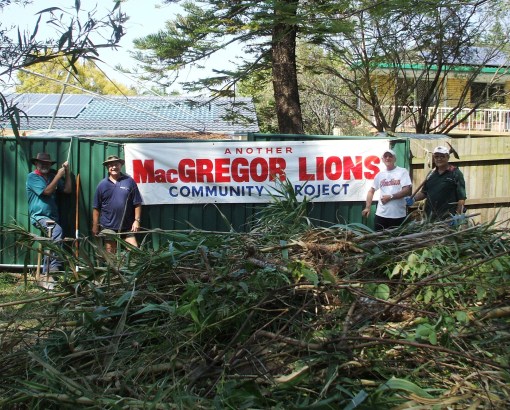
MacGregor Lions have chosen as their 2011 project, refurbishment of native gardens on the Roly Chapman Reserve pathway.  These five gardens are in a poor state, with weeds strangling earlier plantings.  BCC Habitat Brisbane and Mt Gravatt Environment Group are delighted to support MacGregor Lions in this venture which will visually improve the Reserve for walkers and provide valuable habitat for wildlife.

Kookaburras welcome the Lions

Saturday 1st October was Lions’ first working bee and the welcoming committee was ready!

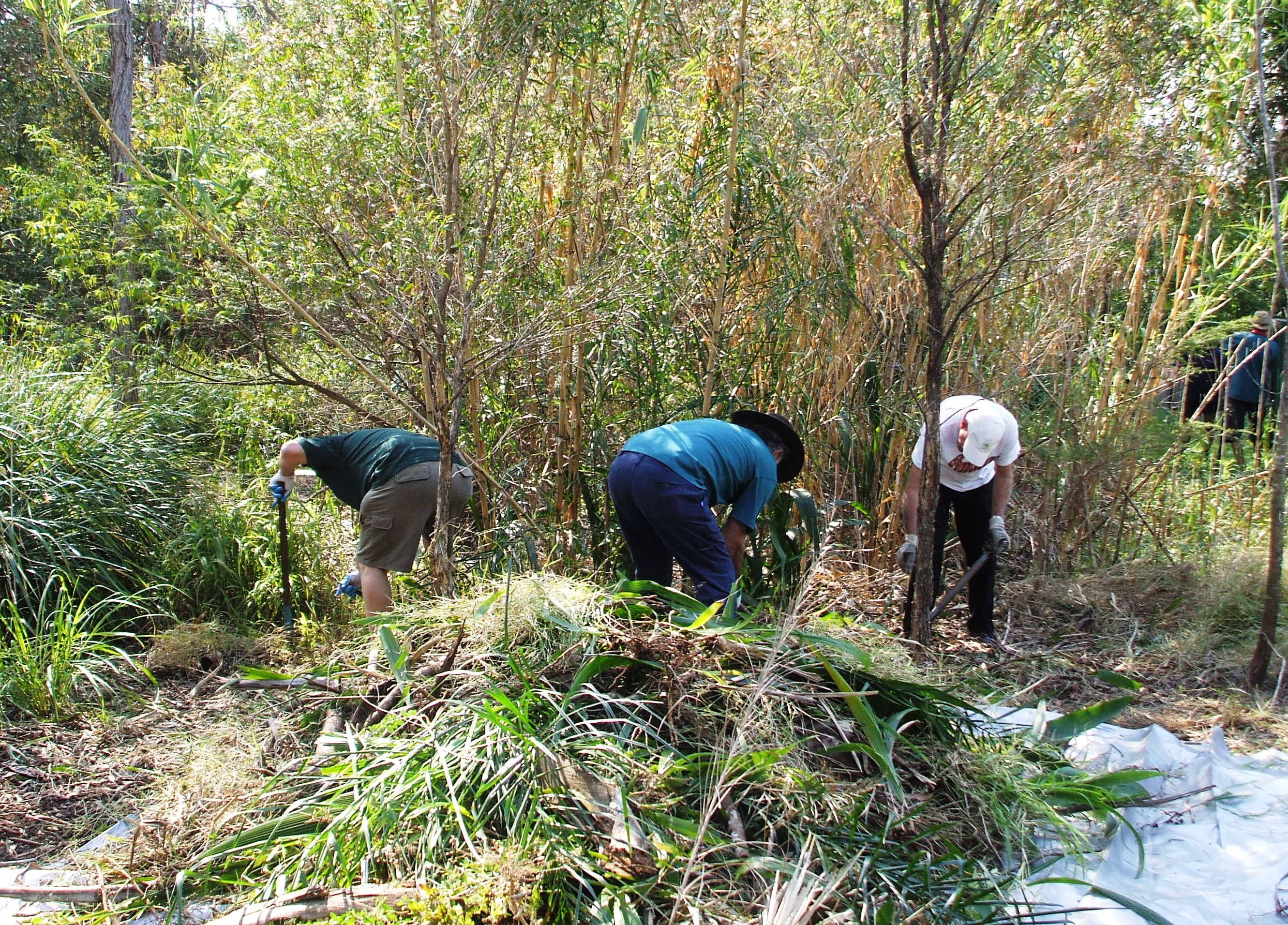
Five Lions’ members rolled their sleeves up and tackled a jungle of Cocos/Queens Palm Syagrus romanzoffiana and Elephant Grass Penisteu purpureum.

n

n

n

n

A large tarp was laid out onto which weeds were piled for mulching and recycling.

n

n

n

n

n

A good morning’s effort!

n

If you would like to help MacGregor Lions with this project, their next working bee will be on Saturday 5th November 8 am – 10 am, at the Hoad Street end of the Roly Chapman pathway.  (UBD 201:A9).

For more information visit Lions MacGregor website at www.brisbane.macgregor.qld.lions.org.au

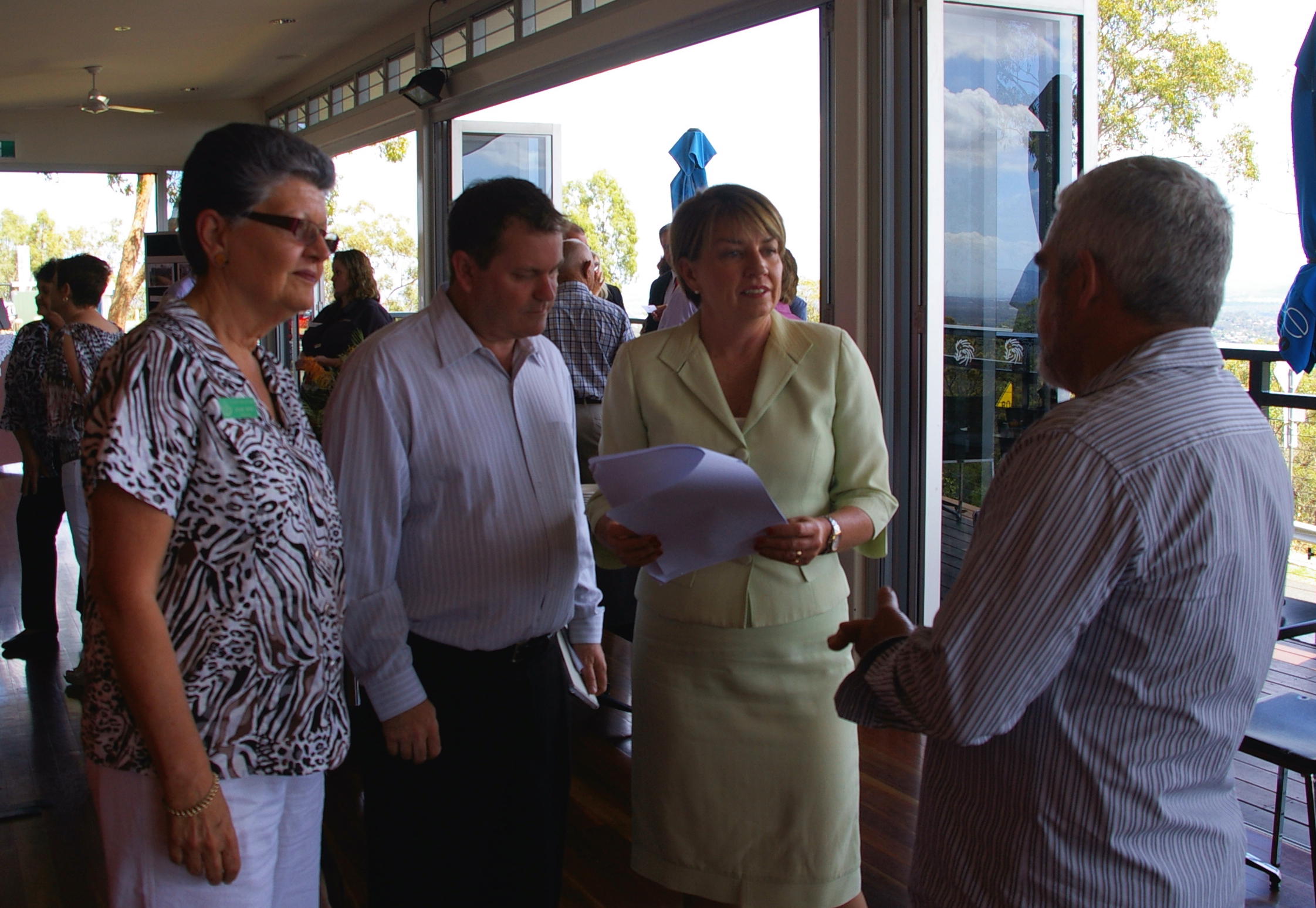
Anna Bligh, Premier of Queensland, joined local member Phil Reeves and community members on Tuesday, for morning tea at Echidna Magic.

(l-r) Sheamus O'Connor, Premier Anna Bligh, Hon Phil Reeves

Sheamus O’Connor, Sue Jones and I (Michael Fox) represented Mt Gravatt Environment Group. Sheamus took the opportunity to explain his outlook on the environment to Anna. An articulate spokesperson for future generations, Sheamus’ credibility is firmly grounded in his personal contribution to restoration of Mt Gravatt Reserve. Not satisfied with joining the Gertrude Petty Place Bushcare team, Sheamus organised a group of fellow students from Mt Gravatt SHS to replant the degraded area at the entry to the Summit Track.

(l-r) Sue Jones, Hon Phil Reeves, Premier Anna Bligh, Michael Fox

I took the opportunity to brief the Premier about the wildlife in the Reserve and the baseline fauna and flora research being undertaken with a grant from the Department of Environment. Anna was particularly pleased to hear that Koalas are breeding in the Reserve and that the BAAM researchers had already identified three species of micro-bats and Topknot Pigeons previously unknown to be present on the mountain.

(l-r) Premier Anna Bligh, Michael Fox, Hon Phil Reeves, Sue Jones

We also presented the Premier with a reminder of the unique nature of this Reserve. The glow-in-the-dark mushrooms Mycena lampadis were only identified on the mountain earlier this year. Queensland is a large and amazing state so it is a real pleasure to surprise our Premier with the unique flora and fauna that can be found only ten kilometres from the CBD.


Andrea, from Griffith University, has reported that two Spectacled Monarchs Monarcha trivigatus were sighted  on the mountain over a couple of days last week. They’re normally found in wet forest and rainforest, so this is an unexpected sighting.

Andrea is keen to know if there have been any other sightings of this special bird. Please email any sightings of Monarchs to megoutlook@gmail.com  – photos are great however even date, time and approximate location are valuable.

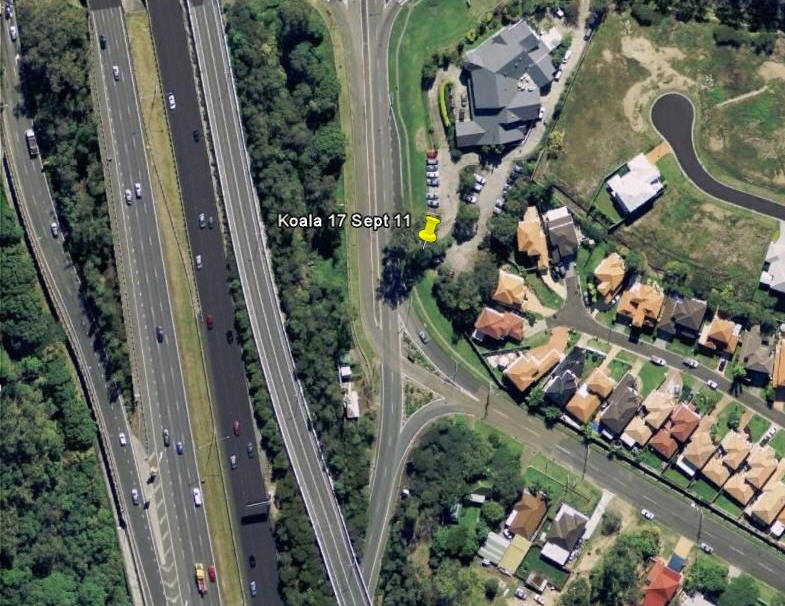
Other wildlife sightings are also welcome: like the Koala Amanda spotted crossing the Motorway onramp last week. He made it safely across the road and quickly climbed the nearest tree.

I represented Mt Gravatt Environment Group at the recent Threatened Species Week event at Griffith University EcoCentre.

Click to read Southside Community News report

My presentation Blurring the Boundaries addressed our community effort to restore wildlife corridors on the southern face of Mt Gravatt. Two key corridors, Fox Gully and Firefly Gully, are almost totally made up of household blocks. To date we have owners of nineteen properties committed to restoration of these corridors.

Blurring the Boundaries refers to the fact that wildlife does not recognize human created boundaries, effective habitat consolidation and linking requires cooperation of a diverse range of property owners. Our Mimosa Creek Precinct Landscape Plan is a community initiative to blur the property boundaries by creating a vision for sustainable restoration based on initiatives that create community and business benefits, as well as, environmental benefits. Download my presentation: Blurring the Boundaries

Cathryn Dexter’s earlier presentation focused on creating a permeable landscape that will allow animals to move around without having to interact with roadways. A member of Griffith’s Environmental Futures Centre, Cathryn is the Project Manager for a major koala road kill mitigation project funded by the Qld Government.  The first study of its kind in Australia, the project’s ultimate goal is to have wildlife mitigation become standard government policy for all linear infrastructure (roads) design.

In a powerful presentation Cathryn shared horrifying road kill statistics balanced with a hopeful view of a future where roads are not barriers to connected habitat and risks to wildlife are dramatically reduced. particularly interesting were the creative solutions being used in Europe and the US where wildlife movement solutions have been actively pursued for decades.

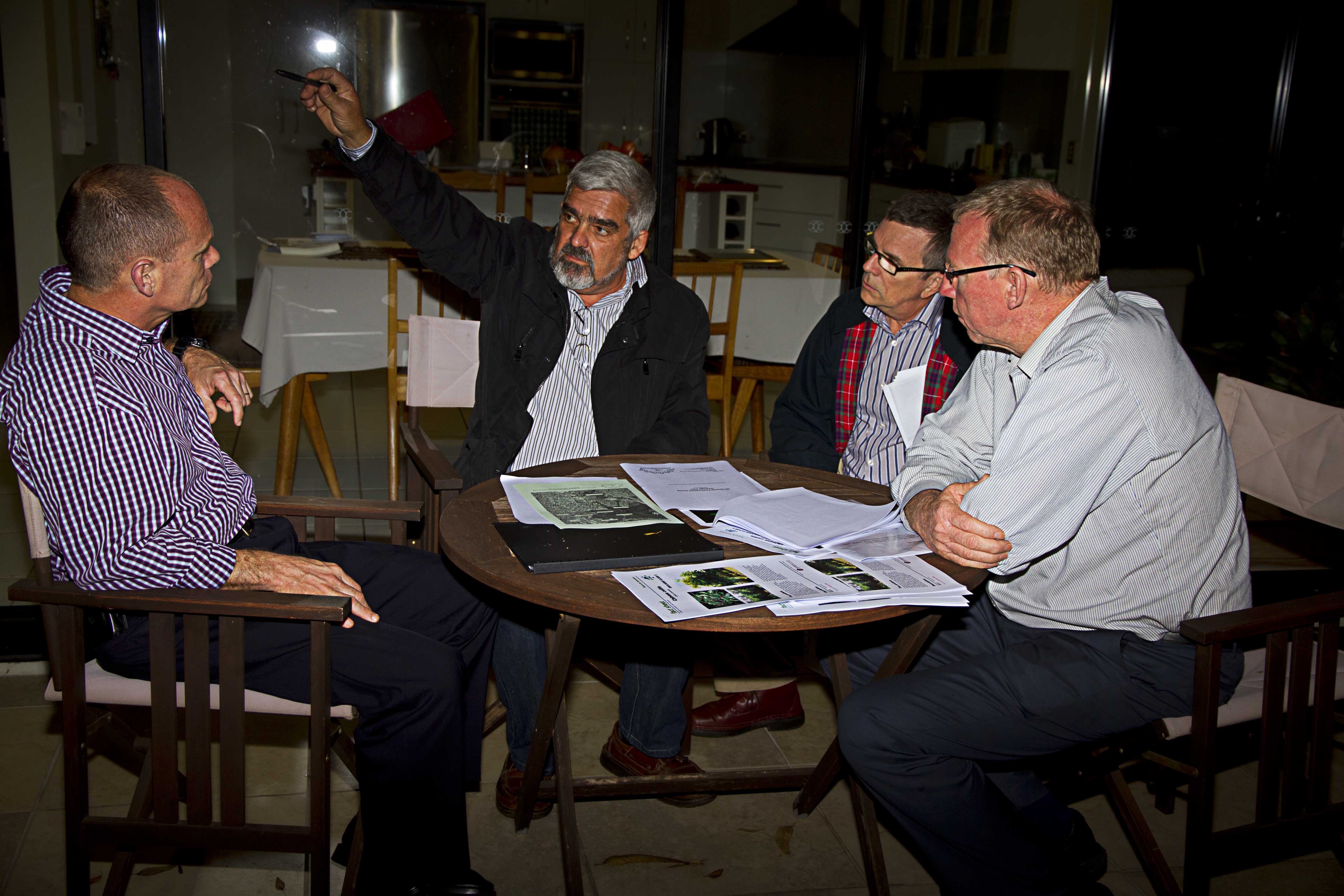
Campbell Newman & Ian trying Treepopper

We were honoured to host local LNP candidate Ian Walker with Campbell Newman and Jeff Seeney at our Fox Gully Bushcare site yesterday.

Late in day and the light was fading however our visitors were still keen get out into the bush and see our restoration work. Campbell was particularly impressed with the elegant design of the Treepopper we use to remove difficult weed trees like Chinese Elm Celtis sinensis and Micky Mouse Plant Ochna serrulata. Specialist tools like the Treepopper dramatically increase productivity of our bushcare team allowing us to start getting ahead of these invasive weeds.

(l-r) Michael Fox, Campbell Newman, Jeff Seeney, Ian Walker

Jeff Seeney, with his Landcare experience, was particularly interested in our focus on natural regeneration. I was happy to show how, in less than twelve months, native Graceful Grass Ottochloa gracillima has returned to act as Green Mulch in the area cleared of Fishbone Fern Nephrolepis cordifolia.

m

m

Briefing on Mimosa Creek Precinct Landscape Plan

I was proud to explain that sixteen households in our community have committed to restoring the gully wildlife corridors on their properties. However, briefing these experienced professionals on the Mimosa Creek Precinct Landscape Plan was challenging, with Campbell in particular, cutting right to the core in critiquing our cost estimates for some initiatives. So we can be proud as a community group to have Campbell Newman sum up the visit with: “Having seen first hand what is being done here I am not surprised that MEG has won two Spotless Suburbs awards in the recent 2011 announcements.”

My thanks to Ian Walker for the opportunity to present our community initiative and Alan Moore, a Fox Gully Bushcare volunteer, who tackled to fading light to provide our excellent photos.

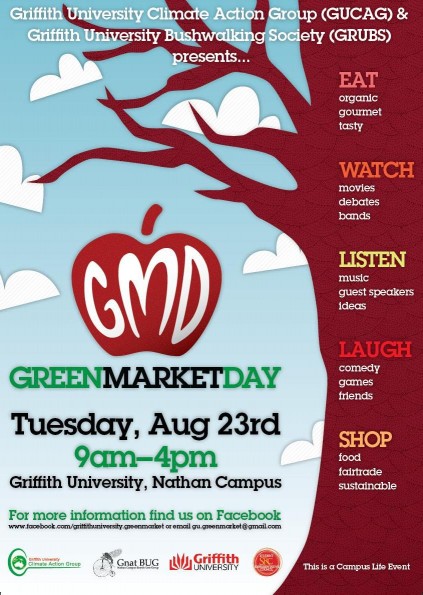
Mt Gravatt Environment Group partnered with Bulimba Creek Catchment Co-ordinating Committee (B4C) to engage Griffith University students at the Green Market.

Our aim is to engage students in active participation with our restoration work. Griffith Uni has a large proportion of international students and our restoration activities represent a unique opportunity for these students to experience the real Australian bush. Interestingly our display at the OWeek Markets in February drew as much or more interest from business and engineeing students as it did from environment students. One approach we are trying is to promote bushcare  as recreaction, much like going on a picnic.

Our links with Griffith University start with Mimosa Creek which has its headwaters in the university grounds and forms a key wildlife corridor linking the Mountain with Toohey Forest and Bulimba Creek.

Daryl, Hannah and I shared the display last Tuesday, handing out information on bushcare events and maps showing how to find Fox Gully Bushcare site.

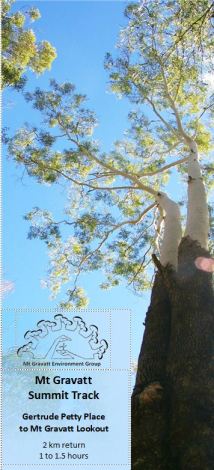
The new Summit Track self-guided walk brochure was very popular: take the inter-campus bus to Mt Gravatt Campus and go walking.

The prototype nest box made by the Men’s Shed also attracted interest. The Men’s Shed is working with us to develop nest boxes we can install in the wildlife corridors where there are a very limited number of suitable nest hollows left for gliders, Lorrikeets, owls and Kookaburras.

Explore Mt Gravatt with our new Summit Track self-guided walk brochure.

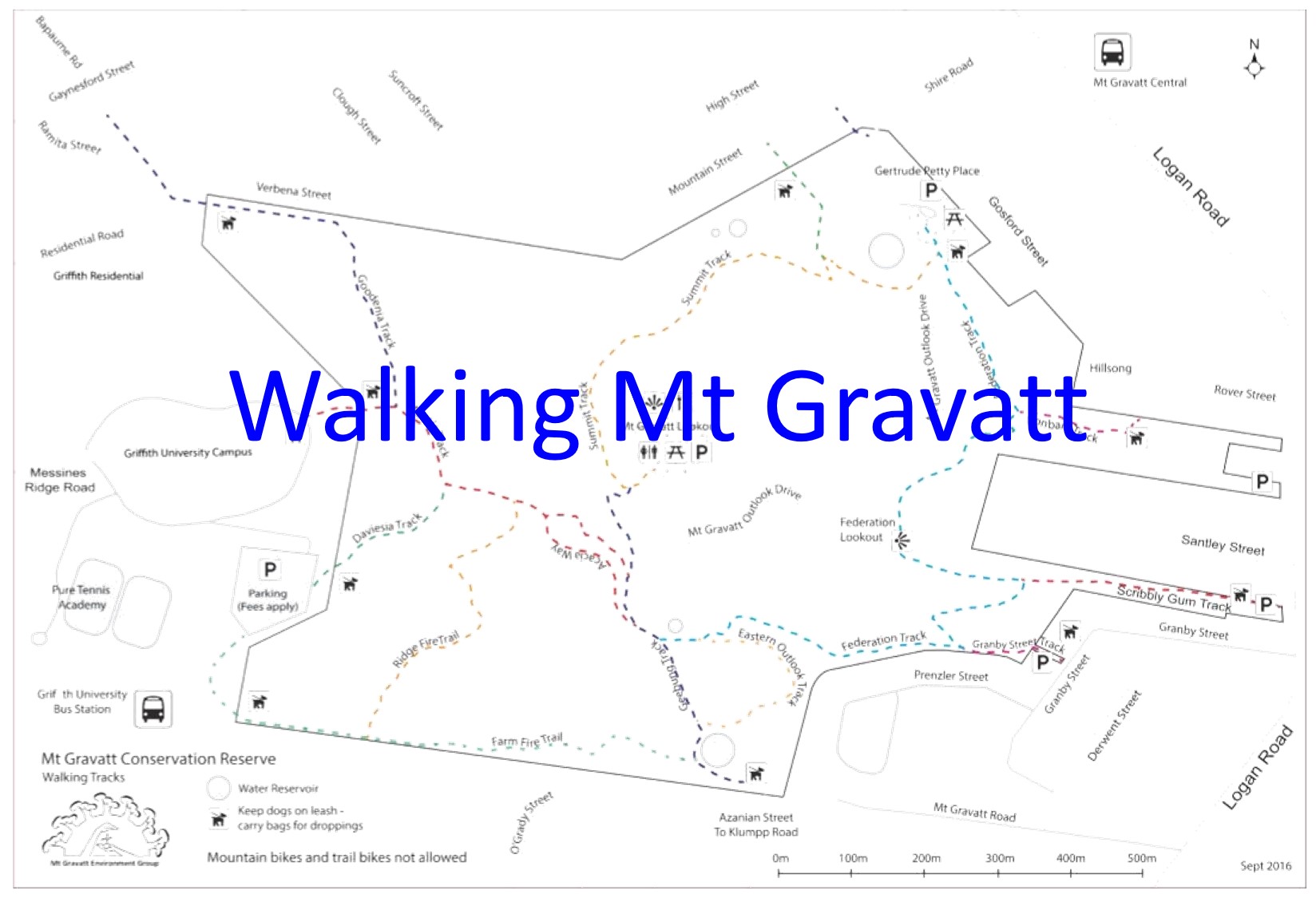
Park at Gertrude Petty Place picnic area at the base of mountain: off Mt Gravatt Outlook Drive. From the parking area take the concrete path then follow the signs to Summit. The track winds around the northern face providing views of the city, Glasshouse Mountains, D’Aguilar Range, Mt Coot-tha and over Toohey Mountain to Main Range.

Distance:  Two kilometres (return)

Grade:  Easy. Uphill all the way: some steps.

Time: One to one and a half hours, depending on walking rate and time spent exploring.

The self-guide brochure provides details relating to Station markers along the track.

Printing of the new brochure has been supported Cr Krista Adams through the Lord Mayor’s Suburban Initiative Fund and Wishart Ward.

You can collect a copy of the Mt Gravatt Summit Track self-guided walk brochure from Wishart Ward Office, Mt Gravatt Library and Garden City Library or print your own – Summit Track guide.

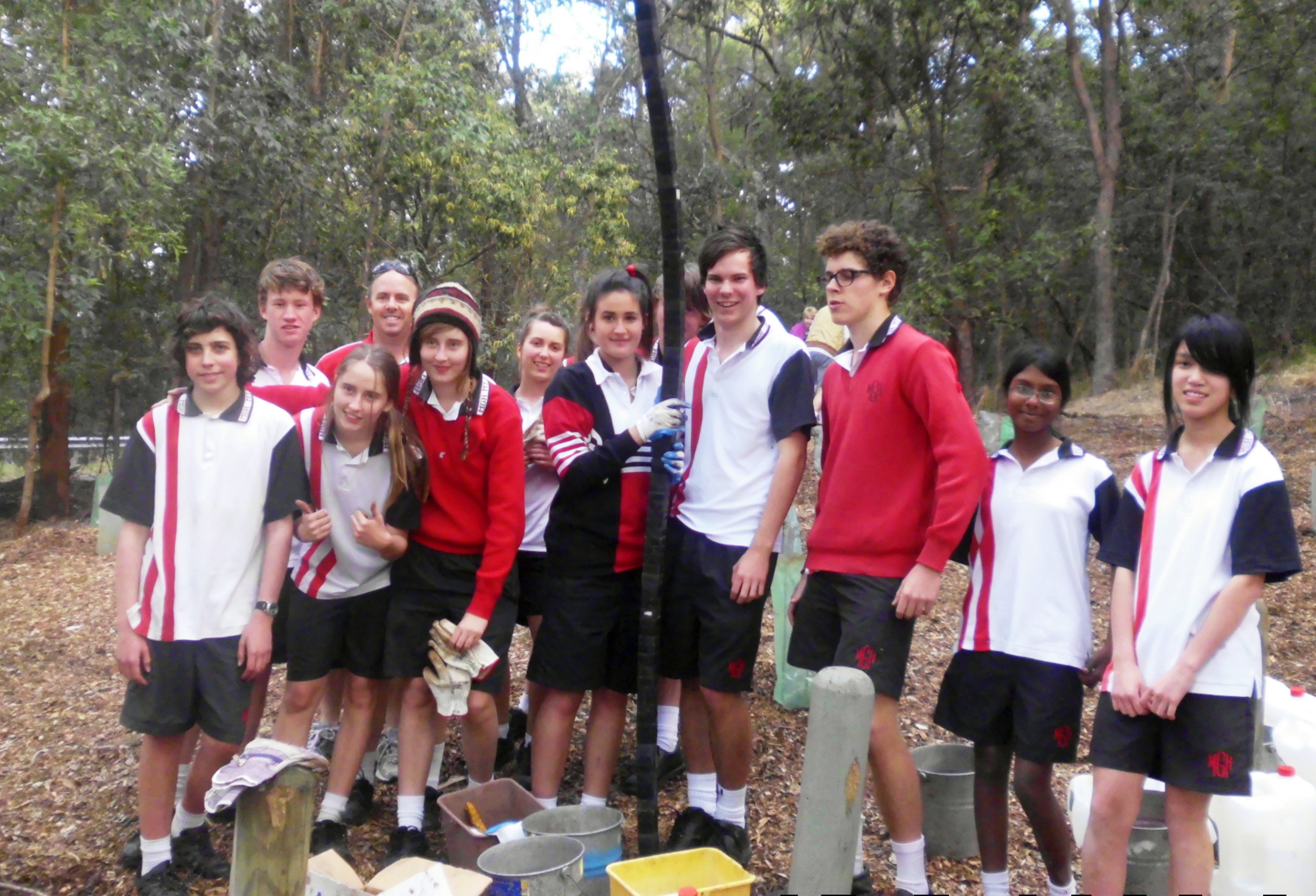
Peter, Sophie, Kevan, Maddison, Dean, D’arcy, Dan, Sheamus, Manasha, Natalie, Caitlin, Breanna, Rosie, Tahlia, Emily, teachers Andrew and Penny

‘We’re so excited’, said Emily.  She was the first Mt Gravatt SHS student to arrive for a planting of 120 native seedlings that will eventually support koalas, gliders and butterflies on Mt Gravatt.  Year 11 student Sheamus O’Connor organised a band of 15 students, two science teachers, and three family members to recognise National Tree Day by rehabilitating a degraded area adjacent to the Summit Track.

Within an hour, the area had been transformed from a barren wasteland into the makings of a great little piece of wildlife habitat.  The students really enjoyed changing the landscape.   Look for it on your left, as you cross the road from Gertrude Petty Place to commence the Summit Track walk.

It gives us hope for the future when our local students don’t wait for others to solve all the problems, they partner with other community members to plant their own future.

You can collect a copy of the Mt Gravatt Summit Track self-guided walk brochure from Wishart Ward Office, Mt Gravatt Library and Garden City Library or print your own – Summit Track guide.

(l-r) Marshal, Michael, Dennis and Paul

Mt Gravatt Bush Blokes has grown naturally out of the regular Fox Gully Tuesday Bushcare.

Meet the Bush Blokes, an eclectic collection of blokes, who enjoy the peace of working in the bush and, of course, sharing tall stories. Conversation today ranged across fishing, the best way to cook the fish, a bit of politics, that our Scrub Turkeys are nothing to the scratching of Cassowarys that invade Dennis’ backyard in north Queensland and writing science fiction.

Dennis, who is visiting his “little” brother Marshall, comes from Mourilyan Harbour near Innisfail. We are now sourcing volunteers from over 1,600 km away: not a bad reach!

Team is proud of our afternoon's work

As well as supporting our Fox Gully Bushcare initiative, Marshal is restoring the bush on his property which forms part of the Firefly Gully wildlife corridor. Michael, our science fiction writer, and Paul, who shares his tall tales of working as a jockey in Japan, are community volunteers who just enjoy the time in the bush working with mates on a worthwhile project.

Thirteen garbage bags of Fishbone Fern Nephrolepis cordifolia does not seem that much until you realise that every bag had to be carried up out of the gully, after standing on logs on the slope to clear the weed then scratch out the hundreds of water nodules and wiry roots that will re-shoot if left behind.

(l-r) Steve and Michael

Our Bush Blokes are proud of our achievements and particularly proud of the Brisbane’s Spotless Suburbs Partnership Award.

Steve, another Bush Bloke, and I posed with our award last week. Steve is an ex-farmer, so learning the low impact natural regeneration bushcare approach was a bit of an adjustment. However I am constantly impressed by his amazing capacity to just quietly get the job done. Steve has cleared the major weed infestation at the corner of the maintenance track near the water reservoir and spread the thick layer of mulch to control weed regrowth and stop the water erosion.

Mt Gravatt Bush Blokes is becoming a powerful team who are experts on weed removal and importantly native plants as I identify natives like Barbed Wire Vine Smilax australis: well named so we cut off close to the ground to make it safe and easy to work – this tough native re-shoots rapidly once the restoration team has finished the area.