By: Michael Fox
Photos: Alan Moore

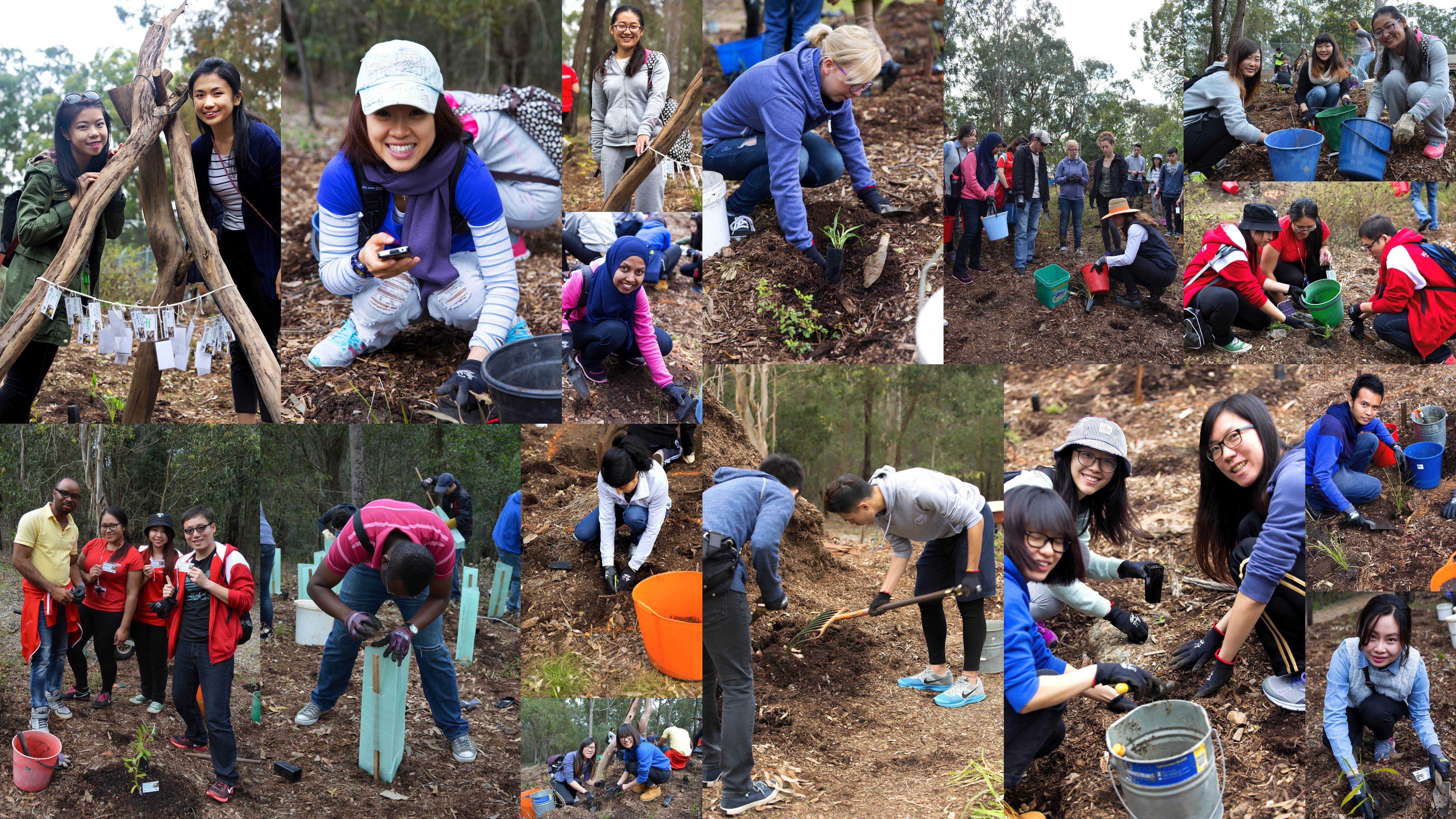
Sunday morning 31 July and one hundred and thirteen volunteers have arrived for 2016 National Tree Day. So I took one team to tackle the Creeping Lantana Lantana montevidenses while Sue Jones organised the other team to start the planting. The teams swapped jobs after morning tea.

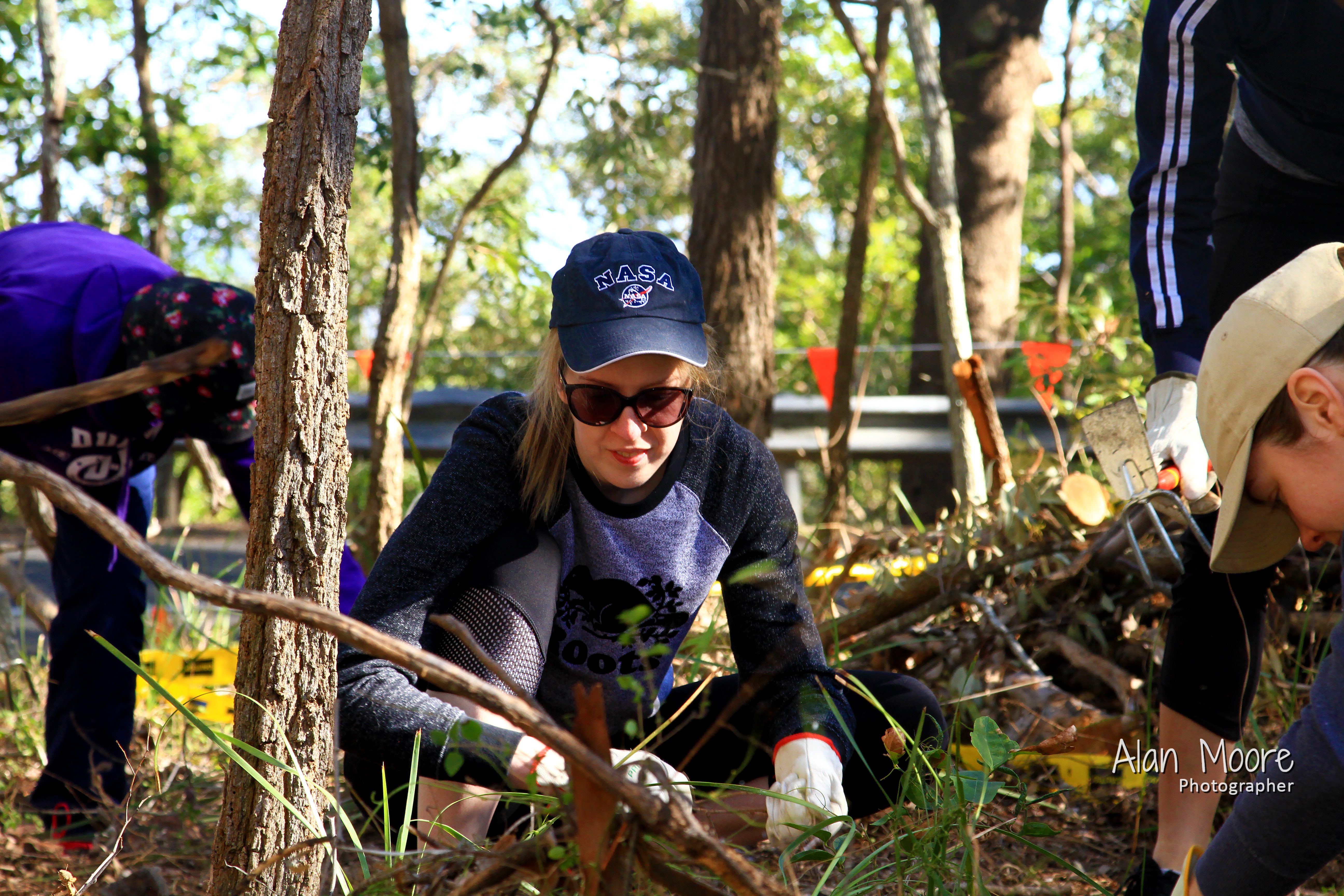
Lantana Busters hard at work
Lantana Busters hard at work clearing 1,600 square metres of Creeping Lantana

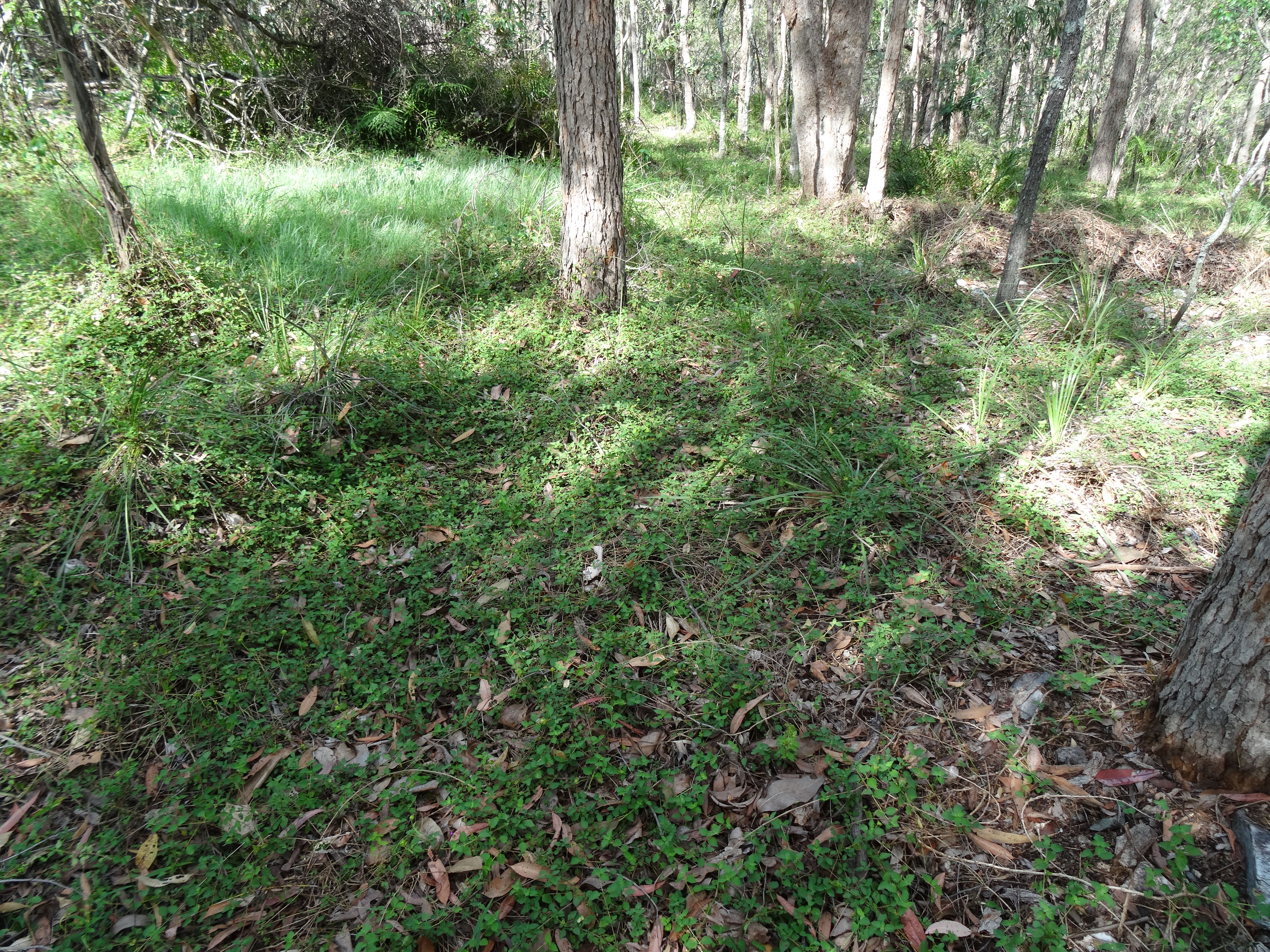
Creeping Lantana is a major weed threat in Mt Gravatt Conservation Reserve. Lantana competes for native plants for scarce water reserves and nutrients, physically smothers other plant and the chemicals in Lantana have a significant negative effects on native plant species.

The Lantana Busting teams cleared an amazing 1,600 square metres with one group raking the weed into long swales to manage erosion and retain water while others followed up, hand pulling the remaining roots. I explained that once the roots are removed the Lantana can be left piled up without regrowing. Slow, detailed but amazingly effective work. I showed the teams the natural regeneration of native grasses: Pademelon Grass Oplismenus imbecillis and Creeping Beard Grass Oplismenus aemulus, Tufted Scleria Scleria mackaviensis (native sedge) and Slender Grape Cayratia clematidea (native vine). Nature works 24/7 to build on our work and the forest will regenerate naturally if we clear the weeds.

Planting - 31 July 2016

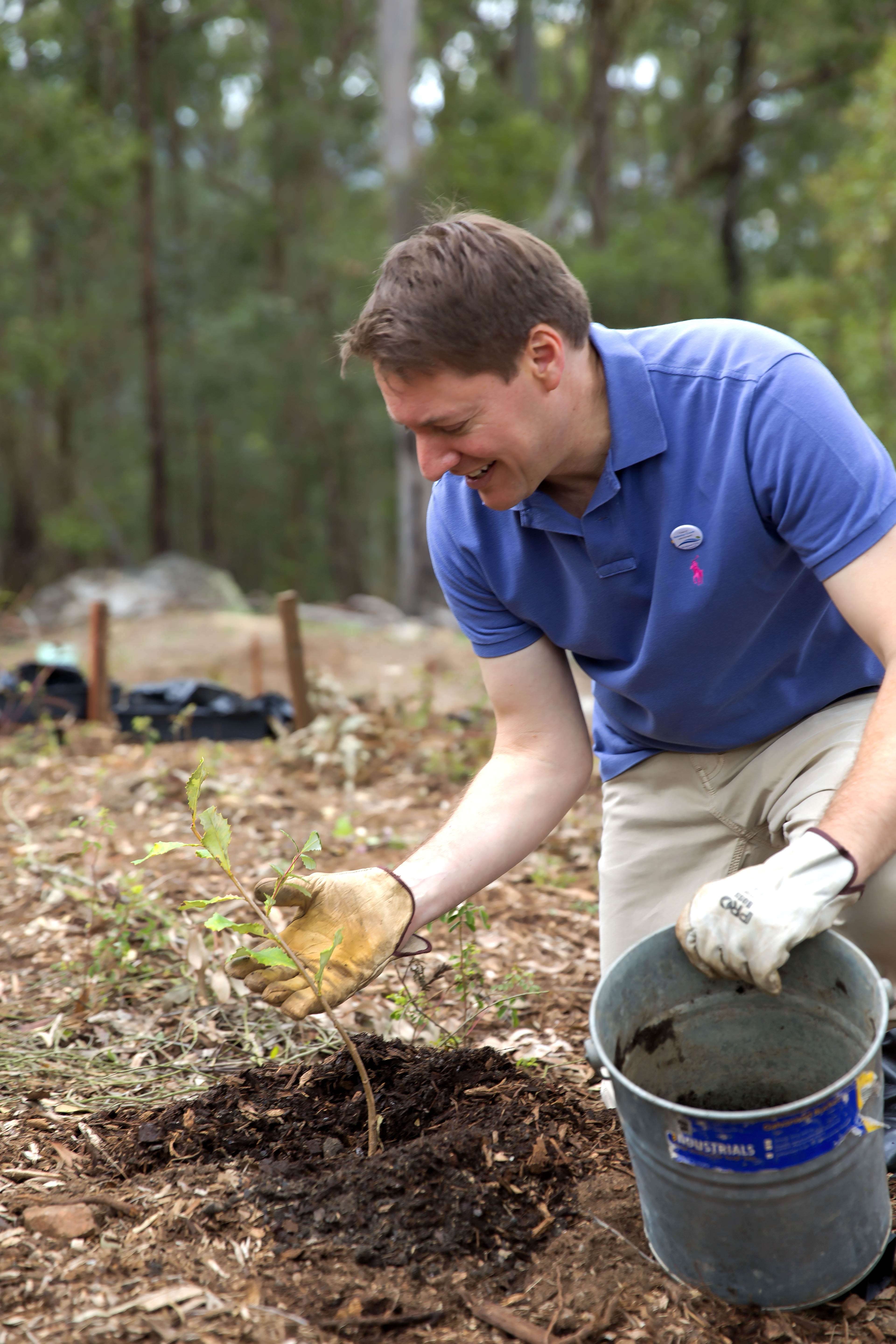
Over with the planting team it was all action, lots of smiles and a big job in hand. This year the team is building on the work from 2015 National Tree Day with in-fill planting of 564 creepers, grasses, shrubs and trees to provide safe habitat and food for small forest birds, including nectar, pollen, insects and seeds. 2016 National Tree Day Planting List

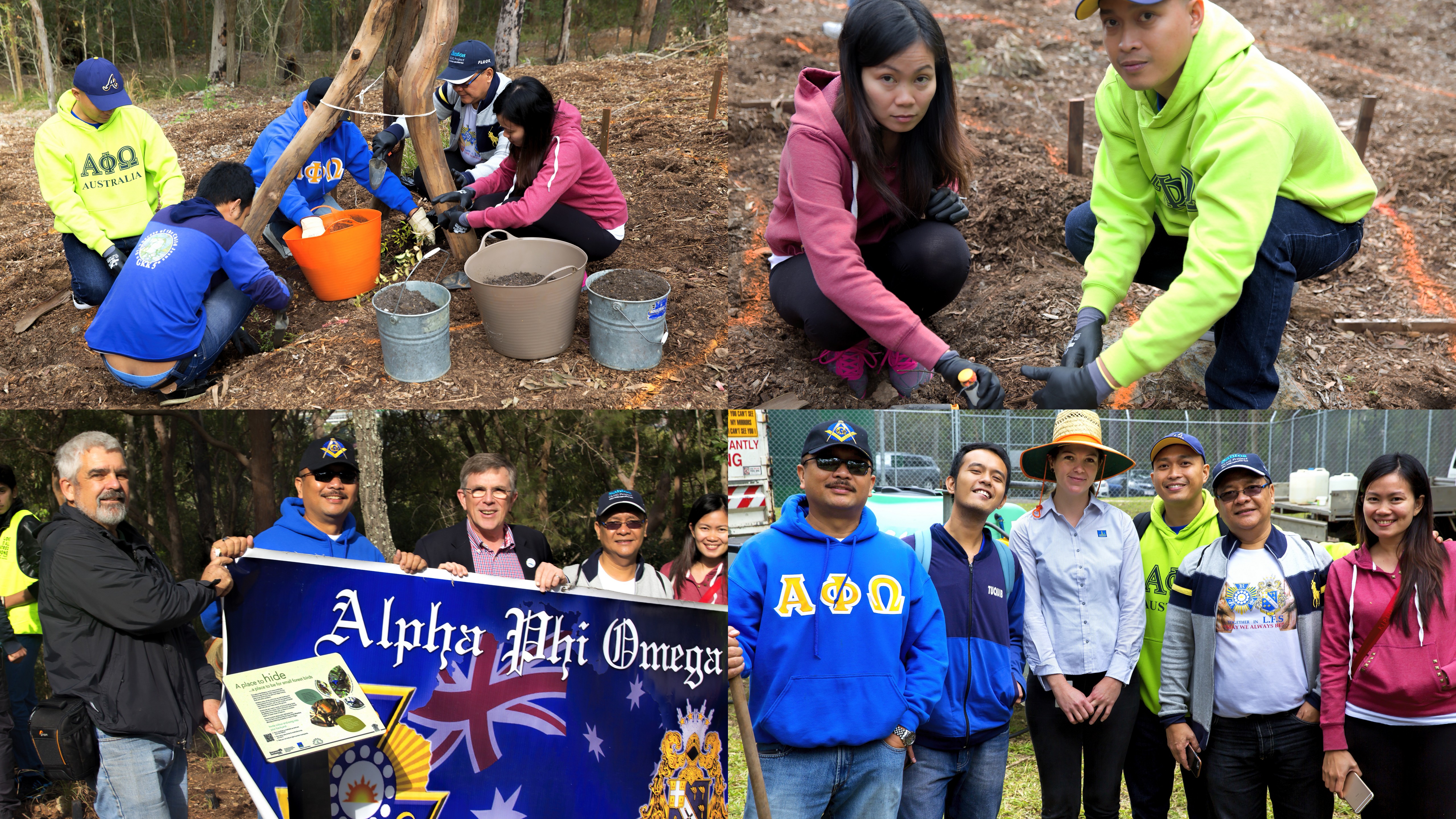
Like last year, this was real cross-cultural event with the Griffith Mates Bushcare Team, Ahmadiyya Muslim Association and Alpha Phi Omega teams returning. This year we welcomed a new team representing carbon neutral energy supply company Viridian Energy Australia. Viridian team members traveled from the Sunshine and Gold Coasts to join us making a practical contribution carbon sequestration to protect our children’s future.

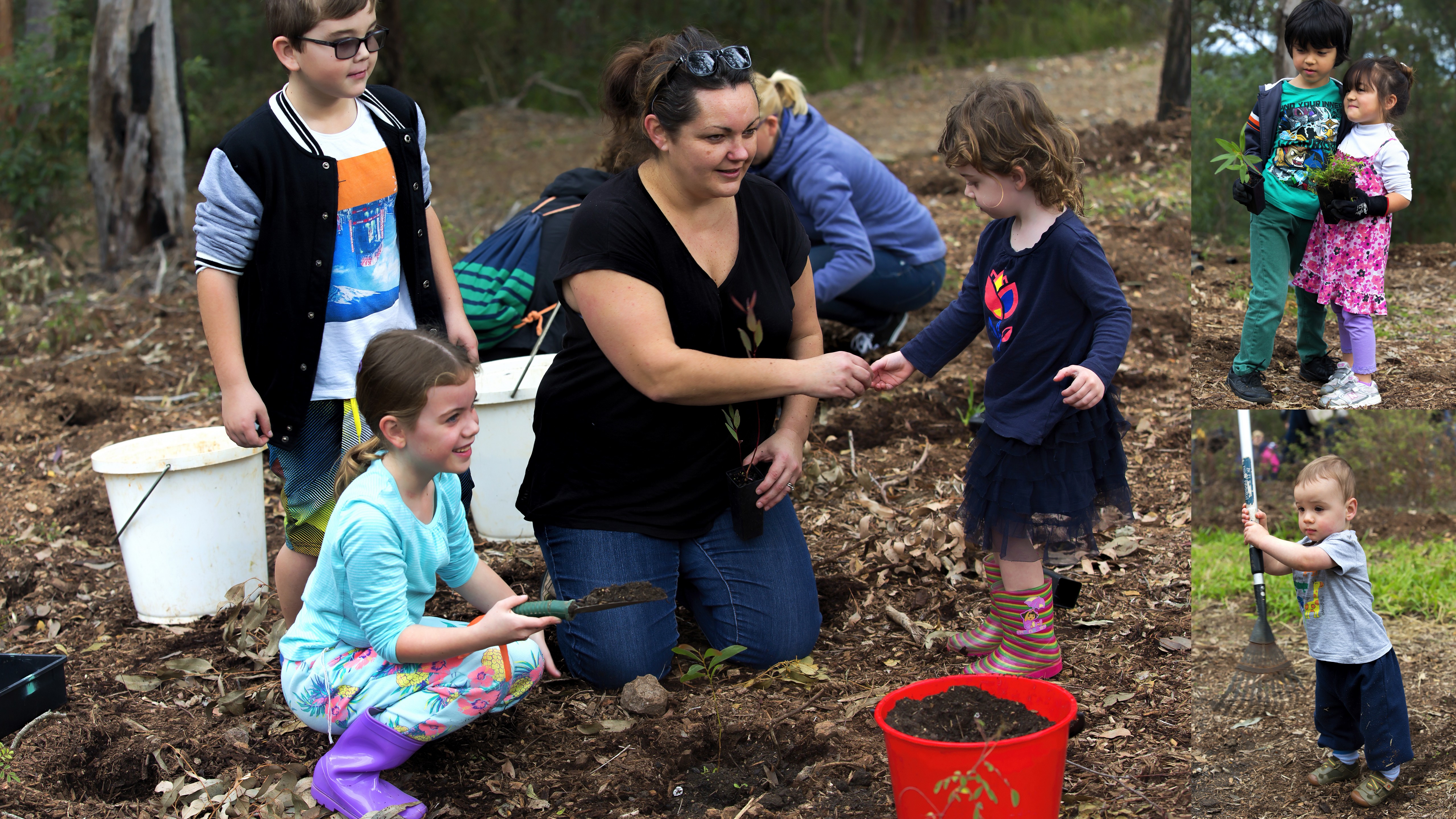
Kids having fun - 31 July 2016

And the kids were there digging in to build their own future. Kids love digging in dirt and look at the skill development! Let’s invite these future builders back for 2017 National Tree Day.

Morning tea - 31 July 2016

All that hard work deserves some tea and bikkies and time to learn about our native bees from Len Kann.


Ross Vasta - National Tree Day - Mt Gravatt Conservation Reserve

I show Ross Vasta and his son an Acacia Falcata planted in 2015 and already flowering.

Of course events like this are not possible without the strong support we receive from our local, state and federal politicians. We were pleased to welcome Ross Vasta MP, Federal Member for Bonner and Jo Kelly MP, State Member for Greenslopes.

Ian Walker MP, State Member for Mansfield and Cr Krista Adams, Councillor for Holland Park both wanted to attend but had other prior commitments.

Event supported by:

BCC Habitat Brisbane
Bulimba Creek Catchment Coordinating Committee (B4C)
Planet Ark National Tree Day
Peaks to Points Festival

supporters

An amazing event – see Stats below, and importantly it looks like 2017 National Tree Day will be even bigger with all the teams and local community members telling me they want to come back.

Stats:

115 participants including two BCC Habitat Brisbane team members

  • Three groups from 2015 returned this year, one new group and lots of locals
  • All fours groups want to return next year when I hope to hold the event at the Summit

273.5 volunteer hours

564 plants

  • 30 creepers
  • 230 grasses
  • 114 shrubs
  • 190 trees

1,600 square metres of Creeping Lantana cleared.
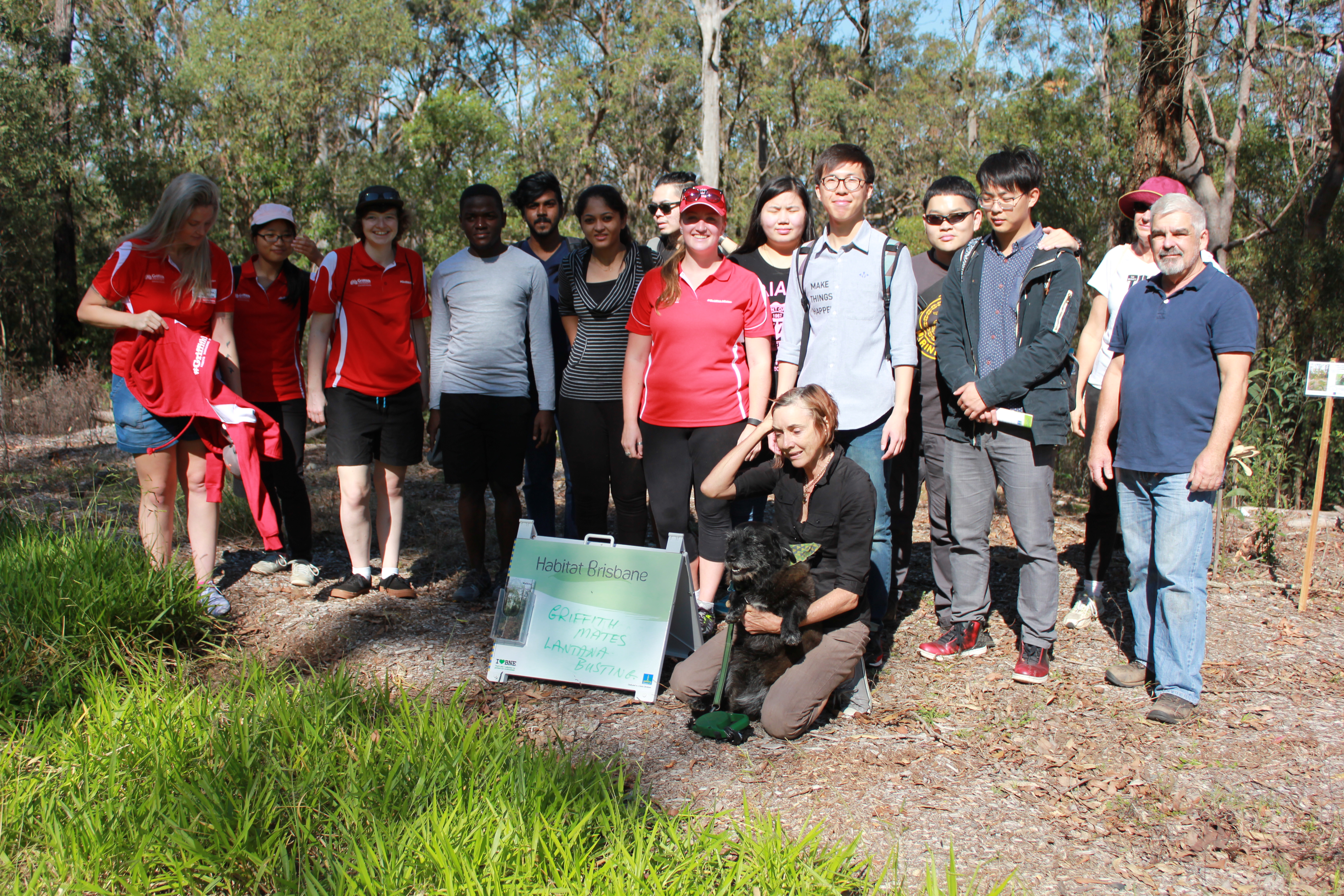


Griffith Mates -  23 July 2016

Griffith Mates Partners

By: Michael Fox

Photos: Kate Flink

OWeek Semester 2 2016

It is always a pleasure to lead a guided walk with our Griffith Mates partners, sharing some of the surprising relationships between different plants and between plants and the animals that depend on them for food and shelter.

Many of the students who join the walk are international so it is a great opportunity to introduce these visitors to our unique bushland. Unfortunately no Koalas spotted this time.
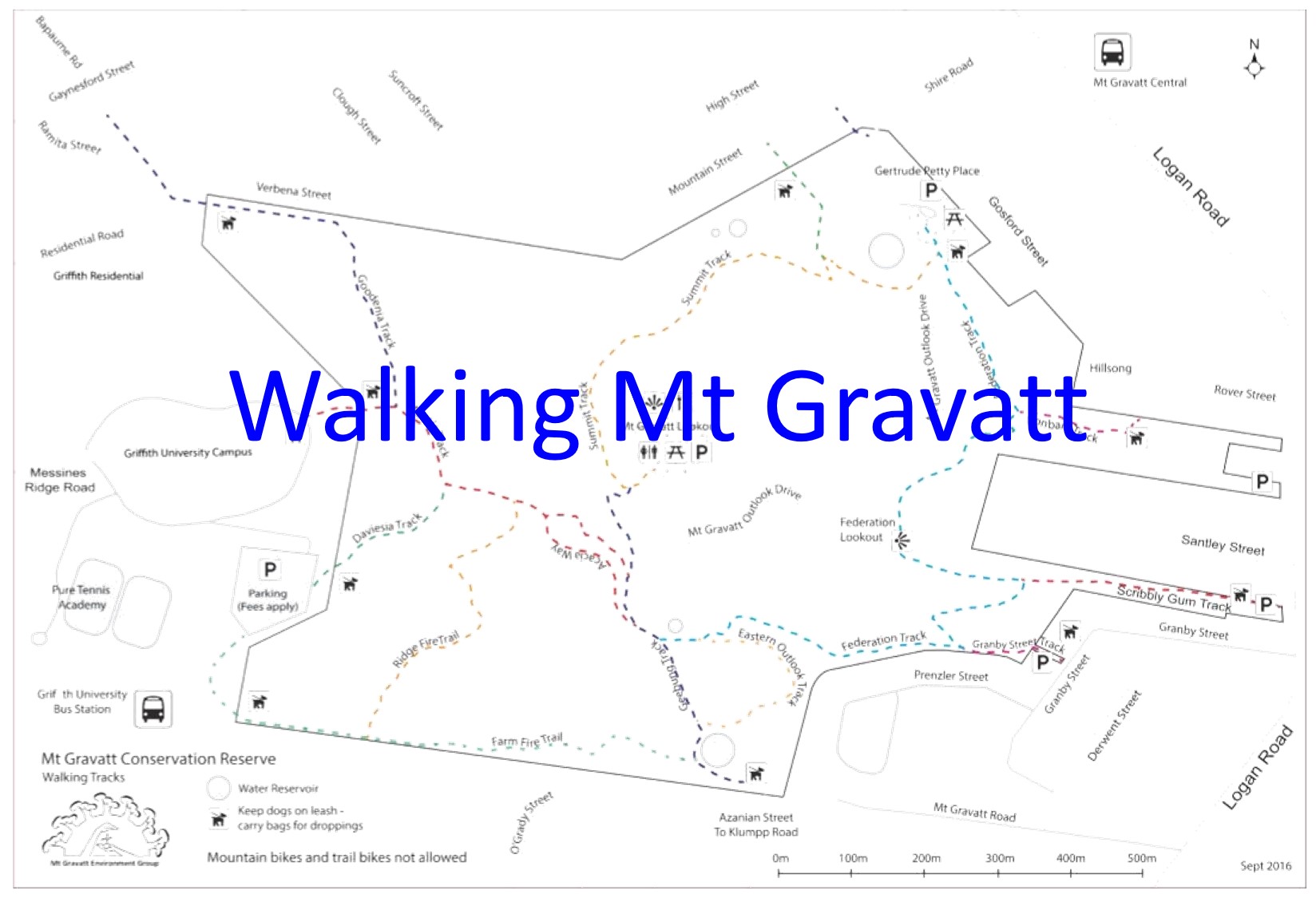
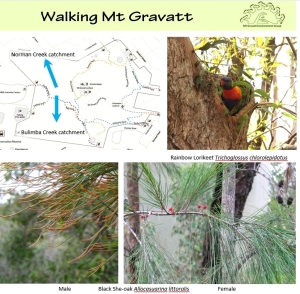
Handout pic


Walking Acacia Way we discussed the importance of tree hollows for nesting and the curious Allocasuarina: male trees have russet (red-brown) flowers on tips of leaves and female trees have red ball flowers growing directly from the branches.
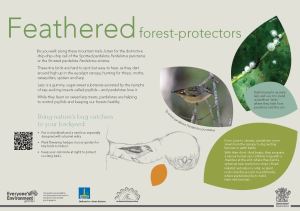
Pardalote sign

.

.

.

.

.

Stopping at the interpretative sign I used the QR code to bring up the online video of a Striated Pardalotte Pardalotus striatus with its “chip-chip” call on my iPhone. As soon as the birds high in the trees head the call they started to respond with their own calls.

.

.

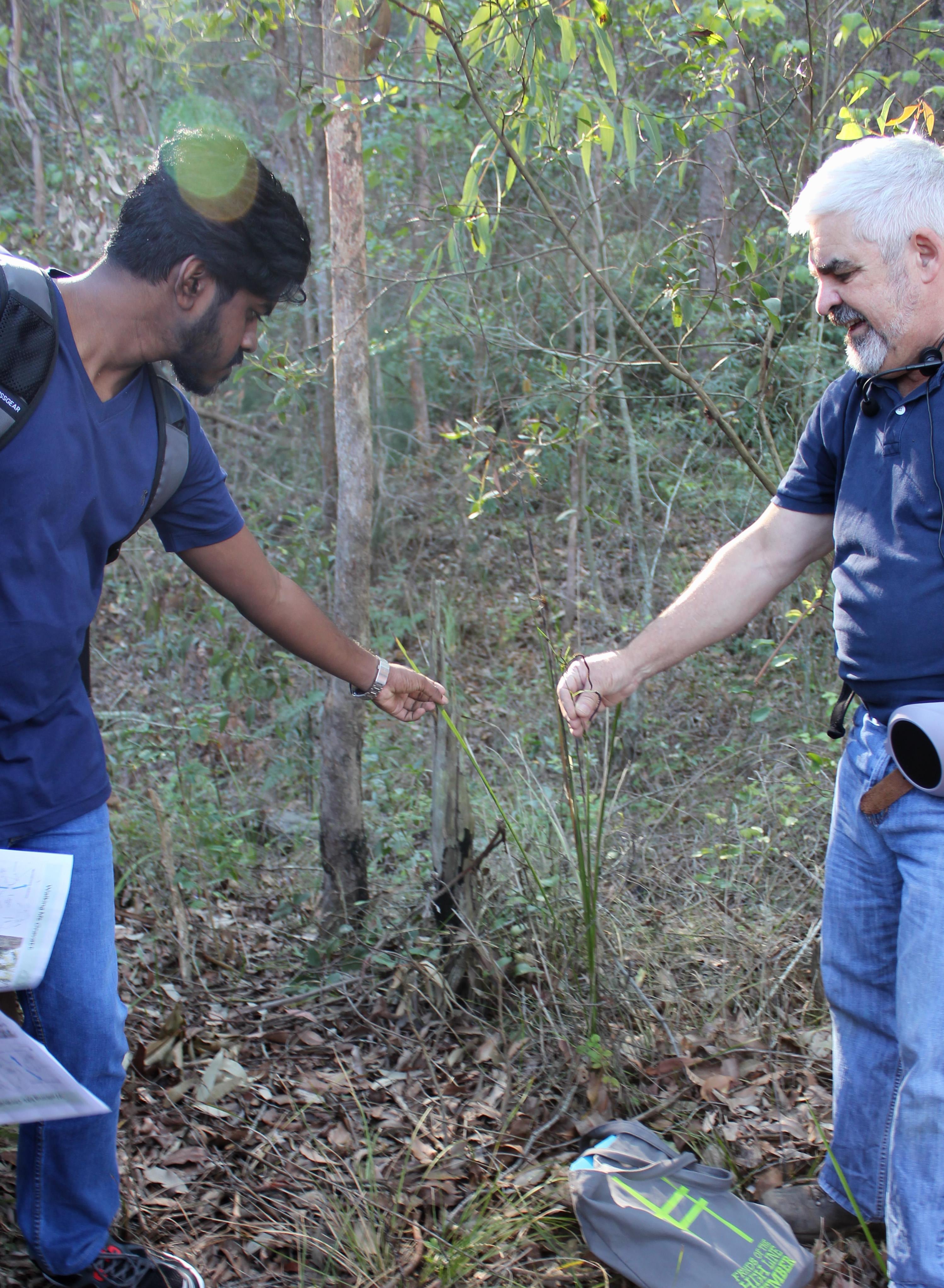
Explaining use of Settlers Flax - 23 July 2016 cropped

Discussing Settlers Flax

.

Settlers Flax Gymnostachys anceps has an interesting history of use by indigenous people and white settlers:

“Fibres were used to make fishing line. There are records of use as string by Europeans (to bind and carry pigs by the feet).” Save Our Waterways Now (SOWN)

.

.

After visiting Fox Gully Bushcare site we spent time clearing Creeping Lantana Lantana montevidenses.


By: Michael Fox

Creeping Lantana - Lantana montevidenses - 23 Apr 2016

Creeping Lantana Lantana montevidenses

Griffith Mates joined me at Fox Gully Bushcare on a beautiful fine Saturday morning to work as Lantana Busters. Creeping Lantana Lantana montevidenses is one of our major weed threats in Mt Gravatt Conservation Reserve. Lantana competes for native plants for scarce water reserves and the chemicals in Lantana have a significant negative effects on native plant species.

.

Griffith Mates - Lantana Busters - 23 Apr 2013

(l-r) Sophie, Lifen, Noe – proud of their work

Removing Creeping Lantana is detailed work requiring team members to get down and pull the roots of individual plants. Fortunately the Griffith Mates team were patient and through leaving the area spotless.

As always, it was fascinating to talk to the students about home towns in Japan and China, catching up with one of my old Management Concepts students or hearing about intern experience with KPMG in Korea.

Koala - Phascolarctos cinereus - 23 Apr 2016

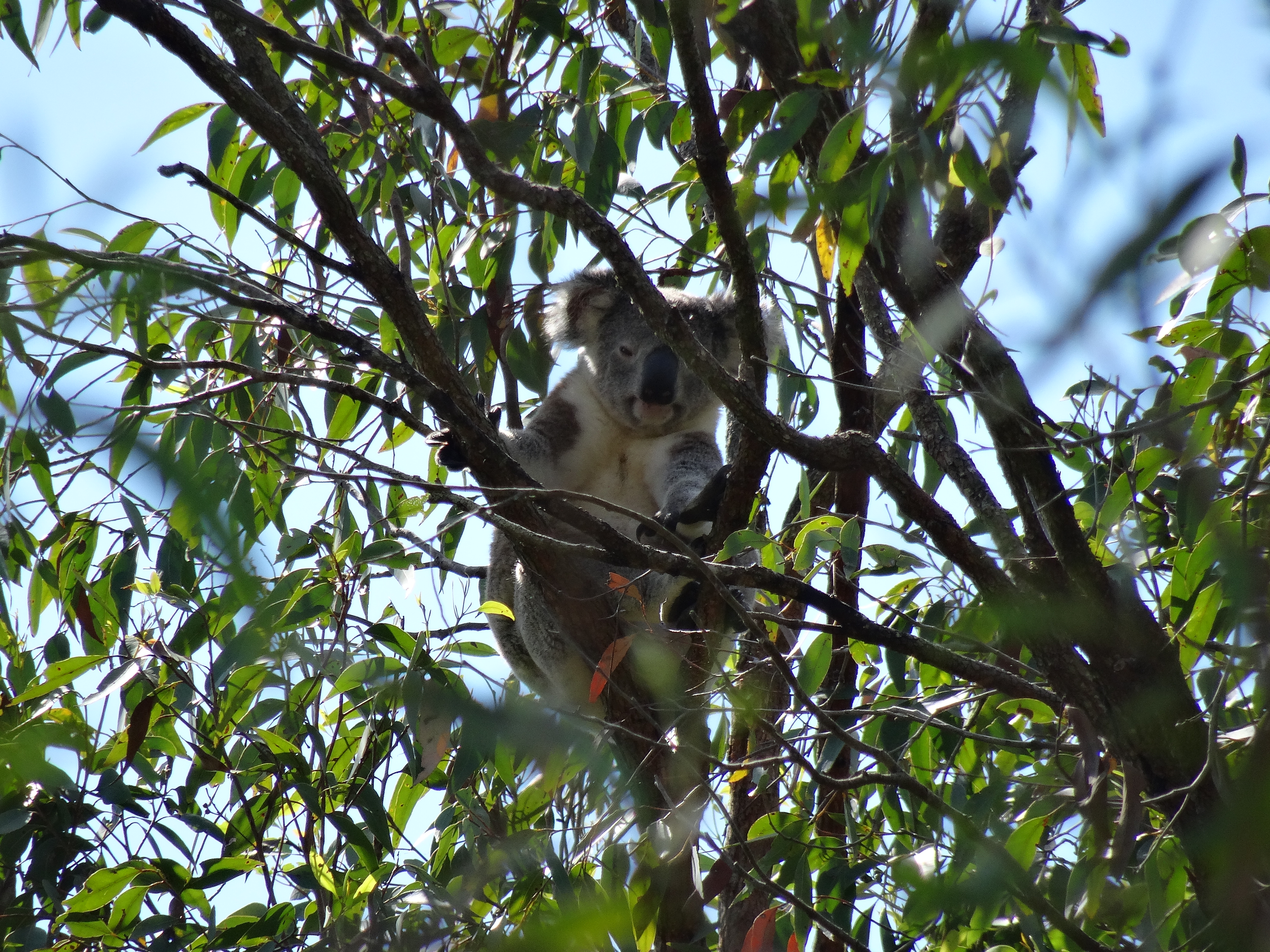
Koala high in tree on Federation Track

.

Outstanding effort deserves a reward, so we headed off down the Federation Track to find a Koala Phascolarctos cinereus in the wild. The track down towards Granby Street is a reliable place to spot Koalas. Sophie was first to spot a Koala high in a Tallowwood Eucalyptus microcorys.

SONY DSC

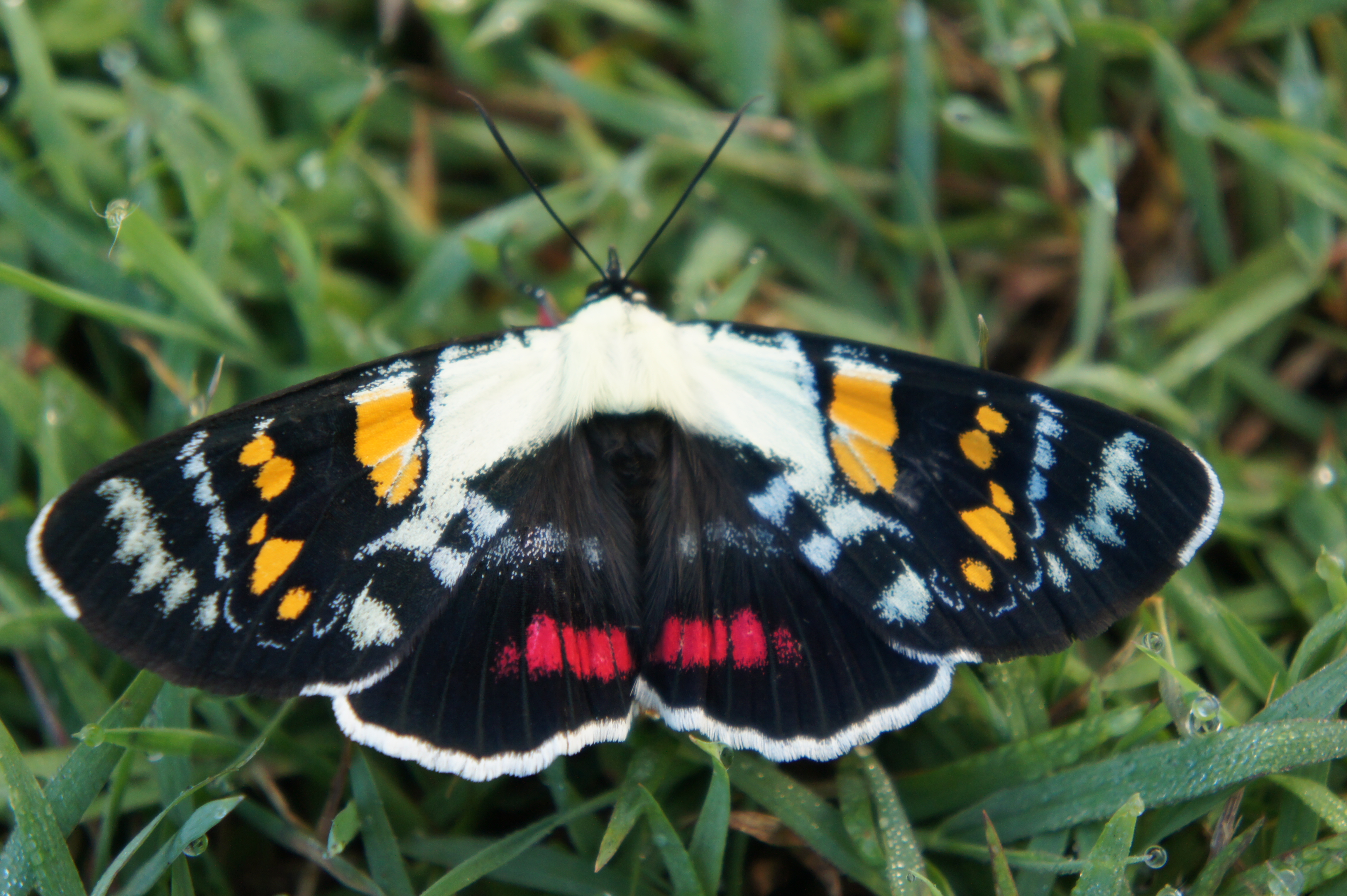
Joseph’s Coat Moth Agarista agricola – Photo: K. Sinigaglia

.


.

We also spotted a brightly coloured Joseph’ Coat Moth Agarista agricola flying around a large clump of Forest Grape Cissus opaca an important caterpillar food plant for this amazing moth.

.

Brown Ringlet - Hypocysta metirius - 23 Apr 2016

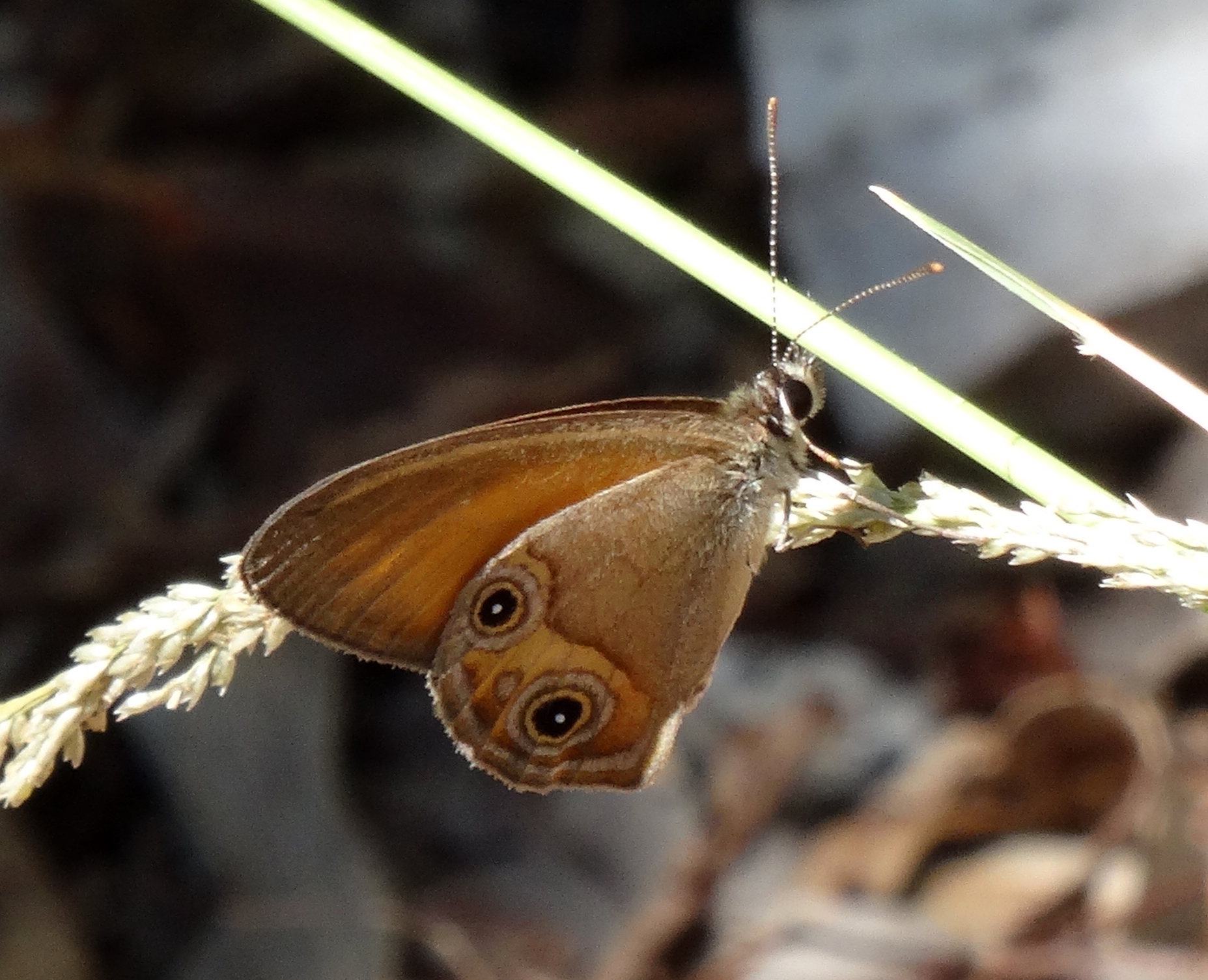
Ringlet butterfly

.

.

We also found a Ringlet butterfly Hypocysta sp. which depend on Poaceae (grass) species for caterpillar food.

The work of the Lantana Busters clearing the weeds will allow regeneration of important butterfly caterpillar food like Forest Grape and native grasses.

Every visit of our Griffith Mates partners strengthens the habitat for all our native species.


By: Michael Fox

Join us for 2016 Clean Up Australia.

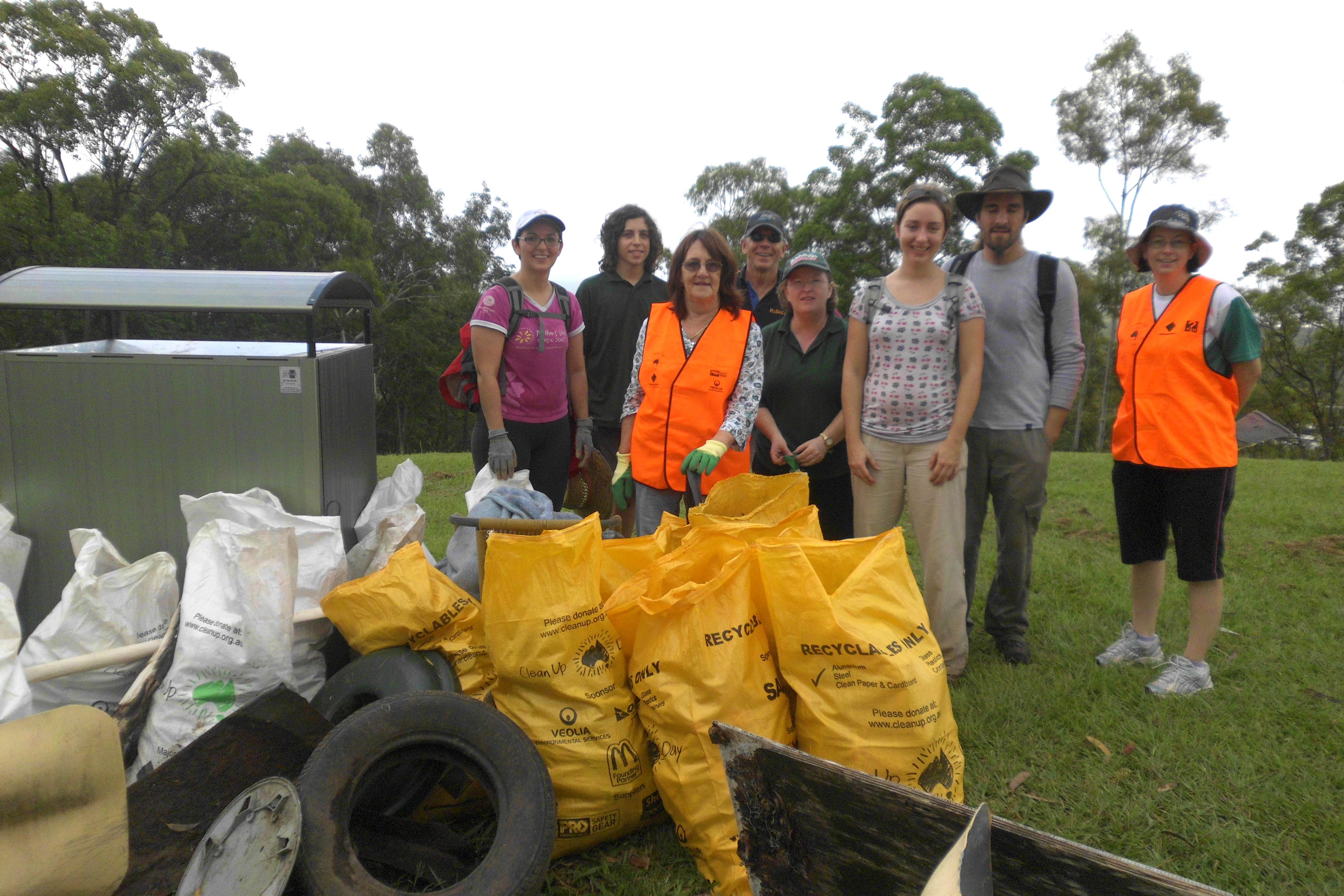
Each year an enthusiastic team comes together to clean up Mt Gravatt Conservation Reserve, collecting a strange collection of rubbish like car tires, as well as, the usual fast food > fast rubbish.

The 2011 Clean Up results were excellent:

  • 31 volunteers
  • 35 bags of rubbish (white)
  • 20 bags of recyclables (yellow)
  • Most unusual item found:
    • a full suitcase of clothing!

Planning the 2016 Clean Up Australia, with coordinator Heather Woods, has highlighted the results of the annual clean up. With the old car tires, suitcases, a piano and TVs removed, and the gates locked at night, the Reserve is looking good.

Be a Lantana Weed Buster.

Our annual Clean Up Australia has been so successful we have decided to offer an option to be a Lantana Weed Buster for a Morning. Creeping Lantana Lantana montevidenses is one of our major weed threats in the Reserve. Lantana competes for native plants for scarce water reserves and the chemicals in Lantana have a significant negative effects on native plant species:

“… lantana excludes native species through smothering and allelopathic effects –  toxicity to other plants.” Lantana—A Weed of National Significance

Join us for a morning in the bush. Register Now for Clean Up or Weed-busting


Lord Mayor's 2016 Australia Day Awards

Laurie receiving Green Heart Award

By: Michael Fox

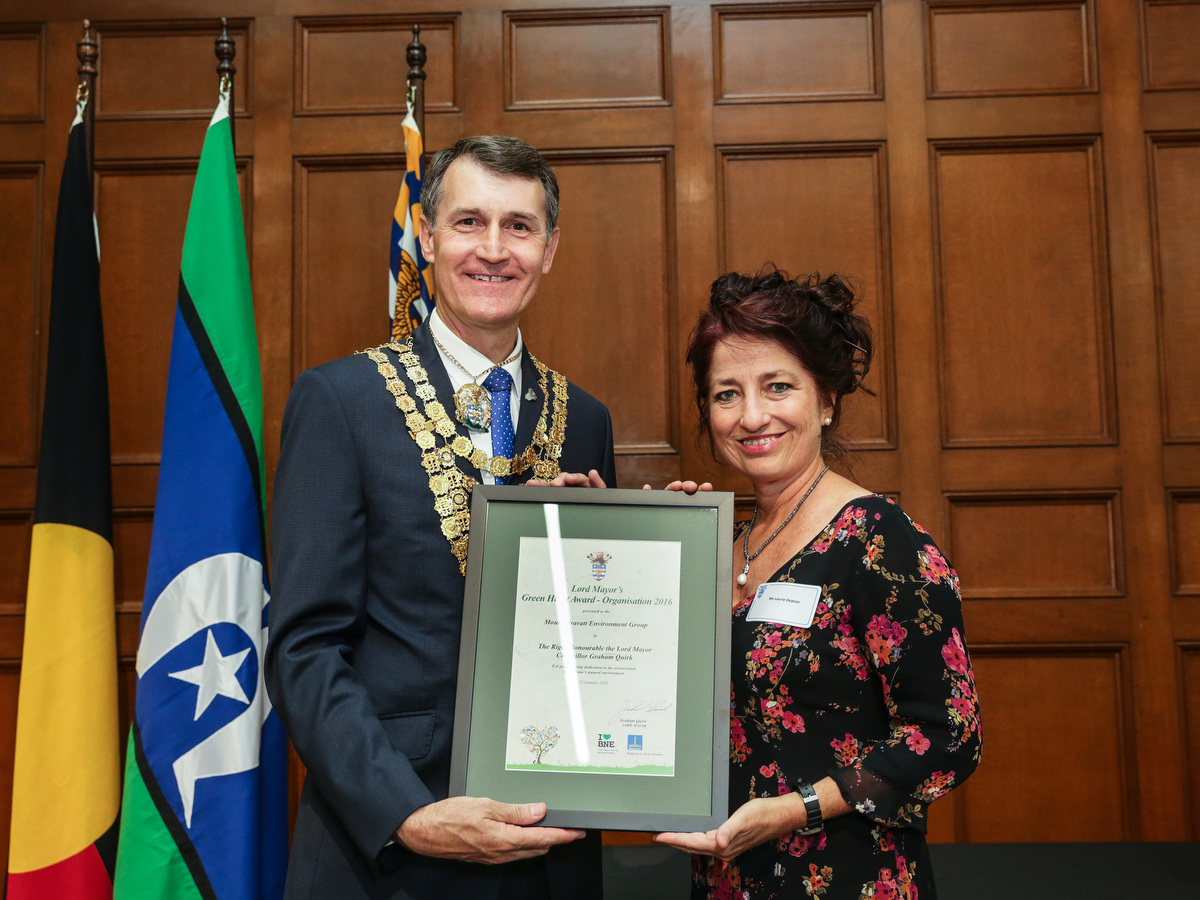
Mt Gravatt Environment Group was honoured on Australia Day with presentation of the Lord Mayor’s Green Heart Award – Organisation 2016.


img785

The award citation:

“Mount Gravatt Environment Group is dedicated to their local environment. Their mantra ‘bringing birds and butterflies back to suburbia’, is achieved by the careful planning and implementation of many projects within the local community including mountain and gully restoration and various flora and fauna projects. The group has been responsible for the rehabilitation of Fox Gully into a vibrant wildlife corridor.

The group works closely with other community organisations to ensure maximum outcome and benefits for Mount Gravatt.”

Laurie Deacon Family and Cr Adams

Cr Krista Adams, myself, Laurie and Sigrid with Green Heart Award

Our President, Laurie Deacon, Sigrid – representing the next generation, and I all attended the award ceremony. An impressive event held in City Hall and hosting an amazing group of individuals members who are giving their time generously to our community.

As with many community groups, the achievements acknowledged with this award are the combined efforts of many individual Mt Gravatt Environment Group members, as well as, some extraordinary community partners who provide support with training, equipment, plants, grant funding, research and boots on the ground. Thank you to:


By: Michael Fox

Griffith Mates Bushcare Team

Griffith Mates Bushcare Team

DSC_0539

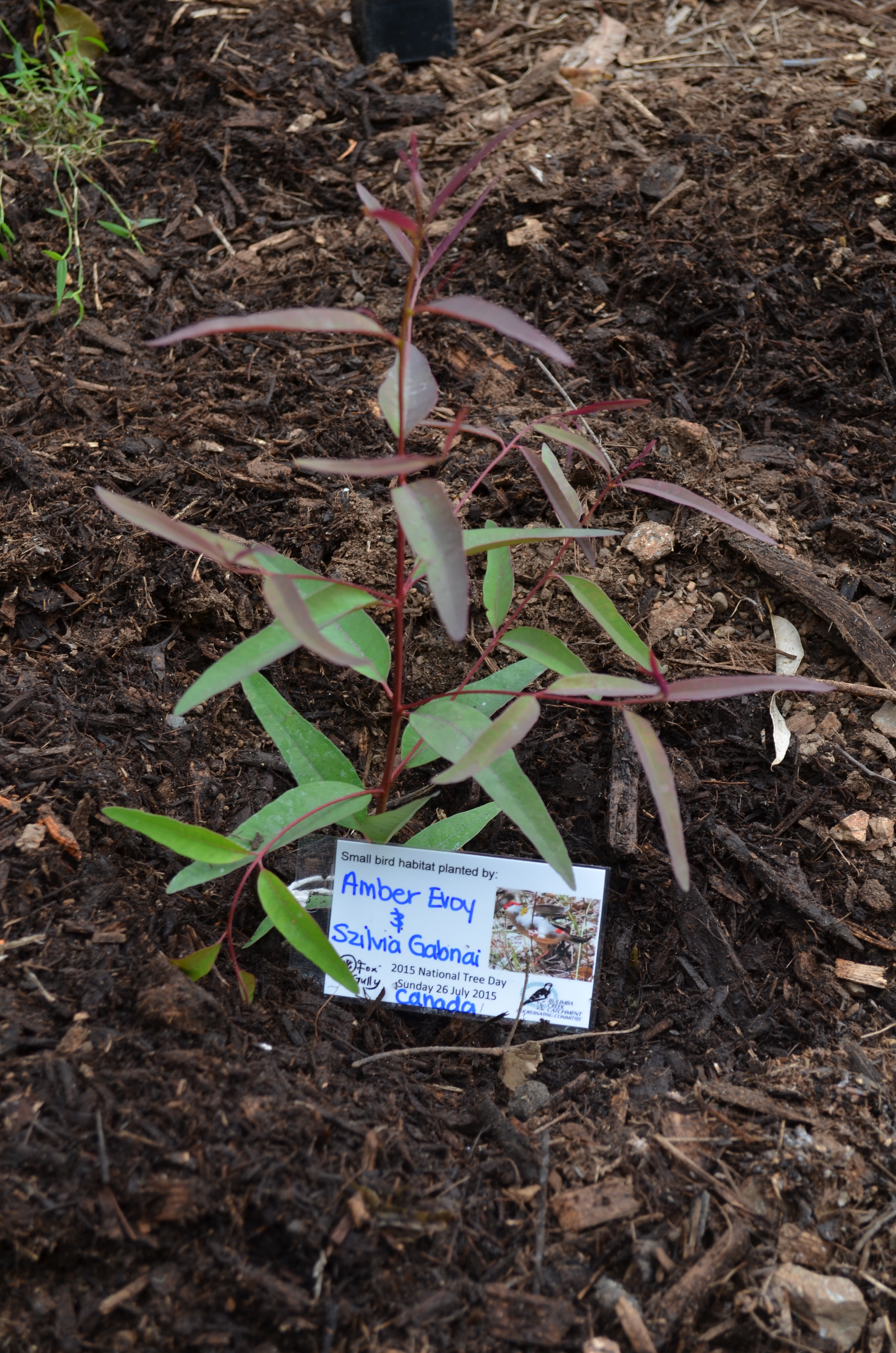
Tags tell a story about participants

It’s 9am on a sunny Sunday morning and the site is buzzing with activity. Seventy-nine students and community members, representing countries as diverse as Canada and the Philippines, are working  together to build a new home for our small forest birds. The 2015 National Tree Day is our largest event on the mountain so far. A great learning experience for us and a credit to the support of our partners BCC Habitat Brisbane, B4C, Griffith Mates and the National Tree Day team.

Introducing Griffith students to Australian bush

Introducing Griffith students to Australian bush

.

.

.

.

.

.

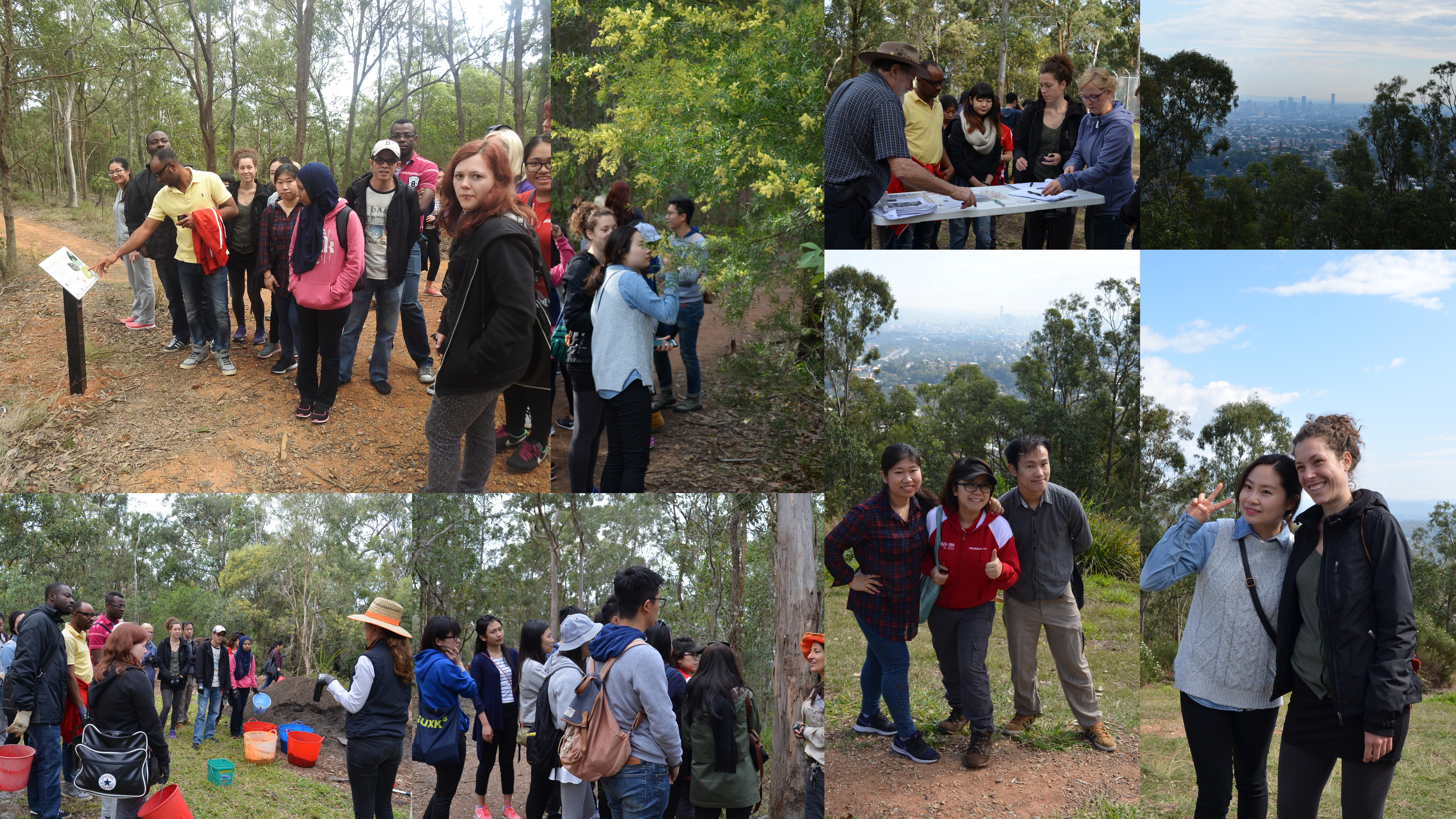
Laurie, Kate and I met the Griffith Mates team at Mt Gravatt Campus for a guided walk to the planting site explaining the difference between the male and female She-oaks Allocasuarina, male – flowers are russet tips on leaves, and female – flowers are red small red balls on branches. And, of course, the winter flowering Brisbane Fringed Wattle Acacia fimbriata is always popular. Laurie showed the distinctive scratches left by Koalas before Len signed the team in talked about our 1,500 species of native bees and Kate demonstrated correct planting technique.

Selection2

Ahmadiyya Muslim Association team

This planting is new initiative to create the specialised habitat our small forest birds like Variegated Fair Wrens Malurus lamberti. These small insect eating birds are valuable partners in controlling pests in our backyards but they do need habitat that provides protection from larger birds and cats. So it was a particular pleasure to meet and talk to another community group that is making valuable contributions to the environment and strengthening our community more generally. The Ahmadiyya Muslim Association Australia (Ahmadiyya Jamaat) was formally established in 1980, however the relationship goes back as far as 1903 with Hassan Moosa Khan being the first Ahmadi in Australia. The local association has a strong relationship with the Logan community and we hope to build a long term bushcare partnership in our community.

Selection4

Kids love getting their hands into the dirt.

.

Kids and dirt, a magic formula.

There are many different stories told in the pictures taken by Alan, Sienna and Jude, however, these really spoke to my heart. Families working together creating something for the future.

.

Mark

Not just kids and dirt

.

.

.

.

.

.

.

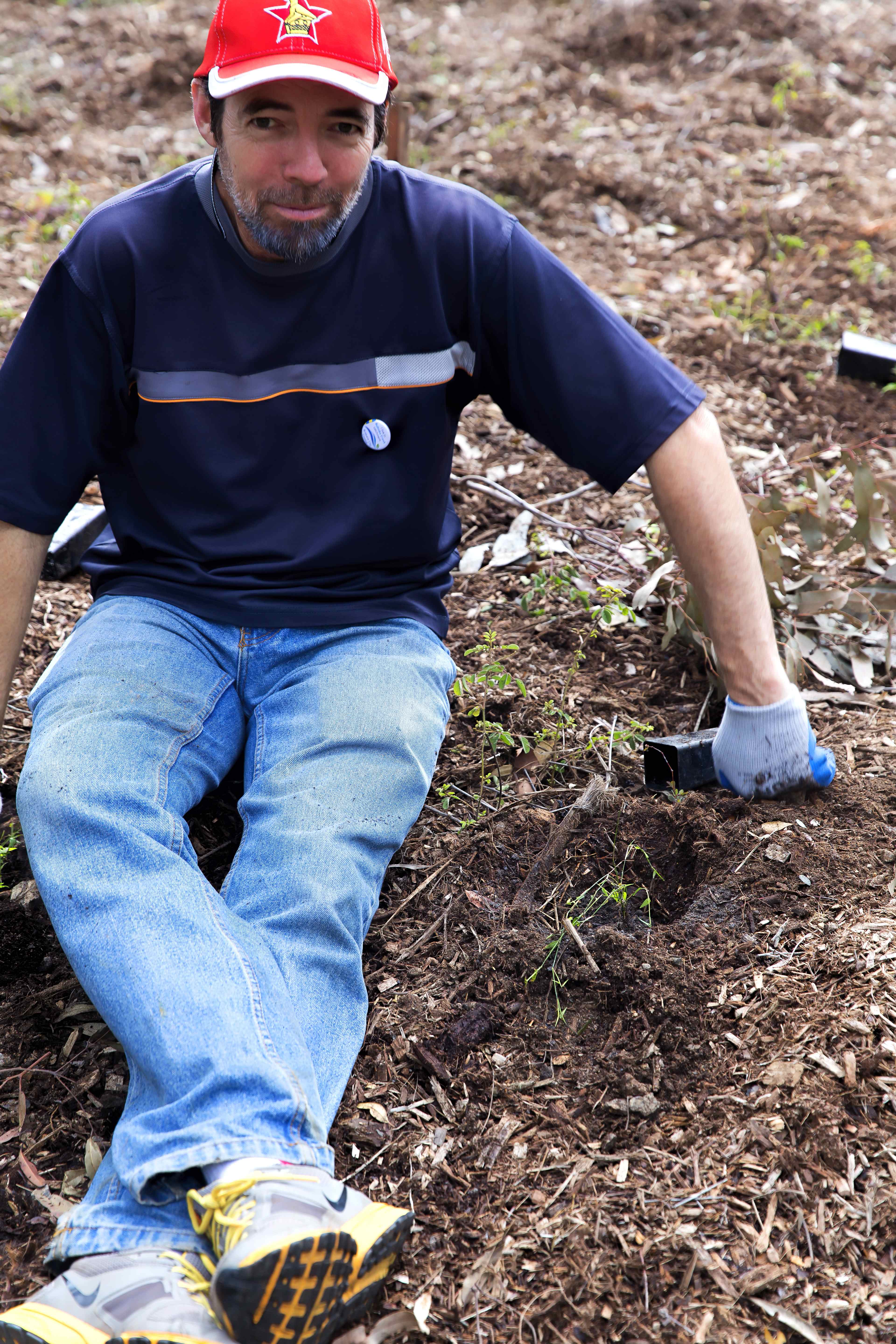
Adults also like to get their hands into the dirt. Mark is a passionate supporter of B4C restoration work and community education.

.

.

.

Ross Vasta

Ross Vasta planting the future

.

.

.

Our local politicians dug in as well. Ross Vasta our local Federal Member loaded mulch and planted trees with the team.

.

.

.

.

.

.

Ian Walker MP with Alpha Phi Omega team

Alpha Phi Omega team with Ian Walker and Kate Flink

Particularly welcome was Ian Walker, Member for Mansfield, and sponsor of our initiative to publish track maps and develop interpretative signs to engage visitors to the Reserve.

Ian is pictured with the Alpha Phi Omega team and new small bird sign in the foreground.

The Alpha Phi Omega team is another interesting service group with a fifty year history of college campus-based volunteerism in the Philippines. The event really was a multinational effort to restore a unique piece of inner city bushland.

Event team (l-r) Michael Fox, Len Kann, Heather Barns, Kate Flink

Event team (l-r) Michael Fox, Len Kann, Heather Barns, Kate Flink

.

.

Thank you all from the event organising team. Laurie Deacon not in photograph.

IMG_9378

Griffith Mates (l-r) Laura, Lothar, Vikram, Sienna and Herman

By: Michael Fox

The Griffith Mates team helped us reach an important milestone last week. The final stage of a five year project was reached as the last patch of Fishbone Fern Nephrolepis cordifolia has been cleared at our Fox Gully Bushcare site Zone 13.

.

.

Fishbone jungle - 11 May 2013

Lost in Fishbone jungle

A team from FWR Group started the daunting task of clearing the Fishbone jungle from the gully.

In its natural environment, Fishbone Fern is usually found growing in rocky areas, on rainforest margins, or as an epiphyte on palm trees in the wetter parts of tropical and sub-tropical Australia. (Weeds of Australia)

CVA team Fox Gully - 22 May 2013 2

Conservation Volunteers (CVA) team

In urban areas where Fishbone Fern has been cultivated as a garden plant it has escaped into remaining patches of bushland crowding out indigenous species. Six species of native fern are indigenous to the Fox Gully habitat. Removal of the weed is allowing natural regeneration of indigenous grasses, ferns and vines.

.

.

.

Removing Fishbone Fern is a time consuming job so the support of a team from Conservation Volunteers Australia (CVA) was a major boost for the project.

.

.

White-banded Plane -25 Apr 2015

Common or Varied Eggfly Hypolimnas bolina

.

.

It is a particular pleasure to welcome Griffith Mates back as they always have a great interest in our local wildlife. They even insisted on walking through the forest from Mt Gravatt Campus.

So it was good to be able to show this perfect specimen of Common Aeroplane Phaedyma shepherdi butterfly posing on a Spotted Gum Corymbia citriodora.

.

Squirrel Glider - 25 Apr 2015

Squirrel Glider Petaurus norfolcensis

.

We finished the morning by checking the nest-boxes introducing our visitors to some of our cutest wildlife.

.

.

.

Magnified Native Cherry

“That is a tiny flower.” Photo: Herman Kai

.

.

.

And Australia’s smallest flower on Native Cherry Exocarpos cupressiformis. Looking for flowering bushfood trees is difficult when you need to carry a magnifying glass.

Griffith Mates team - Fox Gully - 21 Mar 2015

Hard workers (l-r) Sienna, Lara, Indya, Dan, Alex, Shiori, Abraham

By: Michael Fox

The Griffith Mates team joined Fox Gully Bushcare again in March. It is always fascinating to have team around. I listened to two students, one from Norway and one from China, who have never met before, having an in-depth discussion of the Chinese economy while pulling weeds in the Australian bush.

Scorpion-tailed Spider - 21 Mar 2015

Scorpion-tailed Spiders Arachnura higginsi

The students are always interested in the wildlife as well. It can be checking Squirrel Gliders in the nest boxes or like this time finding an interesting spider or beetle.

Snail-eating Carabid - 21 Mar 2015

Snail-eating Carabid Pamborus alternans

Scorpion-tailed Spiders Arachnura higginsi are a curious Orbweaver spider. Female Scorpion-tailed spiders develop a long tail that can be arched over the head must like a scorpion’s attack position. This female Scorpion-tailed Spider is the first I have found in the Mt Gravatt Conservation Reserve and a new addition to our Flora & Fauna list.

The team also discovered a Snail-eating Carabid Pamborus alternans which has not been recorded before in the reserve. These beetles live under logs and feed on snails and earthworms.

A great team effort … two new species found and fourteen bags of Fishbone Fern Nephrolepis cordifolia roots removed from site. We concentrate on removing the roots because the leaves have very few fertile leaves to spread spores.This invasive environmental weed is typically spread by dumping of garden waste in bushland. The industry website Grow Me Instead lists alternative garden plants all of which are indigenous to Fox Gully  – Gristle Fern Blechnum cartilagineum, Rasp Fern Doodia aspera and Rough Maidenhair Fern Adiantum hispidulum.

Koala mapping - Mar 2015

First Koala sightings 2015

By: Michael Fox

2015 is off to a good start with six sightings of Koalas reported already, and, importantly, the sightings have been right around the Reserve.

Koala - Mt Gravatt Campus - 23 Feb 2015 - Michael McGeever

          Koala – Griffith Uni Mt Gravatt Campus                          Photo: Michael McGeever

The latest sighting was on Sunday while we were doing a guided walk for our Griffith Mates visitors. Pieter Demmers spotted the Koala high in a tree beside Acacia Way. Seeing this Koala in the bush was particularly special for our visitors from Germany, France and China.

Michael McGeever spotted another Koala, probably a male,  just at the entry to the Mt Gravatt Campus

.

.

.

.

Koala - Fox Gully - 27 Feb 2015

Young Koala Fox Gully

.

Then we were woken about 4am last week. A young Koala seemed to be calling its mother with the short squeal – almost a ‘yip’, they use to communicate. I was able to get a photo when is climbed an Acacia near the house.

In 2014 at least two Joeys (baby Koalas) were born in Mt Gravatt Conservation Reserve. In 2015 we want to do more tracking of Koalas with the aim of identifying and tracking individuals to help us understand their movement patterns and how to reduce the number killed on the South-east Freeway.

So if you see a Koala, please take a photo – phone camera is ok, note the location and any comments eg. mother with joey or walking along the road.

Sightings can be reported to Koala Tracker and/or emailed to megoutlook@gmail.com.

Exocarpos cupressiformis - 22 Nov 2014By: Michael Fox

Identification of Native Cherry Exocarpos cupressiformis brings to two hundred and seventy-four plant species identified within Mt Gravatt Conservation Reserve.

 Mt Gravatt Then and Now, Mt Gravatt Historical Society, records that in July 1883 our local Mt Gravatt community convinced the state government to protect the Reserve which had previously been logged as railway timber reserve.

In 2014 it is our turn to protect this unique high diversity habitat. The 274 native plant species our 66 hectare Reserve is equal to 11% of of all species in Great Britain which is 22.6 million hectares.

Protecting and restoring this habitat is a whole of community effort with Griffith Mates joining our Bushcare teams, Mt Gravatt Kindy protecting their part of the habitat and installing nest boxes  so the next generation learns, Mt Gravatt State High School and Fox Gully neighbours supporting efforts to build Pollinator Link wildlife corridors linking the Reserve to other habitats.

Koalas breeding successfully is one measure of our progress.