Griffith Mates joined us again this week to help restore the forest, Walking from Mt Gravatt Campus showed the students were interested in everything from the Rainbow Lorikeet disappearing into a tree hollow to the Native Raspberries just starting to flower alongside the track.
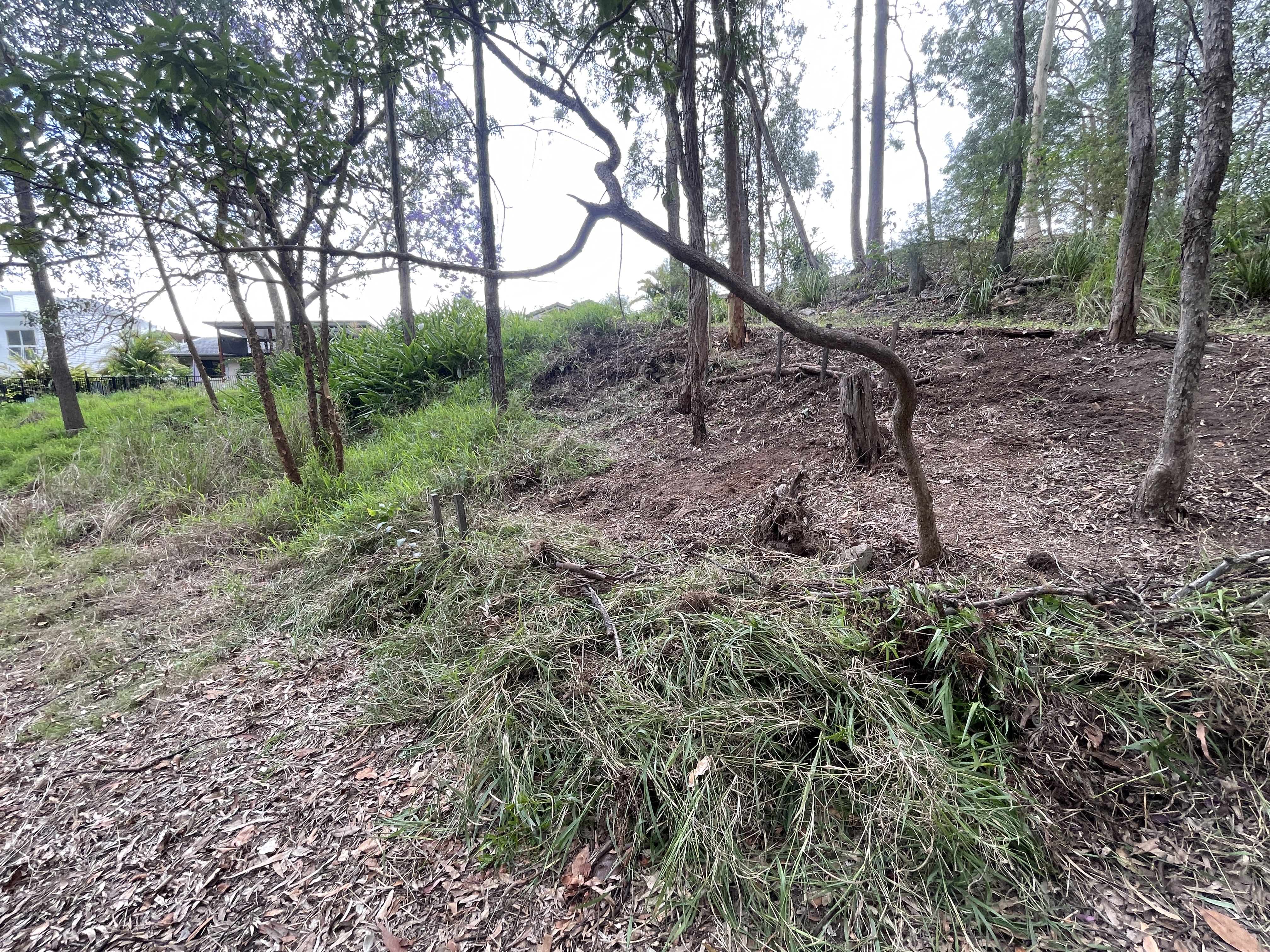
Today the team worked in Zone 21 weeding the site cleared and replanted for National Tree Day 2017.
Site prepared for planting July 2017Site November 2025
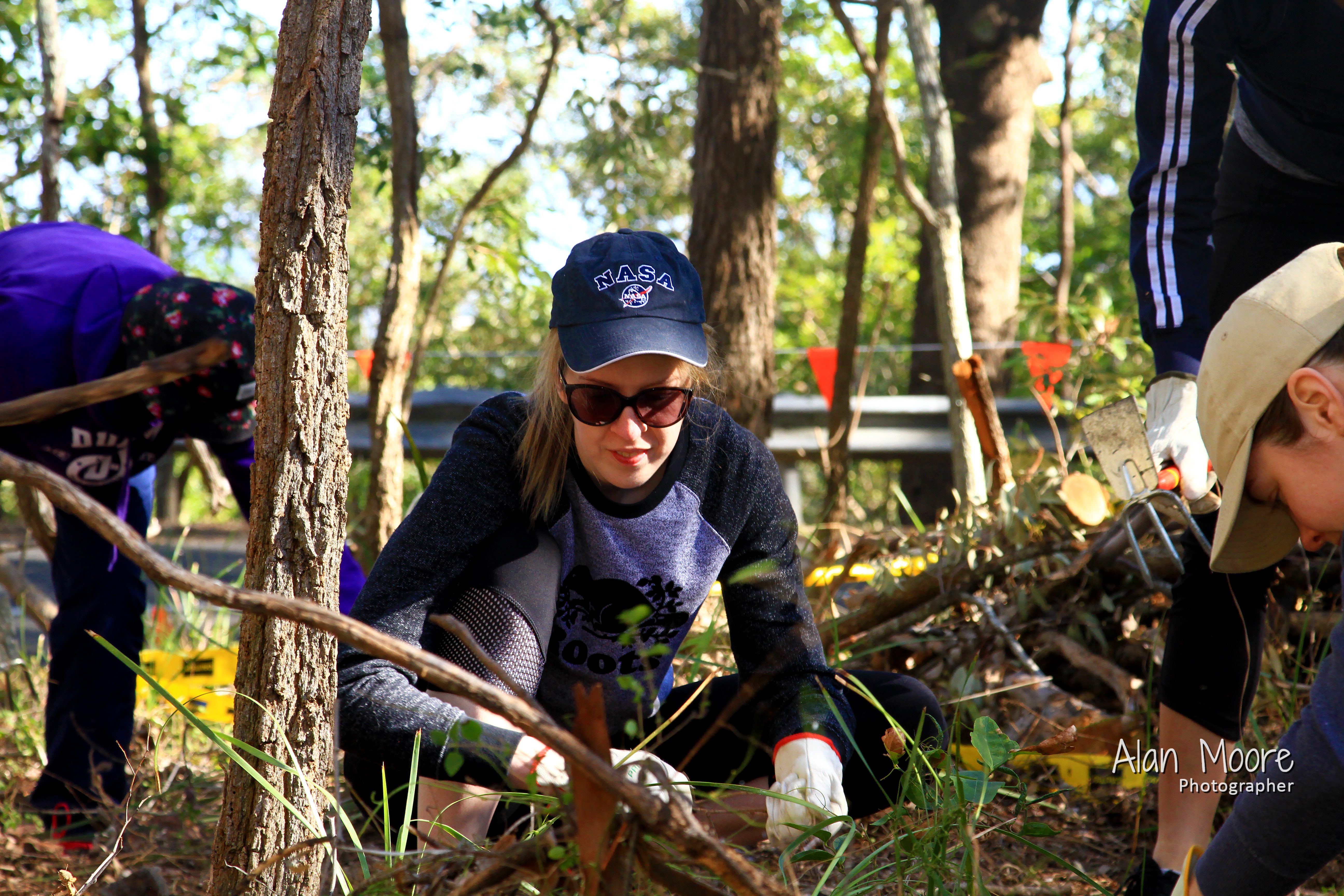
Only a small group of five but they worked like ten clearing weed grass.
Local families and people from far and wide have come to help build a Wildlife Corridor through your school.
This volunteer work has been going on, once a month, since Feb 2012, so that is 13 years !
Last year I was not available to lead the Bush Care due to caring for my Mother up north. However every other year we have made it a monthly priority to commit time, money and energy ; to bringing Wildlife Colour and Movement to our Neighborhood and your School grounds.
Today is World Biodiversity Day ! When Biodiversity has a problem, Humanity has a problem !
The Mount Gravatt Environment Group looks forward to continuing our Social and Environmental Partnership with MG SHS; planting/ building “homes and supermarkets” for your local birds, bees and butterflies through engaging locals and students.
Chinese Elm Celtis sinensis and Ochna Ochna serrulata are two Brisbane’s troublesome environmental weeds that have seeds that are spread by birds eating the fruit. Both called woody weeds they are very difficult to remove as their extensive root systems get a hold.
Leigh loved using the Tree Popper so I spotted a small Yellow Bells Tecoma stans needing removal. Ironically I saw these attractive trees in flower in a park when I visited Quito in Ecuador where they occur naturally.
.
.
.
Pauline with her pile of Corky Passion Vines
.
.
.
.
Another team member Pauline focused on another of our troublesome weeds Corky Passion Vine Passiflora suberosa which is currently covered in fruit which will be eaten and spread by birds.
A nice cool morning in the forest and eleven volunteers came together to attack the invasion of Cobbler’s Pegs Bidens pilosa and Corky Passionvine Passiflora suberosa.
Eloise and Bettina have been coming every week volunteering as part of their work towards their Bronze Duke of Edinburgh Awards.
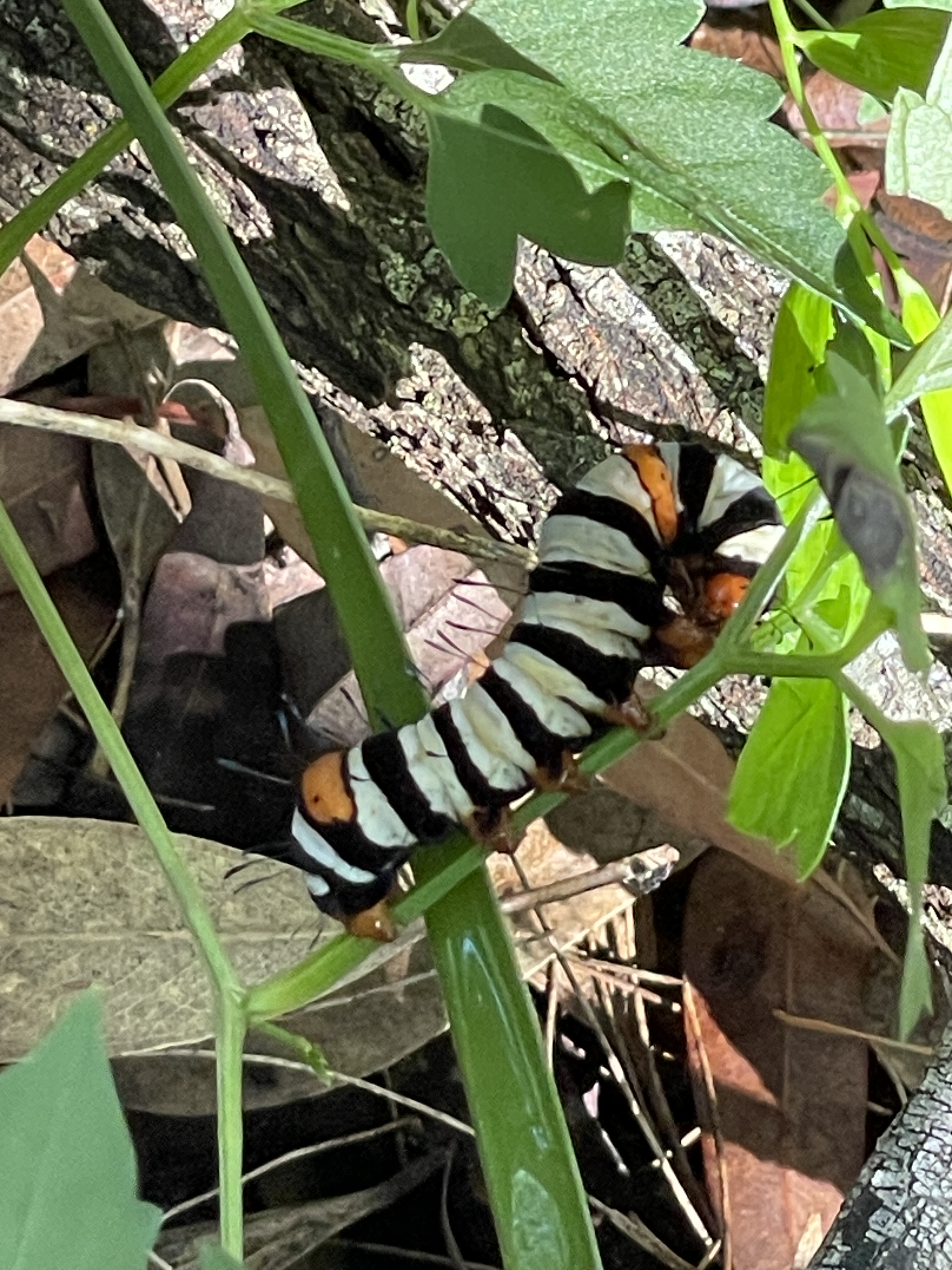
Eloise found a Yam Hawkmoth Theretra nessuscaterpillar. Easily identified as a Hawkmoth by the horn on it’s tail.
.
Melanitis leda Evening Brown
.
.
.
.
.
We also have two volunteers who just finished their Masters of Conservation Biology at University of Queensland, Denise and Max.
.
Denise in particular wants to learn about everything from the curious Melanitis leda Evening Brown caterpillar with its two horns …
.
.
.
.
.
.
.
.
.
… to the way Ottochloa gracillima Graceful Grass: food plant for the Evening Brown, is forming Living Mulch reducing evaporation and keeping the ground cool supporting the soil microbiology.
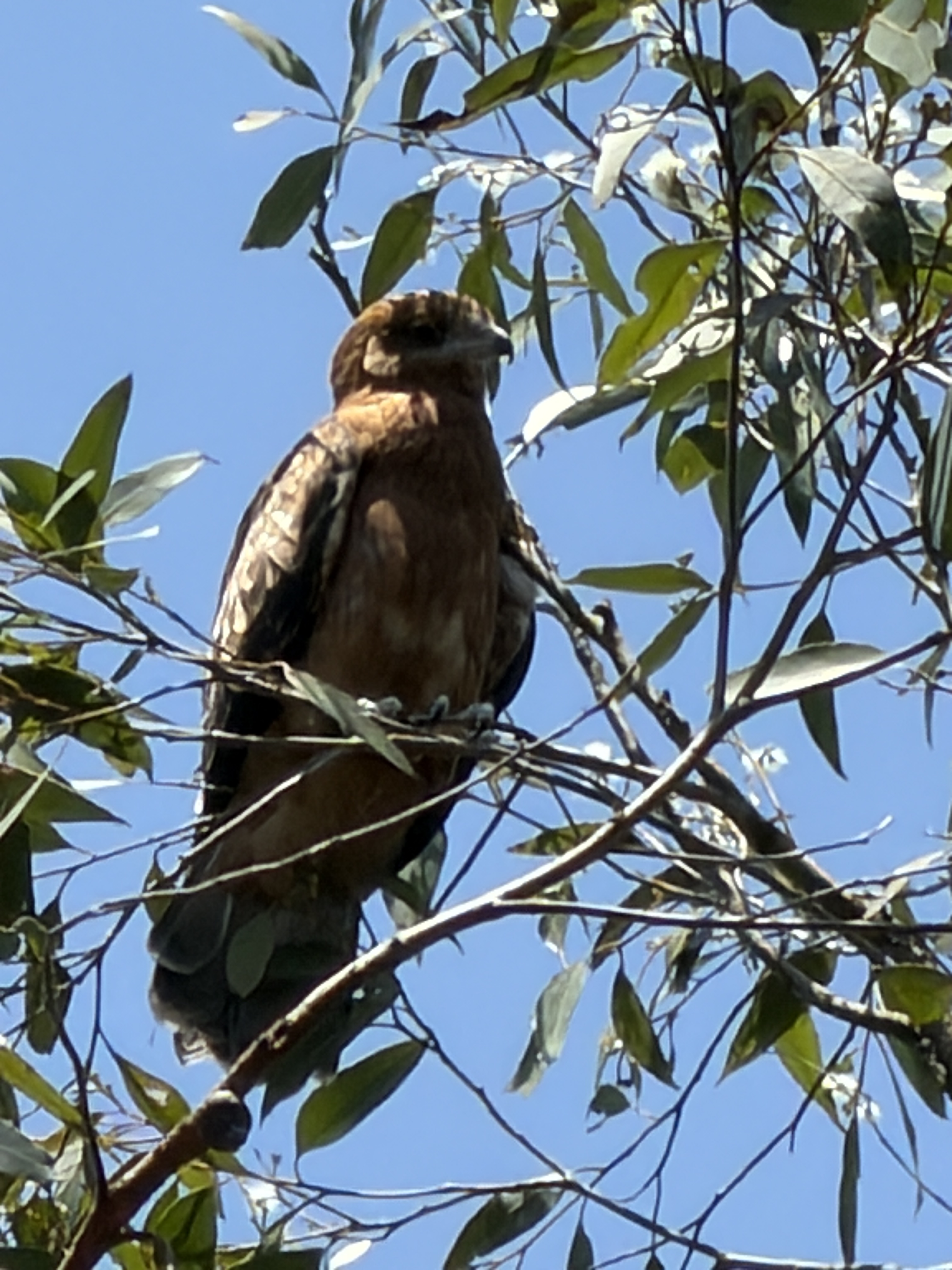
We are finding increasing evidence that our work in Fox Gully Bushcare is making a difference. I photographed this young Square-tailed Kite Lophoictinia isura at Bushcare on Tuesday. The Kite parents have been nesting in the same trees for a few years now and apex predictors like these will only breed if there is food available.
So it is nice to receive acknowledgment from Lord Mayor Schrinner.
Named for the beautiful Pheasant Coucal Centropus phasianinus that lived in scrubby weeds, this special site deserves restoration for these special birds.
Today we started clearing the weed grass off the slope and creating a swale to manage water runoff. This keeps the nutrients on site and reduces the volume of greenwaste going to the dump.
At our first working bee onsite in 2022 we planted two hundred and fifty local grasses, vines, shrubs and trees.
.
.
.
.
.
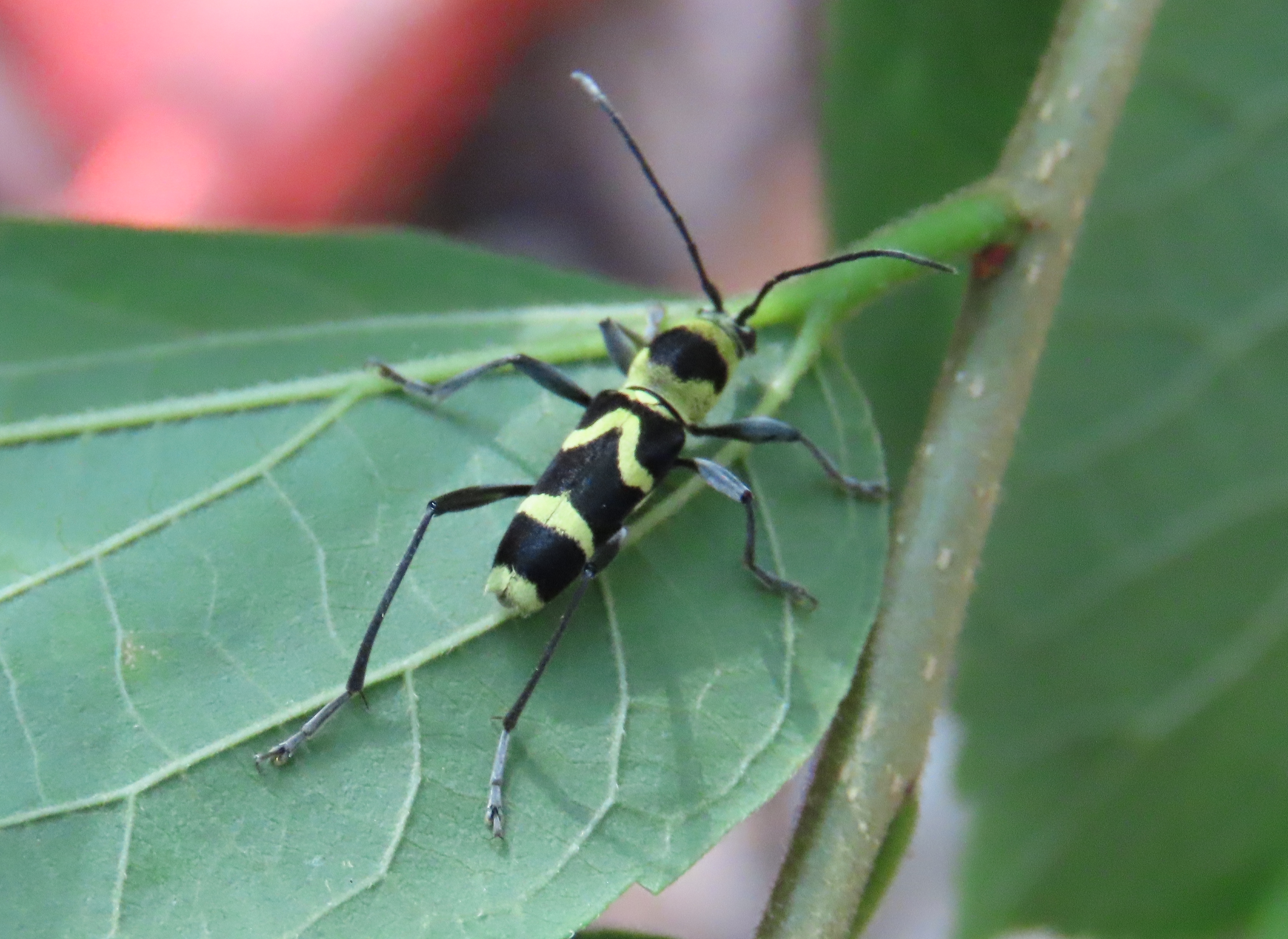
We are already finding insects returning including a new species to add to Flora and Fauna of the Reserve.
A beautiful sunny morning and in the sky two beautiful Square-tailed Kites Lophoictinia isura soaring wings spread wide as they do lazy loops above the trees.
The kites have returned for the forth year to their nest in the Spotted Gum and now have two chicks poking their heads up. The kites are top level predator feeding on small birds, insects and lizards so to have a pair breeding in the forest provides some evidence of a healthy habitat providing sufficient food.
Koala Mum and Joey
Tuesday Bushcare is always an adventure in spotting flora and fauna. Spring breeding season however is special.
Koala Spotter Steph found a Mum and Joey in a tree above where we were working.
.
.
Bearded Dragon
.
.
.
.
We also spotted a handsome Beaded Dragon Pogona barbata hiding in plain sight. Good camouflage.
Spring means the weed Mickey Mouse Plant Ochna serrulatais covered in seed: one bush completely filled a weed tub. Recent rain also softened to ground so we were able to use the TreePopper to remove the weed with minimal disturbance to the soil and no use of herbicide.
.
.
.
.
.
.
.
Corky Passion Vine – variety of leaf shapes
Most of our work at this season is removing Corky Passion Vine Passiflora suberosa which has spread aggressively in areas where we have cleared other weeds. Corky Passion Vine can have very different leaf shapes so we are careful to follow the vines to the base so we can check for the corky stem and remove the roots to stop re shooting.
We welcomed five new volunteers today: Asitha, Andrew, Michelle, Kate and Tatiana, It was a perfect day to introduce volunteers to Bushcare … cool in the shade and so peaceful with the birds calling.
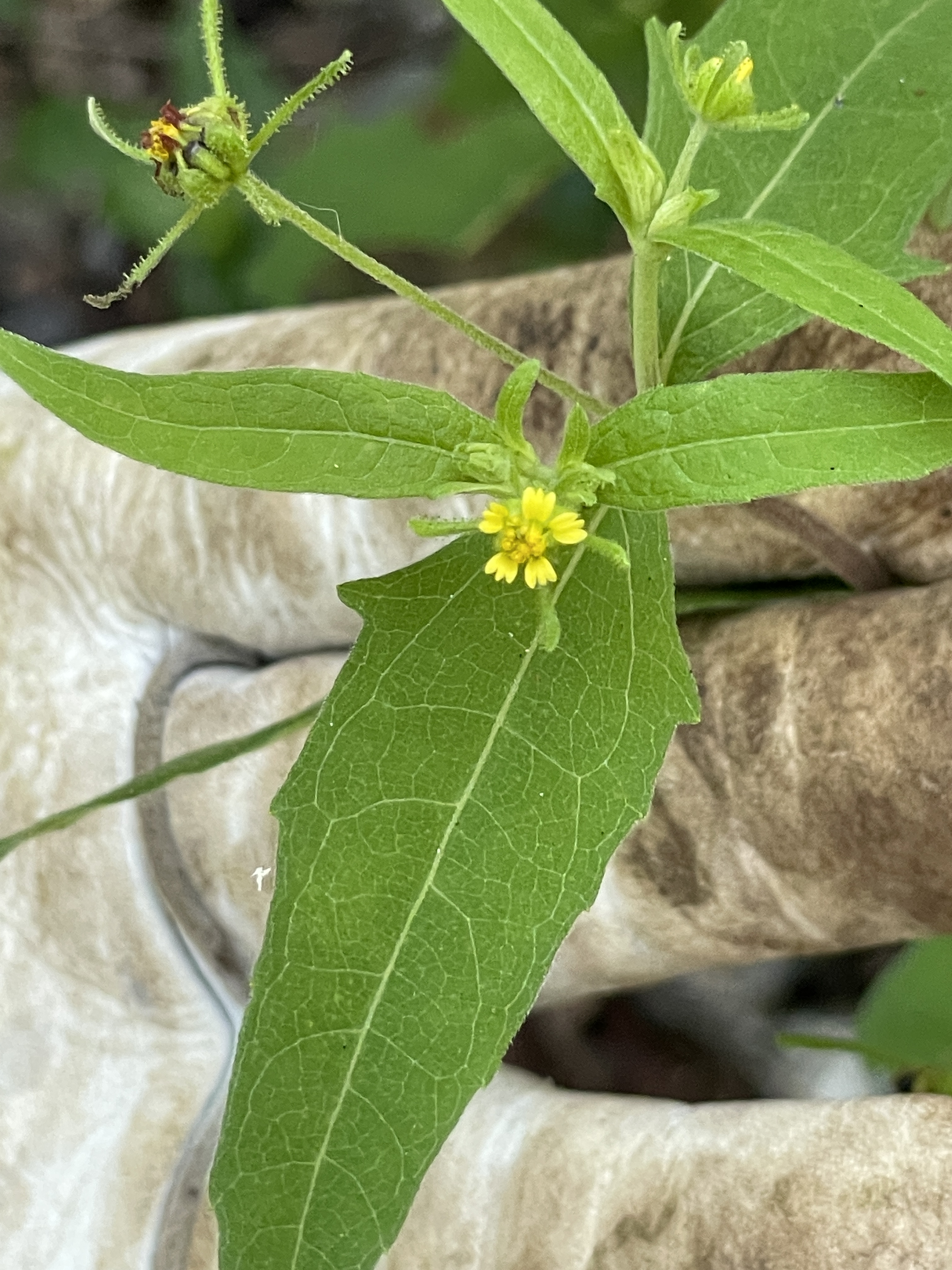
We added a new plant to our species listSigesbeckia orientalis St Paul’s St Paul’s Wort/Indian Weed. I had this down as a weed but Kate was sure it is a native, so I checked with our Botanist Ann Moran who confirmed. I noticed that many of the leaves were chewed which is usually a good sign of a local native.
I introduced the team to a Brown Eucalypt Sawfly Pergagrapta sp. explaining that this is not actually a fly. Sawfly is a common name for some species of wasp.
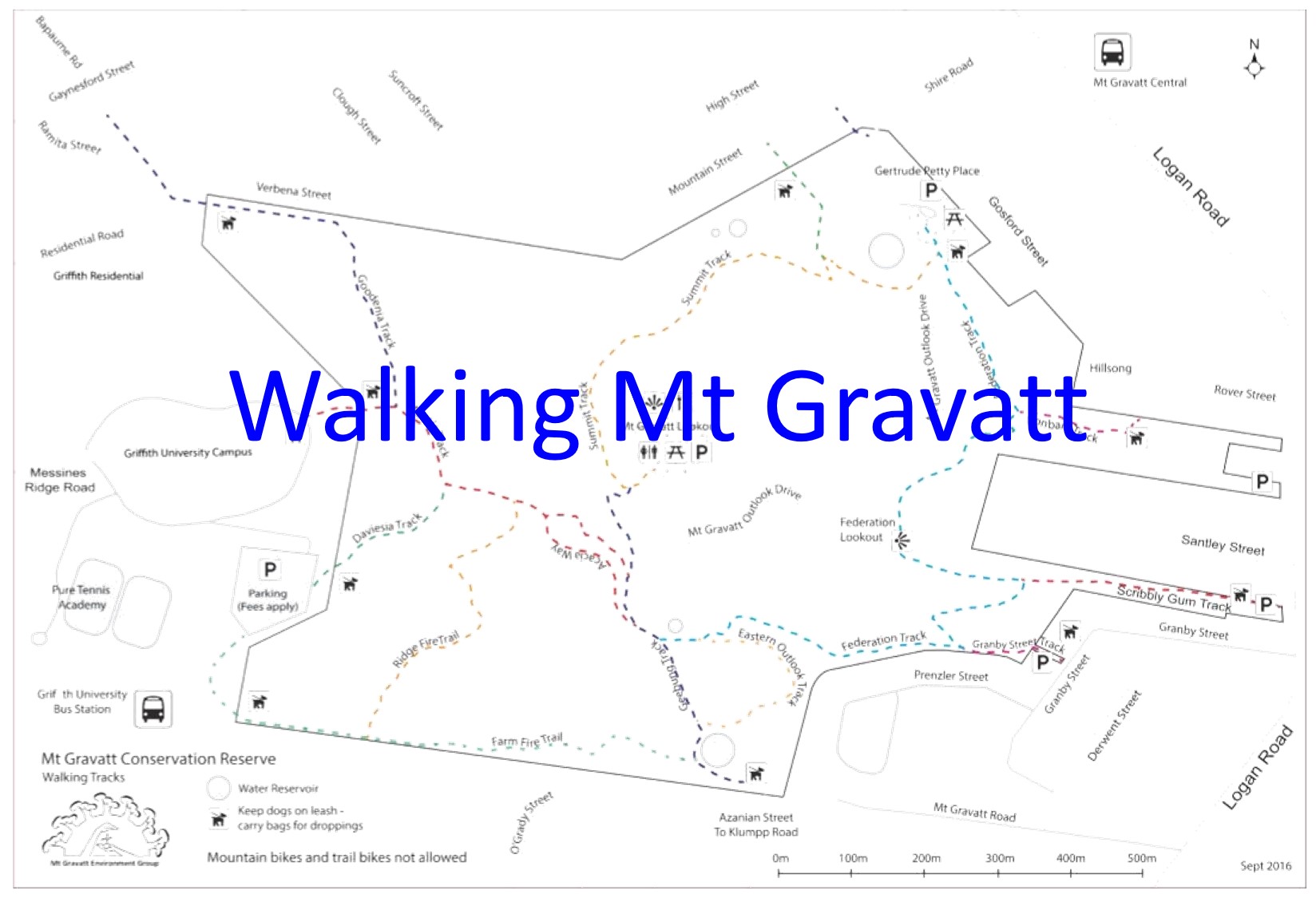
Prior to 1893 Mt Gravatt Conservation Reserve was logged as railway timber reserve which means few large trees remain. Signs of what we have lost can still be found in burnt stumps like this Brush Box Lophostemon confertus beside the Eastern Outlook Track.
Forest regeneration after logging takes decades and can take surprising directions. Only a stump of the Brush Box was left but the lignotuber has allowed the the tree to regrow eight new trunks.
Walking in the forest? Click on the QR codes of the new plant information signs to learn more.
Koala in Brush Box
.
.
.
.
While it will be hundreds of years to grow to the size of the original tree Koalas Phascolarctos cinereus are already using the regrowth.






















 Mount Gravatt Environment Group