Mt Gravatt Conservation Reserve


By: Michael Fox

Breakfast with Spencer Howson

IMG_9047

(l-r) Emily -Cafe Manager, Cr Krista Adams, Anne-Maree – Hope Foundation

An exciting announcement of new operator for the cafe at Mt Gravatt Summit as Loretta Ryan interviewed Cr Krista Adams and Anne-Maree, representing the Hope Foundation.

“Hope Foundation is ecstatic about being the successful tender applicant. We have experienced hospitality staff ready to get in there and start things rolling; some of the Hope Chicks have already completed their coffee training through Di Bella Coffee, although being even partially operational will be about 4 weeks away. And we are – genuinely – delighted and encouraged by all the community support already coming our way. In short – YAY!!!”

Ann-Maree, Executive Assistant   |  HOPE Foundation

Hope FoundationWe are looking forward to partnering with the Hope team, building a strong future for Mt Gravatt Conservation Reserve at the heart of our local community. An iconic bushland location just 10km from Brisbane CBD the Reserve is a special place, home to Koalas and Echidnas with strong links to both indigenous and European histories.

It is great news to know that the cafe will reopen soon and The Love Well Project, though a social enterprise, has a strong commercial focus with an experienced professional manager and backed by a valuable team of business mentors.

PlaygroundThe focus on weekday breakfasts and platters to share will complement and enhance the the way our community and visitors use the mountain, serving morning cyclists and families trying out the new picnic facilities.

Cr Adams and Brisbane City Council have worked hard to make Mt Gravatt Summit an ideal place for a picnic.

.

Toilet block - Summit - 9 June 2015Public toilets may not be as exciting as the brightly coloured playground but they are important infrastructure to make this a must visit tourist destination.
IMG_9613

.

.

.

.

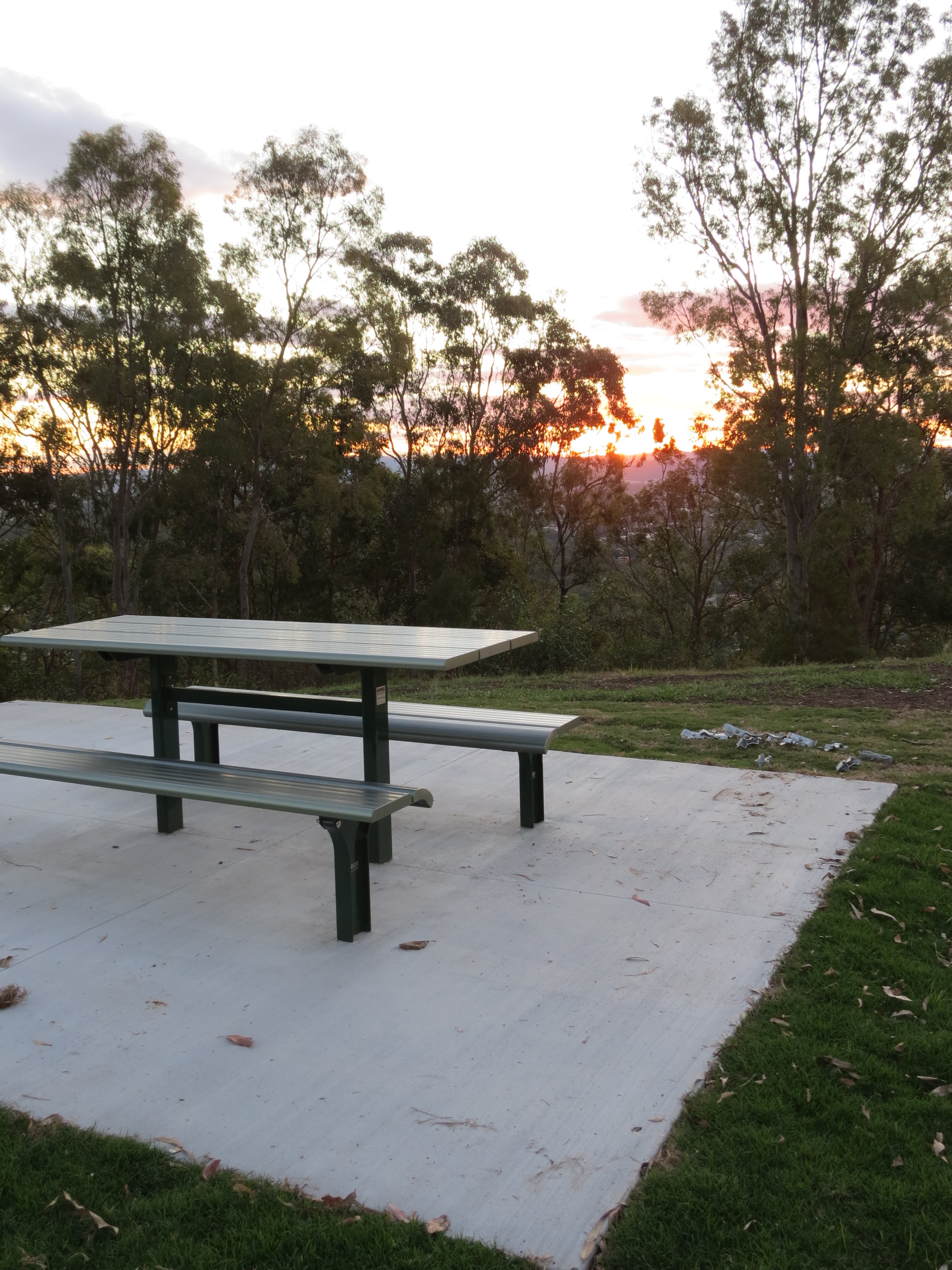
New seating and picnic tables, where friends can share a platter and what the sunset, complete the facilities for visitors.

Relax and enjoy a meal before exploring the mountain walking tracks.

.
By: Michael Fox

Griffith Mates Bushcare Team

Griffith Mates Bushcare Team

DSC_0539

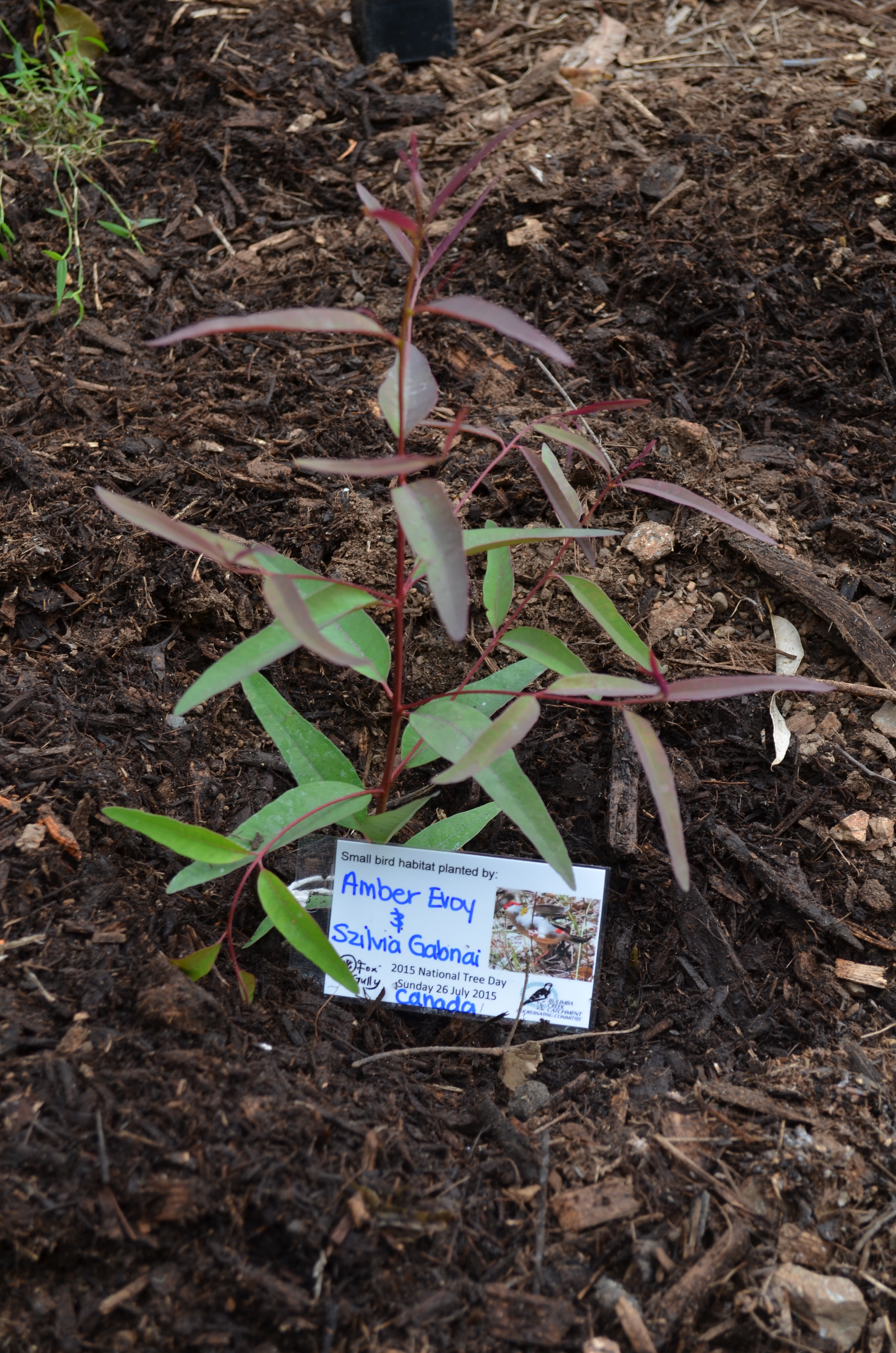
Tags tell a story about participants

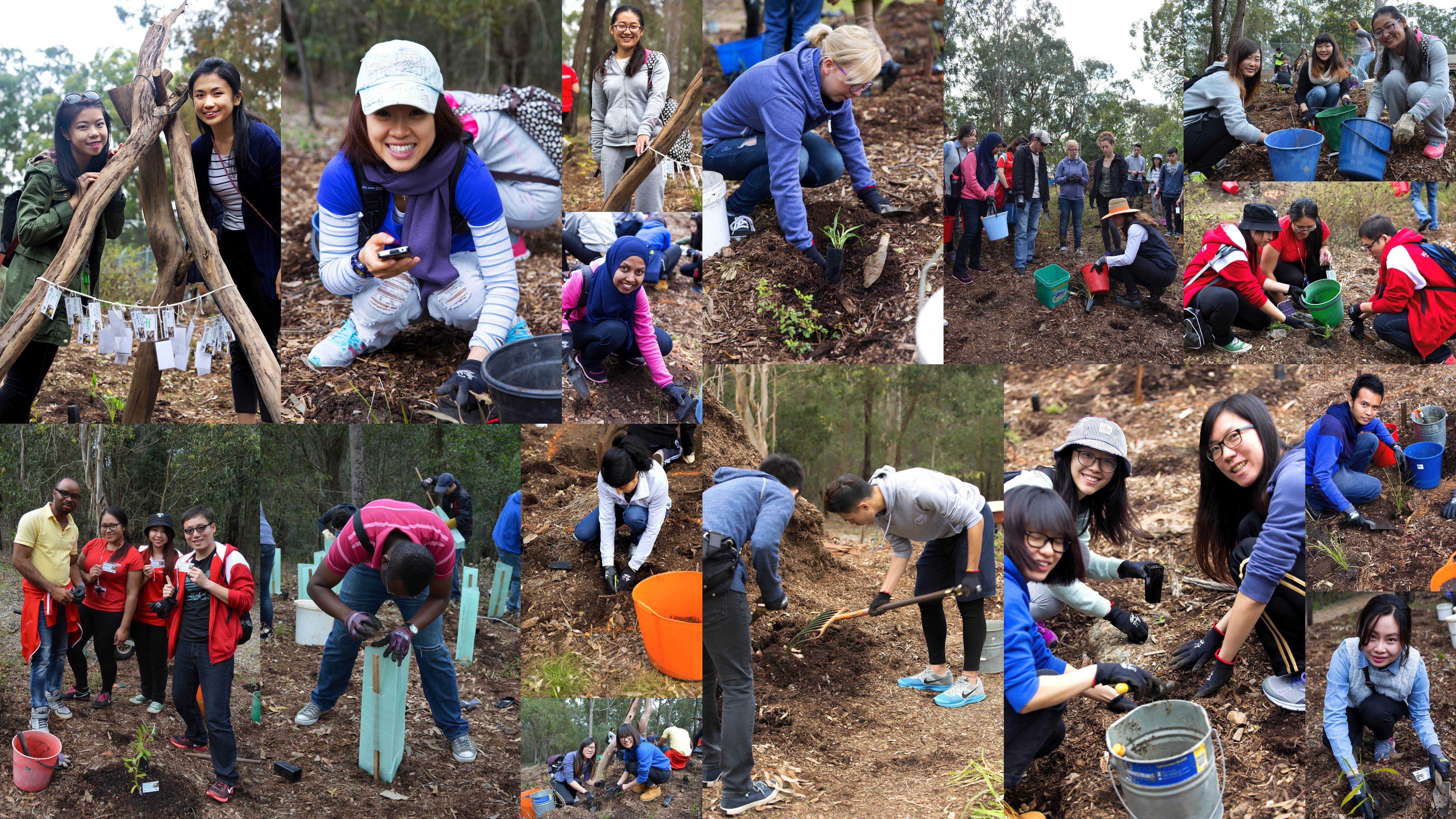
It’s 9am on a sunny Sunday morning and the site is buzzing with activity. Seventy-nine students and community members, representing countries as diverse as Canada and the Philippines, are working  together to build a new home for our small forest birds. The 2015 National Tree Day is our largest event on the mountain so far. A great learning experience for us and a credit to the support of our partners BCC Habitat Brisbane, B4C, Griffith Mates and the National Tree Day team.

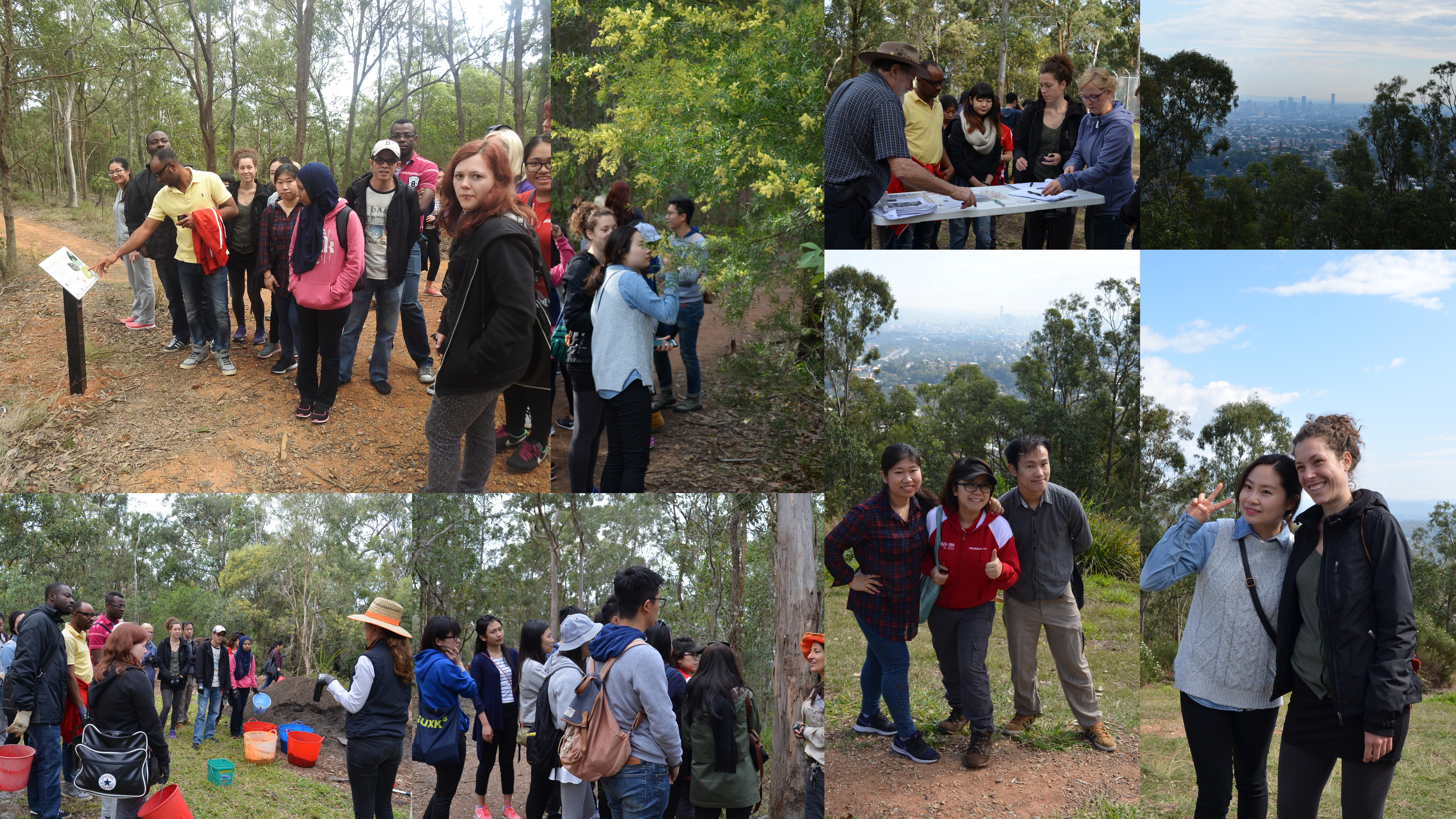
Introducing Griffith students to Australian bush

Introducing Griffith students to Australian bush

.

.

.

.

.

.

Laurie, Kate and I met the Griffith Mates team at Mt Gravatt Campus for a guided walk to the planting site explaining the difference between the male and female She-oaks Allocasuarina, male – flowers are russet tips on leaves, and female – flowers are red small red balls on branches. And, of course, the winter flowering Brisbane Fringed Wattle Acacia fimbriata is always popular. Laurie showed the distinctive scratches left by Koalas before Len signed the team in talked about our 1,500 species of native bees and Kate demonstrated correct planting technique.

Selection2

Ahmadiyya Muslim Association team

This planting is new initiative to create the specialised habitat our small forest birds like Variegated Fair Wrens Malurus lamberti. These small insect eating birds are valuable partners in controlling pests in our backyards but they do need habitat that provides protection from larger birds and cats. So it was a particular pleasure to meet and talk to another community group that is making valuable contributions to the environment and strengthening our community more generally. The Ahmadiyya Muslim Association Australia (Ahmadiyya Jamaat) was formally established in 1980, however the relationship goes back as far as 1903 with Hassan Moosa Khan being the first Ahmadi in Australia. The local association has a strong relationship with the Logan community and we hope to build a long term bushcare partnership in our community.

Selection4

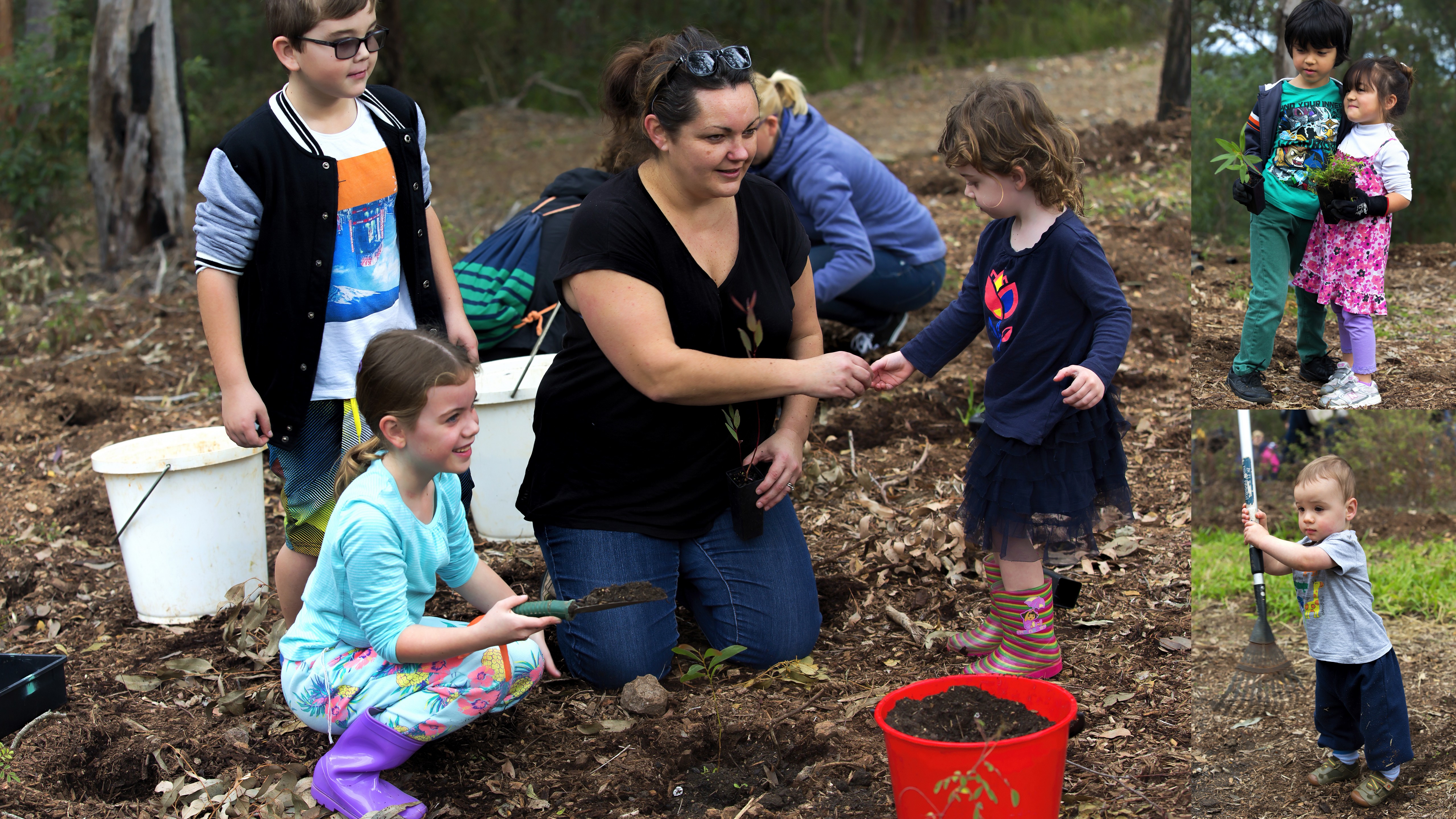
Kids love getting their hands into the dirt.

.

Kids and dirt, a magic formula.

There are many different stories told in the pictures taken by Alan, Sienna and Jude, however, these really spoke to my heart. Families working together creating something for the future.

.

Mark

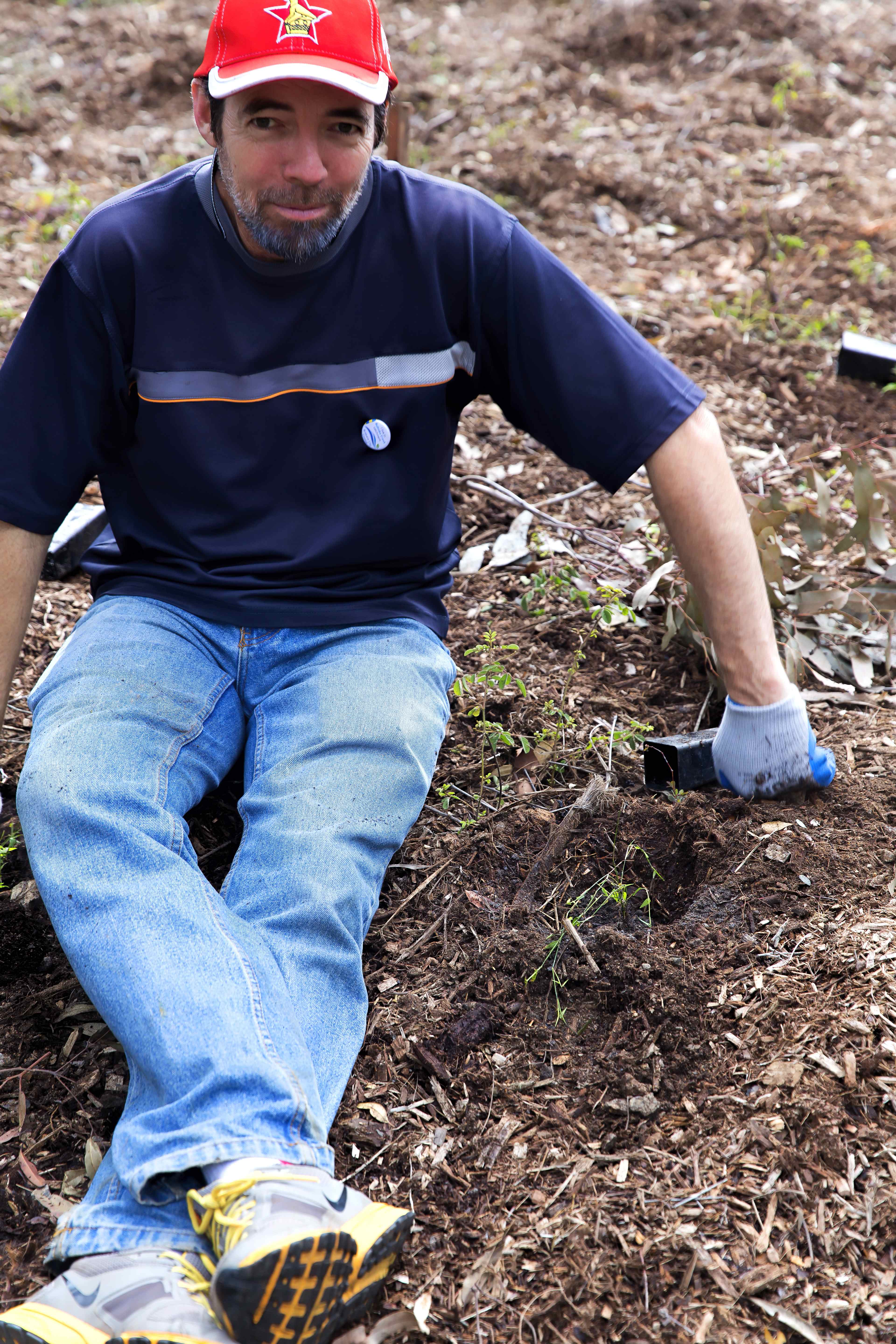
Not just kids and dirt

.

.

.

.

.

.

.

Adults also like to get their hands into the dirt. Mark is a passionate supporter of B4C restoration work and community education.

.

.

.

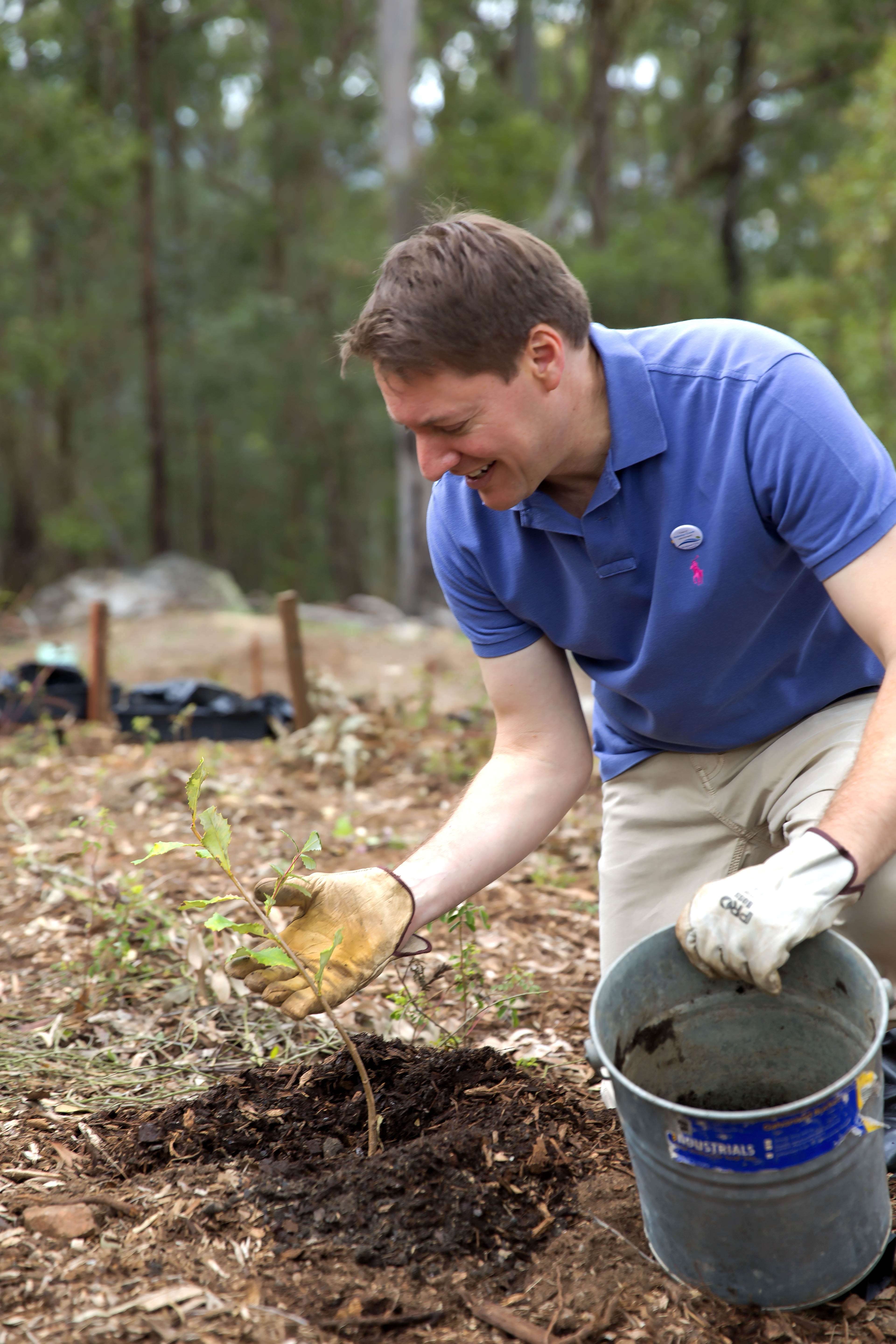
Ross Vasta

Ross Vasta planting the future

.

.

.

Our local politicians dug in as well. Ross Vasta our local Federal Member loaded mulch and planted trees with the team.

.

.

.

.

.

.

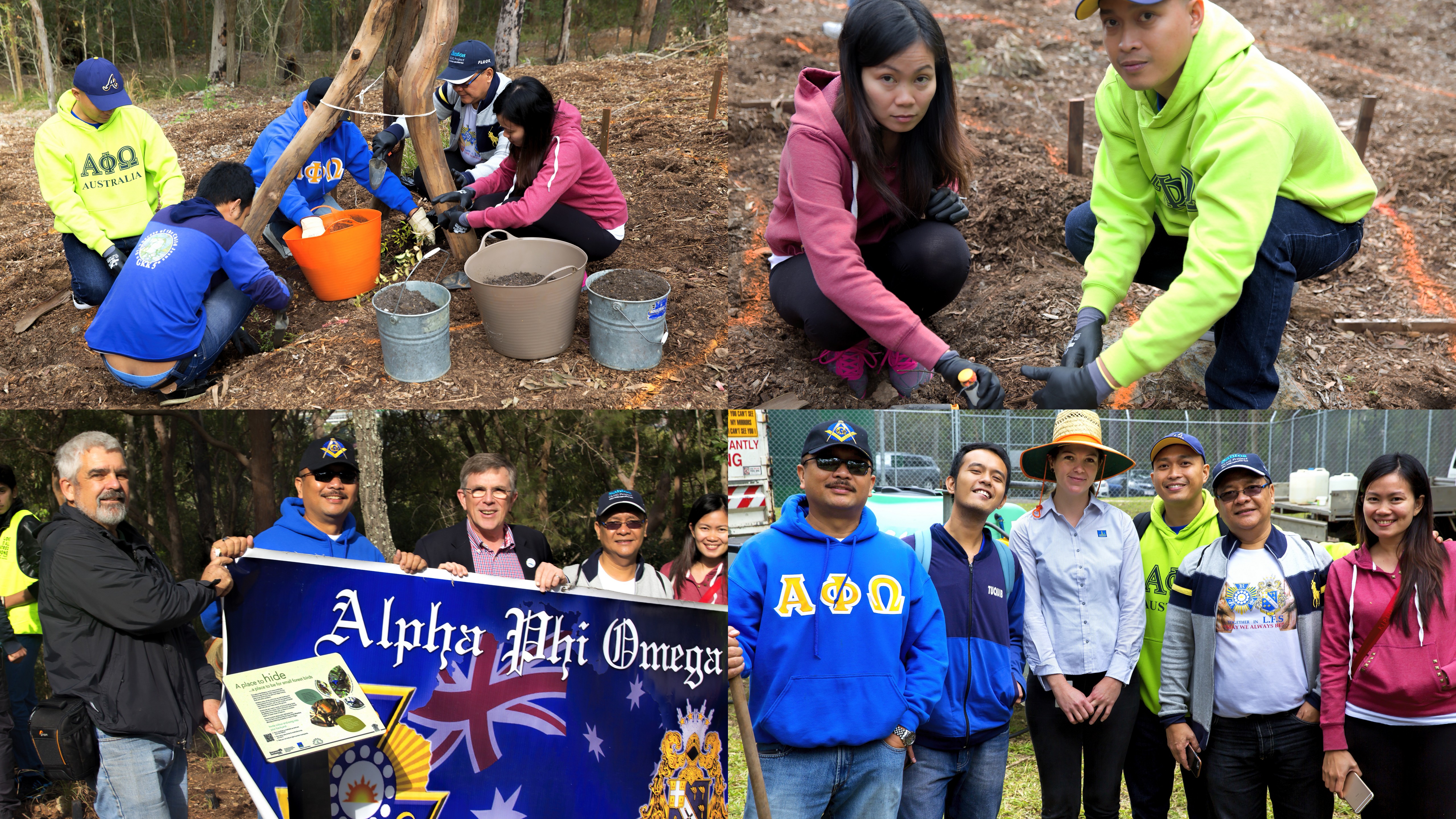
Ian Walker MP with Alpha Phi Omega team

Alpha Phi Omega team with Ian Walker and Kate Flink

Particularly welcome was Ian Walker, Member for Mansfield, and sponsor of our initiative to publish track maps and develop interpretative signs to engage visitors to the Reserve.

Ian is pictured with the Alpha Phi Omega team and new small bird sign in the foreground.

The Alpha Phi Omega team is another interesting service group with a fifty year history of college campus-based volunteerism in the Philippines. The event really was a multinational effort to restore a unique piece of inner city bushland.

Event team (l-r) Michael Fox, Len Kann, Heather Barns, Kate Flink

Event team (l-r) Michael Fox, Len Kann, Heather Barns, Kate Flink

.

.

Thank you all from the event organising team. Laurie Deacon not in photograph.

Mt Gravatt Campus - 22 July 2015

Mmm … almost there. Now to just get past this fence.

By: Michael Fox

They go looking for a good education.

An alert cleaner at Griffith Mt Gravatt Campus caught this intruder on camera. Outstanding wildlife photography!

.

.

.

.

.

.

Mt Gravatt Campus - rail - 22 July 2015

Just hanging out. Don’t worry about me.

.

.

.

.

Of course being a university qualified Koala he was climbing into the Education building.

Small bird planting - sign - 13 July 2015

Planning a habitat haven

By: Michael Fox

Brisbane winters are just stunning … as long as you are in the sun and out of the westerly wind.

I spent time this morning laying out the site for our National Tree Day planting. Two sets of concentric circles will create both the protection for nesting and the food – insects, nectar and seeds, required by our small forest birds.

Our two habitat havens will each be 8 metres in diameter and based on the Habitat Network model – Creating a small bird habitat haven.

The Inner Sanctum planted with Coastal Banksia Banksia integrifolia, Prickly Pine Bursaria spinosa and Wonga Wonga Vine Pandorea pandorana to provide height and tangled habit that larger birds cannot get into making it safe for building nests.

How to plant tubestock

Planting guide for participants

The Protective Circle will be a thick planting of spiky plants like Creek Mat-rush Lomandra hystrix  and Saw Sedge Gahnia aspera. This habit will be attractive for lizards and butterflies while restricting access from feral cats and foxes.

The Shrub Circle will include a range of native herbs and vines with different flowering times and different colours to attract a range of insects. Love Flower Pseuderanthemum variable is a small herb with delicate flowers that Eastern Bearded Dragons Physignathus lesueurii like to eat and provides caterpillar food for a number of different butterflies.

The Eating Out planting of native grasses will provide year round food for seed eating birds like the Red-browed Finch Neochmia temporalis which will duck out of the safety of the Protective Circle to feed.

Thirty-three participants are registered for the National Tree Day planting so we may have a many as fifty at the event. To help us manage the work I have sourced an excellent “How to plant tubestock” guide from SOWN.

Morning Mist - 30 June 2015

Winter sun through the mist

By: Michael Fox

Winter is a great time to walk in the bush in Mt Gravatt Conservation Reserve. Misty mornings, bright sunny days and no summer heat.

The light in winter is special – softer. Winter light helps you see and photograph the bush in different ways.

.

.

.

.

.

.

.

Acacia leiocalyx  - flower - Jun 07

Early Black Wattle Acacia leiocalyx

.

Explore the mountain tracks and discover the winter flowers.

Early Black Wattle Acacia leiocalyx is just past its best.

Also called Lamb’s Tail Wattle, it is a key food supply for caterpillars of Imperial Hairstreak butterflies – Jalmenus evagoras. Look for the caterpillars around February-March.

Learn to identify Early Black Wattle with the winter flowers so you can find the trees in summer. The red colour and triangular shape of the stems are key identifiers.

.

Acacia fimbriata - flower - 5 Aug 10

Brisbane Fringed Wattle Acacia fimbriata

.

Brisbane Fringed Wattle Acacia fimbriata is now coming into flower.

With its bright yellow ball shaped flowers this is one of the most attractive trees in the forest.

Once the Acacia fimbriata produces seeds it is very popular with the spectacular King Parrots Alisterus scapularis.

.

Blackthorn Bursaria spinosa - 12 June 2015

Blackthorn Bursaria spinosa

.

Blackthorn Bursaria spinosa flowers all year.

As the name suggests Blackthorn, with its spiky habit, is useful for Security Planting keeping people out of bushland areas and protecting small forest birds from larger more aggressive birds.

Blackthorn nectar is also popular with butterflies like the Blue Tiger Tirumala hamata.

.

Black She-oak Allocasuarina littoralis is one of the most interesting trees flowering at the moment. In March the male Black She-oaks started producing their flowers showing up as the russet brown tips with the trees glowing in direct winter sunlight. Female Black She-oaks only started to produce their distinctive red flowers in June.

Allocasuarina  male female

…………. Black She-oak Allocasuarina littoralis – (left) male (right) female

Variegated Fairy Wren - 22 June 2015

Variegated Fairy-wren Malurus lamberti

By: Michael Fox

Our 2015 National Tree Day planting will restore important small forest bird habitat. So it was a real pleasure to see a family of Variegated Fairy-wrens Malurus lamberti among the Wonga Wonga Vine Pandorea pandorana growing just 100 metres south-east of the site.

This is the first reported sighting near the Eastern Outlook Track. I was not able to get a photo of the male with all his bright colours.

Variegated Fairy Wren - habitat - 22 June 2015

Small Forest Bird habitat

The aim is to create the scrubby tangled habitat where larger like Crows and Butcher Birds cannot get in to rob nests of egg or chicks.

Habitat Network has published an excellent guide for creating small bird habitat.

.

.

.

.

Habiat haven

2015 National Tree Day

Register for Small Forest Bird Habitat Planting

Sunday 26 July – 9am to 12noon

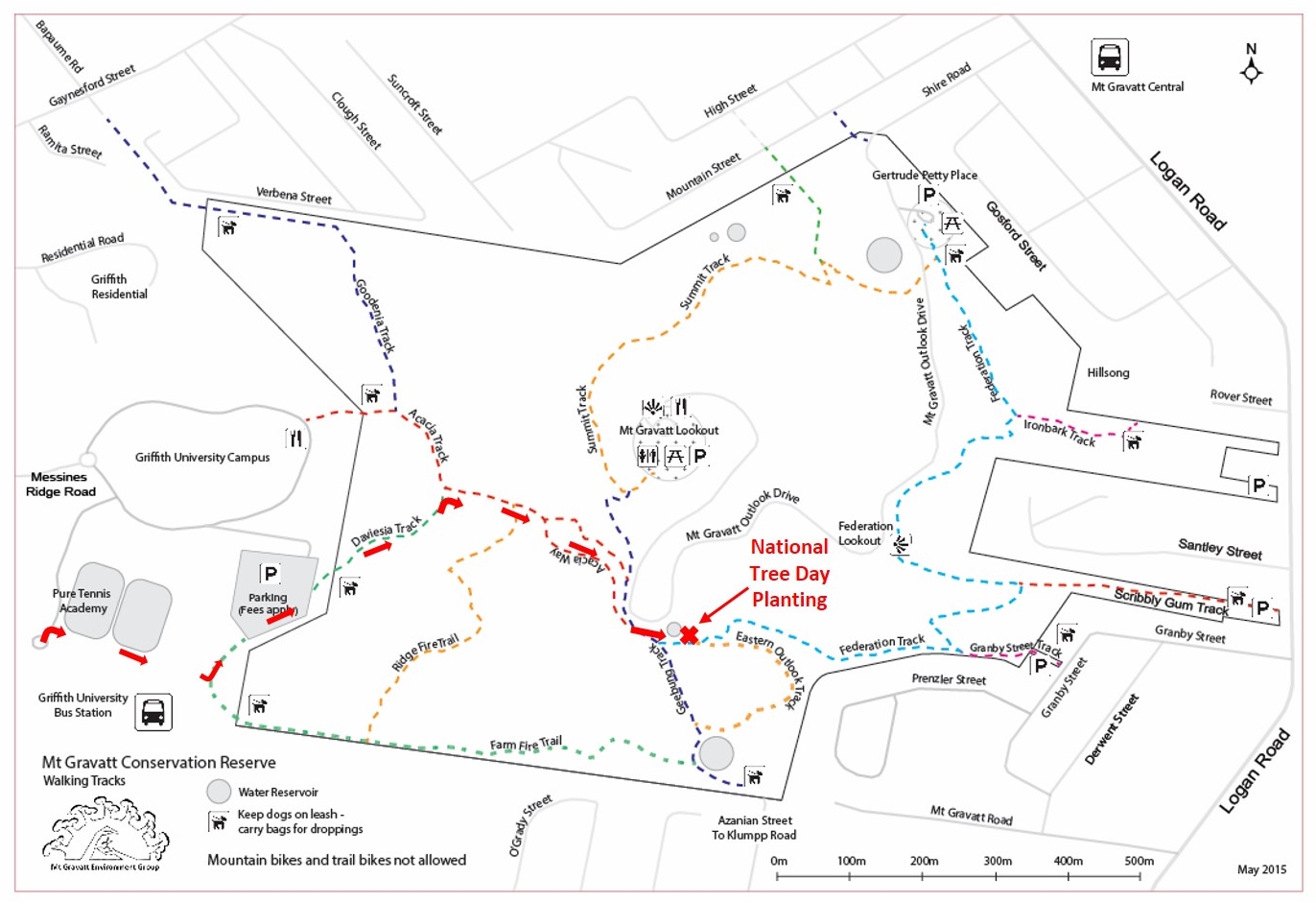
Meet at junction of Federation and Geebung Tracks

National Tree Day public transport2

Drive via Shire Rd – Walk from Griffith Bus Station

Eastern Spinebill 3 - 23 June 2014

Eastern Spinebill Acanthorhynchus tenuirostris

Driving – via Shire Road

Bus – walk from Griffith University Bus Station

Small forest birds need a variety of food ranging from nectar and grass seeds to insects. Also vegetation that provides safety for feed and nesting.

Children welcome with adults..Children welcome with adults.

Join Griffith Mates students and community members for 2015 National Tree Day planting to establish the Small Bird Habitat display garden and plant Koala trees.

Wear enclosed shoes & hat.

Morning tea and equipment provided.

By: Michael Fox

Alan Moore, Photography Workshop leader, and I were planning the trail for the participants’ photo assignment when I found this flamboyant new addition for our Flora & Fauna research.

Our 2015 Photography Workshop will focus on macro-photography like this amazing shot taken by Alan.

Want to learn see Nature Close-up? Register today for Workshop on Sunday 24th May

Only a few places left!

Koalas - night - Laurie - 11 May 2015

Walking at night look up for Koalas

By: Laurie Deacon

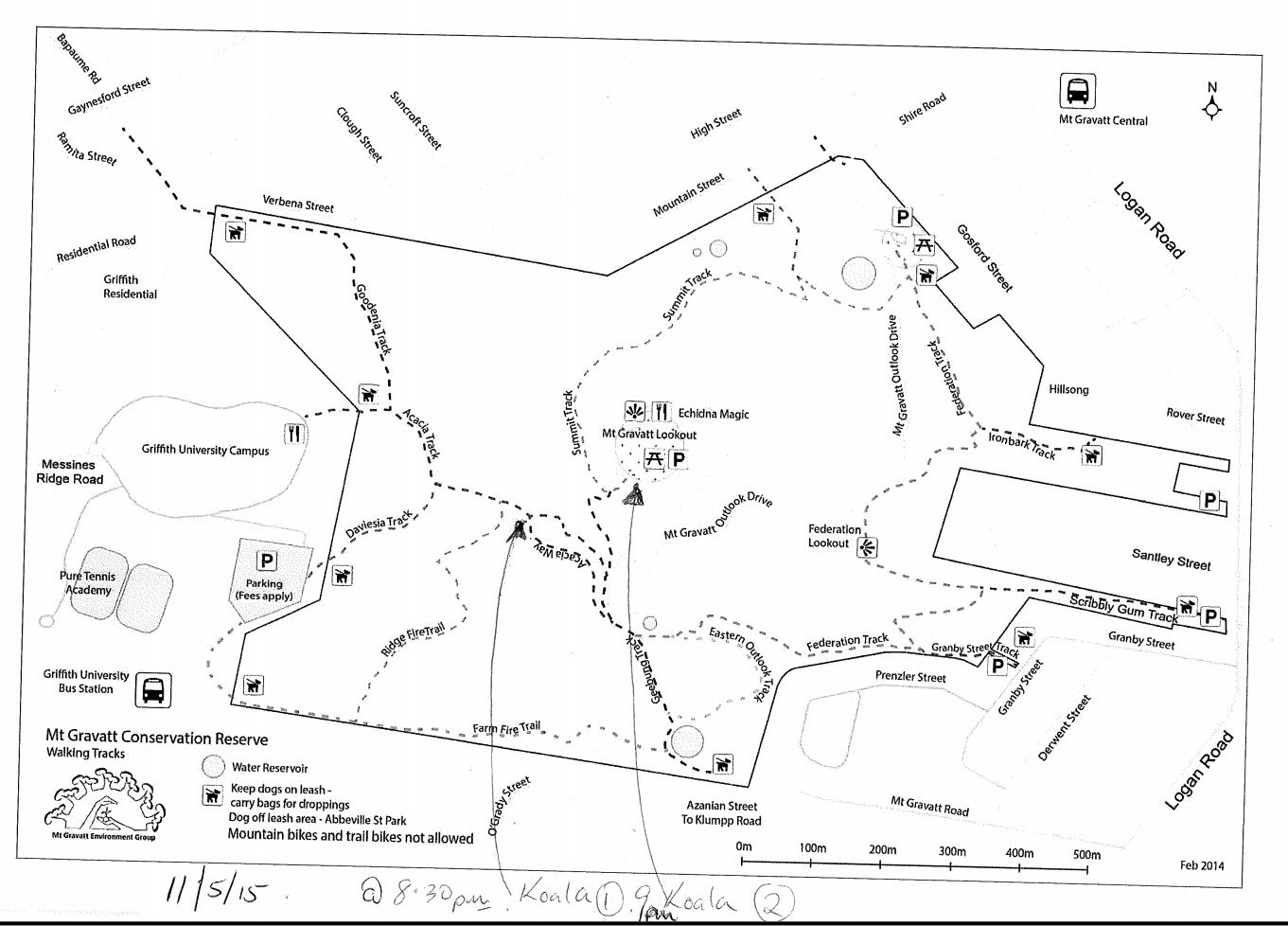
I went walking last night on the mountain with Mike, Liliana and Matt …spotting ….and we saw two Koalas at two different sights as per the map attached.

Koala One was seen at 8.30 pm and was pretty much in same location as were Pieter saw our koala on the March morning walk. At the fork on Acacia Way.

Both were very cute, middle sized Koalas.

Koala one was on the ground beside the track and then when he/she saw us rushed off in the bush and slowly went up a mid-sized straight tree, but stopped and looked at us. She hung around the base of the tree for about 5 minutes. She seemed young, in good health and maybe a girl.

Koala Two seen around 9pm and was sitting high in a gum just about at the top of the Geebung Track where it breaks onto the park area..(currently covered on steel yards for new public toilet construction). She was cuddled up on a long straight branch quite open and the breeze was making her hold on very tight as the branch was swaying. We could not see if she had a clear white tummy as she was balled up. But was looking around.

Was a beautiful night for a star light walk and then a picnic rug for a home baked Honey and Apple syrup cake and candles in the park for Matt’s 25th Birthday.

Best present he said was seeing the Koalas.

Koala - 3 May 2015

Koala visitor Fox Gully Bushcare – 3 May 2015

By: Michael Fox

We have regular sightings on Koalas Phascolarctos cinereus in the Reserve and we know they have been breeding for several years. See the 2011 report about Sparky and her joey, they live near an Energex sub-station.

What we have not yet been able to do is identify individuals. While we are getting more sightings reported we don’t know how many different individuals live in the Reserve and what area their territory covers.

Is today’s Koala visitor the same one I videoed in March grazing on fresh Tallowwood Eucalyptus microcorys in Fox Gully Bushcare?

Koala - Fox Gully - 28 Mar 2015 - J Fox

…… Female Koala – snowy white chest ……… 28 Mar 2015

One thing we can do is identify that both individuals are females. The pure white chest fur is typical of female Koalas. Males have dirty chests from rubbing their scent glands on tree bark to mark their territory.

Further research is needed to establish ways to identify individuals by differences in facial features and fur patterns.

« Previous PageNext Page »