Mt Gravatt Environment Group


IMG_6877

Michael Fox – Fox Gully Bushcare

By: Michael Fox

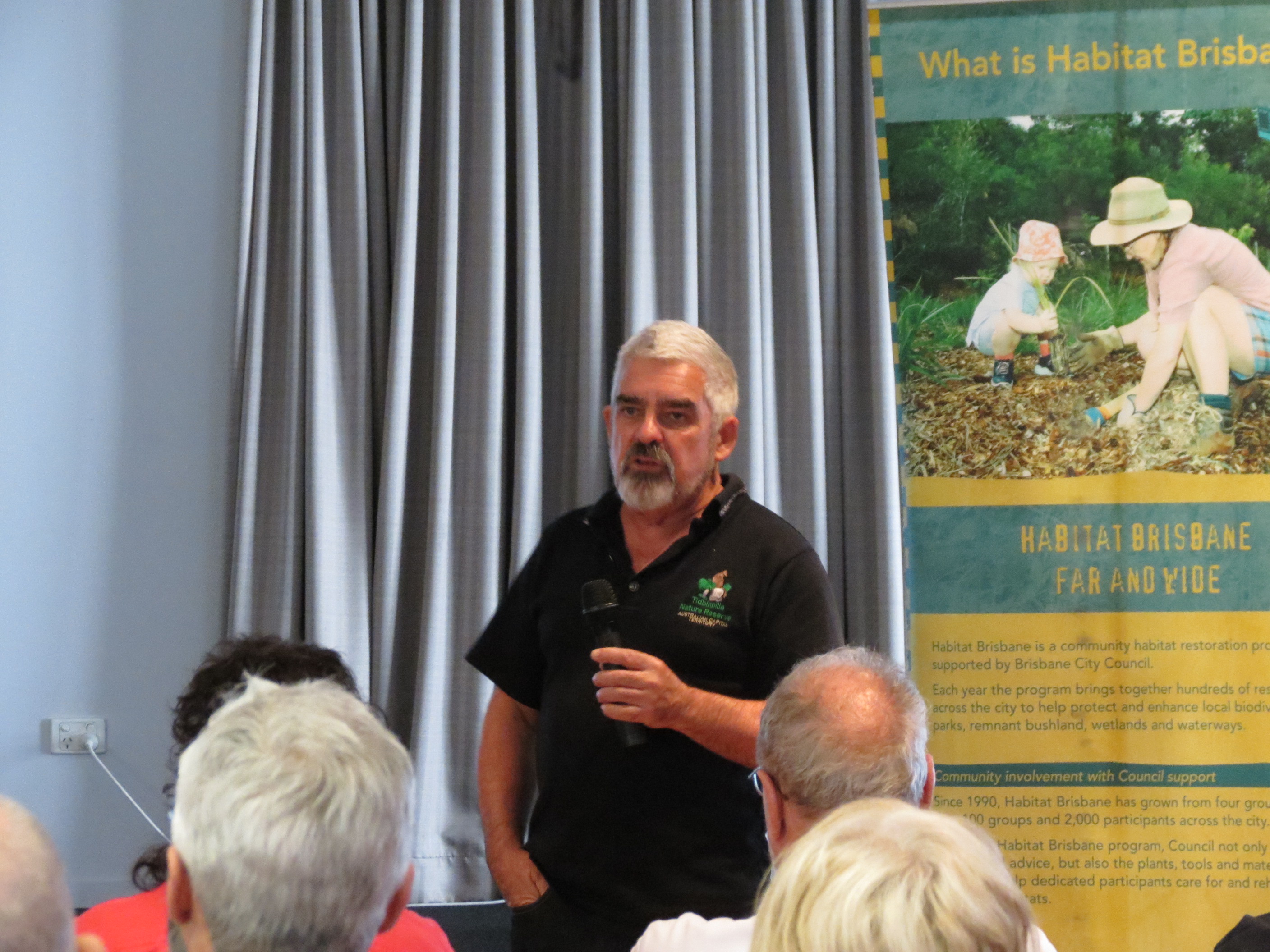
I was honoured, yesterday, to present to  about 40 bushcarers attending the Habitat Brisbane and Wildlife Conservation Partnerships, Orientation day.

Preparing my presentation was a very positive experience as I reviewed and reflected on what I have learned and what out bushcare teams have achieved.

Download a PDF version of presentation

I used a number of videos from our CD Flora & Fauna of Mt Gravatt Conservation Reserve and our website. A sample:

.

Asparagus Fern - 2 Prong Hoe - June 2014

Cyclone 2 Prong Hoe

By: Michael Fox

Garden escapees like Asparagus Fern Asparagus aethiopicus are one of three key threats to the long term future of the two hundred sixty-nine native plant species found in Mt Gravatt Conservation Reserve.

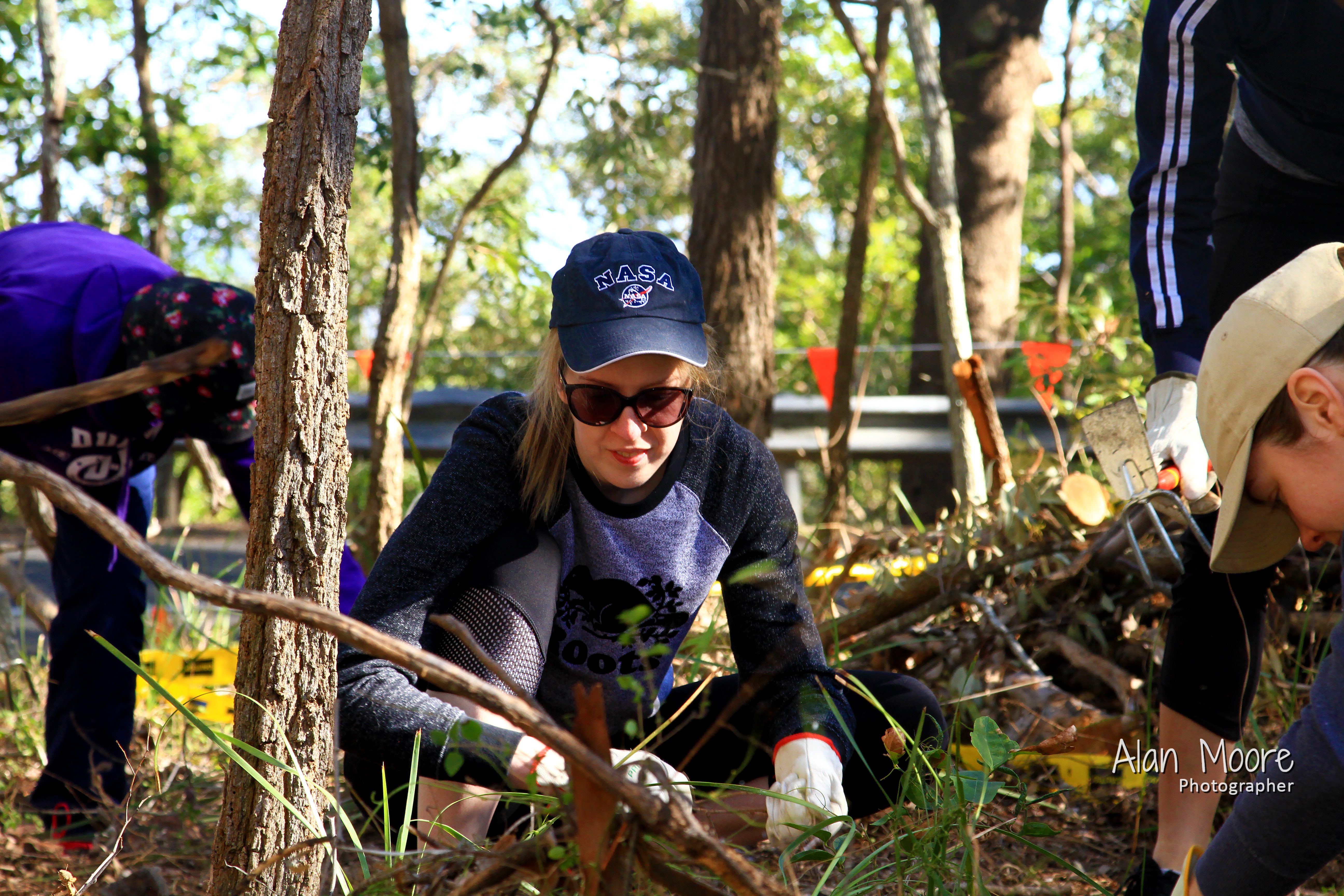
Weeding a 66ha reserve is a bit more of a challenge than managing the average backyard and the bushcare workforce are all volunteers. So getting the “right tool for the job” is critical for team productivity and workplace safety.

Asparagus Fern - 2 Prong - edges - June 2014

Waging war on weeds

The Cyclone 2 Prong Hoe is an excellent general purpose tool for restoration work:

  • light weight allows longer periods of continuous use; and
  • long handle reduces back strain by reducing bending and allows for safer access to weedy slopes.

Most important the 2 Prong Hoe is the ideal weapon for attacking the prickly difficult to tackle Asparagus Fern.

Asparagus Fern - seeds - close - 3 June 2014 - Alan Moore

Major source of re-infection

The strong narrow prongs easily hook in under the crown of the plant allowing the whole root mat to be lifted out in one piece. For larger plants where to root mat for one plant can be cover more than one square metre use the hoe to lift the root mat around the edges to reduce the weight before lifting from the crown.

Remember to wear gloves when you attack this prickly weed. I like the Flex Tuff gloves which offer good protection while allow a good sense of touch.

Asparagus Fern is highly infectious with dozens of seeds that birds love so every plant removed is one less source of re-infection.

By: Michael Fox

As part of the continuing development of Mt Gravatt Environment Group, Laurie Deacon has taken on the role of President. I will continue to work closely with Laurie, continuing as Editor of Mt Gravatt Environment Group blog and Fox Gully Bushcare co-coordinator.

IMG_20140412_132834Over the past decade the team has, expanded restoration activities in seven sites surrounding the Mountain, strengthened relationships with community, university and school stakeholders, contributed to research of Mt Gravatt Conservation Reserve, increased use of the Reserve by community members and developed community education. Membership is strong and members have received local, state and international recognition of their work in Nature Conservation.

Laurie brings a wealth of experience with volunteer groups and environmental work ranging from membership of the management board of a national environmental NGO, protecting endangered Cassowaries in the Daintree, presenting at the UN Congress for Environmental Education: June 2013 in Marrakesh and working with turtles and the local Majestic Park Scout Group.

Laurie is currently taking our Pollinator Link initiative Queensland wide, gaining political support and showing the way with the Pollinator Link garden in Mt Gravatt State High School.

So how does the world create such an amazing person?


photo-2

Laurie was born at Tewantin and grew up on lake Doonela catching mud crabs and feeding pelicans. A family heritage based on  Maroochy River cane farming Grandparents  and Palmwoods orchards Grandparents. Laurie, went to  Nambour State schools doing Agriculture and Animal husbandry with the vision of a future as a vet.

Then changed direction with a Degree in Occupational Therapy specialising in the human species rather than other animal species. Laurie has provided Rehabilitation across a range of physical, paediatric and mental health patient/client groups; across Acute Hospital, Community Health & Tertiary Health Service Models.  Including a time working as Director of Occupational Therapy (OT) at Nambour General Hospital. Laurie’s roles have included designing and developing these services including research, development of standards, planning and implementing interventions and services.

20131123_125338

This broad OT therapy experience allowed allowed Laurie to appreciate the necessity and responsibilities of  providing a healthy natural environment in which humans can learn, grow and thrive. Her interest has always been in getting people to reach their potential for a healthy well balanced life …. doing things of real value! “It’s the people that make the difference but it’s the environment that makes the people.”   Scientific evidence supports the encouragement of  everyone to be active in their neighbourhood doing things they care about … and everyone has a special skill  that is needed to achieve a healthy local community.

As Laurie says: “I am involved in many ‘whole of landscape conservation programs’  as well as individual species programs. Estuaries full of fish and birds and wildlife corridors of any habitat through cities, farms, and bush …I love them, I see them. Biodiversity in all its glory is better than going to the Paris Louvre.

I started my interest  in community service with Save the Franklin Dam campaign at uni in 1982 and then later FIDO as a ‘formal’  socially active community person.

I have seen that folk need to have a one off visceral experience with nature or a ‘over period of time relationship with nature’ before they will care and value it. So getting your feet wet in creeks and looking deep into the eyes of a koala up close and personal is vital for our people to really come alive.”

Griffith Mates Team

Griffith Mates Team

By: Michael Fox

A beautiful autumn Saturday morning and Griffith Mates – Sienna, Ben, Lily, Abraham and Larissa joined Roger and myself at Fox Gully Bushcare site. The team removed another large area of Fishbone/Sword Fern Nephrolepis cordifolia and installed logs on the slope to create a safe work space and control erosion.

When the team from FWR Group joined our Wednesday Bushcare in September 2010 to start clearing, the Fishbone Fern covered an area larger than the average Brisbane house block – approximately 1,000 square metres. By the time the FWR team returned six months later, in March 2011, natural regeneration had already restored a good coverage of native grasses like Ottochloa gracillima Graceful Grass. This Living Mulch of native grasses controlled erosion, suppressed weed regrowth, retained moisture and provided food for caterpillars of the Brown and Orange-streaked Ringlet butterflies.

Ben reaching Glider box with GoPro camera

Ben reaching Glider box with GoPro camera

By the time the Griffith Mates team finished another huge area had been cleared and stabilised with logs. Restoration work on the Fishbone infested areas of Zone 8 is now almost complete and with further help from Griffith Mates we expect to finish the weed clearing this year allowing nature to take over with the natural regeneration of local grasses, herbs, ferns and vines.

To finish the morning I showed the team how we check nest boxes installed to provide substitute nest hollows for birds and gliders.

We found the Squirrel Glider family in two boxes and the female Brushtail Possum is still living in the Kookaburra box. She was quite curious about the camera, reaching up to sniff the lens. It is a particular pleasure to share this wildlife experience with young people from places like Hong Kong.


By: Michael Fox130502_0002_v2.5_03_med

Restoring our local forest must be done without contributing to deforestation and/or damage to poor communities in other countries. Developing printed material like flyers and newsletters seems to run counter to this vision. However, even with the active use of social media like Facebook and email, effective engagement of community members still depends on delivering physical documents that can be read and discussed by family members or picked up in the local library.

Since 2011 Worldwide Printing Solutions at Upper Mt Gravatt have been providing us with high quality printed products, excellent advice and support, all delivered at competitive prices. Worldwide also share our respect for the environment and focus on sustainability:

“In October 2012, we became the very first printing franchise in Australia to be certified NoCO2, meaning we’re 100% carbon neutral in a majority of our national network of centres. We’ve achieved this through making big positive changes internally, while also investing heavily in three major sustainability projects in India, Cambodia and China.” Our sustainability ripples worldwide

It was a pleasure to read the Worldwide report showing that the paper in flyers and newsletters we distribute is certified sustainably sourced – FSC (Forest Stewardship Council of Australia), the factory printing our material is solar powered, environmental inks are used and carbon offset credits are used to fund projects in countries across the world including biofuelling in India, low impact house stoves in Cambodia and wind power in China.

Working with suppliers who share our values is an important part of building a community group that continually works to add value to our environment, community and local business.


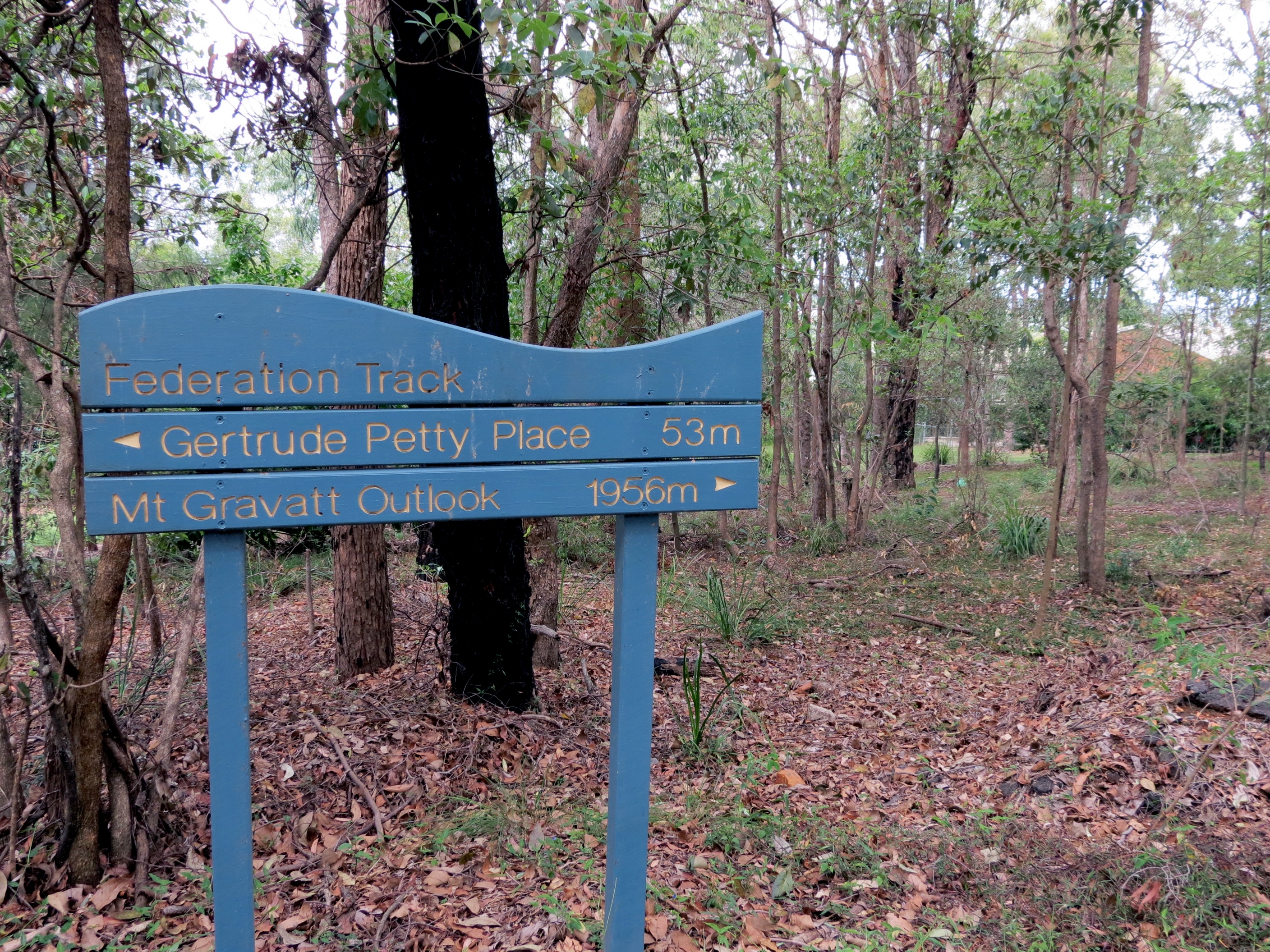
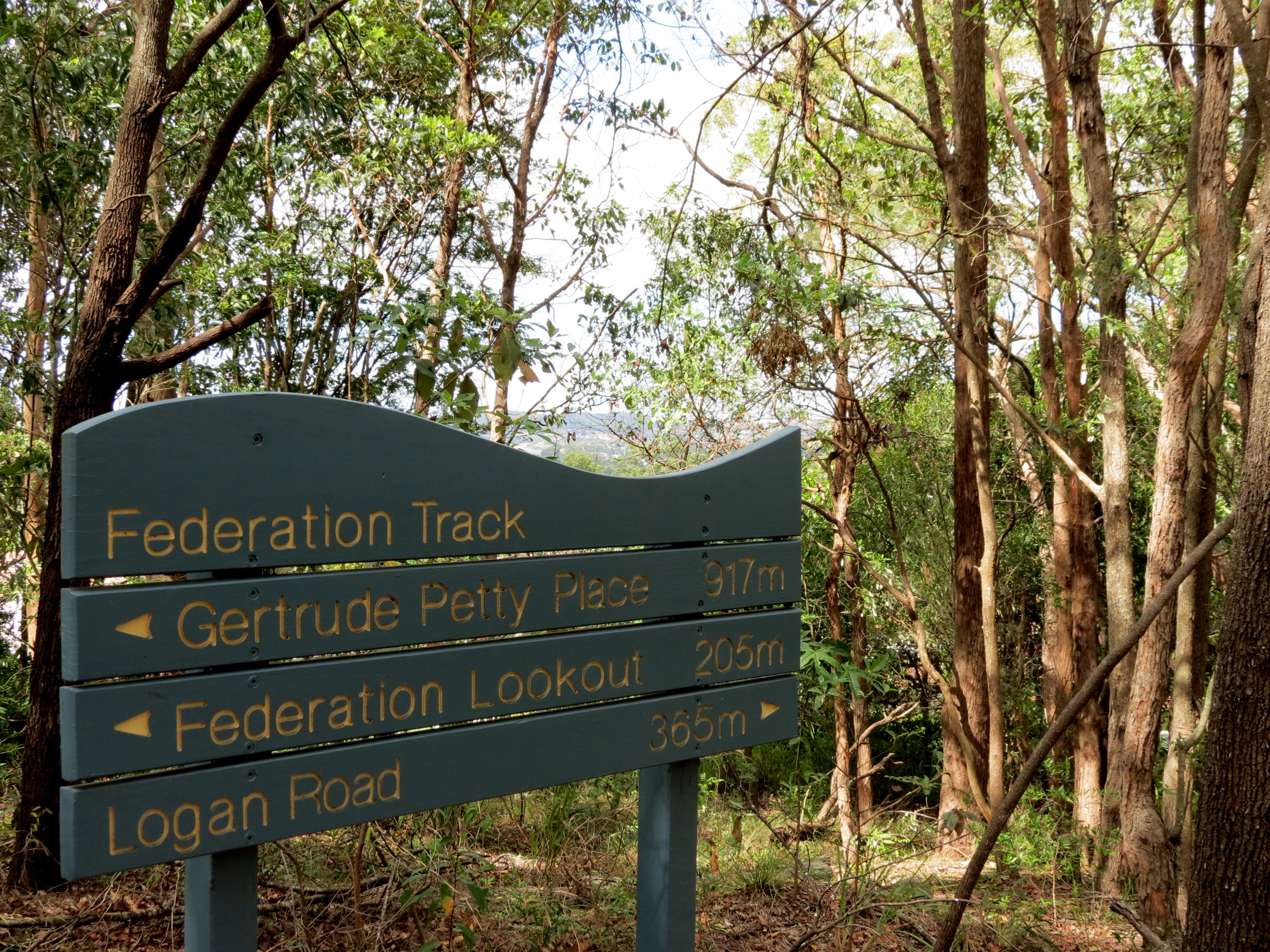
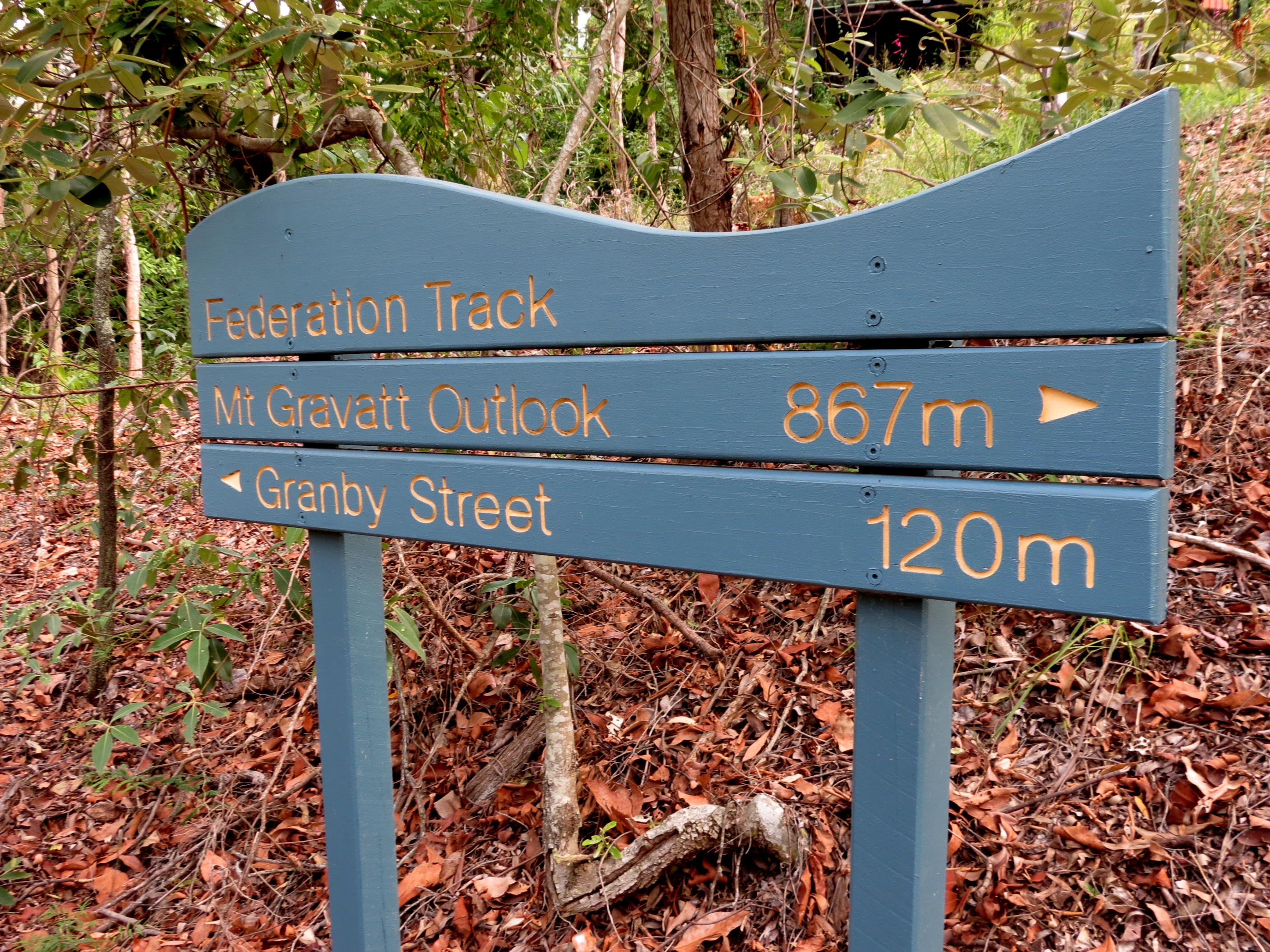
Federation Track sign 1 - 10 Feb 14

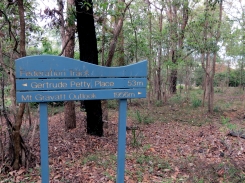
Federation Track – 1.9km to top of mountain

By: Michael Fox

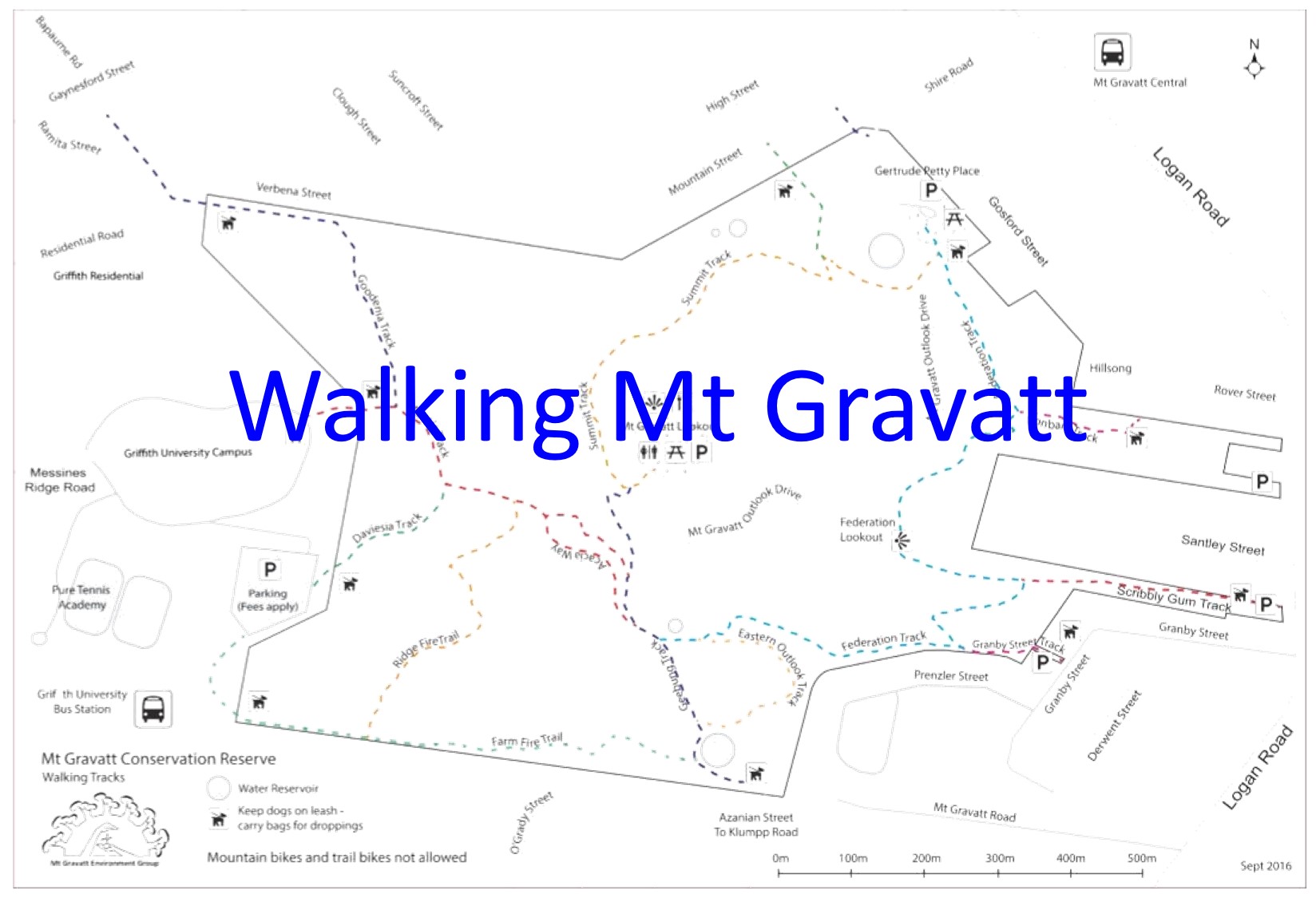
Part of preparing an accurate and useful map/walking guide for Mt Gravatt Conservation Reserve is actually walking all the tracks to check times and signs.

This week I walked the Mt Gravatt Lookout Look starting at Gertrude Petty Place I followed the Federation Track. The track leads through the Gertrude Petty Place Bushcare site where a group led by Sue Jones has been removing weeds and restoring native grasses, vines and trees.
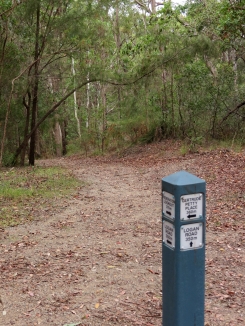
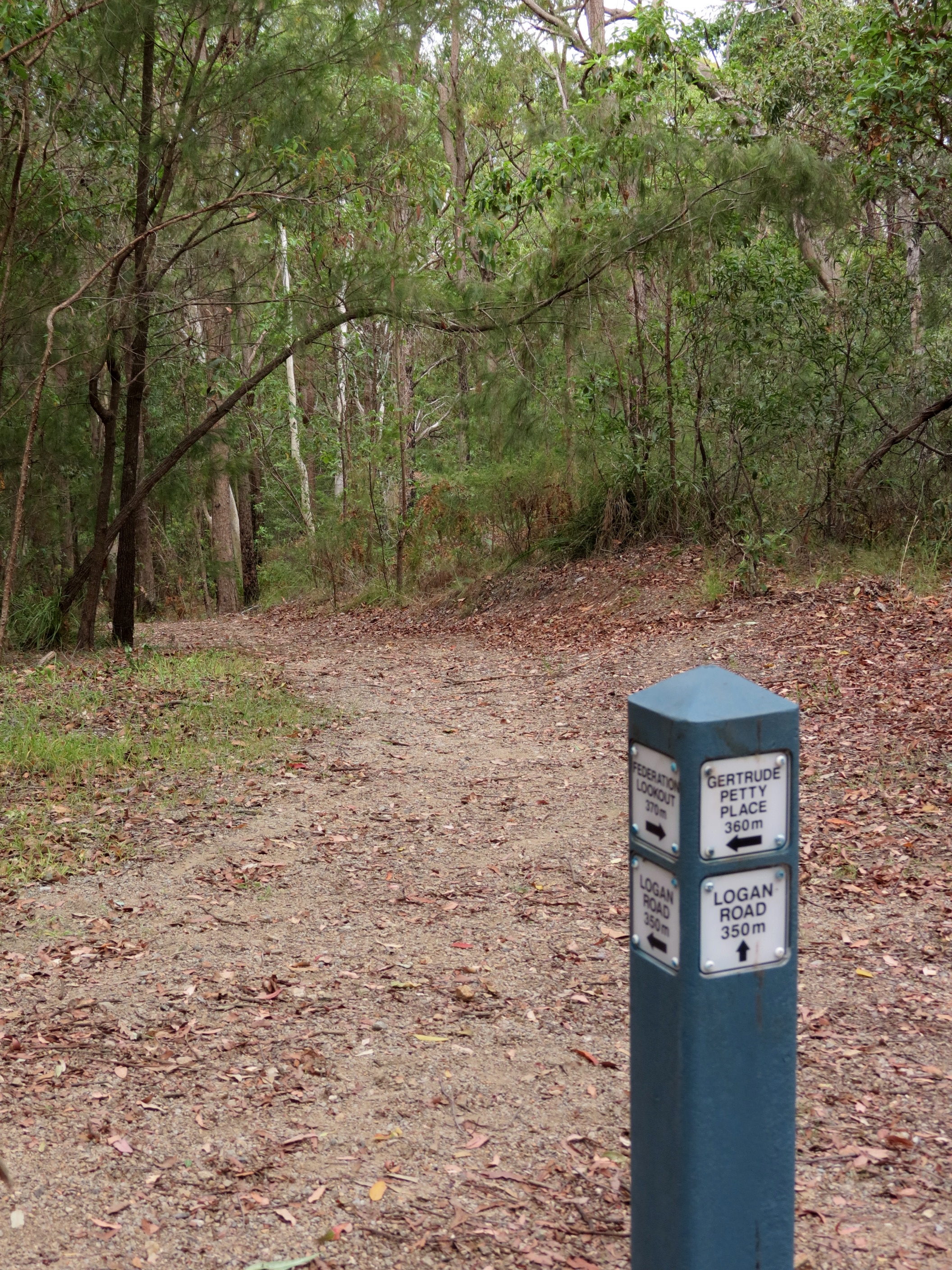
Ironbark Track junction - 10 Feb 2014

Ironbark Track junction – link to Logan Road

.

.

The section of the Federation Track through to the junction with Ironbark Track is very easy walking with no steps or steep climbs. The Ironbark Track currently connects through to Logan Road via the Hillsong Carpark off Rover Street. The long term plan is to bridge the gully at the Rover Street Bushcare site creating a wheelchair accessible track from Gertrude Petty Place through to Mt Gravatt Showgrounds.

.

.

.

.

.
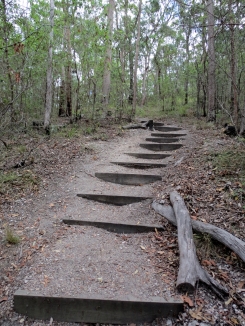
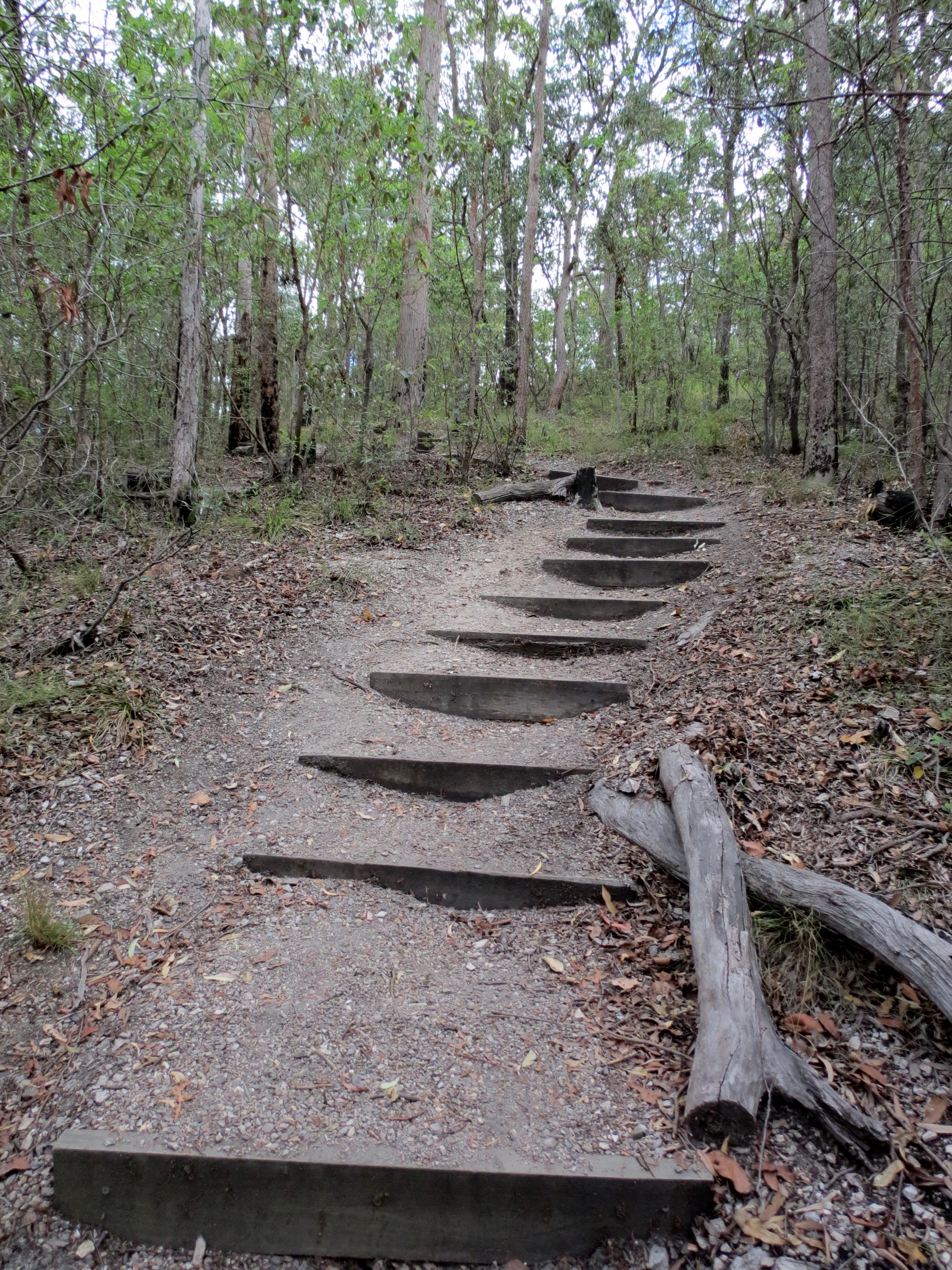
Federation Track steps past Ironbark junction - 10 Feb 2014

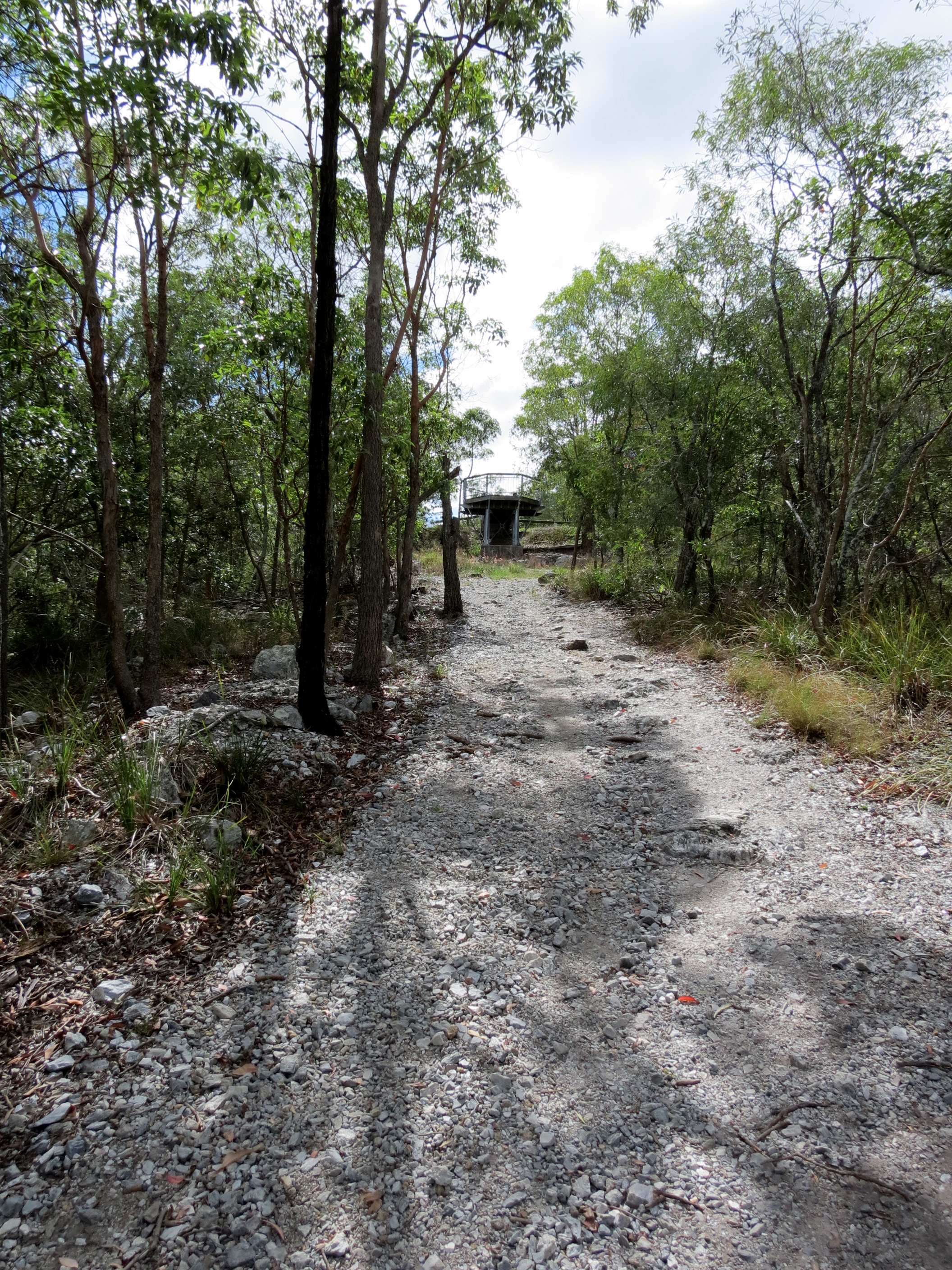
Track climbs to reach Federation Lookout

From the Ironbark Track junction the track starts climbing to reach Federation Lookout.

.

.

.

.
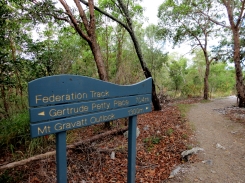
Federation Lookout junction - 10 Feb 2014

Federation Lookout junction

.

.

.

.

.
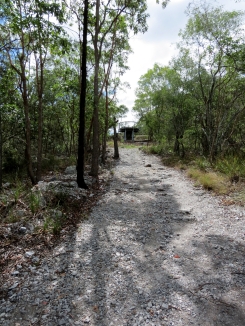
Federation Lookout - 10 Feb 2014

Looking back to Federation Lookout

.

.

A short side track to the right takes you Federation Lookout with excellent views over the city to the east..

.

.

.

.

.

From Federation Lookout the track goes downhill over grey-white quartzite. Large quartzite rocks scattered beside the track create some interesting photographic opportunities.
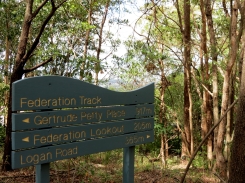
Scribbly Gum junction - 10 Feb 2014

Scribbly Gum Track junction – links to Logan Road at old Scout Hut

.

.

.

.

.

.

.

.

.

.

The Scribbly Gum Track links through to Logan Road at the old Scout Hut opposite Wishart Road. You can park at the Scout Hut to walk directly to Federation Lookout. The walk is quite interesting as it crosses Jo’s Creek before climbing towards the lookout..
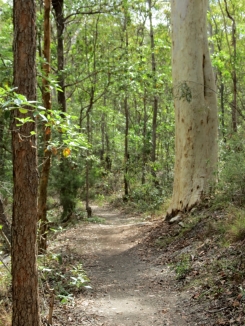
Scribbly Gums - 10 Feb 2014

Scribbly Gums

.

.

.

.

.

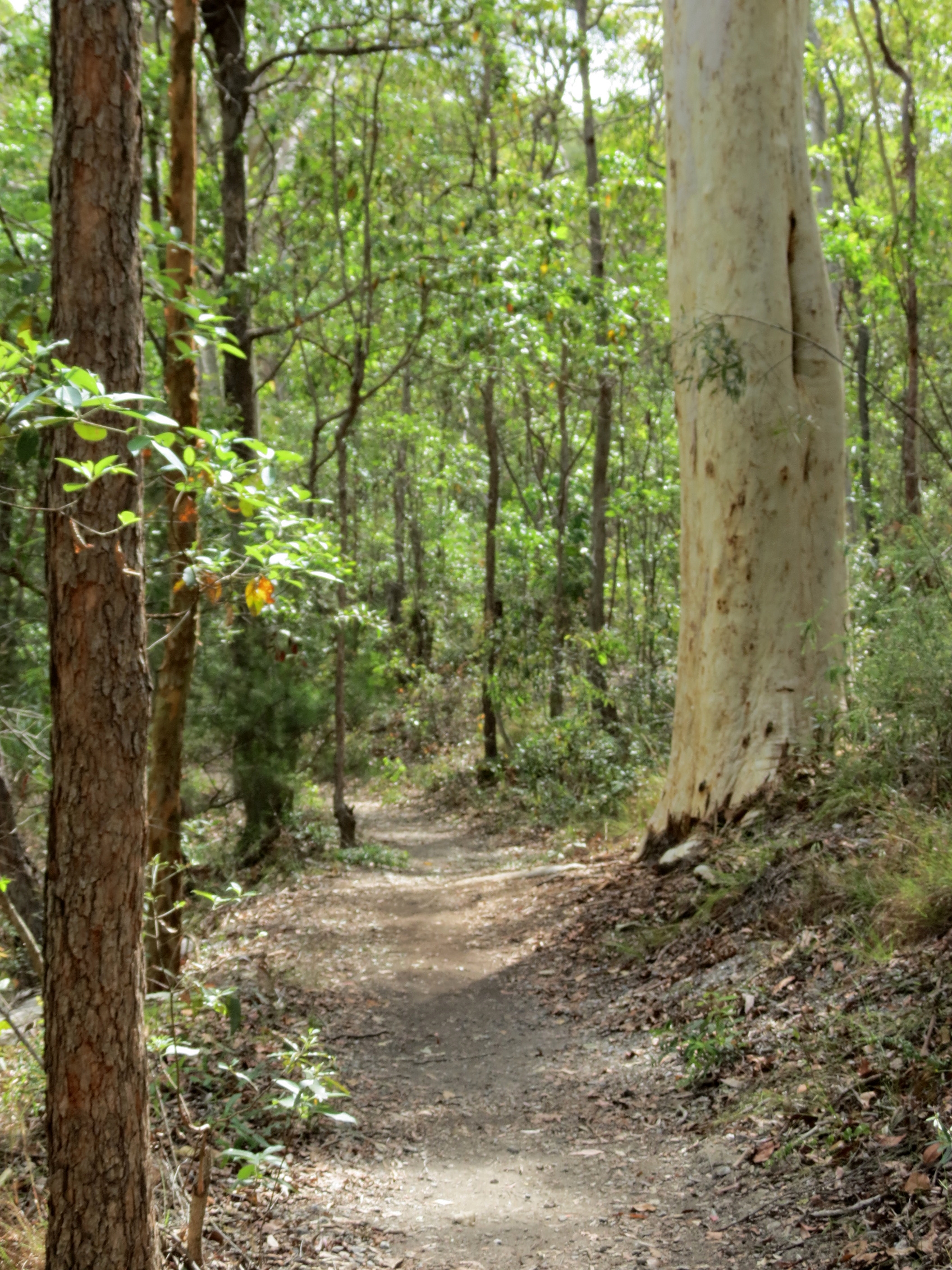
From the junction the track winds though Scribbly Gums Eucalyptus racemosa one of our iconic Australian trees that look like someone has been scribbling on the bark. “That can’t be scribbling, it is right up there metres above ground.” The scribbling is the work of moth larvae feeding on photosynthetic tissue just below the epidermal cells in the tree trunk.

.

.
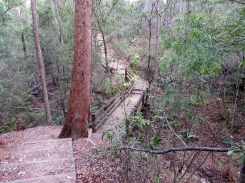
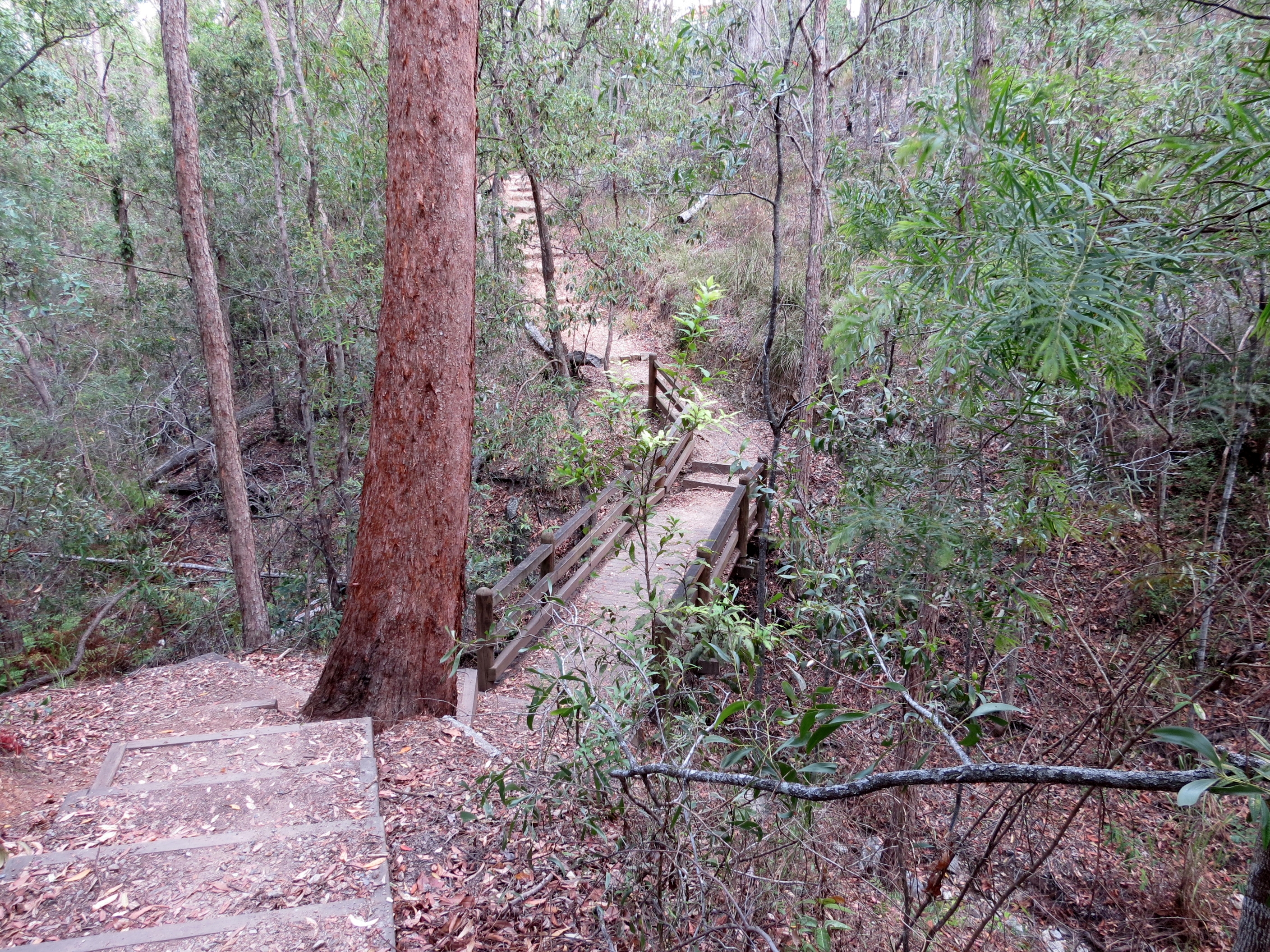
Bridge - 10 Feb 2014

Jo’s Creek Bridge

.

.

.

.

Pause on the timber bridge crossing Jo’s Creek and watch for small forest birds..
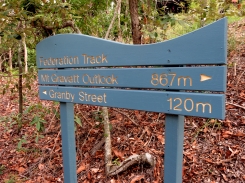
Granby Street sign - 10 Feb 2014

Granby Street junction

.

.

.

.

.

.

The Granby Street Track leads to Logan Road via Granby Street.
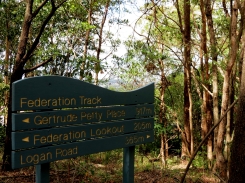
Federation Greebung junction - 10 Feb 2014

Federation Geebung Track junction

The track to Mt Gravatt Outlook is a solid climb gaining 55 metres in height over half a kilometre.

.

.

.

I stopped where the Federation Track joined the Geebung Track to check restoration work on the degraded weedy area beside the track.

.

.
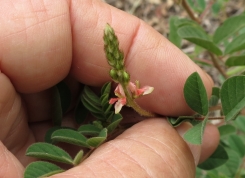
Indigofera hirsuta - flower close - 7 Feb 2014
Hairy Indigo – Indigofera hirsuta

I am always pleasantly surprised at the resilience of our native flora and fauna species that hang on despite massive disruption by man and weed invasion. Among the metre high Guinea Grass Panicum maximum v maximum, Cobblers Pegs Bidens pilosa and Red Natal Grass Melinis repens, I found Slender Flat-sedge Cyperus gracilis, Creeping Beard Grass Oplismenus aemulus, Scrambling Lily Geitonoplesium cymosum and a healthy stand of Hairy Indigo Indigofera hirsuta an attractive native shrub which is caterpillar food plant for the Long-tailed Pea-blue and Common Grass-blue butterflies.
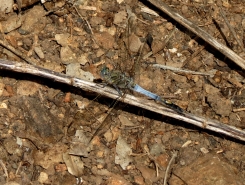
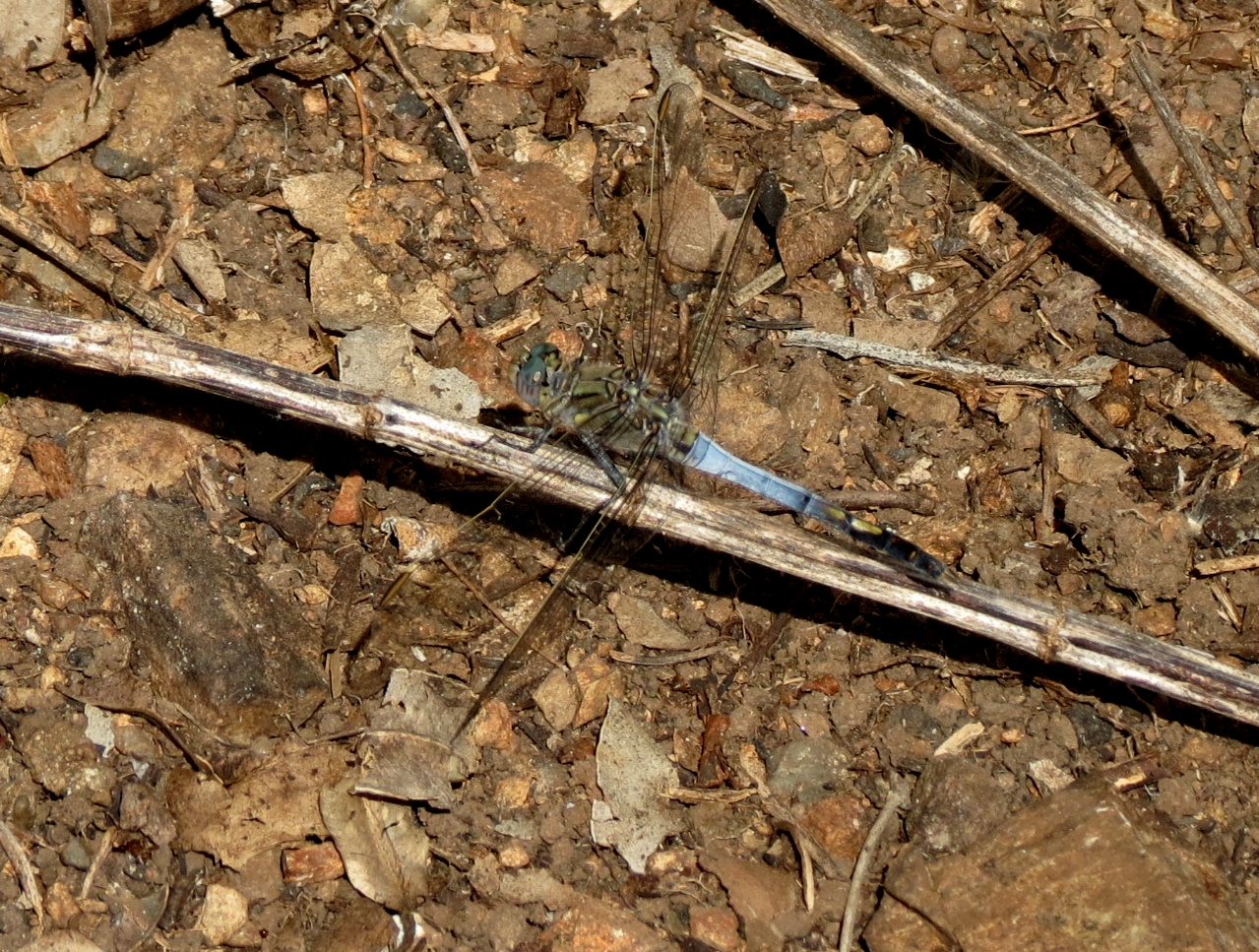
Blue Skimmer Dragonfly - close - 10 Feb 2014

Blue Skimmer Dragonfly

.

.

I also spotted a Blue Skimmer Dragonfly Orthetrum caledonicum resting in the sun.

.
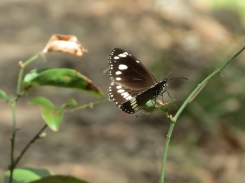
Common Crow - 10 Feb 2014

Common Crow butterfly

.

.

.

.

Following the Geebung Track to the Mt Gravatt Lookout I came across a number of Common Crow Euploea core butterflies performing mating flights.
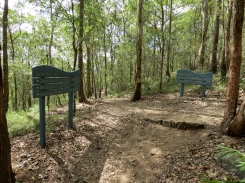
Geebung Summit Track junction 10 Feb 2014

Geebung Summit Track junction

.

.

.

.

.

The Geebung Track joins the Summit Track just short of the Lookout picnic area.

.

.

.
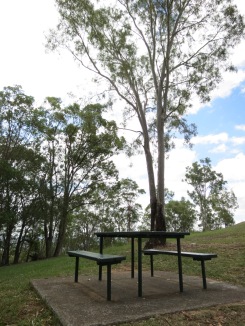
IMG_5979

Lookout picnic area

.

.

.

.

Have a picnic with the family …

.

.

.

.

.

.

.

.
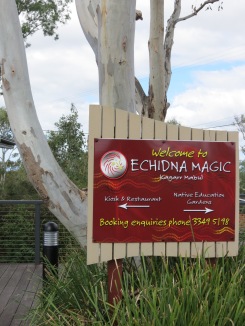
IMG_5982

Echidna Magic

.

.

.

have lunch at Echidna Magic …

.

.

.

.

.

.

.

.

.

.
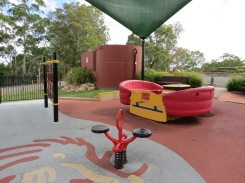
IMG_5984

Lookout playground

.

.

.

enjoy the playground …

.

.
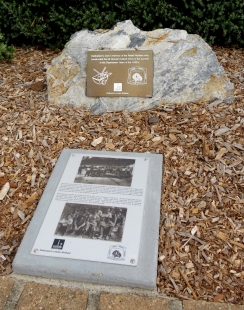
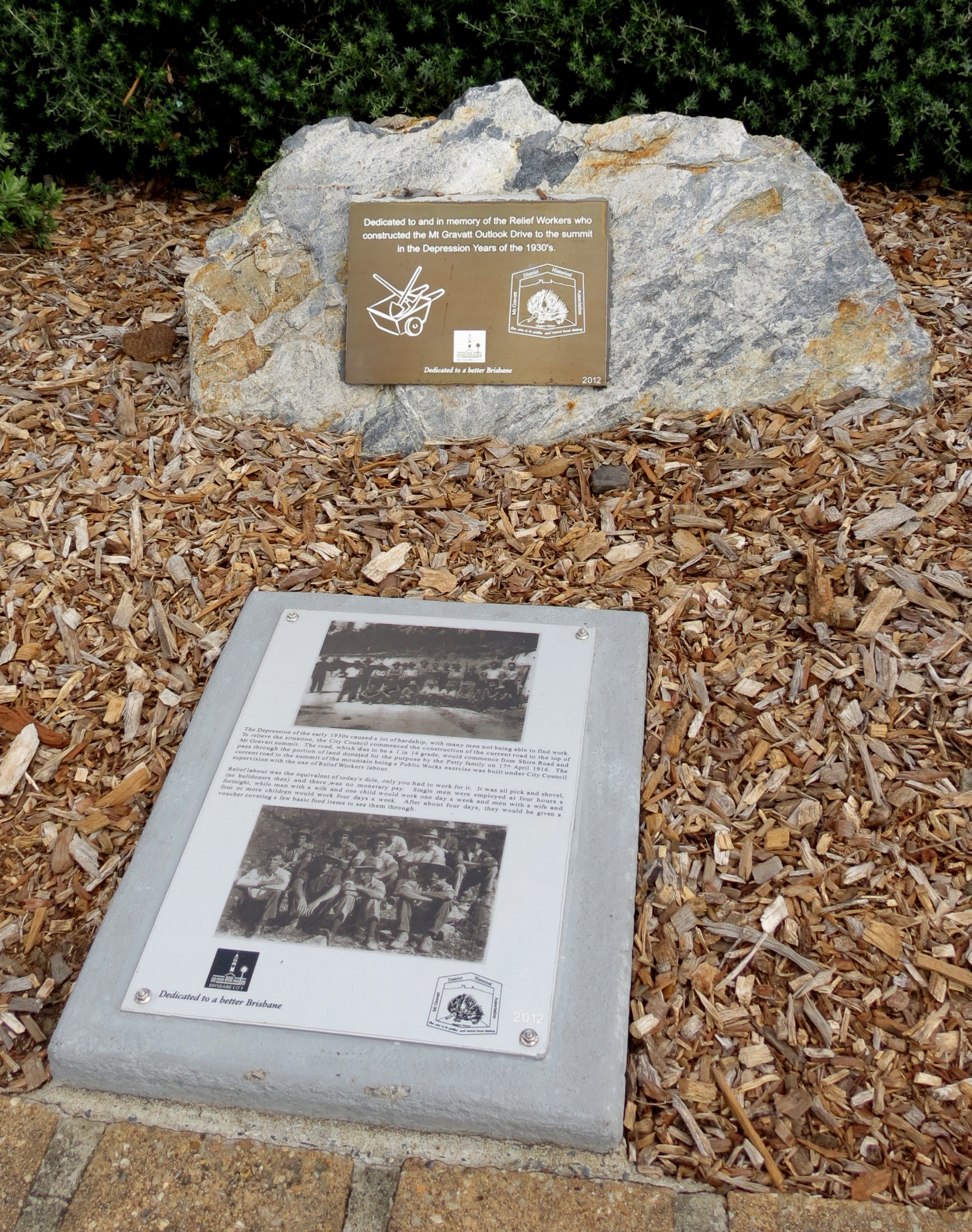
Historical Societ plaque - 10 Feb 2014

Story of road builders

.

.

.

.

or learn some local history.

.

.

.

.

.
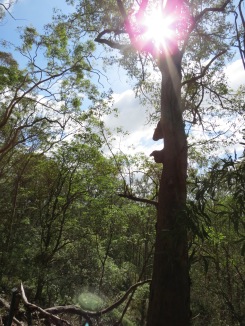
IMG_5997

Old growth trees on steep slope

.

.

.

.

.

.

After refilling my water bottle I returned to Gertrude Petty Place via the Summit Track which winds around the northern face of the mountain.
By: Michael Fox

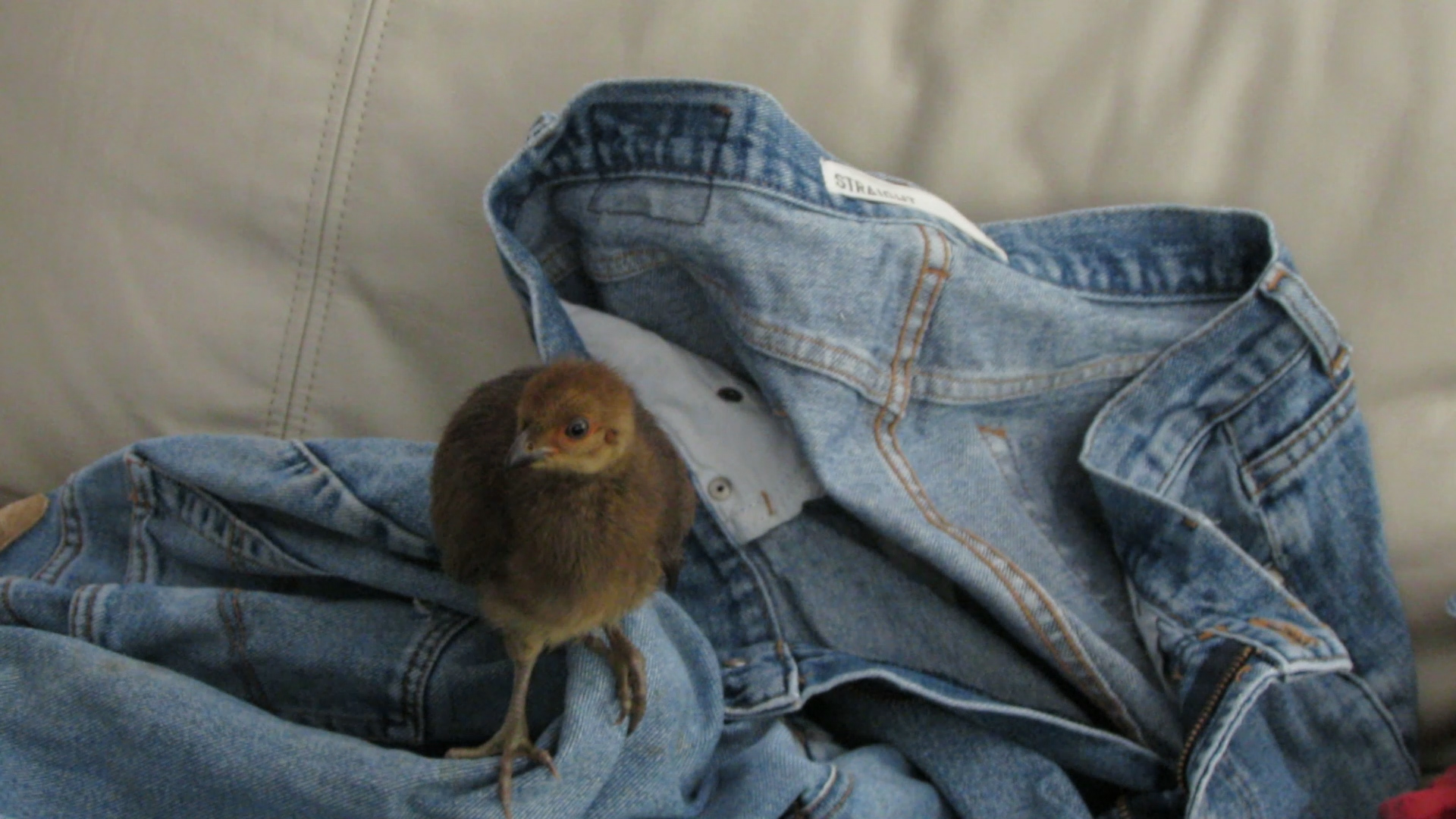
2014 is off to a good start. Lots of Koala sightings, including a joey which gives us two joey in Fox Gully in the last twelve months, Kookaburras hatching chicks and Squirrel Gliders breeding in our nest boxes and today a Brush-turkey chick.

IMG_4148

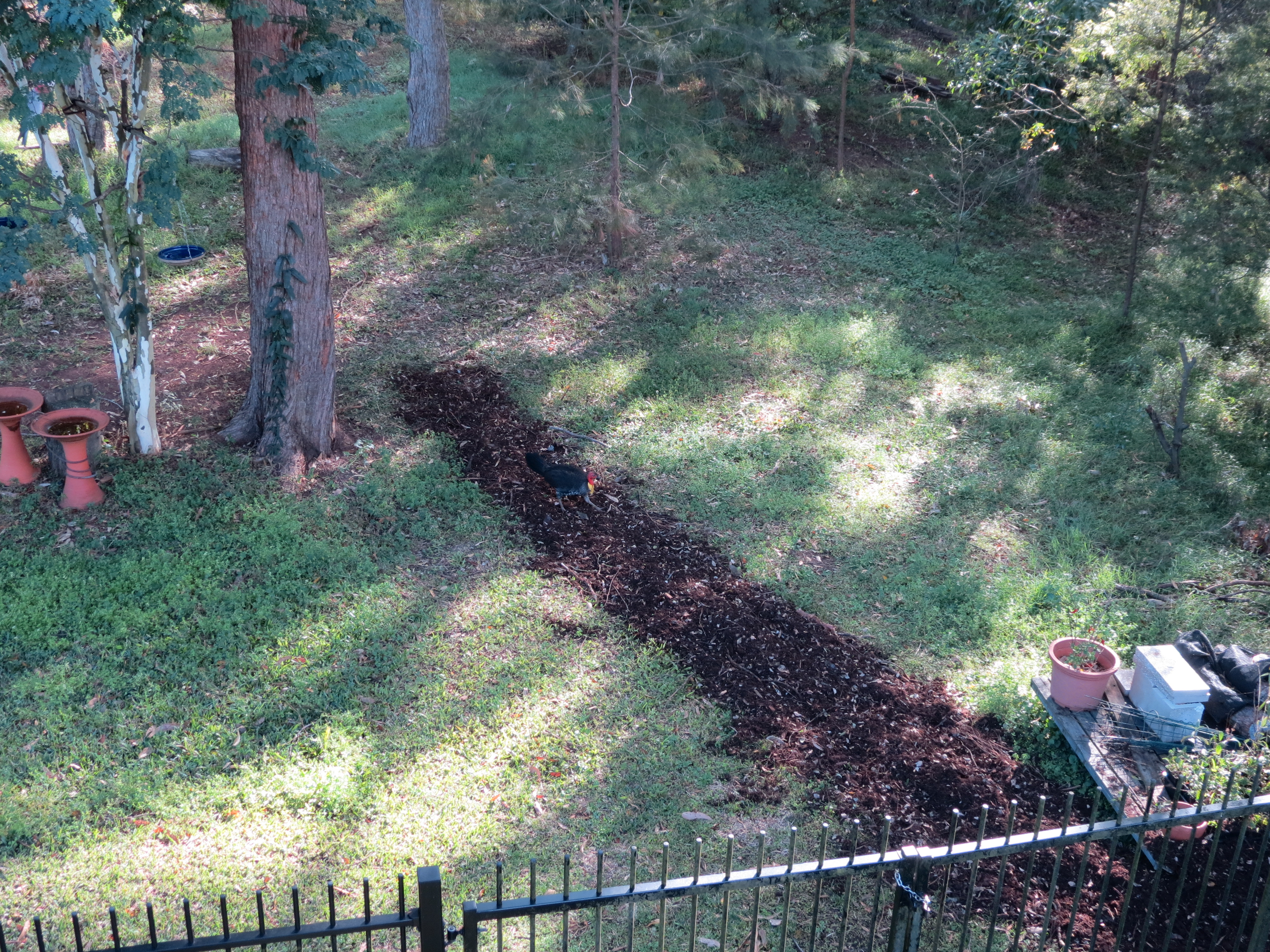
Very neat gardener – Brush-turkey pinching mulch

MVI_5711.MOV.Still004

Mmmm … do I like this place?

We have been watching the male Brush-turkey building his mound and playing host to visiting females since July last year. One morning we looked out to find him pinching mulch … a very tidy gardener, he neatly scraped the mulch about 4o metres from our yard to his mound and left the grass spotless by the end of the day.

MVI_5711.MOV.Still010

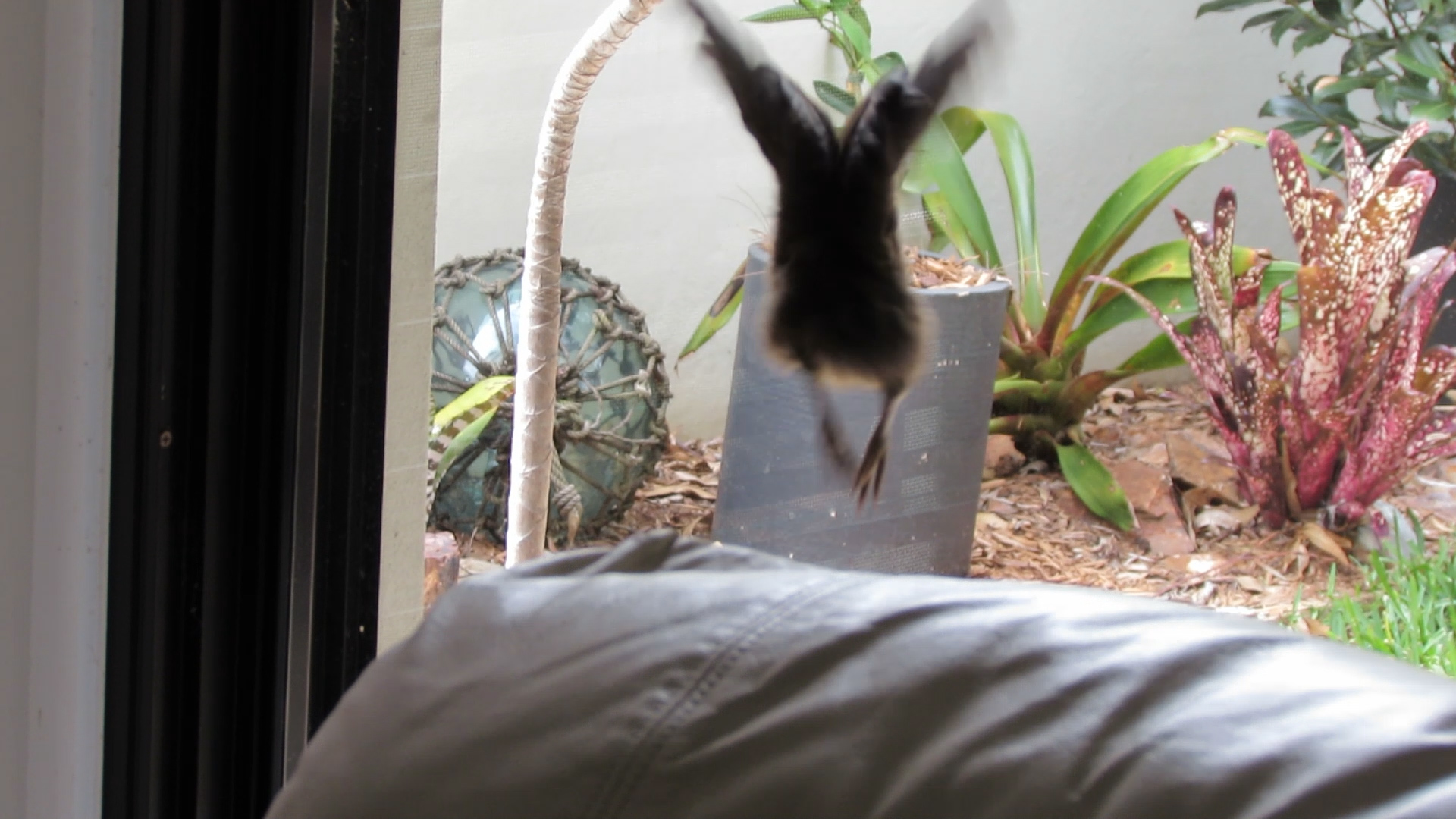
I can fly … whoops … what is that invisible wall?

We have been worried that we missed any hatching’s or that chicks had been taken by a fox or a cat. Today that changed when I walked into the lounge to find this beautiful and confused Turkey chick standing on my clean washing – fortunately just the old jeans I wear for bushcare.

IMG_5715

Released in relative safety of Fox Gully

I quickly grabbed the camera and recorded the visit. Obviously the chick decided the bush was more attractive than my old jeans, however, while he could fly he still has to learn about windows.

I caught him(or her) before he could hurt himself and released him in the safety of the tree cover of the gully.

I hope we have more Turkey chicks visit … perhaps outside so I don’t have to clean up the little gifts they leave behind on the furniture.

By: Jude Fox

Kookaburra feeding chicks - 25 Dec 2013

Kookaburra feeding chicks

On Christmas Day we noticed Kookaburras making regular visits to a nest box installed for Boobook Owls. Observing from the bush track, we watched as a parent Kookaburra landed in the entry of the nest box and heard a great chattering from inside as the parent bird’s head disappeared from view.

Later, using the go pro camera we were able to observe four Kookaburra chicks inside the nest box. Inspired by this finding, on Boxing Day we decided to investigate all the other nest boxes we had installed in the gully. This yielded three Glider boxes containing Gliders and two boxes containing Possums. The Possums were in a box intended for Pale Headed Rosellas and Kookaburras, proving that Possums don’t read nearly as well as do Gliders!!!

Including the nest box that the Lorikeets have used to hatch at least three clutches of chicks that we know of, this is a usage rate of about 75%…not bad for nest boxes that have only been in place just over a year.

Glider - 26 Dec 2013 Gliders - 26 Dec 2013 crop Possum - Pale Headed Box - 26 Dec 2013 crop Kookaburra chicks2 - 26 Dec 2013

Recycle photos

Support our Mountain restoration projects
Recycle your biscuit and lolly bags at Coles

By: Michael Fox

Replas Bollards are to used as station markers for the self-guided walks through Mt Gravatt Conservation Reserve. So it is inspiring to learn that our plastic shopping bags as well as biscuit and lolly packets can now be recycled at our local Coles store.

Planet ARK blog post An Australian first – Free soft plastic recycling at Coles tells the story and lists the soft plastics we can now recycle rather than throw it in your Red Lid rubbish bin. Red Lid bins are gradually replacing the Green Lid general waste bins in line with the Australian Standard for waste bins.

Soft plastic you can recycle in the new Coles bins includes:

  • Bread bags
  • Biscuit packets
  • Frozen food bags
  • Rice and pasta Bags
  • Confectionery packets
  • Newspaper wrap (plastic)
  • Plastic shopping bags
  • Old green bags

Soft plastics like these cannot be recycled in the Yellow Lid household bins.


By: Michael Fox

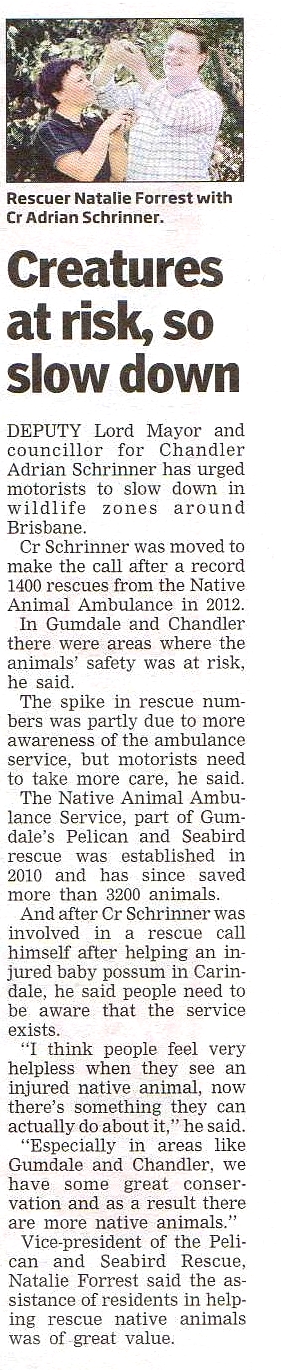
Southern Star - January 16, 2013

Southern Star – January 16, 2013

We host international students at times and today we received a note from the Japanese student who will be living with us during February. One thing she was very clear about: “I want to see a Koala.” With latest sighting, reported this week, of a Koala in a tree beside the footpath leading to Griffith University Bus Station there is an increasing chance that she will see a Koala on the way to university.

It really is fun to watch international students/visitors when they see a Koala just sitting (usually sleeping) in a tree or an Echidna walking across the track … and not a zoo keeper in sight. The most amazing experience though was watching Jian, an international student from Shanghai, when he came face to face with a Koala right on our back deck.

Southern Star - January 16, 2013

Southern Star – January 16, 2013

You can get involved with bush restoration,  reporting any Koala sightings on Koala Tracker or simply slowing down and reporting sick or injured wildlife to 1300 ANIMAL 24/7.

The Southern Star interview with Adrian Schrinner and Natalie Forrest is very valuable in building community awareness. However, it is not only out at Gumdale and Chandler that we need to be increasing careful if we want to have Koalas living in our backyards. We have had one Koala killed on Klumpp Road and another rescued on Creek Road after a car strike.

Read Harry Brampton’s Southern Star story online or forward the link to your overseas friends.

« Previous PageNext Page »