Bushcare


IMG_3882

Prof. Ian O’Connor with development team

By: Michael Fox

The invitation said business casual, however, it is a university …

… and these green leaves gathered around Vice Chancellor Prof. Ian O’Connor are justly proud to launch this year’s must have App – GrowsAtGriffith.

Primary and secondary teachers, kindergartens, bushcare group members, local government teams, libraries, anyone interested in Australian native plants should download this App today. It’s free but looks and works like a million dollars.

IMG_3886

Discussing Slender Hyacinth Orchid photos with Mark and Catherine

Mt Gravatt Environment Group provided many of the 500 plus photos on this first release of this excellent tool. So I was proud to represent our group at this launch and finally meet the two key drivers of this project – Assoc Prof Catherine Pickering, Griffith School of Environment and post-graduate student Mark Ballantyne.

a

a

a

img057

DSCN0089

Sheamus O’Connor – Water Warrior

By: Michael Fox

Congratulations to Sheamus O’Connor who received the Water Warrior Award (Secondary) at Friday’s Healthy Waterways Awards.

Presented by Target Australia the award is open to to individual secondary school students who are undertaking activities that improve the health of our waterways and make a positive difference in our local communities.

Sheamus is a passionate advocate for environmental sustainability, improving bushland and waterways in his local area.  Sheamus became a volunteer and member at the Mt Gravatt Environment Group and Bulimba Creek Catchment in 2010, assisting with the bushcare group every Wednesday after school, and on weekend working bees along side other local residents and the Rotary group.

 In 2011, on National Tree Day, he was responsible for organising 20 students, teachers and family members to rehabilitate the entry of the Mt Gravatt Summit track, in conjunction with the bushcare group. The area was quickly transformed from a weed infested eyesore into the makings of wildlife habitat. In 2012, he continued working in the area, training international and local students from Griffith University, and  again organised a group of students to plant in the area for National Tree Day. Sheamus represented the bushcare group at the 2012 Lord Mayor’s Diamond Jubilee Walk tree planting in Victoria Park.

Sheamus has participated in Clean Up Australia Day for several years, assisting with the Scouts who come along.  He is very mindful that litter on the mountain makes its way into the creeks and degrades habitat for wildlife and explains this to the younger children.

During 2011 and 2012, Sheamus has been a regular attendee at the monthly  Open Days at the Bulimba Creek Catchment Sustainability Centre. He has the role of introducing or thanking the guest presenters, taking new people on a tour of the centre and has given a presentation himself about looking after chickens.  He is very knowledgeable about native plants and assists others to make selections for their yards. Sheamus has also assisted the catchment group at an information stall for Green Heart Fair.  He talked to many people about bushcare, looking after waterways, and plants to encourage native species in the home garden.

In 2012, Sheamus was invited to be part of Council’s school holiday program, giving a presentation about chickens at the Holland Park library.  The children were fascinated with his chickens and the information given about their habits and needs.

His concern for the environment has extended to his own home, where the O’Connor family now uses many sustainable living practices.He has constructed fruit and vegetable gardens, a compost bin, worm farm and chicken coop, recycling as much waste as possible into the garden. The native gardens provide habitat for the endangered Richmond Birdwing Butterfly as well as the usual animals found in urban backyards.  He even persuaded his parent’s to install solar panels.

Sheamus’s efforts have been recognised by the Lord Mayor’s Young Citizen of the Year in 2012 and Quest Newspaper’s Young Star Community Award in 2012.  In 2011 he had the opportunity of meeting the Premier, and he took the opportunity to explain his outlook on the environment and the importance of people acting now to protect natural areas for the future.

Sheamus is a passionate advocate for environmental sustainability and has just begun an Environmental Course at Griffith University.  He is not only an articulate spokesperson for future generations, he is recognised for his personal contribution to the restoration of Mt Gravatt Conservation Reserve.

CVA team - 22 May 2013

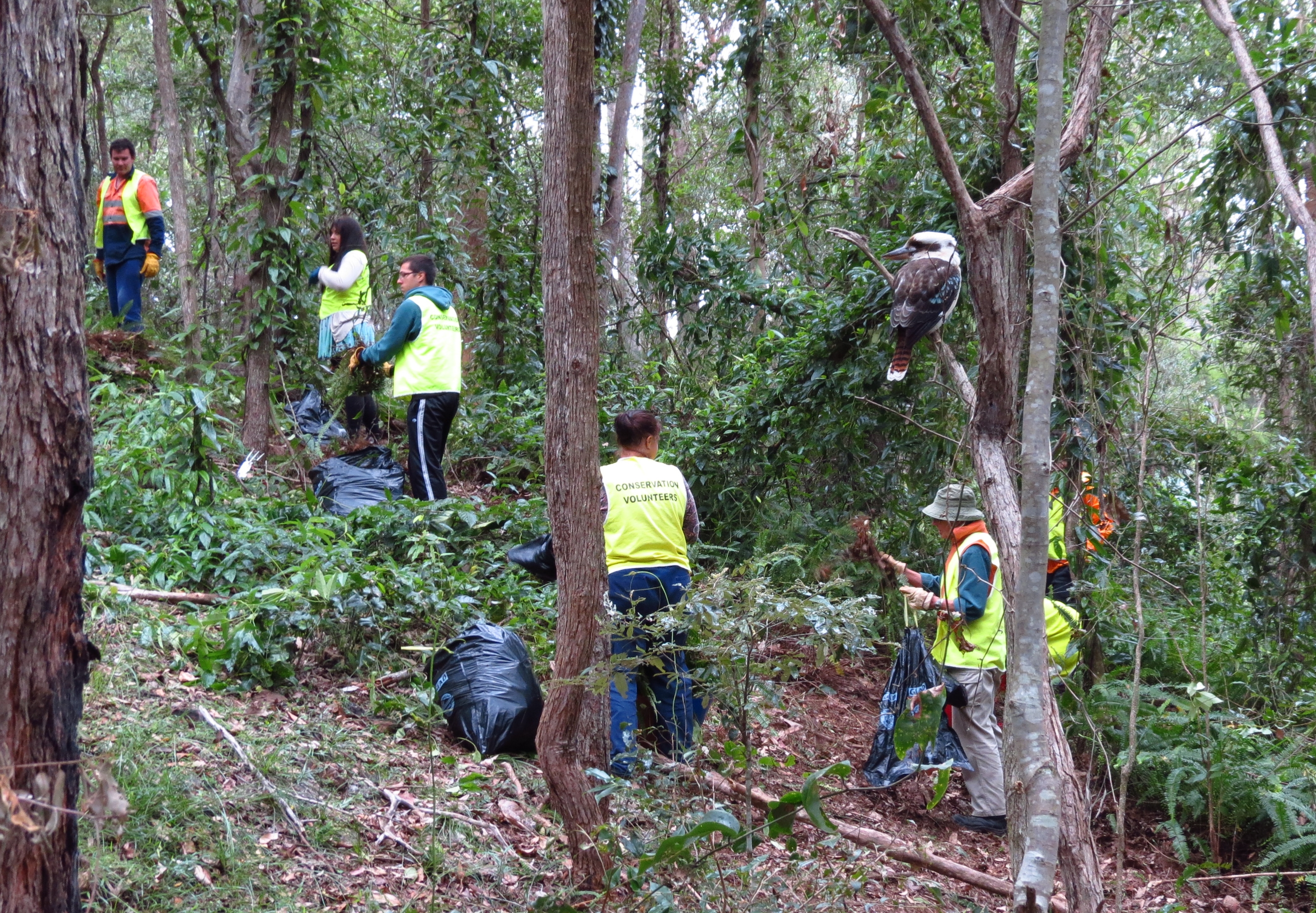
CVA volunteers with Kookaburra supervisor

By: Michael Fox

Conservation Volunteer Australia (CVA) teams worked at our Fox Gully Bushcare site the last two Wednesdays, restoring the silt filters along the track, removing a huge area of Fishbone Fern Nephrolepis cordifolia.

l

l

Silt filters - 22 May 2013

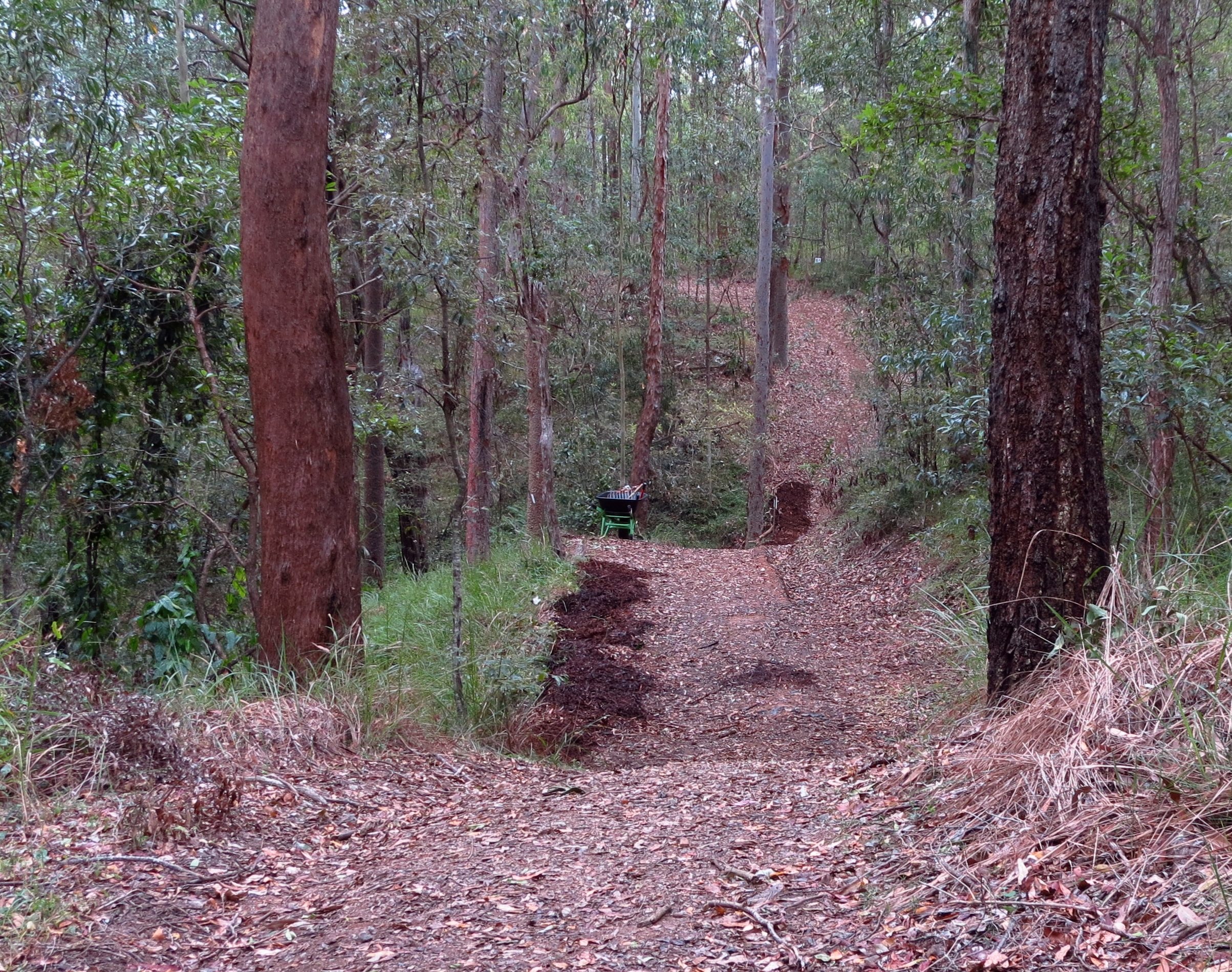
Mulch silt filters clean run-off water

l

Reducing erosion and keeping silt our of our waterways is an important part of our bushcare work. Silt filters created with logs and mulch at run-off points along the dirt maintenance track slow the water and allow silt to settle out. The filters have done an excellent job managing the extreme conditions over the last few years however they needed to be made more permanent with logs and fresh mulch.

Removing Fishbone - 29 May 2013

Chris, CVA supervisor (orange vest), explaining best-practice weed removal

e

The CVA supervisors are very professional, delivering their team, ensuring they have all the necessary safety equipment then providing practical support and guidance. Chris is reinventing his career as a recent mature age graduate from Queensland University, so he combines strong environmental knowledge with practical work experience. Here he is explaining our best-practice procedure for clearing Fishbone – tear off and bin the roots then the leaves are composted on-site.

Internet Generation meet Australian bush

Gen Y meet Australian bush

a

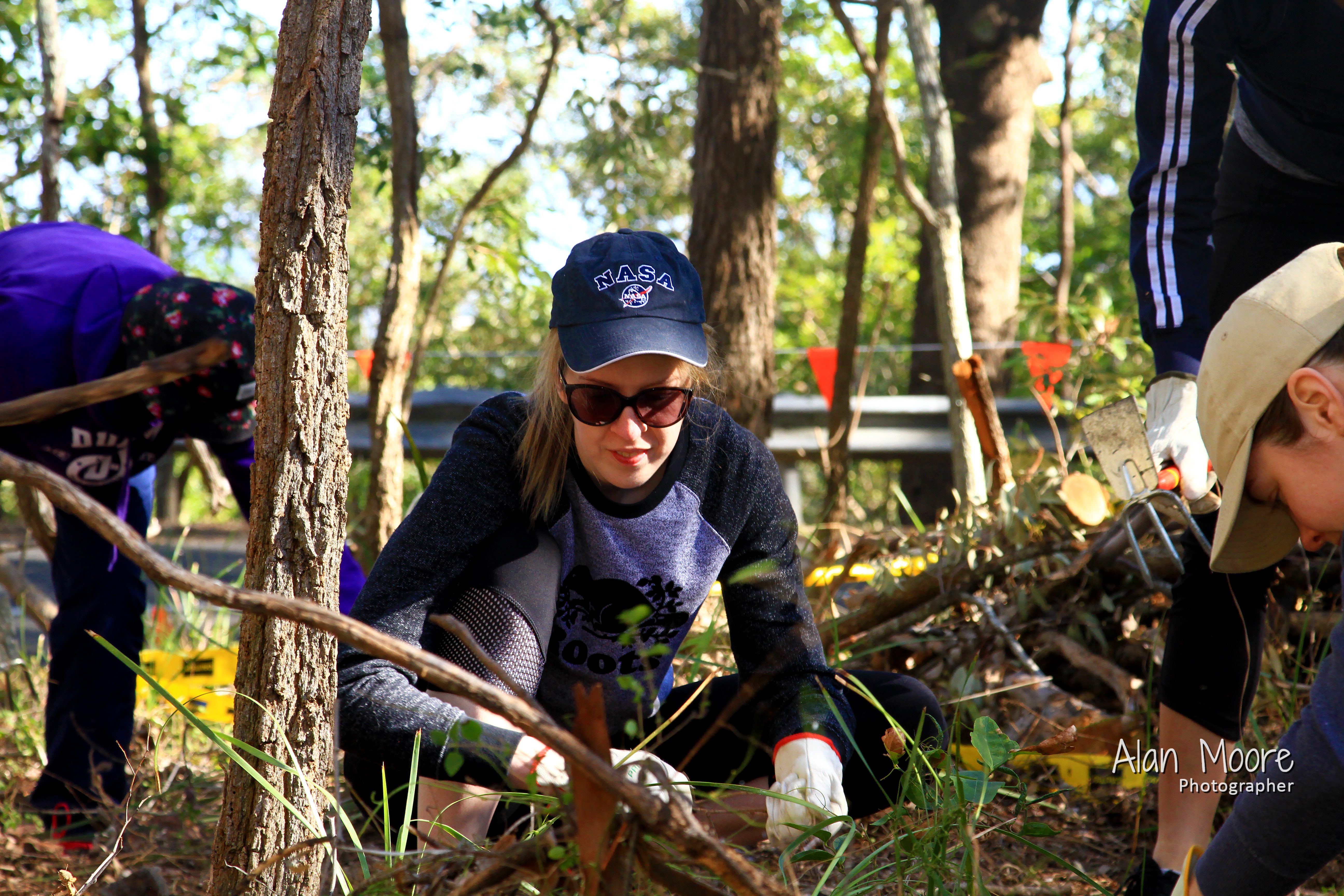
I often hear people comment that young people today a don’t have the same commitment we Baby Boomers demonstrate. So it is a real pleasure to have the opportunity to work with individuals like the young Korean girl not only on a working holiday in Australia bur also volunteering to restore our Conservation Reserve.

IMG_3774

Camphor Laurel and Chinese Elm removed

d

k

d

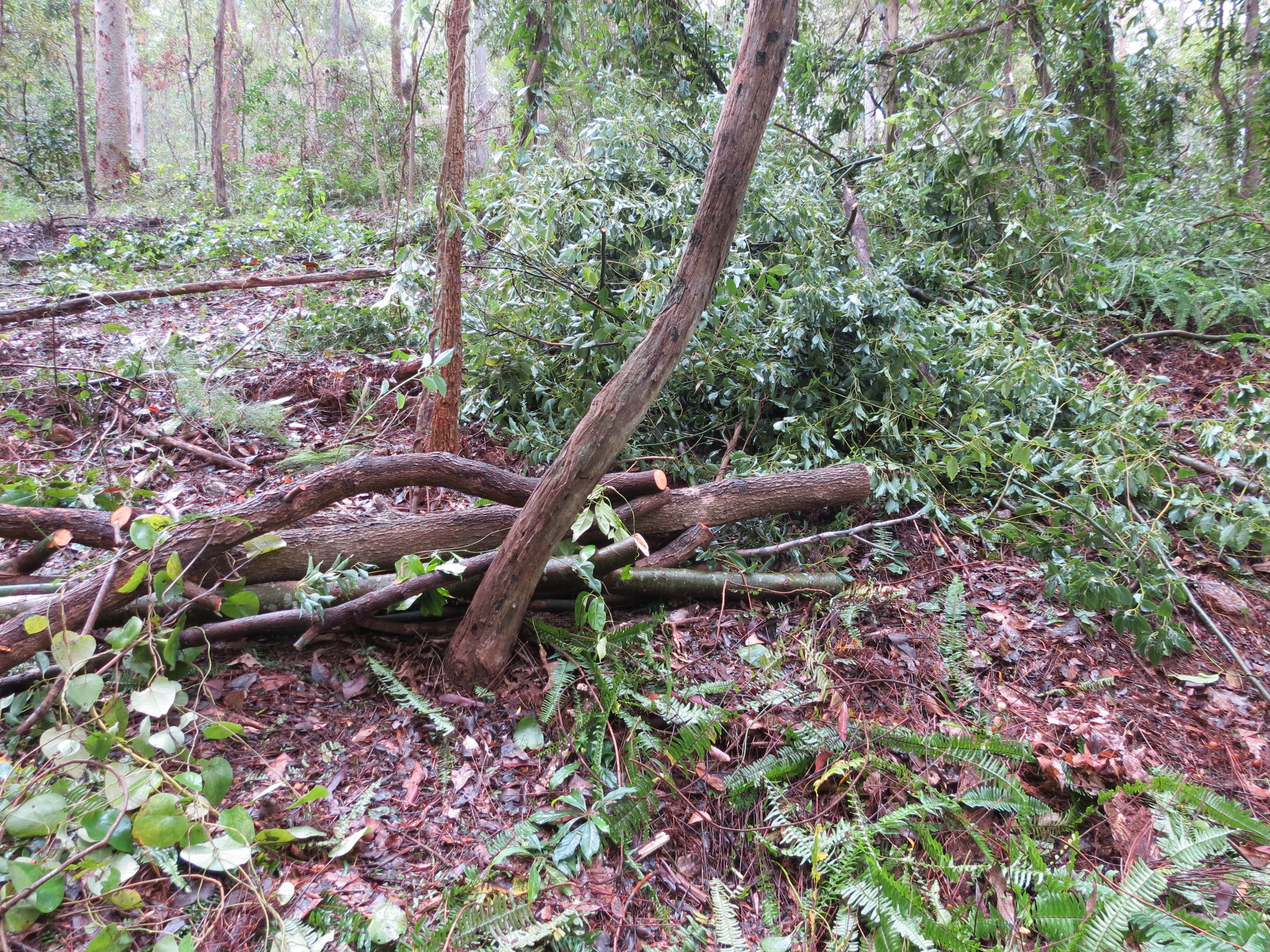
The CVA teams made a major contribution progressing our restoration of Zone 13. Clearing the Fishbone Fern so the native grasses and ferns return to the gully.

d

IMG_3777

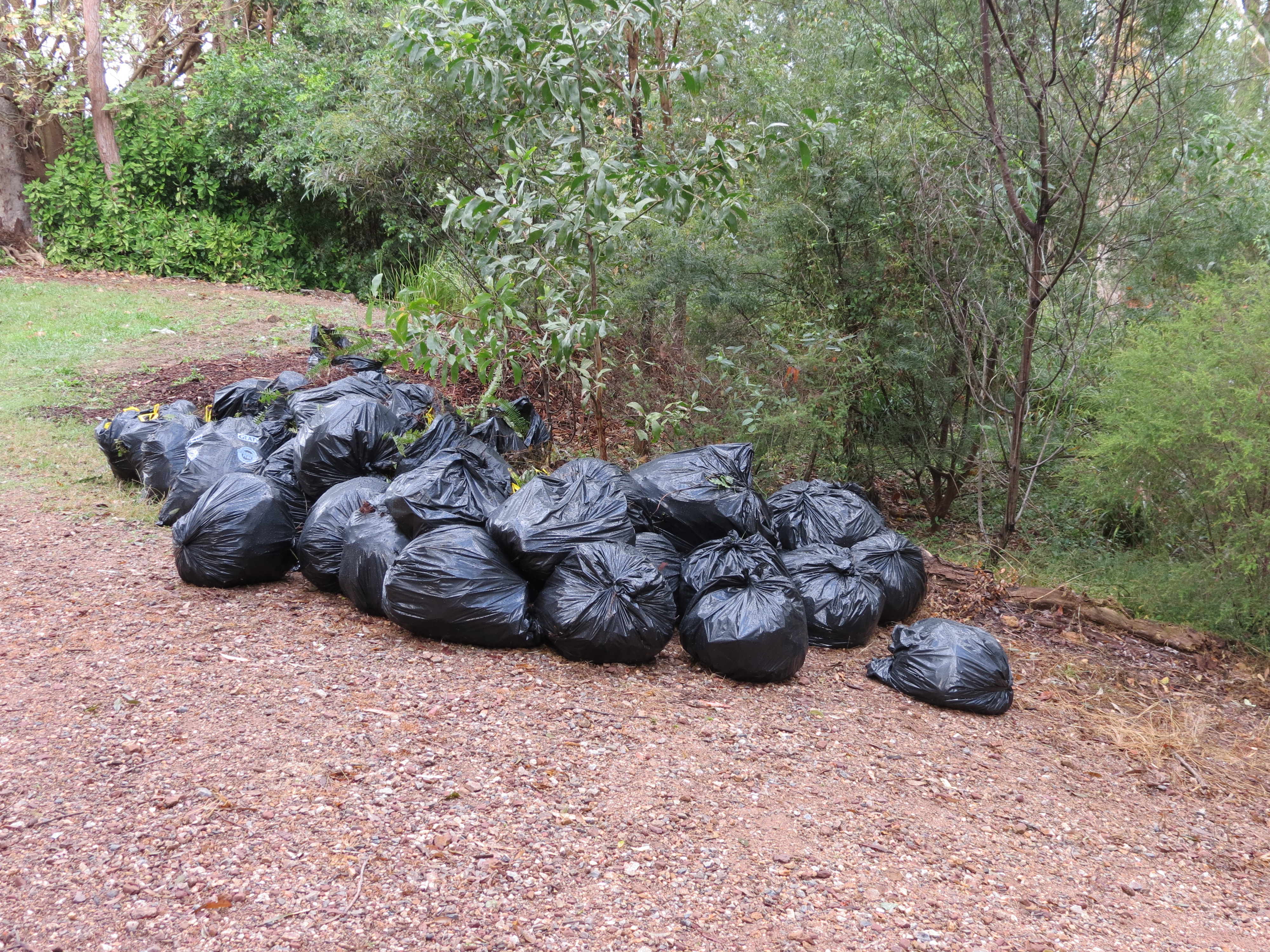
Bags of Fishbone roots ready for removal

d

Multinational volunteer team

By: Susan Jones

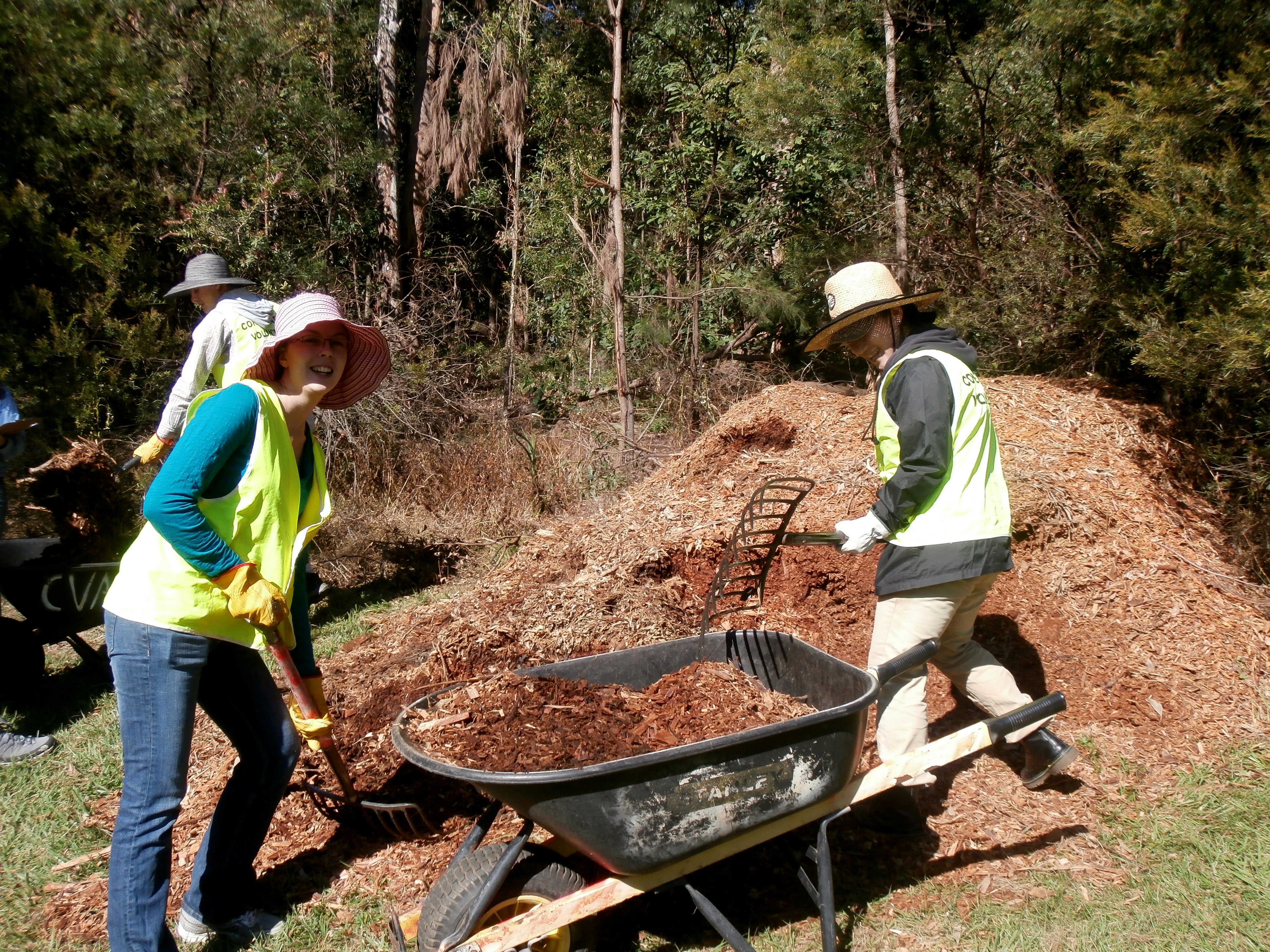
We were fortunate to have a multinational group of eleven Conservation Volunteers Australia (CVA) volunteers at Gertrude Petty Place today to clear a large garden bed of Cobblers Pegs Bidens pilosa and lay mulch.

d

d

CVA Mulch Team

d

One team removed the weeds, whilst the other barrowed in mulch sourced from trees blown down in the March 20 storm.

We were unable to finish the job as we had to stop work when a nest of Green-Head Ants Rhytidoponera metallica swarmed out of a nest in the mulch, threatening volunteers with painful stings.

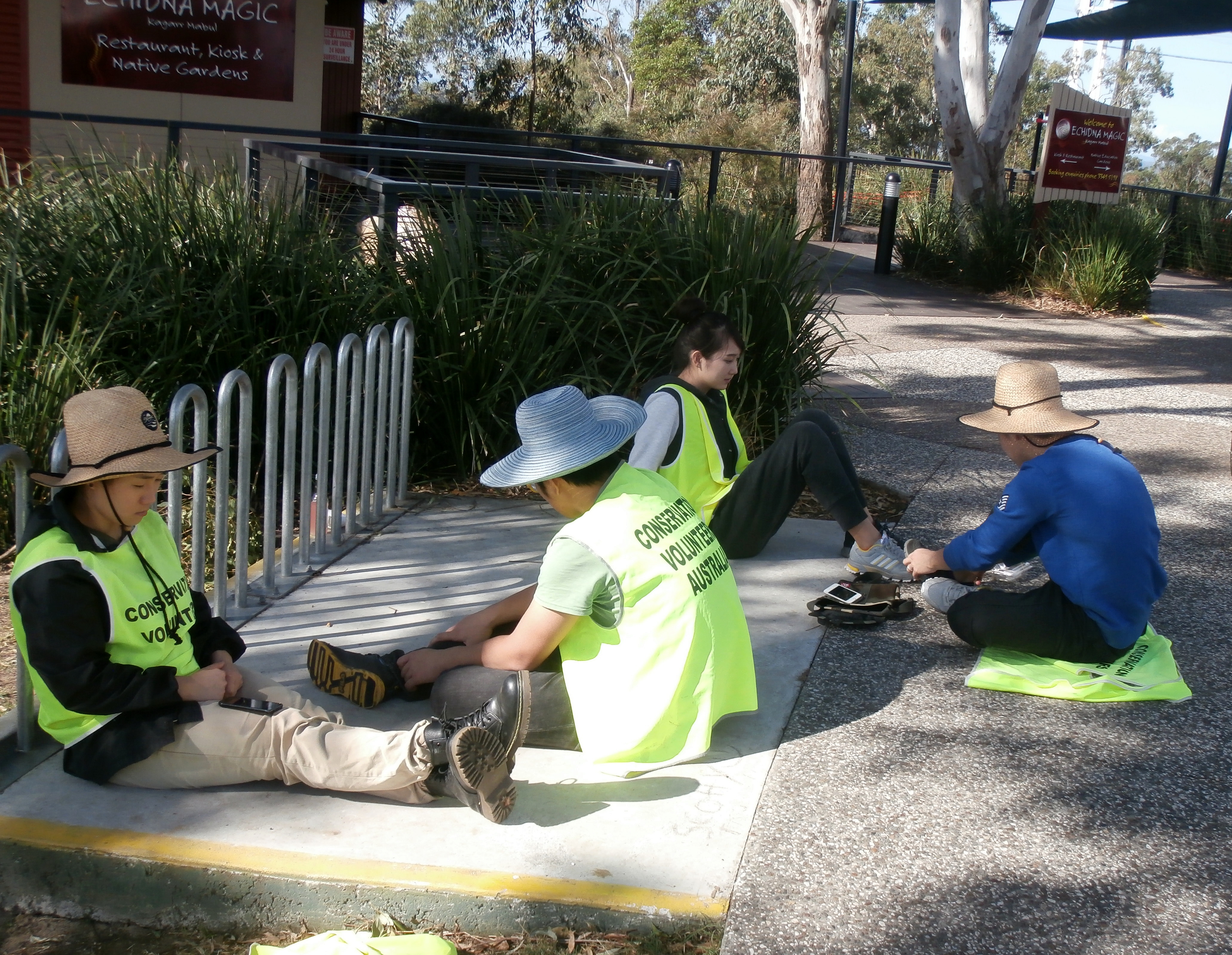
Well earned break at Summit

d

d

d

We stopped for lunch at the summit, which proved a real treat for everyone.   Our international friends were amazed at the expansive views and the locals declared it better than that from Mt Coot-tha.

Removing Creeping Lantana

d


Afterwards, we returned to clear Creeping Lantana Lantana montevidensis at the entrance to the Summit Walk, where we found a hive of Sugarbag native bees Trigona carbonaria.

Our day concluded with a tour of the Mt Gravatt High School National Tree Day Planting site, and a look at an old termite’s nest in an Ironbark gum,  which has provided a breeding site over many years for our local Laughing Kookaburras Dacelo novaeguineae.

A heartfelt thanks to these delightful volunteers who worked so hard to strengthen the environmental values of our Reserve.

(l-r) Mirandha, David, Joseph

By: Michael Fox

Mirandha Escott-Burton is the driving force behind our partnership with the Griffith Bushcare Team which aims to engage our local university students in our restoration work.

We are currently planning a series of Saturday morning events and projects at our six Bushcare sites.

Saturday was at Gertrude Petty Place Bushcare where Mirandha and Joseph worked with local resident David, Team Leader Sue Jones and other volunteers who meet on site the last Saturday of each month between 8am and 10am.

By: Michael Fox


View in Google Maps

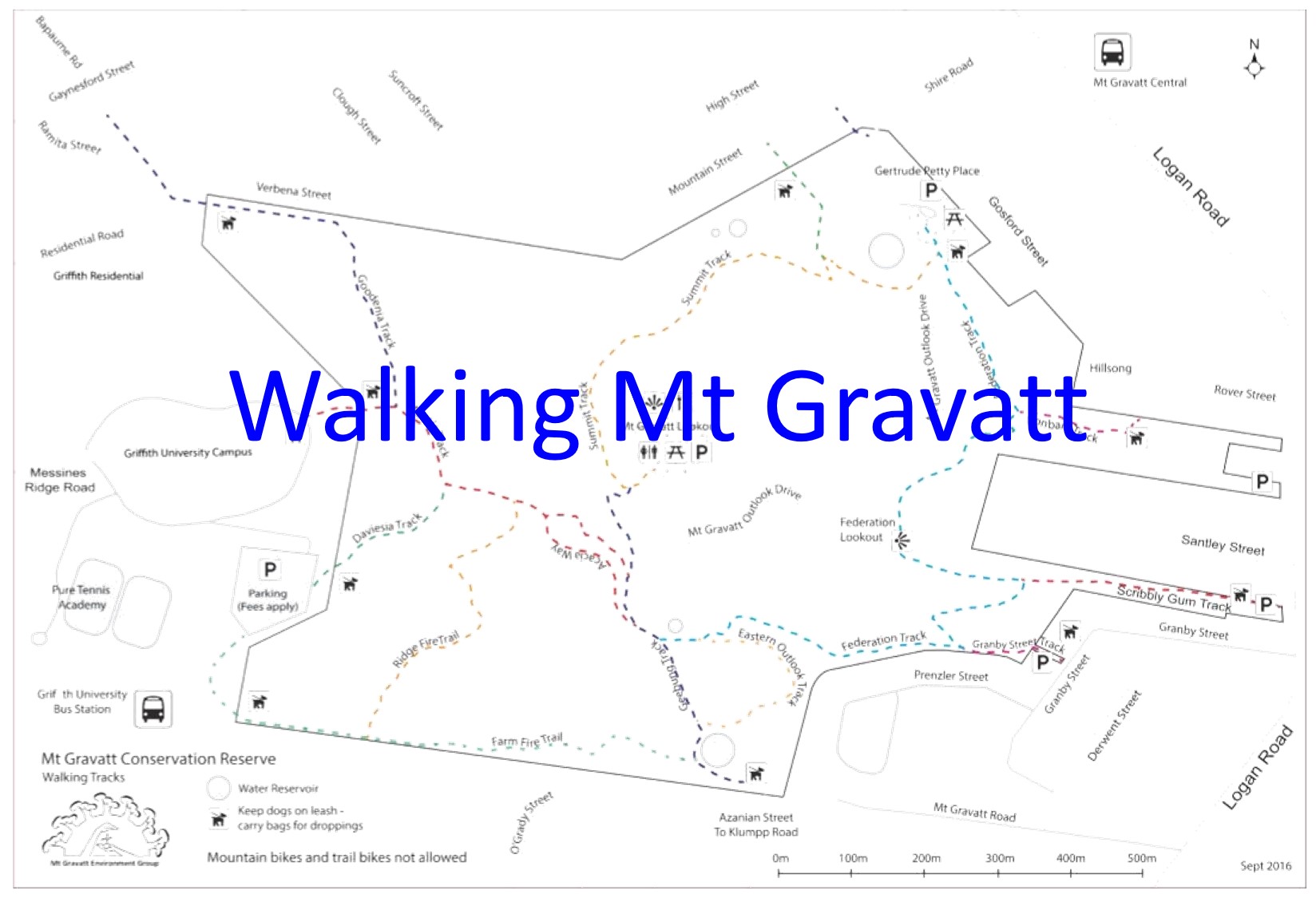
The first stage of the Self-guided Walks Project is now complete thanks to Jon and Karla Henry who have made GPS maps of the existing walking tracks.

We are now researching the information about the tracks – trees, birds, geology, local history – European and Indigenous, stories about the mountain.

What would you like to know about the Reserve or what would you like to share to others?

Do you have a story to share about a walk with your children or perhaps a memory of a visit with a grandparent?

Do you have some pictures to share?

Email your ideas, stories and links to pictures to megoutlook@gmail.com

By: Michael Fox

F&F CD cover

Click to view updates

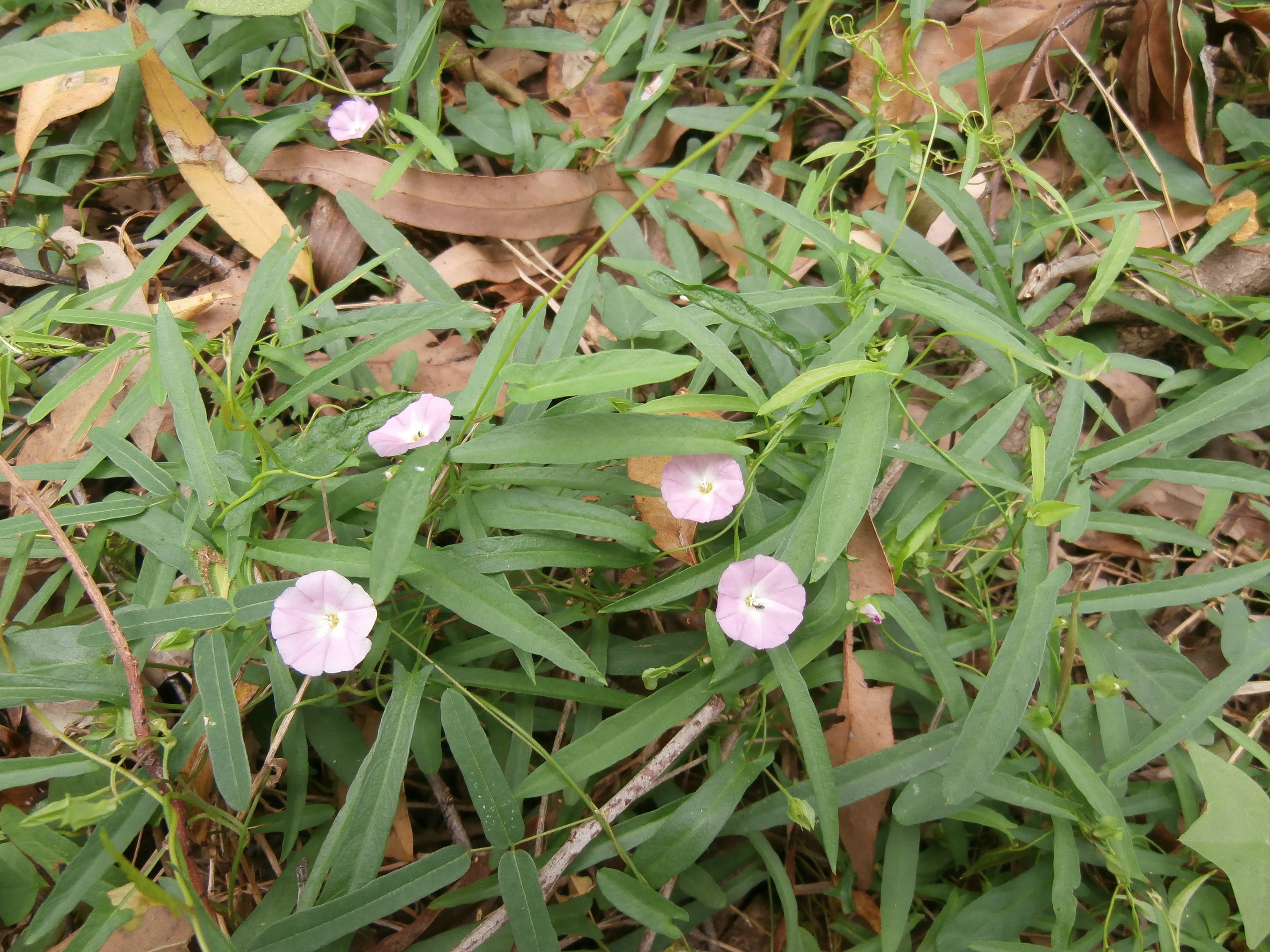
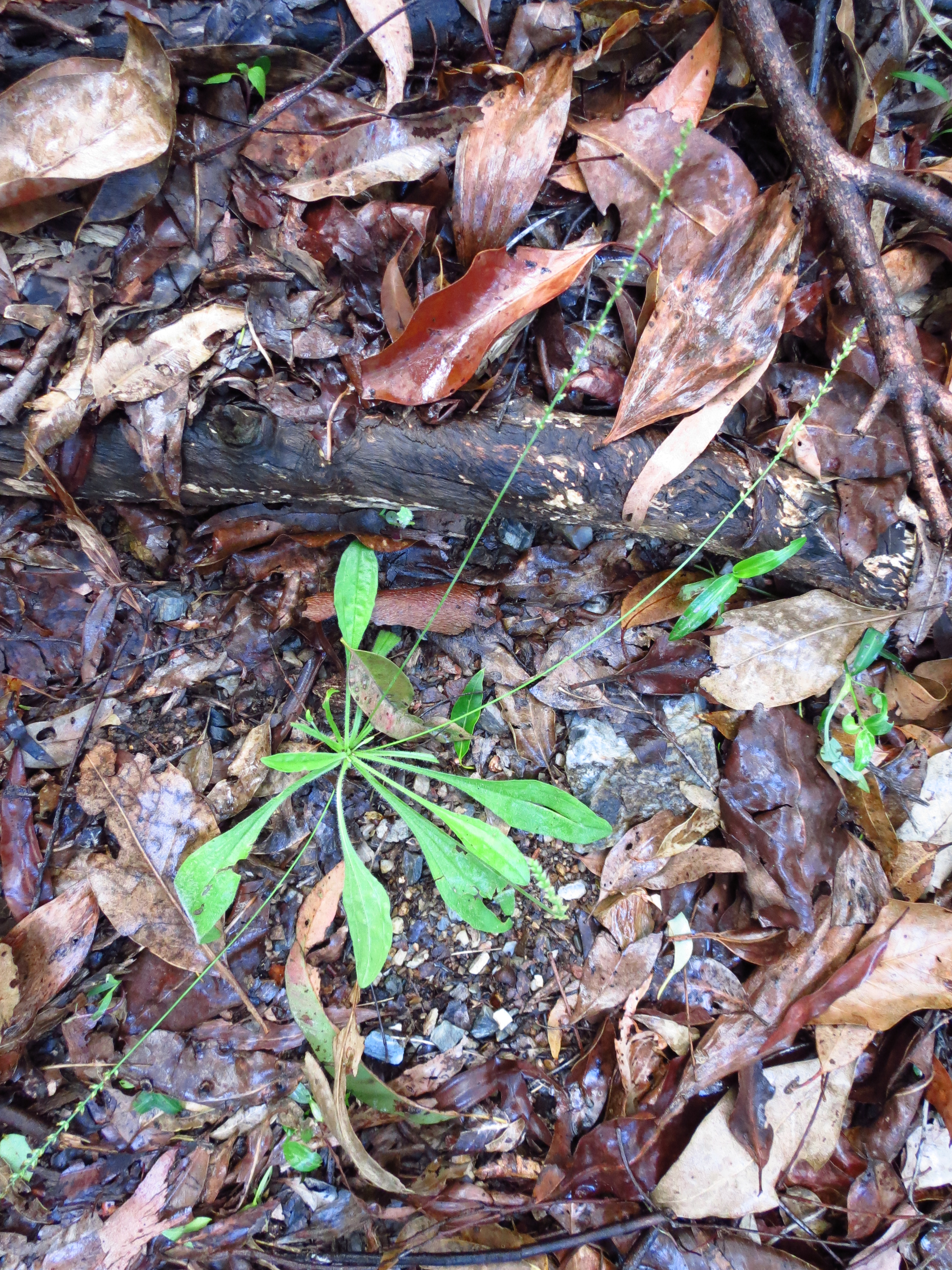
We have updated Flora & Fauna of Mt Gravatt Conservation Reserve with three new native plants – Isotropis filicaulis a rare/threatened shrub of the Fabaceae family, Swamp/Slender Bindweed Polymeria calycina a delicate vine with tiny pale pink flowers and Plantago debilis a native herb. This brings the count of indigenous plants species found in the Reserve to two hundred and sixty-eight.

A new native snail – Fraser’s Land Snail Sphaerospira fraseri has been added thanks to a young naturalist neighbour,  Ethan Morris.

New photos and video of the Pacific Baza Aviceda subcristata has been added. In March we had a family of three Bazas in Fox Gully over a period of two weeks. I watched as one Baza hunted a large Stick Insect in a young Tallowwood planted in our 2008 Fox Gully Bushcare Community Planting and now supporting food for birds.

Flora species list and other research.

OLYMPUS DIGITAL CAMERA

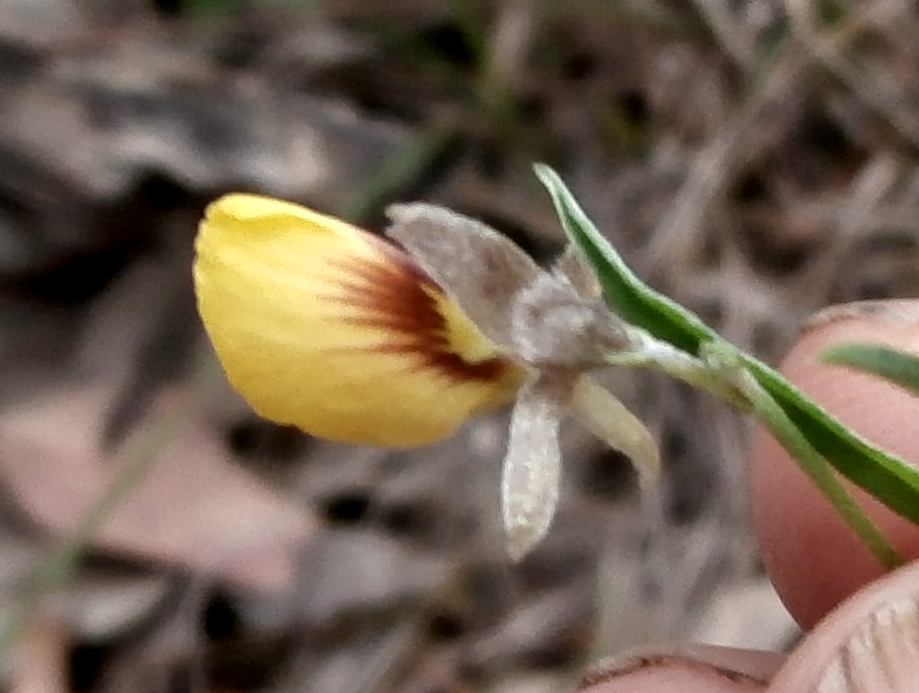
Isotropis filicaulis

By: Michael Fox

The rain is frustrating when we have to cancel Bushcare events, however, it is also bringing the forest alive with three new plant species added in one week.

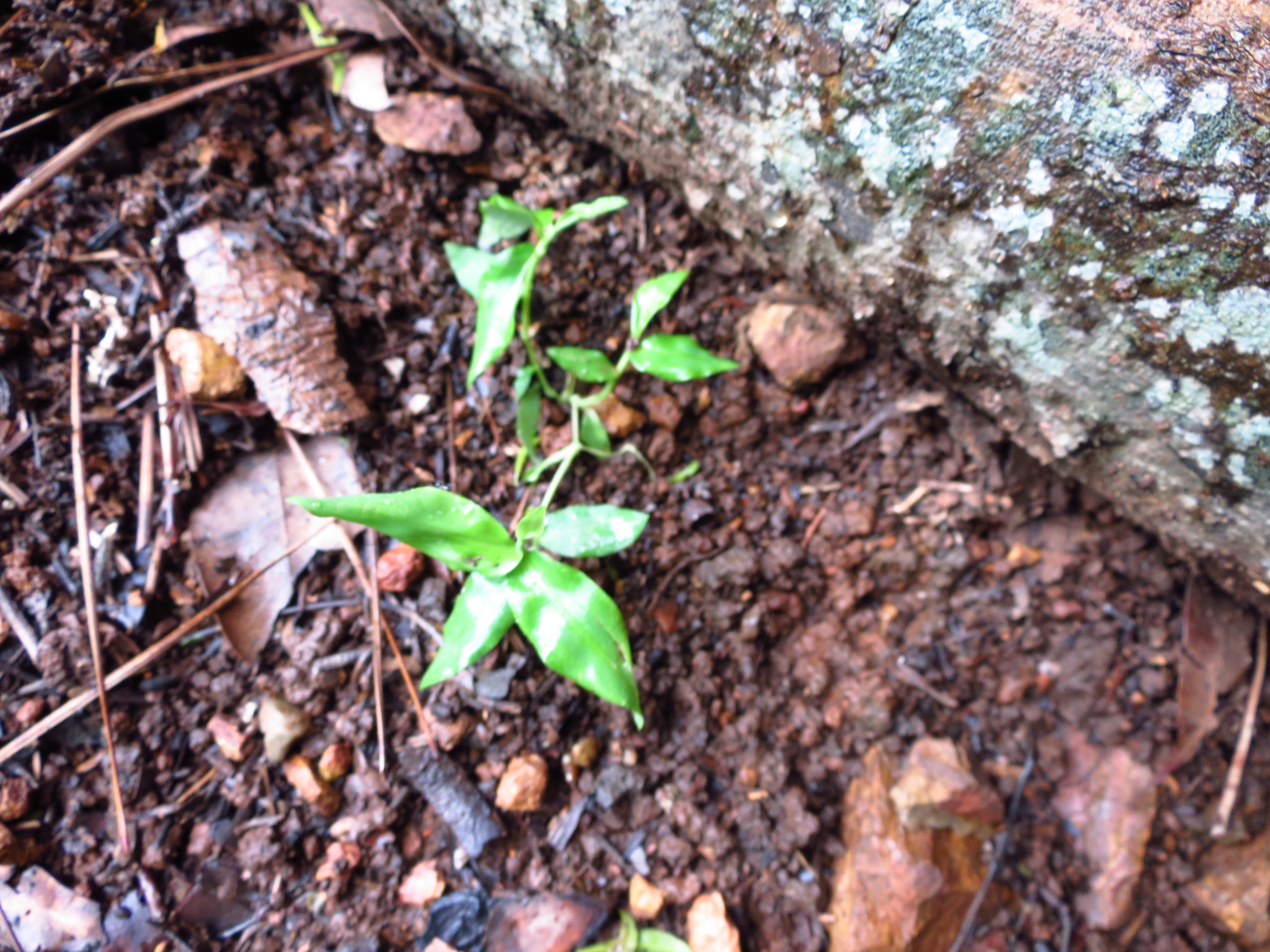
Susan Jones has found that removal of weeds and restoration at the Gertrude Petty Place Bushcare site has allowed natural regeneration of a number of plant species including this rare/threatened Fabaceae species Isotropis filicaulis.

OLYMPUS DIGITAL CAMERA

Polymeria calycina

d

Swamp Bindweed Polymeria calycina a delicate creeper with pink flowers.

d

d

d

d

d

Plantago debilis - 7 Apr 2013

Plantago debilis

d

d

Plantago debilis a small native herb that provides seeds for native birds. Addition of these three new species means we now have 268 native plant species in Mt Gravatt Conservation Reserve.

Thanks to Ann Moran, Jaeger-Moran Environmental, for help with identification.

a

a

On the other side of the mountain Alan Moore got this amazing close-up of an Eastern Bearded Dragon with its beard on display in Fox Gully Bushcare.

a

Bearded Dragon - Mar 2013 - Alan Moore

Bearded Dragon Pogona barbata – Photo: Alan Moore

Imperial Hairstreak - 23 Mar 2013

Imperial Hairstreak butterfly on Early Black Wattle

By: Michael Fox

We welcomed the Griffith Uni Bushcare Team back to Fox Gully on the Saturday before Easter.

Mind you, it took a while to get them onsite as we found some Imperial Hairstreak butterflies, Jalmenus evagoras, beside the track. It is always a pleasure to find someone else who can be totally fascinated by a few of butterflies, caterpillars and ants.

IMG_2852

Imperial Hairstreak chrysalis protected by Small Meat Ants

IMG_2864

Silt 100mm deep behind mulch filter

Imperial Hairstreak butterfly caterpillars and chrysalis are protected by native Small Meat Ants Iridomyrmex sp. referred to as Kropotkin ants. Read my article in Southside Community News.

The Early Black Wattle Acacia leiocalyx are interesting with their distinctive triangular stems.

d

d

d

d

d

The main project for the day was restoration and improvement of the “mulch filters” that keep silt from the dirt maintenance road flowing into the gully. The filters have proved very effective in reducing erosion and keeping the water in the gully clean.

IMG_2861

Mirandha and Sheamus installing mulch filter

The mulch filter is designed to slow the water flow at key runoff points on the track, allowing the silt to settle out. Silt is already 100mm deep behind one filters and starting to support natural regeneration of native grass.

d

d

The original filters were made by simply mounding mulch at the runoff points as an experiment. Now that the effectiveness has been established logs are being installed to make the filters more permanent and allow mulch to be piled higher.

k

ka

k

Sheamus and Mirandha - 23 Mar 13

Bush food snack

kj

Of course after all the hard work a snack is in order. Mirandha try out the sweet roots of Blady Grass Imperata cylindrica.


IMG_2712

Madeira Vine regrowth

By: Michael Fox

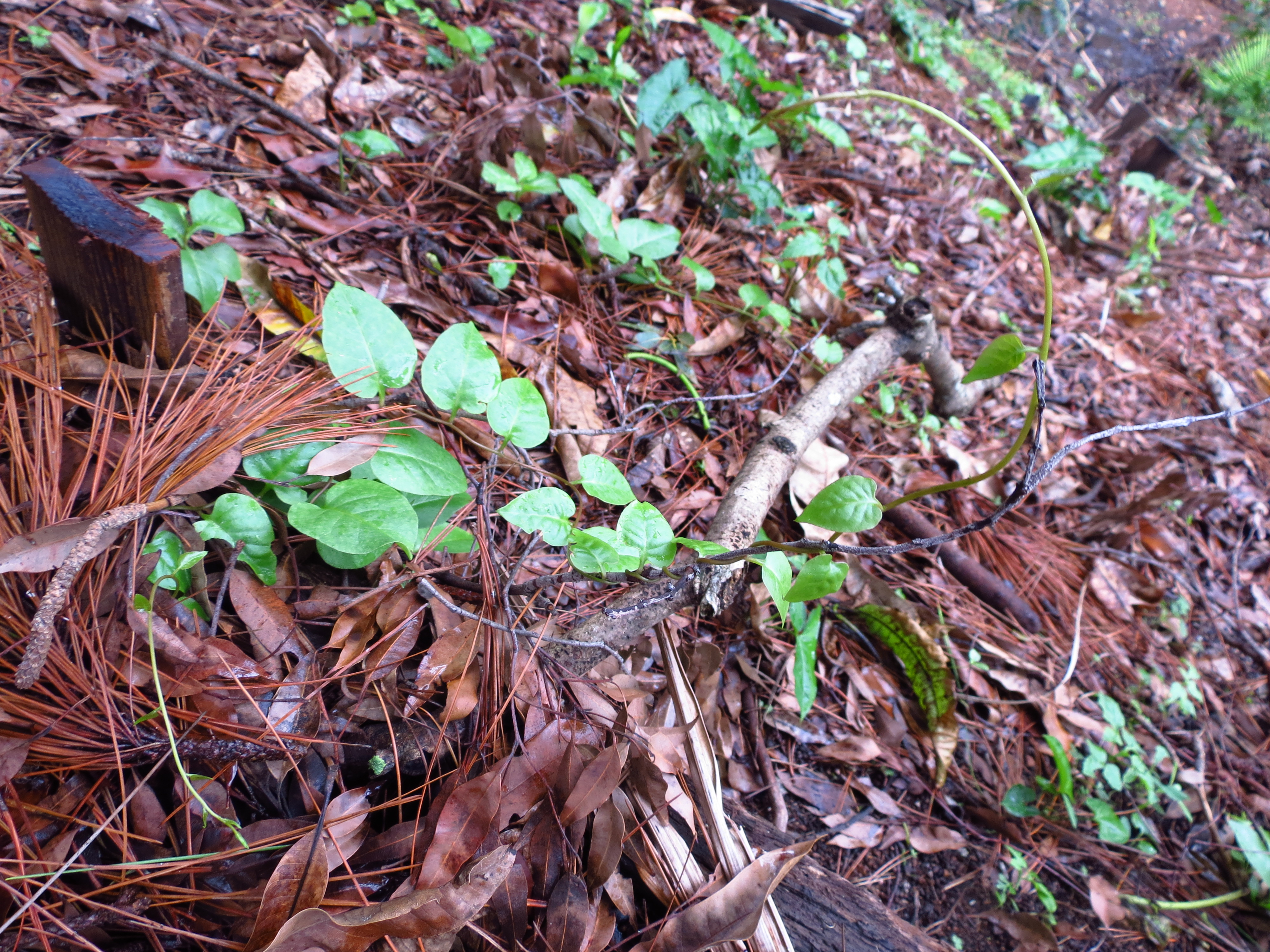
As we are still not allowed to work in our Fox Gully Bushcare site, Tuesday Bushcare moved to our Community Gully Day restoration site where Madeira Vine Anredera cordifolia regrowth has been prompted by the rain.

Madeira Vine is fast growing and extremely difficult to eradicate. When I was first researching Madeira Vine I was advised that digging out the tubers was the most effective technique. A special mix of herbicides and penetrant works however it has limited effectiveness and recommended practice is to: Target tubers as a priority, scrape, gouge and paint large ground tubers/roots.

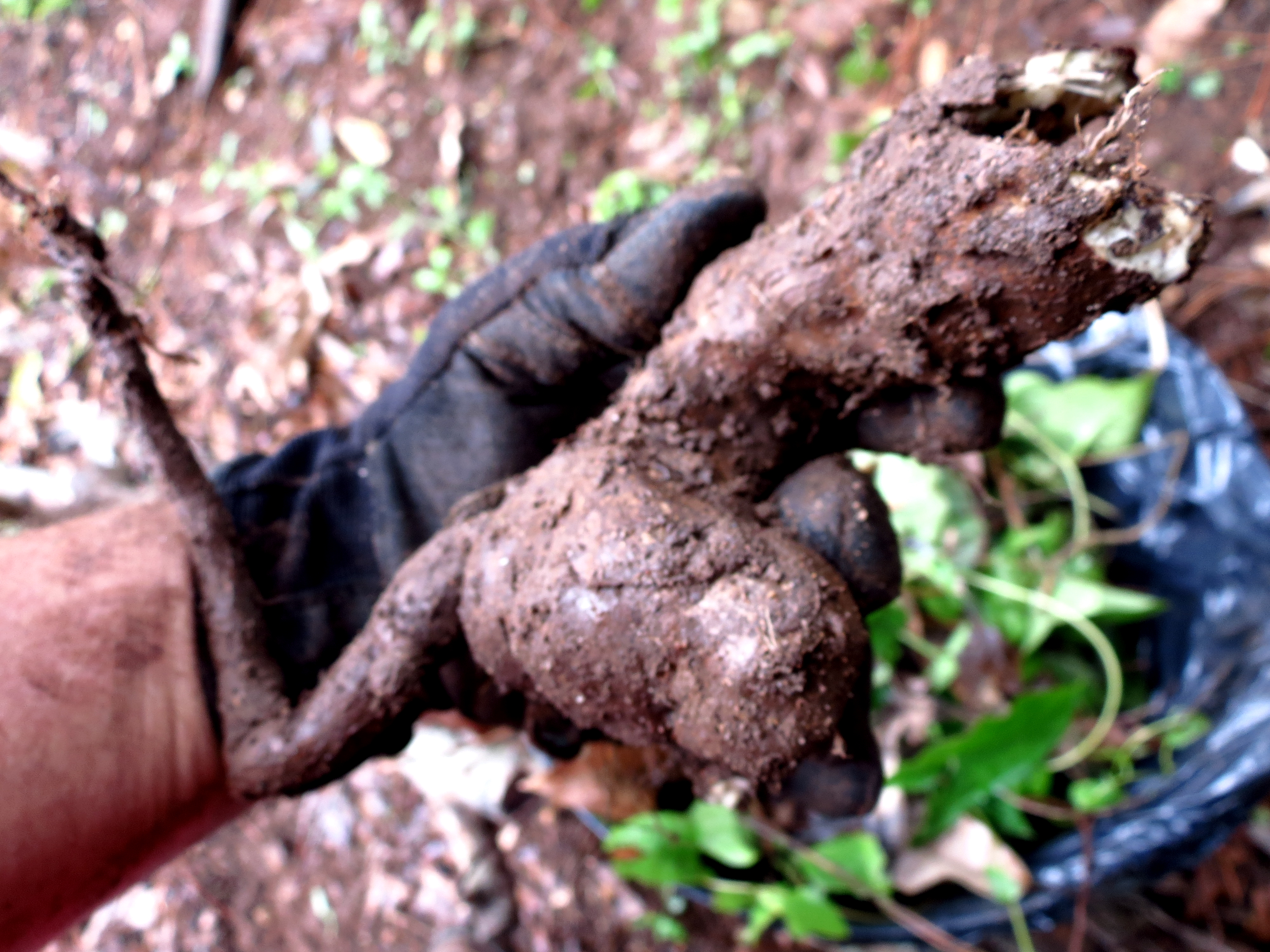
Madeira Vine tuba - 5 Mar 13

Madeira Vine tuba

If we had to dig to uncover the tubers it seemed easier to simply avoid poison, dig the tubers out and remove from site. That is the practice we have been using successfully to eradicate Madeira Vine in the Fox Gully wild life corridor.  Clearing the vine, digging out tubers then targeting regrowth has resulted in large areas almost completely free of Madeira Vine.

Oplismenus aemulus - 5 Mar 13

Natural regeneration – Rainforest Grass

One of the tubers dug out today shows why this vine is so resistant to eradication with poison. The size of a large potato this tuber would not be greatly affected by poison simply applied to the vine leaves.

Eradicating this weed is frustrating, however there are also positive signs with natural regeneration restoring native species like Rainforest Grass Oplismenus aemulus and Scurvy Weed Commelina diffusa. Native grasses like Oplismenus aemulus are an invaluable restoration tool as they create Green Mulch which suppresses weeds, retains moisture and controls erosion.

« Previous PageNext Page »